Polyextremophilic red microalgae of the genus Galdieria, which inhabit hot sulfur springs under conditions unusual for eukaryotes, are capable of heterotrophy. Among the dozens of exogenous organic substrates identified for Galdieria, ethanol is not mentioned as a possible energy source. It turned out that ethanol did not alter the growth of the model species Galdieria sulphuraria when grown in the dark. By contrast, the growth of microalgae is activated in the light, despite the known cell stressor effect of ethanol. The effect of ethanol as an oxidative stress factor has been indicated by the increase in cellular respiration observed in the dark and also in the light even before the activation of photosynthesis. The marked acceleration of growth of G. sulphuraria culture in the light is most likely due to the stimulation of respiration by ethanol with generation of CO2 and its use by chloroplasts as an additional carbon substrate during the photosynthetic process. Compared to the classical organic substrate glucose, the light-induced growth of G. sulphuraria culture in the presence of ethanol is less intense. It can be speculated that ethanol stress in light induces a system of two consecutive key enzymes in the primary alcohol metabolism chain (alcohol dehydrogenase (ADH) and acetaldehyde dehydrogenase), which then leads to the eventual complete oxidation of ethanol, resulting in accelerated growth of G. sulphuraria.
Eukaryotic photosynthesis originated in the course of evolution as a result of the uptake of some unstored cyanobacterium and its transformation to chloroplasts by an ancestral heterotrophic eukaryotic cell. The pigment apparatus of Archaeplastida and other algal phyla that emerged later turned out to be arranged in the same way. Pigment-protein complexes of photosystem I (PS I) and photosystem II (PS II) are characterized by uniform structures, while the light-harvesting antennae have undergone a series of changes. The phycobilisome (PBS) antenna present in cyanobacteria was replaced by Chl a/b- or Chl a/c-containing pigment–protein complexes in most groups of photosynthetics. In the form of PBS or phycobiliprotein aggregates, it was inherited by members of Cyanophyta, Cryptophyta, red algae, and photosynthetic amoebae. Supramolecular organization and architectural modifications of phycobiliprotein antennae in various algal phyla in line with the endosymbiotic theory of chloroplast origin are the subject of this review.
The chromophorylated PBLcm domain of the ApcE linker protein in the cyanobacterial phycobilisome (PBS) serves as a bottleneck for Förster resonance energy transfer (FRET) from the PBS to the antennal chlorophyll of photosystem II (PS II) and as a redirection point for energy distribution to the orange protein ketocarotenoid (OCP), which is excitonically coupled to the PBLcm chromophore in the process of non-photochemical quenching (NPQ) under high light conditions. The involvement of PBLcm in the quenching process was first directly demonstrated by measuring steady-state fluorescence spectra of cyanobacterial cells at different stages of NPQ development. The time required to transfer energy from the PBLcm to the OCP is several times shorter than the time it takes to transfer energy from the PBLcm to the PS II, ensuring quenching efficiency. The data obtained provide an explanation for the different rates of PBS quenching in vivo and in vitro according to the half ratio of OCP/PBS in the cyanobacterial cell, which is tens of times lower than that realized for an effective NPQ process in solution.
Cyanidiales were named enigmatic microalgae due to their unique polyextreme properties, considered for a very long time unattainable for eukaryotes. Cyanidiales mainly inhabit hot sulfuric springs with high acidity (pH 0-4), temperatures up to 56°C, and ability to survive in the presence of dissolved heavy metals. Owing to the minimal for eukaryotes genome size, Cyanidiales have become one of the most important research objects in plant cell physiology, biochemistry, molecular biology, phylogenomics, and evolutionary biology. They play an important role in studying many aspects of oxygenic photosynthesis and chloroplasts origin. The ability to survive in stressful habitats and the corresponding metabolic pathways were acquired by Cyanidiales from archaea and bacteria via horizontal gene transfer (HGT). Thus, the possibility of gene transfer from prokaryotes to eukaryotes was discovered, which was a new step in understanding of the origin of eukaryotic cell.
Imbalanced light absorption by photosystem I (PSI) and photosystem II (PSII) in oxygenic phototrophs leads to changes in interaction of photosystems altering the linear electron flow. In plants and green algae, this imbalance is mitigated by a partial migration of the chlorophyll a/b containing light-harvesting antenna between the two photosystem core complexes. This migration is registered as fluorescence changes of the pigment apparatus and is termed the reverse transitions between States 1 and 2. By contrast, the molecular mechanism of State 1/2 transitions in phycobilisome (PBS)-containing photosynthetics, cyanobacteria and red algae, is still insufficiently understood. The suggested hypotheses – PBS movement along the surface of thylakoid membrane between PSI and PSII complexes, reversible PBS detachment from the dimeric PSII complex, and spillover – have some limitations as they do not fully explain the accumulated data. Here, we have recorded changes in the stationary fluorescence emission spectra of red algae and cyanobacteria in States 1/2 at room temperature, which allowed us to offer an explanation of the existing contradictions. The change of room temperature fluorescence of chlorophyll belonged to PSII was revealed, while the fluorescence of PBS associated with the PSII complexes remained during States 1/2 transitions at the stable level. Only the reversible dissociation of PBS from the monomeric PSI was revealed earlier which implied different degree of surface contact of PBS with the two photosystems. The detachment of PBS from the PSI corresponds to ferredoxin oxidation as electron carrier and the increase of cyclic electron transport in the pigment apparatus in State I.
The theory of endosymbiotic origin of chloroplasts has become basal in present-day biology. In this regard, the emergence of eukaryotic photosynthesis has been established as a result of phagocytal capture of cyanobacteria by some ancestral eukaryotic cell. The phenomenon of endosymbiosis is an indispensable element of cell evolution theory. The process of endosymbiogenesis belongs to the crucial factors of biological progress that gave rise to astonishing diversity and complexity of the eukaryotic organisms. The modern theory of evolution is built on the joint base of the phenomena of endosymbiosis, parallel gene transfer, the theory of natural selection, and the data of phylogenomics. Ultimately, eukaryogenesis has integrated different supramolecular complexes in the cells, created the diversity of organelles, and has led to biosphere oxygenation and modern diversity of living forms.
On p. 679 in the list of authors and affiliations instead of: 1 Timiryazev Institute of Plant Physiology, Russian Academy of Sciences, 127726 Moscow, Russia 2 Bach Institute of Biochemistry, Research Center of Biotechnology, Russian Academy of Sciences, 119071 Moscow, Russia 3 Institute of Fundamental Problems of Biology of the Russian Academy of Sciences, 142290 Pushchino, Moscow Region, Russia 4 Kovalevski Institute of Biology of the Southern Seas, Russian Academy of Sciences, 299011 Sevastopol, Russia 5 Lomonosov Moscow State University, Faculty of Biology, 119991 Moscow, Russia Should read: 1 Timiryazev Institute of Plant Physiology, Russian Academy of Sciences, 127726 Moscow, Russia 2 Kovalevski Institute of Biology of the Southern Seas, Russian Academy of Sciences, 299011 Sevastopol, Russia 3 Institute of Fundamental Problems of Biology of the Russian Academy of Sciences, 142290 Pushchino, Moscow Region, Russia 4 Bach Institute of Biochemistry, Research Center of Biotechnology, Russian Academy of Sciences, 119071 Moscow, Russia 5 Lomonosov Moscow State University, Faculty of Biology, 119991 Moscow, Russia
The phycobilisome (PBS) is the cyanobacterial antenna complex which transfers absorbed light energy to the photosystem II (PSII), while the excess energy is nonphotochemically quenched by interaction of the PBS with the orange carotenoid protein (OCP). Here, the molecular model of the PBS-PSII-OCP supercomplex was utilized to assess the resonance energy transfer from PBS to PSII and, using the excitonic theory, the transfer from PBS to OCP. Our estimates show that the effective energy migration from PBS to PSII is realized due to the existence of several transfer pathways from phycobilin chromophores of the PBS to the neighboring antennal chlorophyll molecules of the PSII. At the same time, the single binding site of photoactivated OCP and the PBS is sufficient to realize the quenching.
Phycobiliproteins are photosynthetic antenna pigments of cyanobacteria and red algae, where they are assembled in macromolecular supercomplexes of phycobilisomes (PBS)s, as well as of cryptophyte algae, where they exist in the form of dimers. The absorbed light energy transfer from phycobiliprotein antenna to the photosystem II (PS II) is well known since the first studies in this field and is highly effective reaching 95-100%. However, interaction of phycobiliproteins with the photosystem I (PS I) is subject for discussion. Here, various data on energetic coupling of PBSs and phycobiliproteins with the PS II and PS I in photosynthetic organisms are discussed.
Phycobilisome (PBS) is a giant photosynthetic antenna associated with the thylakoid membranes of cyanobacteria and red algae. PBS consists of two domains: central core and peripheral rods assembled of disc-shaped phycobiliprotein aggregates and linker polypeptides. The study of the PBS architecture is hindered due to the lack of the data on the structure of the large ApcE-linker also called LCM. ApcE participates in the PBS core stabilization, PBS anchoring to the photosynthetic membrane, transfer of the light energy to chlorophyll, and, very probably, the interaction with the orange carotenoid protein (OCP) during the non-photochemical PBS quenching. We have constructed the cyanobacterium Synechocystis sp. PCC 6803 mutant lacking 235 N-terminal amino acids of the chromophorylated PBLCM domain of ApcE. The altered fluorescence characteristics of the mutant PBSs indicate that the energy transfer to the terminal emitters within the mutant PBS is largely disturbed. The PBSs of the mutant become unable to attach to the thylakoid membrane, which correlates with the identified absence of the energy transfer from the PBSs to the photosystem II. At the same time, the energy transfer from the PBS to the photosystem I was registered in the mutant cells and seems to occur due to the small cylindrical CpcG2-PBSs formation in addition to the conventional PBSs. In contrast to the wild type Synechocystis, the OCP-mediated non-photochemical PBS quenching was not registered in the mutant cells. Thus, the PBLCM domain takes part in formation of the OCP binding site in the PBS.
The phycobilisome (PBS) is a giant highly-structured pigment-protein antenna of cyanobacteria and red algae. PBS is composed of the phycobiliproteins and several linker polypeptides. The large core-membrane linker protein (LCM or ApcE) influences many features and functions of PBS and consists of several domains including the chromophorylated PB-domain. Being homologous to the phycobiliprotein α-subunits this domain includes a so-called PB-loop insertion whose functions are still unknown. We have created the photoautotrophic mutant strain of the cyanobacterium Synechocystis sp. PCC 6803 with lacking PB-loop. Using various spectral techniques we have demonstrated that this mutation does not destroy the PBS integrity and the internal PBS excitation energy transfer pathways. At the same time, the deletion of the PB-loop leads to the decrease of connectivity between the PBS and thylakoid membrane and to the compensatory increase of the relative photosystem II content. Mutation provokes the violation of the thylakoid membranes arrangement, the inability to perform state transitions, and diminishing of the OCP-dependent non-photochemical PBS quenching. In essence, even such a minute mutation of the PBS polypeptide component, like the PB-loop deletion, becomes important for the concerted function of the photosynthetic apparatus.
Phycobilisome (PBS) is a giant water-soluble photosynthetic antenna transferring the energy of absorbed light mainly to the photosystem II (PSII) in cyanobacteria. Under the low light conditions, PBSs and PSII dimers form coupled rows where each PBS is attached to the cytoplasmic surface of PSII dimer, and PBSs come into contact with their face surfaces (state 1). The model structure of the PBS core that we have developed earlier by comparison and combination of different fine allophycocyanin crystals, as reported in Zlenko et al. (Photosynth Res 130(1):347–356, 2016b), provides a natural way of the PBS core face-to-face stacking. According to our model, the structure of the protein–protein contact between the neighboring PBS cores in the rows is the same as the contact between the APC hexamers inside the PBS core. As a result, the rates of energy transfer between the cores can occur, and the row of PBS cores acts as an integral PBS “supercore” providing energy transfer between the individual PBS cores. The PBS cores row pitch in our elaborated model (12.4 nm) is very close to the PSII dimers row pitch obtained by the electron microscopy (12.2 nm) that allowed to unite a model of the PBS cores row with a model of the PSII dimers row. Analyzing the resulting model, we have determined the most probable locations of ApcD and ApcE terminal emitter subunits inside the bottom PBS core cylinders and also revealed the chlorophyll molecules of PSII gathering energy from the PBS.
The functions of phycobiliproteins and phycobilisomes as photosynthetic antenna pigments in cells of cyanobacteria and a range of algae were considered. Achievements in the area of biological and natural sciences connected with study of phycobiliproteins are described. Sources and different possibilities of the practical application of these pigments in fluorescent spectroscopy, pharmacy, and biotechnology are analyzed.
Using molecular modeling and known spatial structure of proteins, we have derived a universal 3D model of the orange carotenoid protein (OCP) and phycobilisome (PBS) interaction in the process of non-photochemical PBS quenching. The characteristic tip of the phycobilin domain of the core-membrane linker polypeptide (LCM) forms the attachment site on the PBS core surface for interaction with the central inter-domain cavity of the OCP molecule. This spatial arrangement has to be the most advantageous one because the LCM, as the major terminal PBS-fluorescence emitter, accumulates energy from the most other phycobiliproteins within the PBS before quenching by OCP. In agreement with the constructed model, in cyanobacteria, the small fluorescence recovery protein is wedged in the OCP's central cavity, weakening the PBS and OCP interaction. The presence of another one protein, the red carotenoid protein, in some cyanobacterial species, which also can interact with the PBS, also corresponds to this model.
In the large linker ArcE polypeptide of the phycobilisome (PBS) from the cyanobacterium Synechocystis sp. PCC 6803, the chromophore-containing 26-kDa domain was deleted with consequent disturbance of the main PBS functions. Phycobilisomes in mutant cells staying in contact with photosystem I cannot transfer energy to the photosystem II. Under the bright light conditions, the interaction of PBSs with the photoprotective orange carotenoid protein in the mutant was lost and the implementation of transition states 1 and 2 of the pigment apparatus was significantly reduced.
The phycobilisome (PBS) is a major light-harvesting complex in cyanobacteria and red algae. To obtain the detailed structure of the hemidiscoidal PBS core composed of allophycocyanin (APC) and minor polypeptide components, we analyzed all nine available 3D structures of APCs from different photosynthetic species and found several variants of crystal packing that potentially correspond to PBS core organization. Combination of face-to-face APC trimer crystal packing with back-to-back APC hexamer packing suggests two variants of the tricylindrical PBS core. To choose one of these structures, a computational model of the PBS core complex and photosystem II (PSII) dimer with minimized distance between the terminal PBS emitters and neighboring antenna chlorophylls was built. In the selected model, the distance between two types of pigments does not exceed 37 Å corresponding to the Förster mechanism of energy transfer. We also propose a model of PBS and photosystem I (PSI) monomer interaction showing a possibility of supercomplex formation and direct energy transfer from the PBS to PSI.
 Zlenko Dmitry V合作论文数a Faculty of Biology, Lomonosov State University19
 Evgeny Lukashev合作论文数11
 Va Boichenko合作论文数10Krasilnikov Pavel M合作论文数8
 Pavel M Krasilnikov合作论文数8н в радзинская合作论文数5М. Ф. Янюшин合作论文数5FF LITVIN合作论文数5
 Navassard V. Karapetyan合作论文数5Ю. В. Болычевцева合作论文数4
 Irina Selyakh合作论文数4Mg Rakhimberdieva合作论文数4Evgeny P Lukashev合作论文数4
 Eugene Maksimov合作论文数Department of Biophysics, Faculty of Biology, M.V. Lomonosov Moscow State University;Laboratory of Physical Chemistry of Biomembranes, Lomonosov Moscow State University4V. Z. Pashchenko合作论文数4E. N. Boldareva合作论文数4
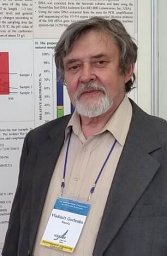 Vladimir M. Gorlenko合作论文数Winogradsky Institute of Microbiology, Russian Academy of Sciences4E. M. Muronets合作论文数4M. F. Yanyushin合作论文数3
 Larisa Semenova合作论文数3Yv Bolychevtseva合作论文数3Mikhail F Yanyushin合作论文数3Mv Gusev合作论文数3Irina V. Elanskaya合作论文数3Sergei K Zharmukhamedov合作论文数3T. I. Bogdanova合作论文数2T. M. Novikova合作论文数2E. N. Krasil’nikova合作论文数2Irena A Kononova合作论文数2Yu. V. Bolychevtseva合作论文数2п м красильников合作论文数2
 Yulia Vladimirovna Bolychevtseva合作论文数2Ivan V. Tropin合作论文数2Ob Belyaeva合作论文数2Natalia E Suzina合作论文数2I V Elanskaia合作论文数2La Mineeva合作论文数2NP YURINA合作论文数2Evgeniy Gusev合作论文数2Boichenko Vladimir A合作论文数2Vladimir Z Paschenko合作论文数2
 Gabor Bernat合作论文数Lehrstuhl Biochem Pflanzen, Ruhr Univ Bochum2Irina V Elanskaya合作论文数2Lukashev Evgeni P合作论文数2Yuri V. Kovalev合作论文数2I. A. Tsaplina合作论文数2L. M. Zakharchuk合作论文数2Felix F. Litvin合作论文数2
 Victor V Kusnetsov合作论文数Timiryazev Institute of Plant Physiology, Russian Academy of Sciences2




