Driven by the"Belt and Road"initiative,megaprojects of China have entered a global era and faces greater complexity challenges.Based on complex system management perspective,firstly,the management characteristics,sources of complexity and complexity characteristics of global megaprojects are analyzed;Secondly,the global megaproject development led by China since the founding of China is comprehensively sorted out and the complex situation evolution analysis is carried out;on this basis,the theoretical,practical and dual-cycle development path of the global megaproject management theory based on complex system management are discussed;finally,it is proposed five core issues that need to be studied in the governance of global megaprojects from the perspective of the"Belt and Road".This will help enrich the application of theoretical scenarios of complex system management,expand the theoretical system of Chinese megaproject management,and provides a reference for the practice of"Belt and Road".
The question of how institutional entrepreneurs working on megaprojects successfully enact change in regard to logic practices remains an unsolved problem in megaproject management literature. Building on an in-depth case study of a megaproject in China, we examine how institutional entrepreneurs manage in order to transform a conventional construction logic into a new logic of "mechanization, autoassembling, and factory construction" in steel bridge industry. We present a model of institutional work conducted by entrepreneurs for institutional entrepreneurship in the megaproject platform. Based on this case, we highlight the significance of institutional compatibility and institutional governmentality in implementing the new logic practices. This article contributes to the literature by examining the different forms of institutional work conducted by entrepreneurs with the aim of driving the institutional changes, and exploring the relationship between megaproject management and institutional entrepreneurship.
系统性是一切管理活动、理论与问题的基本属性.这样,"系统管理"就是以"系统性"为思维原则的管理范式;当今,我们正面临着人类深刻的时代性变革,这是当今时代最现实的管理复杂性的渊源,这一重大现象被人们称为复杂系统管理时代的到来.复杂系统管理是对复杂系统中一类还原论不可逆性问题的管理范式,钱学森的复杂性思维与复杂系统观是这一复杂系统管理思想的内核与底蕴.人类管理活动正出现从系统管理到复杂系统管理的转移;复杂系统管理已经以其新的内涵成为当今具有学术引领性、前沿性与厚重感的管理新领域.
重大工程建设过程往往面临着巨大的风险暴露,保险是重要的风险处置手段,承接保险合同的保险机构和业主一起成为风险损失的承担主体.考虑到保险机构拥有极强参与现场风险管理的动能,本文基于委托代理理论构建了保险机构介入下业主与承包商的激励模型,分别讨论了共同代理和独家代理两种模式下各方的策略与收益.研究结果表明:共同代理模式下,保险机构实现了主动风险管理,业主和保险机构的收益均得以提高,业主愿意提供比独家代理模式更高的激励系数;承包商在共同代理模式下将采取更为积极的风险管理努力,同时其机会主义行为得到了抑制;业主的最优激励系数受项目特征、承包商自身因素以及外界环境的不确定性共同作用.
构建富有韧性的供应链已从企业层面关注的问题上升到行业、地区和国家层面战略,成为应对当前社会经济发展复杂局面和提升国家安全与竞争力水平的重要举措.本文在阐述了供应链是一个社会型多中心共享共治的复杂适应性系统基础上,指出供应链韧性是供应链系统行为与功能整体适应环境复杂性变动的一种能力标志;供应链韧性的复杂整体性属性特征需要通过复杂系统思维范式转移形成新的研究范式与方法论;供应链韧性理论的学术价值主要不是针对常规问题,而要看它应对供应链失稳、风险、应急、功能退化等韧性危机是否有效和效能如何;供应链韧性有着具体特定的真实世界;解释、分析和揭示供应链韧性复杂现象和客观规律需要充分关注供应链的独特性与话语语境,没有两个现实的供应链韧性机理是完全一样的;供应链韧性是当今供应链研究领域中的一个大问题、难问题,具有重要的学术前沿性、现实性与挑战性,应扎根在我国供应链管理的丰富实践土壤中,从基础性的学术体系、理论体系与话语体系夯实研究基础,而不宜过于被供应链韧性初始定义中的"断"与"不断"捆住手脚.
重大工程决策活动中有一类关系到工程建设全局性、战略性、整体性意义的核心决策问题,这类决策问题一旦出现失误将对国家安全和社会经济发展造成严重影响,必须认真对待和解决好.本文运用系统科学思维分析了"复杂整体性"是这类决策问题的基本属性以及情景鲁棒性是基本属性的内核;根据复杂系统管理主要研究"复杂社会经济重大工程系统中一类'复杂整体性问题"'的基本学理,指出重大工程核心决策问题属于复杂系统管理的对象范畴,其逻辑前提是要实现重大工程核心决策的复杂系统思维范式转移;在指出相应思维范式转移路径和相关的实践范式要点后,作为典型案例,介绍了我国不同时期两项创造多项世界第一的长大桥梁工程基于复杂系统管理的核心决策实践.
管理科学与工程是一门运用系统科学思维引领管理活动及指导管理行为、注重运用数学语言与科学范式对管理问题进行分析、预测、决策、优化和调控,并主要通过设计和构建"工程"、"类工程"等人造系统作为解决管理问题方案的学科.在我国管理学领域各个学科中,管理科学与工程是发展最早、基础最厚实的学科之一.今天,在我国管理学发展取得巨大成就之际,对新中国成立以来我国管理科学与工程学科发展历程进行回顾与总结,让我们深切地感受到:70年来,我国管理科学与工程学科发展的现实道路深深铭刻着我国独特的国情与文化烙印,同时以其自身科学内核的强大生命力开掘出一条曲折崎岖、顽强前行的道路.面向未来,我们应该继续发扬笃步前行、创新不止的精神,开创我国管理科学与工程学科发展的新局面.
"复杂系统管理"是基于复杂系统思维与范式,通过复杂系统与管理科学融合而形成的管理学新领域;在实践上,它主要是在解决重大现实复杂问题的需求导向下,对复杂社会经济重大工程系统中一类复杂整体性问题的管理活动和过程;体现了研究问题的物理复杂性、系统复杂性与管理复杂性的完整性与融通性,具有重要的现实意义与鲜明的中国特色;同时,复杂系统管理又是国际学术界广泛关注的重大科学议题,具有重要的学术引领性、前沿性、交叉性与厚重感.钱学森的复杂系统学术思想、科学建树与实践贡献已成为我国复杂系统管理学术体系的内核与底蕴.当今,我国正"进入新发展阶段,贯彻新发展理念,构建新发展格局,需要解决的问题越来越多样,越来越复杂."因此,可以认为,复杂系统管理将成为我国发展新阶段、新格局下的越来越重要的一类新的管理思维范式、实践范式与研究范式;进一步深化钱学森复杂系统管理学术思想研究是我国管理学发展道路重大转折对当今管理学理论时代化与本土化优秀品格的呼唤,是在新的历史阶段和历史高度创立我国自主性管理学术的新标志.任重道远,需要我国学者淡泊习静、行稳致远,做出时代性贡献.
The rationality and scientific nature of the emission trading mechanism is the key to the effective implementation of environmental and economic policies. As far as China is concerned, there are phenomena such as information asymmetry, low supervision efficiency, and alienation of government and enterprise behaviors caused by the incomplete mechanism of emission trading in the practice of different pilots. The introduction of blockchain technology can innovate the traditional transaction model and form a decentralized peer-to-peer transaction and a trusted emission trading market. To this end, based on the current emission trading mechanism and the characteristics of blockchain technology, this paper couples the core technologies of blockchain with the functional requirements of application scenarios. Then, an innovative application framework is built based on the consortium blockchain Fabric from three aspects: emission trading supervision, secondary trading market construction, as well as emission trading incentive and punishment mechanisms. Technologies such as the consensus mechanism, smart contract, Merkle tree and asymmetric encryption are comprehensively applied in this process. In the construction of the blockchain framework of the secondary market for emission trading, institutional changes and innovations brought about by the blockchain at various levels are analyzed in terms of participants, transaction processes and the transaction scope. At the same time, smart contract functions and algorithms are designed for the purchase, transfer-out and trading of emission rights, and the operation business logic of the smart contract is analyzed. On the whole, this paper explores the application framework of blockchain technology in the field of emission trading at the macro level, and analyzes the application mechanism of the corresponding technologies of blockchain at each coupling point in the framework at the micro level. The collaborative analysis at the two levels shows that blockchain technology and the requirements of emission trading mechanism can be effectively coupled, and the application of blockchain technology can promote the effective supervision of enterprises' emission behavior, making the processes of the purchase, transfer and transaction of emission rights intelligent and automated, and providing technical support for cross-regional emission trading to reduce transaction costs and management complexity. In addition, the issuance of emission credits based on smart contract will be a new incentive for companies to actively participate in transactions. Based on the above analysis, this paper believes that the innovative application of blockchain technology is of great significance in the promotion of the market-based allocation of element of emission trading and the rational allocation of environmental resources. It will lead to a major breakthrough in the traditional trading system in terms of trading modes, forming a value transmission network of environmental resources between the government and polluters.
 Tiaojun Xiao (肖条军)合作论文数School of Management & Engineering, Nanjing University29
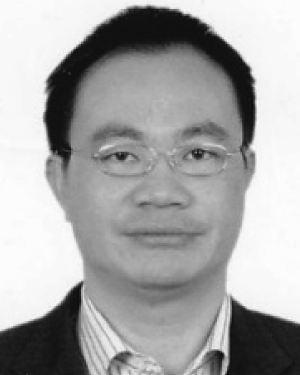 Jian-guo Du (杜建国)合作论文数22
 Rui Lu (卢锐)合作论文数20
 Abdellah Bnouhachem合作论文数19
 Qian Li (李迁)合作论文数School of Management and Engineering, Nanjing University19Jianbo Zhu合作论文数18
 Jing Zhou (周晶)合作论文数School of Management and Engineering, Nanjing University18
 Shuai Jin合作论文数17
 Qianqian Shi (时茜茜)合作论文数College of Economics and Management, Nanjing University of Aeronautics and Astronautics17
 Muhammad Aslam Noor合作论文数Department of Mathematics, COMSATS University Islamabad17
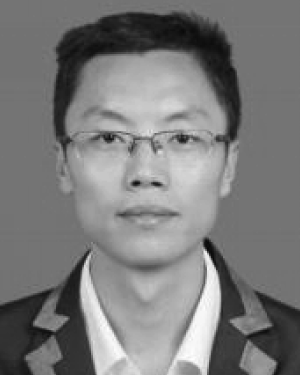 Qingfeng Meng合作论文数16Feng Xu (徐峰)合作论文数School of Management and Engineering, Nanjing University16
 Guohua Chen (陈国华)合作论文数School of Management & Engineering, Nanjing University16
 Shuping Cheng (程书萍)合作论文数School of Management and Engineering, Nanjing University14Wei-dong ZHAO (赵卫东)合作论文数13Sha Tao (陶莎)合作论文数School of Management and Engineering, Nanjing University13QiLong Cao (曹启龙)合作论文数12
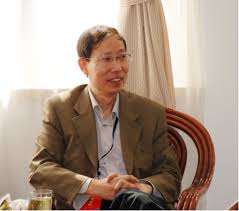 Jianmin He (何建敏)合作论文数School of Economics and Management, Southeast University12
 Lindu Zhao (赵林度)合作论文数School of Economics & Management, Southeast University12Mohamed Khalfaoui合作论文数11
 Junhai Ma (马军海)合作论文数College of Management and Economics, Tianjin University10
 Zhihua Hu (胡志华)合作论文数Institute of Logistics Science and Engineering, Shanghai Maritime University9ChuanQin Zhang (张传芹)合作论文数9
 Ru Liang (梁茹)合作论文数School of Management, Shanghai University9
 Xiangyu Wang合作论文数School of Design and the Built Environment, Faculty of Humanities, Curtin University9Yucheng Wan (万玉成)合作论文数8GuangMou Wu (吴广谋)合作论文数8
 Xiang Ding (丁翔)合作论文数School of Government, Nanjing University8Hongxing Yao合作论文数8
 Huimin Liu (刘慧敏)合作论文数School of Management and Engineering, Nanjing University7
 Jiabao Zhao (赵佳宝)合作论文数School of Management and Engineering, Nanjing University7
 Zhen Li合作论文数6
 Yunzhang Hou (侯云章)合作论文数6BingXiang Liu (柳炳祥)合作论文数6
 Xuezhong Chen (陈学中)合作论文数济南大学6
 Changzhi Wu合作论文数6Xiangjing Tao (陶向京)合作论文数5Lihu Wang合作论文数5
 Jinwen Zhang合作论文数5JiNing Wang (王冀宁)合作论文数5Yu Li (李煜)合作论文数5
 Jing Li (李静)合作论文数College of Information Management, Nanjing Agricultural University5
 Kuiran Shi (石岿然)合作论文数School of Finance, Nanjing Audit University5Xu Nanrong合作论文数5Hairui Wei合作论文数5
 Xindan Li (李心丹)合作论文数School of Management and Engineering, Nanjing University5Depeng Jiang (蒋德鹏)合作论文数4




