The history of the observatory formation, its main instruments and the stages of their modernization are briefly described. Some of the most striking results obtained with these radio telescopes are listed.
A hardware–software system with two-channel digital receiver and a set of programs is developed and tested to record very short sporadic bursts which can arise, in particular, when extremely high-energy cosmic rays interact with the Moon. The recording system, preprocessing data scheme, and examples of short bursts recorded by the LPA of the Lebedev Physical Institute are briefly described.
Comparison is carried out of the long term variation of the year averaged solar wind speed and interplanetary scintillation index with the variations of Wolf's numbers and A_P indexes of geomagnetic activity for the data of 20-24 solar activity cycles. It is shown that the slow non-monotonous trend in the scintillation parameters at middle and high heliolatitudes exists with the typical scale of order of century cycle. Correlation between the variations of Wolf's numbers and anomalies of the air temperature is analyzed for long data series from 1610 up to the present time. Possible application of the results to the global climate problem is discussed.
According to the data on the 20–24 solar activity cycles, long-term variations in the annual average solar wind speed and interplanetary scintillation index are compared to Wolf number variations. It is shown that the scintillation parameters at mid- and high heliolatitudes exhibit a slow nonmonotonic trend with a characteristic scale of the order of the secular cycle. For long-term data series since 1610 to the present, the correlation of variations of Wolf numbers and air temperature anomalies is analyzed. The possible application of the results to the global climate problem is discussed.
Kardashev passed away on August 3, 2019 in Moscow. In the first decade after the Second World War, radio astronomy soared headlong onto the front line of studying the Universe. This was a complicated process in a far from simple periodÐeven the most successful astronomers, physicists, and engineers could not always keep pace with the rapidly transforming science. But it was much more difficult to take part directly in this development, to say nothing of being a driving force in the creation of this new area of astronomy, all the more one whose verbal description requires a logarithmic scale. Kardashev was precisely one of the key players in the formation of the young radio astronomy science and a ``person of truly logarithmic scale.'' Kardashev was born on April 25, 1932 in Moscow, where he lived with his parents only to the age of five. In 1937, at the height of Stalin's repressions, his father Semen Karlovich Brike, an employee in the Comintern and Central Committee of the VKP(b) (All-Union Communist Party (bolsheviks)) and the author of several books on economics, was arrested and executed as an `enemy of the people', and his mother Nina Nikolaevna Kardasheva, a graduate of higher courses for women, was arrested as the wife of an `enemy of the people' andwas sent to a camp for `familymembers of traitors of the motherland' and then exiled. Nikolai's younger sister died in the camp. Nikolai was dispatched to an orphanage, but his aunt, his mother's sister, managed to take him from there. Nikolai met hismother again only in 1954 after 17 years of separation when she was still in Murom in exile. From his early years, Kardashev was greatly interested in the natural sciences, especially in astronomy. He said that he first visited a planetarium at the age of six. It was a lecture about Giordano Bruno. When he was 12, he began attending a group of young astronomers at the Moscow Planetarium. Through all of his life, he remained committed to astronomy. In 1955, Kardashev graduated from the Astronomy Department of Mekhmat (Faculty of Mechanics and Mathematics) atMoscow StateUniversity (MSU).His student years coincided with the period of rapid transformation of astronomy into a science encompassing all wavelengths. In the USSR, this new nontraditional astronomy was focused on radio waves and attracted the young energetic astrophysicist Iosif Samuilovich Shklovsky, who became one of the world leaders in radio astronomy. The Mekhmat class at MSU attended by Kardashev was the first class where Shklovsky delivered lectures on radio astronomy. Kardashev was fascinated by the beauty of this new science and no less by Shklovsky's charisma and enthusiasm. During the following 30 years, until Shklovsky's death in 1985, the teacher and his student remained colleagues and close friends. In an interview that Kardashev gave already in the 21st century, he said that the most amazing event in his life was that he managed to study at MSU in the 1950s in spite of his familial `initial conditions'. In 1963, with Shklovsky as his advisor, Kardashev defended his candidate (PhD) thesis consisting of several topics. In one of them, he discussed the evolution of cosmic radio source spectra and demonstrated that the shape of the synchrotron radiation spectrum can be used to estimate the radio-source age. During the following several decades, Kardashev's analysis was the basis for theoretical studies of radio sources. In another section of the thesis, based on his paper published in 1959, Kardashev analyzed the phenomenon of recombination radio lines in detail. Their existence was confirmed by observations in the USSR and USA only several years later, in 1964±1966. In 1988,Kardashev together with colleagues from the Lebedev Physical Institute (FIAN) in Moscow, Pulkovo Observatory in Leningrad, and the Kharkov Institute of Radio Astronomy was awarded the USSR State Prize for the discovery of recombination radio lines. In 1965, Kardashev's brilliant candidate thesis was accepted as a doctoral thesis as an exception according to a decision of the Academic Council of the Sternberg Astronomical Institute (GAISh) made at a meeting in 1963. At approximately the same time, Kardashev published a paper where he described the behavior of themagnetic field of a collapsing star leading to the formation of a neutron star with a magnetic field up to 10 G. The pulsars in fact Uspekhi Fizicheskikh Nauk 190 (6) 669 ± 670 (2020) Translated by M V Tsaplina PERSONALIA PACS number: 01.60.+q
The scheme and components of a wide field-of-view meter-wavelength radio telescope prototype developed based on an antenna array consisting of 128 dipoles is described. The operating frequency range is 38–74 MHz. Main parameters of the future prototype are presented and versions of its development are discussed.
Results of 111-MHz monitoring observations carried out on the Big Scanning Antenna of the Pushchino Radio Astronomy Observatory during September 1–28, 2015 are presented. Fifty-four pulsating sources were detected at declinations −9° < δ < 42°. Forty-seven of these are known pulsars, five are new sources, and two are previously discovered transients. Estimates of the peak flux densities and dispersion measures are presented for all these sources.
The proposal to use ground based radio telescopes for detection of Askaryan radio pulses from particle cascades arising when extremely high-energy (EHE > 1020 eV) cosmic rays (including neutrinos) interact with the lunar regolith of multi gigaton mass was made at the end of 1980s in the framework of the Russian (Soviet) DUMAND Program. During more than a quarter of century a number of lunar experiments were carried out mainly in the 1–3 GHz frequency range using the large radio telescopes of Australia, USA, Russia and other countries but these experiments only put upper limits to the EHE cosmic rays fluxes. For this reason, it would be of great interest to search for nanosecond radio pulses from the Moon in a wider interval of frequencies (including lower ones of 100–350 MHz) with larger radio detectors – for example the giant radio telescope SKA (Square Kilometer Array) which is constructed in Australia, New Zealand and South Africa. In this paper possibilities are discussed to use one of the most sensitive meter-wavelength (∼ 110 MHz) Large Phased Array (LPA) of 187 × 384 m2 and the wide field of view meter-wavelength array of the Pushchino Radio Astronomy Observatory as prototypes of low frequency radio detectors for lunar experiments. The new scheme for fast simulation of ultrahigh and extremely high-energy cascades in dense media is also suggested. This scheme will be used later for calculations of radio emission of cascades in the lunar regolith with energies up to 1020 eV and higher in the wide frequency band of 0.1− a few GHz.
The lunar technique is a method for maximising the collection area for ultra-high-energy (UHE) cosmic ray and neutrino searches. The method uses either ground-based radio telescopes or lunar orbiters to search for Askaryan emission from particles cascading near the lunar surface. While experiments using the technique have made important advances in the detection of nanosecond-scale pulses, only at the very highest energies has the lunar technique achieved competitive limits. This is expected to change with the advent of the Square Kilometre Array (SKA), the low-frequency component of which (SKA-low) is predicted to be able to detect an unprecedented number of UHE cosmic rays.In this contribution, the status of lunar particle detection is reviewed, with particular attention paid to outstanding theoretical questions, and the technical challenges of using a giant radio array to search for nanosecond pulses. The activities of SKA’s High Energy Cosmic Particles Focus Group are described, as is a roadmap by which this group plans to incorporate this detection mode into SKA-low observations. Estimates for the sensitivity of SKA-low phases 1 and 2 to UHE particles are given, along with the achievable science goals with each stage. Prospects for near-future observations with other instruments are also described.
In the course of monitoring interplanetary scintillations of a large number of sources using the Big Scanning Antenna of the Lebedev Physical Institute, a search for pulsars with periods ≥0.4 s at declinations −9◦ < δ < 42◦ and right ascensions 0h < α < 24h was simultaneously carried out. The search was conducted using four years of observations carried out at 110.25MHz in six frequency channels making up a 2.5 MHz band and having a time resolution of 100 ms. The initial identification of pulsar candidates was done using Fourier power spectra averaged over the entire observational period; the pulsar candidates were then verified using observations with higher frequency and time resolution: 32 frequency channels and a time resolution of 12.5 ms. Eighteen new pulsars were discovered in the studied area, whose main characteristics are presented.
The lunar Askaryan technique is a method to study the highest-energy cosmic rays, and their predicted counterparts, the ultra-high-energy neutrinos.By observing the Moon with a radio telescope, and searching for the characteristic nanosecond-scale Askaryan pulses emitted when a high-energy particle interacts in the outer layers of the Moon, the visible lunar surface can be used as a detection area.Several previous experiments, at Parkes, Goldstone, Kalyazin, Westerbork, the ATCA, Lovell, LOFAR, and the VLA, have developed the necessary techniques to search for these pulses, but existing instruments have lacked the necessary sensitivity to detect the known flux of cosmic rays from such a distance.This will change with the advent of the SKA.The Square Kilometre Array (SKA) will be the world's most powerful radio telescope.To be built in southern Africa, Australia and New Zealand during the next decade, it will have an unsurpassed sensitivity over the key 100 MHz to few-GHZ band.We introduce a planned experiment to use the SKA to observe the highest-energy cosmic rays and, potentially, neutrinos.The estimated event rate will be presented, along with the predicted energy and directional resolution.Prospects for directional studies with phase 1 of the SKA will be discussed, as will the major technical challenges to be overcome to make full use of this powerful instrument.Finally, we show how phase 2 of the SKA could provide a vast increase in the number of detected cosmic rays at the highest energies, and thus to provide new insight into their spectrum and origin.
The design properties and technical characteristics of the upgraded Large Phased Array (LPA) are briefly described. The results of an annual cycle of observations of interplanetary scintillations of radio sources on the LPA with the new 96-beam BEAM 3 system are presented. Within a day, about 5000 radio sources displaying second-timescale fluctuations in their flux densities due to interplanetary scintillations were observed. At present, the parameters of many of these radio sources are unknown. Therefore, the number of sources with root-mean-square flux-density fluctuations greater than 0.2 Jy in a 3° × 3° area of sky was used to characterize the scintillation level. The observational data obtained during the period of the maximum of solar cycle 24 can be interpreted using a three-component model for the spatial structure of the solar wind, consisting of a stable global component, propagating disturbances, and corotating structures. The global component corresponds to the spherically symmetric structure of the distribution of the turbulent interplanetary plasma. Disturbances propagating from the Sun are observed against the background of the global structure. Propagating disturbances recorded at heliocentric distances of 0.4–1 AU and at all heliolatitudes reach the Earth’s orbit one to two days after the scintillation enhancement. Enhancements of ionospheric scintillations are observed during night-time. Corotating disturbances have a recurrence period of 27 d . Disturbances of the ionosphere are observed as the coronal base of a corotating structure approaches the western edge of the solar limb.
The lunar Askaryan technique, which involves searching for Askaryan radio pulses from particle cascades in the outer layers of the Moon, is a method for using the lunar surface as an extremely large detector of ultra-high-energy particles. The high time resolution required to detect these pulses, which have a duration of around a nanosecond, puts this technique in a regime quite different from other forms of radio astronomy, with a unique set of associated technical challenges which have been addressed in a series of experiments by various groups. Implementing the methods and techniques developed by these groups for detecting lunar Askaryan pulses will be important for a future experiment with the Square Kilometre Array (SKA), which is expected to have sufficient sensitivity to allow the first positive detection using this technique. Key issues include correction for ionospheric dispersion, beamforming, efficient triggering, and the exclusion of spurious events from radio-frequency interference. We review the progress in each of these areas, and consider the further progress expected for future application with the SKA.
The origin of the most energetic particles in nature, the ultra-high-energy (UHE) cosmic rays, is still a mystery. Only the most energetic of these have sufficiently small angular deflections to be used for directional studies, and their flux is so low that even the 3,000 km^2 Pierre Auger detector registers only about 30 cosmic rays per year of these energies. A method to provide an even larger aperture is to use the lunar Askaryan technique, in which ground-based radio telescopes search for the nanosecond radio flashes produced when a cosmic ray interacts with the Moon's surface. The technique is also sensitive to UHE neutrinos, which may be produced in the decays of topological defects from the early universe. Observations with existing radio telescopes have shown that this technique is technically feasible, and established the required procedure: the radio signal should be searched for pulses in real time, compensating for ionospheric dispersion and filtering out local radio interference, and candidate events stored for later analysis. For the Square Kilometre Array (SKA), this requires the formation of multiple tied-array beams, with high time resolution, covering the Moon, with either SKA1-LOW or SKA1-MID. With its large collecting area and broad bandwidth, the SKA will be able to detect the known flux of UHE cosmic rays using the visible lunar surface - millions of square km - as the detector, providing sufficient detections of these extremely rare particles to address the mystery of their origin.
C. W. James∗1, J. Alvarez-Muñiz2, J.D. Bray3, S. Buitink4, R.D. Dagkesamanskii5, R.D. Ekers6, H. Falcke7,8, K.G. Gayley9, T. Huege10, M. Mevius11, R.L. Mutel9, R.J. Protheroe12, O. Scholten4,11, R.E. Spencer3, and S. ter Veen7 1Univ. of Erlangen-Nuremberg; 2Univ. de Santiago de Compostela; 3Univ. of Manchester; 4Vrije Univ. Brussel5Lebedev Physical Institute; 6CSIRO ATNF; 7Radboud Univ. Nijmegen; 8ASTRON; 9Univ. of Iowa; 10KIT; 11Univ. of Groningen; 12Univ. of Adelaide E-mail: clancy.james@physik.uni-erlangen.de
 I. M. Zheleznykh合作论文数8V. A. Samodurov合作论文数LPI Astro Space Centre8V. V. Oreshko合作论文数8I. V. Chashei合作论文数7
 C. W. James合作论文数Curtin University6
 Tim Huege合作论文数Institute for Astroparticle Physics, Karlsruhe Institute of Technology;Faculty of Sciences and Bioengineering Sciences, Vrije Universiteit Brussel6V. I. Shishov合作论文数6
 Olaf Scholten合作论文数KVI, University of Groningen6
 Justin Bray合作论文数Jodrell Bank Centre for Astrophysics, The University of Manchester;Department of Physics and Astronomy, The University of Manchester6
 S. V. Logvinenko合作论文数6Yu. V. Volodin合作论文数6
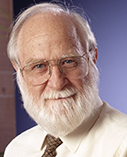 Ron Ekers合作论文数Australia Telescope National Facility, CSIRO Astronomy & Space Science6S. Ter Veen合作论文数6
 Stijn Buitink合作论文数Vrije Universiteit Brussel6Sergey A. Tyul'Bashev合作论文数6Raymond John Protheroe合作论文数Department of Physics and Mathematical Physics, The University of Adelaide5M. Mevius合作论文数DESY, Deutsches Elektronen-Synchrotron DESY5
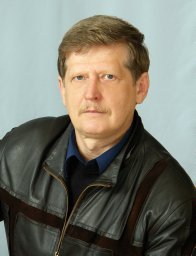 V. A. Kovalenko合作论文数Academy of Sciences of Czech Republic Astronomical Institute5
 Heino Falcke合作论文数Radboud University5Nikolay S Kardashev合作论文数5Юрий Юрьевич Балега合作论文数4С. А. Тюльбашев合作论文数4r l mutel合作论文数4A. G. Gubanov合作论文数4
 K. I. Kellermann合作论文数National Radio Astronomy Observatory4Valerii M Malofeev合作论文数4Kenneth G Gayley合作论文数4
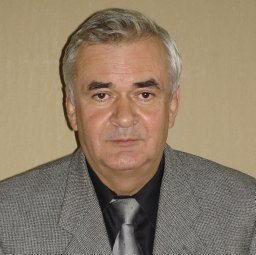 A. A. Konovalenko合作论文数Low-Frequency Radio Astronomy Division, Institute of Radio Astronomy, National Academy of Sciences of Ukraine4J. Álvarez-Muñiz合作论文数3л н литвиненко合作论文数3
 Ralph E. Spencer合作论文数3Vyacheslav I. Slysh合作论文数3Anatolii M. Cherepashchuk合作论文数3K. A. Lapaev合作论文数3B. K. Izvekov合作论文数3
 Gennadii Andreevich Mesyats合作论文数Lebedev Physical Institute, Russian Academy of Sciences3Vadim S Artyukh合作论文数3Yu. P. Ilyasov合作论文数3V. A. Frolov合作论文数3А. М. Кутькин合作论文数2V. S. Tyul’bashev合作论文数2В. С. Тюльбашев合作论文数2игорь дмитриевич новиков合作论文数2s a sukhodolskii合作论文数2a s gvamichava合作论文数2V. M. Rozhkov合作论文数2A. A. Chuprikov合作论文数2А. И. Чернышова合作论文数2K. G. Belousov合作论文数2




