We report the discovery of a relativistic jet in Mrk 110, a narrow-line Seyfert 1 galaxy historically classified as a radio-quiet active galactic nucleus (AGN). Very Long Baseline Interferometry (VLBI) observations reveal intermittent jet activity during 2015–2016 and 2022–2024, with proper motion measurements yielding superluminal velocities of ∼3.6±0.6 c and ∼2.1±0.2 c, respectively. The recent jet component decelerates to ∼ 1.5±0.2 c at a projected distance of 1.1 parsec from the core, coinciding with the transition zone between broad-line and narrow-line regions. This deceleration accompanies dramatic spectral evolution from steep (the spectral index α≈ -0.63 ± 0.04) to inverted (α≈ +0.69 ± 0.10) as the 7.6 GHz flux density more than doubled. These episodic jet ejections and their evolutionary pattern match theoretical predictions from magnetically arrested disk (MAD) models for temporary jet formation in systems with Mrk 110's physical parameters on timescales of months to years. The observed jet deceleration distance matches expectations for relativistic outflows interacting with the circumnuclear environment. These findings demonstrate that the traditional radio-loud/quiet AGN dichotomy may reflect time-averaged states rather than intrinsic capabilities, suggesting that jets may form across the AGN population but become observable only during specific accretion phases when MAD conditions are temporarily established. Mrk 110 serves as a critical "missing link" between radio-loud and radio-quiet AGN, providing insight into jet formation mechanisms, environmental interactions, and physical processes that unify various AGN classifications.
Until Karl Jansky's 1933 discovery of radio noise from the Milky Way, astronomy was limited to observation by visible light. Radio astronomy opened a new window on the Universe, leading to the discovery of quasars, pulsars, the cosmic microwave background, electrical storms on Jupiter, the first extrasolar planets, and many other unexpected and unanticipated phenomena. Theory generally played little or no role – or even pointed in the wrong direction. Some discoveries came as a result of military or industrial activities, some from academic research intended for other purposes, some from simply looking with a new technique. Often it was the right person, in the right place, at the right time, doing the right thing – or sometimes the wrong thing. Star Noise tells the story of these discoveries, the men and women who made them, the circumstances which enabled them, and the surprising ways in which real-life scientific research works.
I review the scientific and technical history of the Search for Extraterrestrial Intelligence (SETI), discuss the impact of the political involvement, and speculate on the nature of a successful detection and its potential social and cultural impact. Emphasis is on the development of SETI in the United States and the complementary progress in the Former Soviet Union.
M. L. Lister , D. C. Homan , K. I. Kellermann , Y. Y. Kovalev , A. B. Pushkarev , E. Ros , and T. Savolainen 1 Department of Physics and Astronomy, Purdue University, 525 Northwestern Avenue, West Lafayette, IN 47907, USA 2 Department of Physics, Denison University, Granville, OH 43023, USA 3 National Radio Astronomy Observatory, 520 Edgemont Road, Charlottesville, VA 22903, USA 4 Astro Space Center of Lebedev Physical Institute, Profsoyuznaya 84/32, 117997 Moscow, Russia 5 Moscow Institute of Physics and Technology, Institutsky per. 9, Dolgoprudny, Moscow region, 141700, Russia 6 Max-Planck-Institut für Radioastronomie, Auf dem Hügel 69, D-53121 Bonn, Germany 7 Crimean Astrophysical Observatory, 98409 Nauchny, Crimea, Russia 8 Aalto University Department of Electronics and Nanoengineering, PL 15500, FI-00076 Aalto, Finland 9 Aalto University Metsähovi Radio Observatory, Metsähovintie 114, FI-02540 Kylmälä, Finland; mlister@purdue.edu Received 2023 April 18; published 2023 May 24
We present multi-epoch, parsec-scale core brightness temperature observations of 447 AGN jets from the MOJAVE and 2cm Survey programs at 15 GHz from 1994 to 2019. The brightness temperature of each jet over time is characterized by its median value and variability. We find that the range of median brightness temperatures for AGN jets in our sample is much larger than the variations within individual jets, consistent with Doppler boosting being the primary difference between the brightness temperatures of jets in their median state. We combine the observed median brightness temperatures with apparent jet speed measurements to find the typical intrinsic Gaussian brightness temperature of (4.1 +- 0.6)*10^10 K, suggesting that jet cores are at or below equipartition between particle and magnetic field energy in their median state. We use this value to derive estimates for the Doppler factor for every source in our sample. For the 309 jets with both apparent speed and brightness temperature data, we estimate their Lorentz factors and viewing angles to the line of sight. Within the BL Lac optical class, we find that high-synchrotron-peaked (HSP) BL Lacs have smaller Doppler factors, lower Lorentz factors, and larger angles to the line of sight than intermediate and low-synchrotron-peaked (LSP) BL Lacs. We confirm that AGN jets with larger Doppler factors measured in their parsec-scale radio cores are more likely to be detected in gamma rays, and we find a strong correlation between gamma-ray luminosity and Doppler factor for the detected sources.
We have analyzed the parsec-scale jet kinematics of 447 bright radio-loud active active galactic nuclei (AGN), based on 15 GHz Very Long Baseline Array (VLBA) data obtained between 1994 August 31 and 2019 August 4. We present new total intensity and linear polarization maps obtained between 2017 January 1 and 2019 August 4 for 143 of these AGN. We tracked 1923 bright features for five or more epochs in 419 jets. The majority (60%) of the well-sampled jet features show either accelerated or nonradial motion. In 47 jets there is at least one nonaccelerating feature with an unusually slow apparent speed. Most of the jets show variations of 10°–50° in their inner jet position angle (PA) over time, although the overall distribution has a continuous tail out to 200°. AGN with spectral energy distributions peaked at lower frequencies tend to have more variable PAs, with BL Lac objects being less variable than quasars. The Fermi Large Area Telescope (LAT) gamma-ray-associated AGN also tend to have more variable PAs than the non-LAT AGN in our sample. We attribute these trends to smaller viewing angles for the lower spectral peaked and LAT-associated jets. We identified 13 AGN where multiple features emerge over decade-long periods at systematically increasing or decreasing PAs. Since the ejected features do not fill the entire jet cross section, this behavior is indicative of a precessing flow instability near the jet base. Although some jets show indications of oscillatory PA evolution, we claim no bona fide cases of periodicity since the fitted periods are comparable to the total VLBA time coverage.
A number of corrections were unfortunately missed during the proofing and correction process. The version supplied here has been updated.
AbstractBy the early 1950s the US Department of Defense, especially the Navy, and the newly created National Science Foundation (NSF) began to play a major role in American science, especially in astronomy. Meanwhile, Associated Universities, Inc. (AUI), which founded and operated the Brookhaven National Laboratory, was looking for new business. During these Cold War times, the United States could not afford to fall behind in the exciting and rapidly developing new area of radio astronomy. Caltech, MIT, Harvard, and Naval Research Laboratory scientists discussed how to get the United States more involved in this emerging field that had clear commercial and military applications as well as extraordinary opportunities for basic research. Two key conferences held at the end of 1953 and the start of 1954 provided the catalyst for an NSF-funded feasibility study aimed toward the goal of establishing a national radio astronomy facility.
AbstractIn April 1933, at a small gathering at a meeting of the US National Committee of the International Scientific Radio Union (URSI), Bell Labs scientist Karl Guthe Jansky announced that he had detected 20.5 MHz (14.6 m) radio emission from the Milky Way. Jansky used a novel directional antenna based on an invention by AT&T Bell Labs colleague, Edmond Bruce, that rotated every 20 minutes to determine the direction and source of the interfering noise that was plaguing the telephone company. Jansky’s remarkable discovery of what he called “star noise” was widely publicized in the media, but had little immediate impact in the astronomical community, as astronomers, who typically had little background in electronics or radio, saw no relation to their own work.
AbstractFollowing the inauspicious experience with the 140 Foot Telescope, NRAO apparently learned to manage big projects. The VLA and VLBA were built on schedule and on budget. But the Green Bank Telescope project was funded before the design was complete and was prematurely rushed into construction with unfortunate consequences to the cost and schedule. However, by the beginning of the twenty-first century NRAO was operating the most powerful radio telescopes in the world, the VLA, the VLBA, and the GBT, and had become the acknowledged leader in the evolution of radio astronomy from a technique to an astronomical-based science. As radio telescopes became more sophisticated and computer-aided, observations and reduction became more automated; radio astronomers evolved from experimenters to observers to data analysts. By the turn of the century, the traditional breed of radio astronomers was disappearing. NRAO users often no longer participated in the observing, and with the start of ALMA observations in 2011, often did not even participate in the planning of the observations or the reduction of data.
AbstractDuring the Second World War, a number of radar scientists independently discovered powerful radio emission from the Sun. Following the cessation of hostilities, and making use of their wartime experience, scientists, mostly at Jodrell Bank and Cambridge in the UK and in Sydney, Australia, used discarded radar systems to further investigate the complex solar radio emission, discovered powerful radio emission from old supernova explosions, and even more powerful radio sources from what later became known as radio galaxies. Encouraged by their early successes with relatively primitive equipment and the potential for new discoveries, scientists in the UK, Australia, the USSR, and the Netherlands developed plans to build more powerful radio telescopes and sophisticated new instrumentation.
AbstractFrom the very earliest stages, planning for NRAO included the construction of a very large fully steerable radio telescope with a diameter up to 1000 foot. However, following the 140 Foot debacle, there was no support for funding such an ambitious and risky construction program. After the construction of the 300 Foot Transit Telescope with its limited capabilities, NRAO initiated the Largest Fully Steerable Telescope (LFST) program to design and potentially construct a very large fully steerable radio telescope. The LFST team produced a series of designs for a 300 foot antenna capable of working at 1 cm wavelength, a 64 meter antenna working to 3 mm wavelength, and finally a 25 meter telescope working to 1 mm wavelength, but none of them were ever built. Although every review of the needs of radio astronomy supported the construction of a large fully steerable radio telescope, there was always a higher priority—the VLA, the VLBA, and most recently ALMA. In 1988, an NSF review committee recommended that the 27-year-old NRAO 300 Foot Transit Telescope be closed in order to provide funds for operating other new astronomical facilities. However, when the 300 Foot Telescope unexpectedly collapsed in November 1988, it was reported in the media as a national disaster for U.S. astronomy. West Virginia’s Senator Robert Byrd demanded that the telescope be replaced. Although the NSF had other plans, Byrd included $75M in the 1989 Emergency Supplemental Appropriations Bill. The new 100 meter Green Bank Telescope would not be completed until the year 2000, and only after contentious litigation as to who was responsible for the delays and nearly factor of two increase in cost.
This open access book on the development of radio astronomy in the U.S.A. gives particular attention to the people and institutions involved. It used the institutional records of NRAO as well as the personal papers of many of the pioneers of U.S. American radio astronomy.
We present the results from the 43 GHz Very Long Baseline Array (VLBA) observations of 124 compact radio-loud active galactic nuclei (AGNs) that were conducted between 2014 November and 2016 May. The typical dimensions of the restoring beam in each image are about 0.5 mas x 0.2 mas. The highest resolution of 0.2 mas corresponds to a physical size of 0.02 pc for the lowest redshift source in the sample. The 43 GHz very long baseline interferometry (VLBI) images of 97 AGNs are presented for the first time. We study the source compactness on milliarcsecond and submilliarcsecond scales, and suggest that 95 sources in our sample are suitable for future space VLBI observations. By analyzing our data supplemented with other VLBA AGN surveys from the literature, we find that the core brightness temperature increases with increasing frequency below a break frequency similar to 7 GHz, and decreases between similar to 7 and 240 GHz but increases again above 240 GHz in the rest frame of the sources. This indicates that the synchrotron opacity changes from optically thick to thin. We also find a strong statistical correlation between radio and gamma-ray flux densities. Our correlation is tighter than those in the literature derived from lower-frequency VLBI data, suggesting that the gamma-ray emission is produced more cospatially with the 43 GHz VLBA core emission. This correlation can also be extrapolated to the unbeamed AGN population, implying that a universal gamma-ray production mechanism might be at work for all types of AGNs.
Kardashev passed away on August 3, 2019 in Moscow. In the first decade after the Second World War, radio astronomy soared headlong onto the front line of studying the Universe. This was a complicated process in a far from simple periodÐeven the most successful astronomers, physicists, and engineers could not always keep pace with the rapidly transforming science. But it was much more difficult to take part directly in this development, to say nothing of being a driving force in the creation of this new area of astronomy, all the more one whose verbal description requires a logarithmic scale. Kardashev was precisely one of the key players in the formation of the young radio astronomy science and a ``person of truly logarithmic scale.'' Kardashev was born on April 25, 1932 in Moscow, where he lived with his parents only to the age of five. In 1937, at the height of Stalin's repressions, his father Semen Karlovich Brike, an employee in the Comintern and Central Committee of the VKP(b) (All-Union Communist Party (bolsheviks)) and the author of several books on economics, was arrested and executed as an `enemy of the people', and his mother Nina Nikolaevna Kardasheva, a graduate of higher courses for women, was arrested as the wife of an `enemy of the people' andwas sent to a camp for `familymembers of traitors of the motherland' and then exiled. Nikolai's younger sister died in the camp. Nikolai was dispatched to an orphanage, but his aunt, his mother's sister, managed to take him from there. Nikolai met hismother again only in 1954 after 17 years of separation when she was still in Murom in exile. From his early years, Kardashev was greatly interested in the natural sciences, especially in astronomy. He said that he first visited a planetarium at the age of six. It was a lecture about Giordano Bruno. When he was 12, he began attending a group of young astronomers at the Moscow Planetarium. Through all of his life, he remained committed to astronomy. In 1955, Kardashev graduated from the Astronomy Department of Mekhmat (Faculty of Mechanics and Mathematics) atMoscow StateUniversity (MSU).His student years coincided with the period of rapid transformation of astronomy into a science encompassing all wavelengths. In the USSR, this new nontraditional astronomy was focused on radio waves and attracted the young energetic astrophysicist Iosif Samuilovich Shklovsky, who became one of the world leaders in radio astronomy. The Mekhmat class at MSU attended by Kardashev was the first class where Shklovsky delivered lectures on radio astronomy. Kardashev was fascinated by the beauty of this new science and no less by Shklovsky's charisma and enthusiasm. During the following 30 years, until Shklovsky's death in 1985, the teacher and his student remained colleagues and close friends. In an interview that Kardashev gave already in the 21st century, he said that the most amazing event in his life was that he managed to study at MSU in the 1950s in spite of his familial `initial conditions'. In 1963, with Shklovsky as his advisor, Kardashev defended his candidate (PhD) thesis consisting of several topics. In one of them, he discussed the evolution of cosmic radio source spectra and demonstrated that the shape of the synchrotron radiation spectrum can be used to estimate the radio-source age. During the following several decades, Kardashev's analysis was the basis for theoretical studies of radio sources. In another section of the thesis, based on his paper published in 1959, Kardashev analyzed the phenomenon of recombination radio lines in detail. Their existence was confirmed by observations in the USSR and USA only several years later, in 1964±1966. In 1988,Kardashev together with colleagues from the Lebedev Physical Institute (FIAN) in Moscow, Pulkovo Observatory in Leningrad, and the Kharkov Institute of Radio Astronomy was awarded the USSR State Prize for the discovery of recombination radio lines. In 1965, Kardashev's brilliant candidate thesis was accepted as a doctoral thesis as an exception according to a decision of the Academic Council of the Sternberg Astronomical Institute (GAISh) made at a meeting in 1963. At approximately the same time, Kardashev published a paper where he described the behavior of themagnetic field of a collapsing star leading to the formation of a neutron star with a magnetic field up to 10 G. The pulsars in fact Uspekhi Fizicheskikh Nauk 190 (6) 669 ± 670 (2020) Translated by M V Tsaplina PERSONALIA PACS number: 01.60.+q
AbstractIn 1962, Frank Drake recruited Texas Instruments physicist Frank Low to come to Green Bank to develop bolometer receiver systems for use at millimeter wavelengths. Under Low’s leadership, NRAO contracted with the Rohr Corporation to manufacture a 36 Foot Telescope designed for use at wavelengths as short as 1 mm. To minimize the effects of tropospheric water vapor, NRAO located the telescope at the Kitt Peak National Observatory near Tucson, Arizona. Fabrication errors led to long delays, and before the 36 Foot Telescope was finished, Low left NRAO to join the University of Arizona, where he could pursue his interests in infrared astronomy. Low’s bolometers never reached the anticipated sensitivity at 1 mm, and manufacturing errors limited the performance of the 36 Foot dish. However, the unanticipated discovery of powerful 2.6 mm radio emission from interstellar carbon monoxide (CO), and later from other molecular species, led to a greatly increased interest in millimeter astronomy. Despite many technical and administrative concerns, the 36 Foot Telescope became the most oversubscribed NRAO telescope. In 1983, NRAO replaced the faulty 36 Foot dish with a more precise 12 Meter surface. Arguably, the 36 Foot/12 Meter telescope became the most productive instrument in the world for millimeter spectroscopy until it was eclipsed by more powerful facilities both in the US and abroad.
AbstractStarting in 1961, NRAO scientists began the process of designing a radio telescope that could make images with an angular resolution comparable to the best optical telescopes operating from a good mountain site. In 1967, the Observatory submitted a proposal to the National Science Foundation (NSF) for the construction of the Very Large Array (VLA). The VLA proposal was for 36, later reduced to 27, fully steerable 25 meter diameter antennas spread over an area some 35 km in diameter. However, there was a competing, much simpler and much cheaper proposal from Caltech for an 8 element array of 130 foot dishes. Several NSF review committees praised the VLA concept but indicated that it was too ambitious, and recommended that NRAO further study the VLA design, and that construction of the Caltech array should begin immediately. Following a confrontational battle among proponents of the NRAO and Caltech arrays, as well as a competing proposal for a 440 foot radome-enclosed antenna proposed by an MIT-Harvard led consortium, support of the VLA by the 1970 National Academy decadal review of astronomy led to approval of its construction.
AbstractBeginning in the 1950s radio interferometers and arrays of antennas were connected by cable, waveguide, or radio links separated by up to a hundred kilometers or more. Starting in 1967, radio astronomers in the US and Canada began to experiment with independent local oscillators and broad band tape recorders to record data collected by widely separated antennas, a technique which came to be known as Very Long Baseline Interferometry or VLBI. Using radio telescopes spread throughout the United States, Australia, and Europe, VLBI baselines were increased to thousands of kilometers, and ultimately to space, with baselines ranging out to hundreds of thousands of kilometers.
The search for the director of NRAO turned out to be unexpectedly difficult, as various astronomers turned down offers, citing the remoteness of the Green Bank site and the need to give up their own research programs. Finally, in 1959, Otto Struve, a distinguished optical astronomer and member of AUI’s Search Committee, agreed to take on the job. But in 1961 both he and AUI President Lloyd Berkner resigned. I.I. Rabi, the new AUI President, appointed Australian Joe Pawsey as NRAO director, but due to a fatal illness he never served, and in 1962, Dave Heeschen became the new NRAO Director.
 Eugen Preuss合作论文数38
 Ed Fomalont合作论文数National Radio Astronomy Observatory36
 Matthew L. Lister合作论文数Department of Physics and Astronomy, Purdue University36
 J. Anton Zensus合作论文数Max Planck Institute for Radio Astronomy;Universität zu Köln29D. B. Shaffer合作论文数28I. I. K. Pauliny-Toth合作论文数28R. C. Vermeulen合作论文数28D. C. Homan合作论文数27YY Kovalev合作论文数26
 Eduardo Ros合作论文数Departamento de Astronomía y Astrofísica, University of Valencia25A. Witzel合作论文数24R. T. Schilizzi合作论文数23Paolo Tozzi 合作论文数Osservatorio Astrofisico di Arcetri22
 Paolo Padovani合作论文数European Extremely Large Telescope Science Office, European Southern Observatory20Walter Alef合作论文数20Iik Paulinytoth合作论文数18Marshall H. Cohen合作论文数California Institute of Technology18
 Jasper Wall合作论文数17M. H. Cohen合作论文数California Institute of Technology, Pasadena, California 9110916
 Vincenzo Mainieri合作论文数Directorate for Science, European Southern Observatory16
 Piero Rosati合作论文数Department of Physics and Earth Sciences, University of Ferrara16David L Jauncey合作论文数16
 Matthias Kadler合作论文数Max-Planck-Institut fur Radioastronomie16
 Neal Miller合作论文数Fine School of the Sciences, Stevenson University16d b shaffer合作论文数14
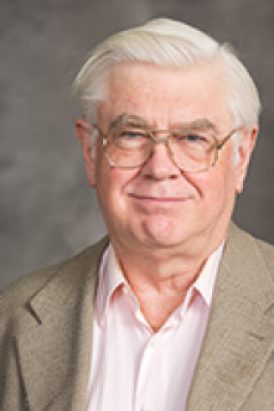 Hugh Aller合作论文数Michigan Institute for Research in Astrophysics, College of Literature, Science, and the Arts, University of Michigan;Department of Astronomy, University of Michigan14
 Margo F. Aller合作论文数Michigan Institute for Research in Astrophysics, College of Literature, Science, and the Arts, University of Michigan-Ann Arbor14Brenda G Clark合作论文数14Jonathan D Romney合作论文数14
 Rogier Windhorst合作论文数School of Earth and Space Exploration, Arizona State University13
 Sándor Frey合作论文数Konkoly Observatory, Research Centre for Astronomy and Earth Sciences12
 Leonid Gurvits合作论文数Department of Space Engineering, Faculty of Aerospace Engineering, Delft University of Technology11
 Peter Wilkinson合作论文数11John J Broderick合作论文数11Alan T Moffet合作论文数11Eric a Richards合作论文数11Alexander B. Pushkarev合作论文数MPIfR11
 Kostenko Vladimir合作论文数11
 Carole A. Jackson合作论文数Australia Telescope National Facility10
 Isobel Hook合作论文数ESO10Margherita Bonzini合作论文数9J. L. Yen合作论文数9
 Andrei Lobanov合作论文数Division of Radio Astronomy, Max-Planck-Institut für Radioastronomie9I. G. Moiseev合作论文数9Richard Perley合作论文数National Radio Astronomy Observatory9Lr Kogan合作论文数8
 Jonathan D. Romney合作论文数8James J. Condon合作论文数National Radio Astronomy Observatory8




