The topic of the article is the problem of “understanding” the Soviet society, interpreted, however, not in line with the so-called “understanding sociology”, but from the point of view of a “portrait” approach to describing particular societies, that allows to identify their characterological features and specifics. On the basis of the complementarity principle formulated by N. Bohr, methodological issues of implementing such an approach are considered, mainly in terms of integrating discourses and languages for describing social reality. As a starting point of the characterological model of a particular society, the article proposes to take its dominant motivations and the sociocultural environment that supports them. For this purpose the concept of a motivating environment of society is introduced. The social nature of the Soviet society is being characterised on the basis of a comparison of sociological research materials, statistical data, assessments of prominent Soviet figures and judgments of "ordinary Soviet people", as well as the author´s own observations. Based on the analysis of these materials, the author proves that the system-forming motivations of the Soviet everyday life are in fact bourgeois in nature. At the same time, against the general background of bourgeois modernity, the Soviet society stood out for its special characterological features, successively associated with the sociocultural trends of the last decades of the existence of the Russian Empire and the peculiarities of the Russian model of educational modernisation. First of all, it is the attitude to education and erudition, that we perceived not as instrumental, but as terminal values. Tracing the dynamics of the intellectual and spiritual needs of the Russian society over long historical intervals, the author considers the formation of such an attitude towards education as a cultural revolution. At the same time, the article substantiates a fundamentally new interpretation of the cultural revolution, that supports the idea that the beginning of the cultural revolution preceded the political revolutions of 1905 and 1917. The attitude to education as a terminal value largely determined the logic of the internal evolution of the Soviet society, during which specific forms of sociality developed in the USSR, that authors propose to define as the society of education.
The article considers some correlations between the idea of the university and its real social functions. It also suggests some assumptions concerning the evolution of the universities in future.
Анализируются основные положения книги, которая привлечет внимание читателей возможностью составить целостное представление о динамике развития исследований общественного мнения в России, новых методологических подходах, вкладе аналитиков ВЦИОМ в эффективность принятия политических решений. Авторы выделяют главное достоинство монографии — детальный анализ истории ВЦИОМ как эффективной организации через призму исторических задач, стоящих перед российским обществом. В рецензии на широком материале социологических архивов рассматриваются основные направления деятельности ВЦИОМ — замеры общественного мнения, аналитические исследования, политическое консультирование, издательская деятельность, образовательные и научные проекты.
The paper focuses on the topical problems of teaching history and the standards of historical education in higher school and ponders over the role of historical component in training specialist of different spheres. These problems are treated through the prism of formation of creative intellectual environments.
What is the current assessment of the comparative significance of historical events in the mass consciousness of Russians? From what sources do our compatriots draw their knowledge about the past of the country? Can one talk about "good" and "bad" eras in the development of Russia? Based on the materials of empirical research, the author of this article undertakes an attempt to analyze the dynamics of features characteristic of the historical consciousness of Russian society. In his opinion, the transformation of people's ideas about the historical path of the country can be considered as one of the analytical tools for early diagnostics of the changes simmering in society. In addition, a conclusion is formulated that Russian society demonstrates an expressed demand for the elaboration of stable historical reference points and interpretations, a certain unified historical narrative.
This is an article on the phenomenon of strategic partnership, which is understood to be a special type of geopolitical and geo-economic cooperation, which, in the author’s opinion, might become a fundamental element of the current globalized world’s composition in the very near future. A general characteristic is given to the theoretical underpinnings of the issue, which brings us to the fact that there are no concrete definitions for the term “strategic partnership”, as well as no criteria that would allow for separating the scientific perception of the term from its purely decorative application in political discourse. The author insists that each and every specific strategic partnership is developed and sustained based on a unique combination of supporting factors, and as a result the study of such processes requires using the appropriate individualized (ideographical) methods. The article offers an example in the form of analyzing one of the most telling cases of this sort – the genesis and development of strategic partnership relations between Russia and India. This study examines the emergence of “special relations” between the two nations, which have deep historical roots, while analyzing the specific profile of this relationship during the time of British dominion, and looking into the process of establishing contacts between intellectual circles. Considerable focus is dedicated to these relations turning into bilateral political cooperation after India declaring its independence, and to the dynamic of said cooperation. Based on the experience of Russia and India, certain general conditions for building strategic partnerships are formulated. While analyzing the future prospects of the strategic partnership between the Russian Federation and India, the author considers the geopolitical significance of the “Moscow-Deli- Peking” triangle, as well as the potential it bears in terms of transforming Eurasia into a territorial entity tied together by large-scale infrastructural and environmental protection projects.
Предлагаемые вниманию размышления над тенденциями развития современного общества навеяны книгой Зигмунта Баумана «Ретротопия». Исходя из того, что современная ситуация глобальных изменений характеризуется особой динамикой и осмысление социально-исторических процессов не поспевает за трансформациями, ими вызванными, авторы статьи оценивают научные подходы З. Баумана с точки зрения их адекватности и продуктивности. Отмечается своеобразие научного мышления Баумана: он выделил ключевые тенденции в развитии нового общественного ландшафта, формируемого ретроспективными, ностальгическими «уходами» общественного сознания в неоархаику. В этом контексте рассматривается, как, казалось бы, преодоленные социальные подходы парадоксальным образом резонируют с новыми социальными явлениями. На основе анализа «четырех шагов назад», трактуемых как основные тенденции в развитии общественного сознания, авторы размышляют о том, почему, отказавшись ожидать улучшений от неопределенного и не внушающего доверия будущего, общество приписывает традиционным ценностям и нормам ценности стабильности и надежности. В порядке дискуссии высказывается мнение, что во времена кризисных изменений едва ли возможно использование старых приемов и традиционалистских практик при решении новых проблем.
The article is based on the results of the study “Young people in the post-Soviet space: pictures of the world, values, strategies of self-realization”, the empirical basis of which were sociological polls conducted in a comparable manner, conducted in October 2017 – February 2018 among the students from leading universities in Russia and the Republic of Belarus. The analysis of the data was carried out from the point of view of the problem of the internal consolidation of the “Russian world” and the prospects for a change of generations in the elites of the post-Soviet states (in this context, the student contingent of leading Russian and Belarusian universities is viewed as a kind of protoelite group). A comparison was made of the world pictures of Russian and Belarusian students, their social perceptions and value orientations, peculiarities of Russian and Belarusian identity, personal self-actualization strategies, including the choice of place of residence and the level of emigration attitudes. Both similarities and differences in the mentality of young Belarusians and Russians are revealed. In particular, the differences in the perception of the arrow of time, as well as in the emotional relation to the concept of “state”, revealed during the study are of great importance. Based on the results of the analysis, the article shows that the ideas about the life of Russian and Belarusian students are largely similar, but the relations between Russia and Belarus in the picture of the world of Russian and Belarusian youth are asymmetric. The article discusses the possible consequences of the difference between the pictures of the world and the value attitudes of student youth in Russia and Belarus for the fate of the “Russian world”.
The article gives a brief overview of the work of the XIX World Sociological Congress, held in July 2018 in Toronto, Canada. Its representative character (more than 5,000 participants) and an extremely large thematic variety of its scientific sessions, as well as reports included in the program, are noted. Within the framework of the Congress, more than 1200 sessions of various formats were held, which dealt with an extremely wide range of issues, from quite traditional ones developed by the founding fathers of sociological science to those that appeared only recently in connection with the latest trends in social and historical development, such as global migrations, international terrorism, formation of the digital economy and the emergence of so-called technological sciences. Considerable attention is paid to the contribution of Russian scientists to the work of the Congress, which seems to be quite noticeable, although value of the Russian sociological science, according to the author of this article, deserves wider coverage. Sharing his impressions of the Congress as a whole, the author points to some innovative ideas and approaches and shows that the world sociological science reacts very vividly to many phenomena and challenges of the present, making considerable efforts to understand them. Nevertheless, attention is drawn to the fact that the main global generalizations that constitute the sociological "filling" of the term "modernity" refer to the last decades of the twentieth century and describe the realities of that time. And the analysis of the themes of both the scientific sessions and of the separate reports submitted to the sociological congress in Toronto shows that in the understanding of the prospects for the further development of humanity that are outlined literally before our very eyes, sociological science is getting late. In particular, it lags behind the rapid pace of changes determined by the development of new principles for the interaction of anthropic and technological components of civilization on the basis of such scientific and technological breakthroughs, as the development of nanotechnologies and biomedicine, the introduction of intelligent robots and the creation of cyberphysical systems.
These materials are the helix-free ferroelectric liquid crystals (FLCs) with small spontaneous polarization (less than 50 nC / cm(2)) and high viscosity (from 0.3 to 1.0 Poise). They were specially designed for fast low-voltage displays and light modulators operating in transparent or scattering mode. The FLC director reorientation is due to motion of solitons at the transition to Maxwellian mechanism of energy dissipation. Such FLCs are able to efficiently modulate the visible and near IR radiation at frequencies up to 7 kHz at the electric field strength of the order of 1-2 V/mu m. The hysteresis-free and smooth dependence of the optical response on the external electric field is in the frequency range up to 6 kHz. In the bistable light scattering mode one can memorize an optical state for the time exceeding the switching time up to six orders of magnitude. Besides, the spatially inhomogeneous modulation of the light phase delay is demonstrated that is able to suppress the speckle-noise in images formed by a laser beam. Novel FLC- materials are compatible with FLCOS, 3D and FSC technologies.
Review of the monograph by Zh. T. Toshchenko «Sociology of Life». M., 2016
In an experimental sample of a despeckler, consisting of an electrooptic cell with a 20-mu m-thick helix-free liquid ferroelectric, to which an electric field with a strength of similar to 3V mu m(-1) and a frequency of 2 kHz is applied, we obtained spatially nonuniform phase modulation of a laser beam with a value exceeding pi. The effect allows the implementation of speckle noise suppression with an efficiency of 10.7 dB.
This article is dedicated to the genre of "portrait" studies of society, developed in Russian sociological science. Presenting the data obtained in the course of these studies, the author considers basic characteristics and traits of Russian society and the prospects of its development. Special attention is paid to social consequences of the economic crisis, the development of value orientations, and the formation of an original model of traditionalistic modernization on the basis of Russian sociohistorical experience.
The characteristics of modern microdisplays based on liquid crystals and electromechanical micromirrors are considered. These displays, being spatial light modulators, can rapidly generate large optical data arrays to be recorded as holograms and used for data processing. The potential of microdisplays for visualising digital holograms in real time is estimated.
This article analyzes in-depth changes connected with universities turning into corporations in the context of institutional analysis. The research has been conducted in the case-study format, and the respondents included students, post-graduates and young scientists of research specializations at National Research Nuclear University MEPhI. The authors put forward three hypotheses: about possible noncompliance of the students’ values with university ones; about demotivation of third-year students due to absence of individual study correction and lack of confidence in the future after the end of studies as the main reason for demotivation. In the course of studying the peculiarities of motivational characteristics of students and post-graduates with the help of validated methods “Life-purpose orientations” (D.A. Leontiev) and “Sources of motivation” (J. Barbuto and R. Scholl), it was found that third year students and Master degree students are demotivated with regard to studies in comparison with first-year students. This is confirmed by high instrumental motivation and low results at the subscale “Goals in Life” in these subgroups of respondents. It was found that demotivation was connected with increasing anxiety about the future, which is conditioned by practically linear correlation between subscale “Goals in Life” and an integral indicator “Sense of purpose in Life”. In its turn, the level of postgraduates’ expectations exceeds the possible remuneration level. The authors see the resolution of these problems in the development of socio-cultural environment of the university that supports cognitive motivation and creative potential of personality, and also in the system of efficient counseling to support the personality sense-forming structures of students and postgraduates, especially during formation of accelerated development groups.
The article develops the concept of ethnic revolution which the author regards as one of the major socio-historical processes of the modern stage of globalization. The ethnic revolution is associated with the phenomenon of the «revival of ethnicity» and understood as a general process of re-establishment of ethnicity and ethnic identities which is not limited to any particular territory. In this respect, the issue should refer to a new characteristic. The author examines different types of ethnicity in the context of renovation of social norms and relationships and suggests that the so-called «post-national identity» is only a transitional step towards the formation of fundamentally new ethno-national communities. The situational analysis in different countries, including the EU countries, Russia and other post-Soviet states, reveals specific features of ethnic revolution; its genetic dependence on the spatial structure of economic interactions and communications is described. The author warns against researchers’ attempts to define ethnicity as an archaism; presenting it as a form of socio-psychological and cognitive compensation for the growing complexity of the social world and as a factor of economic competitiveness (ethno-economy), the author proves its functionality in modern social practices.
The article considers different approaches to teaching humanities and social sciences at higher schools of engineering and technology. Analyzing “minimalist” and “extended” approaches, which the author finds in this field, he defines and then compares the possible destinations of humanitarian and social components of engineering education. In this analytical context an extended approach is to be considered as a key element of training elite engineers. Appealing to the experience of creative interactions the author redefines the ultimate aim of engineering education which, according to his view, cannot be reduced to the “production” of individual specialists but also includes the “output” of intellectual environments. The humanities and social knowledge play an important role in agglutination of such environments, so teaching these matters indirectly upgrades creativity in sciences and engineering.
 I N Kompanets合作论文数31
 Evgeny P Pozhidaev合作论文数18Tatiana Andreeva合作论文数11v m shoshin合作论文数9Sl Smorgon合作论文数5Nikolay Zalyapin合作论文数5
 V. Ya. Zyryanov合作论文数5Yu. P. Bobylev合作论文数5
 Otto Wolfgang Haase合作论文数Institute for Physical Chemistry, Technical University Darmstadt5
 Vladimir G Chigrinov合作论文数Department of Electronic & Computer Engineering , The Hong Kong University of Science and Technology/School of Physics and Optoelectronics Engineering, Foshan University4T. B. Fedosenkova合作论文数3m v minchenko合作论文数3Elena G. Gesheva合作论文数3
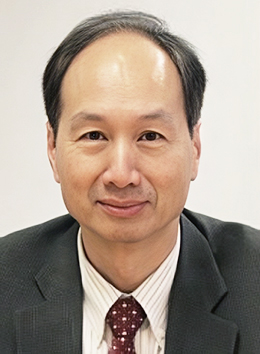 Hoi S. KWOK (郭海成)合作论文数Department of Electronic and Computer Engineering, The Hong Kong University of Science and Technology;State Key Laboratory of Advanced Displays and Optoelectronics Technologies, The Hong Kong University of Science and Technology3N. A. Gubasaryan合作论文数3Yu. P. Shumkina合作论文数3S. Gonchukov合作论文数3E. G. Gesheva合作论文数2D. Ganzke合作论文数2михаил константинович горшков合作论文数2Av Barannik合作论文数2Yu. P. Bobilev合作论文数2Sergey N. Kurilov合作论文数2
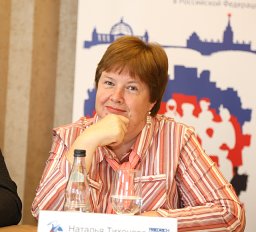 наталья евгеньевна тихонова合作论文数2
 Sofia Torgova合作论文数Opto-Electronic Department, P.N. Lebedev Physical Institute, Russian Academy of Sciences2N. I. Polushin合作论文数2E. A. Novikova合作论文数2Yuliya P. Shumkina合作论文数2A. A. Pozdnyakov合作论文数2
 Gennady. Aleksandrovich. Sobolev合作论文数2O. A. Shadura合作论文数2Alfredo Strigazzi合作论文数2R. S. Starikov合作论文数2Леонтий Георгиевич Бызов合作论文数1михаил васильевич ильин合作论文数1Наталья Николаевна Седова合作论文数1вадим леонидович цымбурский合作论文数1татьяна александровна алексеева合作论文数1A. Strigazzi合作论文数1P. Maltese合作论文数1надежда марковна давыдова合作论文数1андрей григорьевич здравомыслов合作论文数1леонид владимирович поляков合作论文数1Юрий Валерьевич Латов合作论文数1круглый стол журнала полис合作论文数1Алексей Алексеевич Кара-Мурза合作论文数1Лашук Ирина Валерьевна合作论文数1M. V. Minschenko合作论文数1Владимир Васильевич Петухов合作论文数1




