In high-precision optical lattice clocks, the influence of blackbody radiation (BBR) constitutes a primary source of systematic error. To mitigate this issue in our strontium optical lattice clock, we refine a thermal model by characterizing the surface properties of the vacuum components surrounding atoms, enabling accurate estimation of the BBR temperature Ta at the atomic location. Moreover, we rigorously recalibrate an in-vacuum temperature probe, reducing its calibration error to 5.6 mK. The model is validated in a congruent testing chamber under various thermal conditions using the calibrated probe. Utilizing this validated model, a BBR shift uncertainty of 7.6 x 10⁻¹⁹ is achieved.
State-of-the-art ultra-stable lasers have achieved a fractional frequency stability at the 10 −17 level. Further advancement to the 10 −18 level requires frequency stabilization servo controllers with stronger noise suppression capabilities over a broader frequency band. For external-cavity semiconductor lasers, the prevailing stabilization approach utilizes a combination of current frequency modulation and PZT frequency modulation. In this study, we employed a dedicated loop analyzer and an IQ demodulation frequency measurement method to perform detailed measurements of the transfer functions of individual stages and the closed-loop system of this dual feedback loop, with particular focus on its performance limitations in the frequency range within 10 kHz. By optimizing the feedback path, we improved the laser noise suppression at 1 kHz by three orders of magnitude, thereby reducing the contribution of residual laser frequency noise below 10 kHz to the fractional frequency stability at one second to 4.4×10 −19 . The proposed method not only provides significant value for achieving ultra-stable lasers at the 10 −18 level but is also applicable to newer types of semiconductor lasers that rely solely on current frequency modulation.
We report a systematic uncertainty of 9.2 & times;10-19 for the Sr1 optical lattice clock at the University of Science and Technology of China (USTC), achieving accuracy at the level required for the roadmap of the redefinition of the SI second. A finite-element model with in situ-validated, spatially-resolved chamber emissivity reduced blackbody radiation (BBR) shift uncertainty to 6.3 & times;10-19. Concurrently, the externally mounted lattice cavity, by providing a larger beam waist, reduced the atomic density and thereby suppressed the density shift. Enhanced lattice depth modulation consolidated lattice light shift uncertainty to 6.3 & times;10-19 by enabling simultaneous determination of key polarizabilities and magic wavelength. Magnetic shifts were resolved below 10-18 via precision characterization of the second-order Zeeman coefficient. Supported by a clock laser stabilized on an ultralow-expansion glass cavity with crystalline-coated mirrors and refined temperature control suppressing BBR fluctuations, the clock also achieves a frequency stability better than 1 & times;10-18 at 30 000 s averaging time. These developments collectively establish a new benchmark in USTC Sr1 clock performance and pave the way for high-accuracy applications in metrology and fundamental physics.
Quasi-one-dimensional or ladder models serve as a bridge between one-dimensional and two-dimensional models, providing a simplified framework for incorporating intricate physics. In this study, we extend the concept of the momentum-state lattice by introducing couplings between next-nearest-neighbor sites throughout the entire momentum chain to simulate the staggered Su-Schrieffer-Heeger (SSH) ladder model. This ladder model is a direct extension of the well-known SSH model, recognized as a fundamental progression in modeling systems. Through this model, we explore compelling physical phenomena and successfully replicate the topological phase diagram of the Kitaev-Majorana chain. Utilizing time-averaged mean displacements of wave packets as a metric, we ascertain the topological invariants of the model. By varying staggered dimerization and interchain hopping parameters, we map out the topological phase diagram of the staggered SSH ladder, elucidating the presence of three distinct phases classified by their winding numbers: W = +1, 0, and -1, respectively.
Quantum networks, which integrate multiple quantum computers and the channels connecting them, are crucial for distributed quantum information processing but remain inherently susceptible to channel noise. Channel purification emerges as a promising technique for suppressing noise in quantum channels without complex encoding and decoding operations, making it particularly suitable for remote quantum information transmission in optical systems. In this Letter, we introduce an experimental setup for efficient channel purification, harnessing the spatial and polarization properties of photons. Our design employs two Fredkin gates to enable coherent interference between independent noise channels, achieving effective noise suppression across a wide range of noise levels and types. Through application to entanglement distribution, channel purification demonstrates a strong capability to preserve entanglement under channel noise, suggesting that it can serve as a complementary and resource-efficient alternative to conventional entanglement purification in quantum network tasks.
The study of unique entangled states has recently garnered much attention for characterizing unconventional condensed matter phases and phase transitions beyond the Landau symmetry-breaking paradigm. In this work, we propose to investigate a fracton model through periodically modulating the four-body ring-exchange interactions. We study the entanglement structure of the ground state and uncover that the engineered model exhibits long-range entanglement at the critical point, characterized by the conditional mutual information and central charge of conformal field theory. The anomalous transport properties of the fracton model with quench dynamics demonstrate the Hilbert-space fragmentation and restricted mobility of the fracton excitations. Additionally, we extend the model to a square lattice under open boundary conditions to showcase the presence of a symmetryprotected corner state, a distributed Greenberger-Horne-Zeilinger state. Our work provides a promising way to study fracton models with Floquet engineering in state-of-the-art quantum simulation experiments and opens new possibilities for exploring diverse and uncharted quantum phases in these systems.
In quantum networks, after passing through noisy channels or information processing, residual states may lack sufficient entanglement for further tasks, yet they may retain hidden quantum resources that can be recycled. Efficiently recycling these states to extract entanglement resources such as genuine multipartite entanglement or Einstein-Podolsky-Rosen pairs is essential for optimizing network performance. Here, we develop a tripartite entanglement distillation scheme using an eight-photon quantum platform, demonstrating entanglement superactivation phenomena which are unique to multipartite systems. We successfully generate a three-photon genuinely entangled state from two bi-separable states via local operations and classical communication, demonstrating superactivation of genuine multipartite entanglement. Furthermore, we extend our scheme to generate a three-photon state capable of extracting an Einstein-Podolsky-Rosen pair from two initial states lacking this capability, revealing a previously unobserved entanglement superactivation phenomenon. Our methods and findings offer not only practical applications for quantum networks, but also lead to a deeper understanding of multipartite entanglement structures.
Quantum gates executed on physical hardware are inevitably degraded by environmental noise. While state purification effectively distills static quantum resources, the dynamic execution of quantum algorithms requires a higher-order approach to mitigate errors on the operations themselves. In this work, we investigate unitary purification: the task of utilizing a quantum higher-order operation to partially restore the ideal action of an unknown unitary corrupted by a known noise model. Focusing on canonical depolarizing noise, we first reveal a fundamental operational obstruction. We prove that within the indefinite causal order framework, no nontrivial 2-slot higher-order operation can universally purify the set of single-qubit unitaries. Overcoming this strict limitation, we establish that a 3-slot architecture provides the minimal realization for non-trivial universal purification. We analytically derive the optimal average fidelity for the 3-slot regime, demonstrating that it strictly surpasses trivial strategies by systematically utilizing ancillary qubits as a quantum memory to absorb errors. Furthermore, we provide a concrete quantum circuit construction for this optimal higher-order operation. Our results establish the strict theoretical boundaries of distilling clean operations from noisy gates, offering immediate architectural insights for robust gate design.
Reversing unknown quantum dynamics is vital for quantum control and learning, yet full unitary inversion requires a resource-intensive O(d2) queries. Because many applications only require the reversed evolution for a given observable, a critical gap remains in understanding the minimal resources for such targeted reversal. Here, we address this by introducing shadow unitary inversion. We establish a lower bound showing the query complexity must scale at least linearly with system dimension for spectrally biased observables, with the constant determined by the observable’s spectral properties. For qubit case, we construct an explicit, deterministic three-query sequential protocol achieving exact shadow inversion and completely characterize all admissible channels, with numerical evidence suggesting optimality. For higher dimensions, we develop a semidefinite-programming formulation and introduce a representation-theoretic symmetry reduction that decomposes the optimization into invariant blocks, substantially reducing the problem size. Shadow unitary inversion thus offers a resource-efficient path to inverse-dynamics estimation for future quantum control, diagnostics, and learning tasks. Reversing unitary operations is crucial in quantum computing and control, yet remains a challenging task. The authors introduce shadow unitary inversion, achieving efficient inversion at the expectation value level with reduced query complexity, offering a promising approach for quantum error correction and information recovery.
The interference patterns of ultracold atoms, observed after ballistic expansion from optical lattices, encode essential information about strongly correlated lattice systems, including phase coherence and nonlocal correlations. While the interference of lattice bosons has been extensively investigated, quantitative studies of the lattice fermion interference remain challenging. Here, we report the observation and quantitative characterization of interference patterns in low-temperature, homogeneous fermionic Hubbard gases. We develop a general method to extract the quasimomentum distribution and the first-order correlation function from these patterns. In the noninteracting limit, the coherence length remains very close to the average spacing between identical fermions over a wide range of fillings, revealing the fundamental upper bound imposed by Pauli exclusion on first-order coherence. By tuning the interaction strength and filling, we identify their interplay in the suppression of first-order coherence across the metal-to-Mott-insulator crossover. Moreover, at half filling, the measured correlations agree well with quantum Monte Carlo calculations and remain finite in the strong repulsion regime, revealing virtual tunneling and the underlying superexchange physics.
Quantum state purification protocols, which mitigate noise by converting multiple copies of noisy quantum states into fewer copies with a lower noise level, have applications in quantum communication and computation with imperfect devices. Here, we systematically study the task of state purification in distributed quantum systems, demanding that purification be achieved by local operations and classical communication (LOCC). We prove that, in the presence of depolarizing noise, no LOCC purification protocol starting from two copies can work blindly for all the states in three important sets: the set of all pure two-qubit states, the set of all two-qubit maximally entangled states, and the Bell basis. In stark contrast, we show that a targeted, single-state purification is always achievable in the presence of depolarizing noise, and we provide an explicit analytical LOCC protocol for every given two-qubit state. For arbitrary finite sets of pure states and arbitrary noise profiles, we develop an optimization-based algorithm that systematically designs LOCC purification protocols, and we demonstrate it through concrete examples. Overall, our results identify both fundamental limitations and practical noise-reduction strategies for distributed quantum information processing.
Recent explorations of quantized solitons transport in optical waveguides have thrust nonlinear topological pumping into the spotlight. In this work, we introduce a unified topological invariant applicable across both weakly and strongly nonlinear regimes. In the weak nonlinearity regime, where the nonlinear bands are wellseparated, the invariant reduces to the Abelian Chern number of the occupied nonlinear band. Consequently, the pumped charge is quantized to an integer value. As the nonlinearity increases, the nonlinear bands start to intertwine, leading to a situation where the invariant is expressed as the non-Abelian Chern number divided by the number of interacting bands. This could result in a fractional quantization of the pumped charge. Our unified topological invariant approach not only advances the understanding of the soliton dynamics, but also provides implications for the future design of nonlinear topological systems.
Identifying unknown Hamiltonians from their quantum dynamics is a pivotal challenge in quantum technologies and fundamental physics. In this paper, we introduce Hamiltonian recognition, a framework that bridges quantum hypothesis testing and quantum metrology, aiming to identify the Hamiltonian governing quantum dynamics from a known set of Hamiltonians. To identify $H$ for an unknown qubit quantum evolution $\exp(-iH\theta)$ with unknown $\theta$, from two or three orthogonal Hamiltonians, we develop a quantum algorithm for coherent function simulation, built on two quantum signal processing (QSP) structures. It can simultaneously realize a target polynomial based on measurement results regardless of the chosen signal unitary for the QSP. Utilizing semidefinite optimization and group representation theory, we prove that our methods achieve the optimal average success probability, taken over possible Hamiltonians $H$ and parameters $\theta$, decays as $O(1/k)$ with $k$ queries of the unknown unitary transformation. Furthermore, we demonstrate the validity of our protocol on a superconducting quantum processor. This work presents an efficient method to recognize Hamiltonians from limited queries of the dynamics, opening new avenues in composite channel discrimination and quantum metrology.
Identifying symmetries in quantum dynamics, such as identity or time-reversal invariance, is a crucial challenge with profound implications for quantum technologies. We introduce a unified framework combining group representation theory and subgroup hypothesis testing to predict these symmetries with optimal efficiency. By exploiting the inherent symmetry of compact groups and their irreducible representations, we derive an exact characterization of the optimal type-II error (failure probability to detect a symmetry), offering an operational interpretation for the quantum max-relative entropy. In particular, we prove that parallel strategies achieve the same performance as adaptive or indefinite-causal-order protocols, resolving debates about the necessity of complex control sequences. Applications to the singleton group, maximal commutative group, and orthogonal group yield explicit results: for predicting the identity property, Z-symmetry, and T-symmetry of unknown qubit unitaries, with zero type-I error and type-II error bounded by δ, we establish the explicit optimal sample complexity which scales as 𝒪(δ^-1/3) for identity testing and 𝒪(δ^-1/2) for T/Z-symmetry testing. These findings offer theoretical insights and practical guidelines for efficient unitary property testing and symmetry-driven protocols in quantum information processing.
Entanglement detection serves as a fundamental task in quantum information science, playing a critical role in quantum benchmarking and foundational studies. As the number of controllable qubits continues to increase, there emerges a pressing demand for scalable and robust entanglement detection protocols that can maintain high detection capability while requiring minimal resources. By integrating the positive partial transposition criterion with variational quantum interference, we develop an entanglement detection protocol that requires moderate classical and quantum computation resources. Numerical simulations demonstrate that this protocol attains high detection capability using only shallow quantum circuits, outperforming several widely-used entanglement detection methods. The protocol also exhibits strong resilience to circuit noise, ensuring its applicability across different physical platforms. Experimental implementation on a linear optical platform successfully identifies entanglement in a three-qubit mixed state that cannot be detected by conventional entanglement witnesses. Drawing upon the full potential of quantum and classical resources, our protocol paves a new path for efficient entanglement detection.
Fermionic atoms in a large-scale, homogeneous optical lattice provide an ideal quantum simulator for investigating the fermionic Hubbard model, yet achieving this remains challenging. Here, by developing a hybrid potential that integrates a flat-top optical lattice with an optical box trap, we successfully realize the creation of three-dimensional, homogeneous fermionic Hubbard gases across approximately 8×10^{5} lattice sites. This homogeneous system enables us to capture a well-defined energy band occupation that aligns perfectly with the theoretical calculations for a zero-temperature, ideal fermionic Hubbard model. Furthermore, by employing novel radio-frequency spectroscopy, we precisely measure the doublon fraction D as a function of interaction strength U and temperature T, respectively. The crossover from metal to Mott insulator is detected, where D smoothly decreases with increasing U. More importantly, we observe a nonmonotonic temperature dependence in D, revealing the Pomeranchuk effect and the development of extended antiferromagnetic correlations.
Optical atomic clocks play a crucial role in fundamental physics, relativistic geodesy, and the future redefinition of the Systeme International second. Standard operation relies on cyclic interrogation sequences, which alternate between atomic interrogation and dead time used for state preparation and readout. This approach introduces the Dick effect, where laser frequency noise aliases onto the atomic transition frequency. Although reducing laser noise improves clock stability, the Dick effect remains a key limitation. In this Letter, we demonstrate a zero-dead-time optical clock based on two interleaved ensembles of cold ^{87}Sr atoms. Our system significantly suppresses this noise and achieves a fractional frequency instability at the 10^{-19} level between 10 000 and 20 000 s over repeated measurements, with a best value of 2.9×10^{-19} at τ=20000 s. The estimated long-term stability based on the combined data of these measurements reaches 2.5×10^{-19} at 1 day. These results represent a more than ninefold improvement over a conventional single-ensemble clock, highlighting its potential for next-generation timekeeping applications.
 Jian-Wei Pan (潘建伟)合作论文数Division of Quantum Physics and Quantum Information, University of Science and Technology of China176
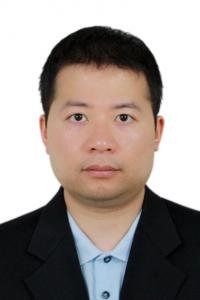 Xingcan Yao (姚星灿)合作论文数Division of Quantum Physics and Quantum Information, University of Science and Technology of China51
 Chengzhi Peng (彭承志)合作论文数Shanghai Institute for Advanced Studies, University of Science and Technology of China46
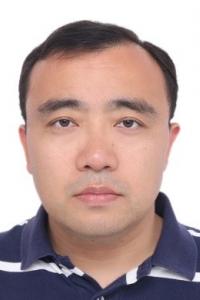 Qiang Zhang (张强)合作论文数Division of Quantum Physics and Quantum Information, University of Science and Technology of China38
 Naile Liu (刘乃乐)合作论文数Division of Quantum Physics and Quantum Information, University of Science and Technology of China37
 Hanning Dai (戴汉宁)合作论文数Division of Quantum Physics and Quantum Information, University of Science and Technology of China31
 Xiang-Pei Liu合作论文数29
 Chao-Yang Lu (陆朝阳)合作论文数Division of Quantum Physics and Quantum Information, University of Science and Technology of China;Shanghai Institute for Advanced Studies, University of Science and Technology of China25
 Juan Yin (印娟)合作论文数Division of Quantum Physics and Quantum Information, Shanghai Institute for Advanced Studies, University of Science and Technology of China24
 Xiao Jiang (江晓)合作论文数Division of Quantum Physics and Quantum Information;University of Science and Technology of China23
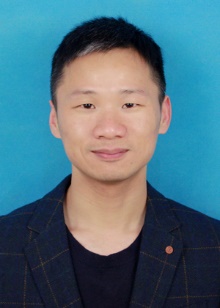 Shengkai Liao (廖胜凯)合作论文数Hefei National Research Center of Microscale Material Science, University of Science and Technology of China23
 Xiaoqiong Wang (王小琼)合作论文数Institute for Quantum Science and Engineering, Southern University of Science and Technology23
 Ping Xu (徐平)合作论文数National University of Defense Technology21
 Bo Zhao (赵博)合作论文数Hefei National Laboratory for Physical Sciences at Microscale, University of Science and Technology of China;Department of Modern Physics, School of Physical Sciences, University of Science and Technology of China21Yu-Xuan Wang合作论文数20
 He Lu (逯鹤)合作论文数School of Physics, Shandong University20
 Yuan Cao (曹原)合作论文数Shanghai Institute for Advanced Studies, University of Science and Technology of China20
 Zhensheng Yuan (苑震生)合作论文数Department of Modern Physics, School of Physical Sciences, University of Science and Technology of China20
 Xin Wang (王鑫)合作论文数Hong Kong University of Science and Technology (Guangzhou)19Jigang Ren (任继刚)合作论文数19
 Xiongfeng Ma (马雄峰)合作论文数Center for Quantum Information, Institute for Interdisciplinary Information Sciences, Tsinghua University18
 Zhengda Li (李正达)合作论文数Institute for Quantum Science and Engineering, Southern University of Science and Technology17Xingyang Cui合作论文数16
 Feihu Xu (徐飞虎)合作论文数Division of Quantum Physics and Quantum Information;University of Science and Technology of China16
 Hao-ze Chen合作论文数15LIU Wei-yue合作论文数15
 Youjin Deng (邓友金)合作论文数Division of Quantum Physics and Quantum Information, Hefei National Laboratory for Physical Sciences at Microscale, University of Science and Technology of China;Division of Theoretical Physics, Department of Modern Physics, University of Science and Technology of China15
 Tao Yang (杨涛)合作论文数University of Science and Technology of China15
 Shuai Chen (陈帅)合作论文数Shanghai Institute for Advanced Studies, University of Science and Technology of China15
 Xu-Fei Yin合作论文数Hefei Natl Lab Phys Sci Microscale, Univ Sci & Technol China14Yuping Wu (吴裕平)合作论文数14
 Anning Zhang (张安宁)合作论文数Department of Optical Physics, School of Physics, Beijing Institute of Technology13
 Qi Shen (沈奇)合作论文数Shanghai Institute for Advanced Studies, University of Science and Technology of China13Zhi Zhao合作论文数State Key Laboratory of Magnetic Resonance and Atomic and Molecular Physics;Wuhan Institute of Physics and Mathematics;Chinese Academy of Sciences;Wuhan;Wuhan Institute of Physics and Mathematics, Chinese Academy of Sciences13Luo-Kan Chen合作论文数13Wen-Qi Cai合作论文数Department of Electrical and Electronic Engineering, Nanjing University of Aeronautics and Astronautics12Yuan Tao合作论文数11
 Rui Zhang合作论文数University of Science and Technology of China11
 Yu-Huai Li (李宇怀)合作论文数Division of Quantum Physics and Quantum Information, Shanghai Institute for Advanced Studies, University of Science and Technology of China11
 Zengbing Chen (陈增兵)合作论文数School of Physics, Nanjing University11
 Jian-Yu Wang (王建宇)合作论文数Shanghai Institute of Technical Physics, Chinese Academy of Sciences;Hangzhou Institute for Advanced Study, University of Chinese Academy of Sciences11
 Hailin Yong (雍海林)合作论文数Hefei National Laboratory for Physical Sciences at the Microscale, University of Science and Technology of China11Li-Zheng Liu合作论文数10Yue-Yang Fei合作论文数10
 Joerg Schmiedmayer合作论文数Vienna Center for Quantum Science and Technology, Institute of Atomic and Subatomic Physics, Vienna University of Technology;TU Wien Atominstitut10
 Li Li (李力)合作论文数中国科学技术大学合肥微尺度物质科学国家研究中心10Stefan Trotzky合作论文数Institut fur Physik10
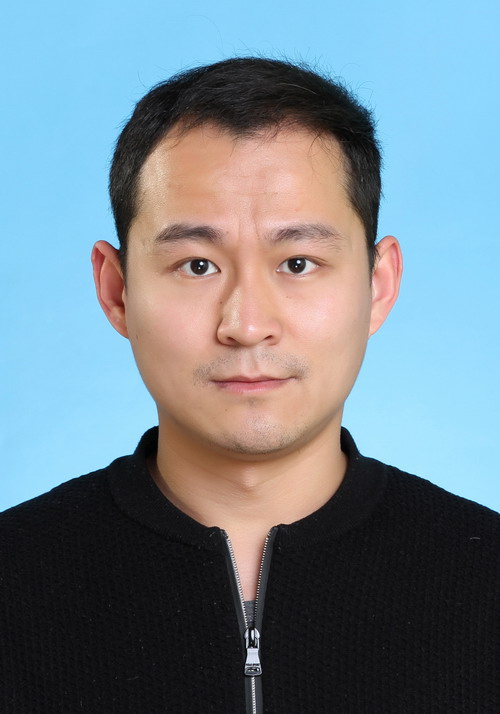 Liang Zhang (张亮)合作论文数Key Laboratory of Space Active Optical-Electro Technology, Shanghai Institute of Technical Physics, Chinese Academy of Sciences;University of Chinese Academy of Sciences9
 Rong Shu (舒嵘)合作论文数Innovation Academy for Microsatellites, Chinese Academy of Sciences;Key Laboratory of Space Active Optical-Electro Technology, Shanghai Institute of Technical Physics, Chinese Academy of Sciences;University of Chinese Academy of Sciences9




