Decay of the 8(+) isomer in fully stripped ions Ru-94(44+) is observed during its circulation in the experimental Cooler Storage Ring (CSRe) at the Heavy Ion Research Facility in Lanzhou (HIRFL). The Ru-94(44+) ions were produced via projectile fragmentation and stored in CSRe tuned into the isochronous ion-optical mode. The timing signals of the ions, passing through a time-of-flight detector, were consecutively registered and used to determine the variation of revolution time as a function of revolution number. A sudden change of the revolution time at a specific revolution was identified as a fingerprint of the Ru-94(44+) isomer decay. The isomeric half-life was deduced to be 102(17) mu s, which agrees well with the theoretical expectation by blocking the internal conversion decay of the isomer. Our work proved the feasibility of studying decays of short-lived isomers in high atomic charge states using the isochronous mass spectrometry. In addition, (94)mRu(44+) represents the shortest-lived nuclear state whose mass has ever been measured directly.
Background: Fragment yields exhibit a strong odd-even staggering (OES). This OES has been experimentally observed in different fragmentation reactions with different projectile-target combinations. However, the experimental data are still scarce for fragments close to drip lines and the origin of this OES is not well understood.Purpose: More experimental data are needed to explore the origin of this OES in fragment yields and to validate fragmentation reaction models, especially for nuclei close to the drip lines. To study the pronounced OES near the proton drip line, we measured the yields of T-z = -1 and T-z = -3/2 nuclei over a wide range of mass number.Methods: The combination of a fragment separator and a storage ring at the Heavy Ion Research Facility in Lanzhou has been used to measure the yields of T-z = -1 and T-z = -3/2 fragments, produced by Ni-58 projectiles impinging on a beryllium target at an energy of about 463 MeV/nucleon.Results: A very strong OES is observed in the measured yields of both T-z = -1 and T-z = -3/2 fragments. Our experimental data demonstrate that the shell structure has a significant impact on the magnitude of this OES. A comparison of different fragmentation reaction data indicates that this OES is almost independent of the projectile-target combinations and the fragmentation energy between 140 and 650 MeV/nucleon.Conclusions: Our study reveals that the OES of fragment yields originates mainly from the OES of particle-emission threshold energies, which is very close to the OES of fragment yields when the Coulomb barrier is considered in particle-emission threshold energies.
The longitudinal momentum distributions of Be-7 fragments in the breakup of B-8 on a carbon target have been measured at 36 MeV/u. The different mechanisms have been distinguished by coincidence measurements. The longitudinal momentum distributions of Be-7 fragments from both the stripping and the diffraction mechanisms are consistent with the results of noneikonal calculations and CDCC calculations. The full widths at half maximum of the longitudinal momentum distributions are 124 +/- 17 and 92 +/- 7 MeV/c for the stripping and diffraction components, respectively. The comparison with the different model calculations is discussed. It is crucial to separate the different reaction mechanisms experimentally to benchmark nuclear reaction theories.
Strong odd-even staggering (OES) of the yields of fragments, produced by fragmenting Kr-78 projectiles, has been measured by employing the combination of an in-flight fragment separator and a storage ring. It is shown that the OES of fragment yields of T-z = -1/2 and T-z = 1/2 mirror nuclei critically depends on both pairing and shell structure, especially at the closed shells Z = 20 and 28. A comparison of the relative OES of yields and of particle-emission threshold energies reveals unambiguously that the origin of the OES of fragment yields is mainly determined by the OES of the particle-emission threshold energies, which contain both pairing and shell effects.
Revolution frequency measurements of individual ions in storage rings require sophisticated timing detectors. One of common approaches for such detectors is the detection of secondary electrons released from a thin foil due to penetration of the stored ions. A new method based on the analysis of intensities of secondary electrons was developed which enables determination of the charge of each ion simultaneously with the measurement of its revolution frequency. Although the mass-over-charge ratios of 51Co27+ and 34Ar18+ ions are almost identical, and therefore, the ions cannot be resolved in a storage ring, by applying the new method the mass excess of the short-lived 51Co is determined for the first time to be ME(Co51)=−27342(48) keV. Shell-model calculations in the fp-shell nuclei compared to the new data indicate the need to include isospin-nonconserving forces.
Masses of neutron-deficient Ni-58 projectile fragments have been measured at the HIRFL-CSR facility in Lanzhou, China employing the isochronous mass spectrometry technique. Masses of a series of short-lived T-z = -3/2 nuclides including the Cr-45 nucleus have been measured with a relative uncertainty of about 10(-6)-10(-7). The new Cr-45 mass turned out to be essential for modeling the astrophysical rp-process. In particular, we find that the formation of the predicted Ca-Sc cycle in X-ray bursts can be excluded.
For a bunched beam, the signals on pickups are coherent, providing a signal power proportional to the square of the number of particles. For a coasting beam the individual particle signals have a random phase; therefore, the overall signal is proportional to the particle number N. As a consequence, Schottky signals are often relatively weak and have to compete with many noise sources. For a small number of particles, the SIN is always a problem. To achieve a high signal-to-noise ratio and better temporal resolution, which could yield important physical information about fast processes, a resonant pickup was developed at GSI (Nolden et al., 2011 [1]), and a similar device is now installed in the CSRe [2] at IMP. This device will be used for nuclear mass and lifetime measurement, as well as other uses. The final goal of the pickup is to detect single particles. In Dec 2012, we performed an experiment with a Sn-112(50+) beam with an energy of 253 MeV/u, and the single particle sensitivity of the pickup was successfully confirmed. This paper presents hardware measurements of the pickup as well as beam measurements. (C) 2013 Elsevier B.V. All rights reserved.
A resonant Schottky pickup was built into the experimental storage ring at GSI Darmstadt in 2010 and a similar one in the CSRe storage ring at IMP Lanzhou in 2011. Single-ion sensitivity was achieved at 400 MeV u−1. The pickup has also been used in many storage ring experiments ever since. A brief description of the pickup and its application in single-ion lifetime spectroscopy is provided in this work.
Isochronous mass spectrometry has been applied to neutron-deficient 58Ni projectile fragments at the HIRFL-CSR facility in Lanzhou, China. Masses of a series of short-lived T(z)=-3/2 nuclides including 41Ti, 45Cr, 49Fe, and 53Ni have been measured with a precision of 20-40 keV. The new data enable us to test for the first time the isobaric multiplet mass equation (IMME) in fp-shell nuclei. We observe that the IMME is inconsistent with the generally accepted quadratic form for the A=53, T=3/2 quartet. We perform full space shell model calculations and compare them with the new experimental results.
Resonant properties in 18Ne relevant to the stellar reaction of 14O(α,p)17F have been investigated through a resonant elastic scattering of 17F+p. The 17F RI beam was produced via a projectile-fragmentation reaction, and subsequently separated and purified by a Radioactive Ion beam Line in Lanzhou (RIBLL). After a series of energy degradation, a 4.21 AMeV 17F beam bombarded a thick (CH2)n target at T2 terminal. Energy and angle of the recoiled protons were measured by two sets of ΔE-E silicon telescope at θlab ≈ 0°, 14° respectively. Several resonances in 18Ne were observed, and their resonant parameters including energy, spin-parity and decay width have been determined by an R-Matrix analysis of the experimental excitation function.
A resonant pick-up for the detection of heavy ion Schottky noise was built into the ESR storage ring at GSI. A similar device will be installed at the cooler storage ring CSRe at IMP. Its purpose is a significant enhancement of the signal to noise ratio of Schottky spectra. A particular application of the new system is the measurement of circulating single ions. The resonator is based on a pillbox design. It is operated at air pressure, and is electromagnetically coupled to the vacuum tube of the storage ring via a cylinder-shaped ceramic gap. The resonant frequency can be changed by inserting plunger pistons. The resonator can easily be decoupled from the storage ring, if high beam impedances become a problem. The article describes the construction, electromagnetic properties of the pick-up as well as first experiments with heavy ion beams.
A prototype of time-of-flight positron emission computed tomography(TOF-PET) has been developed for acquiring the coincident detection of 511 keV γ-rays produced from positron annihilation.It consists of two 80.5 mm×80.5 mm LYSO scintillator arrays(composed of 35 ×35 pixel finger crystals) with the position sensitive photomultiplier tubes R2487 as the readout.Each array is composed of 2 mm ×2 mm×15 mm finger crystals and the average pixel pitch is 2.30 mm.The measured results indicate that the TOF information has the potential to significantly enhance the image quality by improving the noise variance in the image reconstruction.The best spatial resolution(FWHM) of the prototype for the pairs of 511 keV γ-rays is 1.98 mm and 2.16 mm in the x and y directions,respectively,which are smaller than the average pixel pitch of 2.30 mm.
The proton resonant properties in 18 Ne, which determine the reaction rate of the key stellar 14 O(α,p) 17 F reaction, have been studied by using a technique of proton resonant elastic scattering of 17 F+p. A 4.22 MeV/nucleon 17 F radioactive ion (RI) beam was produced via a projectile-fragmentation reaction, and separated by a Radioactive Ion Beam Line in Lanzhou (RIBLL). By bombarding a thick (C H 2) n target, the energy spectra of the recoiled protons were measured by two Δ E - E silicon telescopes at the center-of-mass scattering angles of θ c.m. ≈175°±5°, θ c.m. ≈152°±8°, respectively. Several proton resonances in 18 Ne were observed clearly. A further R-matrix analysis of the experimental data is under way to determine the resonant parameters. The present work reports the preliminary results briefly.
Recent results and progress of mass measurements of proton‐rich nuclei using isochronous mass spectrometry (IMS) are reported. The nuclei under investigation were produced via fragmentation of relativistic energy heavy ions of 78Kr and 58Ni. After in‐flight separation by the fragment separator RIBLL‐2, the nuclei were injected and stored in the experimental storage ring CSRe, and their masses were determined from measurements of the revolution times. The impact of these measurements on the stellar nucleosynthesis in the rp‐process is discussed.
A knockout reaction induced by 6He at 61.2 MeV/u was carried out at the HIRFL-RIBLL radioactive beam line. The α core fragments at forward angles were detected in coincidence with the recoiled protons at large angles. From this coincident measurement the valence nucleon knockout mechanism and the core knockout mechanism can be separated according to the polar angle correlation between the core fragments and the recoiled protons. It is demonstrated that, when reconstructing the resonant state of a weakly bound nucleus, the contamination resulting from the core knockout mechanism should be eliminated in order to obtain the correct structure information.
Isochronous mass measurement is one of physics research projects at CSRe of HIRFL-CSR.The signals induced by circulating ions are amplified and sampled with a digital oscilloscope Tektronix DPO 71254 at a sampling rate of 50 GSa/s.The record length of one injection is 200μs.A program based on LabView and TekVISA is developed to automatically save the sampled data and display the time domain waveform.The program is also designed to on-line analyze the data to get the power spectrum of circulating ions.Principle of isochronous mass measurement at CSRe and the data acquisition system are introduced,and the application results are reported.
Mass excesses of short-lived A=2Z-1 nuclei (63)Ge, (65)As, (67)Se, and (71)Kr have been directly measured to be -46,921(37), -46,937(85), -46,580(67), and -46,320(141) keV, respectively. The deduced proton separation energy of -90(85) keV for (65)As shows that this nucleus is only slightly proton unbound. X-ray burst model calculations with the new mass excess of (65)As suggest that the majority of the reaction flow passes through (64)Ge via proton capture, indicating that (64)Ge is not a significant rp-process waiting point.
 Hushan Xu (徐瑚珊)合作论文数Institute of Moder Physics, Chinese Academy of Sciences;University of Chinese Academy of Sciences30
 Zhengguo Hu (胡正国)合作论文数Institute of Modern Physics, Chinese Academy of Sciences23
 Guoqing Xiao (肖国青)合作论文数Institute of Modern Physics, Chinese Academy of Sciences;University of Chinese Academy of Sciences22
 Ruishi Mao (毛瑞士)合作论文数Institute of Modern Physics, Chinese Academy of Sciences;University of Chinese Academy of Sciences21
 Youjin Yuan (原有进)合作论文数Institute of Modern Physics, Chinese Academy of Sciences20
 Meng Wang (王猛)合作论文数Institute of Modern Physics, Chinese Academy of Sciences;University of Chinese Academy of Sciences18
 Wenlong Zhan (詹文龙)合作论文数Institute of Modern Physics, Chinese Academy of Sciences;University of Chinese Academy of Sciences16
 Jiancheng Yang (杨建成)合作论文数Institute of Modern Physics, Chinese Academy of Sciences;University of Chinese Academy of Sciences15
 Junxia Wu (武军霞)合作论文数Institute of Modern Physics, Chinese Academy of Sciences14
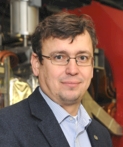 Yury A Litvinov合作论文数GSI Helmholtz Centre for Heavy Ion Research13
 Yuhu Zhang (张玉虎)合作论文数Institute of Modern Physics, Chinese Academy of Sciences;University of Chinese Academy of Sciences12
 Bo Mei合作论文数11
 Xiaolin Tu (涂小林)合作论文数Institute of Life Sciences, Chongqing Medical University11
 Xiaohong Zhou (周小红)合作论文数中国科学院近代物理研究所11
 Jinda Chen (陈金达)合作论文数Institute of Modern Physics, Chinese Academy of Sciences;University of the Chinese Academy of Sciences11
 Xing Xu (徐星)合作论文数Institute of Modern Physics, Chinese Academy of Sciences;University of Chinese Academy of Sciences11
 Klaus Blaum合作论文数Max Planck Institute for Nuclear Physics;Department of Physics and Astronomy, Ruprecht-Karls-University Heidelberg11
 Peng Shuai合作论文数10Zhao Tian Chi (赵天池)合作论文数10
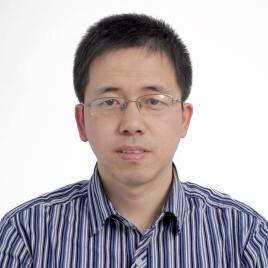 Jiansong Wang (王建松)合作论文数School of Science, Huzhou University9
 Xueheng Zhang (章学恒)合作论文数Institute of Modern Physics, Chinese Academy of Sciences;University of Chinese Academy of Sciences9Zhiyu Sun (孙志宇)合作论文数9
 Xinwen Ma (马新文)合作论文数中国科学院近代物理研究所9Ke Yue (岳珂)合作论文数9
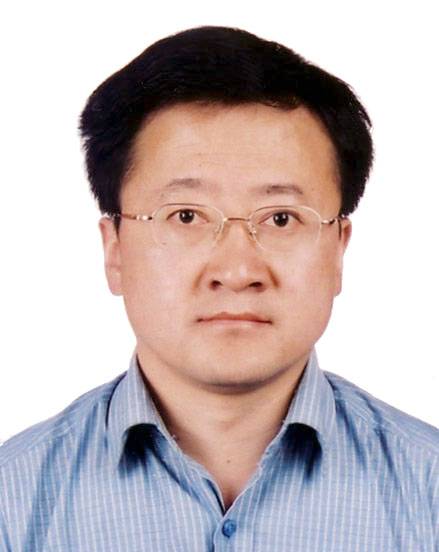 Hongwei Zhao (赵红卫)合作论文数Institute of Modern Physics, Chinese Academy of Sciences;University of Chinese Academy of Sciences9Tiecheng Zhao合作论文数9
 Xueying Zhang (张雪荧)合作论文数Institute of Modern Physics, Chinese Academy of Sciences;University of Chinese Academy of Sciences8
 Yanyun Yang合作论文数8S. L. Jin合作论文数8R. P. Ye合作论文数7C. M. Du合作论文数7
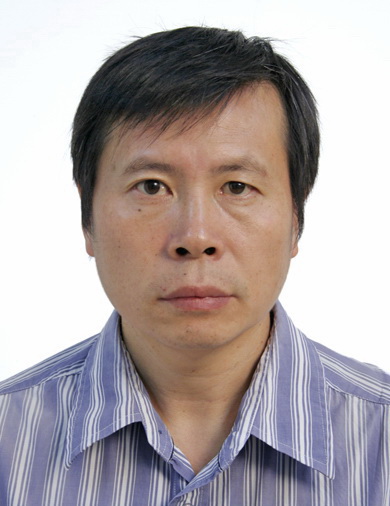 Jiawen Xia (夏佳文)合作论文数Institute of Modern Physics, Chinese Academy of Sciences;University of Chinese Academy of Sciences7
 Shitao Wang (王世涛)合作论文数College of Chemical Engineering, Beijing University of Chemical Technology7Georges Audi合作论文数7Zhongyan Guo合作论文数7
 Xiangqing Li (李湘庆)合作论文数Institute of Heavy Ion Physics, School of Physics, Peking University7p petri合作论文数6
 Jianjun He (何建军)合作论文数College of Nuclear Science and Technology, Beijing Normal University;Institute of Modern Physics, Fudan University6Xianglin Liu (刘祥林)合作论文数Institute of Semiconductors, Chinese Academy of Sciences6Fritz Nolden合作论文数6M. S. Sanjari合作论文数6
 Shuwen Tang合作论文数5
 Xiulan Yan (阎秀兰)合作论文数Institute of Geographic Sciences and Natural Resources Research, Chinese Academy of Sciences;University of Chinese Academy of Sciences5Zhen Bai合作论文数5
 Zeng-Yuan Guo (过增元)合作论文数Institutes of Engineering Thermal Physics, Department of Engineering Mechanics, School of Aerospace Engineering, Tsinghua University;Department of Mechanical Engineering, Michigan State University5
 Ruofu Chen (陈若富)合作论文数Institute of Modern Physics, Chinese Academy of Sciences;University of Chinese Academy of Sciences5
 M. Steck合作论文数5




