The progress of science depends not only on asking the right question, but also on having the technical ability to make a reasonable attempt at producing an answer. Here the question is: "Are we alone in the Universe?
The isotropy and log N/log S distribution of localized gamma-ray bursts are shown to indicate that their sources belong to the extended galactic corona. Bursts are supposed to be generated by old neutron stars with age < 109 yr excited by strong starquakes. The radiated energy is estimated to be about 1042 erg per event. The nearest sources are at a distance of about 5 kpc. Practically all outbursts emitted inside the corona are detectable with available instruments. The anisotropy of the distribution of gamma-ray bursts on the sky may be well-pronounced only for the most powerful events. The identification of GRB 790305 with the SN remnant N49 in the Large Magellanic Cloud strongly confirms our conclusion.
It is argued that the iron nucleosynthesis rate in the universe due to SNI outbursts is dependent on the mass function of star formation. Since the mass function depends on the chemical composition and since the masses of SNI precursors have upper limits, the iron nucleosynthesis rate was low at an earlier evolutionary epoch of the universe when mainly massive stars were formed. The iron nucleosynthesis rate should reach a maximum near z ∼ 0.5. At such or similar value of z the well-known ‘step’ in the cosmic γ-ray background spectrum may be explained by the presence of γ-gray quanta accompanying the radioactive56Co →56Fe decay. An argument is presented against the identification of the hidden mass of the universe with black-hole remnants of ‘type III’ stars.
УСПЕХИ ФИЗИЧЕСКИХ ИЛУ В PERSONALIA 53 (092) ПАМЯТИ ИСАЯ ВЕНИАМИНОВИЧА ЭСТУЛИНА 15 ноября 1982 г. на 65 году жизни после тяжелой болезни скончался известный советский физик-экспериментатор доктор физико-математических наук Исай Вениаминович Эстулин.Исай Вениаминович родился в 1917 г. в Москве.В 1935 г. он поступил на физический факультет Московского университета, который окончил в 1941 г., будучи одним из первых студентов кафедры «Атомное ядро и радиоактивность», организованной академиком Д. В. Скобельцыным в 1940 г.В годы войны Исай Вениаминович работал на оборонном заводе на Урале и в 1945 г. был переведен на работу в МГУ.Приступив в 1945 г. к систематической исследовательской работе, протекавшей вначале в лаборатории атомного ядра НИЯФ МГУ, а затем в лаборатории НИИЯФ МГУ, Исай Вениаминович получил вскоре ряд существенных результатов, снискавших признание специалистов.Его научная активность в этот период была преимущественно посвящена разработке методов регистрации и спектроскопии гамма-излучения.И. В. Эстулину и его соавторам принадлежит оригинальный метод измерения абсолютной интенсивности гамма-излучения с помощью щелевой плоской ионизационной камеры.Исай Вениаминович одним из первых поставил трудные эксперименты по измерению поляризации ядерного гамма-излучения (в частности, корреляции поляризации каскадно испускаемых ядром квантов).Большой цикл работ Исая Вениаминовича, составивший основу его докторской диссертации, принадлежит к новому тогда (50-е годы) направлению -спектроскопии гамма-излучения, возникающего при захвате ядрами медленных нейтронов.К университетскому периоду относится и работа, получившая позже широкую известность,-первое прямое измерение верхней границы для значения электрического заряда нейтрона.В Московском университете Исай Вениаминович много сил и времени уделял важной, особенно в послевоенную пору, деятельности, связанной с подготовкой научных кадров для развития отечественной ядерной физики.Он принадлежал к небольшому коллективу создателей уникального в те годы физического практикума по ядерной физике; было издано написанное им руководство по программе учебных лабораторных работ.Ряд видных ныне физиков выполнили свои дипломные и кандидатские работы под руководством Исая Вениаминовича.С 1968 г.И. В. Эстулин работал в Институте космических исследований АН СССР.Свой большой опыт экспериментатора-ядерщика он направил на развитие новейших направлений астрофизики, связанных с регистрацией жесткого электромагнитного излучения космических объектов на искусственных спутниках Земли.Он был пионером в исследованиях по прецизионной спектроскопии космического гамма-излучения, а в 1974 г. активно включился в работы по исследованию нового, только что открытого эффекта -космических гамма-всплесков.В содружестве с французскими учеными за короткий срок была создана специальная аппаратура для определения координат источников всплесков с точностью лучше угловой минуты, а также для изучения их временных и энергетических характеристик.Результаты, полученные Исаем Вениаминовичем в этой области, получили широкое признание.Всю деятельность Исая Вениаминовича отмечала исключительная любовь к науке, принципиальность, критическое отношение к своим и чужим работам, умение организовать различных и подчас «разношерстных» людей в коллективы, подчиненные единой цели.
On a clear night, you can see literally hundreds of stars. That number increases greatly when looking though a telescope. I recall a statement made by the late Dr. Carl Sagan: the number of stars in the known Universe outnumbers all of the grains of sand on every beach on Earth. That is an enormous number of stars! If a small fraction of those stars are capable of supporting a system of planets, and if a fraction of those planets are capable of supporting life, and if a fraction of the life bearing planets are capable of supporting intelligent life, there will still be an enormous number of civilizations within the Universe (if that phrase sounds somewhat familiar, a variation of this statement is from the movie Contact). The problem is will any of those civilizations make an attempt to send out a signal to alert other civilizations of its existence? This is the foundation of the Search for Extra-Terrestrial Intelligence, or SETI. The founding father of SETI is Frank Drake. As a newly graduated student of Astronomy, Drake worked at the National Radio Astronomy Observatory in Green Bank, West Virginia. During telescope quiet time, he was allowed to use the telescope to search for a signal of extra-terrestrial origins (Shostak, page 153154). Using home-made equipment, Drake scanned the frequencies above and below the radiation emitted by the Hydrogen atom emitting at 1420MHz (Shostak, page 151, 154). This first SETI was named Project Ozma; and while no signal was detected, his efforts demonstrated that such an effort can take place. Since Project Ozma, there have been several SETI efforts by various organizations and universities. While most of these searches are performed by professional astronomers and those with the means to search on their own, there is one that anyone with a computer can participate: SETI@Home.
 C. Sagan合作论文数5Herbert Malamud合作论文数2V. M. Zenchenko合作论文数2Frederick I. Ordway合作论文数2V. E. Nesterov合作论文数2Igor G. Mitrofanov合作论文数1Vladimir G Kurt合作论文数1V. G. Kurt合作论文数1I L Rozental'合作论文数1
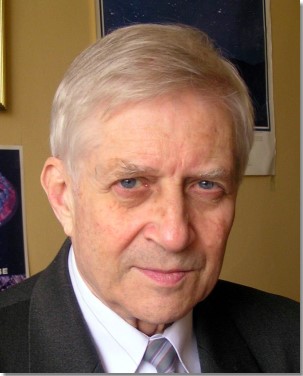 Nikolai S. Kardashev合作论文数Lebedev Physical Institute, Russian Academy of Sciences in Moscow1Roger A. Macgowan合作论文数1G. G. Getmantsev合作论文数1Nikolay S Kardashev合作论文数1Irving S Shapiro合作论文数1Donald G. Rea合作论文数1




