Vehicular named data networking (VNDN), which integrates the principles of named data networks with vehicular ad hoc networks, represents a promising paradigm for future intelligent transportation systems. Nevertheless, VNDN faces significant hurdles, including broadcast storms from excessive interest packet flooding and reverse-path disruptions due to high vehicular mobility. To address these challenges, we introduce an adaptive forwarding with path optimization method. First, a dynamic caching algorithm is designed to optimize roadside unit storage efficiency and maximize cache hit rates. Second, a gated recurrent unit-based adaptive data forwarding mechanism is introduced to dynamically select optimal forwarders and preserve reverse paths via decentralized heartbeat detection and interface remapping, improving link reliability. Simulation outcomes demonstrate that the proposed approach significantly lowers data retrieval delays while curbing overall communication overhead.
The integration of IoV and MEC leads to a surge in delay-sensitive content requests. In viaduct scenarios, 3D structures cause frequent LOS/NLOS transitions, posing challenges to traditional edge caching. This paper presents an edge intelligencebased adaptive caching framework with LSTM popularity prediction and DQN decision-making. Experiments on real-world SUMO trajectories show that our method achieves 77.35% cache hit ratio and 31.2 ms average latency, which outperforms baseline schemes by up to $\mathbf{6. 0 6 \%}$ and $\mathbf{1 1. 4 \%}$, respectively.
In Wireless Sensor Networks (WSNs), location technology is crucial for information sensing and processing. However, due to cost constraints, most sensor nodes are unable to obtain their own location information, making determining the location of unknown sensor nodes a critical issue. This paper aims to address three key issues in WSNs: accurate positioning accuracy, high positioning coverage, and minimizing energy consumption. Therefore, we model the coverage control problem of WSNs as a multi-objective programming problem and propose a Multi-Objective Whale Optimization Algorithm (MOWOA) based on reverse elite retention and Levy mutation. Our proposed algorithm combines reverse learning strategies and improves congestion calculation, adds learning rates and external solution set strategies, and combines a non-dominated sorting method based on reference points. Experimental results show that MOWOA can provide higher-quality non-dominated solutions, select suitable node locations, and optimize their performance metrics
There are many interference factors in the real world that are not related to facial expressions, such as background, lighting intensity, and changes in image resolution. In order to address the problem of facial expression recognition, this article proposes a fuzzy neural network enabled deep subspace domain adaptive fusion (FNN-DSDAF) by integrating the fuzzy logic module into the convolutional network structure. The fuzzy logic module integrates the powerful learning ability of deep networks can learn a set of robust Gaussian membership functions through a series of learnable Gaussian membership functions and logical operations. When training the classical normalized exponential loss function to force different categories of samples to maintain a certain distance in the learned feature space, FNN-DSDAF further uses the local hold loss function to make the local clusters within each category of samples more compact. The experimental results demonstrated that the fuzzy neural network had good feature decoupling ability and was suitable for facial expression understanding in real-world scenarios, and improve the accuracy, reliability, and robustness.
As a key application in the era of 5G communication, the demand for Quality of Service (QoS) in vehicle networks continues to increase, cloud-edge-end collaborative computing offloading has become a key technology, enabling vehicles to offload computing intensive tasks to edge servers or cloud servers to reduce their computing burden. Traditional algorithms often fail to jointly optimize energy consumption and latency while suffering from slow convergence. This paper proposes an Evolving Alternating Direction Multiplier Method (EADMM) aimed at enhancing user performance and optimizing computational offload strategies. Firstly, the EADMM algorithm takes into account the weights of delay and energy consumption, with the goal of minimizing the total cost of users. Then, it combines predictor-corrector to adjust the Lagrange multipliers to accelerate iteration. Finally, the convergence speed of EADMM algorithm is enhanced through dynamic penalty term updates. The experimental result shows that our proposed EADMM algorithm enhances the convergence and robustness of traditional algorithms, while reducing communication costs and computational delays.
The rapid increase of the number of motor vehicles over the last several decades has driven a corresponding increase in the severity of traffic congestion, which has exhibited a considerable human impact. Intelligent anti-collision control via inter-vehicle communication technology can facilitate vehicles adhering to spacing speed standards and improve road utilization and traffic efficiency. In this paper, we apply a deep learning image estimation model based on joint attention mechanism. The network framework uses a deep estimation network Yolov5 and a location based VANET information fast transmission strategy to work together. This paper mainly considers vehicle distance measurement technology as a point of entry to study multi-sensor information fusion for vehicle collision prevention technology based on the self-organizing vehicular ad-hoc network (VANET). This paper also proposes a solution based on the strategy of one-way transmission of shared information and dynamic valuation of a cluster distance threshold with vehicle density. The proposed vehicle anti-collision control algorithm is designed to realize dynamic vehicle control via inter-vehicle communication. In this paper, the two-way coupling of traffic flow and network simulator is used to randomly generate vehicle nodes on the road, and the behavior of the anti-collision system is simulated. The experimental results show that the predetermined control goal is achieved, which demonstrates the effectiveness of the proposed algorithm.
Vehicle-to-Everything edge computing accomplishes the goal of low latency by offloading tasks to edge computing servers, but how to reduce the computing latency of vehicle terminals while ensuring low energy consumption and load balance of servers is still a challenge. In order to address this issue, this paper proposes an adaptive computation offloading strategy based on Adaptive Alternating Direction Method of Multipliers (AADMM). Firstly, a distributed framework for multiple vehicles and multiple Road Side Units(RSUs) is constructed by comprehensively considering the weights of delay and energy consumption, with the optimization objective of minimizing the total system cost. Secondly, the original variables and dual variables are updated alternately, and the step size is dynamically adjusted based on the magnitude of variable updates, thereby progressively approaching the optimal solution. Finally, simulation experiments show that our proposed strategy can effectively reduce the system cost compared with other traditional algorithms under the comprehensive consideration of delay and energy consumption, and our proposed algorithm has better performance in terms of number of vehicles, speed of vehicles, size of the task, etc.
With the development of the Internet of Vehicles (IoV) industry, the introduction of cloud-edge collaboration has greatly enhanced the computing capabilities of vehicle networks. However, optimizing computing offloading and resource allocation strategies in IoV to reduce latency and energy consumption at the vehicle terminals remains a challenge. This paper proposes an Adaptive Computing Offloading and Resource Allocation Strategy (ACORAS) for IoV based on cloud-edge collaboration. Firstly, a Vehicles-Collaborative Road Side Units-Cloud (VCRSUC) system architecture is constructed by considering the use of idle resources on edge servers at remote Road Side Unit (RSU) to reduce the total cost at the vehicle terminals. Secondly, the discrete particle swarm optimization algorithm is combined with chaotic mapping and Cauchy mutation, and dynamically adjusts weights and learning factors based on variable updates. Finally, our proposed ACORAS gradually approaches the optimization of the computing offloading decisions and resource allocation decisions through iterative calculations. Simulation results show that our proposed ACORAS can effectively reduce the total cost while considering latency and energy consumption, demonstrating superior performance compared to traditional algorithms.
With the rapid growth of data demand and the rise of the Industry 5.0, cloud-edge collaborative computing achieves intelligent connectivity and data sharing between devices for intelligent management and optimization of the production process. Computational offloading, as a key technology in the cloud-edge collaborative computing environment, provides higher-quality user services and realizes higher data requirements for intelligent manufacturing and production. In this paper, we proposes an Improved Efficient Alternating Direction Method of Multipliers (IEADMM) for computational offloading in cloud-edge collaborative computing environment, aiming to reduce the total system cost with the optimization goal of minimizing the total time delay. The proposed IEADMM fully utilizes the Alternating Direction Method of Multipliers ADMM) to minimize the total delay by increasing the convergence speed. The experimental result shows that our proposed IEADMM has good performance and practicality for computational offloading in cloud-edge collaborative computing environment, and can be widely applied in practical application scenarios such as intelligent monitoring, Internet of Things (IoT), mobile games, etc.
As a direct application of 5G communications and computer technology, Vehicular Ad-Hoc Networks (VANETs) are already having a profound impact on all sectors of society. However, frequent changes in the topology of VANETs have resulted in poor vehicle communication quality, highly susceptible to communication link breaks and data transmission reliability decreases, and the cost of vehicular communication increases continuously. In this paper, an Adaptive K-medoids based on Greedy Perimeter Stateless Routing (AK-GPSR) algorithm is proposed in multi-channel vehicular network communication of urban scenario. It is an unsupervised learning algorithm, aiming to form high-quality link communication, more stable network topology, and improved data information transmission reliability. First, the proposed AK-GPSR algorithm applies Gap statistic to evaluate the K-medoids algorithm and select the best K value. Further, the K-medoids algorithm clusters the vehicles in the simulation area by the optimal K-value to divide the K clusters. Finally, the packets are forwarded from the source vehicle to the destination vehicle or Road Side Unit (RSU) using the forwarding method of the Greedy Perimeter Stateless Routing (GPSR) algorithm. The experimental results show that our proposed AK-GPSR algorithm has good performance and applicability in multi-channel vehicular network communication.
It is crucial to mine latent sentiments and opinions from comments on social media to comprehensively understand people’s preferences and experiences. Aspect-based sentiment analysis aims to identify the sentiment polarities for specific aspects of a sentence. Mainstream methods generally struggle to process sentences with complex syntactic structures and multiple aspects of different sentiment polarities. To overcome this challenge, this article proposes a dual-channel and aspect-aware graph convolutional network (DAGCN) model, which fully utilizes the syntactic and semantic information to accurately capture the sentiment features for specific aspects. Specifically, a syntactic graph convolutional network module is designed to effectively learn syntactic information by constructing an aspect-oriented dependency tree and employing a gated aggregator. To reduce the semantic interference from multiple aspects, a semantic graph convolutional network module is developed to capture both local and global semantic correlations corresponding to specific aspects. Furthermore, a BiAffine module is integrated to facilitate the interaction between the syntactic and semantic information. Experiments on four benchmark datasets illustrate that our proposed DAGCN significantly outperforms state-of-the-art baselines.
With the development of the mobile communication technology, a wide variety of envisioned intelligent transportation systems have emerged and put forward more stringent requirements for vehicular communications. Most of computation-intensive and power-hungry applications result in a large amount of energy consumption and computation costs, which bring great challenges to the on-board system. It is necessary to exploit traffic offloading and scheduling in vehicular networks to ensure the Quality of Experience (QoE). In this paper, a joint offloading strategy based on quantum particle swarm optimization for the Mobile Edge Computing (MEC) enabled vehicular networks is presented. To minimize the delay cost and energy consumption, a task execution optimization model is formulated to assign the task to the available service nodes, which includes the service vehicles and the nearby Road Side Units (RSUs). For the task offloading process via Vehicle to Vehicle (V2V) communication, a vehicle selection algorithm is introduced to obtain an optimal offloading decision sequence. Next, an improved quantum particle swarm optimization algorithm for joint offloading is proposed to optimize the task delay and energy consumption. To maintain the diversity of the population, the crossover operator is introduced to exchange information among individuals. Besides, the crossover probability is defined to improve the search ability and convergence speed of the algorithm. Meanwhile, an adaptive shrinkage expansion factor is designed to improve the local search accuracy in the later iterations. Simulation results show that the proposed joint offloading strategy can effectively reduce the system overhead and the task completion delay under different system parameters.
The customized bus operating mode based on passenger demand is an effective way to solve the problem of bus services in low travel density areas such as urban fringe areas, ensure the profitability of bus enterprises, and promote the development of customized bus and other emerging bus. First, this study introduces the concept and operating principle of customized bus, determines the advantages and disadvantages of customized bus, evaluates the relevant theories of customized bus lines and station planning, and determines the principles of customized bus lines and station planning. Second, according to the characteristics of customized bus, this study proposes a novel customized bus line and station planning method completely based on passenger travel demand, including travel demand data processing, traffic community division, joint station planning, the establishment of a customized bus line planning model, and the solution of the planning model. Finally, the proposed planning method and improved ant colony optimization and clustering are verified by simulation experiments. The experimental results show that the station line planning method proposed in this paper can better realize the line planning of demand-responsive customized bus as well as meet diverse passenger travel needs.
最优化方法是现代管理科学的重要理论基础和不可缺少的方法,被人们广泛地应用到计算机科学、智能科学与技术、经济管理、国防等领域.最优化理论与方法课程是高校人工智能专业一门专业必修课程,为学生熟悉现代最优化理论及方法的设计和应用打下良好的基础.文章探讨了该课程实践教学的现状及其存在的问题,分析了该课程目标达成度与实践教学创新性体系的研究方法与实践措施.
为了解决传统的协同过滤推荐算法计算用户之间相似性度量时,忽略用户与物品之间的相似关系导致推荐性能下降的问题,设计了一种结合遗忘机制与用户相似度的推荐算法.该算法基于用户-用户和物品-物品余弦相似度值和关系二元性,同时引入遗忘机制,根据用户对物品的评分以及记忆留存率进行偏好权重计算,再通过仔细合并相似度的值提高系统的覆盖率和点击率.通过在数据集MovieLens上与其他链接预测算法进行对比实验,结果证明该算法的命中率相较于其他算法提高了约 7%,覆盖率略高于现有算法.
With the increasing demand for intelligent transportation systems, short-term traffic flow prediction has become an important research direction. The memory unit of a Long Short-Term Memory (LSTM) neural network can store data characteristics over a certain period of time, hence the suitability of this network for time series processing. This paper uses an improved Gate Recurrent Unit (GRU) neural network to study the time series of traffic parameter flows. The LSTM short-term traffic flow prediction based on the flow series is first investigated, and then the GRU model is introduced. The GRU can be regarded as a simplified LSTM. After extracting the spatial and temporal characteristics of the flow matrix, an improved GRU with a bidirectional positive and negative feedback called the Bi-GRU prediction model is used to complete the short-term traffic flow prediction and study its characteristics. The Rectified Adaptive (RAdam) model is adopted to improve the shortcomings of the common optimizer. The cosine learning rate attenuation is also used for the model to avoid converging to the local optimal solution and for the appropriate convergence speed to be controlled. Furthermore, the scientific and reliable model learning rate is set together with the adaptive learning rate in RAdam. In this manner, the accuracy of network prediction can be further improved. Finally, an experiment of the Bi-GRU model is conducted. The comprehensive Bi-GRU prediction results demonstrate the effectiveness of the proposed method.
Virtualization technology provides a new way to improve resource utilization and cloud service throughput. However, the randomness of task arrival, tight coupling between resource load imbalance and node heterogeneity, high computing power, and other factors have hindered the energy consumption optimization and cost reduction objectives of the existing technology. Consequently, task scheduling failure cannot be easily eliminated, and cloud computing performance is decreased dramatically. In this study, a strong agile response task scheduling optimization algorithm is proposed on the basis of the peak energy consumption of data centers and the time span of task scheduling. Agile response optimization techniques are also adopted. From the perspective of task failure rate, the proposed algorithm can be used to investigate the strong agile response optimization model, explore the probability density function of the task request queue overflow, and request a timeout to avoid network congestion. Experimental results indicate that the proposed algorithm can achieve the stability and efficiency of task scheduling and effectively improve the throughput of the cloud computing system.
The spectrum sensing performance depends on the accuracy of the detection about whether primary users are busy or idle. Previous studies on cognitive radio spectrum sensing have shown that the cooperation between secondary users can improve their spectrum detection performance in real cognitive networks. Aiming at the problem of threshold mismatch of energy detectors under noise power uncertainty, a cooperative spectrum sensing method with dynamic dual threshold is proposed. Firstly, the utility function is defined with the objective of minimizing the error probability of spectrum sensing, and the optimum threshold of energy detector is derived. Secondly, in order to mitigate the influence derived from noise uncertainty, an effective dynamic dual threshold adjustment mechanism is presented, and the optimizing combinative fusion rule is discussed with the prerequisite of the minimum global error probability. In addition, in view of insufficient number of cognitive users whose sensing results lie in decision zones, the parameter of credibility is defined to choose the secondary users with reliable local detection for final fusion. Simulation results show that our proposed method can mitigate the influence of noise uncertainty and increase the spectrum sensing accuracy compared with other existing methods.
When directly operated in an image, good results are always difficult to achieve via conventional methods because they have poor high-dimensional performance. Support vector machine (SVM) is a type of machine learning method with solid foundation that is developed based on traditional statistics. It is also a theory for statistical estimation and predictive learning of objects. This paper optimizes the structure of SVM classification tree with differential evolution (DE) and designs the corresponding DE algorithm to effectively solve the problem of image classification of complex background cases in smart city management systems. In the training process of SVM classification tree, it obtains an optimal two-class classification scheme in every node by means of DE, initially separates the classes that are easy to be separated and then the less easy ones, and finally adaptively generates the best classification tree. The simulation experiment proves that the proposed algorithm is effective when applied to smart city management systems.
Industrial wireless sensor network (IWSN) has changed the information transmission way for existing industrial control system. In mobile sink-based industrial wireless sensor networks, the energy consumption optimization for data collection has always been a hot research issue. To meet the delay requirements and minimize energy consumption, a data collection strategy based on ant colony optimization with mobile sink is proposed for industrial wireless sensor networks. Firstly, in order to reduce the number of nodes directly accessed by sink and shorten the traversed path, the selection of rendezvous nodes based on entropy weight method is introduced according to the density of nodes, relative residual energy, and the degree of uniformity of distribution. Then, secondly, an ant colony optimization algorithm is proposed to obtain the optimal access path for mobile sink, which can achieve a trade-off between the energy consumption of the network and transmission delay. The simulation results show that, compared with the existing algorithms, the proposed algorithm can minimize the delay and prolong the lifetime of the network.
 Lixin Ding (丁立新)合作论文数School of Computer Science, Wuhan University9BingJiao He (何秉姣)合作论文数7XiaoNian Tong (童小念)合作论文数7
 Shenwen Wang合作论文数7
 Shijue Zheng (郑世珏)合作论文数School of Computer, Central China Normal University6Gao Li合作论文数5
 Wei Wang合作论文数School of Electronics and Information Engineering, Sichuan University5Guangdong Chen合作论文数4
 Shangping Dai (戴上平)合作论文数School of Computer Science, Central China Normal University4Jianhua Du (杜建华)合作论文数4Shaoliang Nie (聂绍良)合作论文数3Ken Cai (蔡肯)合作论文数仲恺农业工程学院自动化学院3Yan Li (李燕)合作论文数College of Science of Huazhong Agricultural University3Xiong Wang (王雄)合作论文数清华大学自动化系3
 Naixue Xiong合作论文数Department of Computer, Mathematical and Physical Sciences, Sul Ross State University3
 Datong Xie合作论文数3Xuanxuan Feng合作论文数2Hua YANG (杨华)合作论文数2Huixia Jin合作论文数Hunan City University(Hunan City University),Yiyang,China2RunZe Wan (万润泽)合作论文数2
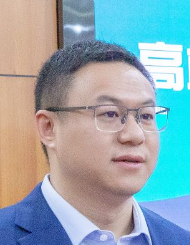 Fengjun Hu (胡峰俊)合作论文数Zhejiang Shuren University2Jingyi Ma (马景奕)合作论文数2Bojin Zheng (郑波尽)合作论文数中南民族大学计算机科学学院2
 Wenhua Du合作论文数2
 Rongbo Zhu (朱容波)合作论文数College of Informaticis, Huazhong Agricultural University2
 Tengyue Mao合作论文数2
 Cheng Wang Xie合作论文数2Guozhang Jiang (蒋国璋)合作论文数1Hengcheng Yang合作论文数1
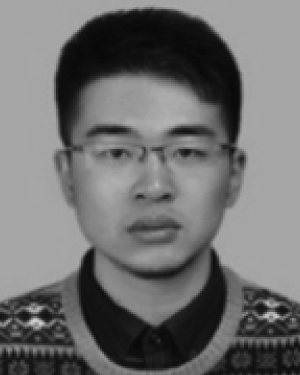 Zeweiyi Gong合作论文数1
 Dicheng Chen合作论文数1xie chenwang合作论文数1Jianbo Wen合作论文数1
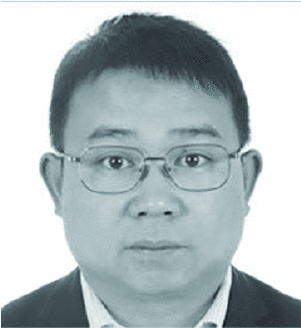 Mingwei He合作论文数1
 Xin Ouyang合作论文数1Shaobo Zhong合作论文数1Tianwen Bao合作论文数1Dongqiu Zhang合作论文数1Lu Dai合作论文数1
 Jianmin Wang (王建民)合作论文数Institute of Information Systems Engineering, School of Software, Tsinghua University;MEM Education Center, Tsinghua University1Chunhua Ma合作论文数1Dongsheng Liu合作论文数1Chen Guo合作论文数1Gongfa Li合作论文数1li ya合作论文数1Yang Hua合作论文数1




