近日,中国电器工业协会燃料电池分会(简称"分会")在山西大同召开分会年会暨一届五次理事会.来自高校、科研院所、企业等的68位代表参加了会议.分会理事长孙公权研究员出席会议并讲话.孙公权理事长指出分会应在三个方面加强职能建设:一、政府沟通.积极向政府汇报行业发展情况,反映行业诉求,为政策制定提供建议,做好政府支撑工作;二、平台建设.联合优势科研院所和企业,建立技术、标准、检测及认证、商务、投资等专业培训平台,全方位、多角度开展行业服务工作,不断提高分会影响力;三、会员服务.提供如《燃料电池产业发展研究报告》、《燃料电池选型手册》、《Fuel cell 星火期刊》等优质信息和技术咨询服务;开展技术交流、会议研讨、企业调研等活动,为燃料电池全产业链的技术交流、商务合作搭建桥梁.
近日,能源行业高温燃料电池标委会在山西大同召开了标委会年会暨标准审查会.清华大学教授韩敏芳、中国华能集团清洁能源技术研究院有限公司总工程健等来自高校、研究院所、企业等单位的41名代表出席了会议.会议由中国电器工业协会标准中心主任张亮主持. 主任委员韩敏芳发表讲话,肯定了标委会2018年的工作,希望所有委员能够积极参与标委会的工作,共同推动高温燃料电池标准化工作.会议邀请中国电器工业协会徐元凤室主任做了新标准化法和标委会管理办法的培训.张亮主任代表秘书处做了2018年标委会工作报告并做IEC/TC105燃料电池国际标准化情况介绍. 会上审议了标准体系、2019年行业标准计划项目、会议安排及委员调整情况,并审查通过了《固体氧化物燃料电池 术语》标准.深入讨论了5项能源行业标准草案.
本文用热水法制备了不同Pr掺杂量的花状Ce x Pr 1-x O 2-δ 固溶体材料,并研究了其结构特性以及对CO氧化的催化活性。实验发现随着Pr掺杂量的增加,Ce x Pr 1-x O 2-δ 固溶体中的氧空位含量不断增加,当Pr掺杂量为30mol.%时,氧空位含量最高。10mol.%Pr掺杂的样品在CO氧化催化反应中活性最好,这可能跟Ce元素的还原性能和氧空位含量有关。
本文介绍了固体氧化物燃料电池的工作原理、技术特点和发展历史,同时对燃料电池在热电联产/分布式发电、大型发电和作为汽车增程器在交通领域的应用进行了分析.
近日,能源行业液流电池标委会在北京召开了第二届能源行业液流电池标委会换届大会暨2018年年会.中国电器工业协会郭振岩副会长兼秘书长、国家能源局能源节约和科技装备司彭杨涵工程师出席了会议并发表讲话.来自高校、研究院所、企业等单位的56名代表出席了会议.会议由中国电器工业协会标准中心张亮主任主持. 郭振岩副会长首先对各位委员对标委会秘书处工作的支持表示感谢.郭会长指出:一、传统发电方式对国家能源结构和环境造成了很大困扰,近几年来新能源发电量增长速度飞快,对各种储能技术提出了更高更多要求.储能作为电网中最重要的一环,受到了国家的大力支持.液流电池作为一种重要的电力储能技术,具有广阔的发展前景.标委会要实现纽带作用,强化国家各部委及标委会委员单位之间的联接,共同开展相关科研、工程及标准化项目.二、2018年1月国家新标准化法开始实施,其中对标准化工作提出了很多要求,标委会应认真学习新的标准化法,优化标委会管理流程,适时开展标准化培训,落实标准化改革精神.最后郭会长希望标委会在储能领域发挥更大作用.
第82届IEC(国际电工委员会)大会近期在韩国釜山举行,同期召开了IEC/TC21(蓄电池技术委员会)/JWG7(液流电池联合工作组)工作组会议.能源行业液流电池标委会主任委员、中国科学院大连化学物理研究所张华民研究员牵头起草的IEC 62932-2-1《固定式用液流电池系统第2-1部分:通用性能要求及试验方法》国际标准获得了国际专家的认可,进入FDIS阶段(最终国际标准草案阶段),计划2019年5月发布出版.
This article reviews the applications of MXene materials used in fuel cells. MXene is a new family of two-dimensional transition metal carbides and carbonitrides materials. This kind of materials can usually be produced by etching the A element from the MAX phases. For the good electrical conductivity, hydrophilicity, transparency and flexibility, MXenes will be good candidates in the fields of catalysis, energy storage, composite materials, sensor, antibiosis and so on. The synthetic methods, structure, chemical stability and electronic characteristics of MXenes are briefly introduced in this paper. The applications of these materials in fuel cells are summarized, especially as Pt catalyst supporters. MXene supported Pt catalysts exhibit high activity and stability for oxygen reduction reaction. At the end of the article, some problems and challenges of MXene used in fuel cells and as catalysts supporters are proposed.
中国电器工业协会燃料电池分会 (简称"燃料电池分会") 一届四次理事会于2018年7月27日在北京召开.燃料电池分会正、副理事长, 理事及代表共25人参加会议.中国电器工业协会副会长兼秘书长郭振岩出席会议, 会议中国电器工业协会燃料电池分会代理秘书长张亮主持.
第二次工业革命以来,人类的生存和发展主要依赖于化石能源(煤炭、石油和天然气),世界能源消费结构中化石能源比例大于80%,中国的化石能源比例更大(大于90%).化石能源是一类不可再生资源,需要经过数百万年乃至上亿年才能形成,且传统的化石能源利用方式会产生碳氧化物、硫氧化物等环境污染物.世界各国为了争夺石油资源,不断引发战争;石油开采和精炼过程中产生的有毒有害气、液体,严重污染了环境;各国海洋石油勘探开发溢油污染事故频发,对海洋环境保护和近邻居民的生活带来了巨大的危害.为了降低对化石能源的依赖和降低温室气体排放,世界各国都在大力发展可再生能源,如风能、太阳能、生物质能、氢能、燃料电池等.
Nanostructured ceria materials have attracted wide attention as catalysts, and the doping of these materials with rare earth elements to modify their catalytic activity has been comprehensively investigated. A novel type of Ni-doped hierarchical nanostructured peony-like ceria (PCO) has been prepared and its catalytic activity is investigated and compared with that of Ni-loaded samples. The prepared Ni-doped ceria have nanoscale grain sizes and open mesopores. This unique morphology endows it with superior catalytic activity for the oxidation of CO and the partial oxidation of methane. It is found that extra oxygen vacancies are generated in the ceria, and the reducibility of the ceria is highly enhanced after Ni-doping. The catalytic activity for CO oxidation is improved after Ni-doping, compared with that of pure ceria and Ni-loaded ceria. In the reaction for the partial oxidation of methane, the 3.8 atm% Ni-loaded PCO sample realizes a higher CH4 conversion than the Ni-doped ceria. However, it is found that the onset temperature for CH4 conversion decreases from 400 degrees C for the pure PCO and 3.8 atm% Ni-loaded PCO sample, to 340 degrees C for the 5.7 atm% Ni-doped PCO sample. (C) 2013, Dalian Institute of Chemical Physics, Chinese Academy of Sciences. Published by Elsevier B.V. All rights reserved.
Solid oxide fuel cells (SOFCs) are electrochemical reactors that can directly convert the chemical energy of a fuel gas into electrical energy with high efficiency and in an environment-friendly way. The recent trends in the research of solid oxide fuel cells concern the use of available hydrocarbon fuels, such as nature gas. The most commonly used anode material Ni/YSZ cermet exhibits some disadvantages when hydrocarbons were used as fuels. Thus it is necessary to develop alternative anode materials which show a mixed conductivity under fuel conditions. This article reviews the recent developments of anode materials for SOFCs with carbon-based fuels. The future trend in this field is briefly summarized as well.
Cerium oxide is a promising material for electrodes and electrolytes of solid oxide fuel cells (SOFCs). Lowering the sintering temperature of the electrolyte will bring a lot of benefits to the fabrication of SOFCs. This paper evaluates the feasibility of using lithium oxide as a sintering aid to reduce the densification temperature of samarium-doped ceria (Ce0.8Sm0.2O1.9, SDC) by SEM and electrochemical impedance spectroscopy. It is shown that the addition of Li2CO3 can indeed decrease the sintering temperature of SDC. More attention is paid to understand the aiding mechanism of Li2CO3. Raman spectroscopy and thermal analysis indicate that it is Li2O, a decomposition product of Li2CO3, that facilitates the sintering by way of a liquid phase sintering effect on the grain boundaries of SDC. These findings help to promote the application of ceria-based electrolytes for intermediate temperature SOFCs.
Herein, we introduce a novel material of flowerlike mesoporous CeO2 microspheres with nanointerspace, which was a kind of multifunctional material for both clean and renewable energy technologies. Catalyst of nickle oxide based on flowerlike cerium microspheres with high dispersion was made to achieve simultaneous dehydrogenation of ethanol and water molecules on multiactive sites. This special morphology catalyst represented novel stability more than 2000 h for hydrogen production at low temperature ethanol steam reforming. And, the molecules of poisonous volatile organic compounds (VOCs) such as benzene, HCN and so on could be adsorped chemically by this CeO2 microspheres based materials easily at room temperature. And, carbon monoxide could be converted to carbon dioxide lower than 100 degrees C by this CeO2 microspheres based materials, without rare metals.
Cu, Mn and Ag nanoparticles are loaded on nanostructured mesoporous CeO2 as catalysts for CO oxidation. The Cu/CeO2 catalyst exhibits an obvious deactivation after the stability test at 95 degrees C for 60 h. This is caused by carbon deposition as confirmed by FTIR spectroscopy, Raman spectroscopy and thermogravimetry-differential scanning calorimetry-mass spectroscopy (TG-DSC-MS) analysis. It is found that the Cu-Mn or Cu-Ag binary metal catalysts supported on the nanostructured CeO2 exhibit much improved activity and stability in CO oxidation. In ease case, carbon deposition is absent in the similar stability test, due to enhanced oxygen adsorption property.
Previously, hydrothermally prepared mesoporous peony-like ceria (PCO) material was shown to exhibit superior catalytic properties for CO oxidation and ethanol reforming. Ni supported PCO had been shown to have high activity for ethanol steam reforming at low temperature. In this work, Ag, Cu and Mn is co-loaded with Ni on PCO catalysts by impregnation method. The catalysts were studied by X-ray diffraction (XRD), scanning electron microscopy (SEM), and a combined thermogravimetry, differential scanning calorimetry, and mass spectrometry (TG-DSC-MS). It was found that all the catalysts gave 100% ethanol conversion above ca. 300°C and exhibited similar H2 yield. It is found that the severe coking problem for the Ni-loaded PCO catalyst was alleviated significantly if Ag, Cu or Mn is co-loaded. Among them, the addition of Mn is the most effective in reducing carbon formation.
Mesoporous peony-like ceria has been previously investigated to exhibit superior catalytic properties for CO oxidation, ethanol reforming and anode catalysts for low temperature SOFC. In this work, morphological and catalytic stability are investigated upon heat treatments in reducing and oxidizing atmosphere at temperatures between 300 and 600°C. Although the peony-like appearance remains stable upon heat treatment at 600°C for up to 72h, the BET surface area decreases from 150 to 30m2g−1 with nanocrystalline size increased from 6 to 15nm. Catalytic activity of CO oxidation decreases such that T50 (temperature for 50% conversion) increases from 153 to 197°C. Although morphological variation is more prominent significant upon treatment in reducing atmosphere, the catalytic activity for CO oxidation degrades less than in oxidizing atmosphere. Oxygen vacancies produced upon reduction treatment are responsible for the superior catalytic activity despite the morphological disadvantage.
Catalysts of nano-sized nickel oxide particles based on flowerlike lanthanum oxide microspheres with high disperse were prepared to achieve simultaneous dehydrogenation of ethanol and water molecules on multi-active sites. XRD, SEM, 77K N-2 adsorption were used to analyze and observe the catalysts' structure, morphology and porosity. Catalytic parameters with respect to yield of H-2, activity, selectivity towards gaseous products and stability with time-on-stream and time-on-off-stream were all determined. This special morphology NiO/La2O3 catalyst represented more than 1000 h time-on-stream stability test and 500 h time-on-off-stream stability test for hydrogen fuel production from ethanol steam reforming at 300 degrees C without any deactivation. During the 1000 h time-on-stream stability test, ethanol water mixtures could be converted into H-2, CO, and CH4 with average selectivity values of 57.0, 20.1, 19.6 and little CO2 of 3.2 mol%, respectively, and average ethanol conversion values of 96.7 mol%, with H-2 yield of 1.61 mol H-2/mol C2H5OH. During the 500 h time-on-off-stream stability test, ethanol water mixtures could be converted into H-2, CO, CH4 and CO2 with average selectivity values of 65.1, 17.3, 15.1 and 2.5 mol%, respectively, and average ethanol conversion values of 80.0 mol%. For the ethanol-H-2 and petrolic hybrid vehicle (EH HV), the combustion value is the most important factor. So, it was very suitable for the EH HV application that the low temperature ethanol steam reforming products' distribution was with high H-2, CO, CH4 and very low CO2 selectivity over the special NiO/La2O3 flowerlike microspheres. (C) 2010 Professor T. Nejat Veziroglu. Published by Elsevier Ltd. All rights reserved.
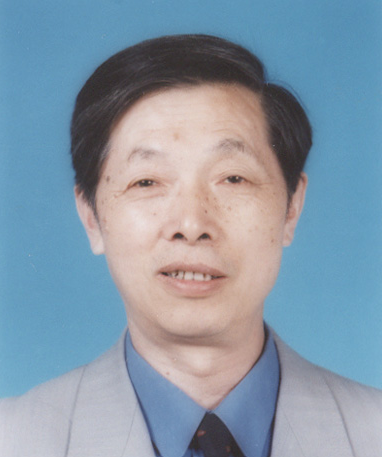 Liquan Chen (陈立泉)合作论文数University of Chinese Academy of Sciences;Institute of Physics, Chinese Academy of Sciences6
 Hong Li (李泓)合作论文数Beijing National Laboratory for Condensed Matter Physics, Institute of Physics, Chinese Academy of Sciences;University of Chinese Academy of Sciences5
 Chunwen Sun (孙春文)合作论文数School of Chemical & Environmental Engineering, China University of Mining and Technology (Beijing)4
 L Chen合作论文数3LI Ji-gang (李纪刚)合作论文数3
 Zhaoxiang Wang (王兆翔)合作论文数Institute of Physics, Chinese Academy of Sciences;University of Chinese Academy of Sciences2Jie Sun合作论文数2Ligong Zhang合作论文数2
 Jong-Sook Lee合作论文数School of Materials Science and Engineering, Chonnam National University2Yulong Cheng (程玉龙)合作论文数2
 Shaofei Wang (王少飞)合作论文数Dept Chem Engn, Univ Rochester1肖睿娟合作论文数中国科学院大学物理研究所1
 Siqi Shi (施思齐)合作论文数School of Materials Science and Engineering, Shanghai University1C. Q. Qin合作论文数1Z. C. Donga合作论文数1Hiromoto Ii合作论文数1Tong Zhou合作论文数1G. Chang合作论文数1
 Zhaohui Ma合作论文数1
 Kai Yang (杨凯)合作论文数Institute of Applied Ecology, Chinese Academy of Sciences;University of Chinese Academy of Sciences1
 Shuai Li合作论文数Faculty of Information Technology and Electrical Engineering, University of Oulu1Guoliang Xiao合作论文数Institute of Physics, Chinese Academy of Sciences1




