This brief review is reported on the preparation and properties of thick film of high temperature superconductor,and application of the thick film is also depicted for the microwave passive devices.
Two batches of C60 films were prepared via sublimation on Ag (111) at two different growth rates. X-ray diffraction revealed in them a preferential (111) orientation and substantial stacking faults. Their dielectric spectra at various temperatures between 80 and 300K showed broad and asymmetric loss peaks attributable to some orientational glass transition. The nominal activation energies evaluated for the two batches are 344 and 305meV, respectively, larger than the value of 280meV for bulk C60. Applying Ngai’s correlated-state model, we determine the real activation energy, which then agrees well with the bulk value. We propose that, under the ac field, molecular volume changes accompany orientational “jumps” and cause local alternating stresses at grain boundaries, which correlate with the dipole reorientations. This correlation explains the deviation from Debye relaxation behavior and the increase in apparent activation energy.
The spin-polarized quasiparticles injection in YBCO film has been studied by means of current injection into NdSrMnO / SrTiO / YBaCuO heterostructures. Six injection junction windows are all 56μm wide, but 80μm, 40μm, 20μm, 10μm, 5μm, and 2μm long, respectively. Under I inj=0.5 Ma , injection efficiency η increases gradually with the decrease of injection junction length L, but η hardly varies when L is less than 20ηm. ηmax is more than 6. These experiment results are related with the spin diffusion length of spin-polarized quasiparticles in a-b plane of YBCO film. "Current-adding principle" would be used carefully to explain the experiment phenomena.
Two batches of C 60 films were grown at different growth rate, using a vacuum deposition technique. X-ray diffraction patterns indicate both films have preferential (111) orientation. We measured their dielectric constant and loss factor from 80K to room temperature, and observed distinct broad and asymmetric loss peaks, attributed to orientational glass transition. The apparent activation energy was determined as 344.4 and 304.8 meV for film A and B respectively, larger than the value 280 meV in bulk C 60. Ngai's correlated-state model is used to simulate relaxation spectrum, and the real activation energies were calculated, which agree with the reported activation value in bulk C 60 very well. We propose that the structure imperfection have contributed additional dipole correlation interactions, which make the relaxation behavior of our C 60 films deviate from that of bulk C 60.
Multilayer structure YBa2Cu3O7−δ (YBCO)/LaNiO3 (LNO)/SrTiO3 (STO)/MgO has been carefully studied in the hope that it can be used for applications such as quasiparticle injection or Josephson junction fabrication. Deposited by pulsed laser, LNO on STO-buffered (100) MgO has low resistivity, good metallic characteristics, and very smooth surface (with a mean-square-root roughness of less than 3 nm). After the deposition of LNO, YBCO film can be grown in situ on it, showing good superconducting properties with a critical temperature above 81 K and a narrow transition width below 1.5 K. X-ray diffraction analyses have indicated that all the deposited films are highly c-axis-oriented.
To look at a quasi-particle injection into high Tc superconductors, YBa2Cu3O7−δ/insulator/LaNiO3 (YBCO/I/LNO) trilayers have been grown on (100) SrTiO3 substrates in situ by pulsed laser deposition (PLD), where, an insulator (I), SrTiO3 (STO), CeO2 (CO) or Eu2CuO4 (ECO) are used. All the deposited films are highly oriented. The surface morphology of LNO and the insulating films is investigated during fabrications after the films are made, revealing small roughness and low droplet density. The top YBCO layer exhibits good superconducting properties with a critical temperature above 82 K and a transition width as sharp as 1.5 K.
We have deposited Eu-2CuO-4(ECO) buffer layers and YBCO thin films on LaAlO-3(100) substrates by pulsed laser deposition(PLD) methods. The results of X-ray diffraction show that ECO thin films were grown along c-axis orientation. Superconducting trasition temperature T-c of the YBCO thin films with the ECO buffer layers was about 87K. The results above suggest ECO should be used as buffer layers for growing of high-T-c superconductor.
在Bi 2 Sr 2 CaCu 2 O 8+x 单晶上制备了具有台式结构的本征.Josephson结,成功地观察到了本征结特有的电压-电流(I-V)特性曲线,包括多分支结构、具有低临界电流的表面结以及准粒子分支上的亚能隙结构,并给出了相应的物理解释.在30K时本征结的能隙电压为20mV.此外,内禀结的Ic-T曲线和D x~2-y~2 波对称超导体沿c轴方向Ic-T关系理论计算结果基本符合.其dI/dV-V关系曲线大致呈V型,与具有s波配对对称性超导体所呈现的U型的dI/dV-V曲线有明显不同,体现了Bi 2 Sr 2 CaCu 2 O 8+x 具有d x~2-y~2 波配对对称性.
In this paper, we did some research on the dielectric properties of SrTiO-3(STO) thin film and its application in the frequency tuning of microwave devices. On the base of corresponding theory analysis and software simulation, we obtained the relationship between some electronic parameters, such as frequency modulation range and quality factor, of a microstrip-line resonator and its structure parameters. We have fabricated the tuning section using interdigital YBCO electrodes and a STO thin film by the pulse laser deposition method and have investigated its tuning properties by using a scanning microwave near-field microscope.
The structures of two ion-pair complexes, which consist of 1-(4'-R-benzyl) pyridinium (R=NO2 (1), Br (2)) and bis(maleonitriledithiolato) cuprate(II), have been determined by X-ray single crystal analyses, and the results show the stacking patterns in 1 and 2 are different from each other although the difference between the molecular structures of these complexes is only the substituent of the benzene ring, which may arise from the difference of interactions between cations and anions in these two complexes. Complex 1 crystallizes in the non-centrosymmetric space group P1, and dielectric measurements shows ferroelectric behavior with a small hysteresis loop. Quantum chemistry calculation further indicate the electric dipole in a unit cell is 56.5509 Debye, and DSC analysis reveal a T-c of 377 K, from the paraelectric to the ferroelectric phase. The magnetic susceptibilities of these two complexes measured in the temperature range 1.8-260 K show an antiferromagnetic coupling feature between neighboring Cu(II) ions with theta=-0.580 K for 1 and -2.167 K for 2. The polycrystalline EPR spectra of the two complexes at room temperature are different from each other, characterized axial g tensors are g(parallel to) of 2.09, g(perpendicular to) of 2.02 for 1, and g(parallel to) = 2.05, g(perpendicular to) = 2.03, A(parallel to) = 40.6x10(-4) cm(-1) for 2.
We have investigated HTS step-edge junction on the LaAlO-3 substrate. The steep step with the gradient angle more than 70° has been fabricated by means of metal transfer lift-off and ion-etching techniques. The characteristic of the junction is similar to that of SNS junction. Under the microwave radiation at 9.5GHz, the Shapiro step has appeared and temperature window of the junction has been observed.
对YBa2Cu3O7-δ(YBCO)微桥中准粒子注入进行了讨论, 利用几种注入模型, 演示了准粒子注入效应、电流叠加效应和热效应, 得到了准粒子注入下的电流增益及其与温度的关系, 对YBCO的超导微桥的临界电流实现了压缩, 并提出了一种新的注入模型.
In traditional fabrication of Josephson junctions, chemical etching or ion beam etching is used to form the special figure of junctions. Etching often brings negative effect to HTS thin films. A new method to fabricate high-quality YBa-2Cu-3O-7/YSZ bicrystal Josephson junctions by heat-resistant microshadow mask technique is introduced in this thesis .The characteristics of the junction are presented. Experiment on frequency mixing using junctions fabricated with this technique will be carried on.
In this paper, we established a microwave scanning near-field microscope to characterize the local microwave properties of high temperature superconducting thin film and devices. Using a coaxial cavity together with a niobium tip as the probe, the microwave surface resistance can be imaged nondestructively at 3 GHz for thin film samples with a spatial resolution of several micrometers. Temperature dependence of the local microwave property can also be obtained through a temperature controlled sample stage cooled by liquid nitrogen. With this technique, we have studied the local microwave characteristics, especially the microwave surface resistance of the high temperature superconducting thin film and device. We believe this technique would be quite helpful in evaluating and improving the performance of the superconducting microwave devices.
Ultrathin Al2O3 films have been deposited on n-Si substrates by low-pressure metalorganic chemical vapor deposition (MOCVD) as gate dielectrics for next generation MOSFET applications. Al(acac)3 was used as metalorganic precursor. Impacts of substrate temperature and post-annealing in O2 or N2 on equivalent oxide thickness (EOT), leakage current density (JA) and carbon residue of Al2O3 films have been studied. It is found that post-annealing is necessary for ultrathin Al2O3 films to obtain good electrical properties. The EOT shows slight deposition temperature dependence and the lowest EOT value with ∼0.8 nm is obtained at 600 °C. Typical Al2O3 ultrathin films have larger frequency dependence and EOT of ∼1.2 nm with JA of 36 mA/cm2 at Vg=+1 V. AES depth profiles demonstrate that post-annealing in an O2 atmosphere could effectively eliminate the carbon contamination of Al2O3 films. Meanwhile, further post-annealing in N2 could decrease the JA of Al2O3 films to 8 mA/cm2.
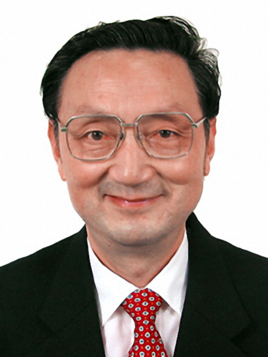 Peiheng Wu (吴培亨)合作论文数School of Electronic Science and Engineering, Nanjing University;Nanning Normal University;Superconducting Electronics Research Institute, Nanjing University76
 Lin Kang (康琳)合作论文数School of Electronic Science and Engineering, Nanjing University43
 Yijun Feng (冯一军)合作论文数School of Electronic Science and Engineering, Nanjing University28
 M. Ji合作论文数26Zhengming Ji合作论文数25
 Weiwei Xu (许伟伟)合作论文数School of Electronic Science and Engineering, Nanjing University23
 Lixing You (尤立星)合作论文数Shanghai Institute of Microsystem and Information Technology, Chinese Academy of Sciences;University of Chinese Academy of Sciences19G.D.Zhou (周赣东)合作论文数12
 Weixing Cai (蔡卫星)合作论文数Department of Medical Physics, Memorial Sloan Kettering Cancer Center12Q. H. Cheng合作论文数12
 Huabing Wang (王华兵)合作论文数School of Electronic Science and Engineering, Nanjing University10
 Guozhu Sun (孙国柱)合作论文数School of Electronic Science and Engineering, Nanjing University9Zhijian Sun合作论文数8
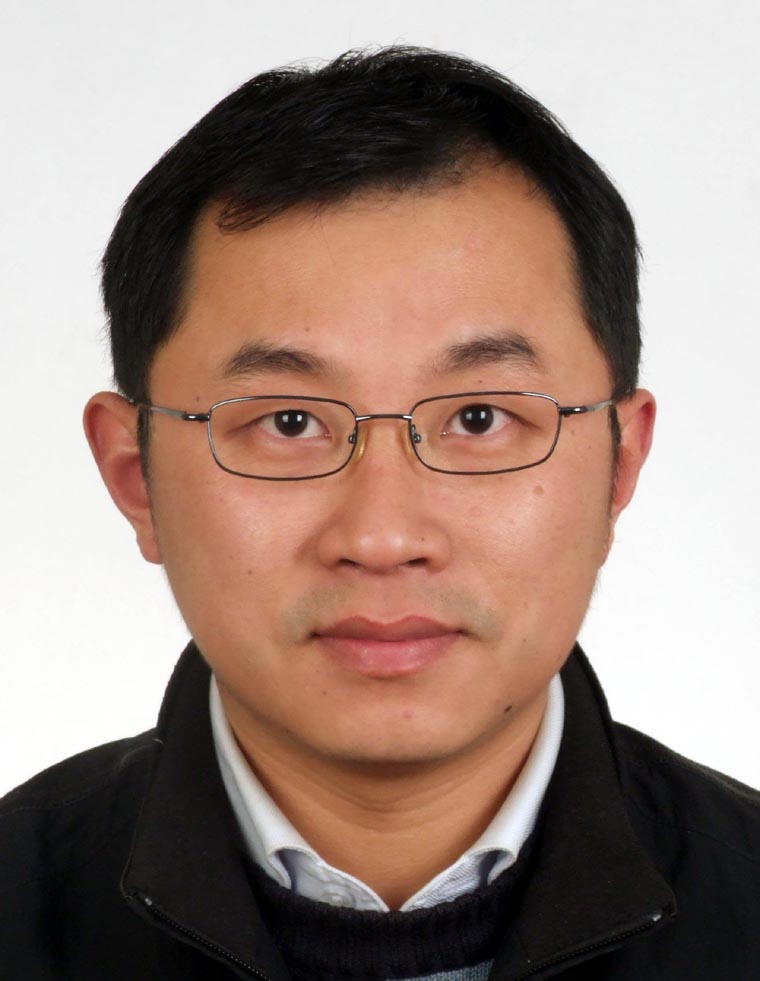 Wenlei Shan (单文磊)合作论文数University of Chinese Academy of Sciences8Xin Jin合作论文数7Qiheng Cheng合作论文数7ZHANG Shi-yuan (张世远)合作论文数6ChunHai Cao (曹春海)合作论文数6
 Jun Zhou (周俊)合作论文数College of Biotechnology and Pharmaceutical Engineering, Nanjing Tech University6
 Xixian Yao (姚希贤)合作论文数The Second Hospital of Hebei Medical University6
 Aidong Li (李爱东)合作论文数College of Engineering and Applied Sciences, Nanjing University6L. Y. Wu合作论文数5
 Tong Tang合作论文数College of Sciences, Hohai University5
 Di Wu (吴迪)合作论文数Department of Materials Science and Engineering, College of Engineering and Applied Sciences, Nanjing University5
 Jianping Zuo (左建平)合作论文数Shanghai Institute of Materia Medica, Chinese Academy of Sciences5Am Sun合作论文数4hongchai zhang合作论文数4
 Xugao Cui (崔旭高)合作论文数College of Intelligent Robotics and Advanced Manufacturing, Fudan University;International Institute for Intelligent Nanorobots and Nanosystems, Fudan University4
 Xiaonong Xu (徐小农)合作论文数School of Physics, Nanjing University4
 Yan Feng (冯岩)合作论文数苏州大学物理科学与技术学院4
 Mu Wang (王牧)合作论文数Department of Optical Science, School of Physics, Nanjing University;Department of Materials Science and Chemical Engineering, Stony Brook University4
 Shuyi Zhang 合作论文数南京大学声学研究所4
 Mak Chee-leung (麥熾良)合作论文数Department of Applied Physics, The Hong Kong Polytechnic University4Wanli Zhang合作论文数4
 WONG, Hong Kuen (黃康權)合作论文数Department of Physics, The Chinese University of Hong Kong4k m yeung合作论文数3Gu D.Z. (顾大振)合作论文数3ziran xu (许自然)合作论文数3Fu Liu (刘富)合作论文数3Liu L. (刘雷)合作论文数3J.Zhou (周军)合作论文数3Fu Z.L. (傅泽禄)合作论文数3qingguo liu (刘庆国)合作论文数3ShiXiong Fan (范世雄)合作论文数3
 Min Gu (顾民)合作论文数School of Physics, Nanjing University3H.M. Shao合作论文数3
 X.B. Yin (尹晓波)合作论文数Department of Mechanical Engineering, Faculty of Engineering, The University of Hong Kong;Department of Physics, The University of Hong Kong3
 Guanghou Wang (王广厚)合作论文数School of Physics, Nanjing University;National Laboratory of Solid State Microstructures, Nanjing University3
 Tian Jiang (姜田)合作论文数School of Electronic Science and Engineering, Nanjing University;School of Frontier Sciences, Nanjing University3




