Based on the 3GPP specifications and ITU-R standardized channel models, in direct-to-satellite smartphone scenarios, the satellite channel is dominated by the energy of the line-of-sight (LoS) path. Consequently, its delay spread is significantly smaller than that in terrestrial non-line-of-sight (NLoS) environments, exhibiting strong sparsity in the discrete delay domain. Due to the lack of structural constraints, the conventional least mean squares algorithm is highly sensitive to noise fluctuations on zero taps in the steady state, resulting in slow convergence and high steady-state error. Therefore, building upon the zero-attracting LMS (ZA-LMS) and reweighted zero-attracting LMS (RZA-LMS), this paper proposes an improved sparse least mean squares algorithm with a rational-function penalty, termed rational least mean squares (Rational-LMS), and derives its stochastic gradient descent-based weight update equation. By exploiting the high-sensitivity gradient of the rational-function penalty near the origin and its rapid attenuation in the large-coefficient region, the proposed algorithm effectively suppresses noise components while ensuring stable convergence of the equalizer coefficients, thereby yielding a regularization effect that is mathematically closer to the ideal 𝓁0-norm constraint. Furthermore, an adaptive parameter update mechanism is introduced to dynamically adjust the sparsity penalty factor according to the instantaneous error, thereby achieving faster convergence and lower steady-state mean squared error (MSE). Theoretical analysis and simulation results demonstrate that, in sparse channel environments, the proposed Rational-LMS outperforms ZA-LMS and RZA-LMS in terms of both convergence rate and steady-state MSE performance.
Firstly, the existing unsourced multiple access coding schemes were introduced in two aspects: linear codes and compressed sensing codes. On this basis, two unsourced multiple access spread spectrum sequence detector schemes proposed by Pradhan and Ahmadi were analyzed and compared. Then, power was redistributed for the compressed sensing coding scheme proposed by Amalladinne in 2020. The simulation results showed that when the number of active users is low, a certain performance improvement is observed.
Objective Under the hundreds of kilometers of transmission distance in low-orbit satellite communication, both power consumption and latency are significantly higher than that in ground-based networks. Additionally, many data collection services exhibit short burst characteristics. Conventional resource reservation-based access methods have extremely low resource utilization, whereas dynamic application-based access methods incur large signaling overhead and fail to meet the latency and power consumption requirements for satellite Internet of Things (IoT). Random access technology, which involves competition for resources, can better accommodate the short burst data packet services typical of satellite IoT. However, as the load increases, data packet collisions at satellite access points lead to a sharp decline in actual throughput under medium and high loads. In terrestrial wireless networks, technologies such as near-far effect management and power control are commonly employed to create differences in packet reception power. However, due to the large number of terminals covered and the long distance between the satellite and the Earth, these techniques are unsuitable for satellite IoT, preventing the establishment of an adequate carrier-to-noise ratio. Developing separation conditions suitable for satellite IoT access scenarios is a key research focus. Considering the future development of spaceborne digital phased array technology, this paper leverages the data-driven beamforming capability of the on-board phased array and introduces the concept of spatial auxiliary channels. By employing a sum-and-difference beam design method, it expands the dimensions for separating collision signals beyond the time, frequency, and energy domains. This approach imposes no additional processing burdens on the terminal and aligns with the low power consumption and minimal control design principles for satellite IoT. Methods To address packet collision issues in hotspot areas of satellite IoT services, this study extends the conventional time-slot ALOHA access framework by introducing an auxiliary receiving beam alongside the random access of conventional receiving beams. The main and auxiliary beams simultaneously receive signals from the same terminal. By optimizing the main lobe gain of the auxiliary beam, a difference in the Signal-to-Noise Ratio (SNR) between the signals received by the main and auxiliary beams is established. This difference is then separated using Successive Interference Cancellation (SIC) technology, leveraging the correlation between the received signals of the auxiliary and main beams to support the separation of collision signals and ensure reliable reception of satellite IoT signals. Results and Discussions Firstly, the system throughput of the proposed scheme is simulated (Fig. 4). The theoretical throughput derived in the previous section is consistent with the simulation results. When the normalized load reached 1.8392, the maximum system throughput is 0.81085 packet/slot. Compared with existing methods such as SA, CRDSA, and IRSA, the proposed scheme demonstrated improved system throughput and packet loss rate performance in both peak and high-load regions, with a peak throughput increase of approximately 120%. Secondly, the influence of amplitude, phase, and angle measurement errors on system performance is evaluated. The angle measurement error had a greater effect on throughput performance than amplitude and phase errors. Amplitude and phase errors had a smaller effect on the main lobe gain but a larger effect on the sidelobe gain (Tables 3'5). Therefore, angle measurement errors have a considerable effect on throughput improvement. Regarding beamwidth, as beamwidth increased, the roll-off of the corresponding difference beam with 10 array elements is gentler than that with 32 array elements. However, the peak gain of the auxiliary beam decreased, leading to reduced system throughput for configurations with larger main lobe widths. Conclusions This paper presents an auxiliary beam design strategy for power-domain signal separation in satellite IoT scenarios, aiming to improve system throughput and packet loss rate performance. The approach incorporates spatial domain processing and proposes the concept of auxiliary receiving beams. By generating a difference beam derived from the main beam and using it as the auxiliary beam, the scheme constructs the required SNR difference for power-domain signal separation, enhancing the probability of successfully receiving collided signals. Simulation results indicate that, compared with SA, the peak system throughput increased by 120%, with significant improvements observed. Furthermore, the scheme demonstrated robustness by tolerating moderate system and measurement errors, facilitating large-capacity random access for satellite IoT terminals.
This article investigates a multiuser satellite multiple-input-multiple-output (MIMO) downlink comprising a multibeam satellite and multiple terrestrial users. To investigate the impact of beam coverage on system capacity in satellite MIMO systems, two beam coverage modes, overlapping coverage and hexagonal coverage, are considered and their capacity performance is analyzed and compared thoroughly. Given identical coverage area and an equal number of beams, the half-power beamwidth and peak gain for each coverage mode are first derived, and the channel matrices are obtained. On this basis, the capacity performance of two beam coverage modes is analyzed and compared in the single-user scenario, dual-user scenario, and multiuser scenario analytically or numerically. The results indicate that hexagonal coverage generally outperforms overlapping coverage because of its higher beam gain; however, overlapping coverage demonstrates better performance in scenarios with highly concentrated user distributions because its multiple beams are larger and completely coincident, compensating for its smaller beam gain. The conclusions provide a reference for the arrangement of multiple beams in the satellite MIMO systems.
The mega-low Earth orbit (LEO) satellite constellation is pivotal for the future of satellite Internet and 6G networks. In the mega-LEO satellite constellation system (MLSCS), which is the spatial distribution of satellites, global users, and their services, along with the utilization of global spectrum resources, significantly impacts resource allocation and scheduling. This paper addresses the challenge of effectively allocating system resources based on service and resource distribution, particularly in hotspot areas where user demand is concentrated, to enhance resource utilization efficiency. We propose a novel three-layer management architecture designed to implement scheduling strategies and alleviate the processing burden on the terrestrial Network Control Center (NCC), while providing real-time scheduling capabilities to adapt to rapid changes in network topology, resource distribution, and service requirements. The three layers of the resource management architecture—NCC, space base station (SBS), and user terminal (UT)—are discussed in detail, along with the functions and responsibilities of each layer. Additionally, we explore various resource scheduling strategies, approaches, and algorithms, including spectrum cognition, interference coordination, beam scheduling, multi-satellite collaboration, and random access. Simulations demonstrate the effectiveness of the proposed approaches and algorithms, indicating significant improvements in resource management in the MLSCS.
With the rapid development of large-scale low Earth orbit (LEO) satellite constellations, cohesive clustered satellite (CCS) systems are considered critical spatial information infrastructures for augmenting space resource efficiency by aggregating the service capabilities of multiple satellite platforms to form an ultracohesive virtual satellite. This paper aims to fill the gaps identified in the literature by providing an extensive survey on communication and computing resources management, integrating insights from academia and the industry of CCS systems. It discusses the evolution and components of CCS systems and then introduces a native artificial intelligence architecture along with a hierarchical structure for resource management. Furthermore, it provides the emerging technologies and applications brought by CCS. On this basis, the modeling and metrics of resource management are established. Then, an exhaustive review of resource management methods encompassing both traditional and artificial intelligence algorithms is presented. Among these methods, knowledge-driven resource scheduling strategies are highlighted. Finally, some future directions of CCS systems are outlined.
There are numerous terminals in the satellite Internet of Things (IoT). To save cost and reduce power consumption, the system needs terminals to catch the characteristics of low power consumption and light control. The regular random access (RA) protocols may generate large amounts of collisions, which degrade the system throughout severally. The near-far effect and power control technologies are not applicable in capture effect to obtain power difference, resulting in the collisions that cannot be separated. In fact, the optimal design at the receiving end can also realize the condition of packet power domain separation, but there are few relevant researches. In this paper, an auxiliary beamforming scheme is proposed for power domain signal separation. It adds an auxiliary reception beam based on the conventional beam, utilizing the correlation of packets in time-frequency domain between the main and auxiliary beam to complete signal separation. The roll-off belt of auxiliary beam is used to create the carrier-to-noise ratio (CNR) difference. This paper uses the genetic algorithm to optimize the auxiliary beam direction. Simulation results show that the proposed scheme outperforms slotted ALOHA (SA) in terms of system throughput performance and without bringing terminals additional control burden.
In this paper, the user selection problem is investigated in the multi-user satellite multiple-input multiple-output (MIMO) downlink, which includes a multi-beam geostationary earth orbit (GEO) satellite in space and multiple terrestrial users on the ground. Considering that the number of users is much larger than that of beams or feeds, user selection should be performed so that multiple users can be served successively in different time slots. In order to meet the quality of service (QoS) requirements of users and maximize the system sum rate, three user selection algorithms are proposed: greedy user selection (GUS) algorithm, add swap user selection (AS) algorithm, and random add swap user selection (RAS) algorithm. Among the three algorithms, only the “add” operation is adopted in the GUS algorithm, both the “add”, and “swap” operations are considered in the AS algorithm. On this basis, heuristic search and “random swap” operation are introduced and the RAS algorithm is obtained. The complexity of the above three algorithms is analyzed analytically and the RAS algorithm is found to have the highest complexity. Besides, the performance of the three algorithms is analyzed and compared through simulations, where the random user selection (RUS) algorithm is taken as a benchmark. Numerical results show that the system sum rate and energy efficiency are greatly improved by the proposed algorithms and the RAS algorithm has the best performance.
This paper examines potential performances of the Spread Spectrum-based random access technique and proposes an Improved Spread Spectrum Aloha (ISSA) protocol for the return channel in satellite Internet of Things (IoT) based on the beam-hopping technique. The key design driver and detailed solution of ISSA protocol are presented in this work and it is shown that the proposed protocol achieves high throughput and low collision probability. To match user/traffic distribution, delay requirement and channel condition with beam allocation better, a low-complexity heuristic beam scheduling algorithm and a more effective Maximum-Weighted Clique (MWC) algorithm have been proposed. The heuristic algorithm considers the user/traffic distribution, inter-beam interference, and fairness primarily. However, the MWC algorithm gives considerations not only on above factors, but also on delay requirement and channel condition (path loss and rain attenuation) to maximize system capacity. The beam angle and interference avoidance threshold are proposed to measure the inter-beam interference, and the link propagation loss and rain attenuation are considered meanwhile in the channel condition. In the MWC algorithm, we construct an auxiliary graph to find the maximum-weighted clique and derive the weighting approach to be applied in different application scenarios. The performance evaluation of our ISSA protocol compared with the SSA protocol is presented, which achieves a gain of 16.7%. The simulation of the ISSA protocol combined with round robin, heuristic, and MWC beam scheduling for the return link in beam-hopping satellite IoTs is also provided. The results indicate that the throughput in nonuniform user distribution is much lower than in the uniform case without the beam scheduling algorithm. Through the application of the scheduling algorithm, the throughput performance can approach the uniform distribution. Finally, the degree of user satisfaction with different scheduling approaches is presented, which validates the effectiveness of heuristic and MWC algorithms.
Hybrid hopping spread spectrum signal has strong anti-interception and anti-interference abilities, and has made great progress in the field of covert communication and civil communication in recent years. In order to realize the “blind” detection and parameter estimation of the hybrid hopping spread spectrum signal under the condition of a low signal-to-noise ratio( SNR ), a detection method based on wavelet packet transform-energy detection method is proposed, and the narrow time domain-cyclic spectrum algorithm is further studied to estimate the parameters of the hybrid hopping spread spectrum signal, which can realize the effective detection and parameter estimation of the hopping spread spectrum signal.
Local state routing methods are usually used in large-scale satellite constellation networks due to the difficulty of obtaining state information. These routing methods use a diverse range of local states and give these states different weights. This paper discusses this problem from the complex network perspective. A local state routing model with tunable parameters for satellite constellation networks is proposed. The model can generalize the characteristics of current various local state routing mechanisms. By using this model, the impact of the range and the weight of state information in routing methods are analyzed. Furthermore, the routing robustness is also discussed by defining a new robustness metric. Experimental results show that it is enough to achieve a satisfactory performance by maintaining a certain state awareness capability and obtaining the states from a limited range of neighbor nodes in satellite constellation network routing. In addition, the network robustness against congestion improves with better state awareness capability and a wider range of state information. The proposed routing model is a promising tool for routing design in satellite constellation networks.
Multilayer satellite networks (MLSNs) are viewed as a promising framework of the future satellite communication networks by realizing cooperative communication among satellites in different orbits. In this article, we introduce the cooperative nonorthogonal multiple access (C-NOMA) scheme into a two-layer geostationary Earth orbit/low Earth orbit satellite network in a frequency coexistence scenario and investigate the performance of the considered network. Taking into account the dynamic properties and channel characteristic of the satellite nodes, we first establish the generic architecture and then obtain the equivalent end-to-end signal-to-interference-plus-noise ratios along with the feasible region of power allocation coefficients based on the C-NOMA principle. Furthermore, the analytical expressions of the system ergodic capacity and outage probability are derived and approximated using Meijer-G functions to evaluate the system performance efficiently. Finally, simulation results are provided to attest the validity of the theoretical results as well as show the superiority of the C-NOMA scheme and the impact of various parameters on the system performance.
Mega-constellation networks have attracted great attention in recent years. The main difficulty of the research lies in the lack of packet-level simulation tools. Toward this end, this paper discusses the problem of topology construction and packet-level dynamic simulation for mega-constellation networks. A data-driven fixed timestep dynamic simulation method is proposed. This method combines the characteristics of the fixed timestep static simulation and the data-driven dynamic simulation. It takes into account the timeliness and simulation efficiency simultaneously. Then a local-state congestion avoidance routing method is presented. It is evaluated by using the proposed simulation method. Simulation results show that the data-driven fixed timestep dynamic simulation method can accurately and effectively capture the topology dynamics and path changes of mega-constellations. It is a promising tool for the quantitative evaluation of the dynamic behavior and performance of mega-constellation networks. In addition, the optimized routing method can avoid congestion and greatly improve the performance of mega-constellation networks with low network local-state awareness overhead.
In recent years, low earth orbit (LEO) satellite constellation systems have been developed rapidly. However, the scarcity of satellite spectrum resources has become one of the major obstacles to this trend. LEO satellite constellation communication systems sharing the spectrum of incumbent geostationary earth orbit (GEO) satellite system is a feasible way to alleviate spectrum scarcity. Therefore, it has practical significance to study the optimization of satellite resources allocation (RA) in a spectrum sharing scenario. This paper focuses on the RA problem that LEO satellites share a GEO high throughput satellite’s spectrum in a beam-hopping (BH) manner. The GEO satellite system is served as the primary system and the LEO satellite constellation system is served as the secondary system whose frequency bands and transmitting power are strictly limited. Compared with conventional multibeam satellites, BH satellites have the advantage of flexibility in the time dimension. Therefore, we make full use of the flexibility of LEO BH satellites to realize the matching of traffic demand and traffic supply. The RA problem is decomposed into three sub-problems, namely, frequency band selection (FBS) problem, illuminated cell selection (ICS) problem, and transmitting power allocation (TPA) problem. We solve each sub-problem in order and finally form a complete RA scheme. The performance evaluation of the proposed RA scheme is carried out in real-time and simulation results show that the LEO BH satellite paired with the RA scheme we proposed has good adaptability to the uneven distribution of traffic demand in the spectrum sharing scenario.
Low latency is an important index in LEO satellite communication systems, while the satellite capacity “application-assignment” scheme based on the DVB-RCS2 standard in the return channel causes a long round-trip delay. To improving the quality of experience (QoE), in this paper, a more aggressive capacity pre-assignment scheme combining traffic prediction and free capacity assignment (FCA) is proposed. The network control center (NCC) predicts traffic for every return channel satellite terminal (RCST) and assigns capacities in advance without capacity requests. Several FCA strategies based on multi-frequency time division multiple accesses (MF-TDMA) in the physical layer are analyzed as a compensatory capacity assignment method to deal with the inaccuracy of traffic prediction. Simulation results show that the proposed FCA strategies have better performance than existing FCA strategies.
Considering the spatial possibility of opportunistic spectrum sharing, sensing-based spectrum sharing method ws applied in the satellite-terrestrial network.The sensing-throughput tradeoff problem was studied, and the throughput is a concave function of the sensing duration was proved.In order to further improved the satellite uplink throughput, the multi-slots sensing method and the cooperative sensing method were proposed.Computer simulations showed that the optimal sensing duration could maximized the uplink throughput, and the multi-slot sensing method or the cooperative sensing method could further improved the throughput of satellite network.
Multi-layer satellite networks (MLSNs) is of great potential for the integrated 5G networks to provide diversified services. However, MLSNs confront frequency interference coordination problem between satellite systems in different orbits. This paper investigates a joint user pairing and power allocation scheme in a non-orthogonal multiple access (NOMA)-based geostationary earth orbit (GEO) and low earth orbit (LEO) satellite network. Specifically, a novel NOMA framework with two uplink receivers, i.e. the GEO and LEO satellites is established where the NOMA groups are formed considering the subcarrier assignment of ground users. To maximize the system capacity, an optimization problem is then introduced subject to the decoding threshold and power consumption. Since the formulated problem is non-convex and mathematically intractable, we decompose it into user pairing and power allocation schemes. In the user pairing scheme, virtual GEO users are generated to transform the multi-user pairing problem into a matching problem and a max-min pairing strategy is adopted to ensure the fairness among NOMA groups. In the power allocation scheme, the non-convex problem is transformed into multiple convex subproblems and solved by iterative algorithm. Simulation results validate the effectiveness and superiority of the proposed schemes when compared with several existing schemes.
The beam-hopping (BH) technology applied to low earth orbit (LEO) satellite communication networks is a superior choice, but the long transmission delay partly caused by data packets waiting in the queue of satellite transponders will seriously affect the user experience.To shorten the packet queueing delay, in this paper, we propose an optimization method of dynamic beam position division for LEO BH satellite communication systems.Firstly, we analyze the packet queueing delay problem in BH satellites to find out the factors related to the queueing delay, and we find that the number of beam positions is negatively correlated with the queueing delay.Then, we turn the beam position division problem into a p-center problem to try to cover all users with the least number of beam positions.The beam positions among the footprint of LEO satellites are determined dynamically by the user distribution and the traffic distribution.Finally, the performance evaluation of the proposed optimization method is carried out in real-time and the simulation shows that the beam position division optimized system we proposed can shorten the queueing delay up to 40% compare to the benchmark system without sacrificing throughput.
massive MIMO technology is critical in the 5G mobile communication system, which can greatly improve the frequency efficiency and communication capacity of terrestrial mobile communication systems, and also provides a new thinking for LEO satellite communication systems to fully reuse frequency between beams. In the paper, according to the massive MIMO-LEO satellite communications theory, we focus on the scenario of demands distributing unevenly spatially, and study the resource allocation problem of LEO satellite communications with full frequency reuse from the spatial perspective. Under the LEO satellite coverage-zoning model, we propose a rasterizing-coverage model for LEO satellites based on the characteristics of massive MIMO, establish a spatial resource allocation model with full frequency reuse, which models the spatial resource allocation problem with the objective of maximizing throughput as an integer programming problem, and put forward a greedy-based spatial resource allocation method. The simulation results show that when the service demand is 100% and the number of spatial resource groups is 16, compared with the fixed-beam method and the hopping-beam allocation method, the resource utilization can be improved respectively by 19% and 26%, and the satisfaction can be improved respectively by 16% and 17.5%, whose improvement are enhanced with the size of the on-board MIMO antenna increasing.
如何科学、有效地整合科研实践和教学这两种基本活动,是高校人才培养和教师队伍建设中亟须解决的问题.对目前高校教育科研实践与教学活动的现状进行了分析,总结了当前二者相互结合与转化的形式和特点,提出科研实践嵌入式教学模式.从教学准备、教学实施及评价机制3个方面对提出的教学模式进行了探讨,为高等教育提高教师综合能力、进一步培养创新型人才提供了新的发展思路.
 Gengxin Zhang (张更新)合作论文数School of Communication and Information Engineering, Nanjing University of Posts and Telecommunications47
 Zhidong Xie (谢智东)合作论文数31Liang Gou合作论文数21
 GuangXia Li (李广侠)合作论文数中国人民解放军陆军工程大学15
 Wei Zhang合作论文数13
 Jing Hu (胡静)合作论文数School of Information Science and Engineering, Southeast University13
 Jian Cheng合作论文数9Chuang Wang合作论文数9
 Jingyu Tang合作论文数8Hu Jing合作论文数7Xinying Yi合作论文数7
 Bo Kong合作论文数6
 Hongpeng Zhu合作论文数6ChongSen Ran (冉崇森)合作论文数5
 Shengchao Shi合作论文数5
 Ruixing Ge合作论文数4Zhengguo Bian合作论文数4Qian Sun (孙谦)合作论文数4
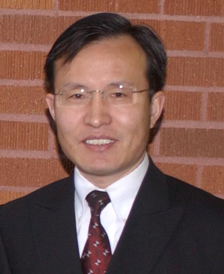 Ruhai Wang合作论文数Phillip M. Drayer Department of Electrical and Computer Engineering, College of Engineering, Lamar University4
 Kanglian Zhao (赵康僆)合作论文数School of Electronic Science and Engineering, Nanjing University4Shaodong Feng合作论文数4
 Longlong Suo合作论文数3
 Cong Li合作论文数3
 Xin Xu合作论文数3Yaxin WANG (王亚昕)合作论文数3Wei Sun (孙伟)合作论文数3Xiang Tian (田湘)合作论文数3
 Yinxia Zhu (朱银霞)合作论文数3Genxin Zhang合作论文数2Jun Cai合作论文数2Yulei Nie合作论文数2Sun Qian合作论文数2Qing WANG (汪晴)合作论文数2
 Kang An (安康)合作论文数National University of Defense Technology2Xing-chen XU (徐星辰)合作论文数2Yong-qiang LI (李永强)合作论文数2Fei ZHANG (张飞)合作论文数2
 Ziwei Liu (刘子威)合作论文数College of Telecommunications and Information Engineering, Nanjing University of Posts and Telecommunications2Huan Chen合作论文数2Shoudong Wang合作论文数2Wang Yulin合作论文数2Zhaoyu Ma (马兆宇)合作论文数2
 Chao He合作论文数2Zhao Zhang (张昭)合作论文数2Jun Xu (徐军)合作论文数2




