第10号染色体缺失的磷酸酶张力蛋白同源物基因(PTEN)是迄今为止发现的第一个具有双重特异性磷酸酶活性的肿瘤抑制基因.近年研究结果表明,PTEN与特发性肺纤维化、心肌纤维化甚至肝纤维化的发生、发展均有一定的相关性[1-2].我们前期研究结果证实,PTEN参与了体内肝星状细胞(HSCs)的活化、增殖[3].但PTEN低表达对体外活化HSCs胶原代谢的影响尚鲜见报道.为此,本研究通过构建HSCs的PTEN低表达模型,探讨阻断PTEN表达对活化HSCs的Ⅰ、Ⅲ型胶原代谢和基质金属蛋白酶(MMPs)及其抑制因子(TIMPs)表达的影响. 关键词:肝星状细胞;基质金属蛋白酶;胶原Ⅰ型;胶原Ⅲ型;PTEN;RNA干扰
Results: Accomopanied by decreased TIMP-1 expression (55% reduction) of liver tissue in AAV/siRNA-TIMP-1 group, AAV/siRNA-TIMP-1 administration attenuated fibrosis severity, as determined by fibrosis scores (3.8±0.8)compared with the CCl 4 -treated group (2.5±0.7)(P = 0.001).Compared with CCl 4 -treated group, the concentration of type I and type III collagen in serum, the hydroxyproline content of liver tissue in AAV/siRNA-TIMP-1 group was decreased by 35%-50%.Western bolt showed AAV/siRNA-TIMP-1 treatment decreased the expression of active-MMP2 and increased the expression of active-MMP13.Furthermore, administration of AAV/siRNA-TIMP-1 resulted in a marked decrease in a-SMA and TGF-b staining of histological section confirmed by the detection of mRNA and protein level of these two markers in liver tissue.Conclusions: Administration of AAV/siRNA-TIMP-1 attenuated CCl 4 -induced rat liver fibrosis by suppressing the expression of TIMP-1 which directly elevating the function of MMP13, and indirectly decreasing expression of Col I, MMP2 and TGF-b1, which were potent factors in liver fibrogenesis.
μg/ml, ~40% after 24 hours).Gal-9 significantly reduced profibrogenic COL1A1, COL3A1, TGF-β1, MMP-2, TIMP-1,CTGF, and simultaneously increased profibrolytic MMP-1,-3, -9,-13 transcripts in LX-2 cells.Lactose, but not sucrose (50 mM), specifically blocked Gal-9 effects on HSC.Gal-9 also reversed the profibrogenic effects of TGF-β1 on LX-2 cells.A blocking antibody to TIM-3 partly abrogated the effects of Gal-9 on HSC.Conclusions: Gal-9 exerts antifibrotic effects via induction of apoptosis and stimulation of putatively fibrolytic genes in HSC.Gal-9 represents a naturally expressed potential antifibrotic agent for the treatment of liver fibrosis.
Objective: To investigate the serum levels of soluble macrophage colony-stimulating factor receptor (M-CSFsR) in normal subjects and patients with hematological diseases and its clinical implications in hematological diseases. Methods: The concentration of M-CSFsR was determined by ELISA. The serum M-CSFsR was identified and characterized by immunoprecipitation and Western blotting. Results: The mean serum level of M-CSFsR of 123 normal individuals was 0.48 ng/ml ± 0.41 ng/ml. Immunoprecipitation and Western blotting assay revealed a ∼ 90kD band of serum M-CSFsR. The mean serum M-CSFsR level of 60 patients with acute lymphoblastic leukemia (ALL), 36 patients with acute myeloblastic leukemia (AML), 13 patients with myelodysplastic syndrome (MDS) and 42 patients with aplastic anemia (AA) .were 0.22 ng/ml±0.23 ng/ml, 0.17 ng/ml±0.16 ng/ml, 0.19 ng/ml±0.16 ng/ml and 0.23 ng/ml±0.21 ng/ml, respectively, which were significantly lower than that of normal subjects (P=0.002 ,P<0.0001,P<0.0001 andP<0.0001). The mean serum M-CSFsR level of 51 idiopathic thrombocytopenic purpura (ITP) patients was significantly higher than that of normal subjects (2.05 ng/ml±2.75 ng/ml,P<0.0001). Conclusion: The serum M-CSFsR levels of patients with ALL, AML, MDS and AA were significantly lower, while the level of patients with ITP was significantly higher than that of normal individuals. Patients with severe ITP (platelet count<30×l09/L) had the highest M-CSFsR level. It suggested that the abnormal levels of serum M-CSFsR may associate with some hematological diseases and may contribute to the pathological process.
我国为全球病毒性肝炎的高发区,而经血液途径造成的肝炎正因其日益增多而越来越引起重视。为此,笔者在1998年间对253名血液病患者作了乙型肝炎病毒(HBV)、丙型肝炎病毒(HCV)及庚型肝炎病毒(HGV)检测,了解血液病患者肝炎病毒感染状况,现将检测结果报告如下。
用抗M-CSF受体的单克隆抗体和兔多克隆抗体及ABC复合物,建立了检测M-CSF可溶性受体(sM-CSFR的双抗体夹心ABC-FLISA.本法灵敏度高(0.1ng/ml),特异性强,重复性好,准确性高(CV<10%),可检出肿瘤患者及部分正常人血清中可溶性sM-CSFR的含量.本法的建立也为探讨sM-CSFR的生物学功能及临床意义提供方法学基础.
Objective: To explore the blood component selection and transfusion for patients undergoing major ABO incompatible allogenic stem cell transplantation.Methods: ABO blood group was identified in recipients and donors of allogenic stem cell transplantation, and the blood component and amount, the time for RBC blood group transversion and stem cell engraftment were analyzed in 28 patients undergoing ABO incompatible transplantation. Results: Compared with patients undergoing ABO compatible transplantation, the time for blood group transversion was significantly prolonged (P 0.01 )and more RBC transfusions were required in 15 patients undergoing major ABO incompatible transplantation (P 0.05 ). And the amount of RBC transfusions was also higher in 13 patients undergoing minor ABO incompatible transplantation (P 0.05 ). The time for stem cell engraftment and the platelet concentrates transfusions were not significantly different between patients undergoing ABO compatible and incompatible transplantation.Conclusion:RBCs and platelet with me not destroyed by the recipients′ serum agglutinin were required for patients undergoing ABO incompatible allogenic stem cell transplantation.
造血干细胞移植前,对供受者双方要进行血型鉴定.ABO血型不合可以进行干细胞移植,移植期间及移植后患者血型的变化,不仅是红细胞血型标志发生了改变,而且在输血疗法中也应引起注意.笔者对28名ABO血型不合的干细胞移植患者的血型转变情况作了观察.
Objective: To verify the antigen association of MAF-J6-1 receptor with M-CSFR and to further study the role of M-CSF and its receptor mediated juxtacrine in promoting leukemic cell proliferation. Methods: Monoclonal antibody (McAb) of MAF-J6-1R RE2 and polyclonal antibody (PolyAb) of rhM-CSFR were prepared. The specificity of McAb RE2 to M-CSFR was confirmed by indirect ELISA, cross-neutralizing assay with J6-1 cell colony formation and neutralization test by ELISA. Results: the reactive activity of purified RE2 to M-CSFR was over 1: 16000. The inhibitory activity of M-CSFR and MAF-J6-1R could be blocked by RE2 and anti-M-CSFR antibody. The reactivity of RE2 to M-CSFR could be reduced by M-CSFR. Conclusion: The specificity of RE2 to M-CSFR was confirmed and the antigen association of MAF-J6-1R with M-CSFR was proved. It suggests that M-CSF and its receptor mediated auto-juxtacrine stimulation could be an operative mechanism in either leukemia or nonhematological malignancies.
We developed two complement-fixing MoAbs HIM1 and HIM4 (murine) that were specifically reactive with chronic myelogenous leukemia (CML) cells. They were capable of fixing human or rabbit complement and suitable for CML cells purging of remission marrow from CML patients. HIM1 reacted with majority leukemic cells from 7 out of 10 CML patients by complement-mediated cytotoxicity (CMC) assay (positive cells 80%–90%), HIM4 reacted with majority CML cells from 4 out of 5 CML by CMC assay (positive cells 80%–90%). Treatment with HIM1 or HIM4 and human C′ was capable of lysing 97% of K562, U937, HL-60 and CML cells in a 20 fold excess of unrelated cells by indirect FITC+EB stain. Using limited dilution culture, incubation with HIM1 and C′ produced 1.5 logs inhibition of growth in K562 cells, and 1.9 logs in U937 cells, and with HIM4 and C′ produced 2.9 logs inhibition in HL-60 cells and 3.0 logs in U937 cells. Both MoAbs cocktail was shown 1.8 logs in K562 cells and 3.2 logs in U937 cells. They were no suppression on the growth of CFC-GM.
 X-L Zhang合作论文数5L. B. Zheng合作论文数4J.Y. An合作论文数3Qing Rao (饶青)合作论文数3Shi Yan (闫石)合作论文数3Kefu Wu合作论文数3X-J Liu合作论文数2Xi-mei YAO (姚锡美)合作论文数2david shih合作论文数2JIAO Shuxian (焦淑贤)合作论文数2Xin-de ZHANG (张新德)合作论文数2yiqi geng (耿以琪)合作论文数2GuanJie Ma (马冠杰)合作论文数2CongLin Yang (杨丛林)合作论文数2Rong Lu (陆荣)合作论文数2FuJun Sun (孙福军)合作论文数2Wei Zhang (张薇)合作论文数2
 Guoguang Zheng (郑国光)合作论文数Chinese Academy of Medical Sciences2Libo Zheng合作论文数2
 Mingzhe Han (韩明哲)合作论文数The First Affiliated Hospital of Xiamen University2Junyan An (安君艳)合作论文数2Guochao Niu (牛国超)合作论文数2
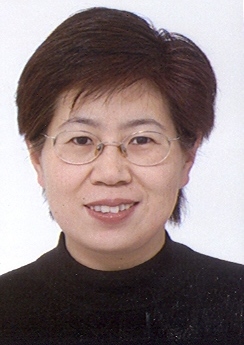 Xiaolan Zhang (张晓岚)合作论文数Department of Gastroenterology, The Second Hospital of Hebei Medical University2L. Liu合作论文数1fangjie liu (刘访杰)合作论文数1xiaojin sha (沙晓津)合作论文数1decheng shen (沈德诚)合作论文数1Zhang Chen合作论文数1wenqing yang (杨文清)合作论文数1S Z Feng合作论文数1J. Y. An合作论文数1chen xiuli (陈秀丽)合作论文数1Lei Liu合作论文数1HongJing Yao (姚宏静)合作论文数1XiaoLong Liao (廖晓龙)合作论文数1LinLi Liu (刘林力)合作论文数1DongMei Yao (姚冬梅)合作论文数1YingXin Zhao (赵英新)合作论文数1JianGuo Liu (刘建国)合作论文数1
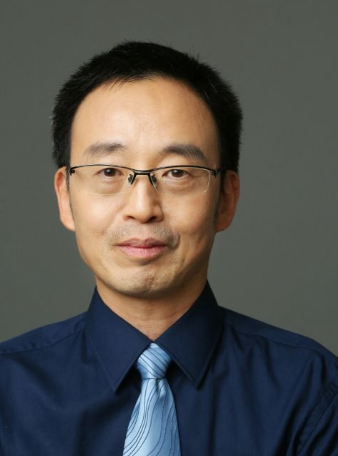 Renchi Yang (杨仁池)合作论文数Hematology Hospital, Chinese Academy of Medical Sciences;State Key Laboratory of Experimental Hematology1Dexian Zheng (郑德先)合作论文数Chinese Academy of Medical Sciences1
 Mei Wang (王玫)合作论文数Chinese Academy of Medical Sciences1
 Jialin Guo (郭嘉琳)合作论文数School of Power and Mechanical Engineering, Wuhan University1Lihua Huang合作论文数1
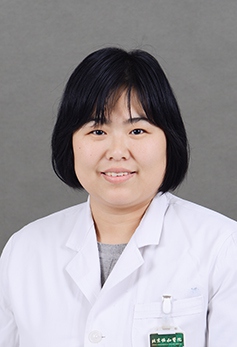 Wei Wang (王薇)合作论文数Peking Union Medical College Hospital1Jian Guo (郭剑)合作论文数Tongji University1
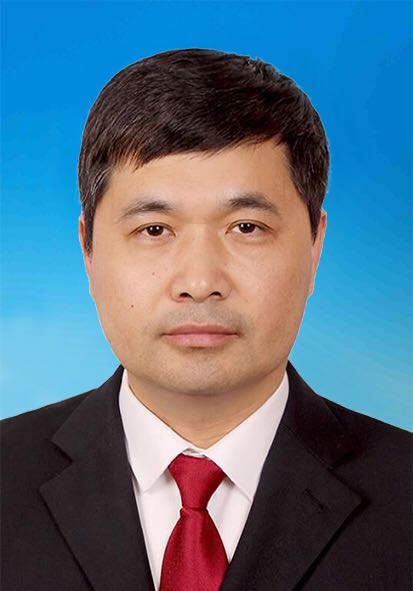 Guozhong Zhang (张国忠)合作论文数Dongzhimen Hospital, Beijing University of Chinese Medicine1




