We measured the spectral distribution of the absolute differential cross section of both ordinary and polarization ultra-soft X-ray bremsstrahlung for 0.7 keV electrons scattered on substrate-free nanoclusters of xenon. Clusters were produced in a supersonic gas jet expanding adiabatically into a vacuum. An original method based on absolute measurements of the intensity of the atom and cluster emission in the vacuum ultraviolet and ultra-soft X-ray spectral regions was used to determine the cluster density in the scattering area. The bremsstrahlung arising from scattering of electrons on clusters had a polarization component which dominated the differential cross section. For the first time, cluster size effect on the formation of the polarization bremsstrahlung was found for xenon.
We present generalized information on the new type of universal quantum detectors operating on the basis of Yanson point contacts. The properties and capabilities of quantum point-contact detectors are totally different from those of conventional sensors based on the principle of changing electric conductance. To give an idea of the nature of these differences, we examine the spectral properties of Yanson point contacts, which are fundamental for understanding the operation mechanisms of quantum point-contact sensors. One of the most important features that determine the functioning of point-contact sensing elements is the quantum detection mechanisms discovered during the study of the point-contact gas-sensitive effect. The detection mechanisms based on the energy principles of analysis and conductance quantization are considered. The innovative methods developed using breath analysis with quantum point-contact sensors made it possible for the first time to detect in real time carcinogenic strains of the bacterium Helicobacter pylori and the hormonal background of the human body. The future work will be focused on universalizing the technology of quantum point-contact sensors, addressing various problems including evaluation of the general state of the human body and solutions to global ecological problems.
In this paper, we consider new quantum mechanisms for selective detection in complex gaseous media which provide the highest possible efficiency of quantum sensors and for the first time analyze their nature. On the basis of these quantum mechanisms, the concepts of quantum detection and innovative methods of analysis are developed, which are virtually impossible to implement in the conventional conductive sensors and nanosensors. Examples of original solutions to problems in the field of detection and analysis of human breath using point-contact sensors are considered. A new method of analysis based on detection of metastable quantum states of the "point-contact sensor—breath" system in dynamic mode is proposed. The conductance histogram of dendritic Yanson point contacts recorded for this system is a unique energy signature of breath which allows differentiation between the states of human body. We demonstrate that nanosized Yanson point contacts, which, thanks to their quantum properties, can replace a massive spectrometer, open up wide opportunities for solving complex problems in the field of breath analysis using a new generation of portable high-tech quantum sensor devices.
Quantum structures are ideal objects by which to discover and study new sensor mechanisms and implement advanced approaches in sensor analysis to develop innovative sensor devices. Among them, one of the most interesting representatives is the Yanson point contact. It allows the implementation of a simple technological chain to activate the quantum mechanisms of selective detection in gaseous and liquid media. In this work, a portable device for multipurpose research on dendritic Yanson point contacts and quantum sensing was developed and manufactured. The device allows one to create dendritic Yanson point contacts and study their quantum properties, which are clearly manifested in the process of the electrochemical cyclic switchover effect. The device tests demonstrated that it was possible to gather data on the compositions and characteristics of the synthesized substances, and on the electrochemical processes that influence the production of dendritic Yanson point contacts, as well as on the electrophysical processes that provide information on the quantum nature of the electrical conductance of dendritic Yanson point contacts. The small size of the device makes it simple to integrate into a micro-Raman spectrometer setup. The developed device may be used as a prototype for designing a quantum sensor that will serve as the foundation for cutting-edge sensor technologies, as well as be applied to research into atomic-scale junctions, single-atom transistors, and any relative subjects.
Abstract In this paper, we consider new quantum mechanisms for selective detection in complex gaseous media which provide the highest possible efficiency of quantum sensors. On the basis of these quantum mechanisms, the concepts of quantum detection and innovative methods of analysis are developed, which are virtually impossible to implement in the conventional conductive sensors and nanosensors. Examples of original solutions to problems in the field of detection and analysis of human breath using point-contact sensors are considered. A new method of analysis based on detection of metastable quantum states of the "point-contact sensor – breath" system in dynamic mode is proposed. The conductance histogram of dendritic Yanson point contacts recorded for this system is a unique energy signature of breath which allows differentiation between the states of human body. We demonstrate that nanosized Yanson point contacts, which, thanks to their quantum properties, can replace a massive spectrometer, open up wide opportunities for solving complex problems in the field of breath analysis using a new generation of portable high-tech quantum sensor devices.
We measured spectral distribution of absolute differential cross section of both ordinary and polarization bremsstrahlung for 0.3-1.0 keV electrons scattered on atoms and substrate-free nanoclusters of xenon. Clusters were produced in a supersonic gas jet expanding adiabatically into a vacuum. An original method based on absolute measurements of intensity of the atom and cluster emission in the VUV and USX spectral regions was used to determine the cluster density in the scattering area. The bremsstrahlung arising from scattering on clusters had a polarization component which dominated the differential cross section. For the first time cluster size effect on the formation of the polarization bremsstrahlung was found for xenon.
The 7,7,8,8-tetracyanoquinodimethane (TCNQ) radical anion salt compound was used as the sensitive material of gas point contact sensors. The phase composition and surface morphology of the obtained sensor films were established. It was found correlation between surface morphology of the point-contact transducer and definite type of the sensor response curve observed under action of the human breath gas. If the sensor sample is formed from numerical crystals of the same or similar sizes having a uniform shape, similar to a shell, and clearly defined external borders it indicates to the creation of defect-free Yanson point contacts in the process of soft electrochemical synthesis. As a result, the surface of the sensor is a complex multistructure of a numerous number of Yanson point contacts, which generates a large output signal from the sensor in response to the action of the analyte. When crystals of Cu-TCNQ compound forming samples under investigation have lower density, large size, distorted and full of fractures boundaries, it prevents the formation of high-quality point contacts. These morphologic peculiarities are typical for samples with low level of response signal. In the case of extremely low density of Cu-TCNQ crystals observed in the sample surface the sample does not show any response to the action of the human breath gas.
Significant progress in development of noninvasive diagnostic tools based on breath analysis can be expected if one employs a real-time detection method based on finding a spectral breath profile which would contain some energy characteristics of the analyzed gas mixture. Using the fundamental energy parameters of a quantum system, it is possible to determine with a high accuracy its quantitative and qualitative composition. Among the most efficient tools to measure energy characteristics of quantum systems are sensors based on Yanson point contacts. This paper reports the results of serotonin and melatonin detection as an example of testing the human hormonal background with point-contact sensors, which have already demonstrated their high efficiency in detecting carcinogenic strains of Helicobacter pylori and selective detection of complex gas mixtures. When comparing the values of serotonin and melatonin with the characteristic parameters of the spectral profile of the exhaled breath of each patient, high correlation dependences of the concentration of serotonin and melatonin with a number of characteristic parameters of the response curve of the point-contact sensor were found. The performed correlation analysis was complemented with the regression analysis. As a result, empiric regression relations were proposed to realize in practice the new non-invasive breath test for evaluation of the human hormonal background. Registration of the patient’s breath profile using point-contact sensors makes it possible to easily monitor the dynamics of changes in the human hormonal background and perform a quantitative evaluation of serotonin and melatonin levels in the human body in real time without invasive interventions (blood collection) and expensive equipment or reagents.
The sensitive element of a new quantum sensor generation is the Janson dendritic point contact. Analytes that are in the space surrounding the sensitive element are able to interact with the freshly formed surface of the conduction channel of the Janson quantum point contact, as well as with the surface of the dendrite during its growth. This interaction provides the influence of the substances under study on the configuration of the output characteristic of the sensor, represented by the system conductivity histogram. The conductivity histogram is built on the basis of the chrono-resistogram of the self-oscillating point-contact cyclic switchover effect, which is directly recorded under self-oscillation conditions. In the structure of the sensor element, Janson's dendritic point contact is immersed in an electrolyte and in an electric field forms a chrono-resistogram, which depends on the environment composition. The paper considers one of the aspects of such chrono-resistograms formation. The features of a gapless electrochemical system in the process of realizing the point-contact cyclic switchover effect are analyzed. Modeling the sensitive element in the form of a gapless electrode system allowed explaining the mechanism and dynamics of the transition “Janson point contact – dendrite and counter electrode in the electrolyte”. The most important parameter of the gapless electrode system is the coordinate of the polarization inversion boundary. It is shown that the idea of the coordinate of the polarization inversion boundary plays a fundamental role in modeling the resistive properties of a point-contact system and its lifetime. The synthesized mathematical models describe well the experimentally obtained dependences of the resistance on the exposure time of the nanostructure in an electric field. It was found that the dependence of the contact resistance on the exposure time, obtained under the assumption of a linear distribution of the anodic polarization along the main axis of the conduction channel, is described by a differential equation in which the growth rate of resistance is directly proportional to the cube of this resistance. The materials obtained make it possible to purposefully optimize the design parameters and operating conditions of sensor devices based on Janson point contacts for the analysis of complex gaseous and liquid mixtures.
Desorption of excited hydrogen atoms was detected from both solid Ar doped with CH4 and free nanoclusters Ar/CH4 at irradiation with an electron beam. It was monitored by an emission of the Lyman-a line. Measurements of cathodoluminescence (CL) spectra in the VUV range were performed within the CH4 concentration limits 0.1–10% in the solid matrix. The CL of free clusters with an average size of 1200 atoms per cluster was detected from pure Ar cluster jet and from Ar clusters doped with 0.1% CH4. The mechanisms of desorption of electronically excited H* atoms from solids and clusters are proposed on the basis of an analysis of energy transfer pathways with the final stage of relaxation — population of the n = 3 state of hydrogen atoms.
Original fundamental properties of Yanson point contacts allow their application to research and technology development at a wide range of surrounding conditions. At low temperature these nanoobjects can be used as a main instrument of Yanson point-contact spectroscopy. At room temperature they can serve as a sensitive element of advanced nanosensors with excellent performance. The most important advantage of point-contact sensors in investigating complex gas media is the spectral nature of the response signal. The discovery of the spectral capabilities of point-contact sensors in the analysis of complex gas media allows us to speak in terms of spectral multifunctionality of Yanson point contacts and the expansion of the possibilities of their spectral application from the spectroscopy of electron-phonon interaction at low temperatures to spectroscopy of gaseous media at room temperatures. Using the spectral response of point-contact sensors, in this work we propose a new non-invasive method for the determination of melatonin, one of the important hormones characterizing the state of the human body. A series of procedures was proposed to find melatonin concentration in the human body as function of the response of a point-contact sensor to the action of the exhaled breath. It has been shown that the proposed method is accurate enough to be used for medical purposes in real time. The results of the study suggest that the problem of non-invasive determination of melatonin concentration in the human body can be successfully solved by using breath tests based on Yanson point contacts.
In recent years, the problem of CBRN materials and explosives has attracted much attention because the threat they pose is high and tends to increase. Effective protection of critical infrastructure against CBRNE threats can be achieved by developing breakthrough technologies to create a new generation of portable, multifunctional, autonomous, energy-efficient, and low-cost devices. One of the advanced approaches to creating new innovative tools to successfully control CBRNE agents can be based on high-tech solutions involving point-contact sensors. Research and development of point-contact sensors is an emerging trend in modern sensorics. To better understand the mechanisms of point-contact sensors operation and their potential to solve the global security problems we pay attention to some of the original properties of Yanson point contacts. They are totally different from those of traditional sensors based on the principle of electric conduction change and, among others, exploit use of tunnelling mechanisms. Special attention is paid to the potential use of point-contact sensors in the development of combined devices and technologies, involving such competing schemes as THz techniques, to detect terror threats and CBRNE agents.
The paper proposes a new approach to studying cathodoluminescence spectra of substrate-free rare-gas clusters produced in supersonic jets exhausting into a vacuum. The approach, which takes into account the fraction of the clustered substance in the jet, is applied to quantitatively analyze integrated intensities of the luminescence bands of the neutral and charged excimer complexes (Rg2)* and (Rg4+)* measured for nanoclusters of three rare gases (Rg = Ar, Kr, and Xe) with average sizes ranging from 100 to 18000 atoms per clusters (diameters varying from 2 to 13 nm). The amount of the clustered substance, which affects the absolute values of integrated intensity of the bands, is shown to be proportional to the logarithm of the average size of clusters in the jet. Analysis of normalized intensities allowed us to spectroscopically find two ranges of average sizes of Ar, Kr, and Xe nanoclusters which, in accordance with the electron diffraction studies, can be assigned to quasicrystalline icosahedral and crystalline fcc structures in clusters, as well as to find the cluster size range in which both structures coexist. We show that in fcc clusters the luminescence of the neutral molecules (Rg2)* comes from within the volume of the cluster, while the charged excimer complexes (Rg4+)* emit mostly from subsurface layers.
The review covers the most recent results and advancements in point-contact nanosensors. Fundamentals of Yanson point contacts that determine their spectroscopic and sensor behaviour are considered. A special attention is paid to the basic properties of these nanoobjects which are responsible for their ability to demonstrate the point-contact gas-sensitive effect and excellent sensor performance. Classification of point contacts into homo- and heterocontacts and peculiarities of their electric characteristics are described. The technological principles of Yanson point-contact spectroscopy used for designing various types of point-contact sensors are discussed. The innovative approaches in sensor engineering which are evident from the peculiar properties of point-contact sensors are presented. The point-contact method of sensor spectral analysis of complex gas mixtures which does not require detection of separate components, and selective analysis of gaseous and liquid media through conductance registration in dynamic regime are introduced. Prospects for application of point-contact sensors for security, environmental and health issues are discussed.
The paper proposes a new approach to the quantitative analysis of the cathodoluminescence spectra of free clusters of inert elements produced in a supersonic jet exhausting into a vacuum. This approach takes into account the level of substance clustering in the jet, and is used to analyze the luminescence band intensities of the neutral and charged (Rg2)* and (Rg4+)* excimer complexes measured for the nanoclusters of three inert gases (Rg = Ar, Kr, and Xe), with the average size ranging from 100 to 18000 atoms per cluster (diameters varying from 2 to 13 nm). The concentration of the clustered substance, which affects the absolute values of the integrated intensity of the spectral bands, is shown to be proportional to the logarithm of the average size of the clusters in the jet. Analysis of the normalized intensities allowed us to use our cathodoluminescence spectra to establish two ranges of average nanocluster size which, according to the electron diffraction studies, can be identified as those corresponding to the quasicrystalline icosahedral and crystalline fcc structures in clusters of argon, krypton, and xenon, as well as to find an intermediate area in which both structures coexist. It is shown that in fcc clusters the luminescence of the (Rg2)* neutral molecules comes from within the volume of the cluster, while the charged (Rg4+)* excimer complexes emit mostly from a subsurface layer.
Development of quantum selective sensors requires a detailed study of nature, kinetic parameters, and activation mechanisms of all phases of the cyclic switchover effect. Yanson point contact is the main tool to solve emerging tasks. When placed in an ion-conducting medium, it can function as an electrochemical gapless electrode system (GES). The transformations in the Yanson point-contact nanostructure are shaped by the quantum shell effect and the GES processes. We show that a GES in an electric field is as a system with a positive feedback which determines the dynamics of the point-contact resistance variation in an ion-conducting medium. Analysis of the experimental data on the dynamics of electric conductance and lifetime of dendritic Yanson point contacts during the cyclic switchover effect allows one to study the peculiarities of the processes that can enable the realization of the quantum mechanism of selective detection and lead to an enhanced sensitivity of point-contact sensors to liquid and gaseous analytes. A mathematical model for the anode destruction of dendritic copper point contacts during the cyclic switchover process is proposed and discussed.
The aim of this paper was to develop a prototype of new quantum sensor whose sensing element is a Yanson point contact. The exceptional features of quantum point-contact sensors, besides the proper quantum properties of Yanson point contacts, are due to a number of their fundamental properties. These properties include the specific potential distribution in the contact contributing to the appearance of the point-contact gas-sensitive effect and the gapless electrode system formed in the point-contact conduction channel in a liquid medium and responsible for the cyclic switchover effect which makes it possible to record a broad spectrum of quantum states in dendritic Yanson point contacts placed in the analyzed media. Conductance histograms corresponding to the quantum states of dendritic point contacts undergoing transformations are markers of certain media and could be recorded with the prototype of new quantum sensor developed in our paper. The efficiency of the developed prototype was demonstrated in experiments with gaseous media of argon and ambient air. The obtained results lay the foundations for the development of new generation of quantum sensors for selective detection in liquid and gaseous media.
Of all modern nanosensors using the principle of measuring variations in electric conductance, point-contact sensors stand out in having a number of original sensor properties not manifested by their analogues. The nontrivial nature of point-contact sensors is based on the unique properties of Yanson point contacts used as the sensing elements. The quantum properties of Yanson point contacts enable the solution of some of the problems that could not be solved using conventional sensors measuring conductance. In the present paper, we demonstrate this by showing the potential of quantum point-contact sensors to selectively detect components of a gas mixture in real time. To demonstrate the high efficiency of the proposed approach, we analyze the human breath, which is the most complex of the currently known natural gas mixtures with extremely low concentrations of its components. Point-contact sensors allow us to obtain a spectroscopic profile of the mixture. This profile contains information about the complete set of energy interactions occurring in the point contact/breath system when the breath constituents adsorb to and desorb from the surface of the point-contact conduction channel. With this information we can unambiguously characterize the analyzed system, since knowing the energy parameters is key to successfully identifying and modeling the physicochemical properties of various quantum objects. Using the point-contact spectroscopic profile of a complex gas mixture it is possible to get a functional dependence of the concentration of particular breath components on the amplitude of the sensor output signal. To demonstrate the feasibility of the proposed approach, we analyze the point-contact profiles from the breath of several patients and compare them with the concentrations of serotonin and cortisol in the body of each patient. The obtained results demonstrate that the proposed methodology allows one to get an effective calibration function for a non-invasive analysis of the level of serotonin and cortisol in the human body using the point-contact breath test. The present study indicates some necessary prerequisites for the design of fast detection methods using differential sensor analysis in real time, which can be implemented in various areas of science and technology, among which medicine is one of the most important.
The paper proposes a mechanism of the cyclic switchover effect observed in electrochemical systems with point contacts used as nano-sized solid-state electrodes. The effect consists in cyclic processes of formation and dissolution of nano-dendrites synthesized in an electrolyte; it is generated by a new type of electrochemical electrode system the gapless electrode system formed on the surface of the point-contact conduction channel. The main features of the cyclic switchover effect are analyzed in the framework of a self-oscillation model; the feedback effects are discussed. The paper also studies the properties of the gapless electrode system and examines the evolution of the conduction channel of the point-contact nanostructure. It is shown that the crucial condition for the unique evolution of the conduction channel is the formation of an electric arc responsible for the redistribution of the material and current in the electrochemical system. The proposed mechanism provides an adequate description of the experimentally observed phenomena and promises to be a useful tool for future studies. The results obtained in the paper can be used to develop a new generation of highly sensitive sensors based on the quantized conductance of dendritic point contacts immersed in electrolyte.
The diversity of techniques employed in modern sensing nanodevices is crucial for large-scale use of sensors in multifunctional technological cycles. We propose a new concept of selective detection of gases and liquids based on the formation of an original quantum system and registration of its energy states in dynamic mode using dendrite point contacts synthesized electrochemically in the probed medium. The in situ synthesis of nanosized dendrite point contacts is shaped by the cyclic switchover effect which takes place in an electrolyte in contact with the analyzed medium and results in consecutive cycles of the formation and destruction of an electrochemical gapless electrode system. Conductivity of such point contacts demonstrates quantum behavior driven by the shell effect which determines the geometry of their conducting channels. Temporal dependence of dendrite point contact electrical resistance measured in dynamic mode is characterized by a step-like structure which reflects the metastable quantum states of the system whose distribution can be presented in the form of a conductance histogram. The histogram is a unique fingerprint of the probed medium and can thus be used to unambiguously identify it. The dynamic mode scanning of the energy states of point contact quantum systems proposed here makes it possible to develop a universal method for selective detection of many gaseous and liquid media including such hard to detect substances as methane and rare gases. The new approach is expected to prove its efficiency in investigating quantum effects for various sensor applications and stimulate the development of the next generation of highly selective nanodevices. The new concept of selective detection of gases and liquids is based on the registration of quantum states of nanosized dendrite point contacts synthesized in the probed medium.
 Alexander P Pospelov合作论文数National Technical University “Kharkiv Polytechnical Institute”,39
 Volodymyr Vakula合作论文数B.Verkin Institute for Low Temperature Physics and Engineering, the National Academy of Sciences of Ukraine25
 Andrey V Khotkevich合作论文数Institute for Low Temperature Physics & Engineering, UkrSSR Academy of Sciences23
 Eric Faulques合作论文数Laboratoire de Physique Cristalline, Institut des Matériaux de Nantes18V.A. Gudimenko合作论文数13
 Yu. S. Doronin合作论文数11Igor K. Yanson合作论文数Institute for Low Temperature Physics and Engineering;National Academy of Sciences;Institute for Low Temperature Physics and Engineering, National Academy of Sciences10A. V. Savytskyi合作论文数9
 Anna Tkachenko合作论文数Space Research Institute (IKI9
 Anna Herus合作论文数National Academy of Sciences of Ukraine8D. A. Harbuz合作论文数7Vladimir N Samovarov合作论文数6Yu. L. Alexandrov合作论文数5A.M. Pletnev合作论文数5
 Lyudmila Kamarchuk合作论文数NAMS Ukraine, SI Inst Children & Adolescents Hlth Care5V. I. Belan合作论文数B Verkin Inst Low Temp Phys & Engn5A.S. Zaika合作论文数4
 Ievgeniia Kushch合作论文数4konstantin i pokhodnya合作论文数4I. G. Kushch合作论文数3
 Maryna Ved合作论文数3Alexandrov Yu合作论文数3
 Andrei V Yeremenko合作论文数Institute for Low Temperature Physics and Engineering3
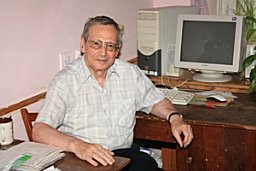 E. S. Syrkin合作论文数Institute for Low Temperature Physics and Engineering;UkrSSR Academy of Sciences;Institute for Low Temperature Physics and Engineering, UkrSSR Academy of Sciences3V. V. Fisun合作论文数3K. I. Pokhodnia合作论文数3i k ianson合作论文数2i g kolobov合作论文数2P. Molinie合作论文数2ME KOZLOV合作论文数2Yuliya V Volkova合作论文数2
 Oleksii Konotop合作论文数2Tetyana Ignatova合作论文数2
 Oleksandr Danylchenko合作论文数Verkin Institute for Low Temperature Physics and Engineering, National Academy of Sciences of Ukraine2Philippe Molinié合作论文数2
 Nikolay Sakhnenko合作论文数2A Leblanc合作论文数2Y. L. Alexandrov合作论文数2Andrey V. Kravchenko合作论文数2V. A. Lykah合作论文数National Technical University Kharkiv Polytechnical Institute2A. Yeremenko合作论文数1YA KOLESNICHENKO合作论文数1p molinie合作论文数1T.M. Kvaratskheliya合作论文数1V. L. Kashina-Yarmak合作论文数1M. D. Sakhnenko合作论文数1N. Sakhnenko合作论文数1IG TULUZOV合作论文数1
 I. A. Pilipenko合作论文数1




