Геннадий Андреевич Месяц (к 60-летию со дня рождения), Андреев А.Ф., Бугаев С.П., Вонсовский С.В., Гапонов-Грехов А.В., Келдыш Л.В., Ковальчук Б.М., Котов Ю.А., Прохоров А.М., Садовский М.В., Фортов В.Е.
29 ÔÇÐÕâÃÓâ 1994 Å. ÒÑÔÎÇ ÕâÉÇÎÑÌ ÃÑÎÇÊÐË ÔÍÑÐÚÂÎÔâ ÄÞAEÂáÜËÌÔâ ×ËÊËÍ-ÕÇÑÓÇÕËÍ, AEÑÍÕÑÓ ×ËÊËÍÑ-ÏÂÕÇÏÂÕË-ÚÇÔÍËØ ÐÂÖÍ, ÒÓÑ×ÇÔÔÑÓ ¬ËÓËÎÎ ±ÇÕÓÑÄËÚ ¤ÖÓÑÄ
On 21 May 1993 corresponding member of the Russian Academy of Sciences Isaak Mikhailovich TsidiPkovskii, a prominent physicist, Head of the Semiconductor Laboratory of the Institute of Metal Physics of the Ural Branch of the Russian Academy of Sciences celebrated his seventieth birthday. I. M. TsidiPkovskii belongs to the generation of people who bore on their shoulders all the difficulties of the Patriotic War of 1941-1945. In July of 1941 he volunteered to go to the front and went through the war as an infantryman, radio operator, and scout from the Dnepr to the Volga, and later from the Volga to the Spree. He was shellshocked and wounded several times. After demobilization he entered in 1946 the Physics Faculty of Kiev University. It is just at that time that a rapid development of semiconductor physics began. The brilliant lectures and seminars of Professors V. E. Lashkarev and S. I. Pekar determined his choice of scientific direction. From the very first independent steps in science made in 1953 at the Dagistan Branch of the Academy of Sciences of the USSR I. M. TsidiPkovskii found his own path. On the advice of the patriarch of Soviet physics Academician A. F. loffe and Professor V. P. Zhuze he began the study of thermomagnetic phenomena in semiconductors. In the course of five years he succeeded in investigating a remarkably broad class of materials. Already then TsidiPkovskii demonstrated the ability of fruitfully to combine the art of the experimenter with a deep theoretical analysis of the results of measurements. The investigations carried out by him in the 1950's on the physics of thermomagnetic phenomena became pioneering ones and convincingly demonstrated all the advantages of these effects as a subtle method for the investigation of the mechanism of scattering of charge carriers in solids. To a great extent due to Tsidil'kovskii's work this new field of the kinetics of solids was created. In those years he predicted and experimentally observed planar thermogalvanomagnetic effects which in a number of cases are a more convenient tools for research than the Hall and the Nernst-Ettingshausen effects. The monograph "Thermomagnetic phenomena in semiconductors" (1959), the first in world literature on this topic, was at once translated into English, and even today has not lost its scientific value. Having moved in 1957 on the invitation of S. V. Vonsovskii to Sverdlovsk, TsidiPkovskii organized at the Institute for the Physics of Metals of the Academy of Sciences of the USSR a laboratory which soon became the center of semiconductor research in the Urals. In the laboratory a large cycle of researches was started on quantum transport phenomena in strong magnetic fields, under conditions of high pressure, and also on optical, magneto-optical, and microwave properties of semiconductors. A particularly subtle experimental mastery was required for investigating thermomagnetic effects in strong pulsed fields with a short pulse duration. In the course of carrying out this program a magnetophonon resonance (predicted by V. L. Gurevich and Yu. A. Firsov) was discovered and thoroughly studied, and phenomena of spin-magnetophonon and combined magnetophonon Shubnikov-de Haas resonances were predicted and investigated. Since the early 1970's I. M. TsidiPkovskii together with his students actively investigated the electron metaldielectric transitions induced by magnetic fields, by a high pressure (up to 400 kbar), and by doping. The principal objects of the investigations were moderately doped semiconductors near the critical Mott concentration and gapless semiconductors. The long-standing problem of the negative temperature coefficient of resistance in the case of doped semiconductors was solved. With unflagging interest TsidiPkovskii worked for many years on the analysis of the situation of strong scattering of electrons when their mean free path is comparable with the interimpurity (or interatomic) distance and the standard approach of the Boltzmann equation is unsuitable. In a number of cases he succeeded in finding ways for a qualitative interpretation of the complex picture of the experimental data. One of the most important results of Tsidil'kovskii's scientific activity were the investigations that initiated a new direction in solid state physics—the physics of gapless semiconductors. Investigating in 1954-1955 the properties of mercury telluride he showed that the gap between the valence band and the conduction band is close to zero and that the edges of these bands are situated at the center of the Brillouin zone. He with collaborators discovered and studied various phase transitions in gapless semiconductors induced by pressure, magnetic field, and change in composition. Tsidil'kovskii's big contribution to the investigation of gapless semiconductors was marked by the award to him and a group of other scientists of a State Prize of the USSR for 1982. The investigations of the last decade are devoted to the problems of the Wigner crystallization of impurities in gapless semiconductors, to the anomalies of the electron properties of semimagnetic semiconductors and HTSC. He succeeded'in showing that the sharp increase in the mobility of the electrons in mercury telluride doped with manganese as the temperature is lowered below 10 К is due to the formation of donor-acceptor dipoles. A theory was developed which enabled one to explain quantitatively the
Памяти Георгия Викторовича Скроцкого, Ацаркин В.А., Боровик-Романов А.С., Буишвили Л.Л., Валиев К.А., Вонсовский С.В., Гуревич А.Г., Карлов Н.В., Кессених А.В., Кокин А.А., Кочелаев Б.И., Провоторов Б.Н., Прохоров А.М., Санадзе Т.И., Туров Е.А.
Александр Михайлович Прохоров (К семидесятилетию со дня рождения), Александров А.П., Боровик-Романов А.С., Валиев К.А., Велихов Е.П., Вонсовский С.В., Гинзбург В.Л., Зельдович Я.Б., Кадомцев Б.Б., Котельников В.А.
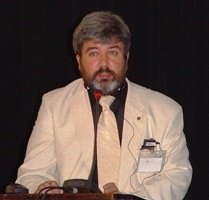 A.M. Prokhorov合作论文数P.N. Lebedev Physical Institute, the Academy of Sciences of the USSR14
 A S Borovik-Romanov合作论文数12M. S. Svirskii合作论文数12Bk Vainshtein合作论文数10Aleksandar Aleksandrov合作论文数9
 Gennadii Andreevich Mesyats合作论文数Lebedev Physical Institute, Russian Academy of Sciences8А.С. Боровик-Романов合作论文数7V. E. Shcherbinin合作论文数6G. G. Taluts合作论文数6yurii a osipyan合作论文数5K. S. Aleksandrov合作论文数5Boris I Kochelaev合作论文数Theoretical Physics Departement, Kazan State University5L A Artsimovich合作论文数5I K Kikoin合作论文数5п л капица合作论文数5i a terskov合作论文数5в д садовский合作论文数4н е алексеевский合作论文数4
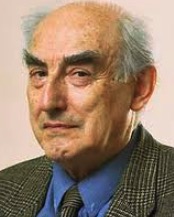 Vitaly L. Ginzburg合作论文数P.N.Lebedev Physical Institute, Russian Academy of Sciences4V. F. Shamrai合作论文数4Камиль Ахметович Валиев合作论文数3юрий андреевич осипьян合作论文数3Yv Kopaev合作论文数3Yurii M Kagan合作论文数3Yu.A. Ovchinnikov合作论文数3O. A. Bannykh合作论文数3Sh. Sh. Bashkirov合作论文数3Boris P Zakharchenya合作论文数3M. M. Zaripov合作论文数3A. G. Gurevich合作论文数3T. I. Sanadze合作论文数3А. Г. Лундин合作论文数3
 Vadim A. Atsarkin合作论文数Institute of Radio Engineering and Electronics, Russian Academy of Sciences3Yurii A Izyumov合作论文数3A. A. Kokin合作论文数3Ya B Zel'Dovich合作论文数3
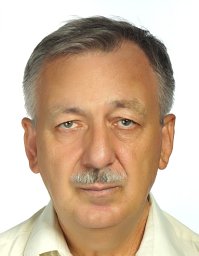 Andriy Gusak合作论文数Dept Phys, Cherkasy Natl Univ3B. N. Provotorov合作论文数3L I Ivanov合作论文数3V. I. Okulov合作论文数3жорес иванович алферов合作论文数2Виктор Григорьевич Барьяхтар合作论文数2Яков Борисович Зельдович合作论文数2евгений акимович туров合作论文数2я с шур合作论文数2виктор павлович силин合作论文数2борис петрович захарченя合作论文数2A.I. Shal'nikov合作论文数2immanuil l fabelinskii合作论文数2




