Vision Transformers are widely used across vision tasks but incur high computational and memory costs, making pruning essential for efficient deployment. However, most existing pruning methods rely on offline training with fixed task objectives and are ill-suited for dynamic settings. We introduce a new problem, Streaming Multi-task Pruning, where a single pruned model must adaptively learn heterogeneous task objectives over time. Through both empirical evidence and theoretical analysis, we show that static pruning strategies in this setting inherently lead to catastrophic forgetting and intransigence, resulting in unavoidable performance degradation. To address these challenges, we propose PruneStream, a lifelong pruning framework that treats pruning masks as structural memory, enabling controlled preservation and adaptation of model structures across tasks. Extensive experiments on five heterogeneous vision tasks demonstrate that PruneStream consistently outperforms 6 strong baselines by an average of 30.8 https://github.com/Ahguei/PruneStream .
Deploying Vision Transformers (ViTs) in real-world multi-task learning remains challenging due to their massive computational costs and the difficulty of pruning shared backbones without harming task performance. Single-task pruning often causes destructive interference by discarding weights critical to other tasks, while existing multi-task pruning strategies remain costly and unscalable for billion-parameter models. We propose Multi-LoRA Guided Importance Consensus (LoGIC), a unified framework for efficient and robust multi-task ViT pruning. LoGIC follows a two-phase procedure: (i) task-consistent pruning of LoRA modules, guided by a task-adaptive gating mechanism that balances shared and task-specific contributions while enforcing structured sparsity for deployment; and (ii) cross-task consensus pruning of the frozen ViT backbone, which retains both universally shared and task-specialized capabilities, enabling aggressive sparsity without sacrificing accuracy. Across five diverse vision benchmarks, LoGIC achieves up to 50% structured sparsity while maintaining competitive accuracy and surpassing all baselines.
Frequent Itemset Mining (FIM) is an important task in data analytics, where classical algorithms face scalability bottlenecks from the combinatorial growth of candidates and the memory overhead of their data structures. Inspired by recent developments in quantum computing, in this paper, we propose the Quantum Frequent-itemset Mining (QFM) data-processing framework for FIM. Following the level-wise structure of the itemset lattice, QFM introduces three mechanisms: (1) Bit-Vector Qubit Encoding for quantum data representation, which organizes transaction data into branchless bit-vectors to facilitate systematic uncomputation; (2) Mining-Aware Candidate Superposition, which prepares a quantum superposition over valid candidates at each lattice level rather than the full itemset lattice; and (3) Bit-Parallel Threshold Marking, which constructs a logarithmic-depth threshold-marking oracle for reliable repeated support verification within hardware coherence limits. We provide theoretical time complexity analysis, implement QFM on IBM Qiskit and Amazon Braket, and evaluate it on real-world datasets against representative classical baselines, where QFM achieves 96
Looped language models (LoopLMs) improve parameter efficiency by recursively reusing Transformer blocks, enabling deeper computation under a fixed model size. However, this reuse makes LoopLMs more fragile under post-training quantization (PTQ). We present the first systematic study of quantization in LoopLMs and identify three challenges: distribution shift across roles, state reuse across loop transitions, and recursive error accumulation. To address these challenges, we propose LoopQ, a loop-aware PTQ framework that preserves a shared quantized backbone while introducing lightweight adaptations. LoopQ combines activation scaling, selective transformation, cross-loop state alignment, and trajectory-aware optimization to reduce distributional mismatch within loops and error accumulation across loops. Experiments across seven benchmarks show that, under W4A4 quantization, LoopQ improves average downstream accuracy by 68.8
The Shapley value provides a principled foundation for data valuation, but exact computation is #P-hard due to the exponential coalition space. Existing accelerations remain global and ignore a structural property of modern predictors: for a given test instance, only a small subset of training points influences the prediction. We formalize this model-induced locality through support sets defined by the model's computational pathway (e.g., neighbors in KNN, leaves in trees, receptive fields in GNNs), showing that Shapley computation can be projected onto these supports without loss when locality is exact. This reframes Shapley evaluation as a structured data processing problem over overlapping support-induced subset families rather than exhaustive coalition enumeration. We prove that the intrinsic complexity of Local Shapley is governed by the number of distinct influential subsets, establishing an information-theoretic lower bound on retraining operations. Guided by this result, we propose LSMR (Local Shapley via Model Reuse), an optimal subset-centric algorithm that trains each influential subset exactly once via support mapping and pivot scheduling. For larger supports, we develop LSMR-A, a reuse-aware Monte Carlo estimator that remains unbiased with exponential concentration, with runtime determined by the number of distinct sampled subsets rather than total draws. Experiments across multiple model families demonstrate substantial retraining reductions and speedups while preserving high valuation fidelity.
Vision Transformers (ViTs) achieve strong performance across vision tasks, yet their deployment with low-precision early exiting remains fragile. Existing quantization methods assume static full-depth execution, making them unstable when exit decisions are perturbed by quantization noise, which can amplify errors along dynamic inference paths. In this paper, we introduce Amortized-Precision Quantization (APQ), a utilization-aware formulation that accounts for layer-wise stochastic exposure to quantization noise and reveals depth-precision trade-offs. Building on APQ, we propose Mutual Adaptive Quantization with Early Exiting (MAQEE), a bi-level framework that jointly optimizes exit thresholds and bit-widths under explicit risk control to improve inference stability. MAQEE establishes a superior Pareto frontier in the accuracy-efficiency trade-off, reducing BOPs by up to 95
Personalized virtual assistants powered by large language models (LLMs) on edge devices are attracting growing attention, with Retrieval-Augmented Generation (RAG) emerging as a key method for personalization by retrieving relevant profile data and generating tailored responses. However, deploying RAG on edge devices faces efficiency hurdles due to the rapid growth of profile data, such as user-LLM interactions and recent updates. While Computing-in-Memory (CiM) architectures mitigate this bottleneck by eliminating data movement between memory and processing units via in-situ operations, they are susceptible to environmental noise that can degrade retrieval precision. This poses a critical issue in dynamic, multi-domain edge-based scenarios (e.g., travel, medicine, and law) where both accuracy and adaptability are paramount. To address these challenges, we propose Task-Oriented Noise-resilient Embedding Learning (TONEL), a framework that improves noise robustness and domain adaptability for RAG in noisy edge environments. TONEL employs a noise-aware projection model to learn task-specific embeddings compatible with CiM hardware constraints, enabling accurate retrieval under noisy conditions. Extensive experiments conducted on personalization benchmarks demonstrate the effectiveness and practicality of our methods relative to strong baselines, especially in task-specific noisy scenarios.
Large Language Models (LLMs) have achieved remarkable success across reasoning and knowledge-intensive tasks, yet their static pretraining leaves them unable to handle rapidly evolving or domain-specific knowledge. Retrieval-Augmented Generation (RAG) addresses this by grounding LLM outputs in dynamically retrieved evidence, improving factual accuracy and reducing hallucinations. However, standard RAG pipelines struggle with temporally sensitive queries, especially when documents contain fuzzy or indirect time expressions (e.g., “a few years later”). This leads to Temporal Misalignment, where topically relevant but temporally incorrect results are retrieved. To overcome this, we propose DeFuzzRAG, a lightweight framework that enhances temporal robustness in RAG. DeFuzzRAG employs a small local language model to infer concrete time scopes from vague expressions and applies metadata-based filtering to realign retrieval with the query’s temporal intent. Experiments on a benchmark of fuzzified queries demonstrate that DeFuzzRAG substantially improves retrieval accuracy, raising Hit Rate by 15.7% while maintaining efficiency and model-agnostic integration. Our findings highlight the importance of temporal reasoning in RAG and establish DeFuzzRAG as a practical, plug-and-play solution for deploying temporally robust LLM systems in real-world settings.
Recently, Non-Fungible Tokens (NFTs) have attracted attention as valuable digital assets. However, NFT marketplaces face complex challenges in simultaneously recommending optimal pricing to sellers and desirable NFTs to buyers. Unlike conventional marketplaces that focus only on balancing demand and supply between sellers and buyers, these tasks are complicated by intricate value interdependencies arising from diverse buyer preferences, budgets, trait rarities, and the unprecedented breeding mechanisms. This paper formulates the NFT Project Pricing/Purchasing Recommendation ((NPR)-R-3) problem, aiming to achieve a competitive equilibrium that concurrently optimizes seller revenue and buyer utility. We introduce BANTER, an iterative algorithm that jointly determines (1) optimal NFT purchases for buyers (via NFT-REC), considering breeding utility and current prices; and (2) optimal pricing for sellers (via PRICE-REC), based on aggregated demand from NFT-REC. To efficiently manage the combinatorial complexity of breeding, we devise Optimal Parent Pair Selection (OPPS) and Heterogeneous Parent Set Selection (HPSS) schemes. Theoretical analysis guarantees BANTER to converge to a competitive equilibrium. Experiments on five real-world NFT datasets demonstrate its effectiveness in enhancing both seller revenue and average buyer utility. Source code: https://github.com/jimmy-academia/BANTER
Non-fungible tokens (NFTs) have emerged as a transformative innovation in art and technology, relying heavily on social networks for promotion and revenue generation. The value of NFTs is profoundly influenced by their scarcity, rarity, and unique breeding mechanisms, which present novel challenges for viral marketing strategies. In this paper, we introduce a new research problem of NFT Revenue Maximization (NRM), which focuses on maximizing revenue from the perspective of NFT marketplaces by optimally selecting users for viral marketing campaigns (NFT airdrops) and determining the ideal quantities of NFTs to release. We prove the hardness of NRM and propose an approximation algorithm named Quantity and Offspring-Oriented Airdrops (QOOA). Our algorithm leverages the concepts of Scarcity-Conscious Revenue and Valuation-based Quantity Inequality to prune suboptimal airdrops and quantities at an early stage. To further enhance revenue through NFT breeding, QOOA identifies and incentivizes Rare Trait Collectors to acquire multiple NFTs with rare traits, facilitating the breeding of high-value offspring. Experimental results demonstrate that QOOA significantly outperforms baselines, achieving up to 3.8 times higher revenue in large-scale social networks.
In this paper, we address the problem of revenue maximization (RM) for multi-grade products in social networks by considering pricing, seed selection, and coupon distribution. Previous works on RM often focus on a single product and neglect the use of coupons for promotion. We propose a new optimization problem, Revenue Maximization of Multi-Grade Product(RMMGP), to simultaneously determine pricing, seed selection, and coupon distribution for multi-grade products with both promotional and competitive relationships between grades in order to maximize revenue through viral marketing. We prove the hardness and inapproximability of RMMGP and show that the revenue function is not monotone or submodular. To solve RMMGP, we design an approximation algorithm, namely Data-Dependent Revenue Maximization (DDRM), and propose the Pricing-Seeding-Coupon allocation (PriSCa) algorithm, which uses the concepts of Worth Receiving Probability, Pricing-Promotion Alternating Framework, and Independent/Holistic Customer-Grade Determinant sets. Our experiments on real social networks, using valuation distributions from Amazon.com, demonstrate that PriSCa and DDRM achieve on average 1.5 times higher revenue than state-of-the-art approaches. Additionally, PriSCa is efficient and scalable on large datasets.
Community detection is a cornerstone problem in social network analysis (SNA), aimed at identifying cohesive communities with minimal external links. However, the rise of generative AI and Metaverse introduce complexities by creating hybrid human-AI social networks (denoted by HASNs), where traditional methods fall short, especially in human-centric settings. This paper introduces a novel community detection problem in HASNs (denoted by MetaCD), which seeks to enhance human connectivity within communities while reducing the presence of AI nodes. Effective processing of MetaCD poses challenges due to the delicate trade-off between excluding certain AI nodes and maintaining community structure. To address this, we propose CUSA, an innovative framework incorporating AI-aware clustering techniques that navigate this trade-off by selectively retaining AI nodes that contribute to community integrity. Furthermore, given the scarcity of real-world HASNs, we devise four strategies for synthesizing these networks under various hypothetical scenarios. Empirical evaluations on real social networks, reconfigured as HASNs, demonstrate the effectiveness and practicality of our approach compared to traditional non-deep learning and graph neural network (GNN)-based methods.
Few-shot learning (FSL) aims to classify unseen examples (query set) into labeled data (support set) through low-dimensional embeddings. However, the diversity and unpredictability of environments and capture devices make FSL more challenging in real-world applications. In this paper, we propose Dual Support Query Shift (DSQS), a novel challenge in FSL that integrates two key issues: inter-set shifts (between support and query sets) and intra-set shifts (within each set), which significantly hinder model performance. To tackle these challenges, we introduce a Dual Alignment framework (DUAL), whose core insight is that clean features can improve optimal transportation (OT) alignment. Firstly, DUAL leverages a robust embedding function enhanced by a repairer network trained with perturbed and adversarially generated “hard” examples to obtain clean features. Additionally, it incorporates a two-stage OT approach with a negative entropy regularizer, which aligns support set instances, minimizes intra-class distances, and uses query data as anchor nodes to achieve effective distribution alignment. We provide a theoretical bound of DUAL and experimental results on three image datasets, compared against 10 state-of-the-art baselines, showing that DUAL achieves a remarkable average performance improvement of 25.66%. Our code is available at https://github.com/siyang-jiang/DUAL.
In the realm of reinforcement learning (RL), the conventional approach involves training agents in unknown environments using extensive experiences comprising high-dimensional state representations (typically images), actions, and rewards. However, this standard setup imposes substantial data transmission overhead in scenarios where edge devices are employed for data collection, and cloud servers are utilized for model training. This paper introduces a novel paradigm termed ”frame-masked RL,” which is devised to enhance data efficiency while examining the impact on existing methods. Concurrently, we introduce a model-based algorithm, ”SelfDreamer,” tailored to mitigate the information loss incurred due to frame masking. SelfDreamer leverages action-transition dual prototypes to embed action information within the world model and align the hidden states in the representation space. Empirical evaluations reveal that SelfDreamer consistently outperforms state-of-the-art methods across six continuous control tasks sourced from the DeepMind Control Suite, demonstrating superior or comparable performance while utilizing only half of the observations from the environment.
Product Quantization (PQ) has received an increasing research attention due to the effectiveness on bit-width compression for memory efficiency. PQ is developed to divide weight values into blocks and adopt clustering algorithms dividing them into groups assigned with quantized values accordingly. Existing research mainly focused on the clustering strategy design with a minimal error between the original weights and the quantized values for the performance maintenance. However, the block division, i.e., the selection of block size, determines the choices of number of clusters and compression rate which has not been fully studied. Therefore, this paper proposes a novel scheme AdaPQ with the process, Adaptive Exploration Product Quantization , to first flexibly construct varying block sizes by padding the filter weights, which enlarges the search space of quantization result of PQ and avoids being suffered from a sub-optimal solution. Afterward, we further design a strategy, Adversary-aware Block Size Selection , to select an appropriate block size for each layer by evaluating the sensitivity on performance under perturbation for obtaining a minor performance loss under a high compression rate. Experimental results show that AdaPQ achieves a higher accuracy under a similar compression rate compared with the state-of-the-art.
Generative document retrieval (GDR) uses pre-trained Transformer-based large language models (LLMs) to extract contextual information and directly predict document identifier token sequences, outperforming traditional document retrieval methods. However, LLMs incur significant computational costs, hindering GDR's practical application and making inference acceleration essential. Early exiting is one of the conditional computing techniques that expedites LLM inference, but it faces challenges when integrated into GDR due to GDR's semantically hierarchical structured identifiers, which cause error amplification from premature exits. Moreover, although beam search expands the search space, the hierarchical structure of document identifiers restricts the diversity of initial tokens, leading to inefficiencies. In this work, we introduce Bi-Level Early Exiting for Generative Document Retrieval (BiLEE), comprising Layer Level Early Exiting (LLEE) and Token Level Early Exiting (TLEE). LLEE are designed for hierarchical document identifiers, dynamically escaping from the middle layer of the Transformer calculation based on a data-driven calibrated token threshold. TLEE exiting from unpromising candidate sequences, thus discarding unpromising search beams and enhancing beam search efficiency. Both components dynamically balance the speed-to-accuracy trade-offs for different token positions, doubling GDR's inference speed and obtaining 13 x reduction for FLOPs while maintaining the same level of accuracy. Source code: https://github.com/Rui-Fang/BiLEE.
To achieve better performance and greater fairness in Federated Learning (FL), much of the existing research has centered on individual clients, using domain adaptation techniques and redesigned aggregation schemes to counteract client data heterogeneity. However, an overlooked scenario exists where clients belong to distinctive groups, or, client types, in which groups of clients share similar characteristics such as device specifications or data patterns. Despite being common in group collaborations, this scenario has been overlooked in previous research, potentially leading to performance degradation and systemic biases against certain client types. To bridge this gap, we introduce Federated learning with Group Customization and Reweighting (FedGCR). FedGCR enhances both performance and fairness for FL with Distinct Client Types, consisting of a Federated Group Customization (FedGC) model to provide customization via a novel prompt tuning technique to mitigate the data disparity across different client-types, and a Federated Group Reweighting (FedGR) aggregation scheme to ensure uniform and unbiased performances between clients and between client types by a novel reweighting approach. Extensive experiment comparisons with prior FL methods in domain adaptation and fairness demonstrate the superiority of FedGCR in all metrics, including the overall accuracy and performance uniformity in both the group and the individual level. FedGCR achieves 82.74% accuracy and 12.26(↓) in performance uniformity on the Digit-Five dataset and 81.88% and 14.88%(↓) on DomainNet with a domain imbalance factor of 10, which significantly outperforms the state-of-the-art. Code is available at https://github.com/celinezheng/fedgcr.
Convolutional Neural Networks (CNNs) have dominated the majority of computer vision tasks. However, CNNs' vulnerability to adversarial attacks has raised concerns about deploying these models to safety-critical applications. In contrast, the Human Visual System (HVS), which utilizes spatial frequency channels to process visual signals, is immune to adversarial attacks. As such, this paper presents an empirical study exploring the vulnerability of CNN models in the frequency domain. Specifically, we utilize the discrete cosine transform (DCT) to construct the Spatial-Frequency (SF) layer to produce a block-wise frequency spectrum of an input image and formulate Spatial Frequency CNNs (SF-CNNs) by replacing the initial feature extraction layers of widely-used CNN backbones with the SF layer. Through extensive experiments, we observe that SF-CNN models are more robust than their CNN counterparts under both white-box and black-box attacks. To further explain the robustness of SF-CNNs, we compare the SF layer with a trainable convolutional layer with identical kernel sizes using two mixing strategies to show that the lower frequency components contribute the most to the adversarial robustness of SF-CNNs. We believe our observations can guide the future design of robust CNN models.
 Philip S. Yu (俞士綸)合作论文数Department of Computer Science, College of Engineering, University of Illinois Chicago;Big Data and Social Computing Lab, University of Illinois Chicago106
 De-Nian Yang (楊得年)合作论文数Institute of Information Science, Academia Sinica66
 Hsi-Wen Chen合作论文数Department of Electrical Engineering, National Taiwan University28
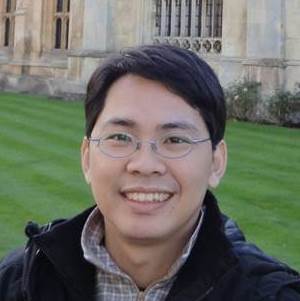 Kun-Ta Chuang (莊坤達)合作论文数Department of Computer Science and Information Engineering, College of Electrical Engineering and Computer Science, National Cheng Kung University;Institute of Medical Informatics, College of Electrical Engineering and Computer Science, National Cheng Kung University26
 Wang-Chien Lee (李旺謙)合作论文数Department of Computer Science and Engineering, The Pennsylvania State University23
 Hong-Han Shuai (帥宏翰)合作论文数Department of Electronics and Electrical Engineering, National Chiao Tung University;Institute of Electrical and Computer Engineering, National Chiao Tung University22
 Chih-Ya Shen (沈之涯)合作论文数Department of Computer Science, National Tsing Hua University21
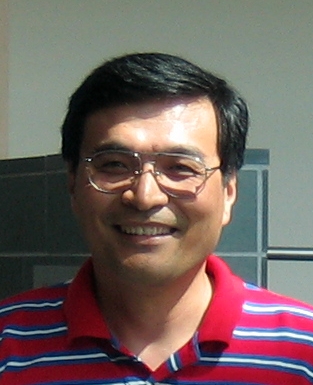 Kun-Lung Wu合作论文数Thomas J. Watson Research Center, IBM Research20
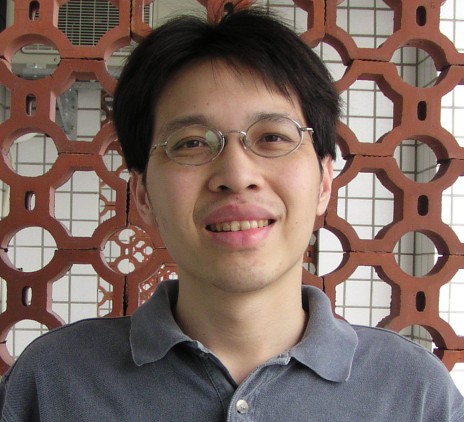 Jiun-Long Huang (黃俊龍)合作论文数Department of Computer Science,National Chiao Tung University17
 Mi-Yen Yeh (葉彌妍)合作论文数Institute of Information Science, Academia Sinica;Department of Computer Science and Information Engineering, National Cheng Kung University;Internet of Things Research Center, National Taiwan University16
 Dilip D. Kandlur合作论文数15
 Chi-Yao Tseng合作论文数Research Center for IT Innovation (CITI)15
 Jen-Wei Huang (Fred) (黃仁暐)合作论文数Department of Electrical Engineering, National Cheng Kung University14
 Hao-Ping Hung合作论文数Graduate Institute of Communication Engineering, National Taiwan University14Cheng-Ru Lin合作论文数13
 Chih-Hua Tai (戴志華)合作论文数Department of Computer Science and Information Engineering, National Taipei University12
 Chung-Kuang Chou合作论文数11
 Wen-Chih Peng (彭文志)合作论文数Department of Computer Science, National Yang Ming Chiao Tung University;Advanced Database System Laboratory, National Yang Ming Chiao Tung University11
 Kuan-Ting Lai (賴冠廷)合作论文数National Taipei University of Technology11
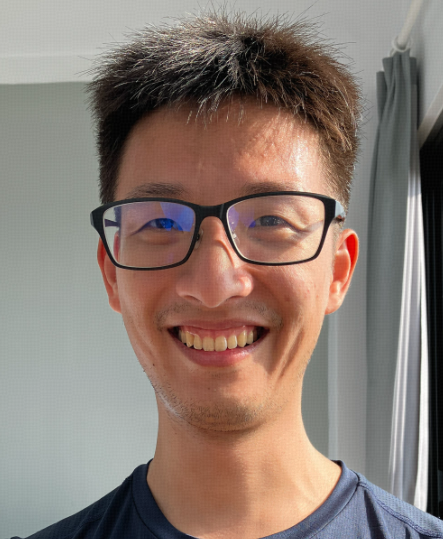 Chin-Yuan Yeh (葉津源)合作论文数10
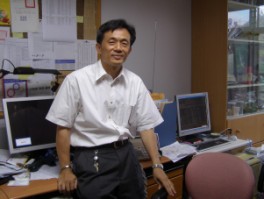 Jan-Ming Ho合作论文数Institute of Information Science Academia Sinica 128 Academia Road Section 2 Nankang Taipei 115 Taiwan10
 Kang G. Shin合作论文数Real-Time Computing Laboratory, Department of Electrical Engineering and Computer Science, University of Michigan10
 Wei-Guang Teng合作论文数Department of Engineering Science, National Cheng Kung University10
 Shan-Hung Wu (吳尚鴻)合作论文数Department of Computer Science, National Tsing Hua University9
 Chung-Min Chen合作论文数Lutron Electronics9
 Chung-Hua Chu合作论文数9
 Cheng-Yue Chang合作论文数9
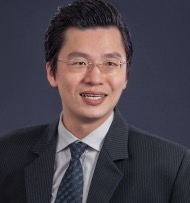 Lin Keng-Pei (林耕霈)合作论文数Department of Information Management, National Sun Yat-sen University9
 Chung-Sheng Li合作论文数Commercial Systems Department, Institute for Systems and Technologies of Information, Control and Communication;Taiwan Semiconductor Manufacturing Company Limited9
 Bi-Ru Dai合作论文数Dept. of Electrical Engineering, NTU9
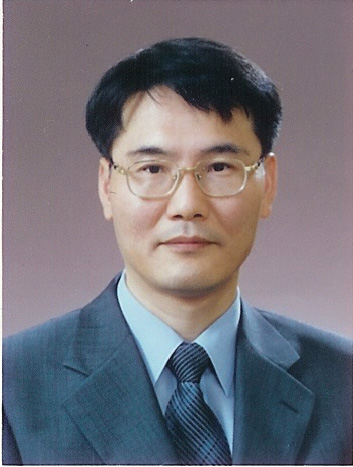 Jong Soo Park合作论文数Sungshin Women's University9Ya-Wen Teng合作论文数8
 Chun-Chieh Chen合作论文数8
 Jen-Hao Hsiao合作论文数Institute of Information Science, Academia Sinica8
 Lee, Hung-chang (李鴻璋)合作论文数Department of Information Management, Tamkang University8
 Kate Ching-Ju Lin (林靖茹)合作论文数Department of Computer Science, National Yang Ming Chiao Tung University8
 Bing (Chuang-Wen) You (游創文)合作论文数UbiComp Laboratory, Graduate Institute of Art and Technology, College of Arts, National Tsing Hua University8
 Chu-Song Chen (陳祝嵩)合作论文数AI Application and Integration Lab, Department of Computer Science & Information Engineering, National Taiwan University7Wei Ding合作论文数6
 Hao-Hua Chu (朱浩華)合作论文数Department of Computer Science and Information Engineering, National Taiwan University;Graduate Institute of Networking and Multimedia, National Taiwan University6
 Weiliang Shen合作论文数2012 Lab, Huawei Technologies Ltd. Co.6
 Hui-I Hsiao合作论文数IBM6
 Hsiao-Ping Tsai合作论文数6Yu-Chieh Lin合作论文数6Jian Chih Ou合作论文数5Ch Yun合作论文数5
 Siyang Jiang合作论文数Dept Elect Engn, Natl Taiwan Univ5
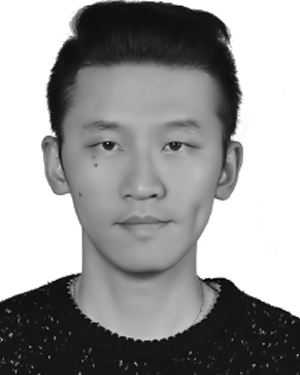 Li-Yen Kuo合作论文数5
 Yiling Chen合作论文数John A. Paulson School of Engineering and Applied Sciences, Harvard University5




