信息化发展和产业结构升级有助于全要素生产率提升.为明确三者间关系,基于2001-2016年中国264个地级市的面板数据,采用面板固定效应模型,实证分析信息化对产业结构升级的影响;同时利用面板分位数回归模型,考察产业结构升级对全要素生产率的非线性影响.研究发现,信息化能促进产业结构合理化和高级化.随着产业结构趋于合理化和高级化,全要素生产率得以提升,但这种提升效应是非线性的.产业结构合理化对全要素生产率增长的促进作用随分位数的提升而减弱,而产业结构高级化随之增强.同时,信息化能通过促进产业结构合理化对经济发展水平较低地区全要素生产率产生正向影响,而通过提升产业结构高级化对经济发展水平较高地区的全要素生产率产生正向影响.
自京津冀协同发展上升到国家发展战略以来,津冀地区的港口群不断整合以实现协同发展,并取得了一定的成效,但仍存在许多问题亟须解决.利用津冀港口运营企业的财务数据、基础设施数据以及港口行业数据,采用比较分析方法分析了津冀港口企业之间竞争的现状和存在的不足,从京津冀协同发展、企业管理和运营机制、企业经营战略等方面得出了津冀港口群协同发展的战略措施.
高铁以其高效、舒适、安全的优点"压缩"了城市之间的时空距离,有利的推动人口、资本等生产要素的快速流动.本文利用城市引力模型,研究分析了京沈高铁经过的北京、承德、阜新、朝阳、铁岭、沈阳6个城市的经济联系强度,实证研究的结果表明,京沈高铁的开通在提高了节点城市之间可达性的同时,极大增强了节点城市之间的经济联系,提高了节点城市的经济发展水平.
本文结合秦皇岛国际化建设现状,在调查思索的基础上,提出可操作性的、提升秦皇岛国际化水平的诸多路径,重点阐述建立专门行政机构,并制定《秦皇岛市城市国际化促进条例》的重要性.
机场是一个城市国际化水准、综合实力和竞争力的重要窗口,在城市国际化建设中起着率先垂范的带头作用.北戴河国际机场作为秦皇岛的一个新建机场,全方位、多角度,各方面协同合作,大力提升它的国际化水平(包括临空经济区)将对秦皇岛的国际化城市建设发挥重要的作用.
秦皇岛经济技术开发区是一个开放包容、活力四射的经济体,在城市国际化建设中起着率先垂范的作用.活用已有的国际化经验,全方位、多角度、上下一心,官民一体,国内外同时发力,继续大力提升其国际化水平,对秦皇岛国际化城市建设是不无裨益的.
Based on the product life cycle,the mean-variance method was adopted to investigate the supply chain pricing strategy. According to the demands in different periods of product life cycle,different decision-making functions were firstly constructed, then the pricing strategies of supply chain in different periods were analyzed, and finally the optimal retail price, wholesale price and operating performance were provided. It was revealed that the retailer price becomes lower and the wholesale price is higher when retailers' risk aversion increases;the retail price and wholesale price become lower when manufacturers' risk aversion increases; and the market position becomes more stable and the price of manufacturers and retailers becomes higher when the product life cycle is longer.
地方政府非效率投资的根源主要来自于地方政府官员对经济收益和政治晋升的需求,因此政府非效率投资的治理要从地方官员治理入手.本文从地方官员治理的角度出发,采用实证研究的方法,分析了经济责任审计工作对地方官员权利的约束作用,检验了经济责任审计工作能够抑制地方政府非效率投资,为完善我国经济责任审计工作提供了若干建议.
从宏观经济增长的角度来看,京津冀与长三角两个区域的增长模式有着相似之处;然而,从区域协同的发展战略角度来看,两个区域却有着明显的区别。本文利用林毅夫教授提出的技术选择指数,研究发现2000年以后长三角区域协同加强,有着明显的收敛趋势;然而,京津冀区域协同较弱,区域发展不平衡。
从我国房地产业基本现状与行业特征入手,研究我国房地产业市场竞争力与资本结构间的相互关系。通过建立模型,进行实证分析,表明我国房地产上市公司在市场竞争力与资本结构之间存在相互影响的关系。
随着我国经济发展进入到“新常态”,粗放式的经济增长模式已经不适合,需要新的模式来实现经济的发展。在分析产业链结构的基础上,归纳出了产业链整合的三种模式:产业链纵向整合、横向整合和混合整合,并论证了三种整合模式的特点及其适用性。通过对三种整合模式的比较研究,发现产业链整合是实现经济进一步增长、改变我国各产业在国际产业链分工中的不利地位的有效途径之一。
In order to consider the effect of slotting allowances on suppliers and consumers fully, we build a complete information dynamic game model. In the model, slotting allowances includes two parts, one part is the one-time payment and another part is changing with production. After analyzing the participants' decision-making in three kinds of downstream market with perfectly competitive market, monopoly market, and the dominant retailer market in downstream, we find that the role of slotting allowances is different in different market structures: In dormant retail market, retail price is decreasing with slotting allowances of per unit product, the effect on wholesale price is uncertain; In monopoly market, wholesale price is increasing with slotting allowances of per unit product. After the comparing, we also can find that the slotting allowances can regulate the efficiency of industry chain.
The ultimate goal of insisting on people-oriented scientific development concept is to realize the human all-round development,to find the problems through the evaluation of the human all-round development,and to make policy recommendations based on the evaluation results.The main work of this paper are as follows:firstly,according to the meaning of scientific development concept,the comprehensive human all-round development evaluation index system of Hebei is constructed through rules such as quality of human,quality of life,economic development,social development,ecological and human capital.Secondly,revised G1 by standard deviation is used to get the weights.Evaluation model is set up to appraise the development status of 2005-2010 of Hebei.The results of the study show that:the human all-round development level of Hebei increases year by year.The number of doctors permillion people,rate of compulsory education,Engel coefficient,consumption level,the per-capita urban housing,urban unemployment rate and urban unemployment have profound effect on human all-round development.
According to the insisting on human-oriented connotation of the scientific outlook on development,this paper constructed a comprehensive evaluation index system and a model of the human all-round development based on G1-Gini coefficient and analyzed the data of China's 10 sub-provincial cities.The innovation and characteristics of this work can be found from the following three aspects.Firstly,by setting up the criterias of the quality of human life,the environment of social development and the ecological environment,the index system reflected the harmony between human and human,human and society,and human and nature.Secondly,through the G1 and the Gini coefficient of index system combination weighting,index weight reflected not only the expertise but also data of objective information.Thirdly,it gave out the key indicators which affected the human all-round development through empirical research on 10 sub-provincial cities.
<正>当前对于非经营性国有资产的管理还处于探索阶段,针对我国非经营性国有资产管理中出现的各种问题各地都结合实际采取了各种不同的监管模式。本文利用比较分析方法和归纳法,通过对我国当前具有代表性的几种监管模式研究,拟提出非经营性国有资产管理体制改革的几点建议。
近年来河北省产业集群有了很大发展,在各地经济发展中起着重要的作用,但是产业集群在成长中也面临着来自各方面的风险。为降低风险,提升产业集群竞争力,政府应加强统筹规划、完善集群发展的制度环境、引导企业进行品牌化建设以及建立创新支持系统。
非经营性国有资产由于其非营利性的特点,长期主要依靠国家行政手段进行资产和资金的分配。由于没有良好的监管机制,非经营性国有资产管理中存在管理混乱、处置不均等许多问题,为此应从机构设置、制度建设和管理工具等多方面加强对非经营性国有资产的管理。
近年来,以中小企业为主的河北省特色产业集群有了很大发展,在各地经济发展中起着重要的作用,但各地的特色产业集群在成长中也承受着来自各方面的风险。这些产业集群面临着结构性风险、周期性风险、网络性风险、政策性风险等七个方面的风险。因此,各地应该通过政府规划、完善集群发展环境、进行品牌化建设等措施,降低特色产业集群的风险,提高特色产业集群竞争力。
To get global solution in multi-depots vehicle scheduling problem (MDVSP), MDVSP models are established. Two-phase particle swarm optimization (TPPSO) is established to solve MDVSP. The optimization course are as follow: first phase, set up goods number dimension particle position vector, vector's every column corresponds to goods, vector elements are random vehicle serial number, thus we can assign goods to vehicles. Second phase, particle position matrix is set up, matrix's column number equal to vehicle freight goods number, every column corresponds to a goods, and matrix has two row, the first row correspond to goods start depot, second row correspond to end depot, matrix elements are random number between 0 and 1, matrix elements are sort ascending according to sort rules, we can get single vehicle route. Then evaluate and filtrate particles by optimization aim, circulate until meet terminate qualification. TPPSO can assign all freights to all vehicles and easy to get optimized solution.
 FengXia Chang (常凤霞)合作论文数3
 Zhiyu Zhang (张志宇)合作论文数Northeastern University at Qinhuangdao3
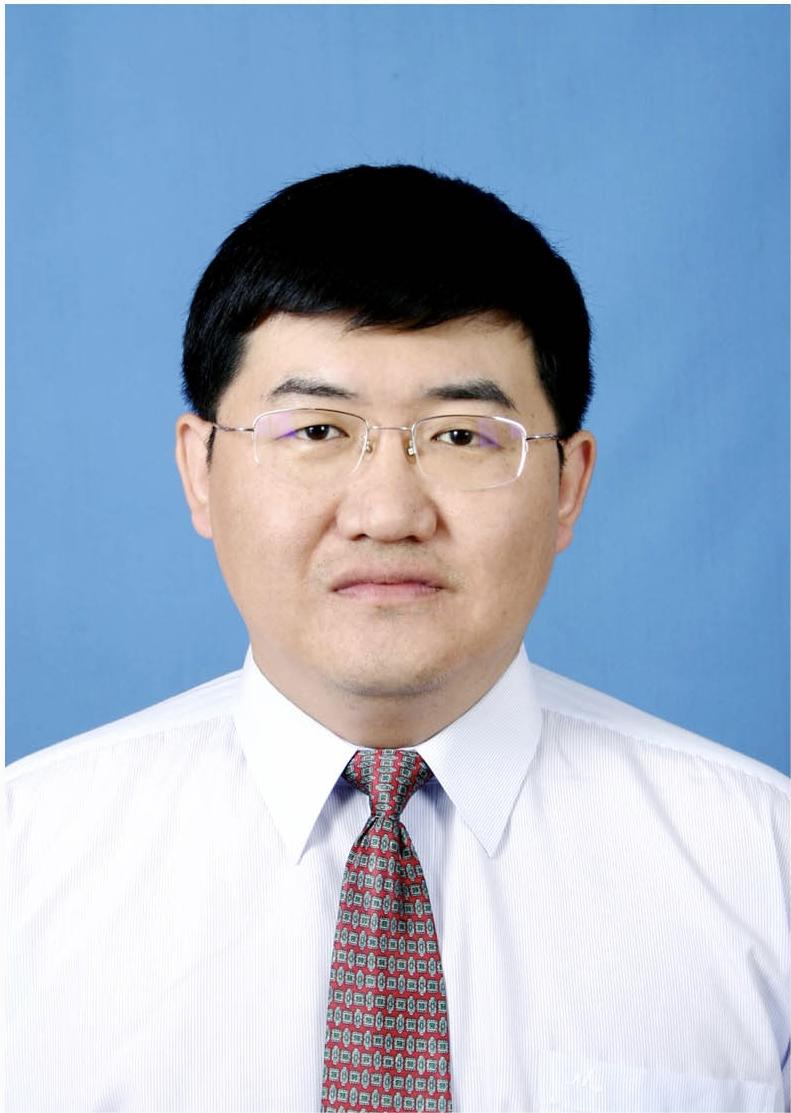 Feng Su (苏锋)合作论文数Northeastern University at Qinhuangdao;College of Arts, Northeastern University3Jie Du (杜洁)合作论文数2Jibo Qu (曲吉波)合作论文数2Jinling Wang (王金玲)合作论文数2
 Kai Li (李凯)合作论文数MBA Education Center, Northeastern University;School of Business Administration, Northeastern University2
 Kai Chen (陈凯)合作论文数Northeastern University at Qinhuangdao;School of Business Administration, Northeastern University2Xin-Yang Liu合作论文数1Li LIU (刘莉)合作论文数1HongTao Yuan (苑红涛)合作论文数1YuHong Fan (樊玉红)合作论文数1YuXi Jiang (姜昱汐)合作论文数1LiBin Zhou (周立斌)合作论文数1WeiHua Chen (陈卫华)合作论文数1
 Leizhen Wang (王雷震)合作论文数Northeastern University at Qinhuangdao1
 Huilin Yuan (原慧琳)合作论文数School of Management, Northeastern University at Qinhuangdao1
 Gang Li (李刚)合作论文数School of Resources and Civil Engineering, Northeastern University1Meng Ge合作论文数1Zhang Lin合作论文数1Yuchuan Liu (刘玉川)合作论文数1Hongwei Zhou (周洪玮)合作论文数1Shibin Lv (吕世斌)合作论文数1Xue Zhang (张雪)合作论文数1
 Cuiping Wang (王翠萍)合作论文数Northeastern University at Qinhuangdao1
 Suxin Wang (王素欣)合作论文数School of Management, Northeastern University at Qinhuangdao1
 Zhaopeng Chu (初钊鹏)合作论文数Northeastern University at Qinhuangdao1
 Ben Niu (牛奔)合作论文数College of Management, Shenzhen University1




