As a model of urban park design worldwide, the Olympic Forest Park (OFP) serves as a paradigm of China's ecological civilization and a vital hub for urban well-being. To maximize the park's ecological value and address the growing public demand for healthy lifestyles, the "Parallel OFP" framework was proposed. Grounded in the ACP (artificial systems, computational experiments, and parallel execution) methodology, Parallel OFP utilized descriptive intelligence for digital modeling, predictive intelligence for ecosystem analysis, and prescriptive intelligence for operational guidance, greatly facilitating the smart management and value expansion of OFP. On this basis, we construct a metaverse architecture integrating scenario engineering, multi-agent modeling, and multi-modal large language models was constructed to serve as the operational backbone bridging virtual simulation and physical execution. The deployment of Parallel OFP was discussed in ecological monitoring, health promotion, and environmental education, highlighting its potential to transform traditional management paradigms. Ultimately, by fusing the artificial and physical realms, Parallel OFP aims to drive innovation in ecological conservation and promote healthier lifestyles, contributing to the sustainable development of urban parks.
Occupancy prediction has attracted intensive attention and shown great superiority in the development of autonomous driving systems. The fine-grained environmental representation brought by occupancy prediction in terms of both geometry and semantic information has facilitated the general perception and safe planning under open scenarios. However, it also brings high computation costs and heavy parameters in existing works that utilize voxel-based 3d dense representation and Transformer-based quadratic attention. To address these challenges, in this paper, we propose a Mamba-based occupancy prediction method (MambaOcc) adopting BEV features to ease the burden of 3D scenario representation, and linear Mamba-style attention to achieve efficient long-range perception. Besides, to address the sensitivity of Mamba to sequence order, we propose a local adaptive reordering (LAR) mechanism with deformable convolution and design a hybrid BEV encoder comprised of convolution layers and Mamba. Extensive experiments on the Occ3D-nuScenes dataset demonstrate that MambaOcc achieves state-of-the-art performance in terms of both accuracy and computational efficiency. For example, compared to FlashOcc, MambaOcc delivers superior results while reducing the number of parameters by 42% and computational costs by 39%. The code is available at https://github.com/Hub-Tian/MambaOcc.
Universal traffic laws describe recurrent patterns in congestion, mobility and driving behavior across cities, providing a scientific basis for transportation planning, management and control. Their discovery, however, remains expert-driven, requiring candidate regularities to be identified from heterogeneous observational evidence or validated through intervention experiments. Although autonomous artificial intelligence (AI) systems have advanced scientific discovery in controlled laboratory settings, extending them to complex transportation domains remains a challenge. Here we present TrafficSci, an agentic AI system that formulates traffic-law discovery as an iterative, auditable workflow integrating evidence scoping, critic-judge hypothesis induction, and observational-interventional validation. Across four case studies spanning population, network, control and trajectory scales, TrafficSci autonomously rediscovers three established traffic laws and identifies an unreported intrinsic temporal memory scale in urban driving behavior, statistically consistent across eight cities and two trajectory datasets. TrafficSci provides a route for extending AI-driven scientific discovery from controlled domains to complex urban systems.
Arctic warming is extending the open water period, increasing interest in oil exploration, extraction, and transport through the extended shipping season, consequently raising the potential for an oil spill in the Arctic. Remote sensing for oil detection and characterization is at the forefront of oil spill response efforts. Here, we show that the density of an oil is related to its complex dielectric constant (CDC), a governing factor of microwave remote sensing. The relationship between oil density (rho) and the real part of the oil CDC (epsilon(y)) as a function of composition and temperature was thoroughly investigated and a simple linear equation to describe the two variables was attained (epsilon(y) = 2.0396 rho+ 0.4961). Based on this oil density-CDC relationship, a framework was built for radar technologies to classify spilled oil as light, medium, heavy, or extra-heavy using forward and inverse modelling of the Normalized Radar Cross-Section to better inform responders on how to approach the oil spill and what mitigation procedures are most appropriate.
Abstract For autonomous systems to operate safely and reliably in dense traffic, they must perform trajectory prediction with human-like, interpretable reasoning. Prevailing data-driven “black-box” models fundamentally lack this capability. This research proposes a paradigm shift toward embodied intelligence, unifying cognitive science principles into a hierarchical framework: a Scene Attention Mechanism for threat prioritization, Social Impact Theory-driven graphs for intent inference, and a physics-compliant Social Force Model. Experimental results demonstrate that our framework reduces average displacement error by 42% and Final Displacement Error by 40% compared to existing state-of-the-art models on ETH and UCY, while enabling near-real-time inference (0.003 s). Crucially, the model’s interpretable architecture, which is validated through risk-sensitive heatmaps and graph visualizations, reveals how agents dynamically balance safety, efficiency, and socio-cultural norms. Beyond performance gains, this work constructs an interpretable bridge between computational models and human cognitive science, laying a foundation for trustworthy autonomous systems.
Entity alignment, a critical task in integrating knowledge from multiple knowledge graphs (KGs), aims to identify equivalent entities across different KGs. Traditional approaches predominantly rely on knowledge embedding models to generate entity representations and compute similarity scores for alignment. However, these methods often lack interpretability, rendering their predictions opaque to end users. Recently, large language models (LLMs) have demonstrated strong semantic reasoning capabilities and have been applied to various KG-related tasks, including entity alignment. Despite this progress, existing methods still suffer from three key limitations: inaccurate retrieval of candidate entities, noisy prompt construction, and weak interaction between the retrieval module and the LLM. To address these challenges, we propose EARAG (entity alignment-oriented retrieval-augmented generation), a novel framework that effectively integrates structured knowledge from KGs with the semantic reasoning power of LLMs. EARAG first employs a convolutional neural network (CNN)-based retriever that jointly models multiple similarity metrics and captures relative ranking information to retrieve high-quality candidate entities. It then constructs carefully designed prompts that guide the LLM to not only determine entity equivalence but also generate human-understandable explanations. Extensive experiments on benchmark datasets demonstrate that EARAG achieves state-of-the-art alignment accuracy while offering superior interpretability. These results highlight the potential of retrieval-augmented LLMs as transparent and effective solutions for real-world entity alignment tasks. Code and datasets are publicly available at: https://github.com/linyaoyang/EARAG.
Automated cooking robots have traditionally relied on predefined procedures and rule-based control, ensuring stable execution but offering limited personalization, whereas recent large-model approaches support natural language interaction but often suffer from opaque decision making and unreliable execution in real kitchens. To address this challenge, this paper proposes an agentic framework that systematically decomposes personalized cooking requirements into structured and verifiable control programs rather than directly mapping language to actions. Multiple AI agents collaboratively transform user intents into canonical recipes, workflow programs with explicit flow control, and executable Python code grounded in an atomic action library. The system consists of three tightly coupled stages: offline recipe-to-code generation through multiple agents, online closed-loop execution with supervisory intervention enabled by multimodal perception, and post-run adaptation that updates user preference models for long-term personalization. Real-world experiments on a physical cooking platform demonstrate that the proposed framework achieves reliable task completion, transparent execution logic, and effective anomaly handling across diverse personalized scenarios, validating its practicality for trustworthy automated cooking in real environments.
The rapid development of Artificial Intelligence (AI) is reshaping the ways in which Social Sciences (SS) conduct observation, modeling, simulation, and governance. At the same time, a series of key challenges faced by AI, including interpretability, controllability, legitimacy, and value alignment, can no longer be resolved through technical pathways alone. This paper argues that the intersection of AI and SS should be understood as a bidirectional co-evolutionary paradigm rather than a one-way application relationship. Based on this view, this paper introduces Parallel Intelligence (PI) and its related theoretical extensions, and proposes an AI × SS framework that connects AI for SS (AI4SS) and SS for AI (SS4AI) within a unified system architecture. Under this framework, the current research landscape is further organized into four key methodological pathways, namely data representation, analysis and modeling, simulation and experimentation, and decision and optimization, and a systematic review is conducted around representative studies along each pathway. The paper then further discusses how these methodological pathways are implemented in representative domains such as finance, communication, management, art, and education. By integrating recent advances in Generative AI, foundation models, Agentic AI, and Computational Social Science, and by incorporating theoretical perspectives from SS on institutions, governance, and human–machine collaboration, this paper characterizes, at the system level, the new research structure emerging from the intersection of AI and SS.
The study of system complexity primarily has two objectives: to explore underlying patterns and to develop theoretical explanations. Pattern exploration seeks to clarify the mechanisms behind the emergence of system complexity, while theoretical explanations aim to identify the fundamental causes of this complexity. Laws are generally defined as mappings between variables, whereas theories offer causal explanations of system behavior. Agent Based Modeling(ABM) is an important approach for studying complex systems, but it tends to emphasize simulation over experimentation. As a result, ABM often struggles to deeply uncover the governing operational principles. Unlike conventional scenario analysis that relies on human reasoning, computational experiments emphasize counterfactual experiments-that is, creating parallel worlds that simulate alternative "evolutionary paths" of real-world events. By systematically adjusting input variables and observing the resulting changes in output variables, computational experiments provide a robust tool for causal inference, thereby addressing the limitations of traditional ABM. Together, these methods offer causal insights into the dynamic evolution of systems. This part can help readers gain a preliminary understanding of the entire computational experiment method, laying the foundation for the subsequent study.
Space resource acquisition and utilization, commonly referred to as Space Mining, represent critical pathways for enabling sustained human exploration and unlocking commercial opportunities in space. These resources mainly include helium-3, water, mineral resources on the Moon and Mars, and abundant mineral deposits on asteroids. Due to the harsh conditions of space, communication delays, and high launch costs, the development of autonomous robotic systems is critical to achieving efficient, cost-effective space mining. This paper provides a comprehensive overview of space mining robotics and associated technologies. First, we review the background of space mining, including international policies, commercial entities, and recent advancements. We define a systematic six-stage architecture for space mining: Exploration is initiated by (1) remote sensing for target identification and (2) precise in situ robotic detection; Sampling progresses from (3) single-robot small-scale sampling to (4) multi-robot large-scale excavation; and Extraction integrates (5) autonomous resource extraction and (6) final integration into in situ construction or terrestrial transport. Additionally, we review and curate existing resources for space mining research, including real-world mission data, terrestrial analog datasets, and high-fidelity simulation environments. Finally, we identify critical open challenges in autonomous space mining and delineate a strategic research roadmap to bridge current technological gaps, fostering the transition toward a sustainable off-world economy. To track ongoing developments in space mining, we maintain an updated project page: https://github.com/OpenSpace-Lab/Space-Mining-with-Robotics-List.
Driven by the rapid advancement of deep learning and large-scale computing,visual perception systems have achieved remarkable progress in a wide range of domains,including autonomous driving,intelligent transportation,secu-rity surveillance,medical diagnostics,industrial inspection,and human-robot interaction.Modern vision algorithms,empowered by massive datasets and increasingly sophisticated neural architectures,are now capable of performing object detection,semantic segmentation,scene understanding,and even causal reasoning with unprecedented accuracy.Despite this rapid growth,the development of visual intelligence still faces several critical bottlenecks.Chief among these chal-lenges are the highly imbalanced data distributions that characterize real-world environments,the scarcity of long-tail or rare-event samples essential for robustness,and the substantial human and financial cost associated with large-scale manual annotation.These factors significantly hinder the performance,safety,and generalizability of deep perception sys-tems,especially in complex,dynamic,or safety-critical scenarios.Parallel images technology,emerging as a novel image generation and modeling methodology grounded in parallel systems theory and the artificial systems,computational experi-ments,and parallel execution(ACP)framework,offers a promising pathway to address these limitations.The core idea behind parallel images is to construct controllable,high-fidelity artificial scene systems that reflect the structure,behavior,physics,and semantics of their real-world counterparts.Within these artificial systems,computational experiments can be conducted at scale,allowing for the controlled generation of diverse visual data that capture variations in illumination,geometry,environmental conditions,sensor characteristics,and task-specific factors.Through the interaction and iterative feedback between virtual and real environments,parallel images establish a closed-loop mechanism of"modeling-training-feedback-optimization",enabling perception models to evolve continuously,validate hypotheses,and improve perfor-mance under systematically generated variations.This closed-loop mechanism differentiates parallel images from traditional synthetic data generation in several important aspects.First,instead of passively producing static rendered images,paral-lel images emphasize dynamic parallelism,where virtual agents,environments,and tasks evolve in sync with real-world processes.Second,the approach integrates multimodal feedback,bridging visual,geometric,physical,and semantic modalities to ensure consistency and translatability across domains.Third,the framework supports scalable modeling of rare,dangerous,or expensive scenarios that are difficult or impossible to capture in real life,such as near-crash events in autonomous driving,rare diseases in medical imaging,or hazardous industrial operations.These capabilities make parallel images a powerful tool for enhancing the robustness,safety,and domain generalization of modern perception systems.This paper provides a comprehensive,systematic review of the theoretical foundations,methodological innovations,and devel-opmental trajectory of parallel images technology.This paper begins by revisiting its roots in parallel intelligence and the ACP paradigm and detailing how artificial systems serve as controlled experimental platforms that complement real-world data collection.Then,this paper examines recent technical advances encompassing three major research directions aligned with the ACP framework:1)multimodal data-driven virtual scene generation,which employs generative adversarial net-works,diffusion models,neural radiance fields,and 3D Gaussian splatting to overcome data scarcity and annotation bottle-necks,enabling the creation of controllable,editable,and semantically consistent synthetic environments;2)multiview feature fusion and virtual-real model transfer,aimed at addressing feature discrepancies and semantic misalignment across heterogeneous visual modalities through cross-modal alignment,multigranularity adaptive transfer,and domain-bridging strategies that enhance generalization and adaptability in hybrid virtual-real environments;3)parallel reasoning through heterogeneous data and knowledge fusion,which integrates structured information extraction,external knowledge guid-ance,scene graphs,temporal logic,and large language models to advance perceptual understanding toward semantic-level reasoning and decision-making,thereby supporting continuous optimization and closed-loop evolution in complex scenes.Beyond summarizing technological developments,this paper also situates parallel images within the broader context of emerging trends in generative artificial intelligence and foundation models.With the rise of diffusion models,neural radi-ance fields,and large-scale multimodal models,parallel images are poised to integrate more deeply with generative simula-tion pipelines.This paper discusses how these innovations can strengthen the fidelity,controllability,and adaptability of artificial visual data and potentially enable new capabilities such as task-conditioned scene synthesis,human-AI cosimula-tion,interactive data generation,and closed-loop autonomous scenario exploration,and provides key capabilities for build-ing general visual systems with continuous learning and feedback optimization.This paper provides crucial support for building general visual systems with continuous learning and feedback-driven optimization.Finally,this paper identifies several open challenges and future research directions that are essential for advancing the development of parallel images systems.These challenges include achieving high-quality expansion of virtual data,bridging the semantic gap between vir-tual and real domains,and enabling real-time,tightly coupled virtual-real interaction.Addressing these issues will require advances in intelligent generation models,self-supervised quality evaluation,unified data standards,causality-aware cross-domain alignment,and low-latency virtual-real collaboration supported by next-generation communication and sens-ing technologies.Solving these challenges will be critical for pushing forward the frontier of synthetic visual intelligence and unlocking the full potential of parallel images in real-world applications.
In recent years, intelligent vehicles operating in urban environments have demonstrated the capability to autonomously execute various tasks, such as object detection, lane detection, segmentation, etc. This advancement is facilitated by the extensive datasets accumulated by researchers, alongside advancements in intelligent algorithms, as well as significant breakthroughs in software and hardware. However, within the autonomous driving community, there is a scarcity of data regarding scenarios encountered in mining environments. This scarcity presents challenges and bottlenecks for the advancement of comprehensive autonomous driving systems and autonomousoperations. Although we previously released our dataset, AutoMine, which includes over 18 hours of driving data in open-pit mines, its scope is limited to two specific tasks. This scope limitation impedes the training and validation of the majority of algorithms for different tasks in this particular scenario. To broaden the scope of autonomous driving visual tasks in mining environments, we have curated a diverse collection encompassing multiple tasks, including detection, segmentation, tracking, etc. Additionally, we have established benchmarks and set up baselines for the aforementioned multiple tasks. By comparing the performance differences of visual algorithms between mining areas and other scenarios, we demonstrate the distinctive characteristics of mining regions in an intuitive manner. We have developed a suite of tools for converting annotated data into the standardized format used in existing driving datasets. Our aspiration is to establish data and benchmark foundations, supporting research endeavors in intelligent transportation within mining environments and autonomous driving in comprehensive scenarios. Our project website can be seen in AutoMine, and the dataset can be downloaded via AutoMine-Benchmark.
In recent years,the rapid advancement of foundation models,including large language models,vision-language models,and world models,has introduced a paradigm shift that enables humanoid robots to transition from laboratory dem-onstrations to open-world applications,such as household services,industrial manufacturing,and medical assistance.As the primary end effector responsible for high-dimensional and fine-grained physical interaction,multi-fingered dexterous hands represent one of the most challenging and emblematic platforms in embodied intelligence due to their high degrees of freedom,strongly nonlinear contact dynamics,and tightly coupled multimodal feedback mechanisms.The emergence of vision-language-action(VLA)models and large-scale foundation architectures,the breakthrough application of diffusion models and flow matching in continuous control policy generation,hybrid reinforcement-imitation learning frameworks,and advances in high-resolution tactile sensing,variable-stiffness mechanisms,and rigid-soft hybrid materials collectively drive a fundamental transition in dexterous hands-from a paradigm of"rigid high-precision"mechanical determinism toward an integrated,perception-learning-execution-centered closed-loop intelligent system.This work presents a compre-hensive review of robotic dexterous hands across four dimensions:mechanical structures,intelligence capability grading,data resources,and benchmarking methodologies.From a historical perspective,we first systematically trace the evolution of mechanical architectures and hardware paradigms,summarizing representative technical routes,including fully actuated multi-finger designs,underactuated compliant mechanisms,tendon-driven systems,soft robotic hands,and rigid-soft hybrid structures.Our analysis indicates that the evolution of dexterous hand mechanisms is not merely an accumulation of degrees of freedom,but rather a gradual shift toward engineering-oriented paradigms that are characterized by underactu-ated coupling,material compliance,and hybrid structural design.By embedding adaptive coordination mechanisms into a mechanical body through passive responses,these approaches effectively reduce actuation and control dimensionality while physically enhancing robustness against object diversity and contact uncertainty.Building upon this foundation,we pro-pose a systematic five-level taxonomy of dexterous intelligence(H1-H5)centered on the evolution of perceptual capabil-ity.H1(perception-free)is characterized by open-loop program execution and teleoperation,wherein the system lacks environmental modeling and policy generation capabilities.H2(single-modal perception)introduces either vision or tactile feedback to enable perception-driven grasping and basic stability regulation.H3(multimodal perception)integrates vision,tactile,and force sensing through deep multimodal collaboration,supporting complex fine manipulation tasks,such as precision assembly,deformable object manipulation,and tool use.During this stage,systematic methodologies emerge across three technical directions:hierarchical task planning,multimodal servo control,and data-driven policy learning.H4(open perception)centers on VLA models and addresses perceptual generalization,long-horizon task plan-ning,and deep multimodal fusion to enable language-guided open-world task understanding and zero-shot manipulation.H5(dynamic perception)envisions an autonomous,evolving general manipulation capability that is supported by deep multimodal dynamic perception and real-time coordination mechanisms,representing a historical leap from robots as"tools"to embodied"symbiotic agents".This taxonomy provides a unified reference framework for evaluating the techno-logical transition of dexterous hands from repetitive execution to open-world task planning,and ultimately,toward autono-mous evolution.Furthermore,we systematically review key data resources and evaluation benchmarks that support dexter-ous intelligence from two complementary dimensions:real-world interaction and high-fidelity simulation.At the data level,real-world datasets offer ecological validity but suffer from high collection costs,limited scalability,and safety risks.Syn-thetic datasets and simulation platforms enable large-scale and diverse data generation at controllable costs but remain con-strained by simplified contact models and the simulation-to-reality gap.We outline the evolution of synthetic datasets from static grasp poses to dynamic manipulation sequences and analyze representative resources in terms of their contributions to grasp generation,cross-hand generalization,articulated object manipulation,and long-horizon modeling.We further sum-marize the technological progression of simulation platforms from basic physical validation to high-fidelity interaction and cross-domain transfer.In terms of evaluation,we categorize performance metrics into outcome-oriented and process-oriented dimensions,including task success rate,grasp cycle time,target pose error,normalized task error,contact region error,stability and drop rate,and efficiency and robustness.Benchmark tasks are organized into five families:stable grasping and transport,re-grasping and contact transition,in-hand manipulation and reorientation,constrained operation and assembly,and tool use and functional manipulation.Combined,these constructs form a systematic 2D evaluation spec-trum that spans contact complexity and temporal depth,emphasizing reproducible and diagnostically meaningful standards for assessing generalization capability and deployment readiness.Finally,we summarize the core challenges and future directions toward the general-purpose deployment of dexterous hands.From a data perspective,the scarcity of real interac-tion data and the persistent simulation-to-reality gap remain fundamental bottlenecks for effective policy transfer.From a modeling perspective,efficient and robust multimodal joint representations,3D foundation model construction,and inter-pretable decision-making mechanisms have yet to converge into a unified theoretical framework,while inherent tensions persist between model scale and real-time inference requirements.From a hardware perspective,long-standing engineering trade-offs exist between high degrees of freedom and low cost,reliability,and lightweight design,and between precision force-tactile control and structural simplicity.In the future,a deep integration of perception,decision-making,and execu-tion;incorporation of physical common sense and causal reasoning through world models and embodied foundation models;generative AI-driven data-efficient learning and simulation credibility enhancement;biomimetic variable-stiffness mecha-nisms and endogenous tactile sensing through soft-hard codesign;and long-term real-world deployment with closed-loop optimization in high-value scenarios,such as intelligent manufacturing,domestic service,and specialized operations,will be critical pathways.Such effort will drive dexterous hands from laboratory prototypes toward reliable real-world applica-tions,ultimately achieving the objective of general embodied intelligence that is capable of perceiving,reasoning,and manipulating"like a human hand".This work provides a unified capability framework and systematic reference for under-standing and tracking the frontier of robotic dexterous hands,offering theoretical guidance and practical insights for future research in hardware paradigm evolution,intelligence capability transition,and data and benchmarking system construc-tion.
Typical human resource management relies on equilibrium analysis or manual design to develop appropriate strategies. Such a paradigm, however, may not be applicable for modern enterprises, as systems are highly time variant with diverse participants. To tackle such individual cognitive difference and systemic complexity, this article proposes a distributed model repository—the digital personnel with heterogeneity. The digital personnel are composed of different digital employers and employees and can conveniently conduct computational experiments to dynamically explore possible management policies. By cognitive reinforcement learning and constant interaction with the real human users, it provides a knowledge automation approach for the agile reengineering and optimization of workflows as well as the elevation of user's satisfaction. Experiment based on a multinational company manifests that the methodology is feasible and effective. Consequently, the heterogeneous digital personnel play a source of intelligent behavior generation with interactive computational experiments and can be an efficient testbed for management strategies.
Spatial Crowdsourcing (SC) has emerged as a significant paradigm for executing complex real-world projects and tasks, which are often decomposed into interdependent subtasks requiring diverse worker skills. A key challenge lies in the efficient allocation of multiple tasks to workers while respecting intricate subtask dependencies and skill requirements within a limited timeframe. This paper formally defines and addresses this Dependency-aware Multi-task Allocation (DMA) problem. We propose a novel framework, termed Heterogeneous Graph Reinforcement Learning for Task Allocation (HGRL-TA), to derive optimal allocation policies. Central to our framework is a multi-relation graph model that uniformly represents the complex problem state, and a Compound-path-based Heterogeneous Graph Attention Network (CHANet) designed to generate comprehensive state embeddings by capturing the intricate relationships among tasks and workers. The allocation decisions are made sequentially by a policy network, which is trained jointly with CHANet using the Proximal Policy Optimization (PPO) algorithm. Extensive experiments on both real-world and synthetic datasets demonstrate that the proposed HGRL-TA framework significantly outperforms seven representative baselines, showcasing its effectiveness and generalizability for the DMA problem.
Mercury contamination represents a risk to coral reefs due to its high toxicity, persistence and biomagnification potential. The coral reefs in Moín, on the Caribbean coast of Costa Rica, are exposed to a variety of anthropogenic activities, including urban development, commercial and industrial activities, and the presence of major commercial ports and the only oil port of the country. This study aimed to determine total mercury (THg) concentrations in sediments, macroalgae (Cryptonemia crenulata) and sponge (Cinachyrella kuekenthali), collected between October 2014 and May 2016 from Moín and a reference site in the south Caribbean (SC). The Bioconcentration Factor (BCF) of THg was calculated in both organisms to evaluate accumulation. THg concentrations were compared with previous studies, Sediment Quality Guidelines (SQG) and the Geoaccumulation Index (Igeo) to assess sediment pollution and possible ecotoxicological effects. THg concentrations in macroalgae were similar between the study and the reference site (28 ng g-1 dwt). Sponge samples had the highest THg accumulation of all samples, ranging from 100 to 192 ng g-1 dwt at Moín and from 85 to 211 ng g-1 dwt at the reference site. Sediment samples at Moín had similar THg concentrations as macroalgae. Sediment THg concentrations were below SQG and the Igeo indicated that sediments at Moín and at the reference site were uncontaminated.
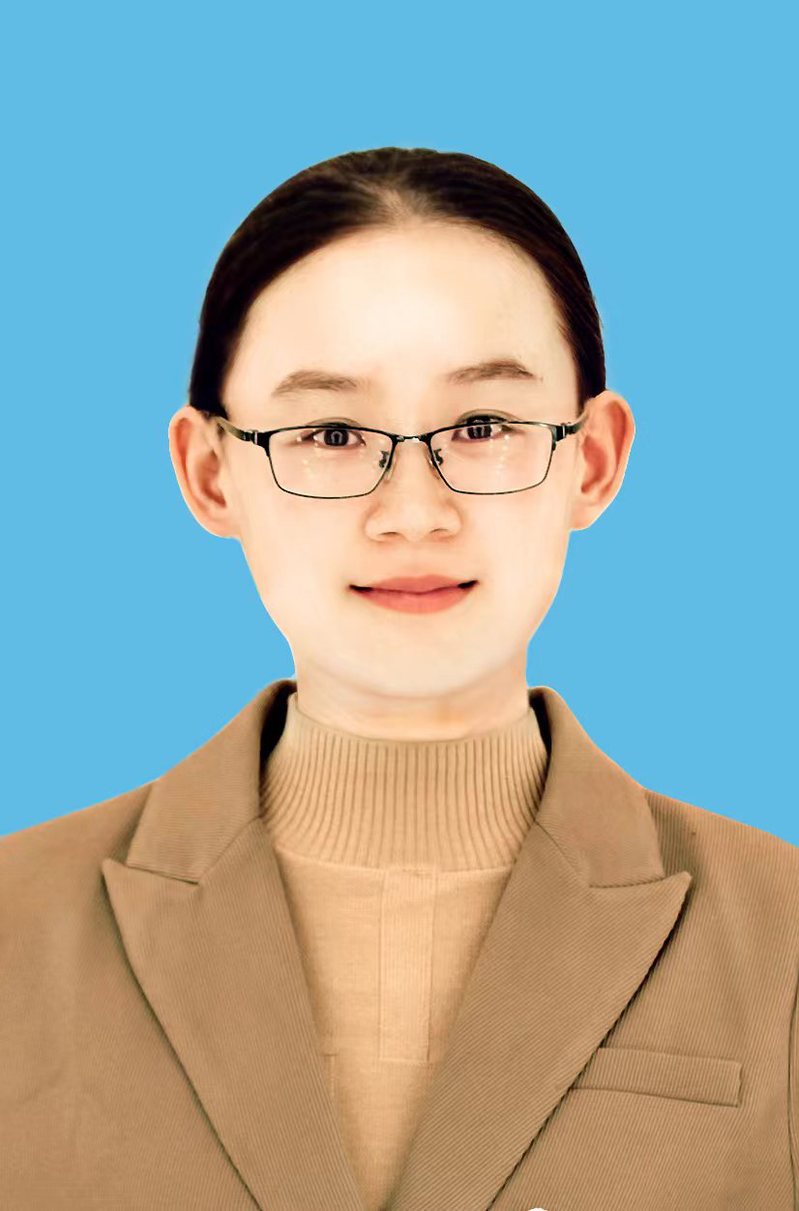 Xiao Wang (王晓)合作论文数School of Artificial Intelligence, Anhui University153
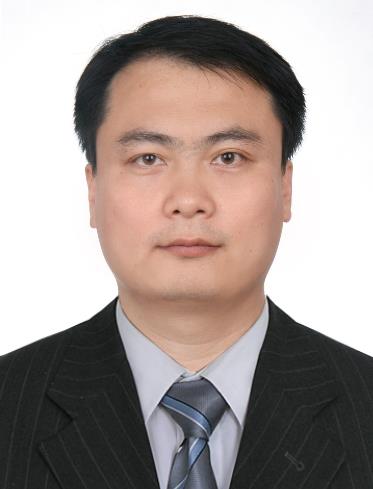 Yong Yuan (袁勇)合作论文数School of Mathematics, Renmin University of China98
 Gang Xiong (熊刚)合作论文数The State Key Laboratory of Management and Control for Complex Systems, Institute of Automation, Chinese Academy of Sciences;School of Artificial Intelligence, University of Chinese Academy of Sciences84
 Juanjuan Li (李娟娟)合作论文数82
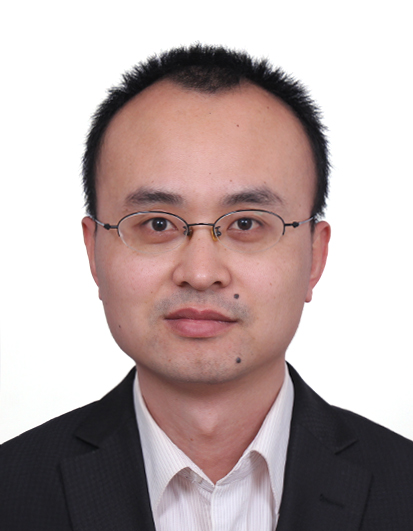 Yisheng Lv (吕宜生)合作论文数Institute of Automation, Chinese Academy of Science;University of Chinese Academy of Sciences75
 Rui Qin合作论文数Institute of Automation Chinese Academy of Sciences, Institute of Automation Chinese Academy of Sciences70
 Yonglin Tian合作论文数Institute of Automation
Chinese Academy of Sciences65
Yonglin Tian合作论文数Institute of Automation
Chinese Academy of Sciences65 Daniel Zeng (曾大军)合作论文数Institute of Automation, Chinese Academy of Sciences;University of Chinese Academy of Sciences65
 Yutong Wang (王雨桐)合作论文数Institute of Automation Chinese Academy of Sciences59
 Dongpu Cao合作论文数Waterloo Cognitive Autonomous Driving Lab, University of Waterloo59
 Kunfeng Wang (王坤峰)合作论文数College of Information Science and Technology, Beijing University of Chemical Technology58
 Chao Gou (苟超)合作论文数School of Intelligent Systems Engineering, Sun Yat-sen University56
 Fenghua Zhu (朱凤华)合作论文数Institute of Automation, Chinese Academy of Sciences;School of Artificial Intelligence, University of Chinese Academy of Sciences49
 Wenbo Zheng合作论文数School of Software Engineering, Xi’an Jiaotong University;The State Key Laboratory for Management and Control of Complex Systems, Institute of Automation, Chinese Academy of Sciences48
 Long Chen (陈龙)合作论文数University of Chinese Academy of Sciences;Institute of Automation, Chinese Academy of Sciences47
 Zhen Shen (沈震)合作论文数Institute of Automation, Chinese Academy of Sciences;University of Chinese Academy of Sciences42
 Lan Yan (严岚)合作论文数School of Computer Science and Technology, Hainan University40
 Yilun Lin合作论文数State Key Laboratory of Management and Control for Complex Systems Institute, Automation Chinese Academy of Sciences39
 Peijun Ye (叶佩军)合作论文数Institute of Automation, Chinese Academy of Sciences;University of Chinese Academy of Sciences39
 Xiaolong Zheng (郑晓龙)合作论文数State Key Laboratory of Management and Control for Complex Systems, Institute of Automation, Chinese Academy of Sciences;University of Chinese Academy of Sciences37
 Li Li (李力)合作论文数Department of Automation, Tsinghua University34
 Xuan Li合作论文数33
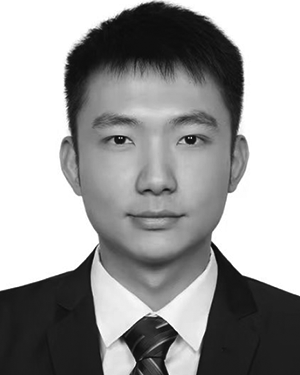 Xingyuan Dai合作论文数Chinese Acad Sci, Inst Automat, State Key Lab Management & Control Complex Syst, Beijing 100080, Peoples R China32
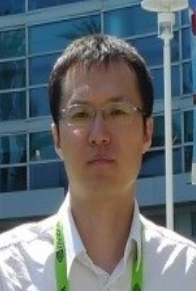 Qinghai Miao (缪青海)合作论文数School of Artificial Intelligence, University of Chinese Academy of Sciences32
 Qinglai Wei (魏庆来)合作论文数Institute of Automation, Chinese Academy of Sciences;University of Chinese Academy of Sciences32
 Nanning Zheng (郑南宁)合作论文数Institute of Artificial Intelligence and Robotics, College of Artificial Intelligence, Xi'an Jiaotong University31
 Shuangshuang Han合作论文数Qingdao Acad. of Intell. Ind.;c;Qingdao Acad. of Intell. Ind.30
 Lingxi Li合作论文数Elmore Family School of Electrical and Computer Engineering, College of Engineering, Purdue University30
 Jing Yang合作论文数Research Units of Discovery of Unknown Bacteria and Function, Chinese Academy of Medical Sciences, Beijing, China.29
 Xisong Dong合作论文数29
 Shuming Tang (汤淑明)合作论文数Institute of Automation, Chinese Academy of Sciences;School of Artificial Intelligences, University of Chinese Academy of Sciences26Qinghua Ni (倪清桦)合作论文数25
 Mengzhen Kang (康孟珍)合作论文数State Key Laboratory of Management and Control for Complex Systems, Institute of Automation, Chinese Academy of Sciences;School of Artificial Intelligence, University of Chinese Academy of Sciences24
 Xingxia Wang合作论文数School of Artificial Intelligence, University of Chinese Academy of Sciences23
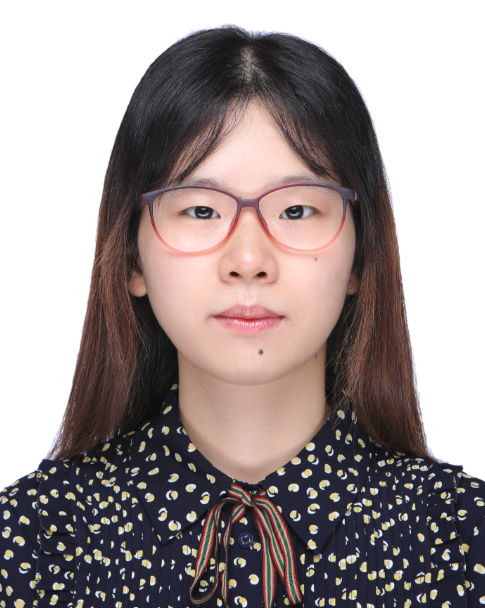 Hui Zhang (张慧)合作论文数School of Computer and Information Technology, Beijing Jiaotong University23
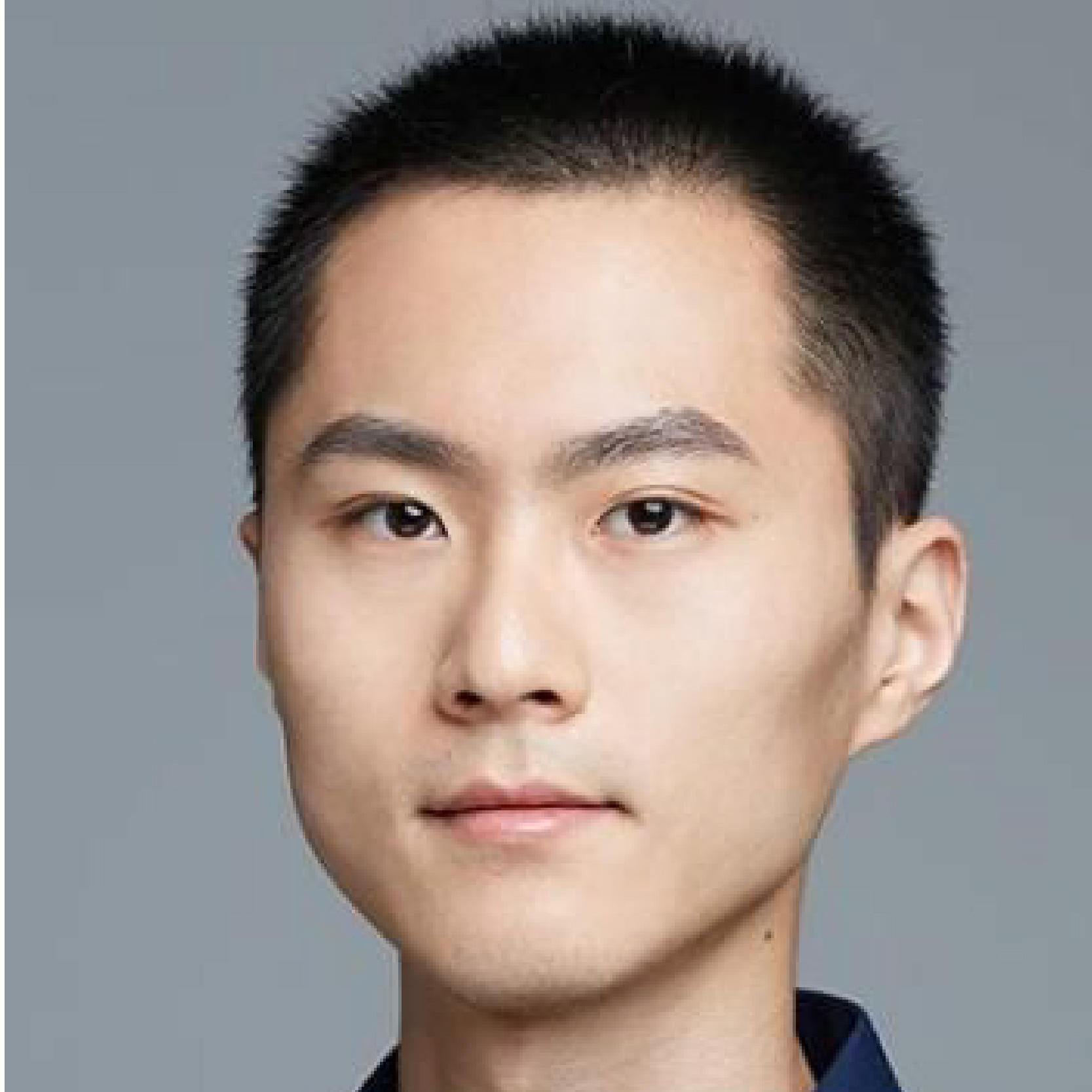 Chen Lyu (吕辰)合作论文数School of Mechanical & Aerospace Engineering, Nanyang Technological University;School of Electrical & Electronic Engineering, Nanyang Technological University22
 Chao Guo (郭超)合作论文数State Key Laboratory for Management and Control of Complex Systems, Institute of Automation, Chinese Academy of Sciences;School of Artificial Intelligence, University of Chinese Academy of Sciences22
 Hairong Dong (董海荣)合作论文数College of Electronic and Information Engineering, Tongji University22
 Siyu Teng (滕思宇)合作论文数Waytous Inc.21
 Wenji Mao (毛文吉)合作论文数State Key Laboratory of Management and Control for Complex Systems, Institute of Automation, Chinese Academy of Sciences;School of Artificial Intelligence, University of Chinese Academy of Sciences21
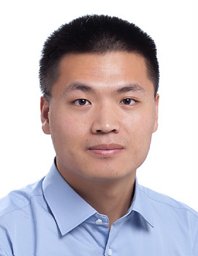 Yuanyuan Chen合作论文数21
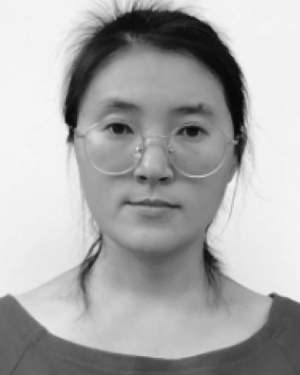 Mo Hong合作论文数20
 Bin Tian (田滨)合作论文数Institute of Automation, Chinese Academy of Sciences;School of Artificial Intelligence, University of Chinese Academy of Sciences20Yuhang Liu合作论文数State Key Laboratory of Multimodal Artificial Intelligence Systems, Institute of Automation, Chinese Academy of Sciences;School of Artificial Intelligence, University of Chinese Academy of Sciences19
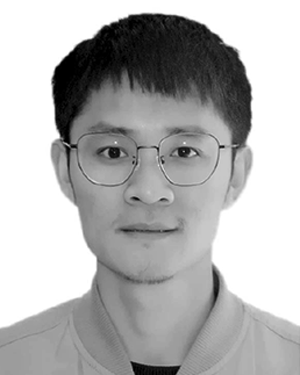 Min Zhou合作论文数Beijing Jiaotong Univ, State Key Lab Rail Traff Control & Safety, Beijing 100044, Peoples R China19
 Lili Fan合作论文数Jilin Univ, Coll Comp Sci & Technol, Changchun 130012, Jilin, Peoples R China19
 Weishan Zhang (张卫山)合作论文数College of Computer Science and Technology, China University of Petroleum;Institute of Automation, Chinese Academy of Sciences19
 Jun Jason Zhang合作论文数18
 Jiangong Wang合作论文数Chinese Acad Sci, Inst Automat, State Key Lab Management & Control Complex Syst, Beijing, Peoples R China18




