Video inpainting aims to reconstruct missing or corrupted regions in video frames, with applications in video editing, restoration, and special effects. Current deep video inpainting methods rely on optical flow to guide the propagation of effective features and spatiotemporal attention mechanisms to model relationships between frames. However, as an explicit motion representation, the optical flow extracted offline in preceding steps often suffers from instability and errors during estimation. These errors accumulate during subsequent content hallucination, resulting in artifacts and blurring. Meanwhile, although traditional spatiotemporal attention effectively captures frame relationships, its dense computational nature introduces redundant information, disrupting inpainting tasks and reducing efficiency. To address these issues, we propose an implicit motion-guided approach for efficient video inpainting. Instead of relying on optical flow, our method uses implicit motion in the latent feature space to guide the dual-domain propagation of images and features end-to-end, avoiding error accumulation from the independent optical flow estimation process. Additionally, we introduce a self-correcting module that enables feedback between image and feature propagation, reducing errors during propagation. Furthermore, we design an adaptive sparse video attention mechanism to focus on highly relevant regions, minimizing the impact of irrelevant information. Experimental results demonstrate that the proposed method outperforms state-of-the-art approaches both qualitatively and quantitatively, while also delivering superior efficiency.
Image forgery detection is a key problem in image forensics. Most existing methods use supervised classification and learn common forgery cues from many labeled samples. However, real forgeries have many forms and image distributions vary a lot, so these models often overfit the training data and generalize poorly across scenes. To address this issue, we propose a deep clustering based framework for forgery localization, HSC (Image Forgery Localization via Hierarchical Soft Clustering). First, we build an asymmetric feature space where background features are compact and forgery features are scattered, and use hierarchical soft clustering with EM iterations to model different forgery patterns in a probabilistic way. Second, we introduce a robust background estimation method with a border prior to reduce sensitivity to cluster size. Finally, we design a two-layer attention decoder with cluster-to-pixel cross-attention and cluster-to-cluster self-attention, turning rule-based decisions into learnable end-to-end inference. Extensive experiments show that HSC outperforms prior methods on multiple datasets and cross-scene settings.
The growing diversity of generative models has made synthetic image source attribution more challenging, particularly in open-set scenarios where test samples may originate from unseen generators. Existing methods often use pretrained features to improve generalization, but rich semantic information may also interfere with the learning of source-related artifacts. To address this issue, we propose an Orthogonal Subspace Mixture-of-Experts (OS-MoE) model based on singular value decomposition, which decomposes pretrained weights into orthogonal subspaces and constructs lightweight experts in the residual subspace. Compared with existing MoE approaches, we explicitly enforce orthogonality among different experts, thereby maintain-ing a relatively high rank of the overall feature space. Each expert focuses on source-related patterns under specific semantic conditions, thereby reducing optimization interference among semantically diverse samples and improving both representation and generalization. Results on GenImage confirm the advantage of the proposed approach in synthetic image attribution.
Existing domain generalization semantic segmentation methods aim to improve the generalization ability by learning domain-invariant information for generalizing well on unseen domains. However, these methods ignore the class discriminability of models, which may lead to a class confusion problem. In this paper, a class-discriminative domain generalization (CDDG) approach is proposed to simultaneously alleviate the distribution shift and class confusion for semantic segmentation. Specifically, a dual prototypical contrastive learning module is proposed. Since the high-frequency component is consistent across different domains, a class-text-guided high-frequency prototypical contrastive learning is proposed. It uses text embeddings as prior knowledge for guiding the learning of high-frequency prototypical representation from high-frequency components to mine domain-invariant information and further improve the generalization ability. However, the domain-specific information may also contain label-related information which refers to the discrimination of a specific class. Thus, only learning the domain-invariant information may limit the class discriminability of models. To address this issue, a low-frequency prototypical contrastive learning is proposed to learn the class-discriminative representation from low-frequency components since it is more domain-specific across different domains. Finally, the class-discriminative representation and high-frequency prototypical representation are fused to simultaneously improve the generalization ability and class discriminability of the model. Extensive experiments demonstrate that the proposed approach outperforms current methods on single- and multi-source domain generalization benchmarks.
Recent advances in deep learning algorithms have shown impressive progress in image copy-move forgery detection (CMFD). However, these algorithms lack generalizability in practical scenarios where the copied regions are not present in the training images, or the cloned regions are part of the background. Additionally, these algorithms utilize convolution operations to distinguish source and target regions, leading to unsatisfactory results when the target regions blend well with the background. To address these limitations, this study proposes a novel end-to-end CMFD framework that integrates the strengths of conventional and deep learning methods. Specifically, the study develops a deep cross-scale PatchMatch (PM) method that is customized for CMFD to locate copy-move regions. Unlike existing deep models, our approach utilizes features extracted from high-resolution scales to seek explicit and reliable point-to-point matching between source and target regions. Furthermore, we propose a novel pairwise rank learning framework to separate source and target regions. By leveraging the strong prior of point-to-point matches, the framework can identify subtle differences and effectively discriminate between source and target regions, even when the target regions blend well with the background. Our framework is fully differentiable and can be trained end-to-end. Comprehensive experimental results highlight the remarkable generalizability of our scheme across various copy-move scenarios, significantly outperforming existing methods.
Elucidating the virulence mechanisms of A. baumannii is essential for developing strategies to mitigate pathogenicity. Although high-virulent strains are associated with increased mortality rate in severely infected patients, the underlying mechanisms remains not well understood. Our analysis revealed leucine as a pivotal biomarker, with the 11dP and paaK being significant contributors to virulence. The ATP-dependent activity and antioxidant activity were identified as the most important pathways in distinguishing the virulence of A. baumannii. Exogenous leucine was found to modulate mitochondria dysfunction and oxidative stress, thereby diminishing the pathogenicity of A. baumannii towards Beas 2B cells. Moreover, leucine reduced the virulence of A. baumannii to Galleria mellonella (G. mellonella) and alleviated pathological damage to lung tissues in mice. Our study offers a novel treatment strategy based on metabolomics, which may assist in the exploration and management of infections caused by highly virulent pathogens. It sets a new course for reducing the impact of highly virulent A. baumannii infections and has significant implications for the development of future therapeutic interventions.
Identifying the source platform of an online video is a critical yet challenging task in digital forensics, complicated by proprietary transcoding and adversarial post-processing. The preceding forensic methods are limited to a single modality, analyzing either fragile container metadata or easily distorted spatiotemporal artifacts severely compromise their robustness. This paper pioneers a multi-modal framework that deeply integrates both information domains. We contend that naive fusion is insufficient as it fails to address cross-modal ambiguity-instances where modalities provide conflicting evidence. To resolve this, we propose DAFN, a novel Dual-modality Ambiguity-Aware Fingerprinting Network which extract features from both container structure and video content. At its core, DAFN introduces an adaptive fusion mechanism guided by a measure of cross-modal ambiguity. This mechanism, which incorporates a variational module to quantify the discrepancy between modalities, enables the model to intelligently arbitrate between evidence sources. We further contribute CNSNVD, a large-scale dataset with nine major platforms and six post-processing types. Extensive experiments show that DAFN significantly outperforms existing baselines, establishing a new state-of-the-art by effectively resolving modal ambiguity to achieve superior accuracy and resilience.
To effectively address challenges in unstructured terrain segmentation, including irregular textures, inconsistent semantic boundaries, and high inter-class similarity, we propose Wavelet-Based Frequency-Spatial Fusion Network (WFFNet), a novel dual-domain feature fusion framework. Our network employs an encoder-decoder architecture built on the lightweight SegFormer backbone. To enhance cross-domain representation, we introduce two complementary modules: the Wavelet-Frequency Enhance Block (WFEB) and the Wavelet-Frequency-Spatial Fusion Block (WFSFB). The WFEB, integrated into the encoder, uses discrete wavelet transform (DWT) and frequency-domain self-attention to decompose features into high- and low-frequency components, emphasizing fine details while suppressing noise. The WFSFB, located in the decoder, contains a Wavelet-Frequency Modulation Branch and a Spatial Attention Branch that jointly model domain-specific cues and facilitate effective frequency-spatial interaction. This cooperative design enables WFFNet to simultaneously capture rich semantic context and detailed structural information, which is crucial for accurately distinguishing traversable and non-traversable regions in complex unstructured environments. Extensive experiments on the challenging RUGD and RELLIS-3D datasets demonstrate that WFFNet achieves state-of-the-art performance.
Identifying traffic accidents in driving videos is crucial to ensuring the safety of autonomous driving and driver assistance systems. To address the potential danger caused by the long-tailed distribution of driving events, existing traffic accident detection (TAD) methods mainly rely on unsupervised learning. However, TAD is still challenging due to the rapid movement of cameras and dynamic scenes in driving scenarios. Existing unsupervised TAD methods mainly rely on a single pretext task, i.e., an appearance-based or future object localization task, to detect accidents. However, appearance-based approaches are easily disturbed by the rapid movement of the camera and changes in illumination, which significantly reduce the performance of traffic accident detection. Methods based on future object localization may fail to capture appearance changes in video frames, making it difficult to detect ego-involved accidents (e.g., out of control of the ego-vehicle). In this paper, we propose a novel memory-augmented multi-task collaborative framework (MAMTCF) for unsupervised traffic accident detection in driving videos. Different from previous approaches, our method can more accurately detect both ego-involved and non-ego accidents by simultaneously modeling appearance changes and object motions in video frames through the collaboration of optical flow reconstruction and future object localization tasks. Further, we introduce a memory-augmented motion representation mechanism to fully explore the interrelation between different types of motion representations and exploit the high-level features of normal traffic patterns stored in memory to augment motion representations, thus enlarging the difference from anomalies. Experimental results on recently published large-scale dataset demonstrate that our method achieves better performance compared to previous state-of-the-art approaches.
The malicious misuse of deep learning-based video inpainting techniques poses significant security risks, highlighting the critical importance of accurately detecting inpainted regions in digital video content. However, existing methods suffer from limited accuracy in complex motion scenarios, and their cross-modal feature fusion efficiency is low due to simplistic integration strategies. To address these challenges, we propose FAD-Net, an end-to-end dual-branch framework that performs video inpainting localization by jointly modeling optical flow and RGB modalities to complement each other's capabilities. The optical flow branch employs a flow consistency error constraint and flow anomaly awareness module to mitigate the impact of inaccurate optical flow estimation, while the parallel RGB branch utilizes an encoder for spatial texture feature extraction and cross-frame attention for long-term temporal modeling. A bidirectional dynamic fusion module then adaptively integrates complementary features using motion-aware weights. Experimental results demonstrate that FAD-Net outperforms existing methods in accurately localizing the inpainted regions, particularly exhibiting excellent performance in complex dynamic scenarios and with unknown inpainting types, enabling reliable forensic analysis of tampered videos.
Image enhancement algorithms can facilitate computer vision tasks in real applications. However, various distortions may also be introduced by image enhancement algorithms. Therefore, the image quality assessment (IQA) plays a crucial role in accurately evaluating enhanced images to provide dependable feedback. Current enhanced IQA methods are mainly designed for single specific scenarios, resulting in limited performance in other scenarios. Besides, no-reference methods predict quality utilizing enhanced images alone, which ignores the existing degraded images that contain valuable information, are not reliable enough. In this work, we propose a degraded-reference image quality assessment method based on dual residual-guided interactive learning (DRGQA) for the enhanced images in multiple scenarios. Specifically, a global and local feature collaboration module (GLCM) is proposed to imitate the perception of observers to capture comprehensive quality-aware features by using convolutional neural networks (CNN) and Transformers in an interactive manner. Then, we investigate the structure damage and color shift distortions that commonly occur in the enhanced images and propose a dual residual-guided module (DRGM) to make the model concentrate on the distorted regions that are sensitive to human visual system (HVS). Furthermore, a distortion-aware feature enhancement module (DEM) is proposed to improve the representation abilities of features in deeper networks. Extensive experimental results demonstrate that our proposed DRGQA achieves superior performance with lower computational complexity compared to the state-of-the-art IQA methods.
In the realm of video processing technology and artificial intelligence (AI), ensuring the integrity and provenance of video content is paramount. Recent advances have shown that video containers hold valuable forensic traces. However, the highly structured and heterogeneous nature of video containers presents substantial challenges for directly learning effective features through AI-driven methods. As a result, existing approaches have largely depended on manually extracted features of video containers, such as frequency vectors of symbols, subsequently processed using machine learning techniques like Random Forests. Consequently, they struggle to comprehensively capture task-specific information and suffer from limitations in feature adaptability and generalization. To address this challenge, we introduce a novel AI-driven container characterization approach for video integrity and source analysis, which eschews manual features entirely, enabling end-to-end training of the whole framework. Specifically, by modeling the video container as a semantic tree, we establish a lossless mapping relationship between the video container space and language space. This innovative container-to-language mapping significantly mitigates the heterogeneity challenges posed by video containers, enabling more effective analysis within a linguistic framework. Further-more, we develop a hierarchical language model that leverages this mapping to adaptively learn task-specific features from video containers without disrupting their structural and semantic information. Extensive experiments demonstrate the superiority of our method on video integrity verification and source identification tasks. Our source code is available at “https://github.com/zhaozwszu/ACCLM”.
Images playa vital role in modern communication, cultural exchange, and information dissemination. Document images, as a digital form of textual content, are widely used in government, finance, and e-commerce scenarios. However, tampered with document images has become increasingly common and is often exploited for identity fraud and financial scams, posing serious threats to platform credibility and public interests. Compared to natural images, document forgeries typically involve small, visually inconspicuous regions against uniform backgrounds, making RGB-based detection methods less effective. To address these challenges, we propose MFPD-Net (Multi-scale Frequency Progressive Detector), which integrates a Transformer-based frequency feature enhancement module combined with an adaptive feature fusion strategy. Additionally, a Progressive multi-scale feedback decoder is designed to refine mask generation and improve localization accuracy. Extensive experiments on multiple document tampered detection tasks demonstrate that our method outperforms existing approaches in both accuracy and robustness, showing strong practicality and generalization capabilities.
Chronic rhinosinusitis (CRS) has a high incidence rate and different endotypes. Serum 25-hydroxyvitamin D (25(OH)D) deficiency is common in patients with eosinophilic and non-eosinophilic chronic rhinosinusitis with nasal polyps (ECRSwNP and nECRSwNP, respectively). This study explored the relationship between serum 25(OH)D levels and CRS risk and determined the value of combining serum 25(OH)D with peripheral blood markers in distinguishing between ECRSwNP and nECRSwNP. This study enrolled 275 CRS patients and 298 healthy controls. The relationship between serum 25(OH)D levels and CRS risk was determined using logistic regression after propensity score matching (PSM). The efficiency of various peripheral blood markers in distinguishing between ECRSwNP and nECRSwNP was assessed using a decision-tree model. The final analysis included 189 CRS patients and 189 controls after 1:1 PSM. Serum 25(OH)D levels were significantly lower in CRS patients than in controls. Patients with mild CRS showed higher serum 25(OH)D levels than those with moderate or severe CRS, and ECRSwNP patients had lower serum 25(OH)D levels than nECRSwNP patients (all Ps < 0.05). Eosinophil percentages and IgE levels were independent risk factors for ECRSwNP, whereas serum 25(OH)D was an independent protective factor. 25(OH)D deficiency increased the ECRSwNP risk (OR = 3.074, P = 0.04). An eosinophil percentage ≥ 5
Accurate traffic anomaly detection (TAD) is critical for intelligent transportation systems. Previous TAD methods mainly relied on driving scene perception or motion patterns of agents (i.e., traffic participants, such as vehicles and pedestrians) to detect traffic anomalies. Although these methods achieve promising detection performance, they lack an intuitive modeling of agent interactions, which limits their ability to handle complex driving scenarios. In fact, modeling interactions among agents helps to understand the underlying logic behind changes in agent behavior, thereby benefiting traffic anomaly detection. In our work, we introduce Interaction-Scene Collaborative Representation for Traffic Anomaly Detection (ISCRTAD), an innovative framework that leverages advanced artificial intelligence techniques to model agent interactions in dynamic driving scenarios. Unlike previous TAD methods, the proposed approach is the first try to collaboratively represent agent interactions and dynamic driving scenarios, significantly enhancing the perception and understanding of traffic anomalies in driving videos. First, we introduce the agent interaction modeling module, which comprehensively models the interactions between agents in driving scenarios through the designed Behavior Interaction Graph and Spatial Perception Graph. Furthermore, we design a heterogeneous modality collaborative representation (HMCR) mechanism to deeply integrate agent interactions with dynamic driving scenarios, thereby enabling a more profound understanding of agent motion patterns in dynamic driving environments. Experimental results on the DoTA and DADA datasets demonstrate significant improvements in traffic anomaly detection performance, highlighting the effectiveness of our AI-driven approach.
Image Sharing Chain Detection (ISCD) aims to reconstruct the complete trajectory of an image's dissemination across social platforms and is an important task in multimedia forensics. Current methods using DCT histograms are insufficient in uncovering platform compression traces and exhibit limitations in detecting weak trace platforms. In this letter, we propose an innovative dual-stream ISCD framework via dynamic information compensation. This framework integrates features from both the frequency domain and the residual domain to extract compression characteristics. Unlike existing methods, we employ binary stereo DCT in the frequency domain to focus on the spatiality of compression operations. Additionally, we design a dynamic information compensation mechanism to enhance platform traces by storing compensation fingerprints of the sharing chains. Furthermore, we develop a new dataset, F-4OSN-SC, encompassing 4 platforms to simulate more realistic social networking scenarios. Experimental results demonstrate that our model outperforms existing methods across multiple datasets.
Image enhancement algorithms are essential for improving visual quality but often introduce new distortions, highlighting the need for reliable image quality assessment (IQA). However, existing IQA methods typically focus on semantic information or distortion-prone regions while ignoring their interactions, resulting in unsatisfactory performance. To address this issue, we propose to integrate semantic information with edge residual learning and design a semantic-guided residual learning IQA framework tailored for enhanced images across diverse scenarios. Specifically, the proposed framework utilizes a covariance-guided encoder to extract semantic information, which is then enhanced using a semantic refinement module. The refined semantic information is subsequently utilized to guide edge residual feature learning in the decoder. Extensive experiments on multiple tasks such as deraining, dehazing, and low-light enhancement demonstrate that our method outperforms state-of-the-art approaches.
Existing domain generalization semantic segmentation (DGSS) methods aim to learn domain-invariant representation from single or multiple domains by using the consistency constraint or normalization strategy. Although these methods can improve the generalization capability of the models, the representation capability may be inevitably weakened since some effective information is eliminated, which may lead to the low discrimination capability of models. To simultaneously preserve the generalization and discrimination capability of models, we provide a novel perspective that encourages to learn the distinct representation while keeping the consistent prediction. Based on this, we propose a novel approach for domain generalization semantic segmentation by simultaneously considering the representation diversity and prediction consistency. The proposed approach consists of an adaptive style randomization (ASR) module, a representation diversity (RD) constraint, and a prediction consistency (PC) constraint. Specifically, first, since diverse stylized images are beneficial for the RD constraint to learn the distinct representation, the ASR module is proposed to leverage global and local style randomization to generate diverse stylized images which have the same content as the source domain images. Then, the distinct representation is learned from the source domain images and the stylized images by using the RD constraint to improve the discrimination capability of the model. Finally, the distinct representation is expected to generate consistent prediction by using the PC constraint for preserving the generalization capability of the model. Extensive experiments demonstrate that our approach achieves superior performance over current approaches on several benchmarks.
The pedestrian trajectory prediction task is an essential component of intelligent systems. Its applications include but are not limited to autonomous driving, robot navigation, and anomaly detection of monitoring systems. Due to the diversity of motion behaviors and the complex social interactions among pedestrians, accurately forecasting their future trajectory is challenging. Existing approaches commonly adopt generative adversarial networks (GANs) or conditional variational autoencoders (CVAEs) to generate diverse trajectories. However, GAN-based methods do not directly model data in a latent space, which may make them fail to have full support over the underlying data distribution. CVAE-based methods optimize a lower bound on the log-likelihood of observations, which may cause the learned distribution to deviate from the underlying distribution. The above limitations make existing approaches often generate highly biased or inaccurate trajectories. In this article, we propose a novel generative flow-based framework with a dual-graphormer for pedestrian trajectory prediction (STGlow). Different from previous approaches, our method can more precisely model the underlying data distribution by optimizing the exact log-likelihood of motion behaviors. Besides, our method has clear physical meanings for simulating the evolution of human motion behaviors. The forward process of the flow gradually degrades complex motion behavior into simple behavior, while its reverse process represents the evolution of simple behavior into complex motion behavior. Furthermore, we introduce a dual-graphormer combined with the graph structure to more adequately model the temporal dependencies and the mutual spatial interactions. Experimental results on several benchmarks demonstrate that our method achieves much better performance compared to previous state-of-the-art approaches.
Prototypical contrastive learning (PCL) has been widely used to learn class-wise domain-invariant features recently. These methods are based on the assumption that the prototypes, which are represented as the central value of the same class in a certain domain, are domain-invariant. Since the prototypes of different domains have discrepancies as well, the class-wise domain-invariant features learned from the source domain by PCL need to be aligned with the prototypes of other domains simultaneously. However, the prototypes of the same class in different domains may be different while the prototypes of different classes may be similar, which may affect the learning of class-wise domain-invariant features. Based on these observations, a calibration-based dual prototypical contrastive learning (CDPCL) approach is proposed to reduce the domain discrepancy between the learned class-wise features and the prototypes of different domains for domain generalization semantic segmentation. It contains an uncertainty-guided PCL (UPCL) and a hard-weighted PCL (HPCL). Since the domain discrepancies of the prototypes of different classes may be different, we propose an uncertainty probability matrix to represent the domain discrepancies of the prototypes of all the classes. The UPCL estimates the uncertainty probability matrix to calibrate the weights of the prototypes during the PCL. Moreover, considering that the prototypes of different classes may be similar in some circumstances, which means these prototypes are hard-aligned, the HPCL is proposed to generate a hard-weighted matrix to calibrate the weights of the hard-aligned prototypes during the PCL. Extensive experiments demonstrate that our approach achieves superior performance over current approaches on domain generalization segmentation tasks. The source code will be released at https://github.com/seabearlmx/CDPCL.
 Wenbin Zou (邹文斌)合作论文数College of Electronics and Information Engineering, Shenzhen University;School of Mathematical Sciences, Shenzhen University55
 Na Wang (王娜)合作论文数College of Electronics and Information Engineering, Shenzhen University35
 Yuanman Li (李元满)合作论文数College of Electronics and Information Engineering, Shenzhen University34
 Shishun Tian (田时舜)合作论文数College of Electronics and Information Engineering, Shenzhen University22
 Jianping Luo (骆剑平)合作论文数College of Information Engineering, Shenzhen University;Shenzhen Key Laboratory of Media Security21
 Minrong Chen (陈泯融)合作论文数华南师范大学计算机学院21
 Jiantao Zhou (周建濤)合作论文数Department of Computer and Information Science, Faculty of Science;and Technology, University of Macau15
 Zhi Jin (金枝)合作论文数Frontier Vision Lab, School of Intelligent Systems Engineering, Sun Yat-Sen University14
 Rongqin Liang合作论文数13
 Shuming Jiao合作论文数Dept. of Electron. Eng., City Univ. of Hong Kong;c;Dept. of Electron. Eng., City Univ. of Hong Kong12
 Yuhang Zhang合作论文数Beijing University of Posts and Telecommunications11
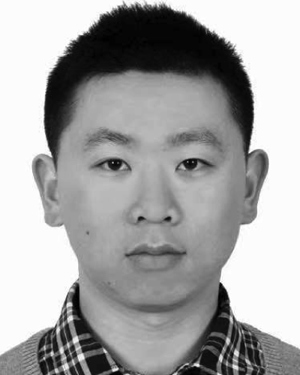 Muxin Liao (廖牧鑫)合作论文数Coll Elect & Informat Engn, Shenzhen Univ9
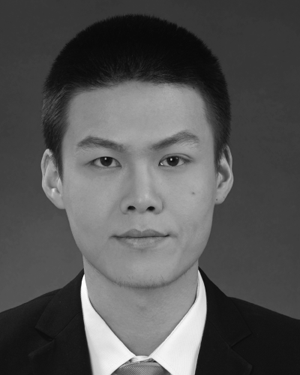 Yi Tang合作论文数9
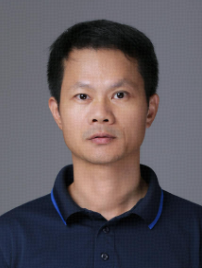 Nengheng Zheng (郑能恒)合作论文数College of Electronics and Information Engineering, Shenzhen University9
 Xuehui Luo (罗雪晖)合作论文数College of Electronics and Information Engineering, Shenzhen University9
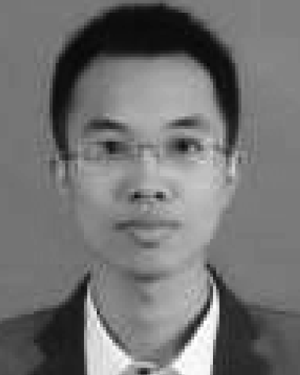 Guoguang Hua (华国光)合作论文数Shenzhen Key Laboratory of Advanced Machine Learning and Applications, Shenzhen University8Bin Li (李斌)合作论文数College of Electronics and Information Engineering, Shenzhen University8
 Changyuan Zhou合作论文数7OUYANG Chun-juan (欧阳春娟)合作论文数6Wang Na合作论文数6
 Jiaxiang You合作论文数5
 Naili Luo合作论文数5
 Jun Guo合作论文数5
 Li Zhang (张力)合作论文数College of Electronics and Information Engineering, Shenzhen University5
 Jihong Zhang (张基宏)合作论文数Institute of Multi-Dimensional Signal Processing, Shenzhen University5
 Hao Chen合作论文数Department of Electrical and Computer Engineering, Boise State University5
 Gehua Zhang (张革化)合作论文数Department of Otolaryngology,The Third Affiliated Hospital,Sun Yat-sen University,Guangzhou ,China5
 Uri Rogers合作论文数5Zizhen Huang (黄子真)合作论文数5
 Li Dong合作论文数4
 Yuchao Su合作论文数Shenzhen Univ, Coll Comp Sci & Software Engn, Shenzhen, Peoples R China4Wen Hou合作论文数Shenzhen Key Lab of Advanced Telecommunication and Information Processing, College of Information Engineering, Shenzhen University, Shenzhen, 518060, China.4
 Hao Wu合作论文数4
 Lu Zhang合作论文数4Yun Yang (杨云)合作论文数College of Management,Shenzhen University4
 Wing Shing Wong (黃永成)合作论文数Department of Information Engineering, The Chinese University of Hong Kong4
 Baiying Lei (雷柏英)合作论文数School of Biomedical Engineering, Shenzhen University Medical School4
 Gongbin Qian (钱恭斌)合作论文数College of Information Engineering,Shenzhen University4Yu Gao合作论文数3CHEN Xiaohong合作论文数3Zhaoyong Zhuang合作论文数3Wanfeng Liu合作论文数3Haotian Wu合作论文数3
 Yuhuan Chen合作论文数Shenzhen Key Laboratory of Advanced Telecommunication and Information Processing, College of Information Engineering, Shenzhen University, Shenzhen, China3Shengkai Zhuo合作论文数3Lihong Chang合作论文数3XiFu Wu (吴喜福)合作论文数3LunYu Qu (瞿伦玉)合作论文数3Qin Yue (岳勤)合作论文数College of Science, Nanjing University of Aeronautics and Astronautics3




