The concept of condensed matter chemistry is proposed as a new scientific discipline. It studies the composition, the multi-level structure, properties and chemical reactions of matters in condensed states formed via stable adhesions. This compares to the classical chemistry, which studies more localized issues, namely the properties of basic particles like atoms, ions and molecules and their electron-moving reactions. In this article, we use examples from solid state matters to illustrate cutting-edge research issues related to(1) the multi-level structures,(2) chemical properties and reactions,(3) constructive chemistry, and (4) novel characterization techniques of condensed matters. In-depth discussions regarding key scientific questions of the new discipline are presented, to set a stage enabling us to reexamine the core scientific issues in the classical chemistry, namely chemical reactions, in the new and larger context and to study the relationships among multi-level structures of condensed matters, chemical properties and reactions, and construction rational synthesis and precision preparation for materials in condensed matter states. The goals are to develop theories of "condensed matter organization" and "chemical reactions", leading to the full development of the science of condensed matter chemistry as well as condensed matter engineering.
Studying the reactions between gaseous molecules are not only of great significance to promote the development of industry, agriculture and economy, but also play a special role in the construction of condensed chemistry. Under normal conditions, gaseous molecules exist in a dispersed state. Because the stability of the structure of gaseous molecules, in most cases, the reactions between them can only occur under the "activation" of the catalyst with a specific composition and structure. In this paper, we list five simple examples to illustrate that the occurrence, progress and results of gaseous intermolecular reactions are subject to or even completely determined by the characteristics, composition and multi-level structure of the catalysts with specific condensed matter state under reaction conditions. In addition, we also list another reaction route in this paper, that is, under extreme reaction conditions such as high pressure, ultra-low temperature, laser, plasma and supercritical, the electronic and geometric structures and "states" of a few gaseous molecules will change, resulting in the specific condensed matter chemical reactions.
In recent decades, the application of zeolite has been extended to many sustainable processes. Professor Ruren Xu of Jilin University is a leader within Chinese, Asian and worldwide zeolite communities, as well as the founder of the inorganic synthesis discipline in China and the first person in the world to propose the scientific discipline of modern inorganic synthetic chemistry. Professor Xu started his scholarly research on zeolites in the mid-1970s. He focused initially on crystallization and mechanisms of zeolite formation. In the 1980s, he gradually shifted his research to the exploration of microporous materials with novel frameworks and compositions. In 1984, he outlined new directions in the synthesis of zeolites and placed emphasis on the 'heteroatom concept', which turned out to be very influential and fruitful for the subsequent development of heteroatom-containing zeolite catalysts. In the following years, he and his group systematically developed new solvothermal routes for zeolite synthesis. In the late 1990s, Xu started to think about the rational synthesis of zeolites, a major challenge for zeolite as well as inorganic synthesis in general. His group developed several effective strategies for the rational design and synthesis of zeolitic materials. He is the chairman of the 15th International Zeolite Conference (15th IZC) held in 2007 for the first time in China. Because of his significant contribution to zeolite science in China, he received the National Zeolite Lifetime Achievement Award of China in 2017. NSR recently interviewed Professor Xu about the current status and future prospects of zeolites and related porous materials. This interview is dedicated to Professor Xu on his 90th birthday, in recognition of his seminal contribution to zeolite science, modern inorganic synthetic chemistry and the new discipline of condensed matter chemistry, which was first suggested by Professor Xu in 2018.
Liquid water is one of the most important media and solvent for chemical reactions, which is also the main object in scholarly investigation of the chemical reactions occurring in condensed (liquid) matter. The composition, structure, and characteristics of water may vary significantly under different conditions, especially under extreme conditions, which may change both the rates (kinetics) and favorability (thermodynamics) of individual chemical reactions in solution. Thus, the condensed matter chemistry under (normal) mild conditions, hydrothermal conditions, and supercritical water conditions may differ considerably. In this review, we discuss the influences of the composition, structure, and characteristics of liquid water and solution on the chemical reactions within, which includes the state and reactivity of the reactants, processes and mechanisms of reactions, compositions and structures of the intermediate and final products. Examples of these reactions are dissolution and crystallization, double decomposition reaction of salts, acid.base reaction, precipitation, gelation and crystallization, hydrolysis, redox reaction, and coordination reactions. In our discussions, we emphasize that it is essential to consider the chemical reactions occurring in aqueous solutions at the level of condensed matter physical science; and similarly it is also essential to investigate chemical reactions occurring in other types of liquids such as organic solvents, ionic liquids, and molecular substances in molten state. We well understand that this review will result in more in-depth discussions and possibly criticisms about the topics of condensed matter chemistry as well as our perspectives among our peer researchers, which will definitely advance this emerging science in liquids and possibly serve as a base for establishing the new discipline of condensed matter chemistry.
Pure silica zeolite has become an important porous material in the chemical industry due to its excellent stability and hydrophobicity. However, there are still some problems in the synthesis process of pure silica zeolite, such as environmental pollution, complex operation and high cost. How to effectively and environmentally synthesize pure silica zeolite still remains a significant challenge. This review summarizes the pure silica zeolite-type frameworks that have been discovered currently, introduces the progresses achieved in the synthesis of pure silica zeolite and prospects the areas for future exploration in the synthesis and development of pure silica zeolite.
Most of the current theoretical studies on the van der Waals heterojunctions (vdWHs) ignore the screening effects from their neighboring components, which may lead to deviation from the facts, more or less. In present work, the photocatalytic water splitting performances of three different phosphorene/g-C3N4 heterojunctions are theoretically investigated by using state-of-the-art GW method within many-body perturbation theory (MBPT) to reveal the importance of the non-local dielectric screening effects in heterojunctions. According to our study, the electronic structures of both g-C3N4 and phosphorene depend very sensitively on their neighboring materials. Particularly, by engineering the surrounding polarizability environment in the form of vdWHs, their photocatalytic performances can also be successfully enhanced.
Pure silica zeolite MFI (silicalite-1) has been widely used in gas separation and volatile organic compounds (VOCs) adsorption. The molar ratio of tetrapropylammonium (TPA+) and SiO2 (TPA+/SiO2) included in the framework of silicalite-1 is 0.042. Reducing the utilization of TPA+ will not only benefit the environment but also reduce the cost of silicalite-1. Herein, we reported the synthesis of highly crystalline silicalite-1 from a reaction mixture with a TPA+/SiO2 molar ratio of 0.035 and a seed loading of 5 wt% or 0.01 and a seed loading of 10 wt%. The investigation on the equilibrium and breakthrough adsorption of volatile organic compounds (VOCs) such as acetone and toluene on the resultant silicalite-1, activated carbon, and silicalite-1 seed showed that silicalite-1 synthesized with reduced TPA+ shows (1) a better performance on VOCs adsorption than activated carbon and (2) a higher adsorption efficiency of the micropore than that of the silicalite-1 seed. The replacement of the seed on TPA+ during the crystallization of silicalite-1 implies that silicalite-1 or other zeolites requiring an organic structure-directing agent (OSDA) might be synthesized in the absence of OSDA with an appropriate amount of seed.
Correction for ‘Chiral zeolite beta: structure, synthesis, and application’ by Tingting Lu et al., Inorg. Chem. Front., 2019, DOI: 10.1039/c9qi00574a.
Zeolite heulandite (HEU) with high aqueous Cd2+ sorption capacity was synthesized with the assistance of natural zeolite stellerite (STI) seeds.
The crystallization behavior of the initial gels containing the structure-directing agents of triethylamine, cyclohexylamine or tetraethylammonium hydroxide under ambient pressure and autogenous pressure at elevated temperature was investigated. At 300 or 180 degrees C under ambient pressure, highly crystalline aluminophosphate molecular sieve AlPO4-5 was rapidly crystallized from the initial gels containing triethylamine, cyclohexylamine or tetraethylammonium hydroxide. When the same initial gels were loaded into autoclaves and heated at 180 degrees C in an oven, three-dimensional open-framework aluminophosphate JDF-20, layered aluminophosphate UT-5, and a mixture containing aluminophosphate molecular sieve AlPO4-5, were obtained, respectively. The crystallization process of the initial gel containing triethylamine under ambient pressure was investigated with in situ thermogravimetric-mass spectroscopy analysis. It was confirmed that the formation of aluminophosphate molecular sieve AlPO4-5 under ambient pressure was mainly occurred in the stage of 150-300 degrees C. We found that the pressure can significantly affect the structure-directing effect of amines. This finding greatly enhanced the understanding on the formation process and crystallization mechanism of zeolites and open-framework crystals.
以乙二胺(EDA)和1,3-丙二胺(1,3-DAP)为结构导向剂,在180 ℃加热摩尔比n(Al2O3)∶n(P2O5)∶n(R)∶n(H2O)=1∶1∶1∶277(R=EDA,1,3-DAP)的混合物,分别得到了高结晶度的三维阴离子开放骨架磷酸铝AlPO4-12和UiO-26.利用X射线粉末衍射分析、元素分析和液相酸碱度测量等表征手段,研究了两个合成体系的晶化过程以及晶化过程中液相的Al、P浓度和pH值随时间的演化.用Materials Studio 中的"原子体积和表面"模块和Dmol3模块计算了双质子化乙二胺和1,3-丙二胺的体积以及Hirshfeld电荷.结果表明,双质子化EDA和1,3-DAP中N原子上的Hirshfeld电荷分别为0.073 e和0.064 e,按Hirshfeld电荷计算的电荷密度分别为1.8573和1.3400 e/nm3,按形式电荷计算的电荷密度分别为25.44 和20.94 e/nm3,而AlPO4-12和UiO-26的骨架电荷密度分别为-6.1和-4.6 e/nm3.结果表明,与氨基中N原子相连碳链长度的改变会影响其上的电荷量以及电荷密度,从而改变原有机胺的结构导向效应,导致晶化产物从AlPO4-12变成了具有较小电荷密度的UiO-26.
In the current study, correlation and path coefficient analysis were applied to investigate the relationship among body measurement traits and carcass weight, and to determine the direct and indirect effects of the body measurement traits including body slope length (BSL), breast width (BW), breast depth (BD), pelvis width (PW), shank length (SL) and shank circumference (SC) on carcass weight. Chinese indigenous Dagu male chickens (80) were used at eighteen weeks of age. Pair-wise correlation results showed high significance between carcass weight and body measurement traits. High correlation was between carcass weight and body slope length (0.596) while the lower correlation was between breast depth and shank length (0.112), respectively. Path coefficient analysis results indicated that shank circumference and shank length had the highest direct effect (0.225, 0.223) on carcass weight than other body measurement traits and breast depth had the highest indirect effect (0.125), respectively. The current study might be used by chicken farmers for prediction of carcass weight while the chicken is still alive.
By heating the initial mixture with the molar composition of n (Al2O3) : n (P2O5) : n (R) : n (H2O) =1 : 1 : 1 : 277 (R = methylamine or dimethylamine) at 200 degrees C, highly crystalline three-dimensional anionic open-framework aluminophosphate of AlPO4-53 or AlPO4-21 was obtained. Protonated methylamine and dimethylamine were located in the framework of AlPO4-53 and AlPO4-21 to balance the negative charge of the framework, respectively. The crystallization processes of both initial mixtures were investigated by X-ray diffraction analysis(XRD), elemental analysis and pH measurement. Theoretical calculation shows that the charge on the N atom of protonated methylamine and dimethylamine is -0.263 and -0.558 e(Mulliken), respectively. The corresponding formal charge density is 22.3 and 16.0 e/nm(3), respectively. The framework charge density of AlPO4-53 and AlPO4-21 is -3.3 and -3.1 e/nm(3), respectively. These results indicate that the environment change around N atom can affect the amount of charge on it, which accordingly affects its structure-directing ability. A charge matching between the formal charge density of organic amines and the framework charge density was observed.
Alcohols, instead of highly toxic concentrated HF, can significantly promote the enrichment of polymorph A of zeolite beta.
We have proposed, in a recent essay entitled ‘Towards a new discipline of condensed matter chemistry’[1], a new research field to study the functionalities and chemical reactions of condensed matter [2] with multi-level structures,characterized by strong intermolecular forces and local organizational order. In this perspective, we suggest possible ways to study their properties and reactions in relevance to specific organizational
Removal of heavy metal ions from wastewater by natural clinoptilolite has been well investigated. However, the removal efficiency of heavy metals with natural clinoptilolite is not consistent due to its uncertain quality. Furthermore, the impurities in natural clinoptilolite significantly affect the investigation on the sorption behavior and mechanism of clinoptilolite. In this study, we investigated the adsorption (ion-exchange) and regeneration behavior of modified synthetic clinoptilolite including the influence of pH, solid/liquid ratio, and ion exchange temperature on the adsorption process, adsorption kinetics and isotherms, and competitive adsorption behavior of Zn2+, Pb2+, Cd2+, and Cu2+. The maximum adsorption capacity of NaCl-modified synthetic clinoptilolite for Zn2+, Pb2+, Cd2+, and Cu2+ is as high as 31.47, 181.8, 44.64, and 33.76 mg/g, respectively, which is much higher than the reported values in the studies on modified and unmodified natural clinoptilolite. The present study shows that the amount of adsorption of NaCl-modified synthetic clinoptilolite for Zn2+, Pb2+, Cd2+, and Cu2+ is less affected by the operation temperature. Kinetics study shows that the pseudo-second-order kinetic equation has a better description for the adsorption behavior of NaCl-modified synthetic clinoptilolite. Isotherms study suggests that the adsorption process of NaCl-modified synthetic clinoptilolite follows the Langmuir model. Competitive adsorption investigation suggests that some cation sites in the open-framework of clinoptilolite can only be exchanged by selective alien cations and this phenomenon reveals the origin of the selectivity of zeolites in ion-exchange.
Three aluminophosphate molecular sieve AlPO4-5s were synthesized using water, ethylene glycol, and triethylene glycol as solvent. The products were thoroughly characterized by powder X-ray diffraction analyses, thermogravimetric analyses, scanning electron microscope analyses, and solid-state cross polarization magic angle spinning nuclear magnetic resonance analyses. The results showed that solvothermally synthesized aluminophosphate molecular sieve AlPO4-5 from triethylene glycol was much less stable than that hydrothermally synthesized from water. Thermogravimetric analysis and 13C cross polarization magic angle spinning nuclear magnetic resonance analyses confirmed that the bulky solvent molecules of triethylene glycol were encapsulated within the channels of AlPO4-5 and was responsible for the significant decrease of the thermal stability of open-framework.
An entry from the Cambridge Structural Database, the world’s repository for small molecule crystal structures. The entry contains experimental data from a crystal diffraction study. The deposited dataset for this entry is freely available from the CCDC and typically includes 3D coordinates, cell parameters, space group, experimental conditions and quality measures.
The acidity of the initial mixture is the key factor promoting the enrichment of chiral polymorph A in zeolite beta.
By heating the initial mixture with the molar composition of n(Al2O3) : n(P2O5) : n(1,2-DAP) : n(H2O) = 1 : 6 : x : 139(1,2-DAP refers to 1,2-diaminopropane) at 180 degrees C a new three-dimensional open-framework aluminophosphate(compound 1) and a two-dimensional layered aluminophosphate APDAP(12)-150 were obtained at x = 5.5 and x = 7.5, respectively. The framework topology of compound 1 is the same as that of AlPO-CJ31, a three-dimensional open-framework aluminophosphate directed by the template of diethylenetriamine. By combing the results of powder X-ray diffraction analysis(XRD), elemental analysis(C, H, N) and TG-DTA analysis, the composition of compound 1 was determined and the co-templating effect of protonated water was confirmed.
 Jihong Yu (于吉红)合作论文数State Key Laboratory of Inorganic Synthesis & Preparative Chemistry, Jilin University;College of Chemistry, Jilin University307
 Jiyang Li (李激扬)合作论文数College of Chemistry, Jilin University;State Key Laboratory of Inorganic Synthesis & Preparative Chemistry Jilin University110
 Yi Li (李乙)合作论文数International Center of Future Science, Jilin University;State Key Laboratory of Inorganic Synthesis and Preparative Chemistry, College of Chemistry, Jilin University90
 Wenfu Yan (闫文付)合作论文数State Key Laboratory of Inorganic Synthesis and Preparative Chemistry, College of Chemistry, Jilin University89
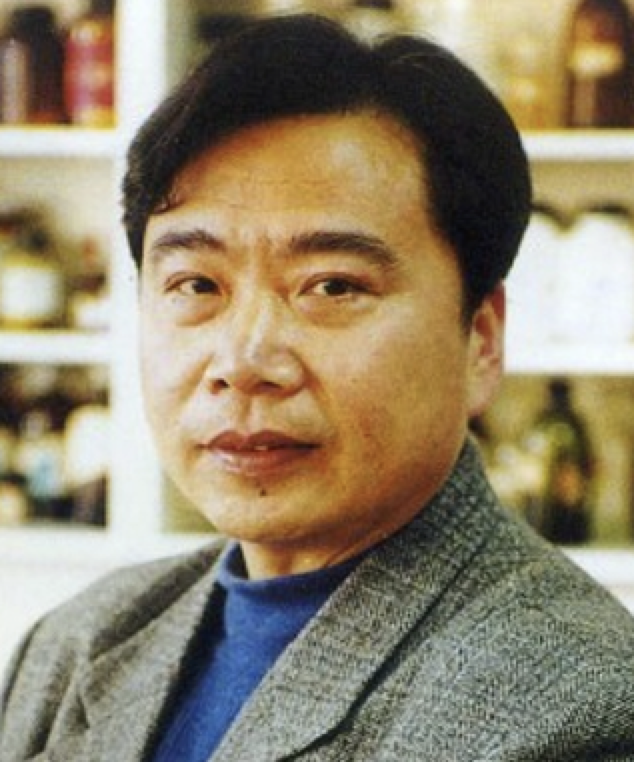 Shouhua Feng (冯守华)合作论文数College of Chemistry, Jilin University;State Key Laboratory of Inorganic Synthesis Preparative Chemistry, Jilin University57
 Jiesheng Chen (陈接胜)合作论文数School of Chemistry and Chemical Engineering, Shanghai Jiao Tong University;Center of Hydrogen Science, Shanghai Jiao Tong University51
 Wenqin Pang (庞文琴)合作论文数College of Chemistry, Jilin University43
 Qinhe Pan (潘勤鹤)合作论文数School of Chemistry and Chemical Engineering, Hainan University40
 Shilun Qiu (裘式纶)合作论文数College of Chemistry, Jilin University34
 Feng-Shou Xiao (肖丰收)合作论文数School of Chemical and Biological Engineering, Zhejiang University;Department of Chemistry, Zhejiang University30
 Zhan Shi (施展)合作论文数State Key Laboratory of Inorganic Synthesis & Preparative Chemistry, College of Chemistry, Jilin University27
 Feng Deng (邓风)合作论文数24
 Qisheng Huo (霍启升)合作论文数College of Chemistry, Jilin University24
 Jun Xu (徐君)合作论文数Innovation Academy for Precision Measurement Science and Technology, Chinese Academy of Sciences;University of Chinese Academy of Sciences22
 Yu Wang (王宇)合作论文数School of Materials Science and Engineering, Zhengzhou University20
 Zhiqiang Liang (梁志强)合作论文数College of Chemistry, Jilin University20
 Qiuming Gao (高秋明)合作论文数School of Chemistry, Beihang University17
 Osamu Terasaki合作论文数School of Physical Science and Technology, ShanghaiTech University;Department of Materials and Environmental Chemistry, Stockholm University17
 Guangshan Zhu (朱广山)合作论文数Faculty of Chemistry, Northeast Normal University16
 Yu Du (杜宇)合作论文数College of Physics and Optoelectronic Engineering, Shenzhen University16
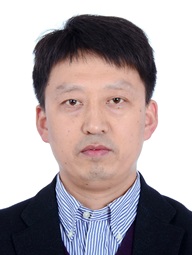 Kaixue Wang (王开学)合作论文数School of Chemistry and Chemical Engineering, Shanghai Jiao Tong University14
 Yide Han (韩义德)合作论文数College of Sciences, Northeastern University14
 Peng Chen (陈鹏)合作论文数School of Materials Science and Chemical Engineering, Ningbo University13
 Jin Xu (徐进)合作论文数School of Materials Science and Engineering, Jilin University13
 Xiaowei Song (宋晓伟)合作论文数College of Chemistry, Jilin University13
 Dairong Chen (陈代荣)合作论文数School of Chemistry and Chemical Engineering, Shandong University13
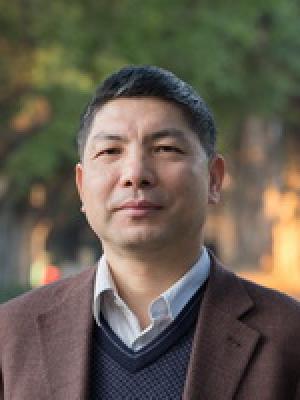 Mingmei Wu (吴明娒)合作论文数School of Chemistry, Sun Yat-sen University12Xiaoqiang Tong合作论文数12
 Wenguo Xu (徐文国)合作论文数Beijing Institute of Technology Library11
 Hongzhu Xing (邢宏珠)合作论文数School of Chemistry, Northeast Normal University11Huiying Lu合作论文数11
 Qianrong Fang (方千荣)合作论文数College of Chemistry, Jilin University;State Key Laboratory of Inorganic Synthesis & Preparative Chemistry, Jilin University11GS Pang合作论文数10yihua xu合作论文数10
 Ranbo Yu (于然波)合作论文数College of Chemistry and Environmental Engineering, Shenzhen University10Yong Yue合作论文数10Shougui Li合作论文数10Yaohua Xu合作论文数9
 Linsong Li (李林松)合作论文数Key Lab for Special Functional Materials of Ministry of Education, Henan University9
 Weiting Yang (杨玮婷)合作论文数School of Chemistry and Chemical Engineering, Hainan University9
 Lei Shi (石磊)合作论文数School of Public Health, Jilin University9Xuejing Cao合作论文数9
 Libo Sun (孙立波)合作论文数Department of Gastrointestinal Surgery, China-Japan Union Hospital of Jilin University9Yongcun Zou合作论文数9
 Lei Wang (王磊)合作论文数8Min Guo (郭敏)合作论文数8
 Xiuling Jiao (焦秀玲)合作论文数School of Chemistry and Chemical Engineering, Shandong University8
 Qinghong Xu (徐庆红)合作论文数College of Chemistry, Beijing University of Chemical Technology8




