A recent remarkable study of the C-H oxidation of substituted fluorenyl-benzoates together with the transfer of a proton to an internal receiving group by means of electron transfer outer-sphere oxidants, in the noteworthy absence of hydrogen-bonding interactions, is taken as an example to uncover the existence of a mechanism crossover, making the reaction pass from a CPET pathway to a PTET pathway as the driving force of the global reaction decreases. This was also the occasion to stress that considerations based on "imbalanced" or "asynchronous" transition states cannot replace activation/driving force models based on the quantum mechanical treatment of both electrons and transferring protons.
Homogeneous catalysis of electrochemical reactions, related to contemporary energy challenges, often involves proton-coupled electron transfer sequences. The idea rapidly emerged that installing the proton donor (for reductions, or acceptor for oxidations) inside the catalyst molecule should be beneficial in terms of efficiency, as it would then be closer to the nerve center of the process (usually the metal in the case of transition metal complex catalysts). If this proton relay has indeed done the job, it has lost its proton at the end of each catalytic loop, and must therefore be reprotonated (for reductions, or deprotonated for oxidations) from acid (or base) from the solution before a new catalytic loop can start. The impression may thus be that there is a zero-sum game. The conditions under which this is not the case may entail, in contrast, a considerable boosting of catalysis. This will also allow explain why the proton is such a specifically appropriate agent for this task.
As an accompaniment to the current renaissance of synthetic organic electrochemistry, the heterogeneous and space-dependent nature of electrochemical reactions is analyzed in detail. The reactions that follow the initial electron transfer step and yield the products are intimately coupled with reactant transport. Depiction of the ensuing reactions profiles is the key to the mechanism and selectivity parameters. Analysis is eased by the steady state resulting from coupling of diffusion with convection forced by solution stirring or circulation. Homogeneous molecular catalysis of organic electrochemical reactions of the redox or chemical type may be treated in the same manner. The same benchmarking procedures recently developed for the activation of small molecules in the context of modern energy challenges lead to the establishment and comparison of the catalytic Tafel plots. At the very opposite, redox-neutral chemical reactions may be catalyzed by injection (or removal) of an electron from the electrode. This class of reactions has currently few, but very thoroughly analyzed, examples. It is likely that new cases will emerge in the near future.
Capacitors and batteries are the two main electrochemical means to store electrical energy. In the first case, good performances in terms of capacitance are closely related to the porous structure of the electrode coating material. Remarkable performances in terms of capacitance are indeed achieved by the increase of the area of the interface between the electronic conducting material of the film and the ionic solution in the pores. With respect to the dynamics of charge storage, we show that it is not governed by counterion diffusion as often asserted. It is rather related to ohmic potential drop in the pores. This is demonstrated first in the case of a simple planar electrode and then generalized to the case of porous films. A quantitative treatment is further described based on a transmission-line approach of the problem, after careful distinction between nanopores (of the size of compact double layers) and mesopores. Application to available experiments show remarkable agreement between theoretical predictions and experimental data. It is finally emphasized that the distinction between nanopores and mesopores entails two different metrics as far as energy storage and power are concerned.
The transition between the insulator state and the band-conducting state is investigated by means of cyclic voltammetry in cobalt oxide porous film electrodes in phosphate-buffered solutions. It is shown that a proton-coupled faradaic oxidative process starting in the insulator region eventually builds an ohmic conduction mode upon anodic polarization. This model allows one to understand the origin of the authentic capacitive behavior of conductive metal oxide films rather than the so-called "pseudocapacitive" behavior. The particular example of cobalt oxide serves to illustrate the way in which, more generally, the behavior of "pseudocapacitors", long ascribed to the superposition of faradaic reactions, is in fact that of true capacitors, once band-conduction has been established upon oxidation of the material.
Current attempts to bridge the fields of what is conventionally called 'electrocatalysis' and of molecular catalysis of electrochemical reactions are surveyed and discussed. It amounts in many cases to rheterogenize' molecular catalytic systems. Information on the meso- to nanostructures of the resulting catalytic films forms the basis of the understanding of new modes of transport of the reactants (catalysts, substrates and cosubstrates, products) that may govern the mechanistic competitions and consequently selectivity. Efforts to adapt benchmarking procedures developed in homogeneous molecular catalysis (catalytic Tafel plots) should be encouraged, taking into account, as additional factors, the transport of electrons and reacting species (including gases) through the catalytic system.
1.Two picturesque albeit fanciful descriptions of the construction of a “pseudocapacitance” from Faradaic reactions. Figure S1 nicely summarizes the construction of a “pseudocapacitance” from faradaic reactions in the case of MnO2 in reference S1 The eight vertical ellipses stand for the CV responses of eight partial surface fast reversible faradaic reactions (eligible each to the application of Nernst law), whose sum would reproduce the experimental CV response of this material.
The two main types of charge storage devices - batteries and double layer charging capacitors - can be unambiguously distinguished from one another by the shape and scan rate dependence of their cyclic voltammetric current-potential (CV) responses. This is not the case with "pseudocapacitors" and with the notion of "pseudocapacitance", as originally put forward by Conway et al. After insisting on the necessity of precisely defining "pseudocapacitance" as involving faradaic processes and having, at the same time, a capacitive signature, we discuss the modelling of "pseudocapacitive" responses, revisiting Conway's derivations and analysing critically the other contributions to the subject, leading unmistakably to the conclusion that "pseudocapacitors" are actually true capacitors and that "pseudocapacitance" is a basically incorrect notion. Taking cobalt oxide films as a tutorial example, we describe the way in which a (true) electrical double layer is built upon oxidation of the film in its insulating state up to an ohmic conducting state. The lessons drawn at this occasion are used to re-examine the classical oxides, RuO2, MnO2, TiO2, Nb2O5 and other examples of putative "pseudocapacitive" materials. Addressing the dynamics of charge storage-a key issue in the practice of power of the energy storage device-it is shown that ohmic potential drop in the pores is the governing factor rather than counter-ion diffusion as often asserted, based on incorrect diagnosis by means of scan rate variations in CV studies.
The world of coordination complexes is currently stimulated by the quest for efficient catalysts for the electrochemical reactions underlying modern energy and environmental challenges. Even in the case of a multielectron-multistep process, catalysis starts with uptake or removal of one electron from the resting state of the catalyst. If this first step is an outer-sphere electron transfer (triggering a "redox catalysis" process), the electron distribution over the metal and the ligand is of minor importance. This is no longer the case with "chemical catalysis," in which the active catalyst reacts with the substrate in an inner-sphere manner, often involving the transient formation of a catalyst-substrate adduct. The fact that, in most cases, the ligand is "noninnocent," in the sense that the electron density and charge gained (or removed) from the resting state of the catalyst are shared between the metal and the ligand, has become common-place knowledge over the last half-century. Insistent focus on a large degree of noninnocence of the ligand in the resting state of the catalyst, even robustly validated by spectroscopic techniques, may lead to undermining the essential role of the metal when such essential issues as kinetics, mechanisms, and product selectivity are dealt with. These points are general in scope, but their discussion is eased by adequately documented examples. This is the case for reactions involving metalloporphyrins as well as vitamin B12 derivatives and similar cobalt complexes for which a wealth of experimental data is available.
Efforts to design catalytic schemes approaching reversibility in which the catalyst is active for both the oxidation and reduction processes are attracting active attention boosted by recent successes. Kinetic analysis of such systems, by electrochemical techniques such as cyclic voltammetry (CV), would contribute to establish reliable mechanisms. So far, the relationships required to achieve this task have been restrained to irreversible catalytic schemes. The purpose of the present communication is to fill this gap. As a preliminary contribution, the analysis is limited to simple on-electron-one step schemes so as to set out the main features of the competition between catalytic reaction and diffusion transport of catalyst and substrates. Emphasis is put on S-shaped CV responses, which offer the best opportunities to accessing the detailed kinetic information forming the basis for determination of mechanisms.
In the context of modern energy challenges, there is an increasing need to decipher the mechanism of complex, multistep catalytic processes, as a basis of their optimization and improvement. Cyclic voltammetry (CV) is one of the most popular electrochemical techniques in this purpose. Mechanistic complexities often trigger a quest for simplification in the treatment of data, such as the application of the steady-state approximation to intermediates. The validity of such assumptions actually needs justification. This is the object of the present work, which examines the question for five homogeneous catalytic reaction schemes of practical interest, which can also serve as tutorial examples for the analysis of further schemes. The analysis is simplified by the consideration of pure kinetic conditions and constancy of substrate concentration. These conditions can be achieved, in practice, by appropriate manipulation of the scan rate and concentrations. The current potential responses are consequently S-shaped and independent of the scan rate. The CV responses are then dependent upon only two dimensionless parameters that group the experimental intrinsic and operational parameters. Limiting the subcases reached for the extreme values of these parameters is worth considering in terms of mechanism diagnosis and kinetic characterization. They are conveniently represented by kinetic zone diagrams. The present work not only provides the tools required to check the correctness of the kinetic analysis but also to gauge the possibility of characterizing transient intermediates by structurally informative techniques (e.g., spectroscopic).
Benchmarking and optimization of molecular catalysts for electrochemical reactions have become central issues in the efforts to match contemporary renewable energy challenges. In view of some confusion in the field, we precisely define the notions and parameters (potentials, overpotentials, turnover frequencies) involved in the accomplishment of these objectives and examine the correlations that may link them, thermodynamically and/or kinetically to each other (catalytic Tafel plots, scaling relationships, "iron laws"). To develop this tutorial section, we have picked as the model catalytic reaction scheme a moderately complex mechanism, general enough to illustrate the essential issues to be encountered and sufficiently simple to avoid the algebraic nightmare that a systematic study of all possible pathways would entail. The notion of scaling relations will be the object of particular attention, having notably in mind the delimitation of their domain of applicability. At this occasion, emphasis will be put on the necessity of clearly separating what is relevant to intrinsic characteristics (through standard quantities) to what deals with the effect of varying the reactant concentrations. It will be also stressed that the occurrence of such scaling relations, otherwise named "iron laws", is not a general phenomenon but rather concerns families of catalysts. Likewise, the search of a general correlation between the maximal turnover frequency and the equilibrium free energy of the electrochemical reaction appears as irrelevant and misleading. This general analysis will then be illustrated by experimental data previously obtained with the O2-to-H2O conversion catalyzed by ironIII/II porphyrins in N, N'-dimethylformamide in the presence of Brönsted acids.
Cyclic voltammetry (CV) of heterogeneous electrocatalysts offers a convenient means to critically assess the occurrence of "volcano plots" rendered popular by acid reduction on metal electrodes. The equations relevant to Volmer-Heyrovsky-type reactions shows that the adsorption free energy of the surface-bound intermediate is one of the rate-controlling parameters, which, plotted against the exchange current, could lead to a volcano-looking curve if other rate-controlling factors such as the rate ratio of the two successive electron transfer steps would remain constant upon changing electrocatalyst. This is not necessarily the case in practice, thus blurring the occurrence of volcano plots. Therefore, careful recording and analysis of the CV responses should be a preferred strategy, leading additionally to catalytic Tafel plots for rational electrocatalyst benchmarking. The alternative Volmer-Tafel mechanism gives remarkably rise to S-shaped current potential responses and to a volcano upon plotting the exchange current against the adsorption standard free energy of the primary intermediate. Again, a wealth of kinetic information results from the characteristics of the current potential responses.
We analyze here, in the framework of heterogeneous molecular catalysis, the reasons for the occurrence or nonoccurrence of volcanoes upon plotting the kinetics of the catalytic reaction versus the stabilization free energy of the primary intermediate of the catalytic process. As in the case of homogeneous molecular catalysis or catalysis by surface-active metallic sites, a strong motivation of such studies relates to modern energy challenges, particularly those involving small molecules, such as water, hydrogen, oxygen, proton, and carbon dioxide. This motivation is particularly pertinent for what concerns heterogeneous molecular catalysis, since it is commonly preferred to homogeneous molecular catalysis by the same molecules if only for chemical separation purposes and electrolytic cell architecture. As with the two other catalysis modes, the main drawback of the volcano plot approach is the basic assumption that the kinetic responses depend on a single descriptor, viz., the stabilization free energy of the primary intermediate. More comprehensive approaches, investigating the responses to the maximal number of experimental factors, and conveniently expressed as catalytic Tafel plots, should clearly be preferred. This is more so in the case of heterogeneous molecular catalysis in that additional transport factors in the supporting film may additionally affect the current potential responses. This is attested by the noteworthy presence of maxima in catalytic Tafel plots as well as their dependence upon the cyclic voltammetric scan rate.
Proton-coupled electron transfer (PCET) is ubiquitous and electrochemistry has proved to be a useful tool to investigate the corresponding mechanisms. This review summarizes recent advances in theoretical modeling of electrochemical PCET and developments in the understanding of role of PCET in catalysis. We also discuss implication of PCET in charge storage processes.
Batteries and electrochemical double layer charging capacitors are two classical means of storing electrical energy. These two types of charge storage can be unambiguously distinguished from one another by the shape and scan-rate dependence of their cyclic voltammetric (CV) current-potential responses. The former shows peak-shaped current-potential responses, proportional to the scan rate v or to v1/2, whereas the latter displays a quasi-rectangular response proportional to the scan rate. On the contrary, the notion of pseudocapacitance, popularized in the 1980s and 1990s for metal oxide systems, has been used to describe a charge storage process that is faradaic in nature yet displays capacitive CV signatures. It has been speculated that a quasi-rectangular CV response resembling that of a truly capacitive response arises from a series of faradaic redox couples with a distribution of potentials, yet this idea has never been justified theoretically. We address this problem by first showing theoretically that this distribution-of-potentials approach is closely equivalent to the more physically meaningful consideration of concentration-dependent activity coefficients resulting from interactions between reactants. The result of the ensuing analysis is that, in either case, the CV responses never yield a quasi-rectangular response ∝ ν, identical to that of double layer charging. Instead, broadened peak-shaped responses are obtained. It follows that whenever a quasi-rectangular CV response proportional to scan rate is observed, such reputed pseudocapacitive behaviors should in fact be ascribed to truly capacitive double layer charging. We compare these results qualitatively with pseudocapacitor reports taken from the literature, including the classic RuO2 and MnO2 examples, and we present a quantitative analysis with phosphate cobalt oxide films. Our conclusions do not invalidate the numerous experimental studies carried out under the pseudocapacitance banner but rather provide a correct framework for their interpretation, allowing the dissection and optimization of charging rates on sound bases.
In the framework of modern energy challenges, the reduction of CO2 into fuels calls for electrogenerated low-valent transition metal complexes catalysts designed with considerable ingenuity and sophistication. For this reason, the report that a molecule as simple as protonated pyridine (PyH+) could catalyze the formation of methanol from the reduction of CO2 on a platinum electrode triggered great interest and excitement. Further investigations revealed that no methanol is produced. It appears that CO2 is not really reduced but rather participates, on the basis of its aquation into carbonic acid, in hydrogen evolution. Actually, the situation is not that straightforward, as revealed by scrutinizing what happens at the platinum electrode surface. The present study confirms the lack of methanol formation upon bulk electrolysis of PyH+ solutions at Pt and provides a detailed account of the Faradaic yield for H2 production as a function of the electrode potential, but the main finding is that CO2 reduction is accompanied by a strong inhibition of the electrode process taking place when it is carried out in the presence of acids such as PyH+ and AcOH. Cyclic voltammetry and in situ infrared spectroscopy were closely combined to investigate and understand the nature and consequences of the inhibition process. Constant comparison between the two acids was required to decipher the course of the reaction owing to the fact that the IR responses are perturbed by PyH+ adsorption. It finally appears that inhibition is caused by the reduction of CO2 into CO, whose high affinity with platinum triggers the formation of a Pt-CO film that prevents the reaction process. Thus, a paradoxical situation develops in which the high affinity of Pt for CO helps to decrease the overpotential for the reduction of CO2 and therefore blocks the electrode, preventing the reaction process.
Modern energy challenges currently trigger an intense interest in catalysis of redox reactions-electrochemical and photochemical-particularly those involving small molecules such as water, hydrogen, oxygen, proton, carbon dioxide. A continuously increasing number of molecular catalysts of these reactions, mostly transition metal complexes, have been proposed, rendering necessary procedures for their rational benchmarking and fueling the quest for leading principles that could inspire the design of improved catalysts. The search of "volcano plots" correlating catalysis kinetics to the stability of the key intermediate is a popular approach to the question in catalysis by surface-active sites, with as foremost example the electrochemical reduction of aqueous proton on metal surfaces. We discussed here for the first time, on theoretical and experimental grounds, the pertinence of such an approach in the field of molecular catalysis. This is the occasion to insist on the virtue of careful mechanism assignments. Particular emphasis is put on the interest of expressing the catalysts' intrinsic kinetic properties by means of catalytic Tafel plots, which relate kinetics and overpotential. We also underscore that the principle and strategies put forward for the catalytic activation of the above-mentioned small molecules are general as illustrated by catalytic applications out of this particular field.
There is a need for the quantitative assessment of molecular electrocatalysts, particularly those designed to address modern energy challenges. This calls for systematic benchmarking to help rationalize the wealth of available data and to apply the lessons learnt to the innovative design of more efficient catalysts. For these purposes, it is tempting to examine the relationship between the reaction kinetics and the stabilization of a single primary intermediate by constructing a volcano plot. The attractiveness and inherent flaw in this oversimplified approach stem from accounting for complicated multi-electron, multistep processes with a single descriptor. In this Perspective, we instead advocate correlating the turnover frequency with the overpotential through a catalytic Tafel plot, which provides a much less restrictive and more reliable evaluation of intrinsic catalyst performance. Within this framework, one way to optimize molecular catalysts involves altering ligand substituents to tune the electronic structure of the catalyst. These inductive through-structure effects are subject to an ‘iron law’, which dictates that gains in the form of smaller overpotentials come at the price of reduced turnover frequencies (and vice versa). This law can be circumvented by instead engineering through-space effects that stabilize the primary catalytic intermediate. These considerations should be based on the patient gathering of reliable experimental data obtained upon variation of the maximal number of operational parameters.
 Cyrille Costentin合作论文数Department of Chemistry, Université de Paris76
 Marc Robert合作论文数Laboratoire d'Electrochimie Moleculaire, Universite de Paris43
 Doris Lexa合作论文数Centre National de la Recherche Scientifique26
 Claude Andrieux合作论文数22
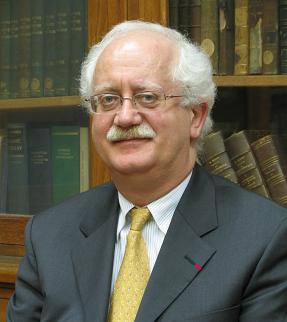 Christian A. Amatore (克里斯汀·阿芒托)合作论文数Xiamen University;Centre National de la Recherche Scientifique;École Normale Supérieure18
 Jean Pinson合作论文数17Andre Thiebault合作论文数12D Lexa合作论文数11Michel Momenteau合作论文数10Philippe Hapiot合作论文数9
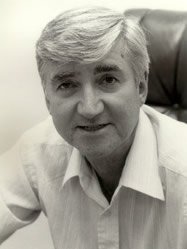 Fred C. Anson合作论文数Division of Chemistry and Chemical Engineering, California Institute of Technology9Cyril Louault合作论文数7
 Benoit Limoges合作论文数UMR “Synthése, Electrosynthèse et Etude de Systèmes à Intérêt Biologique”,, Université Blaise-Pascal de Clermont-Ferrand7K.B. Su合作论文数7Dan Li Wang合作论文数7M. Momenteau合作论文数6Guillaume Passard合作论文数Chem & Chem Biol, Harvard Univ6
 Mehmet A. Oturan合作论文数Geomaterials and Environment Laboratory, Gustave Eiffel University6Feng Xu合作论文数6
 Julien Bonin合作论文数Laboratoire de Chimie Physique—ELYSE, Université Paris-Sud6Catherine Combellas合作论文数5Claude P. Andrieux合作论文数5
 Daniel Mansuy合作论文数Laboratoire de Chimie et Biochimie Pharmacologiques et Toxicologiques, CNRS4S. Robveille合作论文数3Laurence Gelis合作论文数3Marc Lange合作论文数3Mavré François合作论文数Electrochim Mol Lab, Univ Paris Diderot3Arnaud Tatin合作论文数3
 Hachem Dridi合作论文数3Porter Thomas R合作论文数Department of Chemistry, University of Washington3Philippe Maillard合作论文数3Iluminada Gallardo合作论文数3Jacques Moiroux合作论文数3
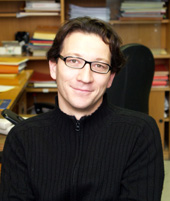 Damien Marchal合作论文数Laboratoire d'Electrochimie Moleculaire, Centre National de la Recherche Scientifique;SATT AxLR;PULSALYS;Aquitaine Science Transfert3
 Joel Mispelter合作论文数Biologie, Institut Curie3Christian Bourdillon合作论文数3
 Maurice Medebielle合作论文数3Olivier Fagebaume合作论文数3
 Patrick Audebert合作论文数Laboratoire pour l'Utilisation3Elodie Anxolabehere合作论文数3C. Gueutin合作论文数3Samuel Drouet合作论文数3P. Neta合作论文数2Iban Azcarate合作论文数2Mathilde Routier合作论文数2C.‐L. Ni合作论文数2Andreas Merz合作论文数2




