Federated Learning (FL) has been widely adopted in Internet of Things (IoT) systems for collaborative model training without raw data transmission. However, real-world deployments face two critical challenges: compliance with data deletion regulations (e.g., the "right to be forgotten") and unstable client participation caused by device mobility, limited energy, and network fluctuations. Federated Unlearning (FU) aims to eliminate the influence of specific clients or datasets from a trained global model, but existing FU methods primarily focus on approximating retraining efficiency while assuming plaintext access and stable client participation—assumptions that are incompatible with dynamic IoT environments.This paper presents PriFog, a privacy-preserving federated unlearning framework designed for dynamic IoT scenarios. PriFog implements client-side approximate unlearning and incorporates a certificate-based stopping rule (CertStop) that quantifies membership inference risk to guide protocol termination. Encrypted aggregation based on homomorphic encryption (HE) safeguards the confidentiality of model updates during unlearning, while an audit mechanism records aggregation inputs to detect deviations. To maintain execution under client dropouts, PriFog introduces a DPSS mechanism that supports decentralized reconstruction in normal operations and assisted recovery with temporary authority assistance when participation is insufficient.Extensive experiments on non-IID datasets (MNIST, CIFAR-10, STL-10) demonstrate that PriFog closely approximates the performance of full retraining while reducing communication cost by approximately 95% and execution latency by 75%, with only 0.1% accuracy loss. The framework maintains stable execution under client dropout rates up to 80% and effectively detects aggregation deviations with a detection rate exceeding 98%. These results validate PriFog's practicality for dynamic IoT systems requiring privacy compliance and reliable unlearning.
We consider the problem of tracking multiple, unknown, and time-varying numbers of objects using a distributed network of heterogeneous sensors. In an effort to derive a formulation for practical settings, we consider limited and unknown sensor field-of-views (FoVs), sensors with limited local computational resources and communication channel capacity. The resulting distributed multi-object tracking algorithm involves solving an NP-hard multidimensional assignment problem either optimally for small-size problems or sub-optimally for general practical problems. For general problems, we propose an efficient distributed multi-object tracking algorithm that performs track-to-track fusion using a clustering-based analysis of the state space transformed into a density space to mitigate the complexity of the assignment problem. The proposed algorithm can more efficiently group local track estimates for fusion than existing approaches. To ensure we achieve globally consistent identities for tracks across a network of nodes as objects move between FoVs, we develop a graph-based algorithm to achieve label consensus and minimise track segmentation. Numerical experiments with synthetic and real-world trajectory datasets demonstrate that our proposed method is significantly more computationally efficient than state-of-the-art solutions, achieving similar tracking accuracy and bandwidth requirements but with improved label consistency.
While Federated Learning (FL) preserves user privacy by keeping data local, its dependence on a central server creates critical weaknesses, including a single point of failure (SPoF), system bottlenecks, and potential malicious manipulation. Moreover, existing FL frameworks often lack transparent, fair, and automated incentive mechanisms, limiting the formation of a sustainable and trustworthy collaborative ecosystem. To overcome these challenges, we propose EcoFL, a blockchain-driven and verifiable collaborative paradigm for federated learning. EcoFL incorporates three key innovations:(1) Decentralized aggregation and governance, which replaces the central server with blockchain consensus, eliminating SPoF and ensuring rule enforcement through smart contracts. (2) A fair and privacy-preserving contribution evaluation model, which quantitatively assesses each participant’s contribution based on verifiable model feedback. (3) A dynamic token-based incentive mechanism, which automatically rewards honest contributors and penalizes malicious or low-quality behavior. Our theoretical analysis and prototype experiments show that EcoFL not only mitigates the security and trust limitations of centralized FL but also establishes a fair, autonomous, and sustainable foundation for collaborative learning, while maintaining competitive model performance.
Radio tagging and tracking are fundamental to understanding the movements and habitats of wildlife in their natural environments. Today, the most widespread, widely applicable technology for gathering data relies on experienced scientists armed with handheld radio‐telemetry equipment to locate low‐power radio transmitters attached to wildlife from the ground. Although aerial robots can transform labor‐intensive conservation tasks, the realization of autonomous systems for tackling task complexities under real‐world conditions remains a challenge. We developed ConservationBots —small aerial robots for tracking multiple, dynamic, radio‐tagged wildlife. The aerial robot achieves robust localization performance and fast task completion times—significant for energy‐limited aerial systems while avoiding close encounters with potential, counterproductive disturbances to wildlife. Our approach overcomes the technical and practical problems posed by combining a lightweight sensor with new concepts: (i) planning to determine both trajectory and measurement actions guided by an information‐theoretic objective, which allows the robot to strategically select near‐instantaneous range‐only measurements to achieve faster localization, and time‐consuming sensor rotation actions to acquire bearing measurements and achieve robust tracking performance; (ii) a bearing detector more robust to noise; and (iii) a tracking algorithm formulation robust to missed and false detections experienced in real‐world conditions. We conducted extensive studies: simulations built upon complex signal propagation over high‐resolution elevation data on diverse geographical terrains; field testing; studies with wombats ( Lasiorhinus latifrons ; nocturnal, vulnerable species dwelling in underground warrens) and tracking comparisons with a highly experienced biologist to validate the effectiveness of our aerial robot and demonstrate the significant advantages over the manual method.
As a top cybersecurity vendor, Sangfor needs collects log streams from thousands of endpoint detection devices such as NTA, STA, EDR and identifies security threats in real-time way everyday. The discovery and disposal of network security incidents are highly real-time in nature with seconds or even milliseconds response time to prevent possible cyber attacks and data leaks. In order to extract more valuable information, the log streams are analyzed using stream processing with pattern matching like CEP (Complex Event Processing) in memory, and then stored in a persistent storage systems such as a data warehouse system or a search engine system for data scientists and network security engineers to do OLAP (Online Analytical Processing). Sangfor needs to build a low-latency big data platform to meet the challenges of massive logs. More and more open source systems are proposed to solve the problem of data processing in a certain aspect. Many decisions must be made to balance the benefits when designing a real-time big data infrastructure. What's more, how to architecture these systems and construct a one-stack unified big data platform have been the key obstacles for big data analytics. In this paper, we present the overall architecture of our low-latency big data infrastructure and identify four important design decisions i.e. message queue, stream processing, OLAP, and data lake. We analyze the advantages and disadvantages of existing open source system and clarify the reason behind our choices. We also describe the improvements and optimizations to make the open-source stacks fit in Sangfor's environments, including designing a real-time development platform based on Flink and re-architecting Apache Kylin, Clickhouse and Presto as a HOLAP system. Then we highlight two important use cases to verify the rationality of our infrastructure.
In this research, we propose the thermal power generation fault diagnosis and prediction model based on deep learning and multimedia systems. The application of multimedia technology in the power dispatching communication system not only greatly enhances the stability and reliability of the power system, but also enriches the application of science and technology in the power system. It is one of the main directions for the development of power communication and information processing systems. The paper’s novelty and contribution are major reflected from the three aspects. First, we optimize the traditional neural network model to fix it more suitable for multimedia applications. We improve the forecasting accuracy; and then for each type of sample of B-neural network model, the up-front of meteorological data. Second, the deep neural network is optimized for better evaluation efficiency. The number of convolution kernels in each convolutional layer in the network is different. The more the number of the post-convolution kernels, the more efficient the model will be. Therefore, the multi-kernel structure is proposed. Third, we integrate the multimedia into the prediction scenario to visualize the data and results. The experiment result is conducted to validate the performance of the proposed method. Results compared with the other state-of-the-art models demonstrate the robustness of our method.
高校思想政治教育的主要任务是稳定大学生思想价值观、维护国家意识形态安全,从这一角度来看,高校思想政治教育的质量直接或间接影响着社会主义现代化建设人才培养的质量.这也是为何多年来"如何提升思政教育的有效性,令思政教育在大学生群体中更具权威性、影响力?"这一问题仍是思政教育优化改革的重点、难点.尤其在近些年,互联网技术的优化升级促使大学生接受信息、传播信息的形式与效率都有了跨越性转变,有形或无形地冲击了思想政治教育在专业领域的权威价值.对此,高校为了帮助学生建立网络信息甄别能力,稳健提升高校思政教育的公信力与话语权威性,选择开通网络思政教育.
With the advent of the era of big data, massive terminal data in the Internet of Things in Electricity has become the cornerstone of building a ubiquitous Internet of Things in Electricity, but new challenges have emerged in data security. In order to ensure the authenticity and credibility of the data source in the Internet of Things in Electricity, it is necessary to study the identity and authentication methods of Human and Things integration, and realize the responsibility of data to the person and responsibility to the terminal to improve the accuracy and authenticity of the data. Different from other Internet of Things, many handheld terminals need to be used in some applications of the Internet of Things in Electricity, such as transmission line inspection and substation inspection. In this case, if only the terminal identity is authenticated, it may cause falsehood. Data uploading, important data loss and other issues, Therefore, this paper proposes the design of an identity authentication system based on the “person and thing” integrated terminal identity authentication technology, which not only ensures the reliability of data collection source, but also ensures data responsibility to people, which can greatly improve the authenticity and availability of data.
Objective: In order to cope with a sudden outbreak of new coronavirus infection, a large number of potential infected persons need to be isolated. A new smart monitoring system which integrates Internet of things and blockchain technology to monitor isolated people in real time was design and studied.Methods: A internet of things devices will collects the location and physical data of isolated people, the data will be sent to master devices which will integrate and format those data and transfer to a smart contract. A smart contract compares and analyses the data with the threshold which is predefined. When the data exceed the threshold, the smart contract will alert the master device, which will notify the isolated person and center for disease control and prevention, the event will be stored in the consortium blockchain. The blockchain does not store the isolated people's details, which are stored in electronic health records linked to the blockchain to guarantee the data safety.Results: This system realizes the effective real-time monitoring of isolators including their physical condition and geographical position on the premise of protecting their privacy and security.Conclusion: By the system, the center for disease control and prevention can respond quickly according to their alerts. It has the advantages of good integrity, tamper-proof, and transparency to isolators.
传统电网故障诊断方法不能实现对电网各个节点工作状态的实时监控,导致电网故障诊断时间过长,准确率低.为了解决上述问题,提出基于相量测量单元数据的电网故障诊断方法.以相量测量单元数据为基础设计电网节点监测器,实现对电网系统的各个节点工作状态的实时监控.利用GPS进行电网故障定位,以已有故障样本数据为基础,利用果蝇算法优化支持向量机方法训练样本数据,提取电网故障特征,根据特征提取结果对电网故障进行分类,将分类结果与故障类型进行匹配,输出故障诊断结果.实验结果表明,研究方法的检测时间短,检测效果好,具有很高的实际应用价值.
Tracking and locating radio-tagged wildlife is a labor-intensive and time-consuming task necessary in wildlife conservation. In this article, we focus on the problem of achieving embedded autonomy for a resource-limited aerial robot for the task capable of avoiding undesirable disturbances to wildlife. We employ a lightweight sensor system capable of simultaneous (noisy) measurements of radio signal strength information from multiple tags for estimating object locations. We formulate a new lightweight task-based trajectory planning method—LAVAPilot—with a greedy evaluation strategy and a void functional formulation to achieve situational awareness to maintain a safe distance from objects of interest. Conceptually, we embed our intuition of moving closer to reduce the uncertainty of measurements into LAVAPilot instead of employing a computationally intensive information gain based planning strategy. We employ LAVAPilot and the sensor to build a lightweight aerial robot platform with fully embedded autonomy for jointly tracking and planning to track and locate multiple VHF radio collar tags used by conservation biologists. Using extensive Monte Carlo simulation-based experiments, implementations on a single board compute module, and field experiments using an aerial robot platform with multiple VHF radio collar tags, we evaluate our joint planning and tracking algorithms. Further, we compare our method with other information-based planning methods with and without situational awareness to demonstrate the effectiveness of our robot executing LAVAPilot. Our experiments demonstrate that LAVAPilot significantly reduces (by 98.5%) the computational cost of planning to enable real-time planning decisions whilst achieving similar localization accuracy of objects compared to information gain based planning methods, albeit taking a slightly longer time to complete a mission. To support research in the field, and conservation biology, we also open source the complete project. In particular, to the best of our knowledge, this is the first demonstration of a fully autonomous aerial robot system where trajectory planning and tracking to survey and locate multiple radio-tagged objects are achieved onboard.
目的 研究基于区块链和物联网的新冠病毒密切接触者智能监控系统.方法 通过物联网设备收集隔离者的位置和生理数据,利用区块链保障信息安全,以智能合约实现分析与监控.结果 物联网设备采集隔离者的数据,主设备对信息进行整合与格式化,传输到区块链的智能合约,智能合约会根据预先确定的阈值进行比较分析,再分别向隔离者、防疫中心显示警报,同时智能合约会生成一个事件存储在区块链中,并存储在与区块链相链接的电子健康记录中,确保数据安全.结论 本系统实现了在保护隔离者隐私性和安全性的前提下对隔离者进行有效的实时监控.
Unit equipment is the key to industrial production, and predicting unit failures is the focus of improving equipment productivity. In order to improve the accuracy and reliability of predicting, and consider the use of multiple related influencing factors for prediction. This paper presents a fault prediction method based on CNN-LSTM. Firstly, the data of multiple variables that affects the predicted value over a period of time are formed into a large matrix. Then, the Long short-term memory network is trained by the feature information extracted from the convolutional neural network. This can predict device data at future time points and build models that use large amounts of data for predicting. Finally, the rationality and effectiveness of the proposed method are verified by the comparison between the evaluation example and the LSTM network.
The full-service ubiquitous Internet of Things in Electricity is a new-generation information communication system that integrates new information and communication technologies such as "big data, cloud computing, Internet of things, mobile Internet, and smart city". Compared with the traditional smart power grid, it has more terminals, which have more complex structure, so the integrity of the terminals is especially important. This paper proposes a terminal security component protection scheme for full-service ubiquitous Internet of Things in Electricity based on trusted computing, so that terminals with damaged integrity could be discovered timely and corresponding protective measures can be taken. It can protect the security of the full-service ubiquitous Internet of Things in Electricity from an integrity perspective.
With the rapid development of wind power capacity and sustained growth in total operation time, the maintenance of wind turbines is becoming increasingly prominent, so we urgently need to develop effective wind turbine fault diagnosis and prediction system. The main fault characteristics of wind turbines are summarized from two aspects of fault diagnosis and fault prediction. Aiming at the difficult problems of fault diagnosis, we analyze and summarize the research status of fault diagnosis methods based on vibration, electrical signal analysis and pattern recognition algorithm. At the same time, we point out the technical characteristics, limitations and future trends of various methods. Based on the characteristics of mechanical structure and electronic system degradation in wind turbines, we summarize the current research progress and propose a fault prediction method based on physical failure model and data driven model fusion. In this paper, we use the deep learning model in the framework of the internet of things to predict and diagnose the faults of wind power generation. The experimental results show that the algorithm proposed in this paper can predict the fault types and make reasonable diagnosis.
针对当前方法监控大数据漏报率高、检测耗时长,导致防冲突检测效果差以及检测时效性差的问题,提出基于机器学习的监控大数据防冲突检测方法。通过计算监控大数据传输信道的占用率来估测信道负载情况,为提高信道负载估测的准确性,反复计算信道的占用率,检测监控大数据在信道传输过程中存在的冲突,利用数据包的传输时延来分析冲突,保证了监控大数据的优先传输;阐述监控大数据的冲突记录,并从客体和主体来划分记录的冲突信息;在此基础上,利用监控大数据中安全级别不同事件所发生的冲突时间计算冲突时间间隔,得到冲突间隔分布情况,并计算监控大数据的标准差,分析事件发生冲突的随机性以及规律性,通过检测监控大数据在信道传输过程中的冲突以及对冲突时间间隔的计算,最终实现了对监控大数据防冲突检测。实验结果表明,提出方法在对监控大数据防冲突检测时,数据的漏报率较低,检测效果和检测时效性较好。
Real time processing of stream data has become increasingly vital. Batched stream systems which discretize stream data into micro-batches and leverage batch system to process these micro-batch stream jobs have attracted wide attention from academia and industry. Such batched stream system always works on heterogeneous environments which have heterogeneous resources and heterogeneous tasks. Unfortunately, current batched stream system implementations designed and optimized for homogeneous environments perform poorly on heterogeneous environments.We attribute suboptimal performance in heterogeneous environments to schedule tasks according to data locality and free slots. On the one hand, data locality creates a barrier between large tasks of slow node and powerful capacity of fast node because slow nodes prefer local large tasks rather than remote small tasks. On another hand, due to scheduler's blind eye to task size, there is a very high probability that large tasks are scheduled in the last few waves. These two aspects hinder perfect load balancing, causing tail latencies of large tasks. To address these issues, we propose a blank scheduling framework called Radar. Being aware of node capacity and task size, Radar pre-steals large tasks from slow nodes and schedules tasks according to the principle of large task first. Then Radar fills the small free slots by choosing small tasks corresponding to node's capacity. We implement Radar in Spark-2.1.1. Experimental results with benchmark show that Radar can reduce job completion time by 27.78% to 42.79% over Spark Streaming. Experimental results with real Tencent production application show that Radar can reduce response time by 28.57%.
Crowdsourcing is widely accepted as a means for resolving tasks that are hard for computers, e.g., entity resolution. Unfortunately, Crowdsourcing may yield relatively low-quality results if there is no proper quality control. Although previous studies attempt to eliminate workers by estimating workers' qualities via qualification tests or hidden tests, the qualities estimated may not be accurate, because workers may have diverse qualities across tasks. Thus, the quality of the results could be further improved by wisely assigning tasks to the workers who are specialized in the tasks and online task assignment is an effective way to achieve this goal. However, existing crowdsourcing platforms either do not support online task assignment (e.g., CrowdFlower) or are not user-friendly because they require to write complicated codes (e.g., Amazon MTurk). To address these limitations, we develop an online task assignment system, which can on-the-fly assign workers with appropriate tasks. We have deployed our system on top of MTurk. We demonstrate the following scenarios using our system. Firstly, requesters can easily utilize our system to enable online task assignment in order to improve answer quality. Moreover, requesters do not need to write any code. Secondly, our system can infer the quality of workers, and requesters can design and test their own task assignment algorithms using our proposed information. Thirdly, our system can monitor tasks and workers in real time, and the requesters can eliminate bad workers or terminate the crowdsourcing process to reduce the unnecessary cost.
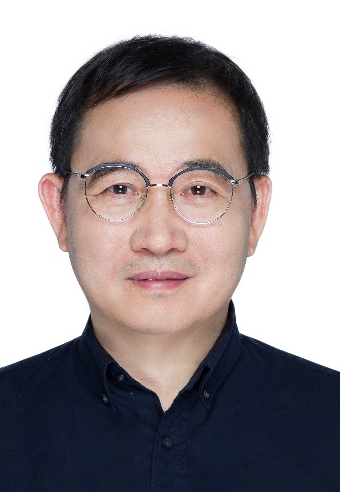 Kehe Wu (吴克河)合作论文数School of Control and Computer Engineering, North China Electric Power University11
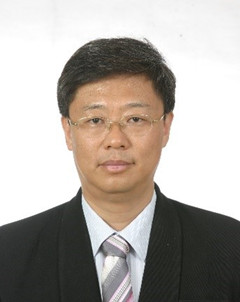 Zhongguang Fu (付忠广)合作论文数School of Energy Power and Mechanical Engineering, North China Electric Power University8
 Ling Zheng (郑玲)合作论文数School of Control and Computer Engineering, North China Electric Power University5
 Hoa Van Nguyen合作论文数Univ Adelaide, Sch Comp Sci, Adelaide, SA 5005, Australia3
 Yunjian Jia (贾云健)合作论文数School of Microelectronics and Communication Engineering, Chongqing University;Mobile Networks and Applications Laboratory, Chongqing University3
 Yi Li合作论文数3
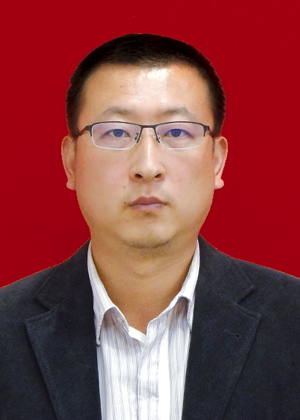 Peng Li (李鹏)合作论文数School of Information Science and Engineering, Dalian Polytechnic University3
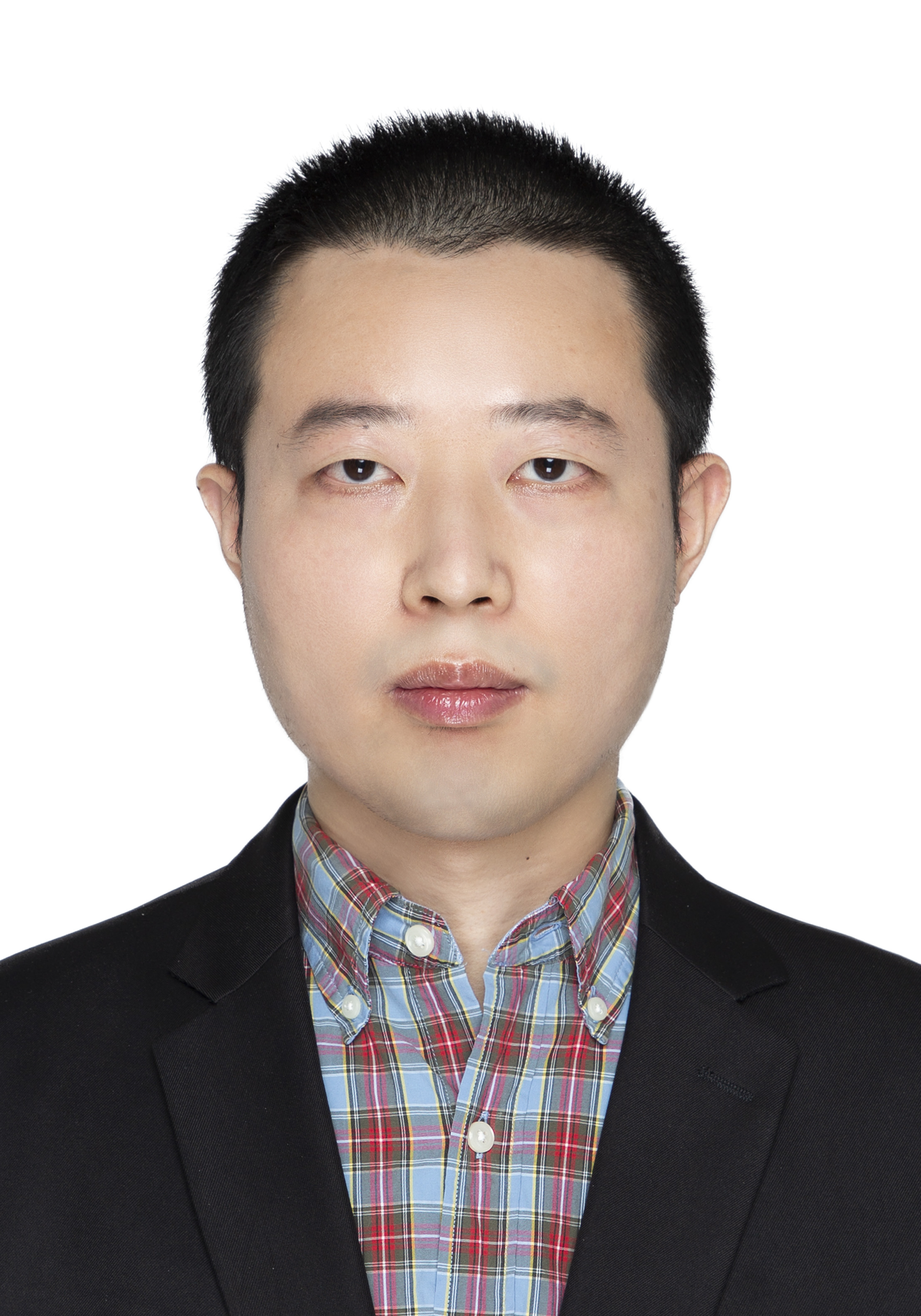 Zhuxiao Wang (王竹晓)合作论文数School of Control and Computer Engineering, North China Electric Power University3Min-Fang Qi合作论文数3
 Damith Ranasinghe合作论文数School of Computer and Mathematical Sciences, Faculty of Sciences, Engineering and Technology, The University of Adelaide3Pei-hua He合作论文数2Huifang Fan合作论文数2Mingjun Feng合作论文数2Ling Zhen合作论文数2
 Xue Gao合作论文数2
 Jing Guo合作论文数Chinese Acad Sci, Inst Phys2
 Yonghong Xiao (肖永红)合作论文数State Key Laboratory of Diagnosis & Treatment of Infectious Diseases, The First Affiliated Hospital, School of Medicine, Zhejiang University2
 Hamid Rezatofighi合作论文数Department of Data Science & AI, Faculty of Information Technology, Monash University;Monash Data Futures Institute, Faculty of Information Technology, Monash University2Yong Feng合作论文数1Pengtian Guo合作论文数1Wenhao Xue合作论文数1Biying Chen合作论文数1
 Jiaqi Chen合作论文数1Joshua A. Chesser合作论文数1Sabita Panicker合作论文数School of Engineering, RMIT University1Wang Xiaohui合作论文数1Lin Jiang合作论文数1Yuanhong Deng合作论文数1Wei Chen合作论文数1Tao Ding合作论文数1tong zhang合作论文数1Qianyuan Zhang合作论文数1wenchao cui合作论文数1CuiRu Wang (王翠茹)合作论文数1XiaoPeng Li (李小鹏)合作论文数1Lu Li (李璐)合作论文数1KeQin Liu (刘克勤)合作论文数1
 Yan Huang (黄岩)合作论文数National Laboratory of Pattern Recognition, Institute of Automation, Chinese Academy of Sciences;University of Chinese Academy of Sciences1
 Yudian Zheng (郑玉典)合作论文数Jobright.ai1Long Chen合作论文数1Hongjiang Ji合作论文数1
 Yuying Wang合作论文数Institute of Genetics and Developmental Biology, Institute of Genetics and Developmental Biology Chinese Academy of Sciences1
 Gang Ma (马刚)合作论文数NARI School of Electrical and Automation Engineering, Nanjing Normal University1Ningbo Li合作论文数1
 Hejin Yuan (袁和金)合作论文数North China Electric Power University1
 Wei Li (李为)合作论文数School of Control and Computer Engineering, North China Electric Power University1
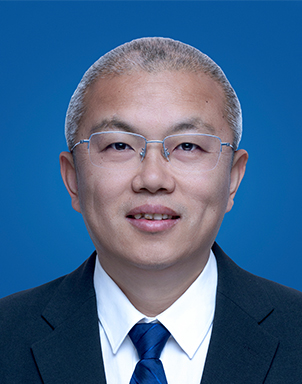 Guoliang Li (李国良)合作论文数Department of Computer Science and Technology, Tsinghua University1
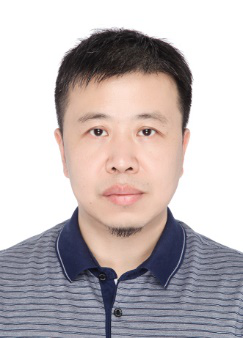 Zhiling Yang (杨志凌)合作论文数School of Energy Power and Mechanical Engineering, North China Electric Power University1
 Xiang Yu合作论文数Gauss Department, Huawei Company1




