Migratory species are vulnerable to habitat loss, especially migratory birds that rely on multiple stopover sites during migration. According to conventional understanding, migratory birds typically show reduced behavioral variability as they age, with their migration routes becoming increasingly fixed through experience, which may make them even more vulnerable to habitat loss along their flyway. Indeed, in the East Asian-Australasian Flyway (EAAF), most waterbird populations have rapidly declined due to habitat loss and land use changes. However, some migratory species like the Pied Avocet Recurvirostra avosetta have maintained or even increased their populations. We investigated whether this success might be linked to age-related patterns in migration behavior. Using satellite tracking technology, we monitored the movement behaviors of 48 adult and 20 juvenile Pied Avocets in eastern China from 2021 to 2024. Contrary to expectations, adults exhibited greater movement variability than juveniles. In the first two years of life, Pied Avocets performed relatively limited movements, adopting conservative migration strategies, which may reduce mortality risks. In contrast, experienced adults showed greater variability in their movement patterns. Some migrated to more southerly wintering grounds or more northerly breeding sites, and occasionally pioneered entirely new flight paths. Compared to juveniles, adult birds also showed larger home ranges during the pre-migration period and greater within-season movements during the non-migration period. This age-related increase in ranging behavior and movement variability may contribute to their population resilience in rapidly changing environments. Our findings suggest that the combination of risk-averse strategies in young birds and diverse movement strategies within adult populations, ranging from conservative to exploratory individuals, might represent an important adaptation mechanism for long-lived species facing environmental change.
Biodiversity loss driven by climate change and human activities poses a critical global challenge. Population restoration and reintroduction programs are essential for mitigating this threat to endangered species, yet their outcomes often remain unpredictable due to poorly understood success factors, such as the inevitable inbreeding during bottleneck events. The conservation programme of the crested ibis (Nipponia nippon) marks a successful example where the population rose from just seven individuals to over 9000 in the past four decades. By developing an individual-based model that simulates the restoration process and incorporates species-specific demography and inbreeding data, we conclude that this successful restoration is largely deterministic, as our results closely mirror empirical recovery time and population-level inbreeding coefficients. To establish general guidelines for reintroduction programs, we compare how inbreeding depression influences the recovery success of two reintroduction strategies involving small founder populations. Our simulations reveal that the 'firework' approach (one-source translocations) outperforms the 'sequential' (serial translocations) approach in restoration effectiveness. Furthermore, by expanding analyses over a broad demographic space, we demonstrate that the net effect of inbreeding varies with species-specific demography and highlight the importance of considering their interaction when interpreting conservation outcomes and designing future reintroduction programs.
Background Rapid advances in animal tracking technologies have generated unprecedented volumes of high-resolution movement data. However, prevailing trajectory-based (Lagrangian) analytical approaches exhibit poor transferability across divergent sampling regimes and struggle to distinguish behaviors with overlapping movement signatures, leaving spatially defined ecological information underexplored. Methods We present an integrated, systematic framework that applies Eulerian, place-based spatiotemporal point pattern analysis to avian tracking data, offering a complementary perspective to traditional Lagrangian, path-based movement approaches. Using five species case studies of migratory shorebirds, waterfowl, and raptors, we integrated spatial statistical methods (e.g., Behaviorally-Anchored Local Moran, DBSCAN clustering) with geoprocessing tools in ArcGIS Pro and R (movepp package). This workflow enables movement states classification, delineation of breeding, stopover, and wintering habitats, and detection of fine-scale behaviors such as foraging, roosting and nesting, with activity pattern inferred from diel timing and habitat associations. Results The framework successfully identified migration phases and resolved movement dynamics at annual, seasonal, and diel scales. Derived point pattern metrics enabled the quantification of site fidelity and nest-site fidelity, as well as the characterization of circadian rhythms in habitat use. The detection of breeding behavior achieved high spatial and temporal precision, comparable to conventional analytical methods. Furthermore, this framework provides standardized and transferable indicators applicable across diverse species. Conclusions By bringing the toolkit of spatial point-pattern analysis to movement data, this framework provides innovative methodologies and practical guidelines to extract robust ecological insights from tracking point data in a fully reproducible and transferable manner. It improves comparative analyses of migratory strategies and supports targeted conservation planning by identifying multi-scale critical habitats and behavioral patterns across scales. Complementing conventional trajectory-based analytical paradigms, this approach broadens the dimensionality of behavioral interpretation from animal movement data.
Effective conservation relies on robust assessments; however, the lack of waterbird data in the Yellow River Basin (YRB) has led to an underestimation of key habitat significance. This study addressed this gap by evaluating YRB wetland conservation importance using waterbirds as indicators and applying Ramsar, Important Bird Areas (IBA), and East Asian-Australasian Flyway (EAAF) criteria. We integrated coordinated surveys with citizen science data, creating a framework that tackles data deficiencies along the under-monitored Central Asian Flyway (CAF). Our analysis identified 75 priority wetlands, supporting 15 threatened species and 49 exceeding global/flyway 1% thresholds, highlighting the basin's biodiversity. We observed strong seasonal habitat use, with high-altitude wetlands vital for breeding and migration, and the Yellow River Delta providing year-round refuge. This research also provided data to refine Baer's Pochard population estimates. Alarmingly, one-third of the identified priority areas, primarily rivers and lakes, remain unprotected. To address this, we recommend systematic surveys, enhanced protected areas, OECMs, and targeted wetland restoration. This study underscores the YRB's role in regional conservation and provides essential data for adaptive management, particularly emphasizing the CAF's importance.
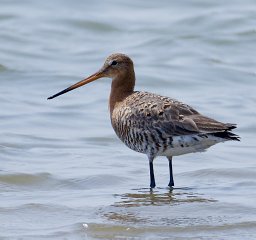
Sexual dimorphism in body size among shorebirds is typically linked to reproductive roles, yet such differences may also lead to ecological differences during the remainder of the annual cycle. Here, we investigate whether the smaller males and larger females of Bohai Black-tailed Godwits Limosa limosa bohaii differ in habitat use and rhythmic behaviours as they refuel in coastal China during northward migration. Based on visual observations, increasing abdominal profiles confirmed their refuelling in the Bohai Bay study area. Using GPS telemetry, we found that males predominantly occurred on coastal mudflats and the adjacent saltworks, whereas females used a wider array of habitats, including freshwater and saline wetlands further inland. In late April and early May, females shifted progressively to these inland habitats. Accelerometry measurements show that on the mudflats, both males and females had the highest intensity of movement around high tide. We interpret this as an expression of their restlessness during the hours they were squeezed into small shoreline areas close to intense human activity. In non-coastal habitats, the two sexes showed similar and pronounced diurnal activity rhythms, with reduced movement intensities in the late-night hours before sunrise. The intensities of movement in inland habitats double those on the mudflats, probably reflecting the high foraging activity required to satisfy food demands because of relatively small arthropod prey in rice fields (Chironomid larvae) and saltworks (brine fly larvae), compared to the larger polychaete prey on mudflats.
Climate change and human activities are widely recognized as major drivers of global biodiversity loss. The Brown Eared Pheasant (Crossoptilon mantchuricum), a ground-dwelling avian species unique to China, is confined to a highly fragmented range and faces persistent long-term threats. To devise robust and site-specific preservation strategies, it is imperative to elucidate the species’ sensitivity to climate change and pinpoint high-priority protection areas. In this study, we integrated field surveys, ensemble species distribution modelling, Marxan systematic conservation planning, and GAP analysis to assess habitat suitability changes under future climate scenarios and identify conservation gaps for the Brown Eared Pheasant. Our results demonstrate that the species’ distribution is primarily driven by annual temperature range, precipitation in the coldest and wettest quarters, and elevation, underscoring its highly restricted climatic niche. Based on current climatic conditions, highly suitable habitats are primarily distributed across specific mountainous regions: Hebei Province (Xiaowutai Mountains), Shanxi Province (the Taihang, Lvliang, and Taiyue mountain systems), Shaanxi Province (Huanglong Mountains), and northwestern Beijing (the Donglingshan area). Simulations conducted across prospective climatic scenarios suggest a continued decline in suitable habitat, which becomes increasingly restricted to higher latitudes and mountainous regions. According to our GAP analysis, current protected area networks fail to encompass 72.27% of the priority conservation zones identified, with significant gaps in the southern Lvliang, Taiyue, and Huanglong Mountains. The outcomes of this research establish a robust empirical foundation with which to inform prospective preservation strategies and habitat stewardship for the Brown Eared Pheasant.
Biparental incubation emerges from the balance between cooperation and conflict. Because only one parent can sit on the nest at a time, any environment-linked change in one parent's schedule compels a reallocation by the partner. Yet most field studies collapse incubation data to daily totals and rarely model continuous 24-h, sex-specific rhythms, masking how environmental context reshapes between-parent dynamics. We used minute-resolution incubation records (13,632 nest-hours from 45 nests) to examine temporal and spatial variations in incubation by Kentish Plovers (Anarhynchus alexandrinus) breeding in northern Bohai Bay, China. By pairing daily summaries with cosinor-based models of sex-specific hourly incubation, we revealed context-dependent diel timing shifts that coarser methods missed. Consistent with previous work, we found females dominated daytime incubation and males at night, yielding female-biased daily totals. Hourly analyses, however, revealed context-dependent retiming in our study. As season warmed, males increased midday attendance but delayed the onset of their night shift; while female attendance declined, producing a more even division between parents with male daily attendance remaining unchanged. Across habitats, total attendance was similar, but in rocky sites, where nocturnal predation was higher, males reallocated effort from night to day and exceeded females in daily totals. Increased male daytime involvement was accompanied by more frequent changeovers, which were more responsive to environmental context than daily attendance. These findings show that environmental variation primarily reorganises when parents incubate rather than simply how much they incubate, and that between-parent dynamics are best examined at hourly scales. Hourly sex-specific analyses thus provide a clearer bridge between environmental context and parental decision-making—insights that matter for forecasting reproductive outcomes under warming climates and changing predator communities.
Seasonal dynamics in wetland landscapes are closely associated with habitat availability and are likely to influence the spatial organization and diversity of waterbird communities. However, most existing studies rely on static land-cover representations or single spatial scales, limiting our ability to characterize how waterbirds respond to seasonally shifting habitats across scales. Focusing on the Qilihai Wetland in Tianjin, China, we combined high-frequency waterbird surveys from 2019–2021 with multi-temporal, season-matched Sentinel-2 imagery and the Dynamic World dataset. Partial least squares regression (PLSR) was applied across a continuous spatial gradient (100–3000 m) to quantify scale-dependent statistical associations between landscape composition and configuration derived from satellite-mapped habitat mosaics on different functional groups. Waterbird diversity exhibited pronounced seasonal contrasts. During the breeding and post-fledging period, high-diversity assemblages were stably concentrated within core wetland areas, showing limited spatial variability. In contrast, during the wintering and stopover period, community distributions became increasingly dispersed, with elevated spatial heterogeneity and interannual variability associated with habitat reorganization. The scale of effect shifted systematically between seasons. In the breeding and post-fledging period, both waterfowl and waders responded predominantly to local-scale landscape factors (<800 m), consistent with nesting requirements and microhabitat conditions. During the wintering and stopover period, however, the characteristic response scale of waterfowl expanded to 1500–2000 m, suggesting stronger associations with broader landscape context, whereas waders remained closely linked to local-scale shallow-water and mudflat connectivity (~200 m). Functional traits played a key role in structuring these scale-dependent responses, with diving behavior and tarsus length being associated with strong constraints on habitat use. Overall, our results suggest that waterbird diversity patterns emerge from the interaction between seasonal habitat dynamics, landscape structure, and functional trait filtering, underscoring the need for phenology-informed, multi-scale conservation strategies that move beyond static spatial boundaries.
Bird banding is internationally recognized as one of the most useful and cost-effective methods for avian monitoring. While widely adopted in Europe and North America—where it has played a pivotal role in collecting foundational data, significantly advancing the understanding of avian demography, migration, population dynamics, and conservation—bird banding in Asia lags considerably behind. Given Asia's rich avian diversity and the severe threats the birds face, there is an urgent need to promote increased bird banding as part of a strategy to effectively conserve both resident and migratory birds and protect their habitats across the region. However, information on the overall status of bird banding in Asia remains scarce, limiting the development of future initiatives in this field. To address this gap, based on integrative methods of banding data analysis, a literature review, and a questionnaire survey across 16 major Asian countries, we delineate the history and status of bird banding across the region, and review how bird banding efforts contributed to the collection of standardized data supporting avian conservation and research. We identify the key challenges facing bird banding in Asia, with a focus on the lack of legislation and policy support, shortage of trained personnel, and incomplete bird banding network. As a response, we indicate the prospects for the future development of Asian bird banding, highlighting priorities of establishing clear and consistent protocols, training and recruiting qualified banders, building and connecting banding networks, and expanding the educational and outreach role of banding stations. We offer new insights into promoting Asian bird banding as an indispensable bird monitoring tool in the challenges of avian conservation at both the flyway and global scales.
Understanding the ecological and evolutionary factors underlying population decline is essential for effective biodiversity conservation. Here, we compiled a comparative dataset integrating inferred historical effective population size, genomic heterozygosity, ecological traits, and extinction risk for 419 bird species, which spans 70% orders across the avian tree of life. Historical effective population size was estimated using the Pairwise Sequentially Markovian Coalescent (PSMC), which infers the distribution of coalescence times along a diploid genome from heterozygosity patterns. Variation in coalesce rate through time was then interpreted as a proxy for changes in historical effective population size. Geographic range size and migratory behavior emerged as the strongest predictors of variation in coalesce rate through time, with species occupying broader ranges and exhibiting migratory lifestyles maintaining larger historical effective population size. In contrast, genomic heterozygosity showed limited independent associations with ecological predictors after accounting for phylogenetic relationships, suggesting that genomic diversity is shaped by multiple interacting demographic and ecological processes rather than by single traits. Species with smaller historical effective population sizes and restricted geographic ranges were more likely to belong to threatened categories. Among species with comparable threatened status, range-restricted resident species with larger body sizes may require greater conservation efforts, as they are likely less capable of adapting to changing environment. Furthermore, in cases where reliable data on wild population trends are unavailable, information on population history could serve as a useful complementary reference for extinction risk assessment.
Penduline tits (genus Remiz) are small passerines distributed across Europe, Central and East Asia, and North Africa, renowned for their elaborate nests and unusually diverse mating systems. However, the taxonomy and evolutionary relationships within this genus have remained contentious due to overlapping breeding distributions and extensive hybridization. Using broad-range geographic sampling and whole-genome sequencing, here we report the phylogenetic relationships within this genus. Our results from maximum likelihood trees, species trees, population structure, and PCA analyses consistently identify four distinct, well-supported monophyletic clades. Based on these robust results, we support dividing Remiz into four species: the Eurasian Penduline Tit (R. pendulinus), Black-headed Penduline Tit (R. macronyx), White-crowned Penduline Tit (R. coronatus), and Chinese Penduline Tit (R. consobrinus). Among these species, R. consobrinus diverged earlier from other species, followed by R. coronatus, and then, R. pendulinus and R. macronyx. R. pendulinus and R. macronyx showed shallow genetic differentiation with recent divergence (∼87,000 years ago) and ongoing gene flow. Our findings demonstrate the effectiveness of phylogenomic approaches in resolving taxonomic ambiguities and provide a robust evolutionary framework for tracing the diversification of life history traits, particularly nest structures and mating systems, across the genus.
The world faces unprecedented species declines. The Kunming-Montreal Global Biodiversity Framework (KMGBF) adopted in 2022 outlines long-term goals to reduce extinction risk by 2050 and sets interim targets for 2030 to halt and reverse biodiversity loss. China, hosting a large number of species on its national Red List (1,050 vertebrate species) and the global threatened species on IUCN Red List (1,822), is critical to achieving KMGBF Goal A. To effectively reduce extinction risk for China's species, prioritizing key landscapes and conservation gaps in existing protected areas (PAs) is critical for species diversity and ecosystem integrity under climate change, while safeguarding functional and phylogenetic diversity essential for ecosystem stability and evolutionary history. Focusing on Galliformes - a culturally and ecologically significant group - we assessed conservation priorities for 23 threatened and endemic species. We analyzed taxonomic, functional, and phylogenetic diversity across 50 km x 50 km grids, identified key landscapes, and evaluated PAs coverage under current and future climate change by their overlap with National Nature Reserves (NNRs). Our findings reveal that only similar to 6 % of areas hosting threatened and endemic Galliformes diversity are currently covered by NNRs, with the most biodiverse regions receiving coverages of 5.82 %, 6.11 %, and 3.63 % for different diversity indexes. Climate change projections indicate a potential range shift towards higher elevations for these species. Key landscapes are concentrated in southeastern Qinghai-Tibetan Plateau, Qinling, Wuling, Nanling-Wuyi mountain ranges, Taiwan, and Hainan. Alarmingly, less than 10 % of current and future priority landscapes are protected, highlighting substantial opportunities for PA network expansion in China. Integrating functional and phylogenetic diversity with taxonomic diversity is essential to safeguard ecosystem resilience and evolutionary history. This study provides critical insights for broader conservation strategies, which will contribute to global efforts to achieve the goals and targets of the KMGBF.
Dispersal in animals is influenced by diverse environmental cues, among which population density and kinship are key drivers. High density can promote dispersal by intensifying intraspecific competition or inhibit it through group-living advantages. Likewise, kin interaction may enhance dispersal via kin competition or limit it through kin-selected fitness gains. However, the interplay between them remains inadequately elucidated. We investigated how density and kinship interacted to influence natal dispersal in silver-throated tits (Aegithalos glaucogularis), a social species showing facultative cooperative breeding during the breeding season and group living thereafter. We found female-biased natal dispersal, consistent with male-biased helping behaviour. For males, the natal dispersal distance was negatively associated with the number of male siblings fledging from the same nest, and this relationship intensified with increasing fledgling density around the natal nest, indicating that density can modulate kin selection's inhibiting effect on dispersal. Furthermore, with increasing male sibling number, fledgling density's effect on male dispersal distance shifted from positive to negative, suggesting that potential kin selection opportunity can reverse the direction of the density effect. These findings demonstrate that density and kin selection opportunities interact to shape dispersal dynamics, offering new insights into their combined roles in driving the evolution of dispersal strategies.
A recent analysis in Science links a photovoltaic policy-stringency index to citizen-science bird records aggregated to county-months and concludes that China’s solar-expansion policy reduced Shannon diversity by 2.10% per standard deviation of stringency. Reproducing that estimate exactly from the replication package and checking its inputs against record-level data from the same platform, we show that the outcome variable measures the observation process rather than bird communities: nearly half of the checklists carry no abundance information, corrupted counts enter the regression unfiltered, and birdwatching effort grew 171-fold while concentrating in accessible, economically developed counties, in step with policy stringency. Once total effort is modeled, the coefficient reverses sign and is null in all 18 effort-adjusted specifications; the preferred estimate,
Species with diverse parental care systems exhibit flexibility in response to environmental changes. Such changes can influence parental care decisions by altering the trade-offs between current and future reproduction. While previous studies have revealed correlations between specific social and ecological factors and parental care systems, the joint effects of multiple factors could be complex and may result in different outcomes within and across populations and between sexes. In this study, we observed parental care systems and their seasonal variations across three geographic populations in a polygamous species, the Chinese penduline tits (Remiz consobrinus), by monitoring breeding events over 8 years. In this species, biparental care, female-only care, male-only care and biparental desertion coexist in one population. To investigate whether and how sex-specific parental care patterns correlate with local conditions, we compared breeding phenology, season length, mating opportunity and reproductive success and their associations with the frequency of parental care patterns observed within and across the populations. We found striking population differences in the parental care system: biparental care predominated in one population, whereas female-only care was more common in the other two. These divergent parental care systems were shaped by sex-specific responses to the interacting local conditions. In all three populations, females synchronised egg-laying and offered males a short but highly successful re-mating window. This resulted in rapidly decreased male mating opportunities due to male collective clutch desertion. Males were more likely to care when re-mating opportunities were low. In contrast, females consistently provided care, regardless of variations in female mating opportunities. Additionally, males deserted clutches more in populations where desertion resulted in no fitness cost to the current broods. We found that desertion costs on brood fitness matter more than achieving a high reproductive reward in driving uniparental care, contrary to the theory that uniparental care only occurs when single parents can raise young efficiently. Our study demonstrates that parental care system variance across populations could result from the combined influences of social and ecological conditions, and their interactions. We highlight the consistency of sex-specific responses to local conditions in parental care.
Bird nest construction is shaped by both avian morphology and ecological context. In this study, we provide the first quantitative descriptions of nest structural parameters and material composition for the White-crowned Penduline Tit (Remiz coronatus) and the Black-headed Penduline Tit (R. macronyx). We also collected nest data for the Chinese Penduline Tit (R. consobrinus), allowing a descriptive comparison of nest architecture and nest materials across penduline tits. By quantifying nest structural parameters, nest mass, and material composition, we documented interspecific and interpopulation variation in several nest traits, including nest width, wall thickness, and corridor length. In the sampled nests, Chinese and White-crowned Penduline Tits used mainly shredded plant stems, plant down, and wool, with mud additionally recorded in the White-crowned Penduline Tit, whereas Black-headed Penduline Tit nests consisted primarily of shredded reed leaves and reed down. Exploratory comparisons further suggested that populations with greater mean body length tended to have larger nest inner diameters, and that species with larger mean beak size tended to use wider nest fibers. Although these comparisons are descriptive only, our study provides new comparative natural history data on nest architecture and material use in penduline tits, laying a foundation for future work on the morphological and ecological drivers of nest construction in this group.
 Yang Liu (刘阳)合作论文数School of Ecology, Sun Yat-sen University43
 Jiliang Xu (徐基良)合作论文数32
 Guangmei Zheng (郑光美)合作论文数College of Life Sciences, Beijing Normal University31
 Weipan Lei (雷维蟠)合作论文数College of Life Sciences, Beijing Normal University29
 Pinjia Que (阙品甲)合作论文数College of Nature Conservation, Beijing Forestry University27
 Yong Wang合作论文数Alabama A&M University24Donglai Li (李东来)合作论文数School of Life Sciences, Liaoning University22
 T. (Theunis) Piersma合作论文数Faculty of Science and Engineering, University of Groningen;Groningen Institute for Evolutionary Life Sciences, University of Groningen;Centre for Ecological and Evolutionary Studies, Faculty of Mathematics and Natural Sciences, University of Groningen22Yiqiang Fu合作论文数19
 Zhijun Ma (马志军)合作论文数School of Life Sciences, Fudan University;Key Laboratory of biodiversity and ecological engineering, Fudan University, Ministey of Education18
 Lei Lv (吕磊)合作论文数School of Ecology, Hainan University17
 Székely Tamás合作论文数University of Bath;Department of Ecology, Sun Yat-Sen University;College of Life Sciences, Beijing Normal University;Biologiai Es Okologiai Intezet, DE Termeszettudomanyi Es Technologiai Kar;University of Debrecen15
 Yu Liu合作论文数12Chris J. Hassell合作论文数12
 Wei Liang (梁伟)合作论文数College of Life Sciences, Hainan Normal University11
 Huw Lloyd合作论文数Department of Environmental and Geographical Sciences, Manchester Metropolitan University11Jiagui Zhu合作论文数10Bo Xi (溪波)合作论文数10Benping Chen合作论文数9
 Bingrun Zhu (朱冰润)合作论文数Conservat Ecol Grp, Univ Groningen9Quanhui Sun (孙全辉)合作论文数9XiangFeng Ruan (阮祥锋)合作论文数9
 Ning Wang合作论文数Department of Biology, University of Florida9
 Jan Komdeur合作论文数Faculty of Science and Engineering, University of Groningen9
 Yanyun Zhang (张雁云)合作论文数College of Life Sciences, Beijing Normal University9
 Xiangjiang Zhan (詹祥江)合作论文数Laboratory of Population and Evolutionary Geneticss, Institute of Zoology, Chinese Academy of Sciences;University of Chinese Academy of Sciences9Simon D. Dowell合作论文数8He-Bo Peng合作论文数8QiuJu He (和秋菊)合作论文数8
 Yi Chuanhui (易传辉)合作论文数8Hongyan Yang合作论文数8
 Hui Wang (王辉)合作论文数College of Life Sciences, Northwest A&F University8Guogang Zhang (张国钢)合作论文数8
 Jianqiang Li (李建强)合作论文数State Key Laboratory of Information Photonics and Optical Communications, Beijing University of Posts and Telecommunications8
 Qin Huang (黄秦)合作论文数Sun Yat-Sen University7XiaoHui Zhang (张晓辉)合作论文数7David S. Melville合作论文数7CHAI Ziwen (柴子文)合作论文数6Xunqiang Mo合作论文数6
 Jia Zheng合作论文数Groningen Institute for Evolutionary Life Sciences, University of Groningen6
 Shou-Hsien Li合作论文数Department of Life Science, School of Life Science, National Taiwan Normal University6
 Jing Zhang (张敬)合作论文数6
 Changqing Ding (丁长青)合作论文数School of Ecology and Nature Conservation, Beijing Forestry University6
 De Chen (陈德)合作论文数Department of Chemical Engineering, Norwegian University of Science and Technology6Chongyan Chang (常崇艳)合作论文数College of Life Sciences,Beijing Normal University,,Beijing,China6
 Shuping Zhang (张淑萍)合作论文数College of Life and Environmental Sciences, Minzu University of China6
 Shenghan Gao合作论文数6
 Nan Zhang合作论文数5




