Functional Gastrointestinal Disorders (FGIDs) represent some of the most prevalent gastrointestinal conditions worldwide. While first-line pharmacological treatments exist, a significant number of patients—particularly those with stressrelated or psychosomatic symptoms—achieve only limited relief. Traditional Chinese Medicine (TCM) provides a holistic therapeutic alternative with distinct characteristics. This study presents ChatGLM-FGIDs-TCM, a domain-adapted large language model based on the open-source ChatGLM-6B framework. By incorporating Retrieval-Augmented Generation (RAG), a specialized TCM knowledge base, a structured knowledge graph, and terminology normalization through word networks, the model enhances reasoning capabilities and clinical applicability for TCM Clinical Decision Support Systems (TCM-CDSS). Comprehensive evaluations involving both objective tasks with varying difficulty and subjective assessments demonstrate that ChatGLM-FGIDs-TCM substantially outperforms baseline LLMs and exceeds the performance of junior physicians in specific reasoning tasks. The model shows considerable promise for deployment in TCM education, public health initiatives, and initial clinical triage.
In recent years, the prevalence of chronic diseases such as Ulcerative Colitis (UC) has increased, bringing a heavy burden to healthcare systems. Traditional Chinese Medicine (TCM) stands out for its cost-effective and efficient treatment modalities, providing unique advantages in healthcare. But syndrome differentiation of UC presents a longstanding challenge in TCM due to its chronic nature and varied manifestations. While existing research has primarily explored machine learning applications for diagnosis and prognosis prediction, the critical issue of explainability in syndrome differentiation remains underexamined. To bridge this gap, we propose an ensemble prediction model enhanced with SHAP (SHapley Additive exPlanations) and LIME (Local Interpretable Model-agnostic Explanations) to improve interpretability and clinical utility. Our study utilizes a dataset of 8078 electronic medical records from Dongfang Hospital, Beijing University of Chinese Medicine, collected between 2006 and 2019. Comprehensive evaluations demonstrate that our ensemble models outperform individual deep learning approaches, with the Gradient Boosting (GB) model achieving 83% F1 in syndrome differentiation. Furthermore, SHAP and LIME reveal key features associated with different syndromes, such as frequent stool in spleen-kidney yang deficiency and lower abdominal coldness in spleen yang deficiency, offering valuable insights for intelligent syndrome differentiation. These findings hold significant promise for advancing TCM-based UC management, enhancing clinical decision-making, and improving patient outcomes.
中医疾病术语标准是科研与临床工作的重要基石,为了更好地了解中医疾病术语标准的变化,本文对比研究了《中医临床诊疗术语疾病部分》(GB/T16751-1997)(下文简称 97 版)和《中医临床诊疗术语第 1 部分:疾病修订版(2020)》(下文简称 20版)两版国家标准后发现,20 版标准新增的类病描述使术语的分类更加详细准确,有利于数据的分科统计;新增骨伤科、妇产科、儿科等临床常见的西医疾病为中医病名,着力于中医专科疾病名的补充与细化;删除了"早孕"和"多胎"2 个生理性术语.但 20 版在概念词的选择中忽略了临床实用性,如将"痹证类病"作为概念词,"痹证"作为入口词;部分易混淆的中医病名的存在也影响了标准的易用性,如胃胀病、胃痞病、胃疡病、胃络痛、胃痛等.因此,在未来的中医疾病标准研制中,建议增加其相对应的西医病名,方便病历书写和临床数据规范处理;同时参考实用性、普及性、准确性选择疾病标准词,避免将常用词作为可选用词,而应将其作为概念词;减少易混淆中医病名的存在,降低术语使用错误率,促进标准的推广应用.
中医临床用药禁忌种类繁多,审核业务复杂.针对上述难题,探索了中医临床用药禁忌规则构建方法与应用模式,研发了中医临床用药禁忌智能审核系统,系统功能由基础服务、规则库管理维护、数据资源管理维护与统计监测 4 部分构成,采用浏览器/服务器架构实现,该系统将中医临床用药禁忌规则从应用程序代码中分离出来,可让临床药师、医师对系统内中医临床用药禁忌规则进行灵活配置,具有良好的实用性与先进性.
目的 通过数据挖掘方法分析李军祥教授治疗溃疡性结肠炎(UC)的用药规律,归纳其辨证思路.方法 收集5 356则李军祥教授治疗UC的医案,涉及患者1510例.建立数据库,采用古今医案云平台2.3.5数据挖掘模块进行药物频次、中药性味归经统计,并通过关联规则分析、聚类分析获得核心组方.结果 5 356首处方涉及药物433种,使用频次>1 000的药物25种,包括黄连、炮姜、白芍、陈皮、苦参等.运用关联规则分析和聚类分析得到核心处方:黄连、炮姜、苦参、青黛、陈皮、炙甘草、木香.用药多寒、温并用,药味多苦、辛、甘,归肝、胃、脾经,功效以清热祛湿解毒、温中健脾为主,并辅以大量凉血化瘀化痰之品.结论 李军祥教授治疗UC重在调理脾胃,亦关注肝经调畅,清温并用,注重阴阳平调,配合理气活血、凉血止血.
"Acupuncture being for reducing rather than reinforcing" is originated from the description in Danxi Xin Fa (Teachings of [Zhu] Dan-xi ) of the Ming dynasty. The understanding and evaluation of it by later physicians are generally limited to the knowledge system of acupuncture-moxibustion theory. Through the investigation from the context of the original text, the context of the original book, medical background and academic origin, the authors propose that this original phrase should be understood in view of novel perspective and position. From a larger perspective, it is necessary to base on the classification of excess or deficiency of disorders by the medical masters of the Jin and Yuan dynasties and the understanding of reinforcing and reducing techniques accordingly. In view of a relatively specific point, the influence of relevant academic knowledge of DOU Han-qing and LIU Wan-su in the related medical works should be also considered. It is suggested that the understanding of some judgments or propositions in ancient acupuncture-moxibustion theory should not be limited to the scope of knowledge system of the theory, but need to give the consideration and analysis from the full dimensions of traditional Chinese medicine.
Traditional Chinese Medicine (TCM) clinical intelligent decision-making assistance has been a research hotspot in recent years. However, the recommendations of TCM disease diagnosis based on the current symptoms are difficult to achieve a good accuracy rate because of the ambiguity of the names of TCM diseases. The medical record data downloaded from ancient and modern medical records cloud platform developed by the Institute of Medical Information on TCM of the Chinese Academy of Chinese Medical Sciences (CACMC) and the practice guidelines data in the TCM clinical decision supporting system were utilized as the corpus. Based on the empirical analysis, a variety of improved Naïve Bayes algorithms are presented. The research findings show that the Naïve Bayes algorithm with main symptom weighted and equal probability has achieved better results, with an accuracy rate of 84.2%, which is 15.2% higher than the 69% of the classic Naïve Bayes algorithm (without prior probability). The performance of the Naïve Bayes classifier is greatly improved, and it has certain clinical practicability. The model is currently available at http://tcmcdsmvc.yiankb.com/.
Traditional Chinese Medicine (TCM) clinical intelligent decision-making assistance has been a research hotspot in recent years. However, the recommendations of TCM disease diagnosis based on the current symptoms are difficult to achieve a good accuracy rate because of the ambiguity of the names of TCM diseases. *e medical record data downloaded from ancient and modern medical records cloud platform developed by the Institute of Medical Information on TCM of the Chinese Academy of Chinese Medical Sciences (CACMC) and the practice guidelines data in the TCM clinical decision supporting system were utilized as the corpus. Based on the empirical analysis, a variety of improved Naı̈ve Bayes algorithms are presented. *e research findings show that the Naı̈ve Bayes algorithm with main symptom weighted and equal probability has achieved better results, with an accuracy rate of 84.2%, which is 15.2% higher than the 69% of the classic Naı̈ve Bayes algorithm (without prior probability). *e performance of the Naı̈ve Bayes classifier is greatly improved, and it has certain clinical practicability.*emodel is currently available at http://tcmcdsmvc.yiankb.com/.
Word embeddings have been widely used in lexical semantics and neural networks in Natural Language Processing. This article investigates the semantic representations using word embedding technologies by verifying them on a human constructed domain ontology. The domain of Traditional Chinese Medicine (TCM) is used as a workbench in this study, because this domain is knowledge-rich and has a large-scale domain ontology with well-defined entity types and relation types. This article releases a dataset, named “TCMSem”, to capture TCM domain experts’ intuitions of semantic relatedness. This data set is designed to cover the medical entities and relations with as many semantic types as possible so as to initiate a diverse and comprehensive evaluation on word embeddings. Experimental results show that word embeddings have demonstrated higher proficiencies in the detection of synonyms and collocations than other types of semantic relations. Furthermore, the semantic relatedness of thousands of terms of major categories in TCM is visualized using the taxonomy defined in the ontology.
BACKGROUND AND OBJECTIVE:Yin and Yang, two concepts adapted from classical Chinese philosophy, play a diagnostic role in Traditional Chinese Medicine (TCM). The Yin and Yang in harmonious balance indicate health, whereas imbalances to either side indicate unhealthiness, which may result in diseases. Yin-yang disharmony is considered to be the cause of pathological changes. Syndrome differentiation of yin-yang is crucial to clinical diagnosis. It lays a foundation for subsequent medical judgments, including therapeutic methods, and formula, among many others. However, because of the complexities of the mechanisms and manifestations of disease, it is difficult to exactly point out which one, yin or yang, is disharmonious. There has been inadequate research conducted on syndrome differentiation of yin and yang from a computational perspective. In this study, we present a computational method, viz. an end-to-end syndrome differentiation of yin deficiency and yang deficiency. METHODS:Unlike most previous studies on syndrome differentiation, which use structured datasets, this study takes unstructured texts in medical records as its inputs. It models syndrome differentiation as a task of text classification. This study experiments on two state-of-the-art end-to-end algorithms for text classification, i.e. a classic convolutional neural network (CNN) and fastText. These two systems take the n-grams of several types of tokens as their inputs, including characters, terms, and words. RESULTS:When evaluated on a data set with 7326 modern medical records in TCM, it is observed that CNN and fastText generally give rise to comparable performances. The best accuracy rate of 92.55% comes from the system taking inputs as raw as n-grams of characters. It implies that one can build at least a moderate system for the differentiation of yin deficiency and yang deficiency even if he has no glossary or tokenizer at hand. CONCLUSIONS:This study has demonstrated the feasibility of using end-to-end text classification algorithms to differentiate yin deficiency and yang deficiency on unstructured medical records.
Traditional Chinese Medicine (TCM) is one of the important non-material cultural heritages of the Chinese nation. It is an important development strategy of Chinese medicine to collect, analyzes, and manages the knowledge assets of TCM health care. As a novel and massive knowledge management technology, knowledge graph provides an ideal technical means to solve the problem of “Knowledge Island” in the field of traditional Chinese medicine. In this study, we construct a large-scale knowledge graph, which integrates terms, documents, databases and other knowledge resources. This knowledge graph can facilitate various knowledge services such as knowledge visualization, knowledge retrieval, and knowledge recommendation, and helps the sharing, interpretation, and utilization of TCM health care knowledge.
This research proposed a TCM FS Ontology using FS-associated information retrieved from ancient Chinese medical texts. To standardize the process, we rigorously followed the 7-steps-approach proposed by Standard University. Besides, the establishing of axioms constraining the relationships between concepts may provide reference for the construction of knowledge base in future studies.
In recent years, people pay more and more attention to the knowledge of health care and longevity. As an important branch of the Traditional Chinese Medicine (TCM), health preservation is a subject for studying the theories and methods to prevent diseases and to maintain personal health. We aim to provide the general public as well as the TCM practitioners and students with a convenient way to access the knowledge in this area. Information technologies such as knowledge base, information retrieval, and World Wide Web were used for knowledge management, knowledge engineering, and knowledge sharing. We developed a comprehensive knowledge base for the systemic organization of TCM health preservation knowledge, and established an Internet platform that makes the knowledge base available for TCM practitioners as well as ordinary people. This system implements various functions such as knowledge retrieval, knowledge navigation, and graphical browsing. This system provides an ideal platform for the sharing and dissemination of TCM knowledge about health preservation. It increases the availability of the literature and knowledge base in this field and promotes the inheritance and modernization of this cultural heritage.
We investigate the differentiation of cold and heat syndromes in Traditional Chinese Medicine with a special concern on the issue of data imbalance. Data imbalance occurs frequently in syndrome differentiation. In this study, we use a neural network classifier, fastText, to differentiate cold and heat syndromes, which have skewed distributions in the medical records and in the population. We investigate several sampling techniques to tackle the issued of data imbalance, including oversampling, under-sampling, and bagging. We further set thresholds of probabilities of the classifiers based on an observation on precision recall curves. The performances are evaluated using macro-averaged F1 score. It is disclosed the classifier we used, fastText, is insensitive to imbalanced data.
In the initial stage (1950s) of the establishment of the People's Republic of China, the Pavlov's theory played an important influence on Chinese biology and medical science fields. At that time, many schools or colleges of traditional Chinese medicine were set up one after another, the first edition of teaching materials or textbook was complete, and a lot of advanced training courses and training classes were developed. In that specific period of "acupuncture scientification", Mr. MA Ji-xing, a professor from China Academy of Traditional Chinese Medicine, is a representative scholar who employed Pavlov's theory to make a scientific explanation about the underlying physiological mechanisms of acupuncture-moxibustion therapy. For example, he employed nerve network or nerve system to explain topical acupuncture stimulation and distal stimulation to induce local effect or distal curative effect, employed the cutaneous-visceral reflex to explain the therapeutic effect of acu-moxibustion for visceral disorders, used the viscera-cutaneous reflex to explain the tender point (sensitized region) or Ashi-point, used the "predominant factor mechanism" or excitation transfer of the stimulated non-sensitized cutaneous region close to the diseased locus to explain the pain-relief of acupuncture stimulation, used the stimulation strength, duration, frequency and distance (to the locus) to explain the needling reinforcing or reducing effect, and so on and so forth. He wrote many articles and books about acupuncturology, one of which was named Jianyao Zhenjiu Xue (Concise Acupuncturology), a well-known demonstration teaching material for advanced training courses, inducing a significant influence on the acu-moxibustion field in both academic field and clinical practice. Looking back this period of history may provide a helpful reference for current research on academic development of acupuncturology.
A cross-platform three-dimensional (3D) system, Acu3D, was developed to visualize human meridians and acupoints. Firstly, a 3D model of human body with meridians and acupoints was built as the basic data for Acu3D. The existing relevant standards and clinical knowledge were collected and organized to construct a knowledge-base which was integrated into the system. Then, Acu3D was realized leveraged by Unity3D platform, and was released to four different platforms. As the result, Acu3D displays location of meridians and acupoints visually and dynamically, compared existing real acupuncture model or 2D chart. It also can reveal details, such as meridian circulation, the spatial structure of acupoints, etc. Meanwhile, the cross-platform feature brings the possibilities to realize the multi-screen application scenarios by the same user interface. Thereby, it is expected to be widely applied in fields, such as teaching of traditional Chinese medicine (TCM), scientific research, science popularization, etc.
Complex networks of direct relevance to biomedicine have not yet been fully mapped largely due to the incompleteness, isolation, and heterogeneity of data. The Semantic Web, by providing a technical framework for the integration and sharing of heterogeneous databases in different domains, can potentially enable more effective complex network mapping and analysis. However, the feasibility of using the Semantic Web for biomedical complex network analysis should be further investigated. In this paper, we propose the semantic graph mining methodology that uses the semantic graph model to integrate graph mining and ontology reasoning for better analyzing biomedical complex networks. We also present reference architecture and a set of recommended biomedical use cases in order to implement this methodology.
Mr. MA Ji-xing has devoted himself into the study of acupuncture medical history for more than 70 years. As a result, a great work of Zhenjiuxue Tongshi (see text), History of Acupuncture-Moxibustion) has been completed. The author has expensively studied for history of acupuncture medicine in time and space. Base on abundant historical materials, deliberate textual research as well as strategically situated academic view, it is considered as a masterpiece of acupuncture on real significance. It is worthwhile to note that the book has a systematic and profound explanation on Bian-stone therapy, unearthed literature relics of acupuncture, the bronze figure or illustration of acupoint as well as special topics of Japan and Korea acupuncture history. Filled several gaps of the field, and explored some significant new paths of study, it laid the groundwork for the profound study and unscramble of traditional acupuncture theory as well as the investigation of the academic history, which is considered to have a profound and persistent influence. The careful sorting and profound digging of many distinguish thoughts and methods of Mr. MA Ji-xing in the study of acupuncture medical history has significant meaning in references and enlightenment of the future research on acupuncture medical history.
<正>本体(Ontology)是针对领域概念体系的精确规范,用以指明概念的定义以及概念之间的语义关系。它能使交互各方对特定领域内共用的概念、词汇以及概念分类达成一致,支持知识的共享和重用,解决系统之间的互操作问题。近年来,本体工程成为中医药领域广泛关注的研究热点[1]。笔者围绕中医药本体工程,通过查阅近10年相关文献,探讨中医药本体工程的方法、技术、覆盖范围和应用,以期为中医药本体开发人员提供参考。
In this paper, to mine herb compatibility and especially how formula emerges by some herb combination, we propose a improved association rule algorithm based on herbs frequency and combination, so all the compatibility relationship is displayed in a tree structure, based on which a new data mining system is introduced to analyze the compatibility of herbal formulae in traditional Chinese medicine. This system is mainly based on a tree-based method, and incorporates functions of data cleaning, data selection, data formatting, formula tree generating and result outputting. Experimental results on datasets of viral myocarditis treatment literature in the past 10 years show that this system could serve as a useful tool for data mining of herbal formula compatibility. By which we can infer clearly the relationship of formulas and their derivation, and also shows that the core of TCM treatment of viral myocarditis are forsythia, honeysuckle and licorice root, as the core drug of treatments., to which more attentions should be paid in future pharmacology research.
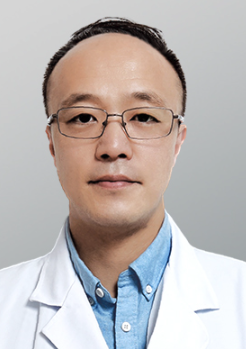 Jinghua Li (李敬华)合作论文数Institute of Information on Traditional Chinese Medicine, China Academy of Chinese Medical Sciences;Beijing Chongwenmen Tcm Hospital14
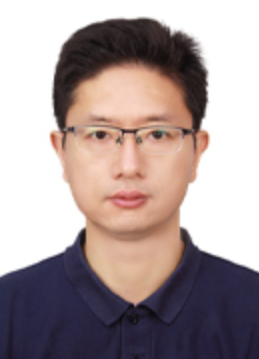 Feng Yang (杨峰)合作论文数Institute of Acupuncture and Moxibustion, China Academy of Chinese Medical Sciences10
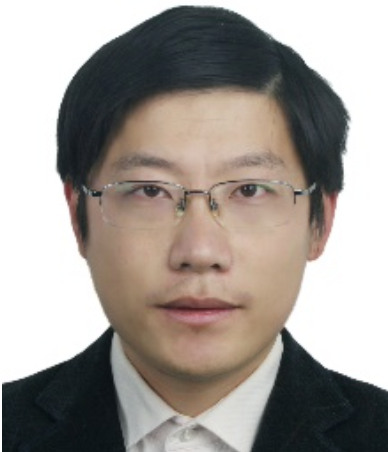 Tong Yu (于彤)合作论文数Institute of Information on Traditional Chinese Medicine, China Academy of Chinese Medical Sciences9
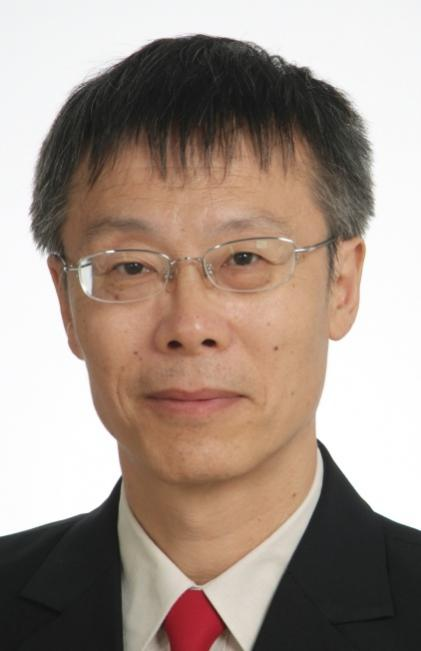 Meng Cui (崔蒙)合作论文数Institute of Information on Traditional Chinese Medicine, China Academy of Chinese Medical Sciences8
 Zheng Wanting (郑婉婷)合作论文数5ShaoLei Tian (田少雷)合作论文数5Wu Yang (吴恙)合作论文数4
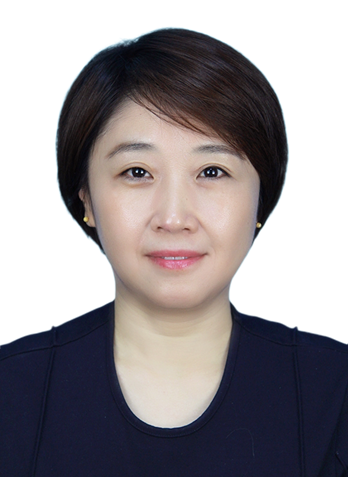 Lirong Jia (贾李蓉)合作论文数Institute of Information on Traditional Chinese Medicine, China Academy of Chinese Medical Sciences4Yueguo Gu合作论文数3Qinan Hu合作论文数3
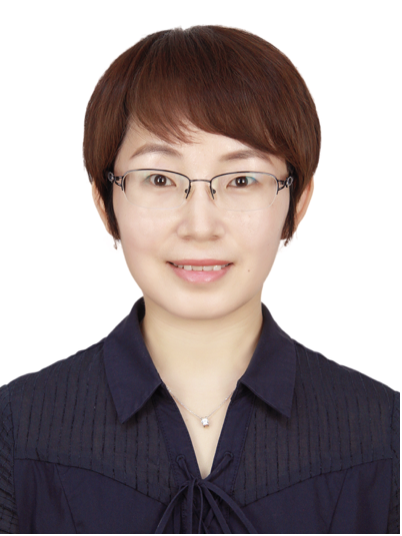 Lihong Liu (刘丽红)合作论文数Institute of Information on Traditional Chinese Medicine, Chinese Academy of traditional Chinese Medicine3Ye Tian (田野)合作论文数Institute of traditional Chinese medicine information, Chinese Academy of traditional Chinese Medicine3
 Shuo Yang (杨硕)合作论文数Institute of Information on Traditional Chinese Medicine, China Academy of Chinese Medical Sciences3Dong Yan合作论文数2ZhuLv Zhang (张竹绿)合作论文数中国中医科学院中医药信息研究所2
 YingHui Wang (王映辉)合作论文数nstitute of Chinese Medicine Information, China Academy of Chinese Medical Sciences2LiLi Xu (徐丽丽)合作论文数2Qi Yu (于琦)合作论文数2Xiaoling Zhou (周晓玲)合作论文数2
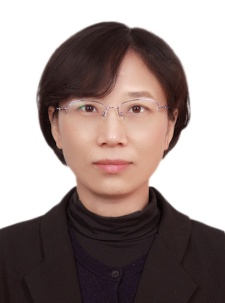 Yan Dong (董燕)合作论文数Institute of Chinese Medicine Information, China Academy of Chinese Medical Sciences2Bo Gao合作论文数Key Laboratory of Northwest Water Resource, Environment and Ecology, MOE, Xi’an University of Architecture and Technology, Xi’an 710055, China1AiNing Yin (尹爱宁)合作论文数1YongChi Fu (符永驰)合作论文数1YuanBai Li (李园白)合作论文数1
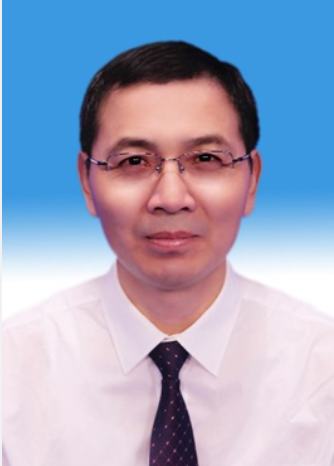 Zongyou Li (李宗友)合作论文数Institute of Information on Traditional Chinese Medicine, China Academy of Chinese Medical Sciences1HongXing Liu (刘洪星)合作论文数1HongJie Gao (高宏杰)合作论文数1Rui Wang (王蕊)合作论文数1
 Jing Liu (刘静)合作论文数中国中医科学院西苑医院1Feng Yi合作论文数1
 Xiaofeng Sun (孙晓峰)合作论文数Institute of Metal Research, Chinese Academy of Sciences1
 Hongjie Gao (高宏杰)合作论文数Institute of Information on Traditional Chinese Medicine, China Academy of Chinese Medical Sciences1




