With the widespread use of area array detectors,multi-target tracking for video satellites has become of great significance.However,for multi-target tracking methods based on graph structure,in the construction of graphs,most of them extract clues from adjacent frames,ignoring the previous frame clues.In response to the above problems,an end-to-end graph network framework was proposed to construct the nodes,edges and global variables of the graph,using various clues such as motion features,appearance features,and topology information extracted from multiple frames.A key principle to realize this unified framework is to design compatible feature representations and graph network update mechanisms for different clues and different sources(trajectories and detection targets).The framework operated in a feed-forward fashion and trained on line.Being evaluated on the public datasets VISO,MOT16,MOT17 benchmarks,the multi-target tracking accuracy of 99.8%,48.8%and 51.8%was achieved respectively,which was better than other related multi-target tracking algorithms.And the ablation experiments were used to verify the improvement that each clue tracks multiple targets.The effectiveness of performance improvement will have a wide range of application scenarios in many fields such as smart transportation,smart cities,and military warfare in the future.
Passive source localization is a challenging task for one receiver, and the pressure sensor provides relatively simple information. An ocean-bottom seismometer (OBS) sensor placed on the seafloor surface can provide more informationnot only pressure information, but also three-axis (x-, y-, and z-axis) velocity information at the seafloor interface. In this paper, an OBS sensor was used to estimate the position of the broadband sound source in a Pekeris shallow water waveguide with elastic bottom. As the dynamics that characterize ocean acoustic applications are inherently nonlinear, non-Gaussian, and non-stationary processes that quickly vary with space and time, sequential Bayesian filtering, such as particle filtering (PF), is able to adapt to these environmental changes. Simulation results show that the PF method with the vertical wave impedance (the ratio of the pressure and vertical particle velocity) in the frequency domain as a measurement vector is not affected by source depth and source spectrum information, making it more tolerant and more robust than that with pressure in positioning. Experimental data results verified the effectiveness of the PF method with the vertical wave impedance for the localization of the explosive source.
Image multi-threshold segmentation method based on three-dimensional Tsallis entropy is proposed by utilizing the non-extensive property of Tsallis entropy in the paper. The improved particle swarm optimization (PSO) is used to search best two-dimensional multi-threshold vector by maximising the three-dimensional Tsallis entropy. The proposed method not only considers the gray distribution information of pixels and relevant information of neighbouring pixels, but also the interaction between the object and the background, the different responses in variant grey level. The experimental results show that the new algorithm is better than the tradition methods with both a better stability.
Data fusion technology was initiated in the field of information retrieval around the 1990s.By using different strategies in a variety of ways to study the retrieval fusion,it can be found that the integration strategy can greatly improve the efficiency of information retrieval.In this paper,the authors focused on a common search strategy,the minimum distance square sum principle,and pointed out the optimality of the results under the linear integration principle and a mistake in information retrieval literatures.Then they analyzed the performance of fusion results based on the minimum distance sum.It is concluded that the fusion results weighted by the minimum distance sum are most approximate to the original retrieval results.Finally,the conclusion was demonstrated by some experiments.
The cultural algorithm is a means to explicitly acquire problem-solving knowledge from an evolving population and in return apply that knowledge to guide a search.In this paper,the routing problem of mobile agents is formally demonstrated;a model for solving a multi-constrained optimal route is also presented.The cultural algorithm is based on a simulated annealing algorithm and is designed to solve the problem of routing mobile agents.The best individuals,based on Metropolis criterion,are accepted to improve the evolution of the belief space.Experiments showed that the algorithm produces highly competitive results at a relatively low computational cost.
A hierarchical binary tree multi-class support vector machine (BTMSVM) based on class similarity in feature space is improved to overcome the drawbacks such as unclassifiable region which the existent methods have. The class similarity which considers class distance and distribution sphere in feature space is used to determine the classification order of hierarchical multi-class SVM. The learning samples and corresponding SVM sub-classifier are selectively re-constructed to make sure as bigger as classification margin, as much as generalization ability. The results of simulated experiments show that the proposed method is faster in training and classifying, better in classification correctness and generalization.
Traveling agent problem solves the problem of planning out an optimal migration path when agents migrate to several hosts, which is a complex combinatorial optimization problem. In this paper, an improved ant colony algorithm is presented. A mutation operator is introduced and the local and global updating rules of pheromone are modified on the basis of ant colony algorithm. The algorithm greatly decreases the possibility of falling into stagnation due to arriving at local minimum. The results show that mobile agent can accomplish the computing task with higher efficiency and shorter time.
Traveling agent problem is a complex and combinatorial optimization problem,which solves the problem of finding an optimal path when an agent migrates to several hosts.An improved ant colony algorithm is presented.A mutation operator is introduced.The local and global updating rules of pheromone are modified on the basis of ant colony algorithm with which the possibility of halting the ant system becomes much lower than the ever in the time arriving at local minimum.Experiment shows that the mobile agents can accomplish the computing tasks with much higher efficiency and in a shorter time.
The key idea behind cultural algorithm is to explicitly acquire problem-solving knowledge from the evolving population and in return apply that knowledge to guide the search. In this article, cultural algorithm-simulated annealing is proposed to solve the routing problem of mobile agent. The optimal individual is accepted to improve the belief space's evolution of cultural algorithms by simulated annealing. The step size in search is used as situational knowledge to guide the search of optimal solution in the population space. Because of this feature, the search time is reduced. Experimental results show that the algorithm proposed in this article can ensure the quality of optimal solutions, and also has better convergence speed. The operation efficiency of the system is considerably improved.
A ribbon drive device comprising a rotatably supported drive roller, a rotatably supported idler roller and a device for biasing the idler roller against the drive roller to form a nip therebetween through which a ribbon is fed. The device for biasing the idler roller is positioned to apply a bias force to the idler roller at the longitudinal center thereof. The device for biasing comprises a straight piece of round or rectangular spring wire positioned in a groove formed in the periphery of the idler roller.
The support vector machine (SVM) is an algorithm based on structure risk minimizing principle and has high generalization ability. The model offers a kind of effective way for the information fusion problem of little sample, non-linear and high dimension. In this paper, mobile agent is applied to information fusion system. The model of OODA and the study method of information fusion system are improved. The model and an algorithm of information fusion based on the support vector machine are proposed. The experiment results show that this hierarchical and parallel SVM training algorithm is efficient to deal with large-scale classification problems and has more satisfying accuracy in classification precision.
To improve the anti-jamming capability and noise sensitivity of existing support vector machines,and reduce the influence of the outliers on the hyperplane,an improved support vector machine algorithm is proposed based on a weighted adjustable separating hyperplane.In this algorithm,significant values of various training samples were used as weights to assign them to boundary values.Simulation results using the standard UCI data set and an artificial data set show that the proposed algorithm has better ability to resist disturbance and noise and has much more classification precision and requires fewer support vectors compared with a standard or fuzzy support vector machine.
Mobile agent migrates to several hosts for completing its task. Migration strategy is responsible for planning out an optimal migration path, which ensures mobile agent to accomplish its task correctly and efficiently. In this paper, the concept of migration strategy based on support vector machine is proposed. Mobile agent with support vector machine can perceive the changes of environment, react immediately, embodying the reactivity and autonomy of agent. Compared with other migration strategies, it can obtain the optimal result with high probability. The simulation experiment on Aglet platform shows that the migration strategy is effective and available.
The base classifier, which is trained by AdaBoost ensemble learning algorithm, has a constant weight for all test instances. From the view of iterative process of AdaBoost, every base classifier has good classification performance in a certain small area of input space, so the constant weight for different test samples is unreasonable. An improved AdaBoost algorithm based on adaptive weight adjusting is presented. The classifiers' selection and their weights are determined by full information behavior correlation which describes the correlation between test sample and base classifier. The method makes use of all scalars of base classifier's full information behavior, overcomes the problem of information losing. The results of simulated experiments show that the ensemble classification performance is improved greatly.
Migration strategy is responsible for planning out an optimal migration path,which ensures that mobile agent can complete its task correctly and efficiently.After analyzing current models and criterions,this paper presents migration strategies based on support vector machine and designs the model.Simulation experiments show that,compared with other migration strategies,it can get the optimal result with high probability,thus to verify this algorithm is effective and available.
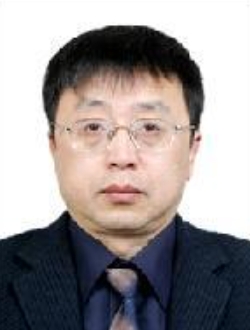 Jianpei Zhang (张健沛)合作论文数College of Computer Science and Technology, Harbin Engineering University11
 Lili Cheng (程丽丽)合作论文数8
 Jing Yang (杨静)合作论文数College of Computer Science and Technology, Harbin Engineering University8Xiaotian Lu (鲁啸天)合作论文数1
 Ziyang Li合作论文数1Liu Ya-Qin合作论文数1
 Ming Lu合作论文数1zhang yu合作论文数1
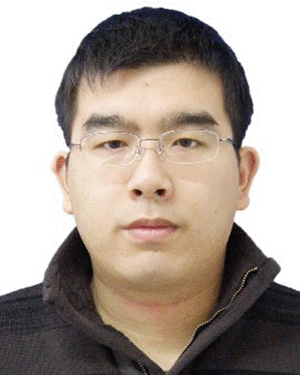 Xiaohan Wang合作论文数1XuDong Tang (唐旭东)合作论文数1
 Feng Li (李锋)合作论文数School of Mechanical Engineering, Sichuan University1
 Haigang Zhang (张海刚)合作论文数College of Underwater Acoustic Engineering, Harbin Engineering University1ZhongWei Yang合作论文数1
 Nan Zhang (张楠)合作论文数College of Nuclear Science and Technology, Harbin Engineering University1Linyang Zhou合作论文数1




