Cross-domain recommendation (CDR) and knowledge discovery (KD) are facing challenges of data heterogeneity and insufficient knowledge transfer. To address these issues, this paper explores the application of large model-based representation learning in CDR and KD. A unified representation learning framework is constructed, including unified semantic representation, cross-domain adaptation, knowledge fusion, and knowledge discovery mechanisms. Experiments on Amazon and Douban cross-domain datasets show that the proposed method outperforms baseline methods in both recommendation performance and knowledge discovery accuracy. Finally, the limitations of the research and future research directions are discussed.
The agricultural pests across diverse crops pose significant challenges in identification due to their diminutive size, natural camouflage, and the complex, cluttered environments they inhabit. This paper proposes an advanced deep-learning model to address these issues. The Key components of this customized solution include the "Channel-Enhanced Generalized Efficient Layer Aggregation Network"module, which enhances and highlights the features through the channel and spatial enhancement mechanisms. The "Generalized Multi- Scale Feature Extraction"module employs multi-scale feature extraction to provide fine-grain, inter-scale, and rich pest features. Additionally, a custom re-parameterization technique was adapted to optimize the realtime performance and boost the model's efficiency. The model's effectiveness was rigorously evaluated using the proposed Jute17 dataset. Experimental results demonstrate significant performance improvements over the Baseline model, achieving a 9.2% increase in Precision, and the detection speed retains high efficiency on the Jute17 dataset. Furthermore, the benchmark datasets Pest24 and IP102 were added to validate the performance of the proposed model, and it outperformed the Baseline model, Faster RCNN, Deformable-detr, and other YOLO series. The proposed model attained a mean Average Precision (mAP) of 78.22% on the Pest24 dataset and 78.15% accuracy on the IP102 dataset. This method offers a practical and efficient agricultural crop-specific and cross-crop pest management solution for complex field environments.
Locality-sensitive hashing (LSH) is an effective randomized technique for high-dimensional approximate nearest neighbor search. In practice, LSH has been used in large-scale recommendation and information retrieval tasks. However, it often suffers from the problem of generating many false positives due to the randomness of hash functions, which significantly increases the query overhead needed to retrieve these false positives. To this end, recent LSH variants have proposed more rigorous search schemes or used more compact hash codes to identify eligible candidates. However, as the number of candidates increases, query performance often degrades. To effectively address this problem, we propose a Double Filters Locality Sensitive Hashing scheme, called DF-LSH, designed for efficient approximate nearest neighbor search in high-dimensional datasets. DF-LSH first learns data-aware hash functions for a Bloom filter to decrease false positives, and then leverages the geometrical nature of random projection for further filter. By employing these double filters, DF-LSH provides probability guarantees similar to that of standard LSH schemes for query performance. Experiment results demonstrate that DF-LSH achieves superior query performance in both accuracy and efficiency over various high-dimensional datasets, with an average query time reduction of up to around 45x compared against previous LSH techniques while maintaining identical query accuracy.
Research on intelligent bird image classification has significant application value in biodiversity conservation, agriculture, and aviation. Traditional coarse classification techniques are inadequate due to the vast number of bird species and their highly similar appearances. Fine-grained bird image classification technology is more suitable for these scenarios. However, the datasets for this task feature large intra-class differences and small inter-class differences, significantly increasing the difficulty of achieving accurate classification. To address this challenge, we propose a Multi-level Entropy-guided Feature Fusion model (MEFF) based on the Vision Transformer (ViT). Experimental results indicate that our model demonstrates state-of-the-art performance on the fine-grained bird image datasets CUB-200-2011 and NABirds, while also showing strong competitiveness on other more challenging ultra-fine-grained datasets Cotton and SoyLoc, fully validating the model’s generality.
This paper introduces BSPA, a parallel algorithm that leverages beam search to address the two-dimensional strip packing problem. The study begins with a comprehensive review of existing approaches and methodologies, followed by a detailed presentation of the BSPA algorithm. Experimental results demonstrate the effectiveness of the proposed method. To facilitate further research, both the code and datasets are publicly available.
Production quality is directly related to the economic development of agriculture. However, the growth of crops is susceptible to pest and disease infestations, which can negatively affect agricultural yields. Therefore, adopting efficient pest and disease identification methods is of the utmost importance. This paper proposes a lightweight few-shot learning model for crop pest and disease identification. The model utilizes a lightweight backbone network and incorporates adaptive spatial feature fusion to aggregate multi-scale features, thus avoiding feature redundancy and interference between multi-scale features. Additionally, a lightweight and efficient attention module is introduced to further explore the salient information in images from both channel and spatial dimensions. Experimental results demonstrate that, compared to the state-of-the-art methods in the field, the model achieved an average recognition accuracy improvement of 0.41% under the 10-shot setting on the PlantVillage dataset and improvements of 4.03% and 2.47% under the 5-shot and 10-shot settings, respectively, on the PlantDoc dataset. Furthermore, the model achieved a 1.46% increase in overall average recognition accuracy on the IP102 dataset, while also showing strong generalization capabilities on locally collected datasets.
In this study, we present a block-based heuristic search algorithm to address the nuclear waste container packing problem in the context of real-world nuclear power plants. Additionally, we provide a dataset comprising 1600 problem instances for future researchers to use. Experimental results on this dataset demonstrate that the proposed algorithm effectively enhances the disposal pool's space utilization while minimizing the radiation dose within the pool. The code and data employed in this study are publicly available to facilitate reproducibility and further investigation.
Community detection is a crucial task that enables the extraction of valuable knowledge and patterns from complex networks. However, the node labels are often unavailable in most real-world applications, which poses limitations on practical implementations. It is common to deal with graphs that have side information. How to effectively fuse the topology information of a graph and the attribute information of nodes also brings great challenges to community discovery task. In this paper, a graph contrastive learning algorithm with cross-encoder is proposed for community discovery. The proposed algorithm introduces graph convolution neural network and graph attention network to fuse the topology information and the attribute information of nodes. Then it employs cross-encoder to obtain the embedding vectors of nodes and the neural networks are trained by contrastive learning which can learn the embedding vectors of nodes from different views. The proposed algorithm and the comparison algorithms are conducted on multiple real data sets. The experimental results show that the proposed algorithm outperforms the comparison algorithms on the most experimental data sets. The experimental results prove that the proposed algorithm is effective for community discovery.
Knowledge graph (KG) embedding methods predict missing links by computing the similarities between entities. The existing embedding methods are designed with either shallow or deep architectures. Shallow methods are scalable to large KGs but are limited in capturing fine-grained semantics. Deep methods can capture rich semantic interactions, but they require numerous model parameters. This study proposes a novel embedding model that effectively combines the strengths of both shallow and deep models. In particular, the proposed model adopts the design principles of shallow models and incorporates an expressive compositional operator inspired by deep models. This approach maintains the scalability while significantly enhancing the expressive capacity of the proposed model. Moreover, the proposed model learns embeddings using the Poincare ball model of hyperbolic geometry to preserve the hierarchies between entities. The experimental results demonstrated the effectiveness of learning Poincare embeddings with an expressive compositional operator. Notably, a substantial improvement of 2.4% in the Mean Reciprocal Rank (MRR) and a 1.4% improvement in hit@1 was observed on the CoDEx-m and CoDEx-s datasets, respectively, when compared to the current state -of -the -art methods. The proposed model was implemented using PyTorch 1.8.1, and experiments were conducted on a server with an NVIDIA GeForce RTX 2080 Ti GPU.
Locality-sensitive hashing (LSH) is an effective randomized technique to address the problem of high-dimensional approximate nearest neighbor search. In practice, LSH is applied to large-scale recommendation and information retrieval tasks. However, it often suffers from the problem of bringing many false positives due the randomness of hash functions, so that query overhead is increased greatly to retrieve these false positives. To this end, recent LSH variants propose more rigorous search schemes or use more compact hash codes to identify eligible candidates, but the query performance is degenerated gradually as the number of cardinality increases. To effectively address this problem, we design a Double Filters Locality Sensitive Hashing scheme called DF-LSH to support efficient approximate nearest neighbor search for high-dimensional datasets. It first learns some data aware hash functions for Bloom filter to decrease the false positives, and then uses the geometrical nature of random projection for further filter. DF-LSH also leverages the double filters to provide similar probability guarantee with standard LSH schemes for query performance. The experiment results demonstrate that DF-LSH obtains more superior query performance in both accuracy and efficiency over various high-dimensional datasets and the average query time can reach up to around 45x reduction under identical query accuracy in comparison with other competitors.
As one of main culprit of seafood-associated human illness, Vibrio parahaemolyticus can readily accumulate on biotic or abiotic surfaces to form biofilms in the seafood processing environment. Biofilm formation on various surfaces can provide a protective barrier for viable bacterial cells that are resistant to most traditional bacteriostatic measures. This underscores the necessity and urgency of developing effective alternative strategies to control V. parahaemolyticus biofilms. Plants have always provided an extensive and infinite source of biologically active compounds for "green" antibiofilm agents. This review summarizes recent developments in promising multitargeted phytogenic compounds against V. parahaemolyticus biofilms. This review provides valuable insights into potential research targets that can be pursued further to identify potent natural antibiofilm agents in the food industry.
Multi-instance learning (MIL) is widely adop- ted for automatic whole slide image (WSI) analysis and it usually consists of two stages, i.e., instance feature extraction and feature aggregation. However, due to the "weak supervision" of slide-level labels, the feature aggregation stage would suffer from severe over-fitting in training an effective MIL model. In this case, mining more information from limited slide-level data is pivotal to WSI analysis. Different from previous works on improving instance feature extraction, this paper investigates how to exploit the latent relationship of different instances (patches) to combat overfitting in MIL for more generalizable WSI classification. In particular, we propose a novel Multi-instance Rein- forcement Contrastive Learning framework (MuRCL) to deeply mine the inherent semantic relationships of different patches to advance WSI classification. Specifically, the proposed framework is first trained in a self-supervised manner and then finetuned with WSI slide-level labels. We formulate the first stage as a contrastive learning (CL) process, where positive/negative discriminative feature sets are constructed from the same patch-level feature bags of WSIs. To facilitate the CL training, we design a novel reinforcement learning-based agent to progressively update the selection of discriminative feature sets according to an online reward for slide-level feature aggregation. Then, we further update the model with labeled WSI data to regularize the learned features for the final WSI classification. Experimental results on three public WSI classification datasets (Camelyon16, TCGA-Lung and TCGA-Kidney) demonstrate that the proposed MuRCL outperforms state-of-the-art MIL models. In addition, MuRCL can achieve comparable performance to other state-of-the-art MIL models on TCGA-Esca dataset.
Hip fractures are a common cause of morbidity and mortality and are usually diagnosed from the X-ray images in clinical routine. Deep learning has achieved promising progress for automatic hip fracture detection. However, for fractures where displacement appears not obvious (i.e., non-displaced fracture), the single-view X-ray image can only provide limited diagnostic information and integrating features from cross-view X-ray images (i.e., Frontal/Lateral-view) is needed for an accurate diagnosis. Nevertheless, it remains a technically challenging task to find reliable and discriminative cross-view representations for automatic diagnosis. First, it is difficult to locate discriminative task-related features in each X-ray view due to the weak supervision of image-level classification labels. Second, it is hard to extract reliable complementary information between different X-ray views as there is a displacement between them. To address the above challenges, this paper presents a novel cross-view deformable transformer framework to model relations of critical representations between different views for non-displaced hip fracture identification. Specifically, we adopt a deformable self-attention module to localize discriminative task-related features for each X-ray view only with the image-level label. Moreover, the located discriminative features are further adopted to explore correlated representations across views by taking advantage of the query of the dominated view as guidance. Furthermore, we build a dataset including 768 hip cases, in which each case has paired hip X-ray images (Frontal/Lateral-view), to evaluate our framework for the non-displaced fracture and normal hip classification task.
The three-dimensional packing problem (3D-PP) is a classic NP-hard problem in operations research and computer science. One of the most popular ways to solve the problem is heuristic methods with a search strategy. However, approaches based on machine learning have recently received widespread attention because of their efficiency. In this work, we propose a deep reinforcement learning (DRL) model to solve 3D-PP. Our method employs Transformer architecture as the policy network and uses Proximal Policy Optimization (PPO) to train the network. Compared with previous approaches using DRL, our method presents a novel state representation of packing environment, and introduces plane features for representing the length and width information of container. Our method achieves the new state-of-the-art results for using DRL to solve 3D-PP. The code of our method will be released to facilitate future research.
Anti-electricity leakage or stealing plays a crucial role in the energy market as accurate detection is beneficial for electricity safety, unit commitment, reduction of corporate losses, and so on. In a contemporary competitive energy market, it can significantly improve the efficiency of electric power enterprises and reduce the operational cost of the power system. In this study, through collecting historical data and analyzing the characteristics of electricity consumption, we established the index system for the detection of electricity leakage or stealing. Based on this, a focal loss-based 1d densely connected convolutional network, which we term the FLB-DCNNs, is proposed for the detection of electricity leakage or stealing. The electricity theft samples obtained in the actual on-site inspection are researched in the empirical analysis, and the results prove the effectiveness of the proposed approach. It attains an average precision of 98.51% for detecting electricity leakage or stealing users, and the average recall rate also reaches 98.17%. The recommended procedure provides a new idea for electricity theft detection and is easily transplanted to other related fields. Our data and code are available at https://github.com/xtu502/electricity-theft-detection.
The extraction of frequent subgraphs is a basic and well studied operation on graphs. Thus, mining frequent graph patterns and problems associated with it is very important. However, the number of frequent subgraphs is potentially exponential while mining large graph patterns. This issue can be partly overcome using closed frequent graphs mining. Instead of mining all frequent subgraphs, it is more efficient to enumerate only the closed frequent graphs. Thus, in this paper, we propose a novel closed frequent subgraph mining algorithm: CFGM. In this algorithm, a stack-based architecture is used to enumerate the frequent graph represented by the depth-first search. Moreover, this algorithm defines a strict partial order among frequent graphs. We demonstrate that, with respect to this strict partial order, only maximal elements (frequent graphs) need to be discovered. A pruning strategy is developed based on this strict partial order that dramatically reduces unnecessary frequent subgraphs to be enumerated. Computational results show our algorithm displays excellent performance, especially for some large asymmetric frequent graph patterns.
Stock market analysis is extremely important for investors because knowing the future trend and grasping the changing characteristics of stock prices will decrease the risk of investing capital for profit. Thereupon, the prediction of stock prices and identifying the graphic signals of candlestick charts, which are two crucial tasks in stock price analysis, attract much attention from investors owing to the returns and risks that coexist in financial markets. To introduce a reliable approach for addressing these challenges, this paper proposes the modeling strategies based on machine learning (ML) techniques. A vector autoregression (VAR)-based rolling prediction model is proposed for forecasting stock prices, and a Gaussian feed-forward neural networks (GFNN)-based graphic signal identification method is introduced to recognize different types of stock price signals. The experimental results demonstrate better performance comparing with the state-of-the-art methods, and it can be successfully applied in real-world stock exchange strategies.
Pavement defects such as cracks, net cracks, and pit slots can cause potential traffic safety problems. The timely detection and identification play a key role in reducing the harm of various pavement defects. Particularly, the recent development in deep learning (DL)-based convolution neural networks (CNNs) has shown competitive performance in image detection and classification. To detect pavement defects automatically and improve effects, a multiscale mobile attention-based network, which we termed MANet, is proposed to perform the detection of pavement defects. The architecture of the encoder–decoder is used in MANet, where the encoder adopts the MobileNet as the backbone network to extract pavement defect features. Instead of the original $3\,\, \times 3$ convolution, the multiscale convolution kernels are used in depthwise separable convolution (DSConv) layers of the network. Furthermore, the hybrid attention mechanism is separately incorporated into the encoder and decoder modules to infer the significance of spatial points and interchannel relationship features for the input intermediate feature maps. The proposed approach achieves state-of-the-art performance on two publicly available benchmark datasets, i.e., the Crack500 (500 crack images with $2000\,\, \times 1500$ pixels) and CFD (118 crack images with $480\,\, \times 320$ pixels) datasets. The mean intersection over union (MIoU) of the proposed approach on these two datasets reaches 0.7219 and 0.7788, respectively. Ablation experiments show that the multiscale convolution and hybrid attention modules can effectively help the model extract high-level feature representations and generate more accurate pavement crack segmentation results. We further test the model on locally collected pavement crack images (131 images with $1024\,\, \times 768$ pixels) and it achieves a satisfactory result. The proposed approach realizes the MIoU of 0.6514 on the local dataset and outperforms other compared baseline methods. Experimental findings demonstrate the validity and feasibility of the proposed approach and it provides a viable solution for pavement crack detection in practical application scenarios. Our code is available at https://github.com/xtu502/pavement-defects .
Plant disease management plays a crucial role in food security as diverse diseases can cause a substantial reduction of crop yield. As an important staple, potatoes are highly consumed over the entire world, while they are easy to be infected by various diseases too. The early recognition and warning can suppress the outbreak of potato diseases and increase the yield of crops. For this purpose, the paper proposes a novel network architecture named MobOca_Net to recognize potato diseases. The lightweight MobileNet V2 was chosen as the foundation network, and to improve the learning capability of minute crop lesion features, we modified the classical MobileNet-V2 by incorporating the attention mechanism behind the pre-trained network, which was followed by an octave convolution block for extracting high-dimensional features. Moreover, the transfer learning from the PlantVillage dataset was applied for model training. The proposed procedure delivered a superior performance gain over other compared methods, and it realized an average identification accuracy of 97.73% on different potato disease types. Experimental findings present a competitive performance and prove the validity of the proposed procedure.
Surface defect inspection of no-service rail is important for safety of railway transportation. However, there are several challenges of irregular defect boundary, similar foreground and background for no-service rail surface defect inspection. To deal with the above challenges, depth image is used to provide complementary spatial information to RGB image. In recent years, with the development of deep learning and computer vision technology, intelligent inspection of defect has made great progress. We propose a neural network named collaborative learning attention network (CLANet) for no-service rail surface defect inspection. Our method can inspect the defect object of rail surface and segment the accurate region of that defect. The proposed method consists of three main stages: feature extraction, cross-modal information fusion, and defect location and segmentation. A multimodal attention block is proposed to highlight complex defect object with a new cross-modal fusion strategy. Furthermore, dual stream decoder enriches the representation of advanced features and avoids the dilution of information in the decoding stage. Suffering from the scarcity of defective data, an industrial RGB-D dataset NEU RSDDS-AUG is built. Finally, ablation studies verify the effectiveness of our proposed method. Compared with the existing nine state-of-the-art methods, CLANet has achieved improvements in all five parameters. Our method is also competitive on four public benchmark datasets.
 Junde Chen合作论文数Xiamen Univ, Sch Informat, Xiamen 361005, Peoples R China37
 Stephen C. H. Leung合作论文数Department of Management Sciences, City University of Hong Kong24
 Y.A. Nanehkaran合作论文数Xiamen Univ, Sch Informat, Xiamen 361005, Peoples R China21
 Adnan Zeb合作论文数Xiamen Univ, Sch Informat, Xiamen 361005, Fujian, Peoples R China20
 Zhenfeng Lei合作论文数Xiamen Univ, Sch Informat Sci & Engn, Xiamen 361005, Peoples R China12
 Yain-Whar Si (池英華)合作论文数Faculty of Science and Technology,University of Macau12
 Anwar Ul Haq合作论文数Xiamen Univ, Sch Informat, Xiamen 361005, Fujian, Peoples R China11
 Guodong Li合作论文数11
 Dongsheng Zhou (周冬生)合作论文数Institute of Microbiology and Epidemiology, Academy of Military Medical Sciences10
 Shuangyuan Yang (杨双远)合作论文数School of Informatics Xiamen University(National Characteristic Demonstration Software School)10
 Emmanuel Bugingo合作论文数Xiamen Univ, Sch Informat Sci & Engn, Dept Comp Sci, Xiamen, Peoples R China9
 Wei Zheng (郑炜)合作论文数9
 Yunhui Yan (颜云辉)合作论文数School of Mechanical Engineering and Automation, Northeastern University;Machine Vision and Robotics Laboratory, Northeastern University9
 Jiwu Shu (舒继武)合作论文数Institute of High Performance Computing, Department of Computer Science and Technology, School of Information Science and Technology, Tsinghua University;School of Computer and Big Date, Minjiang University9
 Kechen Song (宋克臣)合作论文数School of Mechanical Engineering and Automation, Northeastern University9
 Weirong Chen合作论文数8dongkui wang (王东奎)合作论文数8
 Jiao Feng (冯娇)合作论文数Institutes of Biomedical Sciences, Shanxi University8hairong yang (杨海荣)合作论文数7Chen Weijun合作论文数7
 Jinxi Zhao (赵金熙)合作论文数School of Computer Science, Nanjing University7Xiyue Zhou合作论文数7
 Yigang Tong (童贻刚)合作论文数College of Life Science and Technology, Beijing University of Chemical Technology6Qingshan Chen合作论文数6Jiemin Zheng合作论文数6
 Md Suzauddola合作论文数5
 Furong Ye合作论文数Leiden University, Leiden, The Netherlands5Yuandong Sun合作论文数Spira Inc, Los Angeles, CA 90032, USA5Lijie ZHOU (周丽杰)合作论文数5Lijun Wei (魏麗軍)合作论文数Department of Management Sciences,College of Business,City University of Hong Kong5
 Nengjian Wang (王能建)合作论文数College of Mechanical and Electrical Engineering, Harbin Engineering University5Zhe Yin (殷喆)合作论文数中国人民解放军军事医学科学院微生物流行病研究所5Shaohui Hong合作论文数4Zhonghang Zhu合作论文数4Zhe Zhan合作论文数4
 Halefom Tekle Weldegebriel合作论文数4lizhong gui (归丽忠)合作论文数4
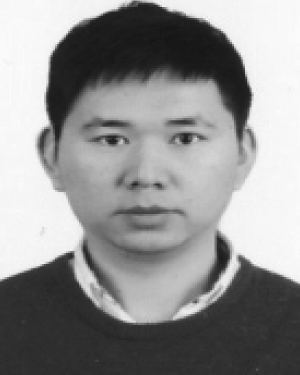 Ling Zheng合作论文数Contributed equally to this work.4Xiaoyuan Jiang合作论文数4
 Yu He合作论文数School of Mechanical Engineering and Automation, Northeastern University, Shenyang, China4
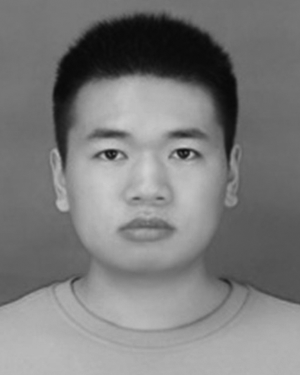 Menghui Niu合作论文数Northeastern Univ, Sch Mech Engn & Automat, Shenyang 110819, Peoples R China4
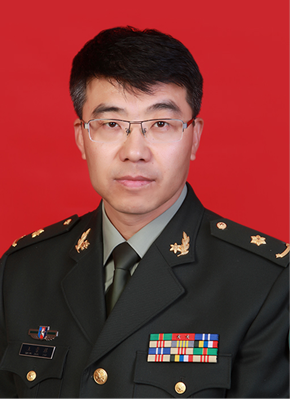 Jinglin Wang (王景林)合作论文数军事医学科学院微生物流行病研究所4
 Yangbin Lin合作论文数4
 Jinxiu Chen (陈锦秀)合作论文数Department of Computer Science and Technology, School of Informatics, Xiamen University4
 Bo Wu合作论文数4
 Yunqi Lei (雷蕴奇)合作论文数Xiamen University4
 Liansheng Wang (王连生)合作论文数Department of Computer Science and Technology, School of Informatics, Xiamen University4
 Wenhua Zeng (曾文华)合作论文数School of Informatics, Xiamen University4Yongkai Liu合作论文数4




