In this paper, a direct finite element method is proposed for solving interface problems on unfitted meshes. This new method treats the two interface conditions as an H^1/2(Γ)× H^-1/2(Γ) pair for the mutual interaction across the interface, rather than the jumps of variables. A simple and straightforward finite element method is proposed based on this approach. This method solves the interface problem using conforming finite elements in one subdomain and conforming mixed finite elements in the other, with a natural integral term accounting for mutual interaction. Under reasonable assumptions, this direct finite element method is proved to be well-posed with an optimal a priori error analysis. Moreover, a simple lowest-order direct finite element method, using the linear element and the lowest-order Raviart-Thomas element, is analyzed to achieve the optimal a priori error estimate by verifying the aforementioned assumptions. Numerical tests are provided to confirm the theoretical results and the effectiveness of the direct finite element method.
We develop mixed finite element methods for the linear stress-gradient elasticity problem based on symmetric Taylor–Hood elements. We establish the stability of the symmetric Taylor–Hood pair on simplicial meshes in both two and three dimensions, thereby resolving the stability left open by Brezzi, Fortin, and Marini in 1993. Combing the Nitsche's method, we further construct finite element schemes for linear stress problem in general boundary condition. Numerical experiments confirm the theoretical results.
This paper proposes a finite element method that couples mixed and Lagrange finite elements to efficiently capture stress concentrations in elasticity problems. The method employs conforming mixed finite elements in regions with stress concentration, while standard Lagrange elements are used elsewhere, achieving a balance between stress accuracy and computational efficiency. The well-posedness of the coupled formulation and optimal a priori error estimates are established, even when the size of the mixed finite element subregion is O(h). Numerical experiments are presented to verify the theoretical convergence rates and to demonstrate the effectiveness and efficiency of the proposed method.
This paper considers the coupled problem of a three-dimensional elastic body and a two-dimensional plate, which are rigidly connected at their interface. The plate consists of a plane elasticity model along the plane direction and a plate bending model with Kirchhoff assumptions along the transverse direction. The Hellinger-Reissner formulation is adopted for the body by introducing the stress as an auxiliary variable, while the primal formulation is employed for the plate. The well-posedness of the new mixed weak formulation is established. This approach enables direct stress approximations and allows for non-matching meshes at the interface since the continuity condition of the displacement acts as a natural boundary condition for the body. Under certain assumptions, discrete stability and error estimates are derived for both conforming and nonconforming finite element methods. Two specific pairs of conforming and nonconforming finite elements are shown to satisfy the required assumptions, respectively. Furthermore, the problem is reduced to an interface problem based on the domain decomposition, which can be solved effectively by a conjugate gradient iteration. Numerical experiments are conducted to validate the theoretical results.
This paper extends the Hu–Zhang element for linear elasticity to curved domains, preserving strong symmetry and H(div) -conformity. The non-polynomial structure of the curved Hu–Zhang element makes it difficult to analyze the stability, which is overcome by establishing a novel inf-sup condition. Optimal convergence rates are achieved for all variables except for the stress in the L^2 -norm. This suboptimality originates from the fact that the divergence space of the curved Hu–Zhang element is not contained in the discrete displacement space, which is improved by local p-enrichment on boundary elements. Some numerical experiments validate the theoretical results.
This paper addresses sharpness conditions for constructing C^r conforming finite element spaces from a superspline spaces on general simplicial triangulations. We introduce the concept of extendability for the pre-element spaces, which encompasses both the superspline spaces and the finite element spaces. By examining the extendability condition for both types of spaces, we provide an answer to the conditions regarding the construction. A corollary of our results is that constructing C^r conforming elements in d dimensions generally requires an extra C^2^sr continuity on s-codimensional simplices, and the polynomial degree is at least (2^d r + 1).
This paper considers the cohomology and bounded interpolation of nonstandard finite element complexes, e.g. Stokes, Hessian, Elasticity, divdiv. Compared to the standard finite element exterior calculus, the main challenge is the existence of extra smoothness. This paper provides a unified framework for finite element complexes with extra smoothness. The trace structure is introduced to derive the bubble complexes in different dimensions (vertices, edges, faces). It is shown that if the bubble complexes in different dimensions are all exact, then the finite element has the correct cohomology. Moreover, the L^2 bounded interpolation can be constructed.
We propose a new finite element method designed to address three-dimensional interface problems. This method employs a quasi-uniform, unfitted mesh as the foundation for constructing the grid, which incorporates anisotropic tetrahedral, pyramidal, and prism elements near the interface. We conduct a rigorous analysis of the optimal approximation capabilities of anisotropic elements, with a specific focus on their linear convergence rates in the H^1 -norm, excluding a logarithmic factor related to the intersection of the interface and element edges. Additionally, we thoroughly investigate errors arising from transitioning between the continuous and discretized interfaces. After applying suitable approximations to the discretized interface, this logarithmic factor is expressed as |ln h|^1/2 . The convergence rate in the H^1 -norm is quantified as O(|log h|^1/2 h) . Numerical experiments are presented to corroborate these theoretical results.
In this paper, a new method is proposed to produce guaranteed lower bounds for eigenvalues of general second order elliptic operators in any dimension. Unlike most methods in the literature, the proposed method only needs to solve one discrete eigenvalue problem but not involves any base or intermediate eigenvalue problems, and does not need any a priori information concerning exact eigenvalues either. Moreover, it just assumes basic regularity of exact eigenfunctions. This method is defined by a novel generalized Crouzeix-Raviart element which is proved to yield asymptotic lower bounds for eigenvalues of general second order elliptic operators, and a simple post-processing method. As a byproduct, a simple and cheap method is also proposed to obtain guaranteed upper bounds for eigenvalues, which is based on generalized Crouzeix-Raviart element approximate eigenfunctions, an averaging interpolation from the the generalized Crouzeix-Raviart element space to the conforming linear element space, and an usual Rayleigh-Ritz procedure. The ingredients for the analysis consist of a crucial projection property of the canonical interpolation operator of the generalized Crouzeix-Raviart element, explicitly computable constants for two interpolation operators. Numerics are provided to demonstrate the theoretical results.
We construct a nodal basis for the 5-dimensional C^1 finite element space of polynomial degree 33 on simplex grids, where the finite element functions are C^1 on the 6 4D-simplex faces, C^2 on the 15 face-tetrahedra, C^4 on the 20 face-triangles, C^8 on the 15 edges, and C^16 at the 6 vertices, of a 5D simplex.
This paper introduces a mixed finite element method for the problem of two coupled plates with mixed boundary conditions and rigid junction conditions. By introducing the union of stresses and moments as an independent variable, which is of significant interest in practical applications, a mixed formulation is developed and its well-posedness is established. To avoid complications with the direct use of trace operators, the theory of densely defined operators in Hilbert spaces is employed to determine a suitable space that incorporates boundary and junction conditions for this variable. Based on the mixed formulation, a mixed finite element method is presented along with an illustrative example. The discrete stability and the a priori analysis for the mixed finite element method are proved under some assumptions. Numerical tests demonstrate the theoretical results.
The Einstein-Bianchi system uses symmetric and traceless tensors to reformulate Einstein's original field equations. However, preserving these algebraic constraints simultaneously remains a challenge for numerical methods. This paper proposes a new formulation that treats the linearized Einstein-Bianchi system (near the trivial Minkowski metric) as the Hodge wave equation associated with the conformal Hessian complex. To discretize this equation, a conforming finite element conformal Hessian complex that preserves symmetry and traceless-ness simultaneously is constructed on general three-dimensional tetrahedral grids, and its exactness is proven.
This paper presents a reliable and efficient residual-based a posteriori error analysis for the symmetric H(divdiv) mixed finite element method for the Kirchhoff-Love plate bending problem with mixed boundary conditions. The key ingredient lies in the construction of boundary-condition-preserving complexes at both continuous and discrete levels. Additionally, the discrete symmetric H(divdiv) space is extended to ensure nestedness, which leads to optimality for the adaptive algorithm. Numerical examples confirm the effectiveness of the a posteriori error estimator and demonstrate the optimal convergence rate under adaptive refinements.
This paper extends the Hu-Zhang element for linear elasticity problems to curved domains, preserving strong symmetry and H(div)-conformity. The non-polynomial structure of the curved Hu-Zhang element makes it difficult to analyze the stability result, which is overcome by establishing a novel inf-sup condition. Optimal convergence rates are achieved for all variables except the stress L^2-error. This suboptimality originates from the fact that the divergence space of the curved Hu-Zhang element is not contained in the discrete displacement space, which is rectified by local p-enrichment in the Hu-Zhang space on curved boundary elements. Some numerical experiments validate the theoretical results.
We propose a hybrid iterative method based on multiple-input operator network for partial differential equations, which combines the traditional numerical iterative solver and the recent powerful machine learning method of neural operator, and further systematically analyzes its theoretical properties, including the convergence condition, the spectral behavior, as well as the convergence rate, in terms of the errors of the discretization and the model inference. We show the theoretical results for the frequently-used smoothers, i.e. Richardson (damped Jacobi) and Gauss-Seidel. We give an upper bound of the convergence rate of the hybrid method w.r.t. the model correction period, which indicates a minimum point to make the hybrid iteration converge fastest. Several numerical examples including the hybrid Richardson (GaussSeidel) iteration for the 1-d (2-d) Poisson equation are presented to verify our theoretical results, and also reflect an excellent acceleration effect. As a meshless acceleration method, it is provided with enormous potentials for practice applications.
We propose the Manifold Function Encoder (MFE) for identifying different functions defined on different manifolds. Both a manifold in Euclidean space and a function defined on this manifold can be viewed as bounded linear functionals on a suitable space of continuous functions. From this perspective, we treat manifold functions as elements of the dual space. By expanding them in the dual space based on appropriate approximating sequence of bases, we obtain a corresponding method for encoding manifold functions, that is MFE. Especially, we prove that MFE achieves super-algebraic convergence based on smooth bases commonly used in spectral methods, such as Legendre polynomials and Fourier basis. We further extend MFE to handle more complex cases, including joint manifold functions of different dimensions and manifold functions with different measures. In addition, we show the approximation theory for MFE-based operator learning, in particular learning the solution mappings of PDEs defined on varying domains, together with several numerical experiments including the 2-d Poisson equation and the 3-d elasticity problem on the real-world bearing.
This paper proposes a mixed variational formulation for the problem of two coupled plates with a rigid {junction}. The proposed mixed {formulation} introduces {the union of} stresses and moments as {an auxiliary variable}, which {are} commonly of great interest in practical applications. The primary challenge lies in determining a suitable {space involving} both boundary and junction conditions of the auxiliary variable. The {theory} of densely defined operators in Hilbert spaces is employed to define {a nonstandard Sobolev space} without the use of trace operators. The well-posedness is established for the mixed formulation. Based on these conditions, this paper provides a framework {of} conforming {mixed} finite element methods. Numerical experiments are given to validate the theoretical results.
In this paper, we construct two lower order mixed elements for the linear elasticity problem in the Hellinger-Reissner formulation, one for the 2D problem and one for the 3D problem, both on macro-element meshes. The discrete stress spaces enrich the analogous P_k stress spaces in [J. Hu and S. Zhang, arxiv, 2014, J. Hu and S. Zhang, Sci. China Math., 2015] with simple macro-element bubble functions, and the discrete displacement spaces are discontinuous piecewise P_k-1 polynomial spaces, with k=2,3, respectively. Discrete stability and optimal convergence is proved by using the macro-element technique. As a byproduct, the discrete stability and optimal convergence of the P_2-P_1 mixed element in [L. Chen and X. Huang, SIAM J. Numer. Anal., 2022] in 3D is proved on another macro-element mesh. For the mixed element in 2D, an H^2-conforming composite element is constructed and an exact discrete elasticity sequence is presented. Numerical experiments confirm the theoretical results.
 Zhongci Shi (石钟慈)合作论文数Academy of Mathematics and Systems Science, Chinese Academy of Sciences;Zhejiang Wanli University19
 Rui Ma (马睿)合作论文数School of Mathematics and Statistics, Beijing Institute of Technology18
 Shangyou Zhang (张上游)合作论文数17
 Yunqing Huang (黄云清)合作论文数School of Mathematics and Computational Science, Xiangtan University12Ting Lin合作论文数9
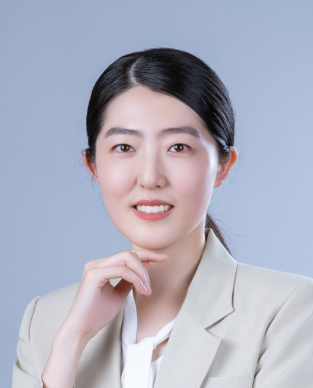 Limin Ma (马利敏)合作论文数Department of Information and Computational Sciences, School of Mathematics and Statistics, Wuhan University8
 Carsten Carstensen合作论文数Department of Mathematics, Humboldt-Universitat zu Berlin;Institut fur Mathematik, Humboldt-Universitat zu Berlin8Yizhou Liang合作论文数7
 Long Chen合作论文数5xueqin yang合作论文数5
 Jinchao Xu (许进超)合作论文数Center for Computational Mathematics and Applications, Pennsylvania State University;Department of Mathematics, Eberly College of Science, Penn State University;King Abdullah University of Science and Technology5
 Xuehai Huang合作论文数4
 Hongying Man (满红英)合作论文数School of Mathematics and Statistics, Beijing Institute of Technology4
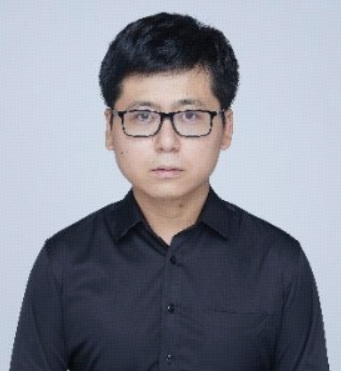 Shudan Tian (田舒丹)合作论文数School of Mathematics and Computational Science, Xiangtan University3Qingyu Wu合作论文数3
 Kaibo Hu合作论文数3
 Quan Shen (沈铨)合作论文数School of Rail Transportation, Soochow University3
 Xuejun Xu (许学军)合作论文数Key Laboratory of Intelligent Computing and Application, Ministry of Education, School of Mathematical Sciences, Tongji University3Dietmar Gallistl合作论文数Institut für Mathematik, HumboldtUniversität zu Berlin3Zihang Zhang合作论文数2
 Qian Zhang (张倩)合作论文数School of Mathematics, Jilin University2DIAO Xuhao (刁旭昊)合作论文数2Min Zhang合作论文数2Suna Ma合作论文数2
 Ruishu Wang (王瑞姝)合作论文数School of Mathematics, Jilin University2
 Pengzhan Jin合作论文数LSEC, ICMSEC, Academy of Mathematics and Systems Science, Chinese Academy of Sciences, Beijing 100190, China2
 Hao Luo合作论文数Sch Math Sci, Peking Univ2
 Hua Wang (王华)合作论文数School of Computer Science and Technology, Zhengzhou University of Light Industry2
 Qingguo Hong合作论文数Department of Mathematics and Statistics, Missouri University of Science and Technology2Malte Braack合作论文数Institut fur Numerische und Angewandte;Georg-August Universitat Gottingen;Institut fur Numerische und Angewandte, Georg-August Universitat Gottingen2
 Guido Kanschat合作论文数heidelberg university2
 Zhencai Zhu (朱振才)合作论文数University of Chinese Academy of Sciences;Innovation Academy for Microsatellites, Chinese Academy of Sciences1S. Y. Frank Zhao合作论文数Dept Phys, Harvard Univ1
 Beihui Yuan合作论文数1
 Wenbin Li (李文彬)合作论文数School of Engineering, Westlake University;School of Science, Westlake University;Materials Modeling and Design Lab, Westlake University1Jianye Wang合作论文数1
 Wei Chen合作论文数Southwest Jiaotong University(Southwest Jiaotong University,Southwest Jiaotong Univ.),Chengdu,China1
 Ping-Hao Jia合作论文数1Bo CHEN (陈博)合作论文数1HeFang Liu (刘荷芳)合作论文数1
 Guozhu Yu (余国朱)合作论文数School of Mathematics, Southwest Jiaotong University1Hongmei Shen合作论文数1
 Yongpin Chen (陈涌频)合作论文数School of Electronic Science and Engineering, University of Electronic Science and Technology of China1
 Xiyao Li (李玺瑶)合作论文数College of Marine Geosciences, Ocean University of China1
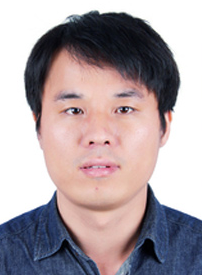 Guangzeng Wang (王光增)合作论文数Key Lab of Submarine Geosciences and Prospecting Techniques, MOE, Ocean University of China1
 Sanzhong Li (李三忠)合作论文数Key Lab of Submarine Geosciences and Prospecting Techniques, Ministry of Education, Ocean University of China;Institute of Marine Geodynamics, College of Marine Geosciences, Ocean University of China;Institute for Advanced Ocean Study, Ocean University of China1
 Shihua Zhong (钟世华)合作论文数School of Marine Geosciences, China Ocean University1
 Qun Lin (林群)合作论文数Academy of Mathematics and Systems Science, Chinese Academy of Sciences1




