Track irregularity evaluation is crucial for ensuring vehicle stability, ride comfort, and safe operation. In the actual operation of the line, it is essential to study the relationship between the vibration state of the metro vehicle and the track irregularity to evaluate the service state of the track and guide the maintenance and repair of the line. To accurately evaluate the irregularity of the metro track, this paper establishes a hybrid deep learning model, which consists of a convolutional neural network, a long short-term memory network, and an improved sand cat swarm optimization algorithm. The model uses vehicle acceleration and running speed as inputs to achieve end-to-end prediction of track irregularity. The hyperparameters of the convolutional neural network and long short-term memory are obtained by the improved sand cat swarm optimization algorithm. Four evaluation indices are adopted to analyze the effectiveness of the presented model and contrast it with other classical models. The hybrid deep learning model is verified using data from comprehensive inspections of metro line vehicles in a city. The experimental results show that the improved sand cat swarm optimization algorithm performs far better than other methods, which can increase the convergence accuracy and speed of the test function and help obtain the optimal hyperparameter configuration of the model. Compared to the traditional models, the hybrid deep learning model can effectively reduce the error, and the max goodness of fit reaches 0.952, which verifies the effectiveness of the model for track irregularity identification. The research results offer a novel approach to studying track irregularity state recognition.
The inherent nonlinearity and time-varying coupling characteristics of wheel-rail adhesion pose a significant challenge to maintaining maximum adhesion under complex operating conditions. Given the inherent strengths of fuzzy theory in tackling nonlinear problems, two advanced fuzzy-based methods for identifying the wheel-rail friction conditions, Fuzzy Logic Algorithm (FLA) and Fuzzy C-Means (FCM) clustering algorithm, were proposed in this study to provide real-time and robust optimal creep thresholds for anti-slip controllers. Comparative simulation studies were then conducted to assess the proposed methods and the variance-based identification method in terms of identification accuracy and wear behaviour. The results show that the fuzzy-based method can identify the optimal threshold more reliably and accurately, with the mean absolute percentage error (MAPE) dropping from 10% (variance-based) to below 1% in the demonstrated low adhesion cases. More importantly, the proposed methods effectively eliminate the issues of threshold misjudgment and sudden jumps, leading to a reduction of wear number by more than 10% compared to the variance-based identification. Furthermore, the FCM-based identification offers simpler implementation and faster processing speed (typically requiring only a few milliseconds) compared to FLA-based identification.
Thermal crack is a key factor to induce wheel spalling or rim fracture of freight wagon. This study develops a numerical framework for analyzing thermal crack propagation using the extended finite element method. A phase transformation model and a freight train electro-pneumatic braking model are integrated into a threedimensional transient heat transfer finite element model of wheel-rail-brake shoe. Based on the wheel temperature, heat-affected zone (HAZ) and residual stress, the stress intensity factors (SIFs), J-integral, propagation direction, and the contributions of different load types are investigated. The results show a critical wheel-brake shoe contact width of 35 mm that induces phase transformation and exacerbates crack propagation during emergency braking on a slope with a 30 parts per thousand gradient. The HAZ, with martensite as the major phase (>= 87%), evolves from a thin layer to crescent and semilunar shapes as the contact width decreases. During coasting, the wheel-rail mechanical load promotes crack growth primarily in the bulk material rather than in the HAZ, favoring tread spalling. During tread braking, the elevated temperature suppresses the opening mode and induce mixed shearing-tearing propagation in the HAZ, favoring radial propagation deep into the rim. Cyclic thermal stress intensifies radial propagation in the HAZ during tread braking and causes oblique propagation in the bulk material during cooling. Finally, propagation phases I-IV are identified under different service conditions to elaborate the thermal crack propagation mechanism. The numerical framework is validated by field observation and full-scale test, supporting its further application in engineering.
The bogie serves as a pivotal structural and functional unit within the rail vehicle system, and any failure in its performance can critically affect the safety and reliability of railway operations. This paper aims to develop a bogie structural health monitoring system based on the transfer function. In this study, the rigid-flexible coupling model of the bogie system will be established through the parameters and data of a real vehicle system. Propose a method for calculating the transfer function through the cross spectral density and auto spectral density. In this study, the system is constructed with the 3-axial acceleration data of the axle box and the stress of a cowcatcher. Then, calculate the transfer function of the 3-input single output system. And the system error is corrected through the sliding window method. Subsequently, the transfer function is used to predict the stress of the cowcatcher. Finally, based on the Dirlik frequency domain fatigue life estimation method, the damage and remaining life of the cowcatcher were calculated by using the measured stress and the predicted stress by transfer function. The results show that the stress results of the two methods have good consistency in both time and frequency domains, with a maximum error of only 6.5 %. It illustrates that the method can reproduce the stress state of the bogie system well. Based on this method, structural health monitoring of the bogie system can be realized.
Due to geographical constraints, some vehicles operate on long downhill ramps. When the vehicle undergoes prolonged braking, continuous heat accumulation occurs on the wheel tread surface, which increases the likelihood of wheel fatigue damage. This study examines how brake shoe materials, ramp gradients, ramp length, axle weights, and braking speeds influence temperature rise in freight wagon wheels during constant speed braking on long downhill ramps. A coupled thermomechanical finite element model of wheel-brake shoe friction, balancing computational accuracy and efficiency, was developed to simulate the conditions of long downhill ramps. Using a two-dimensional thermomechanical coupled finite element model in a commercial finite element solver, we observed that high-friction synthetic brake materials generated the highest maximum wheel tread temperatures, followed by sintered and cast iron materials. Specifically, a 2 parts per thousand increase in ramp gradient results in a 13% rise in maximum tread temperature, and a 3-tonne increase in axle weight causes a 14% increase. Temperature increases linearly with ramp gradient and axle weight. Moreover, the influence of braking speed and ramp length on temperature rise diminishes at higher values, whereas radial temperature decreases nonlinearly with depth. Various vehicle operating parameters significantly affect the evolution of wheel tread temperature during operation on long downhill ramps. These findings offer valuable insights into temperature management and performance optimization of braking systems operating on long downhill ramps.
To better understand the wheel-rail adhesion under actual operations, this study uses data collected from control systems of high-speed trains to assess the adhesion coefficient during traction at speeds up to 250km/h. Based on the data including train speed, temperature, wheel slip signals, sanding signals as well as required and actual traction forces, the correlation of wheel slip occurrence with weather conditions is first analyzed. Afterwards, an approach is further proposed to assess adhesion coefficients, in which actual traction coefficients during slip are used to approximate adhesion coefficients. Combining assessed adhesion coefficients at different speeds, the relationship between adhesion coefficient and speed is fitted from the lower limit of scattered adhesion coefficients. It is found that wheel slip events occurred the most in snowy weather, followed by rainy weather, then in hazy weather, and the least in sunny/overcast/cloudy weather. Wheel slip durations shortened gradually from the leading to trailing cars in hazy, rainy weather as well as after snowfall, confirming the adhesion recovery phenomenon induced by the cleaning effect of passing wheels, and assessed adhesion coefficients across different axles further showed such a trend quantitatively. However, the recovery was not figured out during snowfall, possibly due to ice formation from snow through the pressure-melting mechanism. The fitted adhesion coefficients of typical axle positions in rainy and snowing weather are compared to those from Shinkansen and a full-scale rig, suggesting that the presented approach may be employed to assess wheel-rail adhesion coefficient under complicated operating conditions.
A reliable model for predicting wheel polygonal wear that considers the interaction between an abrasive block and a wheel as well as the contact between the wheel and rail is developed. First, a wheel polygonal wear prediction model that integrates rigid-flexible coupled dynamic model and the Archard wear model for wheel-rail interactions is developed. The wheel polygonal wear prediction procedure is validated using measured wheel out-of-roundness data without the influence of abrasive blocks. Second, a new wheel polygonal wear prediction model that integrates the previously validated polygonal wear prediction model, a finite element method, and a modified Archard wear model for abrasive block-wheel interactions is developed. The new method for predicting wheel polygonal wear is validated using the measured data with acting abrasive blocks.
During train operations on long and steep slopes, intense frictional heat is generated at the wheel-rail interface due to sustained high traction/braking forces, leading to accelerated wheel-rail wear. Developing a thermomechanical coupled model for wheel-rail contact is desirable for accurately predicting interface degradation under complex service conditions. In this study, an innovative wheel wear prediction model is introduced that incorporates the influence of temperature rise on the mechanical characteristics of the contact patch and the contribution of thermal stress to wear. The evolution mechanism of locomotive wheel wear under long and steep slope conditions is investigated using the proposed model, and key parameters influencing wheel wear are identified based on the Sobol sensitivity method. The results show that when worn wheels operate on slope tracks, the thermal effect can increase wear by over 35% compared to cases where it is neglected. The beneficial effect of low-traction mode on wheel wear reduction during acceleration is gradually diminished with increasing track slope. Further sensitivity simulation analysis suggests that a long track with a gentler slope is preferable to reduce locomotive wheel wear. For curved sections, however, a steeper short-track design is recommended.
Wheel polygonal wear induces strong periodic wheel-rail vibrations, threatening ride security and increasing maintenance costs. Data-only deep-learning diagnostic solutions often generalize poorly across operating conditions and rely heavily on large labeled datasets, largely because they ignore the frequency-dependent and multi-wheel coupling physics characteristics of wheel-rail dynamics. We propose Co-FRF-NN, a physics-guided network that embeds wheel-rail dynamic priors through a learnable 4 & times; 4 complex MIMO FRF-Net, enabling frequency-dependent and cross-wheel coupling effects to be modeled directly within the architecture. A threedomain decoupled design-frequency features (C-CNN), spatial MIMO transfer (FRF-Net), and temporal evolution (C-LSTM)-aligns learning with physical mechanisms, substantially improving robustness and data efficiency. Simulation and field results show that Co-FRF-NN markedly surpasses data-only baselines, delivering higher accuracy, stronger cross-speed generalization, substantially improved data efficiency (e.g., matching baseline performance with only 20% of the data), and robust suppression of cross-wheel interference. These results show that physics-guided deep learning is an effective and scalable strategy for wheel-rail condition monitoring, and suggest its potential applicability to intelligent fault diagnosis in other complex electromechanical systems.
Wheel polygonal wear (PW) significantly compromises the operational safety of high-speed trains and escalates maintenance costs. This study investigates an abnormal high-order PW phenomenon observed at Depot A, where the re-profiling intervals for a substantial portion of the high-speed trains fell below 100,000 km. To uncover the root cause, two identical high-speed trains were selected from the problematic Depot A and a reference Depot B for a comparative tracking test of wheel wear and vibration over multiple re-profiling cycles. The results indicate that due to the rapid evolution of PW, the maximum growth rate of the axle box acceleration (ABA) RMS for Train A reached 2.65 g/(10(4) km). Crucially, the ABA jump phenomenon was widely observed shortly after re-profiling, which were confirmed to be closely related to wheel localized defects. During operation at a high speed of 300 km/h, these localized defects act as impulsive excitation sources that strongly trigger the rail localized bending mode (RLBM) within the 550-650 Hz range, driving the rapid evolution of 18th-20th order PW. Then, by tracing the origin of these defects, the root cause was identified as severe impacts (>75 g) from damaged turnout frogs on a mixed-traffic line traversed daily. Following targeted track maintenance, the impact acceleration in the turnout sections decreased by 44%, the ABA growth rate dropped by approximately 92%. Moreover, the unscheduled re-profiling cases of Depot A fell by over 80%. This study provides a complete chain of evidence for the diagnosis and mitigation of wheel degradation in complex mixed-traffic environments, significantly reducing the operation and maintenance costs.
For freight wagons running downhill, the wheel-brake shoe temperature is a key factor in determining the safety of a tread braking strategy. A three-dimensional transient heat transfer finite element model of wheel-brake shoe is developed and coupled with an electro-pneumatic braking model of freight train. Real-time temperature monitoring and feedback control of tread braking are incorporated to simulate active tread brake lifting triggered by excessive temperature, enabling automatic calculation of wheel-brake shoe temperature rise during non-steady tread braking operations on long and steep slopes. The effects of braking parameters and monitoring schemes on wheel-brake shoe temperature are systematically studied. Important findings include that a combination of lower brake shoe pressure, higher mean speed and wider speed range significantly reduces thermal damage of wheel. Under the monitored mode, shorter-period sub-cycles emerge as the compensative electrodynamic brake cutting ratio increases, and an optimal value exists for minimizing thermal damage. Additionally, interchangeability is observed among the surface and subsurface monitoring points, respectively, while the former can also be replaced by the latter if the temperature limit is increased by 50 degrees C. This study provides a powerful tool for investigating wheel-rail-brake shoe thermal interaction under complex tread braking operations and extends the application of tread braking on long and steep slopes.
Wear and rolling contact fatigue (RCF) are the primary damage mechanisms that limit the service life of railway wheels, and their interaction is characterized by a complex competitive relationship. However, most existing methodologies cannot quantitatively predict the long-term evolution of cracks under coupled wear–fatigue conditions. Additionally, fatigue parameters in crack propagation models are typically calibrated manually, resulting in limited efficiency and potential subjectivity. In this study, an integrated prediction model that considers the dynamic competition between wheel wear and RCF crack growth is developed based on long-term field measurements and observations of wheel profiles and tread conditions. An automatic calibration strategy using a backpropagation neural network (BPNN) and particle swarm optimization (PSO) is introduced to identify the fatigue parameters in the crack propagation model. During service, the wheel–rail contact geometry is iteratively updated while wheel wear, crack growth, and wear-induced crack removal are simultaneously considered. The results show good agreement between the simulated and measured wear evolution and crack growth behavior of different wheel profiles. The parametric study further reveals the significant influences of wheel–rail geometric matching, rail profile maintenance, and friction conditions on the long-term evolution of tread RCF damage. This study demonstrates the feasibility of combining machine learning-based parameter calibration with coupled wear–RCF simulations for long-term wheel damage prediction under realistic operating conditions.
The nonuniform wheel temperature rise of freight wagon wheel during tread braking increases the complexity of wheel–rail contact and invalidates the conventional contact theories. To address this, a three-dimensional fully coupled thermo-mechanical finite element model is developed, implementing an efficient method to resolve the incompatibility in mesh size and time increment of wheel–brake shoe and wheel–rail contact. The transient wheel–rail rolling contact during the entire braking process is investigated in detail, and the thermal effect is quantified. The results show a 24
ObjectiveThe mixed passenger and freight railway operates EMUs, locomotives, freight trains, and ordinary passenger trains. Different wheel profiles run on the same line, which results in a complex wheel-rail matching relationship. Rail profile optimization serves as an important approach to improving the wheel-rail matching relationship. Most existing studies on rail profile optimization focus on passenger-dedicated lines, freight-dedicated lines, or metro lines, and they consider only the matching relationship between a single wheel profile and the rail in the optimization design.MethodsFirstly, the vehicle dynamics models of freight cars, locomotives, and bullet trains were established based on the multi-body dynamics simulation software SIMPACK, and the curve operating parameters were selected based on the actual conditions of a domestic passenger-cargo shared railway line with a design speed of 200 km/h and the "TB 10098—2017 Code for Design of Railway Line". The model was used for wheel rail contact geometry analysis and dynamic performance evaluation. Then, based on the tangential relationship between each arc of the rail surface and the tangential relationship between the arc and the straight line, the arc formula of the rail surface was derived, and six arc parameters that fully represented the rail surface were extracted. The arc program was developed using MATLAB, and the arc parameters were utilized as inputs to generate the rail surface composed of discrete points. Using circular arc parameters as design variables, wheel-rail wear number, contact stress, and derailment coefficient as optimization objectives, and axle lateral force and wheel load reduction rate as constraint functions, a mathematical model for rail profile optimization of passenger-cargo railway curve sections was established. The optimal Latin hypercube method was employed to extract uniformly distributed sample points in the sample space to reduce the computational time cost of the optimization model, and the RBF neural network surrogate model was established to predict the mapping relationship between the design variables and the objective functions based on the sample data. The model was solved using the NSGA- Ⅱ optimization algorithm to obtain the optimized rail profile. The rail wear prediction model of the mixed passenger and freight railway was developed to predict the rail wear evolution law, considering the passing frequency of different vehicle types and the passing weight coefficients of different wheel profiles. Finally, the performance indices of the optimized rail profile and the 60N rail profile were compared and analyzed from three aspects to verify the performance of the optimized rail profile: wheel-rail static contact characteristics, vehicle dynamic performance, and rail wear evolution law under 800 000 wheel passes.Results and DiscussionsThe performance indices of the optimized rail and the 60N rail were compared and analyzed from three aspects to verify the performance of the optimized rail: wheel-rail static contact characteristics, vehicle dynamic performance, and rail wear prediction. The following conclusions were obtained: After applying the optimized rail profile, the distribution of wheel-rail contact points became more uniform, the rolling circle radius difference increased under large lateral displacement, and the vehicle curve negotiation performance improved. Under the R800 m radius curve, the derailment coefficient and axle lateral force were significantly reduced when LM, JM3, and LMA wheel profiles were matched with the optimized rail profile. Under different operating conditions, the derailment coefficient and axle lateral force were improved when the JM3 wheel profile was matched with the optimized rail profile. For the 800 m curve radius, the wear number of the LM wheel profile improved and was reduced by 17%, while the wear numbers of the JM3 wheel profile under 800, 2 800, 3 500, and 4 500 m radius curves were reduced by 56%, 58%, 50%, and 42%, respectively. The wear number of the LMA wheel profile under 800 and 2 800 m radius curves improved significantly, with reductions of 80% and 80%, respectively, while the LMB10 wheel profile showed a reduction of 42% under the 800 m radius curve. After applying the optimized rail profile, the wheel-rail contact stress of LMA wheels under 800 m and 2800 m radius curves was significantly reduced by 59% and 59%, respectively. When the JM3 wheel profile was matched with the 60N rail, it exhibited a higher wheel-rail contact stress level under different operating conditions, and the stress level decreased by an average of 60% after applying the optimized rail profile. After applying the optimized rail profile, the wheel-rail contact stress of the LMB10 wheel under the 800 m radius curve was significantly reduced, with a 44% reduction compared to the 60N rail profile and a 17% reduction for the LM wheel. After the optimization of the rail profile, the issue of rail side wear under 800 and 2 800 m radius curve conditions was resolved. Under other curve radius conditions, the rail wear distribution range became wider, and the maximum wear amount was lower than that of the 60N rail.ConclusionsThe results indicate that the method is suitable for the optimal design of rail profiles in the curved sections of mixed passenger and freight railways, and it can ensure the safety of vehicle operation and curve-passing performance while reducing wheel-rail contact stress and wear rate after optimizing the existing rail profile. The research findings provide a valuable reference for rail profile design and rail grinding in passenger-cargo railways.
Nearly the entire fleet of high-speed electric multiple units (EMUs) at a specific depot exhibited localised wheel tread defects (LWTDs), resulting in rapid progression of high-order wheel polygonisation and significantly shortened wheel re-profiling intervals. This incident marks the first documented occurrence of its kind in high-speed EMU operations across China in the past two decades. Comprehensive field investigations and experimental studies were conducted to identify the root causes of LWTDs and investigate the influence of operating speed on the formation of LWTDs. The main findings indicate that LWTDs originate from severe impact loads generated as wheels pass over damaged insulated rail joints (IRJs) and fixed frogs on a mixed-traffic railway line serving both passenger and freight trains. Although the speed limit was reduced to 60 km/h, this measure alone was insufficient to fully mitigate LWTDs without rail defect remediation. Based on long-term vehicle vibration tracking test data, two novel diagnostic indicators for IRJs and fixed frogs are proposed, utilising axle-box impact acceleration measurements to detect damaged rails. After remediation of the defective IRJs and fixed frog nose rails, LWTDs have been substantially mitigated, with high-order roughness levels of wheel out-of-roundness returning to normal operational levels.
Reconstruction of abnormal data to improve data quality is of great importance for machinery health monitoring (MHM). Existing data reconstruction methods are generally limited by strict assumptions, such as signal sparsity and random sampling, along with high computational costs, making them poorly adaptable to MHM data. To assure high-quality MHM data, this study developed a novel enhanced context encoder based on compressive sensing (CS-ECE). The loss function utilized in CS-ECE is designed to consider multiple feature dimensions, enabling accurate reconstruction of signal characteristics in both time and frequency domains, which can significantly enhance the reliability of MHM results. The proposed CS-ECE's effectiveness and superiority are confirmed through real-world data collected from a high-speed train and ablation studies. Comparative analysis shows that the proposed CS-ECE yields a higher fitting degree and lower error levels compared to four classical and five representative state-of-the-art CS algorithms, especially in terms of time cost, which is at least two orders of magnitude faster.
This study develops a micromechanical constitutive model for advanced multiphase bainitic rail steel, which exhibits complex multi-mechanism behavior. A two-step homogenization framework integrates an interpolation Mori-Tanaka method and an extended Mori-Tanaka method to resolve the hierarchical relationship among constituent phases. By embedding microstructural characteristics and volume fraction evolution within this mean-field homogenization framework, a micromechanical multiphase constitutive model incorporating microstructural characteristics and evolution is constructed. Comparisons with experimental results demonstrate that the model accurately simulates the stress-strain responses and the evolution of retained austenite volume fraction during tensile testing of samples with varying microstructures. Furthermore, the model reliably predicts the observed trends in tensile strength and uniform elongation across different samples. Additionally, analyses of incremental step sensitivity and alternative homogenization frameworks confirm the model's robustness. Finally, the proposed model is applied to investigate the influence of bainitic-ferrite volume fraction, retained austenite stability, and strain-controlled cyclic loading on the overall mechanical behavior of bainitic rail steel.
A 3D elastic-plastic finite element (FE) model was developed to simulate the material mechanical responses in corrugated rail subjected to wheel-rail cyclic rolling contact. The FE model incorporates wheel substructure reduction, rail shadow elements, periodic boundary conditions, and user subroutines, substantially improving computational efficiency in cyclic simulations. The cyclic deformation and ratcheting behavior of corrugated rail under combined normal and tangential cyclic loading are accurately captured by an improved non-linear kinematic hardening law. The simulation characterized the distribution and evolution of accumulated plastic strain in corrugated rail and identified the correlation between accumulated plastic strain and corrugation geometry under varying contact conditions. The potential role of these results in the initiation of rolling contact fatigue was subsequently evaluated. The results indicate that corrugated rails exhibit significant residual stress and accumulated plastic strain, while smooth rails do not. When the wheel cyclic rolling over short-pitch corrugation under higher creepage and higher coefficient of friction, the maximum accumulated plastic strain gradually shifts from the crest and stabilizes near the middle of the upslope. Under these conditions, the accumulated plastic strain continues to increase with the number of rolling cycles, forming ratcheting strain. The ratcheting strain rate is also highest near the middle of the upslope, where the estimated fatigue life is shortest. These findings provide a mechanistic explanation for the formation of Belgrospi from the perspective of cyclic rolling contact.
 Xuesong Jin (金学松)合作论文数State Key Laboratory of Rail Transit Vehicle System, Southwest Jiaotong University236
 Gongquan Tao (陶功权)合作论文数State Key Laboratory of Rail Transit Vehicle System, Southwest Jiaotong University127
 Xinbiao Xiao合作论文数66
 Xin Zhao (赵鑫)合作论文数Institute for Wheel-Rail Interaction and Vibration & Noise, State Key Laboratory of Rail Transit Vehicle System, Southwest Jiaotong University62
 Hengyu Wang (王衡禹)合作论文数State Key Laboratory of Rail Transit Vehicle System, Southwest Jiaotong University43
 Li Wei合作论文数43
 Qinghua Guan (关庆华)合作论文数State Key Laboratory of Rail Transit Vehicle System, Southwest Jiaotong University36
 Lei Wu (吴磊)合作论文数School of Mechanical Engineering, Southwest Jiaotong University34
 Xingwen Wu (吴兴文)合作论文数School of Mechanical Engineering, Southwest Jiaotong University24
 Qinglin Xie合作论文数23
 Shulin Liang (梁树林)合作论文数State Key Laboratory of Rail Transit Vehicle System, Southwest Jiaotong University23
 Maoru Chi (池茂儒)合作论文数State Key Laboratory of Rail Transit Vehicle System, Southwest Jiaotong University21Dexiang Ren合作论文数19
 Bing Wu (吴兵)合作论文数School of Rail Transportation, Soochow University19Zhijun Zhou合作论文数18
 Xiaoxuan Yang合作论文数State Key Laboratory of Traction Power, Southwest Jiaotong University18
 Wenjian Wang (王文健)合作论文数School of Mechanical Engineering, Southwest Jiaotong University16DU Xing (杜星)合作论文数15
 Weihua Zhang (张卫华)合作论文数State Key Laboratory of Traction Power, Southwest Jiaotong University15Wei Li (李伟)合作论文数14
 Jian Han (韩健)合作论文数School of Mechanical Engineering, Southwest Jiaotong University14
 Dabin Cui合作论文数13
 Ping Wang (王平)合作论文数School of Civil Engineering, Southwest Jiaotong University13
 Xia Li合作论文数13heji zhang合作论文数12Shuangchao Huang合作论文数12
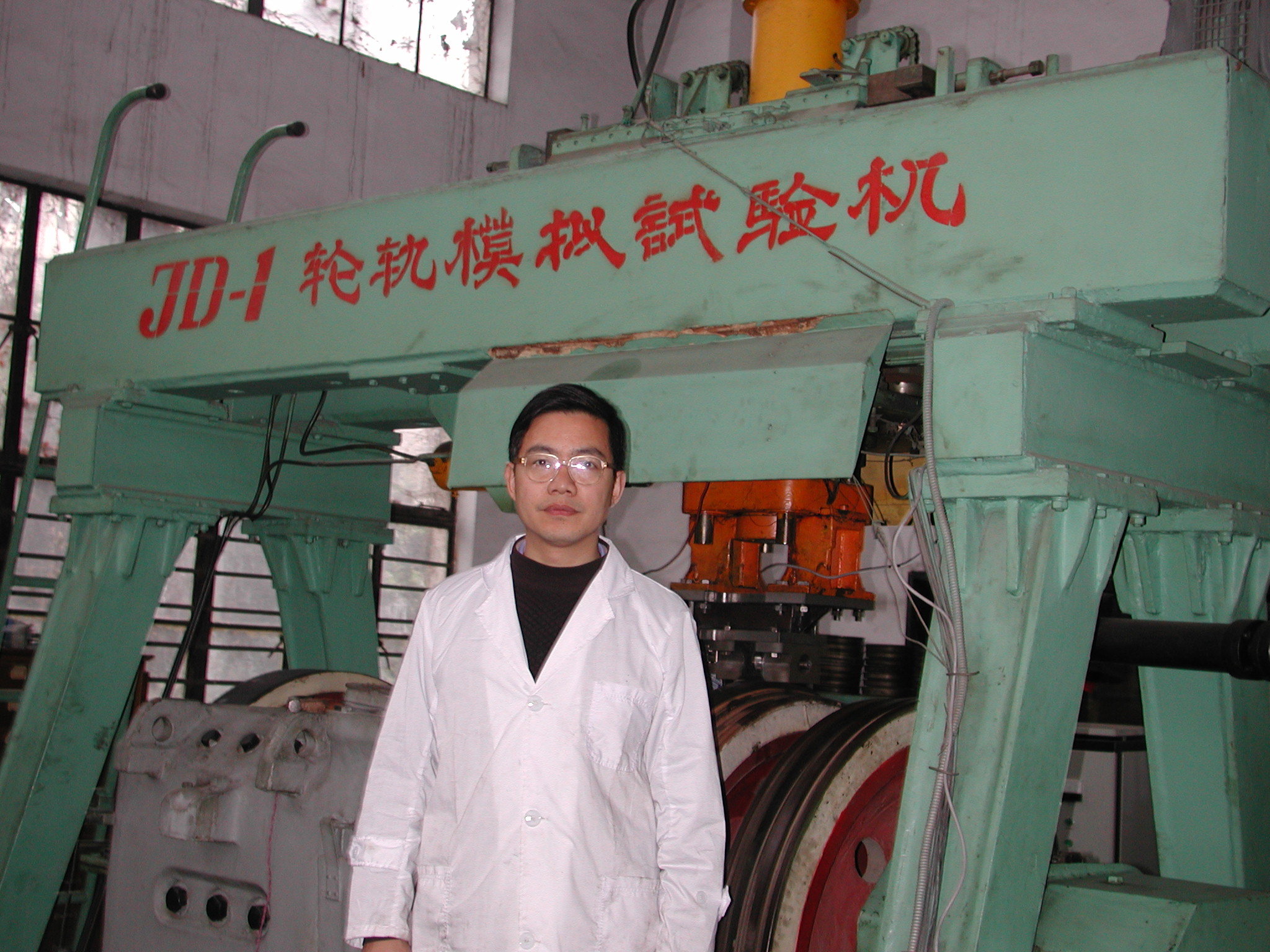 Qiyue Liu (刘启跃)合作论文数Tribology Research Institute, School of Mechanical Engineering, Southwest Jiaotong University12
 Qianhua Kan (阚前华)合作论文数School of Mechanics and Aerospace Engineering, Southwest Jiaotong University12
 Chenxi Xie合作论文数11
 Minhao Zhu (朱旻昊)合作论文数School of Materials Science and Engineering, Southwest Jiaotong University11WenJiao Lu (陆文教)合作论文数10
 Jun Guo (郭俊)合作论文数State Key Laboratory of Traction Power,Southwest Jiaotong University10
 Jizhong Yang (杨吉忠)合作论文数9
 Liang Ling (凌亮)合作论文数State Key Laboratory of Rail Transit Vehicle System, Southwest Jiaotong University9
 Guotang Zhao (赵国堂)合作论文数China State Railway Group Co.,Ltd.;Beijing-Shanghai High Speed Railway Co.,Ltd.;School of Civil Engineering, Southwest Jiaotong University9
 Zhongrong Zhou (周仲荣)合作论文数School of Mechanical Engineering, Southwest Jiaotong University9
 Boyang An (安博洋)合作论文数8
 Wubin Cai合作论文数Ctr Syst Reliabil & Safety, Univ Elect Sci & Technol China8
 Guozheng Kang (康国政)合作论文数School of Mechanics and Aerospace Engineering, Southwest Jiaotong University8Bingguang Wen合作论文数7
 Xiaolong Liu (刘晓龙)合作论文数7Yue Wu合作论文数7Tao Wu合作论文数7
 Xu Zhang (张旭)合作论文数School of Mechanics and Aerospace Engineering, Southwest Jiaotong University7
 Hongqin Liang (梁红琴)合作论文数School of Mechanical Engineering, Southwest Jiaotong University7Zhenxian Zhang合作论文数6
 Hongchen Miao (苗鸿臣)合作论文数School of Mechanics and Aerospace Engineering, Southwest Jiaotong University6
 Qingzhi Yan (燕青芝)合作论文数School of Materials Science and Engineering, University of Science and Technology Beijing6Xinbiao Mao合作论文数5




