Relational aggression refers to a type of adolescent aggressive behavior that seriously endangers adolescents'mental health and development. The aim of this study was to reveal the role of perceived social support in the relationship between psychological suzhi and adolescents'relational aggressive behavior. A total of 502 adolescents from Southwestern China participated in the questionnaire survey, including 252 boys, 230 girls, and 20 adolescents who did not disclose their gender. Their mean age was 13.20 years. The results showed that there were significant correlations between psychological suzhi, perceived social support, and relational aggression among adolescents. Psychological suzhi had both direct and indirect effects on adolescents'relational aggression, and perceived social support was an important mediator between psychological suzhi and adolescent aggressive behavior. Psychological suzhi could enable adolescents to perceive more social support and thus reduce the risk of them attacking others'interpersonal relationships.
Introduction:This study examines the complex interplay between childhood maltreatment and suicidal ideation among Chinese female college students within China's collectivistic context, examining affective balance as a mediator and expressive suppression as a culturally contingent moderator. Methods:A cross-sectional design was employed with 2,280 female undergraduates from 11 universities across eight Chinese provinces. Participants completed validated measures, including the Childhood Trauma Questionnaire, Beck Scale for Suicide Ideation, Bradburn Affect Balance Scale, and Emotion Regulation Questionnaire. The data were analyzed by conducting moderated mediation analysis with bootstrapping procedures to test the hypothesized pathways. Results:Affective balance significantly mediated the relationship between childhood maltreatment and suicidal ideation (indirect effect = 0.12, 95% CI [0.08, 0.16]). Expressive suppression moderated this mediation pathway, with higher levels of suppression attenuating the adverse effects of childhood maltreatment on affective balance (interaction effect = -0.09, p < 0.01). The protective buffering effect was particularly pronounced at moderate to low levels of childhood trauma. Discussion:Consistent with prior cross-cultural psychology research, the present findings substantiate the adaptive role of expressive suppression in China's collectivistic cultural context. Rather than challenging Western emotion regulation models, this study extends the existing evidence by demonstrating context-specific patterns of emotion regulation among Chinese participants. These results underscore the importance of incorporating cultural variability into models of emotion regulation and suggest that culturally informed approaches are essential for understanding emotional adjustment and mental health across societies.
Psychological maltreatment has been shown to be positively associated with loneliness, and both are linked to children's mental health. However, the mechanisms underlying the association between psychological maltreatment and children's loneliness remain insufficiently understood. Perceived social support is linked to psychological maltreatment and may serve as a protective factor against loneliness, and psychological suzhi has been described as an essential and stable psychological quality that may moderate the effects of external factors on an individual's mental health. Thus, this study proposes and explores a moderated mediation model of psychological suzhi and perceived social support. The data were collected from a sample of 1122 students (550 boys, 572 girls) aged 9-13 years in China, and statistical analysis was done with SPSS 26.0. Results indicated that perceived social support partially mediated the association between psychological maltreatment and loneliness, while psychological suzhi weakened the indirect relationship between psychological maltreatment and loneliness via perceived social support. Research has indicated that psychological maltreatment may undermine perceived social support, which in turn relates to high levels of loneliness. Psychological suzhi may influence the detrimental effect of psychological maltreatment on perceived social support, and the protective effect of perceived social support on loneliness. These findings provide insights into potential directions for interventions and preventative actions aimed at Chinese children who have experienced psychological maltreatment.
Psychological suzhi is a culturally rooted construct that emerged from China’s quality-oriented educational reform, aiming to promote positive adolescent development. It integrates cognitive, individuality, and adaptability qualities, forming a dynamic internal system that supports resilience and mental health in Chinese contexts. Despite its theoretical prominence in Chinese educational discourse, research on its developmental trajectory and long-term implications for adolescent adjustment remains limited. This three-year longitudinal study (six waves) followed 1812 middle school students (Mage = 12.56 years, SD = 0.73, 51.4
Emotional regulation, a key mechanism for promoting emotional health, has been found to play an important mediating role between psychological suzhi and emotional health, and there is a close relationship between psychological suzhi and emotion regulation effects. However, most studies on the relationship between psychological suzhi and emotion regulation effects have focused only on subjective experiences and changes in peripheral nervous system indicators, failing to examine central neurophysiological indicators of emotion regulation effects. The close relationship between psychological suzhi and emotion regulation has not yet been sufficiently revealed, and this has, to some extent, limited the in-depth exploration of the mechanisms of psychological suzhi. Therefore, to examine the relationship between psychological suzhi and changes in the nervous system surrounding emotion regulation, we aimed to deepen the research on the relationship between psychological suzhi and emotion regulation and thus to further reveal the mechanism of the role of psychological suzhi. This study used event-related potential (ERP) technology with a high temporal resolution to examine the electrophysiological differences in the use of two emotion regulation strategies, cognitive reappraisal and expressive inhibition, for negative emotion regulation among college students. The results showed that the late positive potential (LPP) amplitude of the high psychological suzhi group was significantly decreased beginning in the early time window (500–1000 ms), while the LPP amplitude of the low psychological suzhi group was significantly decreased beginning in the middle time window (1000–1500 ms). In the early, middle and late time windows, the negative emotion regulation effect of cognitive reappraisal in the group with high psychological suzhi was significantly better than that of the group with low psychological suzhi. The regulatory effect of cognitive reappraisal of negative emotion was significantly greater in college students with high psychological suzhi than in college students with low psychological suzhi.This study has enlightening significance for further research on the mechanism of psychological suzhi.
Childhood abuse is a significant risk factor for suicidal ideation. However, the underlying mediation mechanism necessitates further exploration. This study investigated the mediating role of core self-evaluation and negative emotions in the relationship between childhood abuse and suicide ideation in young adults. A sample of 3103 college students from 11 universities across 8 provinces in China was analyzed. Childhood abuse, core self-evaluation, negative emotions, and suicidal ideation were assessed using the Childhood Trauma Questionnaire (CTQ-CF), Core Self-Evaluation Scale, Affect Scale, and Beck Suicidal Ideation Scale (BSI-CV), respectively. Data analysis was conducted using SPSS 19.0 and SPSS Macro Process. We found that high scores for childhood abuse were associated with elevated levels of suicidal ideation, whereas low scores for core self-evaluation were closely linked to heightened levels of negative emotions and suicidal ideation. Furthermore, core self-evaluation and negative emotions mediated the relationship between childhood abuse and suicidal ideation through three significant paths. The results demonstrate that childhood abuse can directly impact suicidal ideation in young adulthood and indirectly influence suicidal ideation by affecting core self-evaluation and negative emotions. They suggest that addressing core self-evaluation and negative emotions in individuals who have experienced childhood abuse may help prevent or treat suicidal ideation.
It is easy for students who are new to a school to have maladaptive problems and induced anxiety due to the change of environment.This is especially true for high school freshmen, because they not only have to adapt to a new school environment but also have to experience dramatic biological and psychological changes in the developmental phase of puberty. That is to say, they have to bear the dual pressure of change in their external environment and turbulence in their internal world at the same time. Moreover, teenagers are in a period of high anxiety, which is not conducive to their physical and mental health development. Previous studies on anxiety in high school freshmen were all cross-sectional investigations and did not investigate the trajectory and characteristics of anxiety. Therefore, this study used a short-term longitudinal research design across four waves to explore the trajectory of anxiety in high school freshmen as well as the mechanism of psychological suzhi.In this study, 326 registered freshmen from a high school in Chengdu were selected as the research participants using cluster sampling. The first baseline test was completed in the first week after entering school as freshmen. The questionnaires were the Psychological Suzhi Questionnaire for Adolescents and the Self-Rating Anxiety Scale. A total of 306 valid questionnaires were collected(the effective response rate was 93.9%), and included 165 male students(53.9%) and 141 female students(46.1%), with an average age of 15.5 years(SD=.47). The second test was conducted four weeks later, and the third test four weeks after the second. The fourth test was postponed to eight weeks after the third test due to a conflict in the course arrangement schedule. The second, third, and fourth tests were conducted with the Self-Rating Anxiety Scale. The sample sizes were 22, 75, and 67,respectively, due to attrition for various reasons, such as absence or change of school.The latent growth model was used to explore the trajectories and influencing factors of anxiety in high school freshmen during the transition period. The results showed that:(1) Anxiety in high school freshmen increased linearly in the first semester;(2) There were no significant gender differences in the initial levels of anxiety, however, male students’ anxiety increased significantly faster than female students’ anxiety in the following four months; and(3) The psychological suzhi of freshmen had a significant predictive effect on the intercept and slope of anxiety, that is to say,freshmen with higher levels of psychological suzhi had relatively low initial levels of anxiety after entrance, and their anxiety had a slower growth rate during the following three months. The above results demonstrated that anxiety in high school freshmen increased linearly, and psychological suzhi had predictive effects on freshmen’s anxiety in this process.Analyzing the test results, this study examined the trajectory and characteristics of anxiety in high school freshmen, and the role of gender and psychological suzhi in its trajectory. The results confirmed that psychological suzhi can effectively prevent and reduce the deterioration of their emotional state. The study deepens the understanding of the mechanism of psychological suzhi in adolescents’ mental health education and provides a targeted empirical basis for the prevention and education of anxiety in the adaptation period for high school freshmen.
Prosocial behavior contributes to the well-being of individuals as well as the harmonious development of society. This research aimed to reveal the mechanisms underlying the relationship between the psychological suzhi and prosocial behavior of Chinese adolescents with the consideration of time. A total of 477 adolescents (228 boys, 49.1%; Mage = 14.04 and SD = 1.77) from southwest China completed three questionnaires during waves 1 and 2. Results showed that psychological suzhi and forgiveness were positively correlated with prosocial behavior in both waves 1 and 2; psychological suzhi significantly predicted both current and three months later prosocial behavior and forgiveness played a mediating role in both immediate and lasting effects of psychological suzhi on prosocial behavior. Psychological suzhi and forgiveness are vital predictors of adolescents' prosocial behaviors in China. Interventions based on psychological suzhi and forgiveness are essential to promote the development of pro-social behaviors.
Recent studies that used adult faces as the baseline have revealed that attentional bias toward infant faces is the strongest for neutral expressions than for happy and sad expressions. However, the time course of the strongest attentional bias toward infant neutral expressions is unclear. To clarify this time course, we combined a behavioral dot-probe task with electrophysiological event-related potentials (ERPs) to measure adults' responses to infant and adult faces with happy, neutral, and sad expressions derived from the same face. The results indicated that compared with the corresponding expressions in adult faces, attentional bias toward infant faces with various expressions resulted in different patterns during rapid and prolonged attention stages. In particular, first, neutral expressions in infant faces elicited greater behavioral attentional bias and P1 responses than happy and sad ones did. Second, sad expressions in infant faces elicited greater N170 responses than neutral and happy ones did; notably, sad expressions elicited greater N170 responses in the left hemisphere in women than in men. Third, late positive potential (LPP) responses were greater for infant faces than for adult faces under each expression condition. Thus, we propose a three-stage model of attentional allocation patterns that reveals the time course of attentional bias toward infant faces with various expressions. This model highlights the prominent role of neutral facial expressions in the attentional bias toward infant faces.
为探讨城镇化进程中离乡农民的心理健康特点以及心理素质、相对剥夺感对其的影响,通过量表对1339名城乡居民进行调查.结果发现:离乡与留乡农民在幸福感、拥有生命意义感、感知控制感、心理素质方面显著低于城镇居民,在状态焦虑方面显著高于城镇居民;离乡农民在抑郁上显著高于城镇居民,在感知控制感上显著高于留乡农民,在心理素质上显著低于留乡农民;留乡农民在相对剥夺感上显著高于城镇居民;离乡农民的幸福感、拥有生命意义感、感知控制感态与相对剥夺感呈显著负相关,与心理素质呈显著正相关;离乡农民的抑郁、状态焦虑与相对剥夺感呈显著正相关,与心理素质呈显著负相关;离乡农民的相对剥夺感与心理素质之间呈显著负相关.心理素质除了可以直接预测心理健康各项指标,还可以通过相对剥夺感的中介作用,间接预测幸福感、抑郁及状态焦虑.提升心理素质和降低相对剥夺感是离乡农民心理健康服务的重要切入点.
Objective: The present study aimed to investigate the developmental trajectory of adolescents' aggression and the role of the Five-Factor Model (FFM) traits during the transition to college. Method: A sample of 973 Chinese college freshmen (73.9% females) was recruited to complete the Neuroticism-Extraversion-Openness (NEO) Five-Factor Inventory and Aggression Questionnaire with a short-term longitudinal research design across four waves with an interval of 1 month between waves. We calculated bivariate relations between FFM traits and Physical and Verbal Aggression at each time point, and latent growth models were computed to examine the trajectory of aggression over the first 4 months of college. Results: Results indicated that (a) Agreeableness displayed large and negative bivariate relations to Physical and Verbal Aggression (r = -.32 to -.48 and r = -.38 to -.47, respectively); (b) Physical Aggression showed an increased linear trajectory across the four waves, while Verbal Aggression showed a decreased linear trajectory (S = .02 and S = -.02, respectively); (c) high Neuroticism was associated with a larger increase in Physical Aggression and a smaller decrease in Verbal Aggression over time (beta = .21 and beta = .16, respectively); and (d) males obtained larger relations between Neuroticism and trajectories of Verbal Aggression than females (beta = .44 and beta = .10, respectively). Conclusions: Our findings highlight the role of multiple personality traits in predicting aggressive behavior during a key transitional period.
Psychological suzhi has increasingly been recognized to buffer chronic stress and improve mental health. However, few studies have examined the role of psychological suzhi in the response to acute stress. The current study aimed to investigate whether psychological suzhi can buffer state anxiety and heart rate responses to acute stress in adolescents. Healthy male adolescents (N = 63) were classified into high (N = 30) or low (N = 33) psychological suzhi groups based on the Chinese norm of adolescent psychological suzhi scale-simplified version. They completed both the modified Trier Social Stress Test for Groups and a specific control condition, with heart rate and state anxiety assessed. Data were analysed with mixed-design repeated measures analysis of variance. The results showed that the modified Trier Social Stress Test for Groups condition effectively induced an increase in state anxiety and heart rate. Furthermore, individuals with higher levels of psychological suzhi showed lower state anxiety and heart rate stress responses. The present study indicated that psychological suzhi is an important internal resource against acute stress, which may inform interventions for male adolescents exposed to acute stress.
Objective: The present study investigated the relationship between stressful life events and sleep quality. Further, it explored the mediating and moderating role of psychological suzhi in the relationship between stressful life events and sleep quality. Method: The Adolescent Self-rating Life Events Checklist (ASLEC), Pittsburgh Sleep Quality Index (PSQI), and Concise Scale of Psychological Suzhi for College Students (Health Edition) were used to collect data from a sample of 1212 college students. SPSS 20.0 and SPSS macro Process, specially developed for assessing complex models including mediators and moderators, analyzed the data. Results: High scores for stressful life events were related to worse sleep quality, and high scores on psychological suzhi were closely related with better sleep quality. Psychological suzhi mediated and moderated the relationship between stressful life events and sleep quality. Conclusions: The results demonstrate that stressful life events can directly affect the sleep quality of college students and can indirectly affect sleep quality through affecting psychological suzhi. Additionally, psychological suzhi can buffer the adverse effects of stressful life events on sleep quality. This finding supports the hypothesis that psychological suzhi can act as a pressure buffer. The results enrich the research on the function mechanism of psychological suzhi and could inform future interventions for sleep disorders. (c) 2022 Elsevier B.V. All rights reserved.
 Guangzeng Liu合作论文数Faculty of Psychology, Southwest University46潘彦谷合作论文数Research Institute of Social Development, Southwestern University of Finance and Economics41XinQiang Wang (王鑫强)合作论文数27ZhengZhi Feng (冯正直)合作论文数25
 Tianqiang Hu合作论文数24ZhiQiang Su (苏志强)合作论文数23
 Cheng Guo (郭成)合作论文数Faculty of Psychology, Southwest University21
 Yanling Liu (刘衍玲)合作论文数Faculty of Psychology, Southwest University21
 Jinliang Wang (王金良)合作论文数Center for Mental Health Education, Faculty of Psychology, Southwest University21
 Gang Cheng (程刚)合作论文数School of Mechanical and Electrical Engineering, China University of Mining and Technology18
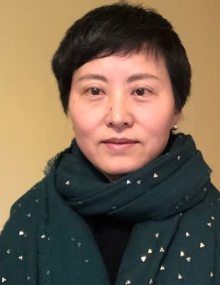 Mingxia Wu (吴明霞)合作论文数Faculty of Psychology, Southwest University18
 Qian Zhang (张骞)合作论文数The Faculty of Education, Southwest University16ShiLan Luo (罗世兰)合作论文数15
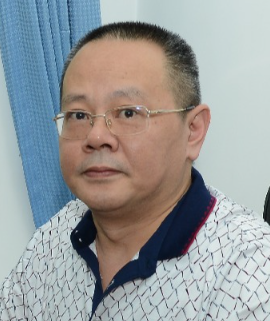 Xu Chen (陈旭)合作论文数Southwest University Faculty of Psychology15Wanfen Chen合作论文数Sch Psychol & Cognit Sci, East China Normal Univ14
 Qian Nie (聂倩)合作论文数School of Journalism and Communication, Southwest University13
 Fangyuan Ding合作论文数13Gang Wang (王钢)合作论文数12
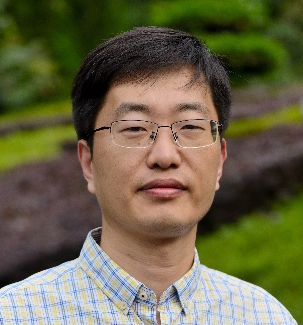 Jingjin Shao (邵景进)合作论文数Faculty of Psychology, Southwest University12
 Zhi Wang (王智)合作论文数Faculty of Psychology, Southwest University11
 Zhaojun Teng (滕召军)合作论文数Faculty of Psychology, Southwest University10
 Yun Cheng Jia (贾云丞)合作论文数10ZhengGuang Zhu (朱政光)合作论文数10Ling Gong (龚玲)合作论文数10
 Qi Jiang (江琦)合作论文数Southwest University Faculty of Psychology10XiaoDong Qi (齐晓栋)合作论文数9Lan Tian (田澜)合作论文数8GuiQin Liu (刘桂芹)合作论文数8
 Yunyan Liu (刘云艳)合作论文数Faculty of Education, Southwest University8
 Bingbing Li合作论文数8Zhaoxia Pan合作论文数7Xing-yue LU (陆星月)合作论文数7ZeSong Dong (董泽松)合作论文数7Deying Gong (龚德英)合作论文数7Xue-qi ZHANG (张雪琪)合作论文数6YuSheng Guan (关雨生)合作论文数6ZhengYu Ma (马郑豫)合作论文数6
 Chunyan Yang合作论文数Graduate School of Education, University of California, Berkeley6ChuanXing Liu (刘传星)合作论文数6XingKui Zhao (赵兴奎)合作论文数6
 Xingchun Xu (胥兴春)合作论文数Southwest University6
 Guangming Ran (冉光明)合作论文数6
 Lili Wu合作论文数5Lin JIN (金琳)合作论文数5Zhan-feng ZHAO (赵占锋)合作论文数5DongQuan Kou (寇冬泉)合作论文数5Nan Lin (林楠)合作论文数5




