Cascaded pipelines, which use a base text-to-video (T2V) model for low-resolution content and a video super-resolution (VSR) model for high-resolution details, are a prevailing strategy for efficient video synthesis. However, current works suffer from two key limitations: an inefficient pixel-space interface that introduces non-trivial computational overhead, and mismatched degradation strategies that compromise the visual quality of AIGC content. To address these issues, we introduce SimpleGVR, a lightweight VSR model designed to operate entirely within the latent space. Key to SimpleGVR are a latent upsampler for effective, detail-preserving conditioning of the high-resolution synthesis, and two degradation strategies (flow-based and model-guided) to ensure better alignment with the upstream T2V model. To further enhance the performance and practical applicability of SimpleGVR, we introduce a set of crucial training optimizations: a detail-aware timestep sampler, a suitable noise augmentation range, and an efficient interleaving temporal unit mechanism for long-video handling. Extensive experiments demonstrate the superiority of our framework over existing methods, with ablation studies confirming the efficacy of each design. Our work establishes a simple yet effective baseline for cascaded video super-resolution generation, offering practical insights to guide future advancements in efficient cascaded systems. Video visual comparisons are available \href{https://simplegvr.github.io/}{here}.
This position paper argues that the evaluation of modern visual processing systems should no longer be driven primarily by single-metric image quality assessment benchmarks, particularly in the era of generative and perception-oriented methods. Image restoration exemplifies this divergence: while objective IQA metrics enable reproducible, scalable evaluation, they have increasingly drifted apart from human perception and user preferences. We contend that this mismatch risks constraining innovation and misguiding research progress across visual processing tasks. Rather than rejecting metrics altogether, this paper calls for a rebalancing of evaluation paradigms, advocating a more human-centered, context-aware, and fine-grained approach to assessing the visual models' outcomes.
Generalization to unseen degradations remains a fundamental challenge for low-level vision models. This paper aims to investigate the underlying mechanism of this failure, using image deraining as a primary case study due to its well-defined and decoupled structure. Through systematic experiments, we reveal that generalization issues are not primarily caused by limited network capacity, but rather by a “shortcut learning” phenomenon driven by the relative complexity between image content and degradation patterns. We find that when background content is excessively complex, networks preferentially overfit the simpler degradation characteristics to minimize training loss, thereby failing to learn the underlying image distribution. To address this, we propose two principled strategies: (1) balancing the complexity of training data (backgrounds vs. degradations) to redirect the network's focus toward content reconstruction, and (2) leveraging strong content priors from pre-trained generative models to physically constrain the network onto a high-quality image manifold. Extensive experiments on image deraining, denoising, and deblurring validate our theoretical insights. Our work provides an interpretability-driven perspective and a principled methodology for improving the robustness and generalization of low-level vision models.
Generative Image Restoration (GIR) has achieved impressive perceptual realism, but how far have its practical capabilities truly advanced compared with previous methods? To answer this, we present a large-scale study grounded in a new multi-dimensional evaluation pipeline that assesses models on detail, sharpness, semantic correctness, and overall quality. Our analysis covers diverse architectures, including diffusion-based, GAN-based, PSNR-oriented, and general-purpose generation models, revealing critical performance disparities. Furthermore, our analysis uncovers a key evolution in failure modes that signifies a paradigm shift for the perception-oriented low-level vision field. The central challenge is evolving from the previous problem of detail scarcity (under-generation) to the new frontier of detail quality and semantic control (preventing over-generation). We also leverage our benchmark to train a new IQA model that better aligns with human perceptual judgments. Ultimately, this work provides a systematic study of modern generative image restoration models, offering crucial insights that redefine our understanding of their true state and chart a course for future development.
Composition matters during the photo-taking process, yet many casual users struggle to frame well-composed images. To provide composition guidance, we introduce PhotoFramer, a multi-modal composition instruction framework. Given a poorly composed image, PhotoFramer first describes how to improve the composition in natural language and then generates a well-composed example image. To train such a model, we curate a large-scale dataset. Inspired by how humans take photos, we organize composition guidance into a hierarchy of sub-tasks: shift, zoom-in, and view-change tasks. Shift and zoom-in data are sampled from existing cropping datasets, while view-change data are obtained via a two-stage pipeline. First, we sample pairs with varying viewpoints from multi-view datasets, and train a degradation model to transform well-composed photos into poorly composed ones. Second, we apply this degradation model to expert-taken photos to synthesize poor images to form training pairs. Using this dataset, we finetune a model that jointly processes and generates both text and images, enabling actionable textual guidance with illustrative examples. Extensive experiments demonstrate that textual instructions effectively steer image composition, and coupling them with exemplars yields consistent improvements over exemplar-only baselines. PhotoFramer offers a practical step toward composition assistants that make expert photographic priors accessible to everyday users.
Transformer-based methods have shown impressive performance in image restoration tasks, such as image super-resolution and denoising. However, we find that these networks can only utilize a limited spatial range of input information through attribution analysis. This implies that the potential of Transformer is still not fully exploited in existing networks. In order to activate more input pixels for better restoration, we propose a new Hybrid Attention Transformer (HAT). It combines both channel attention and window-based self-attention schemes, thus making use of their complementary advantages. Moreover, to better aggregate the cross-window information, we introduce an overlapping cross-attention module to enhance the interaction between neighboring window features. In the training stage, we additionally adopt a same-task pre-training strategy to further exploit the potential of the model for further improvement. Extensive experiments have demonstrated the effectiveness of the proposed modules. We further scale up the model to show that the performance of the SR task can be greatly improved. Besides, we extend HAT to more image restoration applications, including real-world image super-resolution, Gaussian image denoising and image compression artifacts reduction. Experiments on benchmark and real-world datasets demonstrate that our HAT achieves state-of-the-art performance both quantitatively and qualitatively. Codes and models are publicly available at https://github.com/XPixelGroup/HAT.
Recent advances in generative AI raise the question of whether general-purpose image editing models can serve as unified solutions for image restoration. In this work, we conduct a systematic evaluation of Nano Banana 2 for image restoration across diverse scenes and degradation types. Our results show that prompt design plays a critical role, where concise prompts with explicit fidelity constraints achieve the best trade-off between reconstruction accuracy and perceptual quality. Compared with state-of-the-art restoration models, Nano Banana 2 achieves superior performance in full-reference metrics while remaining competitive in perceptual quality, which is further supported by user studies. We also observe strong generalization in challenging scenarios, such as small faces, dense crowds, and severe degradations. However, the model remains sensitive to prompt formulation and may require iterative refinement for optimal results. Overall, our findings suggest that general-purpose generative models hold strong potential as unified image restoration solvers, while highlighting the importance of controllability and robustness. All test results are available on https://github.com/yxyuanxiao/NanoBanana2TestOnIR.
Real-world super-resolution (SR) is challenging due to complex degradations. HYPIR, a recent state-of-the-art diffusion-based restoration model, struggles to deal with this task in a single step. Although a naive two-step cascade improves the results, over-saturation, limited fine-grained details, and high inference latency remain. To address these limitations, we present HYPIR++. It removes the degradation removal encoder and noise augmentation to better preserve fidelity cues from low-quality inputs. To enhance fine-grained detail restoration and local structure fidelity, HYPIR++ introduces a tailored latent ConvNeXt and a latent patch discriminator, enabling adversarial learning directly in the latent space. In addition, HYPIR++ improves inference efficiency by reducing the text sequence length and replacing full attention with sparse neighbor attention, allowing direct processing of high-resolution images without block-based tiling. Extensive experiments demonstrate that HYPIR++ achieves superior perceptual quality and a 1.71× speedup over HYPIR, establishing a new state-of-the-art for real-world SR.
We present Lunima-OmniLV (abbreviated as OmniLV), a universal multimodal multi-task framework for low-level vision that addresses over 100 sub-tasks across four major categories: image restoration, image enhancement, weak-semantic dense prediction, and stylization. OmniLV leverages both textual and visual prompts to offer flexible and user-friendly interactions. Built on Diffusion Transformer (DiT)-based generative priors, our framework supports arbitrary resolutions – achieving optimal performance at 1K resolution – while preserving fine-grained details and high fidelity. Through extensive experiments, we demonstrate that separately encoding text and visual instructions, combined with co-training using shallow feature control, is essential to mitigate task ambiguity and enhance multi-task generalization. Our findings also reveal that integrating high-level generative tasks into low-level vision models can compromise detail-sensitive restoration. These insights pave the way for more robust and generalizable low-level vision systems.
This paper presents the NTIRE 2026 image super-resolution (×4) challenge, one of the associated competitions of the NTIRE 2026 Workshop at CVPR 2026. The challenge aims to reconstruct high-resolution (HR) images from low-resolution (LR) inputs generated through bicubic downsampling with a ×4 scaling factor. The objective is to develop effective super-resolution solutions and analyze recent advances in the field. To reflect the evolving objectives of image super-resolution, the challenge includes two tracks: (1) a restoration track, which emphasizes pixel-wise fidelity and ranks submissions based on PSNR; and (2) a perceptual track, which focuses on visual realism and evaluates results using a perceptual score. A total of 194 participants registered for the challenge, with 31 teams submitting valid entries. This report summarizes the challenge design, datasets, evaluation protocol, main results, and methods of participating teams. The challenge provides a unified benchmark and offers insights into current progress and future directions in image super-resolution.
We introduce UniCon, a novel architecture designed to enhance control and efficiency in training adapters for large-scale diffusion models. Unlike existing methods that rely on bidirectional interaction between the diffusion model and control adapter, UniCon implements a unidirectional flow from the diffusion network to the adapter, allowing the adapter alone to generate the final output. UniCon reduces computational demands by eliminating the need for the diffusion model to compute and store gradients during adapter training. Our results indicate that UniCon reduces GPU memory usage by one-third and increases training speed by 2.3 times, while maintaining the same adapter parameter size. Additionally, without requiring extra computational resources, UniCon enables the training of adapters with double the parameter volume of existing ControlNets. In a series of image conditional generation tasks, UniCon has demonstrated precise responsiveness to control inputs and exceptional generation capabilities.
Recent advances in interactive technologies have highlighted the prominence of audio signals for semantic encoding. This paper explores a new task, where audio signals are used as conditioning inputs to generate motions that align with the semantics of the audio. Unlike text-based interactions, audio provides a more natural and intuitive communication method. However, existing methods typically focus on matching motions with music or speech rhythms, which often results in a weak connection between the semantics of the audio and generated motions. We propose an end-to-end framework using a masked generative transformer, enhanced by a memory-retrieval attention module to handle sparse and lengthy audio inputs. Additionally, we enrich existing datasets by converting descriptions into conversational style and generating corresponding audio with varied speaker identities. Experiments demonstrate the effectiveness and efficiency of the proposed framework, demonstrating that audio instructions can convey semantics similar to text while providing more practical and user-friendly interactions.
Deep image restoration models aim to learn a mapping from degraded image space to natural image space. However, they face several critical challenges: removing degradation, generating realistic details, and ensuring pixel-level consistency. Over time, three major classes of methods have emerged, including MSE-based, GAN-based, and diffusion-based methods. However, they fail to achieve a good balance between restoration quality, fidelity, and speed. We propose a novel method, HYPIR, to address these challenges. Our solution pipeline is straightforward: it involves initializing the image restoration model with a pre-trained diffusion model and then fine-tuning it with adversarial training. This approach does not rely on diffusion loss, iterative sampling, or additional adapters. We theoretically demonstrate that initializing adversarial training from a pre-trained diffusion model positions the initial restoration model very close to the natural image distribution. Consequently, this initialization improves numerical stability, avoids mode collapse, and substantially accelerates the convergence of adversarial training. Moreover, HYPIR inherits the capabilities of diffusion models with rich user control, enabling text-guided restoration and adjustable texture richness. Requiring only a single forward pass, it achieves faster convergence and inference speed than diffusion-based methods. Extensive experiments show that HYPIR outperforms previous state-of-the-art methods, achieving efficient and high-quality image restoration.
Many current image restoration approaches utilize neural networks to acquire robust image-level priors from extensive datasets, aiming to reconstruct missing details. Nevertheless, these methods often falter with images that exhibit significant information gaps. While incorporating external priors or leveraging reference images can provide supplemental information, these strategies are limited in their practical scope. Alternatively, textual inputs offer greater accessibility and adaptability. In this study, we develop a sophisticated framework enabling users to guide the restoration of deteriorated images via textual descriptions. Utilizing the text-image compatibility feature of CLIP enhances the integration of textual and visual data. Our versatile framework supports multiple restoration activities such as image inpainting, super-resolution, and colorization. Comprehensive testing validates our technique's efficacy.
Research of Nb3Sn superconducting radio-frequency (SRF) cavities was carried out at the Institute of High Energy Physics Chinese Academy of Sciences (IHEP), in order to improve the intrinsic quality factor (Q0) and accelerating gradient (Eacc). Various recipes of coating were attempted at SRF cavities and samples made of Nb, which resulted in different Sn content. It was found that the Sn content, namely the ratio of Nb/Sn, had great influences on the performance of Nb3Sn SRF cavities. When the ratio of Nb/Sn was slightly higher than 3, the Nb3Sn SRF cavities showed the best performance during the vertical test. Q0 of 1.3 GHz 1-cell Nb3Sn SRF cavity (the ratio of Nb/Sn ti 3.16) reached 3.0 x 10¹⁰ (@ 4.2 K) and 1.0 x 10¹¹ (@ 2.0 K) at low RF field. This study could provide insights on the effects of Sn content on the performance of Nb3Sn SRF cavities, which be referenced by the SRF community.
Real-world image restoration (IR) is inherently complex and often requires combining multiple specialized models to address diverse degradations. Inspired by human problem-solving, we propose AgenticIR, an agentic system that mimics the human approach to image processing by following five key stages: Perception, Scheduling, Execution, Reflection, and Rescheduling. AgenticIR leverages large language models (LLMs) and vision-language models (VLMs) that interact via text generation to dynamically operate a toolbox of IR models. We fine-tune VLMs for image quality analysis and employ LLMs for reasoning, guiding the system step by step. To compensate for LLMs' lack of specific IR knowledge and experience, we introduce a self-exploration method, allowing the LLM to observe and summarize restoration results into referenceable documents. Experiments demonstrate AgenticIR's potential in handling complex IR tasks, representing a promising path toward achieving general intelligence in visual processing.
With the rapid advancement of Vision Language Models (VLMs), VLM-based Image Quality Assessment (IQA) seeks to describe image quality linguistically to align with human expression and capture the multifaceted nature of IQA tasks. However, current methods are still far from practical usage. First, prior works focus narrowly on specific sub-tasks or settings, which do not align with diverse real-world applications. Second, their performance is sub-optimal due to limitations in dataset coverage, scale, and quality. To overcome these challenges, we introduce the Enhanced Depicted image Quality Assessment model (EDQA). Our method includes a multi-functional IQA task paradigm that encompasses both assessment and comparison tasks, brief and detailed responses, full-reference and non-reference scenarios. We introduce a ground-truth-informed dataset construction approach to enhance data quality, and scale up the dataset to 495K under the brief-detail joint framework. Consequently, we construct a comprehensive, large-scale, and high-quality dataset, named EDQA-495K. We also retain image resolution during training to better handle resolution-related quality issues, and estimate a confidence score that is helpful to filter out low-quality responses. Experimental results demonstrate that EDQA significantly outperforms traditional score-based methods, prior VLM-based IQA models, and proprietary GPT-4V in distortion identification, instant rating, and reasoning tasks. Our advantages are further confirmed by real-world applications including assessing the web-downloaded images and ranking model-processed images. Codes, datasets, and model weights have been released in https://depictqa.github.io/.
With the rapid advancement of Multi-modal Large Language Models (MLLMs), MLLM-based Image Quality Assessment (IQA) methods have shown promising performance in linguistic quality description. However, current methods still fall short in accurately scoring image quality. In this work, we aim to leverage MLLMs to regress accurate quality scores. A key challenge is that the quality score is inherently continuous, typically modeled as a Gaussian distribution, whereas MLLMs generate discrete token outputs. This mismatch necessitates score discretization. Previous approaches discretize the mean score into a one-hot label, resulting in information loss and failing to capture inter-image relationships. We propose a distribution-based approach that discretizes the score distribution into a soft label. This method preserves the characteristics of the score distribution, achieving high accuracy and maintaining inter-image relationships. Moreover, to address dataset variation, where different IQA datasets exhibit various distributions, we introduce a fidelity loss based on Thurstone's model. This loss captures intra-dataset relationships, facilitating co-training across multiple IQA datasets. With these designs, we develop the distribution-based Depicted image Quality Assessment model for Score regression (DeQA-Score). Experiments across multiple benchmarks show that DeQA-Score stably outperforms baselines in score regression. Also, DeQA-Score can predict the score distribution that closely aligns with human annotations. Codes and model weights have been released in https://depictqa.github.io/deqa-score/.
Real-world blind image super-resolution is a challenging problem due to the absence of target high resolution images for training. Inspired by the recent success of the single image generation based method SinGAN, we tackle this challenging problem with a refined model SR-SinGAN, which can learn to perform single real image super-resolution. Firstly, we empirically find that downsampled LR input with an appropriate size can improve the robustness of the generation model. Secondly, we introduce a global contextual prior to provide semantic information. This helps to remove distorted pixels and improve the output fidelity. Finally, we design an image gradient based local contextual prior to guide detail generation. It can alleviate generated artifacts in smooth areas while preserving rich details in densely textured regions (e.g., hair, grass). To evaluate the effectiveness of these contextual priors, we conducted extensive experiments on both artificial and real images. Results show that these priors can stabilize training and preserve output fidelity, improving the generated image quality. We furthermore find that these single image generation based methods work better for images with repeated textures compared to general images.
The compact thin films of Cu2MnSnS4 nanoparticles are in situ prepared on ITO substrate by spin-coating precursor solution combined with a short thermal annealing (5 min) at low temperature (similar to 300 degrees C). The as-prepared Cu2MnSnS4 nanoparticle film exhibits a bandgap of 1.63 eV and an absorption coefficient of >10(4) cm(-1) within 300-900 nm. The ultrathin solar cell structured as ITO/Cu2MnSnS4/CdS/Al with 65 nm-thick Cu2MnSnS4 film is firstly fabricated and achieves a peak efficiency of 0.50 %. Moreover, this solution-processing method could be extended to prepare other Cu2MSnS4 (M = Co, Ni, Cd and Mg) nanoparticle films for photovoltaics.
 Yu Qiao (乔宇)合作论文数Multimedia Laboratory, Shenzhen Institutes of Advanced Technology, Chinese Academy of Sciences;Shanghai AI Laboratory;Shenzhen University of Advanced Technology54
 Jinjin Gu合作论文数INSAIT - Institute for Computer Science, Artificial Intelligence and Technology43
 Xintao Wang (王鑫涛)合作论文数KwaiVGI, Kuaishou Technology34
 Mingtai Wang合作论文数28
 Chen Change Loy (吕健勤)合作论文数College of Computing and Data Science, Nanyang Technological University26
 Yihao Liu合作论文数Shanghai Artificial Intelligence Laboratory25
 Junwei Chen合作论文数22
 Radu Timofte合作论文数Computer Vision Laboratory, Institute of Computer Science, Faculty of Mathematics and Computer Science, Julius Maximilians University of Würzburg;ETH Zurich18
 Liangbin Xie (謝良彬)合作论文数State Key Laboratory of Internet of Things for Smart City, University of Macau;Xpixel Group, University of Macau;Shenzhen Institutes of Advanced Technology, Chinese Academy of Sciences;Kuaishou17Fanghua Yu合作论文数Shenzhen Institute of Advanced Technology, Chinese Academy of Sciences13Zheyuan Li合作论文数13
 Wenlu Zhang (张文禄)合作论文数Institute of Physics, Chinese Academy of Sciences;University of Chinese Academy of Sciences13
 Ying Shan (单瀛)合作论文数Applied Research Center, Tencent PCG13
 Jiantao Zhou (周建濤)合作论文数Department of Computer and Information Science, Faculty of Science;and Technology, University of Macau13
 Sean Xiaoou Tang (汤晓鸥)合作论文数Department of Computer Science & Engineering, Faculty of Engineering, The Chinese University of Hong Kong;Shenzhen Institute of Advanced Technology, Chinese Academy of Sciences;SenseTime12Wangwei Chen合作论文数11
 Chong Chen (陈冲)合作论文数Henan Key Laboratory of Photovoltaic Materials, Henan University11
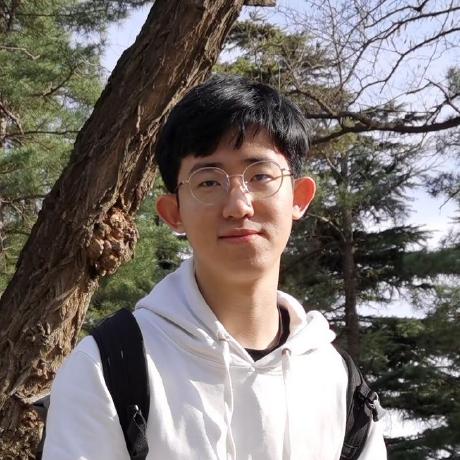 Xiangtao Kong (孔祥涛)合作论文数The Hong Kong Polytechnic University11
 Xiangyu Chen合作论文数University of Macau11
 Wenlong Zhang合作论文数Shanghai AI Lab10Zhiyang Wan合作论文数10
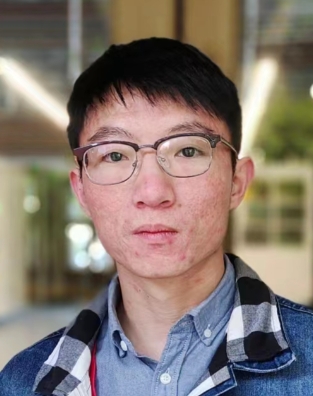 Zhiyuan You (尤志远)合作论文数Multimedia Laboratory, The Chinese University of Hong Kong10Juanjuan Qi合作论文数10
 Rong Liu (刘荣)合作论文数Henan Key Laboratory of Photovoltaic Materials, Henan University10
 Jimmy S. Ren (任思捷)合作论文数AI Sensing and Imaging Group, SenseTime Research10
 Zhihong Lin (林志宏)合作论文数Department of Physics and Astronomy, University of California10Liangxin Zhu合作论文数9
 Haoming Cai (蔡昊明)合作论文数Department of Computer Science, University of Maryland;Marc Levoy’s NextCam Team, Adobe9Jingwen He合作论文数ByteDance Inc9
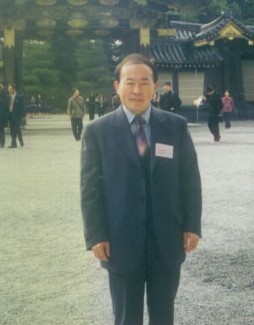 Li Ding (丁莉)合作论文数中国科学院等离子体物理研究所9
 Jintao Cao合作论文数9Wenbo Cao合作论文数8
 Zhitao Shen (申志涛)合作论文数School of Future Technology, Henan University;Henan Key Laboratory of Photovoltaic Materials,Henan University8Meng Weili合作论文数8
 Gen Li (李根)合作论文数School of Mechanical and Aerospace Engineering, Nanyang Technological University7
 Shixiang Wu合作论文数Shenzhen Institutes of Advanced Technology, Chinese Academy of Sciences7
 Shangfeng Yang (杨上峰)合作论文数Department of Materials Science and Engineering, University of Science and Technology of China7
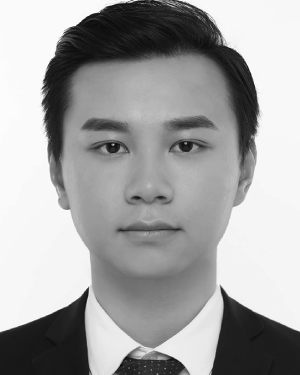 Zhengwen Zhang合作论文数Hubei University, Hubei University of Technology7
 Ke Yu (禹可)合作论文数School of Artificial Intelligence, Beijing University of Posts and Telecommunications7Xinqi Lin合作论文数Shenzhen Institutes of Advanced Technology, Chinese Academy of Sciences;XPixel Group6
 Kelvin C.K. Chan合作论文数Google DeepMind6Getinet Y. Ashebir合作论文数6
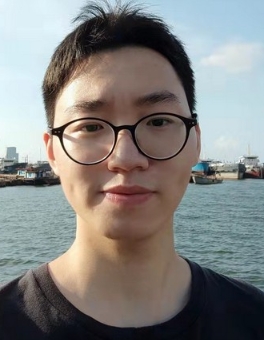 Henry Hengyuan Zhao (赵恒远)合作论文数SIA-NUS Digital Aviation Corporate Laboratory, Institute of Operation Research and Analytics, National University of Singapore;Department of Electrical & Computer Engineering, College of Design and Engineering, National University of Singapore;Microsoft6
 Wangmeng Zuo (左旺孟)合作论文数School of Computer Science and Technology, Harbin Institute of Technology6
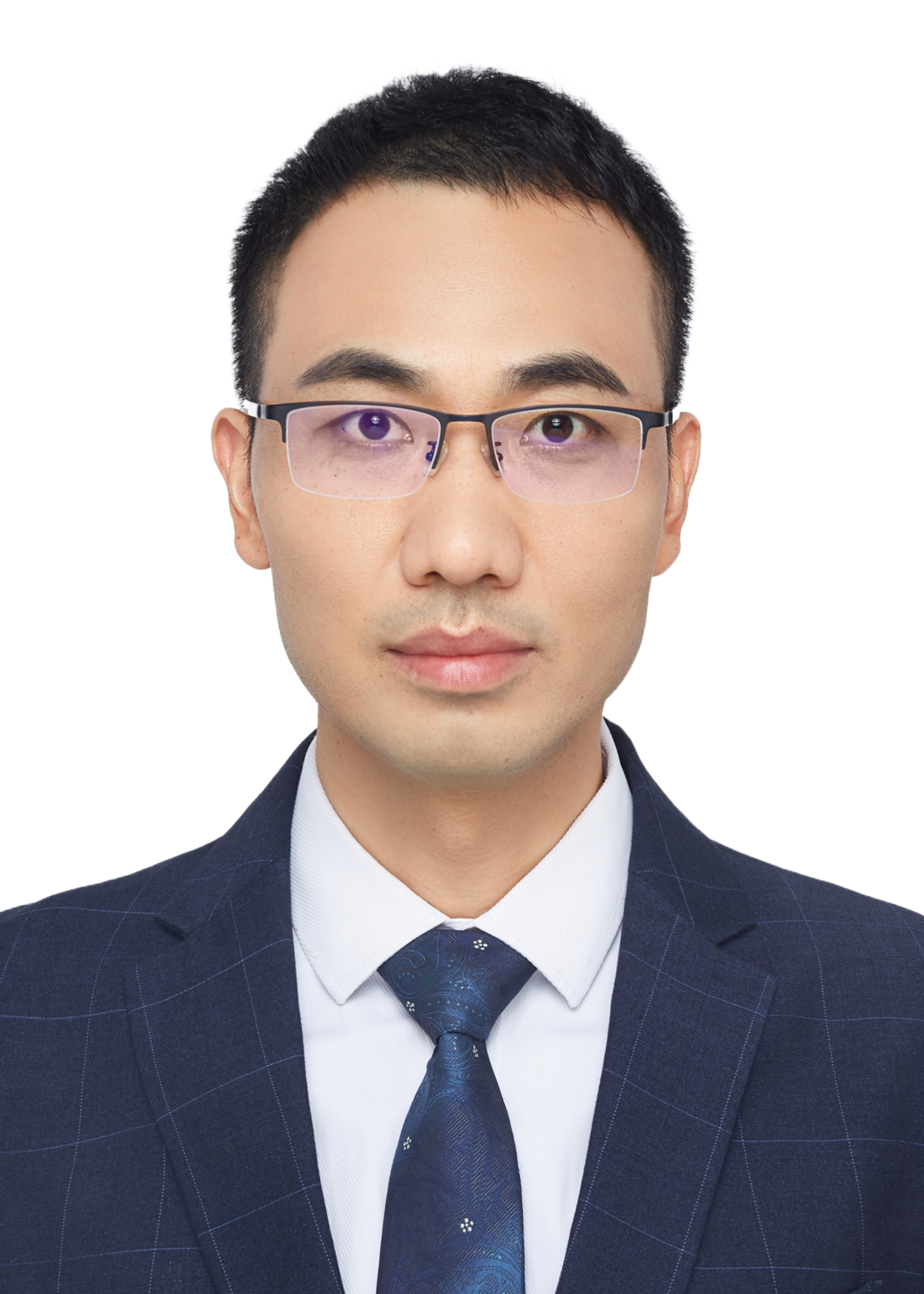 Tao Chen (陈涛)合作论文数Laboratory of Advanced Energy Materials and Devices, University of Science and Technology of China6
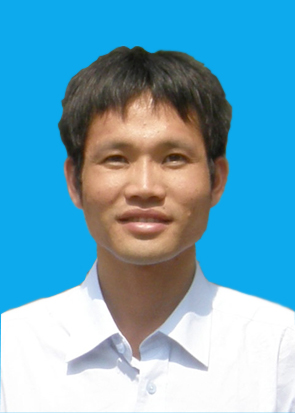 Bin Li (李彬)合作论文数School of Automation Science and Engineering, South China University of Technology6
 Lianfang Tian (田联房)合作论文数School of Automation Science and Engineering, South China University of Technology;Key Laboratory of Autonomous Systems and Network Control, Ministry of Education, South China University of Technology6