The landscape of high-performance image generation models is currently shifting from the inefficient multi-step ones to the efficient few-step counterparts (e.g, Z-Image-Turbo and FLUX.2-klein). However, these models present significant challenges for directly continuous supervised fine-tuning. For example, applying the commonly used fine-tuning technique would compromises their inherent few-step inference capability. To address this, we propose D-OPSD, a novel training paradigm for step-distilled diffusion models that enables on-policy learning during supervised fine-tuning. We first find that the modern diffusion model where the LLM/VLM serves as the encoder can inherit its encoder's in-context capabilities. This enables us to make the training as an on-policy self-distillation process. Specifically, during training, we make the model acts as both the teacher and the student with different contexts, where the student is conditioned only on the text feature, while the teacher is conditioned on the multimodal feature of both the text prompt and the target image. Training minimizes the two predicted distributions over the student's own roll-outs. By optimized on the model's own trajectory and under it's own supervision, D-OPSD enables the model to learn new concept, style, etc. without sacrificing the original few-step capacity.
Diffusion Transformers (DiTs) are a powerful yet underexplored class of generative models compared to U-Net-based diffusion architectures. We propose TIDE-Temporal-aware sparse autoencoders for Interpretable Diffusion transformErs-a framework designed to extract sparse, interpretable activation features across timesteps in DiTs. TIDE effectively captures temporally-varying representations and reveals that DiTs naturally learn hierarchical semantics (e.g., 3D structure, object class, and fine-grained concepts) during large-scale pretraining. Experiments show that TIDE enhances interpretability and controllability while maintaining reasonable generation quality, enabling applications such as safe image editing and style transfer.
Contrastive Vision-Language Pre-training (CLIP) has shown ground-breaking results in zero-shot and few-shot learning. Its success in the 2D domain sparks the curiosity to explore if CLIP, pre-trained with large-scale image-text pairs, can be adapted for 3D recognition. This chapter discusses PointCLIP and PointCLIP V2 and shows that it is indeed possible to align CLIP-encoded point clouds with 3D category text representations. PointCLIP projects a point cloud into multi-view 2D images, which helps in revealing geometric information from 3D to 2D. For better extraction of global features, PointCLIP features an interview adapter, significantly boosting the performance by just fine-tuning the lightweight adapter. After that, PointCLIP V2 is discussed to further improve the performance and enhance the generalization ability. V2 employs a shape projection module for the visual end, helping to synthesize more realistic depth maps and narrowing the domain gap between projected point clouds and natural images. Simultaneously, V2 combines CLIP and large language models (LLMs) to generate 3D-specific text, improving the feature extraction of CLIP's textual encoder. PointCLIP VI and V2 demonstrate remarkable generalization capabilities in unified 3D open-world learning, paving the way for better in-depth understanding and possible future improvements and extensions.
Diffusion model distillation has emerged as a powerful technique for creating efficient few-step and single-step generators. Among these, Distribution Matching Distillation (DMD) and its variants stand out for their impressive performance, which is widely attributed to their core mechanism of matching the student's output distribution to that of a pre-trained teacher model. In this work, we challenge this conventional understanding. Through a rigorous decomposition of the DMD training objective, we reveal that the primary driver of few-step generation is not the distribution matching term, but a previously overlooked component we identify as \textit{\textbf{C}FG \textbf{A}ugmentation} (\textbf{CA}). We demonstrate that this term acts as the core "engine" of distillation, while the \textbf{D}istribution \textbf{M}atching (\textbf{DM}) term functions as a "regularizer" that ensures training stability and mitigates artifacts. We further validate this decoupling by demonstrating that while the DM term is a highly effective regularizer, it is not unique; simpler non-parametric constraints or GAN-based objectives can serve the same stabilizing function, albeit with different trade-offs. This decoupling of labor between CA and DM also allows a more principled analysis of the properties of both terms, leading to a more systematic and in-depth understanding. This new understanding enables us to propose principled modifications to the distillation process, such as decoupling the noise schedules for the engine and the regularizer, leading to further performance gains.
We present Lumina-mGPT, a family of multimodal autoregressive models capable of various vision and language tasks, particularly excelling in generating flexible photorealistic images from text descriptions. By initializing from multimodal Generative Pre Training (mGPT), we demonstrate that decoder-only Autoregressive (AR) model can achieve image generation performance comparable to modern diffusion model with high efficiency through Flexible Progressive Supervised Finetuning (FP-SFT). Equipped with our proposed Unambiguous image Representation (Uni-Rep), Lumina-mGPT can flexibly generate high-quality images of varying aspect ratios. Building on the strong image generation capabilities, we further explore Ominipotent Supervised Finetuning (Omni-SFT), an initial attempt to elevate Lumina-mGPT into a unified multi-modal generalist. The resulting model demonstrates versatile multimodal capabilities, including visual generation tasks like text-to-image/multiview generation and controllable generation, visual recognition tasks like segmentation and depth estimation, and vision-language tasks like multi-turn visual question answering, showing the rosy potential of the technical direction. We release all code and checkpoints at https://github.com/Alpha-VLLM/Lumina-mGPT , hoping to facilitate the progress towards AR-based multi-modal generalist.
Few-step diffusion distillation has become increasingly mature for 4-8-step generation, yet pushing further to 2 steps remains challenging. In this work, we introduce Z-Image Turbo++, a high-quality 2-step image generation model distilled from the 8-step Z-Image Turbo teacher. Our method addresses the central bottlenecks of increased task difficulty and limited model capacity in 2-step generation through three simple but effective design choices tailored to this regime. First, we propose Distribution-Aligned Adversarial Learning, which uses teacher-generated images rather than external real images as real samples for GAN training, providing a more attainable and informative adversarial target. Second, we adopt Step-Decoupled Parameterization, assigning independent model parameters to the two denoising steps to better match their distinct capacity demands. Third, we perform End-to-End Training with Iterative Regularization, allowing the first step to receive gradients from final image quality while preserving a meaningful intermediate generation through an explicit step-1 loss. Together, these designs substantially narrow the quality gap between 2-step and 8-step generation in both qualitative and quantitative evaluations, highlighting the potential of carefully tailored distillation strategies for improving the quality-efficiency trade-off in few-step generation.
Recent large vision-language models (VLMs) remain fundamentally constrained by a persistent dichotomy: understanding and generation are treated as distinct problems, leading to fragmented architectures, cascaded pipelines, and misaligned representation spaces. We argue that this divide is not merely an engineering artifact, but a structural limitation that hinders the emergence of native multimodal intelligence. Hence, we introduce SenseNova-U1, a native unified multimodal paradigm built upon NEO-unify, in which understanding and generation evolve as synergistic views of a single underlying process. We launch two native unified variants, SenseNova-U1-8B-MoT and SenseNova-U1-A3B-MoT, built on dense (8B) and mixture-of-experts (30B-A3B) understanding baselines, respectively. Designed from first principles, they rival top-tier understanding-only VLMs across text understanding, vision-language perception, knowledge reasoning, agentic decision-making, and spatial intelligence. Meanwhile, they deliver strong semantic consistency and visual fidelity, excelling in conventional or knowledge-intensive any-to-image (X2I) synthesis, complex text-rich infographic generation, and interleaved vision-language generation, with or without think patterns. Beyond performance, we show detailed model design, data preprocessing, pre-/post-training, and inference strategies to support community research. Last but not least, preliminary evidence demonstrates that our models extend beyond perception and generation, performing strongly in vision-language-action (VLA) and world model (WM) scenarios. This points toward a broader roadmap where models do not translate between modalities, but think and act across them in a native manner. Multimodal AI is no longer about connecting separate systems, but about building a unified one and trusting the necessary capabilities to emerge from within.
Encoding videos into discrete tokens could align with text tokens to facilitate concise and unified multi-modal LLMs, yet introducing significant spatiotemporal compression compared to continuous video representation. Previous discrete video VAEs experienced unstable training, long training time, and degraded reconstruction quality. Given the easier training and superior performance of continuous VAEs, an intuitive idea is to enhance discrete video VAEs by leveraging continuous VAEs. After rethinking the intrinsic link between discrete and continuous representations, we found that FSQ could effectively preserve pre-trained continuous VAE priors compared to other quantization methods. By leveraging continuous VAE priors, it converges several times faster than training from scratch and achieves superior performance at convergence. Meanwhile, two structural improvements are proposed. First, inspired by how continuous VAEs enhance reconstruction via enlarged latent dimensions, we introduce a multi-token quantization mechanism, which achieves nearly a 1 dB improvement in PSNR without compromising the token compression ratio. Second, to tackle reconstruction challenges in high-compression video VAEs, we strengthen first-frame reconstruction, enabling the causal VAE to leverage this information in subsequent frames and markedly improving the performance of 4 x 16 x 16 discrete VAEs. Furthermore, we propose a joint discrete-continuous optimization scheme that unifies the two paradigms and, for the first time, achieves competitive performance on both continuous and discrete representations within a single network. We name our method OneVAE to reflect this connection.
Vision-language models have significantly advanced the field of artificial intelligence by bridging the gap between visual and textual understanding. These models can enable wide-ranging applications including image recognition, object detection, scene understanding, visual content generation and editing in both 2D and 3D, and visual question answering, to name a few. This chapter introduces the foundational concepts underlying these models, emphasizing their unique ability to learn multimodal representations through novel neural network architectures and large-scale data pre-training. We explore the vision-language modeling paradigm, highlight key challenges in feature alignment, scalability, and data and evaluation, and review notable progress in the field. In addition, we discuss the limitations of current approaches, from computational inefficiencies to ethical concerns, and outline potential directions for future research. This chapter serves as a roadmap for understanding the fields core principles and its transformative potential in AI applications.
Distribution Matching Distillation (DMD) facilitates efficient inference by distilling multi-step diffusion models into few-step variants. Concurrently, Reinforcement Learning (RL) has emerged as a vital tool for aligning generative models with human preferences. While both represent critical post-training stages for large-scale diffusion models, existing studies typically treat them as independent, sequential processes, leaving a systematic framework for their unification largely unexplored. In this work, we demonstrate that jointly optimizing these two objectives yields mutual benefits: RL enables more preference-aware and controllable distillation rather than uniformly compressing the full data distribution, while DMD serves as an effective regularizer to mitigate reward hacking during RL training. Building on these insights, we propose DMDR, a unified framework that incorporates Reward-Tilted Distribution Matching optimization alongside two dynamic distillation training strategies in the initial stage, followed by the joint DMD and RL optimization in the second stage. Extensive experiments demonstrate that DMDR achieves state-of-the-art visual quality and prompt adherence among few-step generation methods, even surpassing the performance of its multi-step teacher model.
This paper investigates an increasingly important topic in generative modeling: pixel-space diffusion models. Although numerous studies have explored this topic, most focus on small-scale or class-conditional settings. Consequently, a practical recipe for training pixel-space models that rival or exceed well-established latent-space counterparts remains elusive. Through a comprehensive empirical study, we first observe that direct large-scale pre-training in pixel space converges substantially more slowly than in latent space. This observation motivates a latent-to-pixel strategy that acquires generative priors efficiently in latent space and transitions to pixel space during post-training. We then systematically investigate the key design choices governing this transition, including weight initialization, data composition, prediction target, decoder architecture, and noise schedule, and identify a practical recipe that makes the resulting pixel-space models match or outperform their latent-space counterparts while delivering 3.18 to 4.75 times end-to-end inference speedups. We hope that our findings provide useful empirical insights and practical guidelines for future research on pixel-space generation.
We introduce the MiniMax-M2 series, a family of Mixture-of-Experts language models built around the principle that mini activations can unleash maximum real-world intelligence. The flagship M2 contains 229.9B total parameters with only 9.8B activated per token. Designed end-to-end for agentic deployment, the M2 series rests on three components: (i) agent-driven data pipelines producing large-scale, verifiable trajectories across agentic coding and agentic cowork, each grounded in an executable workspace and an artifact-aligned reward; (ii) Forge, a scalable agent-native RL system that adapts to long-horizon agent trajectories, paired with windowed-FIFO scheduling, prefix-tree merging, inference optimization, and a clean training-inference-agent decoupling that supports both white-box and black-box agents; (iii) the latest M2.7 checkpoint takes an early step toward self-evolution – autonomously debugging training runs and modifying its own scaffold. Across M2 through M2.7, this combination translates a mini-activation footprint into frontier-tier performance on agentic coding, deep search, office-task, and reasoning benchmarks.
To address issues in class-incremental object detection models such as noise interference during detection, instability of old class boundaries, and imbalance between learning old and new classes, this paper proposes improvements to the CL-DETR model and introduces a class-incremental object detection model CC-DETR based on curriculum learning distillation. First, a noise-resistant collaborative purification module is constructed to filter label noise and suppress background noise interference while performing pseudo-label purification and foreground-guided distillation. Secondly, a boundary distillation method based on knowledge consolidation is introduced, applying KL distillation only to old class channels to stabilize the decision boundaries of old classes. Finally, we designed a curriculum-style learning distillation strategy, enabling the model to quickly learn new classes in the early stages of training, and dynamically adjust the distillation weights as training progresses to stabilize old classes while learning new ones. Experiments show that under the 70+10 and 40+40 splits of the COCO dataset, detection accuracy reached 40.9% and 39.1%, respectively, improving over CL-DETR by 1.9% and 2.4%, and outperforming current mainstream class-incremental object detection algorithms. Meanwhile, with the same inference structure, FPS increased by 9.7% and training time decreased by 25.4%, making it better suited for practical class-incremental object detection scenarios.
Generating high-fidelity audio that is both semantically meaningful and temporally synchronized with silent videos remains a challenging problem in video-to-audio generation. Existing approaches often fail to capture fine-grained temporal correspondence between visual events and audio dynamics, leading to unrealistic or desynchronized outputs. To address these limitations, we propose VisioSonic, a Video-Aligned Sound generation framework that unifies flow-matching diffusion and preference-guided alignment. VisioSonic introduces a multimodal conditioning module that jointly leverages video frames and textual cues to provide semantic and frame-level temporal guidance. A co-attention diffusion transformer efficiently fuses visual and audio representations, enabling content-aware sound synthesis with minimal computation costs. To further enhance alignment beyond supervised training, we introduce Semantic-Temporal Alignment Ranked Direct Preference Optimization (STAR-DPO), a novel preference-learning paradigm that automatically generates audio candidates,ranks them based on both semantic and temporal alignment, and subsequently fine-tunes the diffusion model using the derived preference pairs. Extensive experiments on various benchmarks demonstrate that VisioSonic achieves state-of-the-art audio-video synchronization and audio fidelity while using the fewest trainable parameters among competing approaches.
Contrastive Language-Image Pretraining (CLIP) has demonstrated superior generalization capabilities in image classification over general visual domains. However, for some specific downstream tasks, CLIP still suffers from unsatisfactory results due to semantic gaps. To this end, CoOp has been proposed to adopt learnable prompt tokens for few-shot learning. In this chapter, we showcase an alternative to utilize feature adapters to enhance the few-shot image classification performance of CLIP. We first introduce CLIP-Adapter, an adapter architecture equipped after CLIP's vision encoder for injecting downstream knowledge. On top of that, we further present two upgraded variants, Tip -Adapter and Tip-Adapter-F, a training-free adaption method, and its fine-tuning variant. They incorporate the few-shot semantics with the pretrained CLIP with a constructed cache model, which further achieve both effectiveness and efficiency for leading image classification performance.
We present Lunima-OmniLV (abbreviated as OmniLV), a universal multimodal multi-task framework for low-level vision that addresses over 100 sub-tasks across four major categories: image restoration, image enhancement, weak-semantic dense prediction, and stylization. OmniLV leverages both textual and visual prompts to offer flexible and user-friendly interactions. Built on Diffusion Transformer (DiT)-based generative priors, our framework supports arbitrary resolutions – achieving optimal performance at 1K resolution – while preserving fine-grained details and high fidelity. Through extensive experiments, we demonstrate that separately encoding text and visual instructions, combined with co-training using shallow feature control, is essential to mitigate task ambiguity and enhance multi-task generalization. Our findings also reveal that integrating high-level generative tasks into low-level vision models can compromise detail-sensitive restoration. These insights pave the way for more robust and generalizable low-level vision systems.
Reward models are central to text-to-image post-training, but visual preference is subjective and better represented as a distribution over rubric scores than as a deterministic scalar. Existing scalar, score-token, and pairwise reward models over-compress uncertainty and fine-grained score differences, while reasoning-based generative rewards provide stronger judgments but are costly to deploy and difficult to use as direct optimization signals. We propose Z-Reward, a teacher-student reward modeling framework that decouples reasoning-heavy judgment from efficient reward deployment. The teacher is a large VLM that uses reasoning to infer rubric-aligned score distributions, and is trained with Group-wise Direct Score Optimization (GDSO), which combines policy-gradient rewards from distribution expectations with direct pointwise and pairwise supervision on score distributions and score gaps. The student is trained with Reasoning-Internalized Score Distillation (RISD), which transfers the teacher's reasoning-conditioned score distribution into a compact VLM without requiring explicit reasoning chains at inference time. On our internally annotated evaluation set, the 27B GDSO teacher reaches 89.6
Recent advancements have established Diffusion Transformers (DiTs) as a dominant framework in generative modeling. Building on this success, Lumina-Next achieves exceptional performance in the generation of photorealistic images with Next-DiT. However, its potential for video generation remains largely untapped, with significant challenges in modeling the spatiotemporal complexity inherent to video data. To address this, we introduce Lumina-Video, a framework that leverages the strengths of Next-DiT while introducing tailored solutions for video synthesis. Lumina-Video incorporates a Multi-scale Next-DiT architecture, which jointly learns multiple patchifications to enhance both efficiency and flexibility. By incorporating the motion score as an explicit condition, Lumina-Video also enables direct control of generated videos' dynamic degree. Combined with a progressive training scheme with increasingly higher resolution and FPS, and a multi-source training scheme with mixed natural and synthetic data, Lumina-Video achieves remarkable aesthetic quality and motion smoothness at high training and inference efficiency. We additionally propose Lumina-V2A, a video-to-audio model based on Next-DiT, to create synchronized sounds for generated videos. Codes are released at https://www.github.com/Alpha-VLLM/Lumina-Video.
Mathematical geometric problem solving (GPS) demands verifiable logical coherence and multimodal reasoning capabilities. While large language models (LLMs) have shown rapid progress in GPS, their advancement is hindered by the lack of reliable benchmarks and systematic methodologies. A critical challenge is the inherent hallucination in LLMs, which leads to synthetic GPS datasets that are often noisy, unverified, and self-contradictory. To address this, we introduce TrustGeoGen, a data engine that generates formally verified geometric problems to establish a principled and trustworthy benchmark. Our engine integrates four key innovations: 1) Multimodal Alignment, which synchronizes the generation of diagrams, text, and step-by-step solutions; 2) Formal Verification, ensuring all reasoning paths are rule-compliant; 3) Connection Thinking, bridging formal deduction with human-like logical steps; and 4) our GeoExplore series algorithms, which produce diverse problem variants with multiple solutions and self-reflective backtracking. Using this engine, we create the GeoTrust-200K dataset and the corresponding GeoTrust-test benchmark, both with guaranteed cross-modal integrity. Experiments reveal that state-of-the-art models achieve only 45.83% accuracy on GeoTrust-test, highlighting its significant challenge. Furthermore, training on our synthesized data substantially improves model performance on GPS tasks, with strong generalization to out-of-domain (OOD) benchmarks. Our code and data are available at https://github.com/Alpha-Innovator/TrustGeoGen
We present Vchitect-2.0, a parallel transformer architecture designed to scale up video diffusion models for large-scale text-to-video generation. The overall Vchitect-2.0 system has several key designs. (1) By introducing a novel Multimodal Diffusion Block, our approach achieves consistent alignment between text descriptions and generated video frames, while maintaining temporal coherence across sequences. (2) To overcome memory and computational bottlenecks, we propose a Memory-efficient Training framework that incorporates hybrid parallelism and other memory reduction techniques, enabling efficient training of long video sequences on distributed systems. (3) Additionally, our enhanced data processing pipeline ensures the creation of Vchitect T2V DataVerse, a high-quality million-scale training dataset through rigorous annotation and aesthetic evaluation. Extensive benchmarking demonstrates that Vchitect-2.0 outperforms existing methods in video quality, training efficiency, and scalability, serving as a suitable base for high-fidelity video generation.
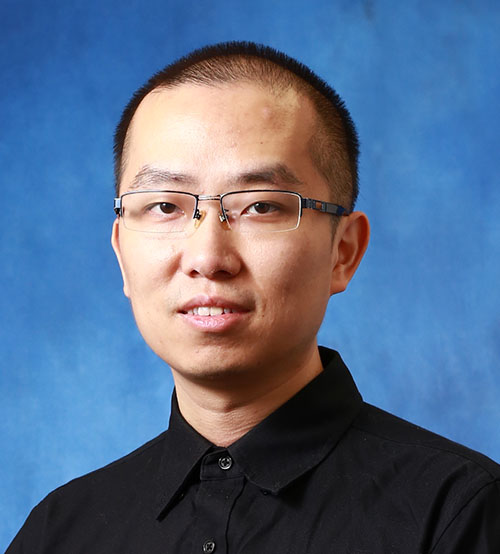 Hongsheng Li (李鴻升)合作论文数Department of Electronic Engineering, The Chinese University of Hong Kong;Multimedia Laboratory, The Chinese University of Hong Kong76
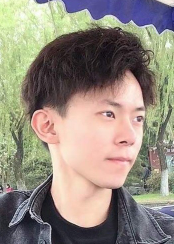 Renrui Zhang合作论文数Multimedia Laboratory, The Chinese University of Hong Kong59
 Yu Qiao (乔宇)合作论文数Multimedia Laboratory, Shenzhen Institutes of Advanced Technology, Chinese Academy of Sciences;Shanghai AI Laboratory;Shenzhen University of Advanced Technology52
 Dong-Yang Liu合作论文数Key Lab of Intell. Info. Process., Inst. of Comput. Tech., Chinese Academy of Sciences;University of Chinese Academy of Sciences20
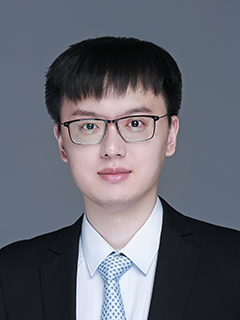 Hao Dong (董豪)合作论文数Center on Frontiers of Computing Studies, School of Computer Science, Peking University18
 Shijie Geng合作论文数Amazon18
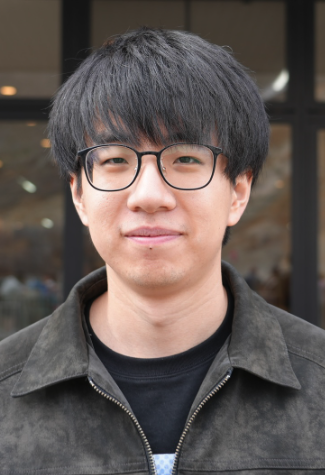 Le Zhuo合作论文数Krea AI17
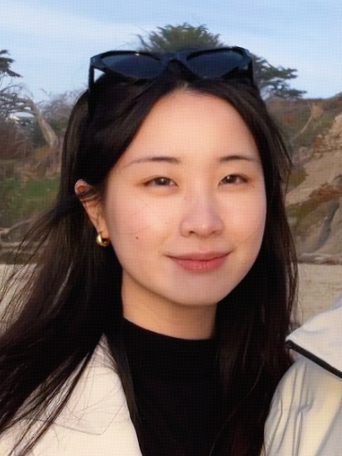 Ziyu Guo合作论文数The Chinese University of Hong Kong;Google DeepMind15
 Zhengkai Jiang (蒋正锴)合作论文数Tencent15
 Siyuan Huang合作论文数14
 Wenqi Shao (邵文琪)合作论文数Shanghai AI Lab12
 Kaipeng Zhang (张凯鹏)合作论文数Shanghai AI Laboratory12
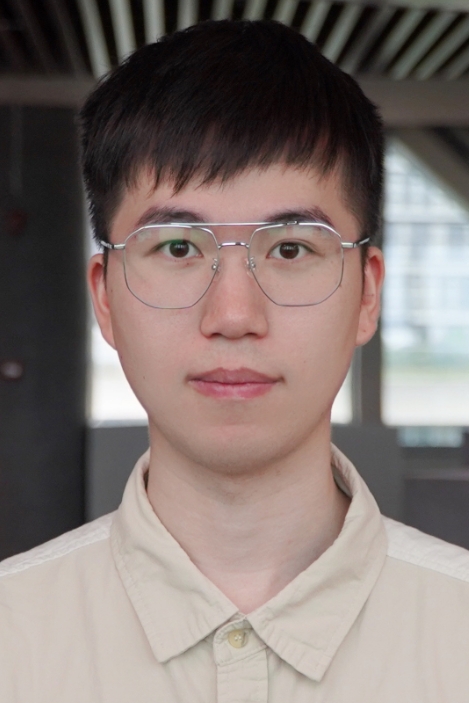 Teli Ma (马特立)合作论文数The Hong Kong University of Science and Technology11
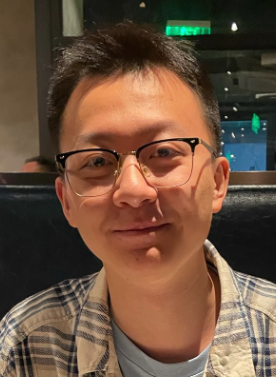 Ruoyi Du (杜若一)合作论文数Pattern Recognition and Intelligent System Laboratory, School of Artificial Intelligence, Beijing University of Posts and Telecommunications11
 Aojun Zhou (周奥军)合作论文数Department of Electronic Engineering, The Chinese University of Hong Kong11
 Zhen Li (李震)合作论文数College of Computer Science, Nankai University11Xiangyang Zhu合作论文数Shanghai Artificial Intelligence Laboratory10
 Shanghang Zhang (仉尚航)合作论文数Institute for Visual Technology, School of Computer Science, Peking University;Institute for Artificial Intelligence, Peking University10Ziyi Lin合作论文数Multimedia Laboratory, The Chinese University of Hong Kong9
 Xiaogang Wang (王曉剛)合作论文数Department of Electronic Engineering, The Chinese University of Hong Kong9
 Jifeng Dai (代季峰)合作论文数Department of Electronic Engineering, Tsinghua University9
 Baochang Zhang (张宝昌)合作论文数School of Artificial Intelligence, Beihang University9
 Jiaming Liu (刘家铭)合作论文数National Key Laboratory for Multimedia Information Processing, School of Computer Science, Peking University8
 Steven Hoi (许主洪)合作论文数8
 Pan Lu合作论文数Stanford University8
 Sheng Xu (徐昇)合作论文数Beihang University7
 Ping Luo (羅平)合作论文数Department of Computer Science, School of Computing and Data Science, The University of Hong Kong7
 Jiaming Han (韩佳明)合作论文数Multimedia Laboratory, The Chinese University of Hong Kong;Bytedance Seed7
 Ziwei Liu (刘子纬)合作论文数College of Computing and Data Science, Nanyang Technological University7
 Han Xiao合作论文数Multimedia Laboratory, The Chinese University of Hong Kong7
 Bo Zhang合作论文数Shanghai Aritifcal Intelligence Laboratory7
 Cewu Lu (卢策吾)合作论文数School of Artificial Intelligence, Shanghai Jiao Tong University;Center for DNA Information Storage, Shanghai Jiao Tong University7
 Weifeng Lin (林炜丰)合作论文数Multimedia Laboratory, The Chinese University of Hong Kong6
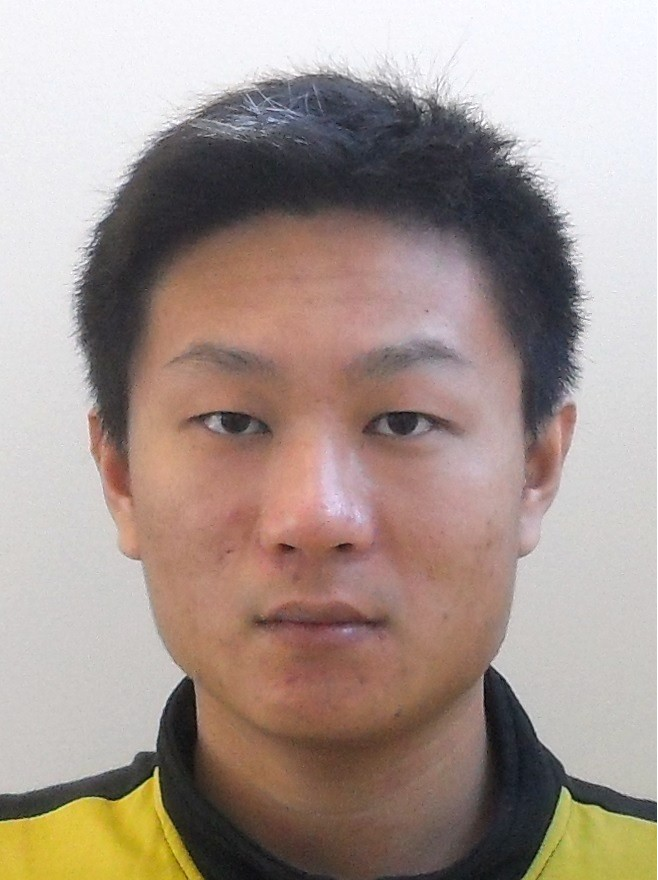 Yali Wang (王亚立)合作论文数University of Chinese Academy of Sciences;Shenzhen Institutes of Advanced Technology, Chinese Academy of Sciences6
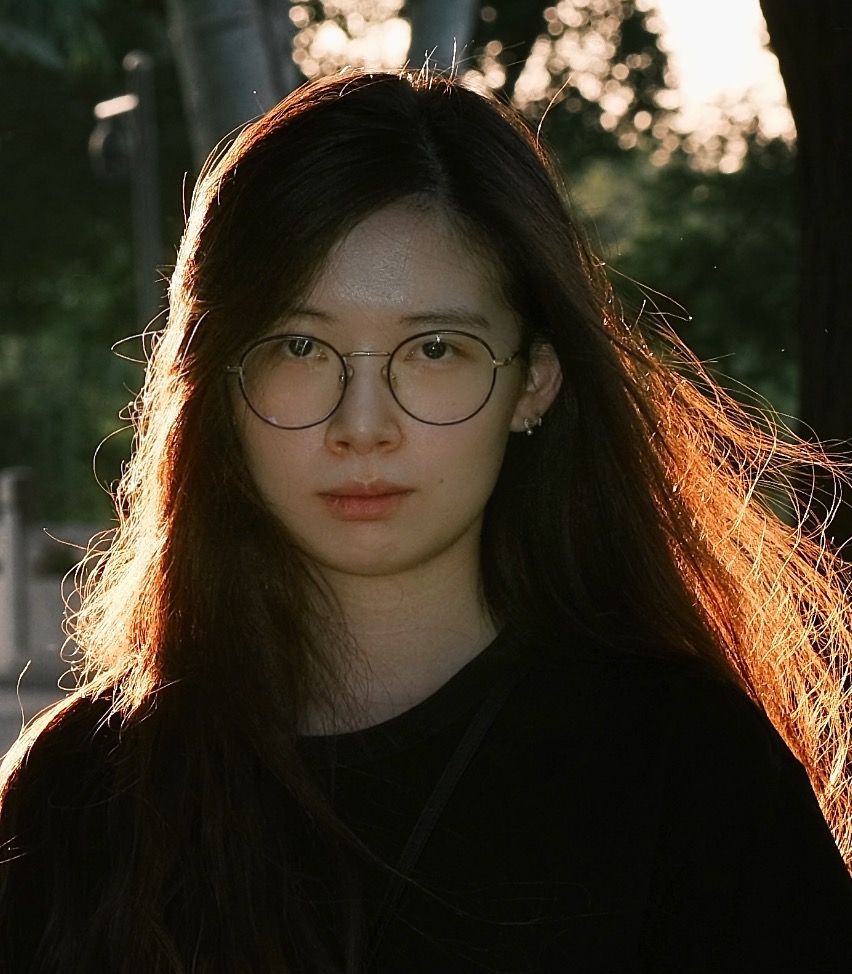 Yanjing Li合作论文数School of Electronics and Information Engineering, Beihang University;Shanghai Artificial Intelligence Laboratory6
 Chaoyou Fu (傅朝友)合作论文数School of Intelligence Science and Technology, Nanjing University6
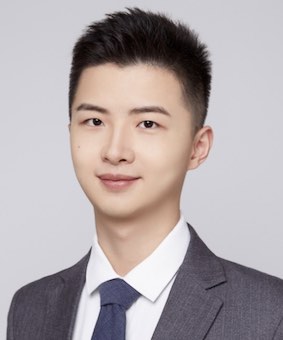 Yu Liu合作论文数Sensetime;Shanghai AI Lab6
 Yin Zhuang (庄胤)合作论文数School of Information and Electronics, Beijing Institute of Technology6
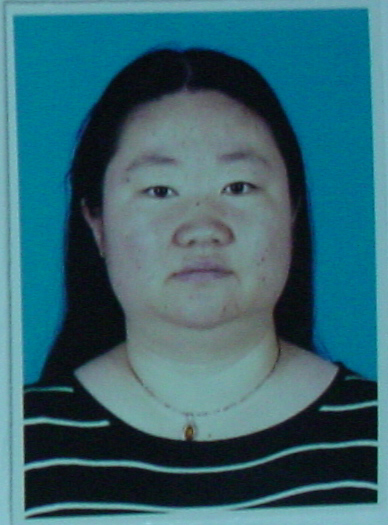 He Chen (陈禾)合作论文数北京理工大学信息与电子学院6
 Junchi Yan (严骏驰)合作论文数Department of Computer Science and Engineering, Shanghai Jiao Tong University;ReThinkLab, Shanghai Jiao Tong University6
 Guotong Xie (谢国彤)合作论文数Ping An Group;PingAn Health Technology;Ping An Technology6
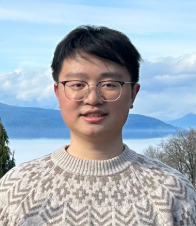 Longtian Qiu合作论文数School of Information Science and Technology, ShanghaiTech University;PLUS Lab, ShanghaiTech University5
 Wei Zhang (张伟)合作论文数School of Computer Science and Technology, East China Normal University5Guanglu Song合作论文数SenseTime X-Lab5
 Kunchang Li (黎昆昌)合作论文数ByteDance Seed5
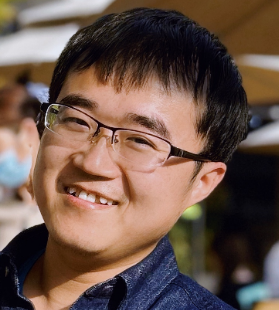 Xiangyu Yue (岳翔宇)合作论文数Multimedia Lab, Department of Information Engineering, Faculty of Engineering, The Chinese University of Hong Kong5
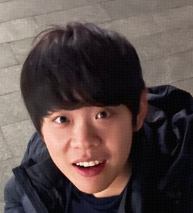 Yi Xin (辛毅)合作论文数Department of Computer Science and Technology, Nanjing University;Shanghai Innovation Institute5
 Yichi Zhang合作论文数5




