Constructing new-type power systems is a key goal for the transformation of the power industry in China. It is also essential for achieving the objectives of carbon peaking and carbon neutrality. This paper explores the establishment of new-type power systems from a different perspective, drawing inspiration from ongoing practices and existing discussions. In this paper, we summarize the current status and challenges of traditional power systems firstly to identify the key issues that require resolution. Next, this paper traces the evolving trajectory of the power system to seek the motivation for further development. Then, this paper examines several topics of general interest, including inertia and system strength, to reveal the inherent causes of technical challenges. Finally, this paper brings out a proposal of development for a new-type power system, clarifying its main characteristics and key technologies that require further in-depth research.
With integration of a larger amount of clean power sources and power electronic equipment, operation and dynamic characteristics of the power grid are becoming more and more complicated and stochastic. Therefore, it is necessary and urgent to obtain accurate real-time states, which is difficult from traditional state estimation. This paper systematically develops a phasor measurement unit (PMU) based real-time state estimator for a realistic large-scale power grid for the first time. The estimator mainly relies on three refined algorithms, i.e., an improved linear state estimation algorithm, a practical bad data identification method and a distributed topology check technique. Furthermore, a novel system architecture is designed and implemented for the China Southern Power Grid. Numerical simulations and extensive field operation results of the state estimator recorded under both normal and abnormal situations are presented. All the tests and field results demonstrate the advantages of the proposed algorithms in terms of online system monitoring and feasibility of refreshing the states of the whole system at intervals of tens of milliseconds.
现代电力系统的发展使得系统频率特性更加复杂化,同时系统安全稳定经济运行对频率稳定提出了更高的要求,电力系统频率问题日益显著,关于系统频率特性的研究涌现并被应用于保障系统安全稳定运行.首先回顾了近年来国内外电力系统频率事故的发展过程并结合事故过程中频率特性分析事故原因,结合现代电力系统的特点从多角度分析了高比例电力电子接口装置接入对电力系统频率特性的影响,然后以单机模型为例分析了机组参数对电力系统频率动态过程的多重交互影响,并总结了系统惯量估计、发电机组调频性能监测和两者共同作用对系统频率动态行为影响监测的相关研究及应用情况.最后提出了在未来系统频率特性领域值得探索研究的问题和方向.
The couplings between different types of energy networks are receiving increasing attention, especially in distribution networks. One of the fundamental topics of interest is the dynamic coupling between power grids and gas networks. To study dynamics in gas pipelines and the interaction between gas networks and electric power grids, dynamic modeling of gas networks gives the foundation. Commercial software is available and mature, but has flaws: (1) time-consuming simulation and complex implementation, and (2) the interface to electric power grids is not friendly. In this paper, transfer functions (TFs) are used to model a single pipeline. To model a gas network with multiple pipelines, a universal networking method is proposed. The accuracy of transfer function models are thoroughly examined under step and sinusoidal excitations, and the influence factors of accuracy is investigated. The adaptability of TF models is then quantitated by reference curves. Finally, the proposed modeling approach is applied in analyzing a gas-electricity system to test its capabilities.
With the increasing penetration of renewable energies in modern power grids, large amounts of voltage source converters (VSCs) have been installed, resulting in many new transient issues. Electromagnetic transient (EMT) simulation plays an essential role in investigating and solving the issues. However, simulation efficiency plunges when object grids contain multiple VSCs, because each switching event incurs modification or re-decomposition of the network matrix in traditional EMT programs, which is very time-consuming. Thus, this paper proposes a VSC model represented by pulse voltage-current source pairs. Accordingly, a unidirectional loosely-coupled solving algorithm is designed. Synthetically, the authors propose a novel EMT simulation approach adaptive to systems with multiple VSCs. The proposed approach keeps the computational network invariable while sufficiently considers detailed switching events, thereby significantly improving the simulation efficiency of the EMTP program without precision loss.
为有效降低电网换相高压直流(line-commutated converterhighvoltagedirectcurrent,LCC-HVDC)输电系统换相失败的概率,提出串联电压换相变流器(seriesvoltage commutated converter,SVCC)方案。该方案以直接增加换流阀换相电压面积为目标,将级联的全桥子模块变流链接入换流变压器与LCC换流阀交流端口之间,通过灵活控制串联电压对阀组辅助换相。基于全桥子模块的8种工作状态,设计变流链串联电压辅助换相策略及电容电压控制方法;以SVCC临界换相电压为依据,提出子模块电容容值及额定电压的优选方法。PSCAD/EMTDC仿真结果表明,SVCC拓扑能灵活切换子模块变流链的工作状态,所提出电容电压控制效果良好,与仿真结果吻合度高。相比其他方案,SVCC对交流系统电压暂降的电压补偿响应速度快,可显著提高LCC-HVDC防御换相失败的能力。此外,当交流系统故障超出SVCC抑制换相失败范围,SVCC所采取的紧急应对措施降低了变流链内开关器件的电流应力要求,提高了其工程实用性。
The transmission line' ice melting device is widely used in the field of power grid ice melting due to its advantages of high ice melting efficiency and small power supply capacity. However, reactive power needs to be consumed during DC ice melting. When the demand for reactive power capacity is large, the voltage fluctuation of substation may be caused, which affects the reliability of power supply. In addition, a large number of 5th and 7th harmonics will be generated during ice melting rectification, and a large filtering device needs to be installed. In this paper, a low harmonic DC ice melting device which can compensate reactive power simultaneously is studied. The ice melting and reactive power compensation function can operate at the same time to meet the dynamic reactive power demand of ice melting. At the same time, the main and sub harmonics injected into the grid by the ice melting rectifier are eliminated. The experimental and simulation research on the device are carried out which is installed in the 500 kV Chuanshan substation. The actual ice -melting is carried out on the 500 kV Chuansu I line which takes only 68 minutes to melt the ice. The results prove the feasibility of the proposed DC ice-melting device in this paper.
The DC distribution technology brings challenges and opportunities to the penetration of large-scale distributed renewable energy sources. In a medium-voltage DC (MVDC) distribution network, operation mode switch occurs owing to some large disturbances. To manage these disturbances and achieve seamless switch of the operation mode, a hierarchical control strategy with two layers, namely local and global layers, is proposed in this work. The novel local layer controller called P-U-I controller is designed to enhance the voltage stability, improve system controllability and suppress overcurrent under large disturbances. This controller only needs local information and does not rely on fast communication. Furthermore, as the scale of the DC distribution network expands continuously, the number of system operation mode increases in geometric progression. Therefore, a global layer controller based on breadth-first search algorithm is proposed. This controller can automatically identify the system topology and adjust the control mode of converters to optimise the system operating characteristics. Thus, this hierarchical control strategy can accurately control the system power in steady state, suppress overcurrent under large disturbances and suit large-scale DC distribution networks. Finally, a three-terminal MVDC distribution network simulation model established on power systems computer-aided design and RT-LAB validates the proposed strategy.
This paper presents a multi-stage and multi-load-scenario Active Distribution Network (ADN) expansion planning model. The proposed model considers the applications of new distributed generation (DG) and construction of feeders at the planning level, and the utilization of DG supply and topology reconfiguration of distribution network (DN) including microgrid at the operation level. The proposed co-optimization model incorporates both investment and operation costs of ADN in the objective function. The ADN operation at each time stage is divided into several scenarios based on the load forecast data, in which the optimal reconfiguration of the ADN topology and the power output of DG units are calculated. The co-optimization considers investment decisions at each planning stage and operation strategies at each ADN loading scenario. The benefits of introducing DG and network construction as planning options, and DG supply and network reconfiguration as operation strategies, are discussed. The effectiveness of the proposed co-optimization of investment-operation is demonstrated using the numerical results.
With the development of power electronics technology, numerous studies have been conducted on voltage-source converter-based high-voltage DC (VSC-HVDC) transmission technology and low-voltage DC micro-grids. However, DC power distribution networks are more sophisticated than HVDC transmission networks with respect to the complex topology, changeable operation modes and use of diverse power electronic devices. Research on voltage-source converter-based medium-voltage DC (VSC-MVDC) distribution networks is still in its infancy stage, and whether or not some of the existing control and protection schemes used in VSC-HVDC can be applicable to the distribution networks remains a question. In this study, a dynamic simulation platform with DC circuit breakers is initially established. This platform is based on the first dual-terminal VSC-MVDC distribution network constructed in China. Second, a complete overall control scheme is proposed for VSC-MVDC distribution networks. The control scheme is proposed with an array of control strategies, including controls for system startup/shutdown, voltage coordination, operation mode transition, single-station integration, system fault isolation, and recovery. Finally, the proposed scheme is validated through experiments using the dynamic simulation platform. Experimental results indicate the effectiveness of the proposed overall control scheme for VSC-MVDC power distribution networks. Thus, the proposed scheme can be used in the design and operation of future VSC-MVDC distribution networks.
Dedicated to response based corrective control against short-term voltage instability, this paper develops an adaptive load shedding approach via random subspace based SVM ensemble (RS-SVME) learning Post-contingency time series (TS) data is collected to implement contingency-independent learning. Shapelet transform is then performed to transform the TS data into a tractable single-valued form. With the transformed data, RS-SVME learning is conducted to construct a stability margin estimator. During the learning process, cost-sensitive concerns regarding misdetection and false alarm are tactfully treated. The correlation based feature selection (CFS) method is employed to help the estimator determine the location and amount of load shedding. Test results on the realistic Hong Kong power grid demonstrate the effectiveness of the whole approach.
为深入探讨多相永磁同步发电机应用于风电领域的前景,归纳了多相永磁同步电机的建模方法与电流控制策略;分析了不同实际要求下的最佳谐波注入率对输出转矩的贡献差异及其原因;总结了多相永磁同步电机在正常状态和一相开路下的统一数学模型,通过矢量控制和电流优化策略实现电机开路故障下的无扰运行.最后指出了多相永磁同步发电机在风力发电应用中面临的机遇与挑战.
A multi-stage Active Distribution Network (ADN) planning model that integrated with the application of Energy Storage System (ESS) is presented in this paper. Both the long-term investment cost and short-term operation conditions of ADN are considered in the proposed model. The benefits of power supply reliability improvement brought by ESS in the ADN are also included. In each planning stage, the operation conditions are divided into several typical-day scenes and an extreme scene based on the load prediction data. The long-term expansion planning decisions including replacing and adding circuits, building up ESS, the short-term operation strategies of the ADN about charging and discharging ESS are optimized together in the model. The benefits of ESS, such as peak load shifting and power reliability enhancement are discussed based on some numerical cases, in which the centralized or distributed ESS become the options of ADN construction. Thus, the effectiveness of the proposed model is also demonstrated.
In this study, a locally weighted linear regression (LWLR) method is proposed to predict damping ratio of a dominant mode online. The LWLR method, which is nonparametric and data-oriented, is essentially proposed for nonlinear data fitting; therefore, it can track the nonlinear power system operations and help damping ratio prediction in real power systems, which is hardly achieved by the conventional linear regression. To successfully implement this method, the measurement of weighting value and the choice of weighting function as well as its parameter setting, related to prediction accuracy and numerical conditions, are extensively discussed. Simulations are carried out in a two-area four-machine system and a large complex system, China Southern Grid. Both results validate the effectiveness of the proposed method.
There are two critical issues in stabilizing subsynchronous resonance of practical power systems. One is to select an effective yet low-cost control scheme. The other is to optimize the controllers under all possible operating conditions and diversified system disturbances. To address these issues, this article proposes a combined control scheme and a coordinated control design method. The combined scheme is composed of a supplementary excitation damping controller and a voltage source converter based generator terminal subsynchronous damping controller deployed, respectively, on the rotor and stator sides of a generator to take full advantage of a supplementary excitation damping controller (very low cost) and generator terminal subsynchronous damping controller (fast response, flexibility in rating, and deployment). The coordinated control design is implemented through parameter optimization on the linearized system and performance verification with non-linear simulations. The former uses genetic algorithm and simulated annealing to solve the constrained non-linear optimization problem, while the latter inspects the dynamic control performance under either large or small disturbances. A practical system in northern China is taken for a case study. The results of both eigenvalue analysis and time-domain simulation have fully demonstrated the effectiveness of the optimally and coordinately designed subsynchronous resonance control system.
The subsynchronous resonance (SSR) problem may become more serious with the continuous evolvement of a series-compensated power system. Consequently, the existing SSR mitigation scheme might no longer keep the system stable. This issue has been encountered by Shangdu Power Plant, where the deployed supplementary excitation damping controllers (SEDCs) that well stabilized the system before cannot maintain torsional stability after the recent change occurred in the power system. Therefore, a combined mitigation scheme of SEDC and generator terminal subsynchronous damping controller (GTSDC) is proposed in this paper to regain system stability. SEDC provides electrical damping by modulating the excitation voltage at the rotor side. Meanwhile, GTSDC can damp SSR via injecting super-synchronous and subsynchronous currents into the generator stator. Field tests have proven the effectiveness of this combined scheme in addressing the deteriorated SSR issue. Eigenvalue analysis indicates that the combined scheme can provide enough positive damping for the system under any operating condition. Thanks to the low investment of SEDC and the flexibility of GTSDC, this combined scheme provides an economical and scalable solution for SSR mitigation, especially when the target system changes constantly.
The DVR(Dynamic Voltage Restorer) with double-stage LC filter is applied to eliminate the influence of load harmonic current on the output voltage of DVR with single-stage LC filter and to filter out the switching-frequency harmonic with smaller inductance and capacitance.The mathematical model of DVR with double-stage LC filter is established and its system stability is analyzed according to Routh criterion.The parameter design of its control system is proposed and its response performance is compared with that of DVR with single-stage LC filter.Simulative and experimental results prove that,the DVR with doublestage LC filter suppresses the influence of load harmonic current on the DVR system to effectively enhance its output voltage quality.
Starting from the expression of electromagnetic torque of doubly fed induction generator (DFIG), this paper divided the electromagnetic torque variation at a certain rotor speed variation into two parts, i.e., the rotor torque variation and stator torque variation. After working out the relationship of stator and rotor torque variations with the rotor speed variation, a novel mechanism interpretation of subsynchronous resonance (SSR) was put forward by analyzing the amplitude and phase characteristics versus frequency. With this method, this paper investigated the impact of rotor speed, compensation level and controller parameter on SSR stability. Results show that rotor-side electromagnetic torque variation has a positive damping effect on SSR but the stator-side torque variation has a negative damping effect. The speed of rotor and the inner-loop gain of rotor side converter (RSC) mainly affect rotor-side torque variation and the compensation level has significant impact on the stator-side torque variation. SSR risk will increase with lower rotor speed, higher compensation level or larger controller gain.
Load modelling is a crucial part in modelling a power system. The complex, nonlinear and stochastic characteristics of power load increase the difficulty of modelling. In this paper, a new approach of ambient signal based load model parameter identification method is proposed to solve this problem. With the proposed method, load model parameter can be identified in any time regardless of the existence of fault. First, Z+M model is simplified to reduce the number of parameters to be identified. Then, parameters of Z+M model are identified with an optimization method, the objective function of which is calculated from WAMS measured power and voltage data. An iterative process is proposed to solve the problem of initial value sensitivity in optimization problems. Finally, the effectiveness of this identification method is validated through the simulation results on WSCC three machines nine nodes system under different operation situation including both small disturbance and large disturbance.
 Xiaorong Xie (谢小荣)合作论文数Department of Electrical Engineering, Tsinghua University;Institute for Carbon Neutrality, Tsinghua University45
 Wang Zhonghong合作论文数40
 Man Chung Wong (黃民聰)合作论文数Department of Electrical and Computer Engineering, Faculty of Science and Technology, University of Macau40
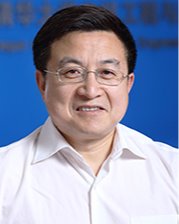 Qirong Jiang (姜齐荣)合作论文数Department of Electrical Engineering, Tsinghua University29Chao Lu (陆超)合作论文数27Wenjin Cui (崔文进)合作论文数清华大学22
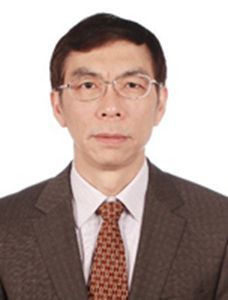 Yong Min (闵勇)合作论文数Department of Electrical Engineering, Tsinghua University;State Key Laboratory of Power System Operation and Control, Tsinghua University19Jingtao Wu合作论文数16
 Ningyi Dai (戴宁怡)合作论文数Faculty of Science and Technology,University of Macau14Jianye Chen (陈建业)合作论文数清华大学电机工程与应用电子技术系11
 Renjie Ding (丁仁杰)合作论文数清华大学电机工程与应用电子技术系10
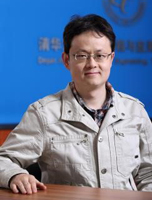 Shuqing Zhang (张树卿)合作论文数Department of Electrical Engineering, Tsinghua University10Yiliang Tang合作论文数9WU Xiao-chen合作论文数8Jinyu Xiao合作论文数8Dong Shen合作论文数8
 Chi-Seng Lam (林智聲)合作论文数State Key Laboratory of Analog and Mixed-Signal VLSI, Institute of Microelectronics, University of Macau;Department of Electrical and Computer Engineering, Faculty of Science and Technology, University of Macau8Zhan Changjiang合作论文数7Wenhua Liu (刘文华)合作论文数7
 Chao Wu (吴超)合作论文数College of Mechatronics and Control Engineering, Shenzhen University7
 Liang-Bing Zhao合作论文数7Luyuan Tong合作论文数7
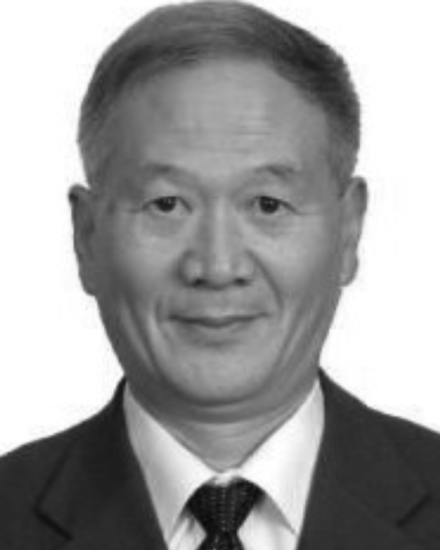 Mingchui Dong合作论文数university of macau6huaijin chen (陈淮金)合作论文数6Xinfeng Wang合作论文数6Jian Le (乐健)合作论文数6
 Junbo Zhang (张俊勃)合作论文数School of Electric Power Engineering, South China University of Technology6
 Jing Tang合作论文数6Lincheng Xiu (修林成)合作论文数5Gang Duan合作论文数5XiaoLiang Dong (董晓亮)合作论文数5
 Zhihua Wang (王志华)合作论文数School of Integrated Circuits, Tsinghua University5Yingdong Wei (魏应冬)合作论文数5Zhu Shouzhen (朱守真)合作论文数4Weixin Ma合作论文数4Songtai Yu合作论文数4Zhigang Huang合作论文数4
 Yi Zhao合作论文数4MinCong Huang (黄民聪)合作论文数4SanLi Zheng (郑三立)合作论文数4XianZhang Lei (雷宪章)合作论文数4
 Xinwei Shen (沈欣炜)合作论文数Institute for Ocean Engineering, Shenzhen International Graduate School, Tsinghua University4
 Qiang Lu (卢强)合作论文数Tsinghua University4Jinghong Zheng (郑竞宏)合作论文数4
 Zhichang Yuan (袁志昌)合作论文数Department of Electrical Engineering, Tsinghua University4
 Kongxing Lin (林孔兴)合作论文数华中电力集团公司3Weiji Chen合作论文数3




