Aiming at the problem that machine vision is difficult to be applied to the radioactive source grasping due to the semi-closed and strong radiation environment of the lead can, we propose a memory reasoning based reinforcement learning grasping method. The kinematics model of intelligent robot grasping system is constructed based on machine vision. The interaction between the intelligent robot and internal environment of lead cans is realized by force feedback. Through the memory reasoning decision of historical grasping data, the autonomous grasping of radioactive sources is realized. Using the Gazebo simulator in robot operating system (ROS), the Monte Carlo sampling method and reinforcement learning grasping method based on memory reasoning are simulated, respectively. The results show that the reinforcement learning grasping method based on memory reasoning achieves the average grasping efficiency of 84.67% higher than that of Monte Carlo sampling method and thus demonstrate that the reinforcement learning grasping method can effectively solve the problem of autonomous grasping of radioactive sources in lead cans.
针对移动机器人的轨迹规划和轨迹跟踪控制问题,提出一种加速度和速度约束情况下,通过贝塞尔曲线拟合参考轨迹,再利用跟踪微分器规划平滑速度的轨迹规划新方法;基于Backstepping方法,建立机器人位姿误差方程并进行控制器的设计,同时分析了控制参数对轨迹跟踪性能的影响;将轨迹规划方法和控制算法结合,并在仿真平台和移动机器人实物平台上进行实验验证.实验结果验证了轨迹规划算法和控制器的可靠性及有效性,相比于未进行速度规划、速度不连续和滑模控制等方法,提出的方法控制平稳且有效减少了位姿误差.
为了实现各种场合下机器人的高精高可靠应用,需要准确评估机器人整机性能.然而,工业机器人整机性能评估指标及其影响因子多、影响关系耦合性强、运行环境及工况条件多变,极大地限制了实验研究法的执行性及准确性.为此,本文提出一种基于随机遗传算法优化BP神经网络(BPNN)的工业机器人整机性能评估模型.首先,分析确定模型的输入参数和输出参数;然后,选用BP神经网络作为整机性能预测评估模型,并对网络进行结构设计;第三,利用遗传算法优化BP神经网络的初始权重和阈值,防止训练过程陷入局部最优;最后,通过训练集和验证集对模型进行训练和验证.研究结果表明:BPNN整机性能评估模型存在校正决定系数得分较低的情况,而经过遗传算法优化后几乎未出现极低分;模型对于新样本的预测误差总体分布正常,几乎未出现极端异常值.遗传算法能够有效防止BPNN整机性能评估模型陷入局部最小值,提高模型的泛化能力,基于遗传算法优化BP神经网络的整机性能评估模型能够准确预测工业机器人整机性能.
针对数控加工过程日益复杂,数控系统热误差建模及误差补偿控制越发困难的问题,分析了传统建模方式面临的挑战,阐明了以"数据+算法+算力"的数据驱动建模架构在数控系统智能化与精度提升方面面临的机遇和挑战.以数据驱动技术为线索,对数控设备热误差建模和误差补偿控制2个方面的研究现状进行综述.并对数据驱动算法在数控系统中的应用前景进行了乐观预测.
提出了一种基于动力学模型的导纳控制算法,用来实现机器人末端力和位置的柔顺控制,可以在速度模式下控制机器人运动,以保证无外力接触时的轨迹跟踪精度.首先,根据牛顿-欧拉法建立机器人动力学模型;然后,通过粒子群算法辨识动力学模型参数,得到完整的动力学模型;在此基础上,计算机器人末端位置误差和外力,利用设计的导纳控制器实现机器人的柔顺控制,用Matlab的Simulink仿真模块验证了基于动力学模型导纳控制的有效性和可靠性.仿真结果表明:机器人末端没有与环境接触时,具有较高的跟踪精度;与环境接触时,机器人末端会产生位置误差和外力,从而实现机器人的柔顺控制.
Nowadays, industrial robots have been widely used in manufacturing applications; however, their speed is hard to control precisely due to unknown system dynamics. Instead of struggling to get an accurate explicit model, this paper addresses this challenge by proposing a new iterative data-driven fractional model reference control (FMRC) method, which tunes an adaptive controller to ensure that each robot actuation system behaves closely to a reference model with desirable system behavior to be obtained. This method utilizes input-output measurements without requiring an identified model or accessing the plant through specific experiments. A multiple degrees-of-freedom FMRC method with self-learning ability is designed to iteratively reach the optimal control parameters such that an accurate speed tracking is attained for each actuator. Constraints on the input signal are also considered to enhance the system robustness against external disturbances. The convergence, asymptotic accuracy, and stability of the designed control system are analyzed theoretically. Experimental results indicate that the proposed FMRC method is able to achieve a higher tracking precision and better robustness for the industrial robot compared with conventional methods.
Industrial robots can be found in many manufacturing applications that suffer from imprecise position control of their own drive systems due to unknown external disturbances and parametric uncertainties. To address this problem, this paper proposes a robust cascade path-tracking control method to achieve better position control performance for a networked industrial robot. In the joint task space, the cascade control framework is formulated for the developed robotic actuation system, which consists of an inner speed loop and an outer position loop. Instead of exploring the conventional model-based approaches, a multiple degree-of-freedom constrained iterative feedback tuning (CIFT) method is presented to regulate the cascade controller by utilizing the monitored process data straightforwardly. With the integration of the normalized input constraints and position tracking error, the proposed CIFT method seeks an optimal solution to track the desired position profiles with satisfactory accuracy and improved robustness. Theoretical analysis is performed to verify the asymptotical convergence of the closed-loop system. Implemented on a real-time networked industrial robot, experimental results demonstrate that the proposed method can enhance the dynamic path tracking and system robustness during various operating situations.
The precise model identification is one of the key technologies for the high-performance control of a multi-joints industrial robot. In this paper, an improved particle swarm optimization algorithm (IPSO) with a cross-mutation function is presented to estimate the robotic dynamic parameters. This proposed algorithm can avoid the final solution trapping into local optimum, and the identification precision is improved significantly. Firstly, the theoretical model is deduced on the basis of the robotic load dynamic parameters. Then, the IPSO solution is derived to identify the load dynamic parameters achieving a global optimum solution. Thus, the complete robotic dynamic model can be established. The effectiveness of the proposed load identification method is verified by experiments on a real-time industrial robot. As compared with the traditional method, we show that the proposed method maintains superior identification accuracy.
The industrial robot is typically actuated by a permanent magnet synchronous motor (PMSM). In manufacturing applications, the position control performance of the PMSM actuation systems will directly affect the efficiency and precision of the industrial robot. This study proposes a cascade control method to achieve accurate position profile-tracking for a field-bus industrial robot. The proposed method is a data-based method, which implies that only process data is directly used for the controller design without system model information. The cascade position controller optimisation problem is formulated using the collected data from the plant to be controlled. Then, a multiple degrees-of-freedom solution is designed to obtain the optimal control parameters for all actuation PMSM systems. The effectiveness and robustness of the proposed method are demonstrated using an experimental example implemented on the developed field-bus industrial robot.
This study proposes a continuous measurement method of 12 position-dependent geometric errors for rotary axes on five-axis machine tools with a tilting rotary table. Firstly, an algorithm for calculating the three-dimensional position deviations of the standard sphere is presented. The target points on the sphere surface are pre-distributed for the measurements. Then, the single setup continuous measurement method implemented by the standard spheres and a laser displacement sensor is designed. Before performing the measurements, the installation error of the laser displacement sensor is controlled in an acceptance range by an adjustment device with simple procedures. To expand this measurement idea, the application of this continuous measurement method on five-axis machine tools with one rotary axis on the spindle and another one on the worktable is illustrated. The standard uncertainties and the range of the uncertainty contributors are also provided. Finally, an experiment is performed to validate the identification accuracy and efficiency of the proposed method.
The usage of virtual prototype technology to study the static and dynamic properties of machine tools could shorten the life cycle time of machine design as there is no need for a physical prototype. The base of this technology is to establish the virtual model accurately and conveniently. This study presents a hybrid analytic-experimental method for the dynamic modeling of machine tools. In the proposed method, the structural components of machine tools are modeled by an analytic method (finite element method), and the machine elements are represented by models that originate from experimental data. The full dynamic model of the machine tool structure is obtained by assembling the analytic models of the structural components and experimental models of the machine elements. The bolted joint is taken as an example to illustrate the experimental model for the machine elements and the assembly of the analytic and experimental models. The convenience and accuracy of the proposed hybrid analytic-experimental modeling method are illustrated by two engineering examples.
In this paper, a novel chattering-free hybrid control (HC) algorithm is proposed for the speed regulation of permanent magnet synchronous motor (PMSM). The HC is made up of the high-order sliding mode control (HOSMC) scheme and the proportional-integral (PI) control scheme, where HOSMC is developed for transient tracking, and PI is responsible for steady regulation. The error band method is adopted to determine the switching rule between the HOSMC and PI schemes. When the operation condition with strong disturbances happens and the tracking error exceeds the error band, the HOSMC scheme is chosen to be the main controller due to its characteristics of fast response and strong robustness. Under the control of HOSMC, the tracking error will converge to zero gradually. However, the undesirable chattering is generated by the discontinuous and high-frequency switching control action in HOSMC scheme. On the other hand, when the amplitude of the disturbances decreases and the tracking error enters the error band, the PI scheme will replace HOSMC to be the control core such that the actual speed will track the speed reference without chattering or steady error. The main advantages of the proposed HC algorithm are that the chattering is eliminated by the PI scheme, and the strong robustness is guaranteed by the HOSMC scheme. Real-time experiments in embedded platform are conducted to verify the efficiency and superiority of the HC algorithm.
Path tracking, as a subproblem in trajectory planning, is one of the most significant topics in robot researches. In this paper, a time-optimal trajectory planner is proposed, which tracks the specified B-spline path with limit jerk. This planner utilizes the master-slave strategy to plan trajectory for all axes. In the preprocessing stage, switching points are divided into two types: critical points and axis switching points. By detailed classification and S-shape velocity planning of adjacent critical points, the continuous turning problem in B-spline curves is solved. In order to reduce the global execution time under the physical constraints, an iterative optimization method is employed in the velocity profile and the bang-bang control with limit jerk is realized. The proposed algorithms are simulated on a manipulator model with three links. The result shows that the algorithms can be applied to complex B-spline path tracking and generate trajectory for each axis under jerk constraint, which reduces the vibration effectively.
For the existing methods, it will cost a lot of time and computation to solve time-optimal trajectory planning problem of industrial robots along fixed path. To solve this problem, the maximum phase speed profile is obtained firstly by using velocity constraint inequality in joint space. Then, the necessary maximum constraint speed curve is obtained by using joint acceleration/torque constraint inequality. By intersection operation for the above two maximum speed curves, the maximum speed curve under multiple constraints is obtained. Finally, the time optimal trajectory is obtained by correcting the maximum speed curve under multiple constraints with the pruning/shooting algorithm. The efficiency and real-time performance of the proposed algorithm is demonstrated by experiment.
A fast motion planner is presented for manipulator pick-and-place operation in cluttered workspace. This planner consists of two subalgorithms which are proposed to enhance the computational efficiency. First, based on the discretization and extraction of boundary surface from obstacle space, a new obstacle space modeling method is introduced to carry out the collision check promptly. Second, an optimized path searching subalgorithm named moving-window rapidly-exploring random tree is presented. The moving-window unilateral Gaussian random sampling strategy is used for fast convergence to the goal state in different environment. Finally, the proposed motion planner is simulated on a PUMA560 robot manipulator. The simulation results demonstrate that the proposed method enables real-time motion planning and can be implemented conveniently. More importantly, compared to the conventional methods, the developed method requires less storage space for obstacle space model, executes only once to check the collision rapidly for each segmented path. Besides, the stable performance in path searching offers higher robustness for the motion planner.
基于Android系统开发平台,设计了一款智能护理床无线控制软件.采用Android的Activity、Intent组件实现软件的界面部分;采用TCP/IP协议通过Socket套接字实现软件的通信部分;采用Android的Handler机制实现软件的界面与通信线程的交互.软件在某智能护理床上的实验结果表明,通过移动终端对智能护理床进行无线控制不仅方便和实用,而且具有Android系统界面美观、操作简单和接口人性化等特点.
在分析玻璃刻花工艺的基础上,研究了以嵌入式微处理器ARM和FPGA为核心架构的玻璃刻花机控制器硬件平台,以及以Linux和Xenomai构建的实时操作系统为软件框架的软件平台.针对玻璃刻花加工对同步控制、误差补偿和加工工艺的要求,研究了相关的功能模块,完成玻璃刻花机控制器的设计开发.
A new Fast Pose Detection Algorithm is proposed in this paper. Different form other recognition strategies which need users to train template database and cost some time to match, the algorithm is based on a stable geometric feature descriptor. It is a non-model based pose detection method to get the position and orientation of objects. It first sorts out the right contour sequence by digital image processing and contour op-timization. Then, through minimum bounding rectangle and contour edge feature comparison, it gets the ob-ject’ s position and orientation data which will be send to the robot sorting system. So all the objects in scene can be picked up and placed in a straight line with the same direction.
Based on homogeneous transformation matrix,a method of trajectory planning for robot in cartesian space is put forward. In the method,joint attribute is first introduced to predict whether the position of demonstration points is appropriate. Then,based on the trajectory characteristics of the robot's end effector and the advantage of homogeneous transformation matrix,the trajectory planning in the robot's cartesian space is subdivided into translation and rotation trajectory planning,based on which the equation of translation and rotation trajectory can be founded,and the interpolation of position and posture can be proceeded. The method is available for both arc and line trajectory planning for robot in cartesian space. It not only overcomes the original shortcomings of trajectory planning method caused by the singularity of robot and Euler angular algorithm,but also has many characteristics,such as visualized concept,accurate path planning and strong maneuverability.
In this paper, a stable adaptive PI control strategy based on the improved just-in-time learning (IJITL) technique is proposed for permanent magnet synchronous motor (PMSM) drive. Firstly, the traditional JITL technique is improved. The new IJITL technique has less computational burden and is more suitable for online identification of the PMSM drive system which is highly real-time compared to traditional JITL. In this way, the PMSM drive system is identified by IJITL technique, which provides information to an adaptive PI controller. Secondly, the adaptive PI controller is designed in discrete time domain which is composed of a PI controller and a supervisory controller. The PI controller is capable of automatically online tuning the control gains based on the gradient descent method and the supervisory controller is developed to eliminate the effect of the approximation error introduced by the PI controller upon the system stability in the Lyapunov sense. Finally, experimental results on the PMSM drive system show accurate identification and favorable tracking performance.
 Xiaoqi Tang (唐小琦)合作论文数School of Mechanical Science & Engineering, Huazhong University of Science and Technology16
 Bao Song (宋宝)合作论文数School of Mechanical Science and Engineering, Huazhong University of Science and Technology10
 Shuo Xiong合作论文数7
 Yuanlong Xie (谢远龙)合作论文数School of Mechanical Science & Engineering, Huazhong University of Science and Technology6
 Jieyu Tao合作论文数5Zhengyi Li合作论文数4
 Xiangdong Zhou (周向东)合作论文数School of Mechanical Science & Engineering, Huazhong University of Science and Technology4Wenbin ZHANG (张文彬)合作论文数3
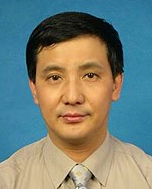 Bin Li (李斌)合作论文数National Nc System Engineering Research Center, Huazhong University Of Science And Technology3ZENG Lizhan (曾理湛)合作论文数2weichun bie (别卫春)合作论文数2LI Han (黎晗)合作论文数2TAN Shuai (谭帅)合作论文数2Xiaojing Yu合作论文数2Yan-jun ZHANG (张艳君)合作论文数2
 Wenhu Nan (南文虎)合作论文数School of Mechanical and Electrical Engineering, Lanzhou University of Technology2Maosheng Tian合作论文数2Zengshuang Huang (黄增双)合作论文数2
 Zhihong Zhu (朱志红)合作论文数National Nc System Engineering Research Center, Huazhong University of Science and Technology2Guojun Meng (孟国军)合作论文数2Ya-qiong SHEN (沈雅琼)合作论文数1TANG Yongjie (唐永杰)合作论文数1zhihong zhu (朱志红)合作论文数1Zhouxiang Jiang合作论文数1Yi ZHANG (张毅)合作论文数1Lang LIU (刘浪)合作论文数1
 Yixuan Guo (郭艺璇)合作论文数Department of Mechanical and Energy Engineering, College of Engineering, Southern University of Science and Technology1encang liu (刘恩沧)合作论文数1
 Hu Li (李虎)合作论文数State Key Laboratory of Intelligent Manufacturing Equipment and Technology, School of Mechanical Science & Engineering, Huazhong University of Science and Technology1Wenjun Qiao合作论文数1weiwei xiao合作论文数1Benwang LI (李本旺)合作论文数1Jing Yang (杨晶)合作论文数1Peng Xie (谢鹏)合作论文数1Xiang Zhang (张翔)合作论文数1
 Wei Meng (孟伟)合作论文数School of Information Engineering, Wuhan University of Technology1
 Shiqi Zheng (郑世祺)合作论文数School of Automation, China University of Geosciences1Zhendong Qin (秦贞冬)合作论文数1
 Shaowu Lu (卢少武)合作论文数1
 Jian Jin (金健)合作论文数Huazhong University of Science and Technology1
 Jihong Chen (陈吉红)合作论文数School of Mechanical Science & Engineering, Huazhong University of Science & Technology1Aimin Gao (高爱民)合作论文数1
 Shuzi Yang (杨叔子)合作论文数Huazhong University Of Science And Technology1Youhu Li (李友虎)合作论文数1
 Dongxiang Zhou (周东祥)合作论文数School of Optical and Electronic Information, Huazhong University of Science and Technology1Jian Feng (冯健)合作论文数1
 Yi Zhang (张毅)合作论文数College of Public Administration, Huazhong University of Science and Technology1
 Ming Jiang (蒋明)合作论文数Wuhan National Laboratory for Optoelectronics, Huazhong University of Science and Technology1




