Objective To investigate the hemodynamic changes before and after Revivent surgery in patients with left ventricular apical aneurysm by cardiac magnetic resonance imaging ( CM R ) and echocardiography . Methods Twenty‐two cases with left ventricular apical aneurysm were examined by two‐dimensional and three‐dimensional transthoracic echocardiography 1 week before operation ,1 month and 12 months after operation ,by CM R 1 week before operation and 12 months after operation .Left ventricular end‐diastolic volume( LVEDV ) ,left ventricular end‐systolic volume ( LVESV ) ,left ventricular end‐diastolic diameter ( LVEDd ) , left ventricular end‐systolic diameter ( LVESd ) , left ventricular ejection fraction ( LVEF) ,stroke volume ( SV ) ,stroke output index ( SVI) ,cardiac output ( CO ) and cardiac output index ( CI) were quantitatively measured and statistical analysis were performed . Results T here were significant differences between preoperation and 1 month after operation for the measurements of LVEDV ,LVESV , LVEDd and LVEF by both CM R and echocardiography ( all P < 0 .05 ) . Compared with preoperation , LVESd decreased significantly 12 months after operation ( P <0 .01) . However ,there were no significant differences between preoperation and 1 or 12 months after operation for the measurements of SV ,SVI ,CO and CI ( all P > 0 .05 ) . T he consistency between CM R and echocardiography measurements was good . Conclusions Revivent surgery provides an effective and feasible treatment for patients with left ventricular apical ventricular aneurysm . T he dual‐modality imaging with CM R and echocardiography are reliable technical means to evaluate the changes of left ventricular heamodynamiscs during the perioperative period of Revivent
Objective To evaluate the safety and efficacy of epicardial ventricular restoration (EVR) using REVIVENT system in patients with antero-septal scar and dilated ischemic cardiomyopathy. Methods Ten ischemic heart patients with antero-septal scar underwent the operation. The scarred lateral left ventricular wall was apposed to the septal scar with serial paired anchors placed through epicardial transmural excluding the non-viable portions of the chamber. Left ventricular hemodynamic assessments as well as left ventricular ejection fraction, left ventricular end-systolic/diastolic volume (LVEDV/LVESV) and their indexes (LVEDVI/LVESVI) were measured by cardiac magnetic resonance (CMR). Results Ten ischemic heart failure patients with antero-septal scar, aged(55.2±13.9)years, received a hybrid epicardial ventricular restoration. Cardiac MR done at one a month after the procedure showed an elevation of LVEF from(27.8±4.6%)to(37.5±11.4)% (+35%, P<0.01). LVESV was significantly reduced from(149.9±61.6) ml to(109.9±58.0)ml (–26.7%, P<0.01), LVESVI was reduced from(84.8±36.7)ml/m2to(63.0±34.2) ml/m2(reduced by 25.7%, P<0.01); LVEDV was reduced from(203.0±64.0)ml to(167.9±58.2)ml (reduced by 17.3%, P<0.01), and LVESV was reduced from(114.5±37.8)ml/m2to(96.2±35.2)ml/m2(reduced by 16.0%, P<0.01). Cardiac output (CO) increased from(4.0±1.5)L/min to(4.8±1.2)L/min(increased by 20.0%, P=0.034) and cardiac index (CI) increased from(2.2±0.7)L/(min ? m2) to(2.7±0.7)L/(min ? m2) (increased by 22.4%, P=0.023). Conclusions Our preliminary experience on EVR using the REVIVENT system demonstrated signifi cant increase in LVEF, CO and CI, with decreases in LVEDV/LVESV at 1 month following the procedure. Its feasibility and safety need further evaluation in the future.
目的:总结近4年来笔者所在中心感染性心内膜炎(infective endocarditis,IE)患者的临床特征,评估心脏外科手术治疗对改善IE预后的价值,以提高IE的临床诊疗水平.方法:回顾性收集2012年7月-2016年6月在厦门大学附属心血管病医院住院治疗的IE患者的流行病学资料、临床表现、并发症、治疗及预后资料.结果:共纳入IE患者123例,平均年龄(45.2±17.1)岁,其中62.6%为男性,73.2%来自于农村,仅15%可追溯感染源.85.6%存在基础心脏病,其中风湿性心脏病25.2%,先天性心脏病15.4%和心脏术史13.0%.48.8%血培养结果阳性,致病菌主要为链球菌属和葡萄球菌属.最常见的临床表现为发热(91.9%)、心脏杂音(82.1%)、贫血(72.4%),感染主要累及左心系统(88.6%),心功能不全(42.3%)、败血症(31.7%)和栓塞事件(17.9%)是最常见的并发症.83例IE接受心脏外科手术治疗,住院期间7例死亡(5.7%),远期随访共16例死亡(13.0%);手术组住院死亡率低于非手术组(3.6%,4.0%),但差异无统计学意义(P>0.05);手术组远期死亡率显著低于非手术组(7.2%,25%),差异有统计学意义(P=0.003).结论:IE基础心脏病因构成比和致病菌发生明显变化,预防及抗感染策略也需相应调整;缺乏特异性临床表现为IE早期确诊带来困难,改良版Duke诊断标准特异性好;外科手术治疗可改善IE患者预后,但具体手术时机仍存在争议.
Objective:To evaluate the performance of European system for cardiac operative risk evaluation(EuroSCORE) Ⅱ and the Society of Thoracic Surgeons(STS) score in patients with infective endocarditis(IE) undergoing cardiac surgery.Methods:Data were retrospectively collected from adult patients undergoing cardiac surgery for IE between July 2012 and March 2016 in our hospital.EuroSCORE Ⅱ and STS score were calculated.The discrimination and calibration of these two scoring system were assessed by receiver-operating characteristic(ROC) curve analysis and Hosmer-Lemeshow goodness-of-fit test.According to the EuroSCORE Ⅱ,patients were divided into the low risk group(<3%),the medium risk group(3%~6%) and the high risk group(≥6%).Differences in prognosis among these three groups were compared.Results:Among 80 IE patients undergoing cardiac surgery,3 patients (3.75%) died in-hospital and total 6 deaths (7.5%) were observed during follow-up.The area under the ROC curve (AUC) for the EuroSCORE Ⅱ,STS,and combination of them was 0.836,0.833,and 0.846 to predict late mortality respectively;0.946,0.980,and 0.980 to predict in-hospital mortality respectively,which indicated good discriminative power.Hosmer-Lemeshow goodness-of-fit test showed significant P-values(P>0.05) indicating good calibration and accuracy.The predictive in-hospital mortality was similar to actual mortality in the high risk group(11.8% vs.10.3%,P=0.358),and significantly higher than that in the low risk and medium groups (P<0.01).The predictive late mortality was similar to actual mortality in the medium risk group(4.1% vs.4.2%,P=0.718),whereas was underestimated in the high risk group(1 1.8% vs.17.2%,P<0.05) and overrated in the low risk group(1.9% vs.0%,P<0.01).Conclusion:Both EuroSCORE Ⅱ and STS scoring system can satisfactorily predict in-hospital mortality and late mortality in patients with IE undergoing cardiac surgery.
We report on diode-pumped Nd:LuAG crystal lasers on F-4(3/2) -> I-4(11/2) transition around 1.1 mu m in continuous-wave and passive Q-switching regimes. For continuous-wave laser operation, a dual wavelength laser at 1117 and 1122 nm is achieved with maximum output power of 5.82 W and slope efficiency of about 42.8%, which is believed to be the highest output power of Nd:LuAG lasers at 1.1 gm. Using an etalon to tune the lasing wavelength, a single-wavelength laser at 1114 nm is also realized, for the first time to our knowledge, with maximum output power of 4.11 W. Further wavelength tuning from 1113.9 to 1122.6 nm is also obtainable. Passively Q-switched laser operation at 1122 nm is finally performed with a maximum average output power of 0.73 W, the narrowest pulse width of 21.2 ns and a maximum pulse repetition rate of 14.12 kHz, which leads to a maximum pulse peak power of 2.43 kW and a maximum pulse energy of about 51.7 mu J. (C) 2017 Elsevier Ltd. All rights reserved.
目的 总结采用冠状动脉旁路移植术(CABG)治疗冠状动脉粥样硬化性心脏病的临床经验.方法 回顾性分析2004年1月至2015年7月736例冠状动脉粥样硬化性心脏病患者接受CABG治疗的临床资料.结果 736例患者中,564例接受非体外循环下CABG,168例接受体外循环下CABG.患者术后呼吸机辅助时间(19.6±31.4)h,监护室停留时间(43.1±45.9)h;术后平均住院时间(12.6±6.4)d.术后出现肾功能不全40例(5.5%),需要透析治疗19例(2.6%);88例患者在围手术期出现并发症,发生率约12.0%;围手术期死亡28例,死亡率为3.8%.结论 采用心脏停跳或不停跳下CABG治疗冠心病均可取得满意的近期临床效果,手术风险较低.
We report a full investigation of continuous-wave diode-pumped Nd:LuAG single crystal lasers on F-4(3/2)-> I-4(13/2) transition around 1.3 and 1.4 mu m. In free-running mode, a maximum output power of 4.18 W is achieved for a simultaneous dual-wavelength laser operation at 1321 and 1338 nm, which represents the highest output power for Nd:LuAG laser material at a 1.3 mu m emission band. Three single wavelength lasers at 1340, 1332 and 1322 nm, as well as a dual-wavelength laser at 1334 and 1338 nm, are also generated with maximum output powers of 2.39, 2.63, 2.24 and 1.23 W, respectively, with the aid of a glass etalon. Moreover, a single wavelength laser at 1353 nm is also obtained with a maximum output power of 1.53 W. Furthermore, in free-running mode, simultaneous tri-wavelength eye-safe lasers at 1419, 1432 and 1442 nm are attained with a maximum output power of 1.83 W, and a 1.08 W single wavelength laser at 1419 nm is also yielded. Most of the 1.3 mu m lasers and all of the 1.4 mu m lasers are demonstrated for the first time to our knowledge. Thus, this work indicates that Nd: LuAG crystal is a very promising laser gain medium for high-power continuous-wave infrared laser generation. (C) 2016 Optical Society of America
We report on the efficient diode-pumped continuous-wave laser operation of a Nd:YAG crystal at several wavelengths by using a simple and compact two-mirror laser cavity and an undoped YAG thin plate acting as a Fabry-Pérot (F-P) etalon. We thus obtain a high-power single-wavelength laser operation at about 1073 nm with a maximum output power of 5.58 W and a laser slope efficiency of about 36.6%, with respect to absorbed pump power, which is believed to be the highest output power ever obtained with Nd:YAG at 1073 nm. We also achieve dual-wavelength laser operation at 1064 and 1078 nm, with a maximum output power of 1.57 W, and triwavelength laser operation at 1061, 1064, and 1078 nm, with a maximum output power of 2.16 W. This is the first demonstration, to the best of our knowledge, of a diode-pumped Nd:YAG laser at 1078 nm.
We report on high-performance infrared lasers at 0.94 μm based on quasi-three-level transition of F3/24→I9/24 in Nd:LuYAG mixed crystal, for the first time to our knowledge. The maximum output power was achieved to 5.64 W with slope efficiency of approximately 52.5% at 946 nm. The simultaneous dual-wavelength laser at 939 and 946 nm is also obtained with maximum output power of 3.61 W and slope efficiency of 34.8% by introducing a glass etalon into the cavity. Moreover, a 2.0-W single-wavelength laser at 939 nm can be further attained by suitably tilting the etalon. Using a Cr:YAG saturable absorber, Q-switched laser operation is realized with maximum average output power of 0.68 W and the narrowest pulse width of 8.4 ns, which results in the maximum single pulse energy of approximately 55.3 μJ and the maximum pulse peak power of approximately 6.15 kW. Finally, thermal focal length of the laser crystal is estimated by using a flat-flat laser cavity.
We report diode-pumped continuous-wave (CW) and Q-switched Nd:GYSO lasers using a compact two-mirror linear laser cavity. Single-wavelength laser emissions at 1074.11nm with 4.1-W power and at 1058.27nm with 1.47-W power have been obtained in CW mode. The slope efficiencies with respect to the absorbed pump powers are 48.5% and 22.9%, respectively. Wavelength tunability is also demonstrated with range of about 8nm. Using a MoS2 saturable absorber, maximum average output power up to 410 mW at 1074nm can be yielded with absorbed pump power 6.41W and the maximum pulse energy reaches 1.20μJ with pulse repetition rate of 342.5kHz and shortest pulse width of 810ns. The CW laser results represent the best laser performance and the Q-switching also present the highest output power for Q-switched Nd3+ lasers with MoS2 as saturable absorber.
We report a power scaled laser operation of diode-pumped Nd:LSO lasers at 1.35 mu m. With single-end pumping scheme, maximum output power reaches 0.77 W at 1358.99 nm in free-running mode. By inserting an etalon, wavelength tuning can be realized with tuning range of at least 6.5 nm from 1356.95 nm to 136339 nm. Simultaneous dual-wavelength laser at 1331.63 and 1357.43 nm can also be generated with total output power of 0.19 W, for the first time to. our knowledge. Further power scaling to 1.03 W of the 1358.99 nm laser is finally achieved by recycling the remaining pump power, which represents the highest output power so far for 1.3 mu m silicate lasers. (C) 2016 Elsevier B.V. All rights reserved.
目的:总结非体外循环冠状动脉搭桥术治疗多支冠状动脉血管病变的临床经验,探讨其对多支冠状动脉血管病变的临床应用价值。方法回顾性分析2012年1月至2015年1月254例在我科行非体外循环下冠状动脉搭桥术的多支血管病变冠状动脉粥样硬化心脏病患者的临床资料,其中三支血管病变115例,三支血管病变+左主干病变139例。结果入组患者均接受非体外循环下冠状动脉搭桥术,平均术中搭桥2.94根,术中转为体外循环辅助支持4例,围手术期需IABP辅助20例,术中无死亡病例,患者在围手术期出现并发症32例,死亡6例。全组患者均接受随访,随访时间6~30个月,平均14.76个月。随访期间未出现心绞痛症状。结论非体外循环下冠状动脉搭桥术是多支血管病变患者的一种有效治疗方式,有利于患者的早期恢复。
We report diode-pumped Nd:LuYAG mixed crystal lasers around 1.06 μm. In free running mode, single wavelength laser at 1063.88 nm is obtained with maximum output power of 8.71 W and slope efficiency of 60.4%. The laser result represents the best laser performance of Nd:LuYAG laser so far. Using an undoped YAG thin plate to act as intracavity etalon, four simultaneous dual-wavelength lasers can be yielded, i.e. 1064.12 and 1060.95 nm with maximum output power of 4.32 W and slope efficiency of about 31.6%, 1064.37 and 1072.89 nm with maximum output power of 2.06 W and slope efficiency of about 15.0%, 1063.88 and 1052.41 nm with maximum output power of 1.82 W and slope efficiency of about 14.4%, as well as 1063.88 and 1068.26 nm with maximum output power of 1.51 W and slope efficiency of about 13.1%. These dual-wavelength lasers are all generated for the first time to our knowledge in Nd:LuYAG crystal. The multiple peak structure of the Nd:LuYAG mixed crystal like Nd:YAG single crystal could be a potential laser source for THz wave generation.
Based on a free-running diode-end-pumped a-cut Nd:YVO4 laser with output power of 3.61 W at a single wavelength of π-polarized 1342 nm, we further obtain a 1.82 W σ-polarized 1345 nm laser with a slope efficiency of about 22.3% by introducing an intracavity etalon, for the first time to the best of our knowledge. In addition, a simultaneous dual-wavelength orthogonally polarized laser at π-polarized 1342 nm and σ-polarized 1345 nm can also be achieved with a maximum output power of 1.35 W. The dual-wavelength laser provides a potential laser source for terahertz wave generation.
We report a free-running orthogonally polarized dual-wavelength laser at 1313 and 1321 nm with maximum total output power of about 1.73 W using a two-mirror linear cavity. By inserting an etalon into the linear cavity, single-wavelength lasers at 1317 or 1323 nm, two-wavelength lasers at 1317 and 1323 nm, as well as four-wavelength lasers at 1313, 1317, 1323 and 1370 nm can be achieved with maximum output powers of about 0.73, 0.63, 0.78 and 0.25 W, respectively. About 10-nm wavelength tunability from about 1313 to 1323 nm is also realized by inserting the etalon into a three-mirror V-type Nd:YLF laser cavity.
We report on the diode-pumped continuous-wave (CW) and passively Q-switched laser operation of a c-cut Nd:YAlO3 (YAP) laser crystal. CW laser operation is demonstrated for the first time with 0.61W output power on a low-gain emission line at 1364nm by using a 0.08-mm glass etalon. Dual-wavelength laser operation is also achieved at 1328 and 1340nm as well as at 1340 and 1364nm with maximum output powers of 0.87 and 0.83W, respectively. Using graphene oxide as saturable absorber, stable Q-switching is obtained at 1339nm with a maximum average output power of 0.43W, a pulse width of 380ns and a repetition rate of 76.9kHz, thus laser pulses with 14.7W peak power and 5.6μJ pulse energy. This work presents the first graphene oxide based Q-switched Nd:YAP laser and shows the effectiveness of graphene oxide as saturable absorber for the generation of 1.3μm laser pulses.
Calibrated room temperature polarized emission spectra recorded between 850 and 1400 nm and nearly free from any reabsorption effect are presented for the first time. A laser output power of 2.35 W is obtained at 1063.45 nm with a laser slope efficiency of about 56% by pumping an uncoated Nd:LaF3 single crystal with a fiber-coupled laser diode at 790 nm inside a standard two-mirror linear laser cavity. True dual-wavelength laser operation on two orthogonally polarized laser lines around 1040 and 1065 nm as well as continuous laser wavelength tuning around 1040 nm, 1048 nm and 1064 nm are also achieved for the first time by using either an intracavity etalon or a birefringent filter. Laser operation is finally obtained around 1330.73 nm with a maximum output power of 0.18 W and a laser slope efficiency of about 4% and simultaneous dual-wavelength laser operation at 1329.04 and 1359.67 nm is demonstrated by using a glass etalon. (C) 2016 Elsevier B.V. All rights reserved.
We report a diode-pumped continuous-wave simultaneous dual-wavelength Nd:LSO laser at 1059 and 1067 nm. By employing a specially coated output coupler with relatively high transmissions at high-gain emission lines of 1075 and 1079 nm, the two low-gain emission lines, 1059 and 1067 nm, can be achieved, for the first time to our knowledge, with maximum output power of 1.27 W and slope efficiency of about 29.2%. The output power is only limited by the available pump power. Output beam quality is also measured to be about 1.19 and 1.21 of the beam propagation factors in the x and y directions, respectively.
 Huiying Xu (许惠英)合作论文数School of Electronic Science and Engineering, Xiamen University21
 Bin Xu (徐斌)合作论文数School of Electronic Science and Engineering, Xiamen University21
 Zhiping Cai (蔡志平)合作论文数School of Electronic Science and Engineering, Xiamen University21
 Hao You (尤颢)合作论文数Xiamen Cardiovascular Hospital Xiamen University20
 SHAN Zhong-gui (单忠贵)合作论文数17Yi Wang合作论文数17ChongXian Liao (廖崇先)合作论文数15Jinglong Lan合作论文数13Xiaoxu Huang合作论文数11
 Xiaodong Xu合作论文数Department of Physics, University of Washington;Department of Materials Science and Engineering, University of Washington10
 Qian Yang (杨谦)合作论文数Xiamen Cardiovascular Hospital, Xiamen University9
 Feng Qiu (邱风)合作论文数Xiamen Cardiovascular Hospital, Xiamen University8
 Yongjie Cheng合作论文数7
 Tao Shu (舒涛)合作论文数The First Affiliated Hospital of Xiamen University7
 Hongwei Guo (郭宏伟)合作论文数The First Affiliated Hospital of Xiamen University6
 Richard Moncorge合作论文数Département de Physique-EEA, University of Caen Normandy6Qin Cui合作论文数5Jian Zhang (章健)合作论文数5
 Xia Zhao (赵霞)合作论文数Zhongshan Hospital Xiamen University5Peng Zhu (朱鹏)合作论文数4
 Yuan Wu (伍源)合作论文数Xiamen Cardiovascular Hospital, Xiamen University4
 Maolong Su (苏茂龙)合作论文数School of Medicine, Xiamen University;Xiamen Cardiovascular Hospital, Xiamen University4KeKe Lai (赖可可)合作论文数3
 Zhengqian Luo (罗正钱)合作论文数School of Electronic Science and Technology, Xiamen University3
 Yan Wang (王焱)合作论文数Xiamen Cardiovascular Hospital, Xiamen University3
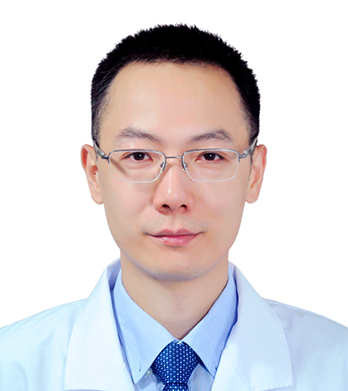 Bin Wang (王斌)合作论文数Xiamen Cardiovascular Hospital, Xiamen University3
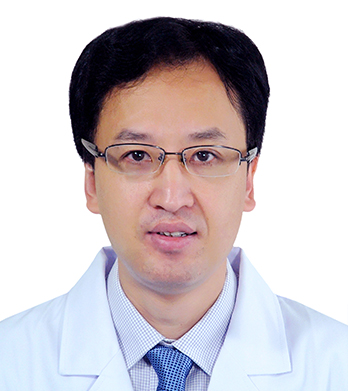 Guosheng Xiao (肖国胜)合作论文数Xiamen Cardiovascular Hospital, Xiamen University3
 Shengwei Cui (崔省伟)合作论文数3Shibo Song (宋世波)合作论文数2Hua Liang合作论文数2FanQi Meng (孟凡琦)合作论文数2XiaoBin Hao (郝晓斌)合作论文数2ZhiWei Zhao (赵之伟)合作论文数2
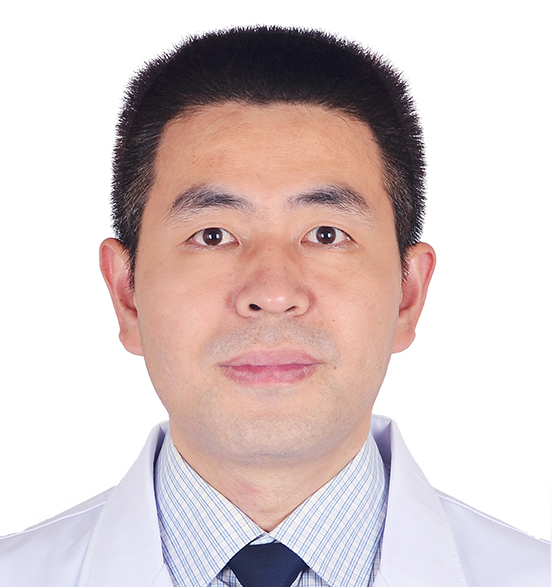 Guoming Zhang (张国明)合作论文数Xiamen Cardiovascular Hospital, Xiamen University2
 Yong Sun (孙勇)合作论文数Zhongshan Hospital, Xiamen University2
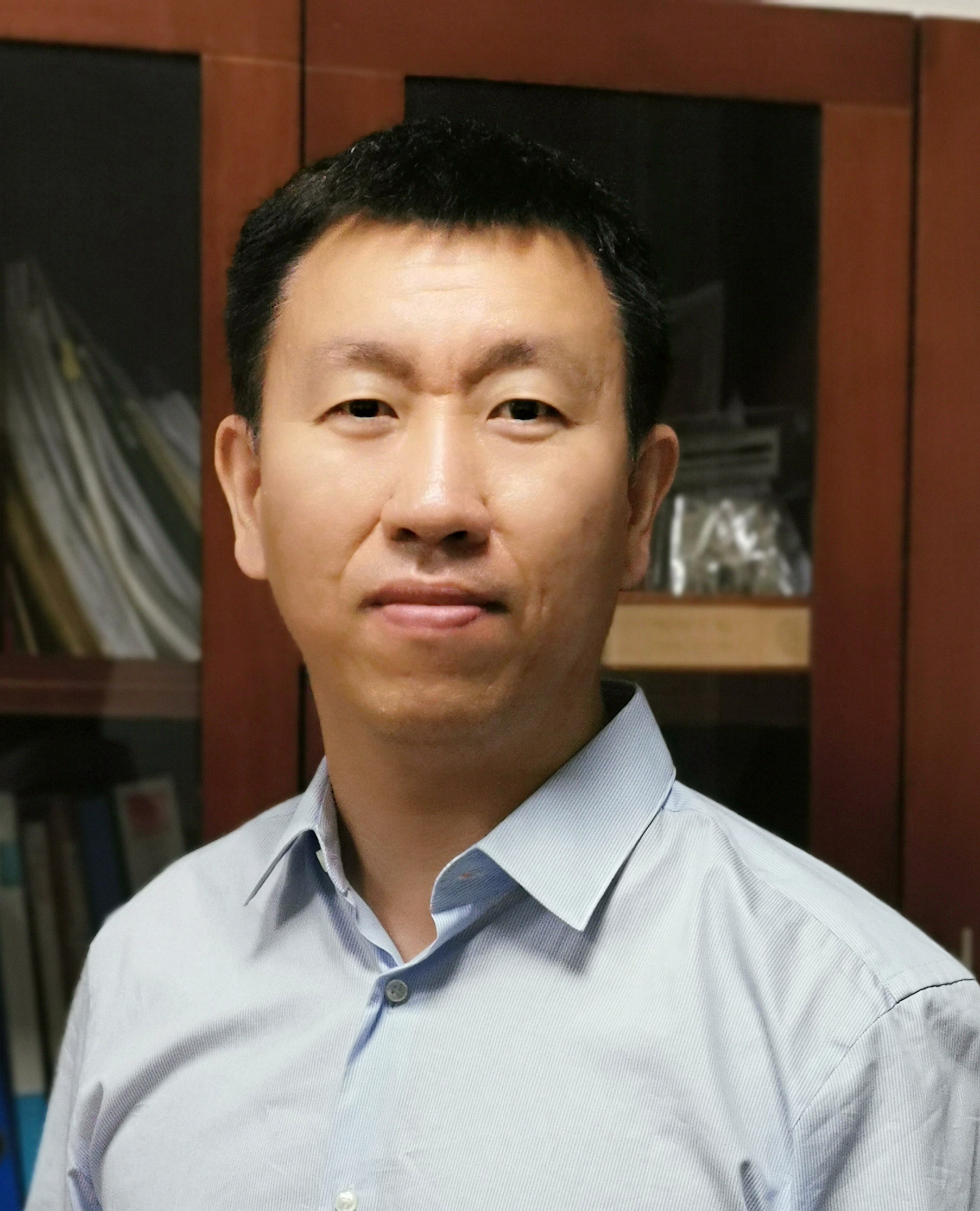 Jun Xu (徐君)合作论文数Innovation Academy for Precision Measurement Science and Technology, Chinese Academy of Sciences;University of Chinese Academy of Sciences2Chen Nan合作论文数1Yang Qian合作论文数1Lon S. Annest合作论文数1Xinyu Wang合作论文数1Jian Wang合作论文数1Shui-wei QIU (邱水玮)合作论文数1Xu Chen合作论文数1Huimin Wang合作论文数1Xiaofeng Guan合作论文数1




