Traditional video restoration methods are typically designed for a single, known degradation type, while real-world videos often experience time-varying and unknown degradations. Although more general restoration methods have been proposed, they largely overlook the time-varying nature of real-world degradations. In this work, we focus on time-varying unknown degradations, which introduce frame-wise distortions and pose two significant challenges to video restoration. First, the unknown nature of degradations expands the input degradation space and introduces significant uncertainty into the restoration process. Second, time-varying degradations cause inconsistent distortions across frames, hindering the effective aggregation of temporal information from neighboring frames. To address these two challenges, we propose FaverNet, a Frequency-guided All-in-one VidEo Restoration Network, which incorporates a Frequency-discriminative Conditioning Mechanism (FCM) and a Prompt-guided Alignment Mechanism (PAM). Specifically, FCM enhances the degradation-awareness of the restoration process by conditioning the model with degradation cues extracted from frequency domain, where different degradation types are more separable than in the spatial domain. PAM further leverages these degradation cues to assist alignment between neighboring frames, enabling temporally coherent and degradation-robust information aggregation. Furthermore, we build two benchmarks covering both classic low-level distortions (e.g., noise, blur) and complex weather-related degradations (e.g., haze, rain). Experiments show that FaverNet offers an encouraging solution for practical video restoration and achieves superior performance.
Recent advancements in Mamba have shown promising results in image restoration. These methods typically flatten 2D images into multiple distinct 1D sequences along rows and columns, process each sequence independently using selective scan operation, and recombine them to form the outputs. However, such a paradigm overlooks two vital aspects: i) the local relationships and spatial continuity inherent in natural images, and ii) the discrepancies among sequences unfolded through totally different ways. To overcome the drawbacks, we explore two problems in Mamba-based restoration methods: i) how to design a scanning strategy preserving both locality and continuity while facilitating restoration, and ii) how to aggregate the distinct sequences unfolded in totally different ways. To address these problems, we propose a novel Mamba-based Image Restoration model (MaIR), which consists of Nested S-shaped Scanning strategy (NSS) and Sequence Shuffle Attention block (SSA). Specifically, NSS preserves locality and continuity of the input images through the stripe-based scanning region and the S-shaped scanning path, respectively. SSA aggregates sequences through calculating attention weights within the corresponding channels of different sequences. Thanks to NSS and SSA, MaIR surpasses 40 baselines across 14 challenging datasets, achieving state-of-the-art performance on the tasks of image super-resolution, denoising, deblurring and dehazing. The code is available at https://github.com/XLearning-SCU/2025-CVPR-MaIR.
Under-Display Camera (UDC) restoration aims to recover the underlying clean images from the degraded images captured by UDC. Although promising results have been achieved, most existing UDC restoration methods still suffer from two vital obstacles in practice: (i) existing UDC restoration models are parameter- intensive, and (ii) most of them struggle to capture long-range dependencies within high-resolution images. To overcome above drawbacks, we study a challenging problem in UDC restoration, namely, how to design a lightweight UDC restoration model that could capture long-range image dependencies. To this end, we propose a novel lightweight Mamba-based UDC restoration network (MUNet) consisting of two modules, named Separate Multi-scale Mamba (SMM) and Separate Convolutional Feature Extractor (SCFE). Specifically, SMM exploits our proposed alternate scanning strategy to efficiently capture long-range dependencies across multi- scale image features. SCFE preserves local dependencies through convolutions with various receptive fields. Thanks to SMM and SCFE, MUNet achieves state-of-the-art lightweight UDC restoration performance with significantly fewer parameters, making it well-suited for deployment on mobile devices. Our codes will be available after acceptance.
In this paper, we study two challenging but less-touched problems in image restoration, namely, i) how to quantify the relationship between image degradations and ii) how to improve the performance of a specific restoration task using the quantified relationship. To tackle the first challenge, we proposed a Degradation Relationship Index (DRI) which is defined as the mean drop rate difference in the validation loss between two models which are respectively trained using the anchor degradation and the mixture of the anchor and the auxiliary degradations. Through quantifying the degradation relationship using DRI, we reveal that i) a positive DRI always predicts performance improvement by using the specific degradation as an auxiliary to train models; ii) the degradation proportion is crucial to the image restoration performance. In other words, the restoration performance is improved only if the anchor and the auxiliary degradations are mixed with an appropriate proportion. Based on the observations, we further propose a simple but effective method (dubbed DPD) to estimate whether the given degradation combinations could improve the performance on the anchor degradation with the assistance of the auxiliary degradation. Extensive experimental results verify the effectiveness of our method in dehazing, denoising, deraining, and desnowing. The code will be released after acceptance.
In contrast to close-set scenarios that restore images from a predefined set of degradations, open-set image restoration aims to handle the unknown degradations that were unforeseen during the pretraining phase, which is less-touched as far as we know. This work study this challenging problem and reveal its essence as unidentified distribution shifts between the test and training data. Recently, test-time adaptation has emerged as a fundamental method to address this inherent disparities. Inspired by it, we propose a test-time degradation adaptation framework for open-set image restoration, which consists of three components,i.e., i) a pre-trained and degradation-agnostic diffusion model for generating clean images, ii) a test-time degradation adapter adapts the unknown degradations based on the input image during the testing phase, and iii) the adapter-guided image restoration guides the model through the adapter to produce the corresponding clean image. Through experiments on multiple degradations, we show that our method achieves comparable even better performance than those task-specific methods. The code is available at https://github.com/XLearning-SCU/2024-ICML-TAO.
Vision Transformers have shown promising performance in image restoration, which usually conduct window- or channel-based attention to avoid intensive computations. Although the promising performance has been achieved, they go against the biggest success factor of Transformers to a certain extent by capturing the local instead of global dependency among pixels. In this paper, we propose a novel efficient image restoration Transformer that first captures the superpixel-wise global dependency, and then transfers it into each pixel. Such a coarse-to-fine paradigm is implemented through two neural blocks, i.e., condensed attention neural block (CA) and dual adaptive neural block (DA). In brief, CA employs feature aggregation, attention computation, and feature recovery to efficiently capture the global dependency at the superpixel level. To embrace the pixel-wise global dependency, DA takes a novel dual-way structure to adaptively encapsulate the globality from superpixels into pixels. Thanks to the two neural blocks, our method achieves comparable performance while taking only 6% FLOPs compared with SwinIR.
In contrast to close-set scenarios that restore images from a predefined set of degradations, open-set image restoration aims to handle the unknown degradations that were unforeseen during the pretraining phase, which is less-touched as far as we know. In this work, we explicitly study this challenging problem and reveal its essence, i.e., the unidentified distribution shifts between test and training data. In recent, test-time adaptation emerges as a fundamental method to address this inherent disparities. Inspired by this, we propose a test-time degradation adaption framework for open-set image restoration, which involves three components, i.e., i) a pre-trained and degradation-agnostic diffusion model to generate clean images, ii) a test-time degradation adapter adapts the unknown degradations based on the input image during the testing phase, and iii) the adapter-guided image restoration guides the model through the adapter to produce the corresponding clean image. Through experiments on multiple degradations absent from the training data, we show that our method achieves comparable even better performance than those task-specific methods.
Image hazing aims to render a hazy image from a given clean one, which could be applied to a variety of practical applications such as gaming, filming, photographic filtering, and image dehazing. To generate plausible haze, we study two less-touched but challenging problems in hazy image rendering, namely, i) how to estimate the transmission map from a single image without auxiliary information, and ii) how to adaptively learn the airlight from exemplars, i.e., unpaired real hazy images. To this end, we propose a neural rendering method for image hazing, dubbed as HazeGEN. To be specific, HazeGEN is a knowledge-driven neural network which estimates the transmission map by leveraging a new prior, i.e., there exists the structure similarity (e.g., contour and luminance) between the transmission map and the input clean image. To adaptively learn the airlight, we build a neural module based on another new prior, i.e., the rendered hazy image and the exemplar are similar in the airlight distribution. To the best of our knowledge, this could be the first attempt to deeply render hazy images in an unsupervised fashion. Compared with existing haze generation methods, HazeGEN renders the hazy images in an unsupervised, learnable, and controllable manner, thus avoiding the labor-intensive efforts in paired data collection and the domain-shift issue in haze generation. Extensive experiments show the promising performance of our method comparing with some baselines in both qualitative and quantitative comparisons. The code is available at https://github.com/XLearning-SCU.
In this paper, we study a challenging problem in image restoration, namely, how to develop an all-in-one method that could recover images from a variety of unknown corruption types and levels. To this end, we propose an All-in-one Image Restoration Network (AirNet) consisting of two neural modules, named Contrastive-Based Degraded Encoder (CBDE) and Degradation-Guided Restoration Network (DGRN). The major advantages of AirNet are two-fold. First, it is an all-in-one solution which could recover various degraded images in one network. Second, AirNet is free from the prior of the corruption types and levels, which just uses the observed corrupted image to perform inference. These two advantages enable AirNet to enjoy better flexibility and higher economy in real world scenarios wherein the priors on the corruptions are hard to know and the degradation will change with space and time. Extensive experimental results show the proposed method outperforms 17 image restoration baselines on four challenging datasets. The code is available at https://github.com/XLearning-SCU/2022-CVPR-AirNet.
In this paper, we study two challenging and less-touched problems in single image dehazing, namely, how to make deep learning achieve image dehazing without training on the ground-truth clean image (unsupervised) and an image collection (untrained). An unsupervised model will avoid the intensive labor of collecting hazy-clean image pairs, and an untrained model is a “real” single image dehazing approach which could remove haze based on the observed hazy image only and no extra images are used. Motivated by the layer disentanglement, we propose a novel method, called you only look yourself (YOLY) which could be one of the first unsupervised and untrained neural networks for image dehazing. In brief, YOLY employs three joint subnetworks to separate the observed hazy image into several latent layers, i.e., scene radiance layer, transmission map layer, and atmospheric light layer. After that, three layers are further composed to the hazy image in a self-supervised manner. Thanks to the unsupervised and untrained characteristics of YOLY, our method bypasses the conventional training paradigm of deep models on hazy-clean pairs or a large scale dataset, thus avoids the labor-intensive data collection and the domain shift issue. Besides, our method also provides an effective learning-based haze transfer solution thanks to its layer disentanglement mechanism. Extensive experiments show the promising performance of our method in image dehazing compared with 14 methods on six databases. The code could be accessed at www.pengxi.me .
In this paper, we study two challenging problems in incomplete multi-view clustering analysis, namely, i) how to learn an informative and consistent representation among different views without the help of labels and ii) how to recover the missing views from data. To this end, we propose a novel objective that incorporates representation learning and data recovery into a unified framework from the view of information theory. To be specific, the informative and consistent representation is learned by maximizing the mutual information across different views through contrastive learning, and the missing views are recovered by minimizing the conditional entropy of different views through dual prediction. To the best of our knowledge, this could be the first work to provide a theoretical framework that unifies the consistent representation learning and cross-view data recovery. Extensive experimental results show the proposed method remarkably outperforms 10 competitive multi-view clustering methods on four challenging datasets. The code is available at https://pengxi.me.
Motion blur is a common photography artifact in dynamic environments that typically comes jointly with the other types of degradation. This paper reviews the NTIRE 2021 Challenge on Image Deblurring. In this challenge report, we describe the challenge specifics and the evaluation results from the 2 competition tracks with the proposed solutions. While both the tracks aim to recover a high-quality clean image from a blurry image, different artifacts are jointly involved. In track 1, the blurry images are in a low resolution while track 2 images are compressed in JPEG format. In each competition, there were 338 and 238 registered participants and in the final testing phase, 18 and 17 teams competed. The winning methods demonstrate the state-of-the-art performance on the image deblurring task with the jointly combined artifacts.
Multi-scale neural networks have shown effectiveness in image restoration tasks, which are usually designed and integrated in a handcrafted manner. Different from the existing labor-intensive handcrafted architecture design paradigms, we present a novel method, termed as multi-sCaLe nEural ARchitecture sEarch for image Restoration (CLEARER), which is a specifically designed neural architecture search (NAS) for image restoration. Our contributions are twofold. On one hand, we design a multi-scale search space that consists of three task-flexible modules. Namely, 1) Parallel module that connects multi-resolution neural blocks in parallel, while preserving the channels and spatial-resolution in each neural block, 2) Transition module remains the existing multi-resolution features while extending them to a lower resolution, 3) Fusion module integrates multi-resolution features by passing the features of the parallel neural blocks to the current neural blocks. On the other hand, we present novel losses which could 1) balance the tradeoff between the model complexity and performance, which is highly expected to image restoration; and 2) relax the discrete architecture parameters into a continuous distribution which approximates to either 0 or 1. As a result, a differentiable strategy could be employed to search when to fuse or extract multi-resolution features, while the discretization issue faced by the gradient-based NAS could be alleviated. The proposed CLEARER could search a promising architecture in two GPU hours. Extensive experiments show the promising performance of our method comparing with nine image denoising methods and eight image deraining approaches in quantitative and qualitative evaluations.
In this article, we study two less-touched challenging problems in single image dehazing neural networks, namely, how to remove haze from a given image in an unsupervised and zero-shot manner. To the ends, we propose a novel method based on the idea of layer disentanglement by viewing a hazy image as the entanglement of several “simpler” layers, i.e., a hazy-free image layer, transmission map layer, and atmospheric light layer. The major advantages of the proposed ZID are two-fold. First, it is an unsupervised method that does not use any clean images including hazy-clean pairs as the ground-truth. Second, ZID is a “zero-shot” method, which just uses the observed single hazy image to perform learning and inference. In other words, it does not follow the conventional paradigm of training deep model on a large scale dataset. These two advantages enable our method to avoid the labor-intensive data collection and the domain shift issue of using the synthetic hazy images to address the real-world images. Extensive comparisons show the promising performance of our method compared with 15 approaches in the qualitative and quantitive evaluations. The source code could be found at http://www.pengxi.me.
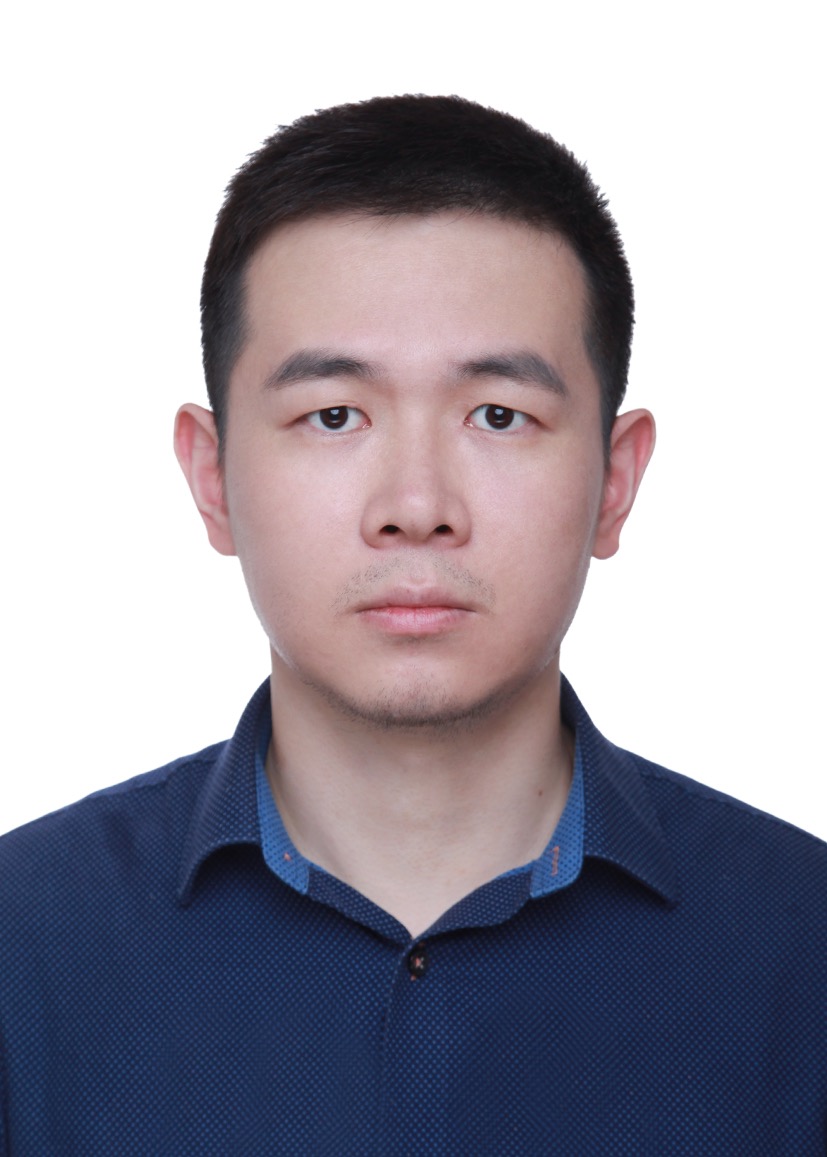 Xi Peng (彭玺)合作论文数XLearning Group, College of Computer Science, Sichuan Univerisity12
 Yuanbiao Gou (缑元彪)合作论文数College of Computer Science, Sichuan University10Haiyu Zhao (赵海宇)合作论文数College of Computer Science, Sichuan University4
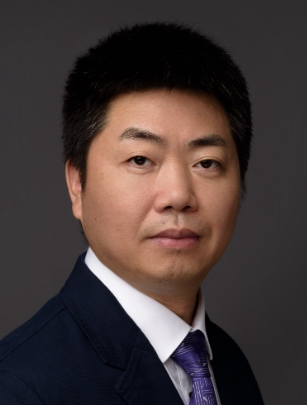 Jiancheng Lv (吕建成)合作论文数College of Computer Science, Sichuan University4
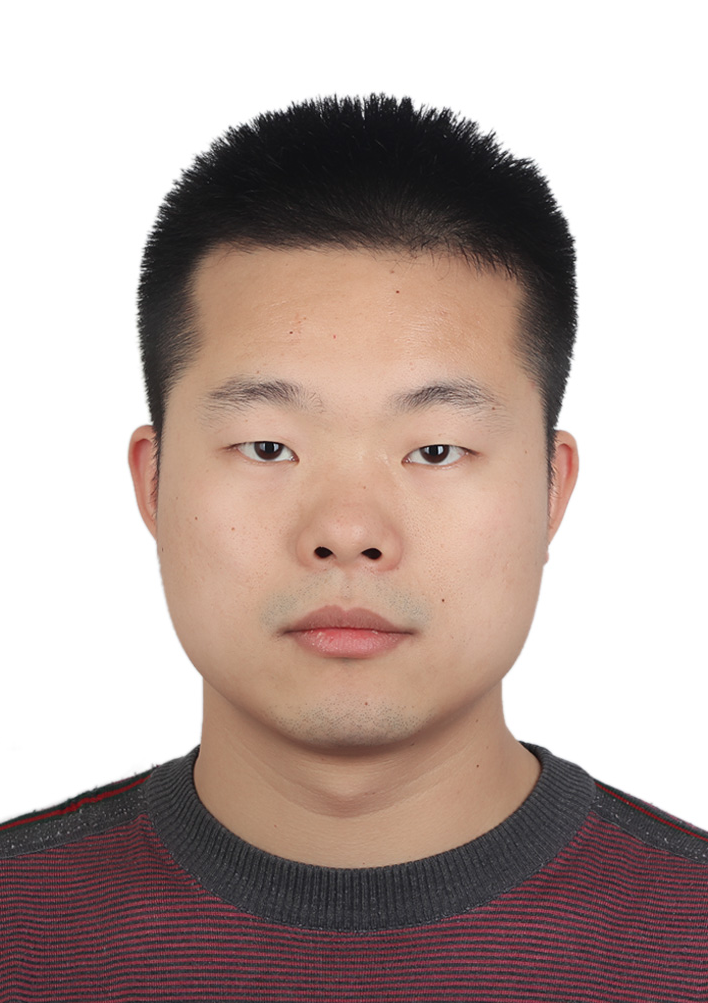 Peng Hu (胡鹏)合作论文数Machine Intelligence Laboratory, College of Computer Science, Sichuan University4
 Zitao Liu (刘子韬)合作论文数Guangdong Institute of Smart Education, Jinan University4
 Yijie Lin (林义杰)合作论文数College of Computer Science, Sichuan Univerisity;Ant Group2
 Xinyan Xiao (肖欣延)合作论文数Baidu2
 Joey Tianyi Zhou (周天異)合作论文数Institute of High Performance Computing, Agency for Science, Technology and Research;Centre for Frontier AI Research, Agency for Science, Technology and Research2Wenxin Wang合作论文数1Xiao Liu合作论文数1
 Zeyu Xiao合作论文数National University of Singapore1Si Miao合作论文数1Jun-Ho Choi合作论文数1Si Xi合作论文数1Donghyeon Lee合作论文数1Chengpeng Chen合作论文数1Suyoung Lee合作论文数1Taesung Kim合作论文数1Jong-Seok Lee合作论文数1Chulhee Lee合作论文数1Xiaojie Chu合作论文数1Jiaxin Zhang合作论文数1Yimin Ou合作论文数1Shuai Liu合作论文数1
 Tong Lu (路通)合作论文数National Key Laboratory for Novel Software Technology, Department of Computer Science and Technology, Nanjing University1Donghao Luo合作论文数Department of Precision Instrument, Tsinghua University1Mingchao Jiang合作论文数1
 David Svitov合作论文数Istituto Italiano di Tecnologia1Chaoyu Feng合作论文数1Junwei Xie合作论文数1Ru Li合作论文数1
 Ruikang Xu (徐瑞康)合作论文数MoE Key Laboratory of Brain-Inspired Intelligent Perception and Cognition, University of Science and Technology of China1
 Tao Wang合作论文数School of Computer Science, Nanjing University1
 Dafeng Zhang合作论文数Samsung Research China - Beijing1
 Hao Wei合作论文数Institute of Artificial Intelligence and Robotics, Xi'an Jiaotong university;an;Institute of Artificial Intelligence and Robotics, Xi'an Jiaotong university1
 Long Sun (孙龙)合作论文数Intelligent Media Analysis Group, School of Computer Science, Nanjing University of Science and Technology1
 Guangpin Tao合作论文数Nanjing Univ, Natl Key Lab Novel Software Technol, Nanjing, Jiangsu, Peoples R China1Songsheng Cheng合作论文数Nanjing University of Science and Technology1
 Jonghoon Yim合作论文数Sungkyunkwan Univ, Dept Elect & Comp Engn, Seoul, South Korea1Jongwook Han合作论文数1
 Vinh Van Duong合作论文数Sungkyunkwan Univ, Dept Elect & Comp Engn, Seoul, South Korea1
 Thuc Nguyen Huu合作论文数Sungkyunkwan Univ, Dept Elect & Comp Engn, Seoul, South Korea1Liangyu Chen (陈亮宇)合作论文数Megvii Technology Inc.1Teng Xi合作论文数1
 Shuaijun Chen合作论文数1
 Zhongqin Wu合作论文数TAL Education Group, Beijing, China1
 Yunchen Zhang合作论文数China Design Group Co., Ltd, Nanjing, China1Jinfeng Bai合作论文数1




