Abstract The ROOT TTree has been widely used in the analysis and storage of various high-energy physical experiment data. The event data generated by the experiment is stored in TTree and further compressed into a standard ROOT format file. At present, ROOT supports compression storage of TBasket, the buffer of TBranch, using compression algorithms such as ZLIB, LZMA, LZ4 and ZSTD. By using different compression algorithms in different scenarios, ROOT maximizes performance and handles the increasing amount of high-energy physical data. Hardware technology advancements make it possible to accelerate specific commonly used algorithms at the underlying hardware layer. In this article, we use ISA-L (The Intel Intelligent Storage Acceleration Library) to extend the compression algorithm of ROOT on the Intel X86 machine. This enriches the options for ROOT data compression and further improves the comprehensive performance of TTree data compression. Performance tests on intel Xeon Silver 4215R CPUs show that the compression time using the ISA-L library is 23.76% higher than that of the ZSTD algorithm, and the compression rate is slightly better than ZSTD, However, the decompression speed is slower than ZSTD. Adding ISA-L support to ROOT provides users with more compression methods to choose from and effectively reduces compression time.
Optical photon tracing is a major computational bottleneck in Cherenkov detector simulations, where a typical high-energy charged particle can produce tens of thousands of photons. To address this challenge, we develop a two-stage deep-learning-based fast simulation to replace full optical photon tracing. In the first stage, a Hit Probability Regression Network (HPRN) predicts the probability that a QE-surviving optical photon reaches the photomultiplier tube (PMT) photocathode, and a Bernoulli thinning is used to accept photons according to the predicted hit probability. In the second stage, conditional Mixture Density Networks (MDNs) generate the time and charge responses conditioned on the initial state of the accepted optical photons. Applied to the LHAASO-KM2A muon detector geometry, the generated one-dimensional time and charge distributions show errors of 1.24%±0.12% and 1.55%±0.13%, respectively, with respect to the Geant4 baseline. Muon-level validation for fixed-direction muon simulations further shows that the mean integrated charge agrees with the Geant4 baseline within about 2.4% for the tested incident configurations. On a CPU, the proposed method achieves a speedup of about 84 relative to Geant4, and the speedup further increases to about 1.1×10⁴ when using a GPU.
Modern AI training and data analytics increasingly span multiple data centers (DCs), yet cross-DC storage access remains a security bottleneck. Traditional solutions rely on VPN-based Layer-3 network extensions, which enlarge the attack surface and conflict with Zero Trust principles. In this paper, we present MCG (Multi-Data-Center Content Gateway), a secure gateway architecture that facilitates collaborative storage access while keeping backend storage daemons strictly intranet-only. MCG adopts a split-zone network topology and introduces the Virtual Endpoint Identifier (VEI), a capability token that encodes identity and routing logic into SOCKS v5 tunnels to achieve topology hiding. We implemented a prototype compatible with standard POSIX and S3 clients without modifying storage backends. Evaluations on a real-world wide-area network (WAN) between Beijing and Sichuan demonstrate that MCG converges the attack surface and outperforms VPN-based access for both small and large objects. Under challenging network conditions with limited bandwidth, MCG improves bandwidth utilization for large-file transfers (e.g., checkpoints), achieving up to 5 × the throughput of standard VPN tunnels.
Abstract The field of high energy physics is a typical data-intensive computing environment. There exists a kind of high statistical computation in the high energy physics computing paradigm, which requires access to a large amount of data for analysis. Under the background of large data volume, the traditional “computing-storage” separation system needs to carry out high frequency data movement, which tends to produce longer transmission delay and increase network load. Generally, storage nodes also have computing resources, such as cpus, necessary for deploying distributed file systems. However, the computing capabilities of these computing resources are often ignored. Therefore, offloading computing to computational storage on storage is a viable solution. This paper introduces a computational storage scheme implemented under the distributed file system framework commonly used in high energy physics, and tests its acceleration effect in typical data intensive applications. For a single test application, computational storage mode reduces computation time by 37% compared with traditional mode. Moreover, with the increase of parallel applications, the computational storage mode becomes more stable, and the computation time is reduced by 72% in the case of 40 parallel applications.
Logs play a critical role in the stable operation of modern software systems. To achieve efficient and accurate anomaly detection, researchers have introduced deep learning methods. However, log data generally suffers from problems such as imbalanced class distribution and a scarcity of labeled samples, which limit the applicability of traditional supervised learning. Furthermore, long-range dependencies in massive log volumes are difficult to effectively model. To address these challenges, this paper proposes a Hybrid State-Space Recurrent Encoding method and introduces a meta-learning framework. We utilize the State-Space module to model long-range dependencies in log sequences and capture short-range dependencies through a bidirectional GRU, thereby effectively modeling anomalous patterns in massive log data. By designing meta-training and meta-testing tasks and combining them with contrastive learning, our method effectively improves the model’s generalization ability. Extensive experimental results demonstrate that our method outperforms baseline models on multiple log datasets.
In this paper, we report the detection of the very-high-energy (VHE, 100 GeV < E < 100 TeV) and ultra-high-energy (UHE, E > 100 TeV) γ-ray emissions from the direction of the young star-forming region W43, observed by the Large High Altitude Air Shower Observation (LHAASO). The extended γ-ray source was detected with a significance of ∼16 σ by KM2A and ∼17 σ by WCDA, respectively. The angular extension of this γ-ray source is about 0.5 degrees, corresponding to a physical size of about 50 pc. We discuss the origin of the γ-ray emission and possible cosmic ray acceleration in the W43 region using multi-wavelength data. Our findings suggest that W43 is likely another young star cluster capable of accelerating cosmic rays (CRs) to at least several hundred TeV.
In this paper we present the current status of the enhanced X-ray Timing and Polarimetry mission, which has been fully approved for launch in 2030. eXTP is a space science mission designed to study fundamental physics under extreme conditions of matter density, gravity, and magnetism. The mission aims at determining the equation of state of matter at supra-nuclear density, measuring the effects of quantum electro-dynamics, and understanding the dynamics of matter in strong-field gravity. In addition to investigating fundamental physics, the eXTP mission is poised to become a leading observatory for time-domain and multi-messenger astronomy in the 2030's, as well as providing observations of unprecedented quality on a variety of galactic and extragalactic objects. After briefly introducing the history and a summary of the scientific objectives of the eXTP mission, this paper presents a comprehensive overview of: 1) the cutting-edge technology, technical specifications, and anticipated performance of the mission's scientific instruments; 2) the full mission profile, encompassing spacecraft design, operational capabilities, and ground segment infrastructure.
The Circular Electron-Positron Collider (CEPC), a proposed next-generation Higgs factory, provides new opportunities to explore physics beyond the Standard Model (SM). With its clean electron-positron collision environment and the ability to collect large samples of Higgs, W, and Z bosons, the CEPC enables precision measurements and searches for new physics. This white paper outlines the CEPC's discovery potential, including studies of exotic decays of the Higgs, Z, and top quarks, dark matter and dark sector phenomena, long-lived particles, supersymmetry, and neutrino-related signatures. Advanced detector technologies and reconstruction techniques, such as one-to-one correspondence reconstruction and jet origin identification, significantly improve sensitivity to rare and weakly interacting processes. The CEPC is particularly well suited to probe the electroweak phase transition and test models of electroweak baryogenesis and dark sector interactions. In addition, global fit analyses highlight the CEPC's complementary role in constraining a wide range of new physics scenarios. These features position the CEPC as a powerful tool for exploring the next frontier in fundamental particle physics in the post-Higgs discovery era.
Ultra-high-energy (UHE), exceeding 100 TeV (10^12 electronvolts), γ-rays manifests extreme particle acceleration in astrophysical sources. Recent observations by γ-ray telescopes, particularly by the Large High Altitude Air Shower Observatory (LHAASO), have revealed a few tens of UHE sources, indicating numerous Galactic sources capable of accelerating particles to PeV (10^15 electronvolts) energies. However, discerning the dominant acceleration mechanisms (leptonic versus hadronic), the relative contributions of specific source classes, and the role of particle transport in shaping their observed emission are central goals of modern UHE astrophysics. Here we report the discovery of a giant UHE γ-ray emitter at -17.5° off the Galactic plane - a region where UHE γ-ray sources are rarely found. The emitter exhibits a distinctive asymmetric shape, resembling a giant "Peanut" spanning 0.45° \times 4.6°, indicative of anisotropic particle distribution over a large area. A highly aged millisecond pulsar (MSP) J0218+4232 is the sole candidate accelerator positionally coincident with the Peanut region. Its association with UHE γ-rays extending to 0.7 PeV, if confirmed, would provide the first evidence of a millisecond pulsar powering PeV particles. Such a finding challenges prevailing models, which posit that millisecond pulsars cannot sustain acceleration to PeV energies. The detection reveals fundamental gaps in understanding particle acceleration, cosmic-ray transport, and interstellar magnetic field effects, potentially revealing new PeV accelerator (PeVatron) classes.
The High Energy cosmic-Radiation Detection (HERD) facility is an under construction space astronomy and particle astrophysics experiment in collaboration between China and Europe, and will run on the China Space Station for more than 10 years since 2027. HERD is designed to search for dark matter with unprecedented sensitivity, investigate the century-old mystery of the origin of cosmic rays, conduct high-sensitivity surveys and monitoring of high-energy gamma rays, and explore new methods of pulsar navigation. Once operational, HERD experiment is expected to generate and distribute more than 90 PB of data over a span of 10 years. To share the data and computing resource for data processing and analysis, a distributed computing system based on grid computing technology is developed with the supports of computing and storage sites in China and Europe. HERD distributed computing infrastructure (DCI) integrates a distributed computing system managing data processing jobs based on DIRAC and dHTC, a distributed data management system distributing raw and produced data based on Rucio, and other grid computing middleware including IAM, FTS3, etc. Furthermore, HERD DCI is designed to be deeply involved with HERD Offline Software and data production workflow, providing grid computing services without normal and production users being aware of it.
Gamma-Ray Bursts (GRBs) are among the universe’s most energetic events, requiring advanced methods to separate signals from background noise. The LHAASO-WCDA is well-suited for detecting very-high-energy (VHE) gamma rays, but traditional trigger-based methods struggle with lowenergy GRBs. This study optimizes a triggerless detection algorithm using Bayesian optimization, enhancing sensitivity and noise suppression. Applied to GRB 221009A, our approach achieved 11.5σ in triggerless data, revealing low-energy gamma rays below the 100 GeV threshold that were previously undetectable by trigger methods. These results demonstrate the potential of the triggerless method to expand the detection capabilities of LHAASO-WCDA and improve GRB studies in high-energy astrophysics.
We report the detection of an extended very-high-energy (VHE) γ-ray source coincident with the location of middle-aged (62.4 kyr) pulsar PSR J0248+6021, by using the LHAASO-WCDA data of live 796 d and LHAASO-KM2A data of live 1216 d. A significant excess of γ-ray induced showers is observed both by WCDA in energy bands of 1–25 TeV and KM2A in energy bands of >25 TeV with 7.3σ and 13.5σ, respectively. The best-fit position derived through WCDA data is R.A. = 42.06° ± 0.12° and Dec. = 60.24° ± 0.13° with an extension of 0.69°±0.15° and that of the KM2A data is R.A.= 42.29° ± 0.13° and Dec. = 60.38° ± 0.07° with an extension of 0.37° ±0.07°. No clear extended multiwavelength counterpart of this LHAASO source has been found from the radio band to the GeV band. The most plausible explanation of the VHE γ-ray emission is the inverse Compton process of highly relativistic electrons and positrons injected by the pulsar. These electrons/positrons are hypothesized to be either confined within the pulsar wind nebula or to have already escaped into the interstellar medium, forming a pulsar halo.
The ultra-high-energy (UHE) gamma-ray source 1LHAASO J0007+7303u is positionally associated with the composite SNR CTA1 that is located at high Galactic Latitude b ≈ 10.5°. This provides a rare opportunity to spatially resolve the component of the pulsar wind nebula (PWN) and supernova remnant (SNR) at UHE. This paper conducted a dedicated data analysis of 1LHAASO J0007+7303u using the data collected from December 2019 to July 2023. This source is well detected with significances of 21σ and 17σ at 8–100 TeV and >100 TeV, respectively. The corresponding extensions are determined to be 0.23°±0.03° and 0.17°±0.03°. The emission is proposed to originate from the relativistic electrons accelerated within the PWN of PSR J0007+7303. The energy spectrum is well described by a power-law with an exponential cutoff function dN/dE=(42.4± 4.1)(E 20 TeV)^-2.31± 0.11 exp(-E 110± 25 TeV) TeV−1 cm−2 s−1 in the energy range from 8 to 300 TeV, implying a steady-state parent electron spectrum dN_e/dE_e∝ (E_e 100 TeV)^-3.13± 0.16 exp[(-E_e373± 70 TeV)^2] at energies above ≈ 50 TeV. The cutoff energy of the electron spectrum is roughly equal to the expected current maximum energy of particles accelerated at the PWN terminal shock. Combining the X-ray and gamma-ray emission, the current space-averaged magnetic field can be limited to ≈ 4.5 µG. To satisfy the multi-wavelength spectrum and the γ-ray extensions, the transport of relativistic particles within the PWN is likely dominated by the advection process under the free-expansion phase assumption.
The Water Cherenkov Detector Array (WCDA) is one of the components of Large High Altitude Air Shower Observatory (LHAASO) and can monitor any sources over two-thirds of the sky for up to 7 h per day with >98 per cent duty cycle. In this work, we report the detection of two outbursts of the Fanaroff-Riley I radio galaxy NGC 1275 that were detected by LHAASO-WCDA between 2022 November and 2023 January with statistical significance of 5.2 sigma and 8.3 sigma. The observed spectral energy distribution in the range from 500 GeV to 3 TeV is fitted by a power law with the best-fitting spectral index of alpha = -3.37 +/- 0.52 and -3.35 +/- 0. 29, respectively. The outburst flux above 0.5 TeV was (4.55 +/- 4.21) x10(-11) cm(-2) s(-1) and (3.45 +/- 1.78) x10(-11) cm(-2) s(-1), corresponding to 60 per cent and 45 per cent of Crab Nebula flux, respectively. Variation analysis reveals the variability time-scale of days at the TeV energy band. A simple test by one-zone synchrotron self-Compton model reproduces the data in the gamma-ray band well.
The first source catalog of the Large High Altitude Air Shower Observatory (LHAASO) reported the detection of a very high energy gamma-ray source, 1LHAASO J1219+2915. This Letter presents a further detailed study of the spectral and temporal behavior of this pointlike source. The best-fit position of the TeV source (R.A. = 185.°05 ± 0.°04, decl. = 29.°25 ± 0.°03) is compatible with NGC 4278 within ∼0.°03. Variation analysis shows an indication of variability on a timescale of a few months in the TeV band, which is consistent with low-frequency observations. Based on these observations, we report the detection of TeV γ -ray emissions from this low-luminosity active galactic nucleus. The observation by LHAASO's Water Cherenkov Detector Array during the active period has a significance level of 8.8 σ with a best-fit photon spectral index Γ = 2.56 ± 0.14 and a flux f 1–10 TeV = (7.0 ± 1.1 sta ± 0.35 syst ) × 10 −13 photons cm −2 s −1 , or approximately 5% of the Crab Nebula. The discovery of VHE gamma-ray emission from NGC 4278 indicates that compact, weak radio jets can efficiently accelerate particles and emit TeV photons.
The Large High Altitude Air Shower Observatory (LHAASO) is a major national science and technology infrastructure project. The project collects trillions of cosmic ray events every year, generating about 10 PB of data annually, providing valuable scientific data resources for physicists all over the world to explore the origin of high-energy cosmic rays, the related evolution of high-energy celestial bodies, and search for dark matter. In this paper, we firstly give a brief introduction to the LHAASO experiment including its detectors, and then explain the LHAASO data system in detail, including data acquisition system, data processing platform, data processing software, and scientific applications. Finally, we summarize the design and construction of LHAASO data system. It is expected that the experience could be useful to similar projects in future.
We present the first catalog of very-high energy and ultra-high energy gamma-ray sources detected by the Large High Altitude Air Shower Observatory (LHAASO). The catalog was compiled using 508 days of data collected by the Water Cherenkov Detector Array (WCDA) from March 2021 to September 2022 and 933 days of data recorded by the Kilometer Squared Array (KM2A) from January 2020 to September 2022. This catalog represents the main result from the most sensitive large coverage gamma-ray survey of the sky above 1 TeV, covering declination from $-$20$^{\circ}$ to 80$^{\circ}$. In total, the catalog contains 90 sources with an extended size smaller than $2^\circ$ and a significance of detection at $> 5\sigma$. Based on our source association criteria, 32 new TeV sources are proposed in this study. Among the 90 sources, 43 sources are detected with ultra-high energy ($E > 100$ TeV) emission at $> 4\sigma$ significance level. We provide the position, extension, and spectral characteristics of all the sources in this catalog.
The rapid growth in image data generated by high-energy photon sources poses significant challenges for storage and analysis, with conventional compression methods offering compression ratios often below 1.5. This study introduces a novel, fast lossless compression method that combines deep learning with a hybrid computing architecture to overcome existing compression limitations. By employing a spatiotemporal learning network for predictive pixel value estimation and a residual quantization algorithm for efficient encoding. When benchmarked against the DeepZip algorithm, our approach demonstrates a 40
In this Letter we try to search for signals generated by ultraheavy dark matter at the Large High Altitude Air Shower Observatory (LHAASO) data. We look for possible γ rays by dark matter annihilation or decay from 16 dwarf spheroidal galaxies in the field of view of the LHAASO. Dwarf spheroidal galaxies are among the most promising targets for indirect detection of dark matter that have low fluxes of astrophysical γ-ray background while having large amount of dark matter. By analyzing more than 700 days of observational data at LHAASO, no significant dark matter signal from 1 TeV to 1 EeV is detected. Accordingly we derive the most stringent constraints on the ultraheavy dark matter annihilation cross section up to EeV. The constraints on the lifetime of dark matter in decay mode are also derived.
For decades, supernova remnants (SNRs) have been considered the prime sources of Galactic cosmic rays (CRs). But whether SNRs can accelerate CR protons to PeV energies and thus dominate CR flux up to the knee is currently under intensive theoretical and phenomenological debate. The direct test of the ability of SNRs to operate as CR PeVatrons can be provided by ultrahigh-energy (UHE; E-gamma >= 100 TeV) gamma-rays. In this context, the historical SNR Cassiopeia A (Cas A) is considered one of the most promising targets for UHE observations. This paper presents the observation of Cas A and its vicinity by the LHAASO KM2A detector. The exceptional sensitivity of LHAASO KM2A in the UHE band, combined with the young age of Cas A, enabled us to derive stringent model-independent limits on the energy budget of UHE protons and nuclei accelerated by Cas A at any epoch after the explosion. The results challenge the prevailing paradigm that Cas A-type SNRs are major suppliers of PeV CRs in the Milky Way.
 Haibo Li (李海波)合作论文数Institute of High Energy Physics, Chinese Academy of Sciences41
 Minhao Gu (顾旻皓)合作论文数Institute of High Energy Physics, Chinese Academy of Sciences;University of Chinese Academy of Sciences41
 Songzhan Chen (陈松战)合作论文数中国科学院大学;中国科学院高能物理研究所40
 Ping Zhou (周平)合作论文数School of Astronomy & Space Science, Nanjing University39
 Cunfeng Feng (冯存峰)合作论文数Institute of Frontier and Interdisciplinary Science, Shandong University39
 Zhen Cao (曹臻)合作论文数Key Laboratory of Particle Astrophysics, Institute of High Energy Physics, Chinese Academy of Sciences;University of Chinese Academy of Sciences39
 Xuefeng Wu (吴雪峰)合作论文数Purple Mountain Observatory, Chinese Academy of Science;University of Science and Technology of China;University of Chinese Academy of Sciences39
 Hongbo Hu (胡红波)合作论文数Institute of High Energy Physics, Chinese Academy of Sciences;University of Chinese Academy of Sciences39
 Ruizhi Yang (杨睿智)合作论文数Department of Astronomy, School of Physical Sciences, University of Science and Technology of China39
 Huanyu Jia (贾焕玉)合作论文数School of Physical Science and Technology, Southwest Jiaotong University39
 Dahai Yan (闫大海)合作论文数Yunnan University38
 Jin Min Yang合作论文数38Hongkui Lv合作论文数38
 Zhiyuan Pei合作论文数Key Lab Astron Observat & Technol Guangzhou38
 Xinhua Ma (马欣华)合作论文数中国科学院高能物理研究所38
 Daming Wei (韦大明)合作论文数Purple Mountain Observatory, Chinese Academy of Sciences;University of Chinese Academy of Sciences38
 Alejandro Sáiz合作论文数UAM Dpt. Física Teórica Cantoblanco38
 Denis Bastieri合作论文数Dipartimento di Fisica e Astronomia, University of Padova38
 Shuwang Cui合作论文数38Q. Gao合作论文数37G. M. Xiang合作论文数37P. Pattarakijwanich合作论文数37O. Shchegolev合作论文数37F. Zheng合作论文数37Y. H. Yao合作论文数37Y. A. Han合作论文数37JF Chang合作论文数37
 Shoushan Zhang (张寿山)合作论文数Particle Astrophysics Division, Institute of High Energy Physics, Chinese Academy of Sciences;University of Chinese Academy of Sciences37Y. C. Nan合作论文数37L.Q. Yin合作论文数37L. Xue合作论文数37G. H. Gong合作论文数37Y. W. Bao合作论文数37V Stepanov合作论文数37Y. D. Cui合作论文数37H. Liu合作论文数37L Zhao合作论文数37K. Jiang合作论文数37C. G. Zhu合作论文数37D. Kuleshov合作论文数37
 Yi Xing (邢祎)合作论文数Shanghai Astronomical Observatory, Chinese Academy of Sciences37
 Xiangdong Sheng (盛祥东)合作论文数中国科学院大学高能物理研究所37
 Fengrong Zhu (祝凤荣)合作论文数School of Physical Science and Technology, Southwest Jiaotong University;Astrophysical Center, Southwest Jiaotong University37
 Xin Li (李昕)合作论文数School of Physics, Chongqing University37
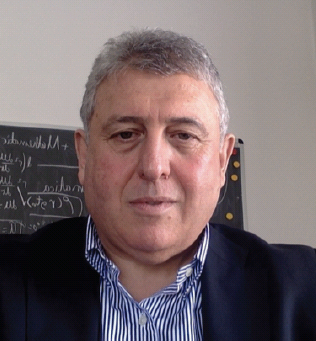 Felix Aharonian合作论文数Dublin Institute for Advanced Studies;Max-Planck-Institut fuer Kernphysik37E. W. Liang合作论文数37D. H. Huang合作论文数36Y. J. Bi合作论文数36J. R. Mao合作论文数36




