[目的]随着化学肥料在全球范围的大量使用,所引起的农业面源污染问题不仅对整个生态系统造成的破坏难以估量,还直接影响了农民的切身利益.化肥减施增效技术是目前协调农业生产与环境保护的重要途径,但先进技术与生产应用之间存在不同程度上的脱节现象,这就需要将技术进一步物化,开展对技术"载体"的研究.[方法]农业经营主体是肥料施用最直接的载体,农户施肥行为的规范程度直接关系肥料利用的效率及对环境的污染程度,文章以采用化肥减施技术的水稻种植农户为研究对象、从技术增效角度入手、运用MOA理论构建分析框架,借助结构方程模型和mplus7.0软件、对角加权矩阵伴均值-方差校正卡方检验(WLSMV)方法对样本农户技术采纳行为的决策过程进行实证分析.[结果](1)采纳机会、采纳动机、抗风险能力都对农户采纳技术的行为规范在1%的显著性水平上具有正向影响;(2)技术认知对其行为规范的路径系数为负,假设未通过验证;(3)行为规范对行为效益的路径系数高达0.97,行为效益对采纳意愿的系数为0.9.[结论]影响农民行为的主客观因素中采纳动机是最显著的,行为执行的规范程度是决定其行为效益最直接、最重要的因素,行为效益又是农民是否继续采纳的重要参考,并据此提出相关建议.
China's ecological agriculture has played a pioneering role in sustainable development, which has attracted extensive attention and high praise from the international community. This paper systematically analyzed the development process of China's eco-agriculture, by combining with the practice of ecological agriculture construction in China for many years and the construction process of modern ecological agriculture base of the Ministry of Agriculture, and comprehensive literature research. The results showed that: 1) The development of China's eco-agriculture has gone through two periods: traditional ecological agriculture and modern ecological agriculture. Traditional ecological agriculture provides rich production experience. China's modern agricultural ecology has experienced four development stages: initial exploration (1981–1992), expansion and consolidation (1993–2004), steady advancement (2005–2011) and innovation and promotion (2012–present). Each stage has distinctive features and landmark achievements, which rammed the foundation for the green and sustainable development of agriculture and rural areas in China; 2) China's modern ecological agriculture has been incorporated into the act of government in 1993, and has basically formed a five-level demonstration and driving system of ecological agriculture including 2 pilot provinces for eco-agriculture, 10 demonstration cities for circular agriculture, 100 demonstration counties for eco-agriculture, 12 demonstration bases for eco-agriculture, and 1100 beautiful villages, which cover province, municipality, county, base and village. The advancing mechanism of modern ecological agriculture of “small circulation in the main body, circulation in the park and large circulation in the county”, has effectively promoted the development of ecological agriculture nationwide; 3) China's eco-agriculture has three distinct characteristics: comprehensiveness, sustainability and diversity. Its basic contents mainly include: agricultural ecology methodology and theoretical basis, optimization design of agricultural ecosystem, assembly and integrated application of eco-agricultural technology; 4) Under the trend of agricultural green development, China's eco-agriculture construction is innovating and improving system and mechanism, and ensuring the development towards high efficiency, industrialization, standardization, practicality and multi-function, thus gradually establishing a resource-saving, environment-friendly and ecological conservation-oriented modern ecological agricultural system with Chinese characteristics, constituting the ecological agriculture development pattern integrating rural production development, prosperous life and good ecology, and helping China's rural ecological revitalization.
[目的]随着蔬菜产业的快速发展和规模的不断扩大,蔬菜秸秆问题日益严重.进一步改进蔬菜秸秆无害化处理技术对推进农业绿色发展、提高我国人民生活质量、增加农民收入具有重要意义.[方法]针对蔬菜秸秆含水率较高、碳氮比较低、易腐烂发臭滋生病虫害等缺点,在分析比较资源化处理手段优缺点的基础上,以无害化处理为目标对技术进行革新.[结果]目前蔬菜秸秆处理技术主要有直接还田、厌氧沤肥、好氧堆肥、饲料化等,但仍存在一些缺点,难以满足无害化处理要求,文章总结了一系列蔬菜秸秆无害化利用技术,优化消毒直接还田技术,制定厌氧沤肥的技术环节,完善田间堆肥技术体系,优化联合堆肥物料配比,解决快速无害化处理问题,规范物理脱水饲料化的操作流程和添加剂配方,延伸蔬菜秸秆产业链;同时,探讨蔬菜秸秆资源化利用的现存问题、潜力及发展方向.[结论]为未来推广蔬菜秸秆无害化处理和资源化利用工作提供参考.
生态农场是发达国家农业环境政策的主要实施对象,是我国生态农业建设的基本单位,成为农业绿色发展的有效抓手.本文依托跨时7年的生态农场调查数据,结合农业农村部5年的生态农业基地建设经验,得出了我国4个区域和3类生态农场的经济参数,进一步依据我国新型农业经营主体发展规划,按照3%~5%生态化转型比例,评估了生态农场在区域和全国尺度的发展空间,分析了生态农场促进农业绿色发展的产业价值,从战略层面提出我国近期生态农场建设的最新要求和政策建议.结果显示:1)从区域看,华南地区生态农场投入产出效率最高,东北地区生态农场投入产出效率最低;从类型看,种养结合单体产投比和利润率最高,养殖型和种植型单体产投比、利润率较小.2)到2022年,国内生态农场将达到3万~5万家,生态农场区域规模排序为:华北地区>长江中下游地区>东北地区>华南地区,可有效带动市场投资和提供就业机会.3)近期应在"长三角"地区和部分重点区域,率先建成一批具有全国示范引领作用的生态农场,逐步向全国推广生态农场评价工作,优化生态农场补偿政策,打造生态农场大数据系统,培育生态农场产业化平台,创设生态农场产业投融资机制.
在西北地膜高投入的甘肃、新疆和内蒙古等3省(区)选择地膜覆盖面积较大、地膜使用量较高的5个典型县,同步采集玉米产地的土壤和玉米,采用加速溶剂萃取-高效液相色谱串联质谱技术对土壤与玉米籽粒中6种优先控制的领苯二甲酸酯(PAEs)含量进行分析.结果 表明,研究区域土壤中Σ6PAEs含量为(0.532±0.175) mg·kg-1,区间为0.103-1.117 mg·kg-1.新疆Σ6PAEs含量最高.DEP在所有土壤样品中均未检出,其余5种PAEs组分含量依次为DEHP>DnBP>DMP> BBP、DnOP.土壤PAEs均以DEHP和DnBP为主,其中DEHP占35%-65%,DnBP占24%-33%,其余PAEs组分含量和占比较低.研究区域玉米籽粒中Σ6PAEs含量为(0.508±0.105) mg·kg-1,区间为0.206-0.966 mg·kg-1,玉米对PAEs的BCF为(1.245±0.716).新疆玉米籽粒中Σ6PAEs含量最高.与土壤类似,玉米籽粒中PAEs均以DEHP和DnBP为主,两者合计占PAEs总量的63%-89%,其余PAEs组分含量和占比较低.相关性分析表明,玉米籽粒中PAEs、DnBP及DEHP含量与土壤中对应组分含量的相关性达到了显著性水平.调查区玉米PAEs含量及各组分含量均低于美国和欧洲的建议摄入标准,总体是安全的.成人和儿童的PAEs致癌风险分别为4.67×10⁻⁶和1.58× 10⁻⁶,非致癌指数分别为8.46× 10⁻²和7.60× 10⁻²,均在可接受范围内.PAEs各组分中,对人体致癌和非致癌总风险贡献最大的均为DEHP.
我国已经连续30年成为世界化肥消费量最大的国家,单位面积化肥施用量也长期居世界高位水平,化肥的过量施用既造成严重的农业面源污染,也制约着我国农业的可持续发展.本研究收集了美国、加拿大等12个典型国家1961—2015年的人均GDP和化肥消费量的时间序列数据,通过回归分析法得出各国人均GDP与化肥消费量显著相关(P<0.05),发达国家的人均GDP在8000~13000美元区间时,化肥消费量由增长阶段进入稳定或降低阶段.从我国目前人均GDP(>8000美元)的发展水平与世界发达国家化肥的历史消费轨迹来看,我国的化肥消费量已经具备了从增长阶段转变到稳定阶段的条件.
生态农场作为生态农业的落地载体,兼顾生态环境保护与经济社会可持续发展,具有市场灵活性,在带动农户发展专业化、标准化、绿色化生产方面具有明显优势.新形势下,各地已形成了一批各具特色的生态农场典型案例.2016-2017年,作者重点围绕面源污染防控与农业清洁生产,以我国东部15个省市的468家生态农场为研究对象,制定调查问卷开展典型案例调查研究.研究结果表明,90%的农场成立时间在15年以下,生态农场经营者的平均年龄为47.5岁,土地面积在6.6~16.6 hm2的农场占到40%,土地平均租金为11 040元.hm-2·a-1;以公司、合作社和家庭农场为组织形式的农场各占23%、40%和30%;进行了农产品质量认证的农场占到73%;生态农业措施采用率排在前5位的是有机肥/堆肥、人工/机械除草、轮作、清洁田园、杀虫灯/秸秆还田;养殖农场的生态意识较为淡薄,生态措施的采用情况也不乐观.在农场投入方面,种植农场的肥料投入和养殖农场的饲料投入最高,劳动力工资平均在3~4万元.cap.-1·a-1;种植农场收益率为-21%~70%,养殖农场为13%~337%,种养结合农场为-21%~152%;50%的农场获得过农业补贴.从调研结果看,我国生态农场有着良好的发展势头,但还处于初级阶段,缺乏相应的指导.文章在调研的基础上还从技术应用、产业融合、成本收益、销售途径及补贴政策等方面分析了生态农场发展过程中面临的问题和挑战,并提出了相应的对策建议,以期对我国生态农场健康有序发展提供指导.
从乡村振兴战略视角分析中国生态农业发展的必要性,并就目前的生态农业发展现状进行反思,剖析农业发展进程中面临的资源环境、供需不平衡等多方面的压力,指出发展生态农业是实现乡村振兴战略目标的重要举措,市场需求发生新变化的客观要求,解决农业生产所面临资源环境压力的必然选择,以及对发达国家农业持续发展经验的理性借鉴.在对我国生态农业发展现状反思的基础上,提出“七个一批”的发展建议,即编制一批发展规划、出台一批扶持政策、培育一批生态产业、发展一批生态农场、壮大一批生态农庄、培养一批生态农民、构建一批信息平台.以此实现乡村产业兴旺,农村环境宜居及农业产品的多样化、优质化,更好满足城乡人民群众对农产品安全优质、营养健康的消费需求,同时提升生态农业“养眼、洗肺、悦心”的生态价值,促进农业增效、农民增收,农村增绿,为更好促进中国农业的可持续发展乃至世界性的农业清洁生产提供参考借鉴.
[目的]新时代,推动农业绿色发展的关键是建立健全涉农资金整合机制,加大涉农资金投入力度,提高涉农资金使用效率,建立完善以绿色生态为重点的农业投入制度.[方法]文章通过研究国内涉农资金整合现状和问题,分析发达国家涉农资金整合的经验及启示,推动我国建立以农业绿色发展为重点的涉农资金整合政策机制.[结果]我国涉农资金整合存在多头管理、 方向不明、 结构不优、 效率不高等问题,加快涉农资金整合势在必行,成败取决于顶层设计,关键在于完善相关法规法律以及打破部门利益藩篱的瓶颈,落地在于"依法、 照单、 精准"施策.今后要围绕农业绿色发展,突出绿色生态导向,涉农资金整合要把政策目标由数量增长为主转到数量质量生态并重上来,增量资金重点向资源节约型、 环境友好型和生态保护型农业倾斜.[讨论]建立健全涉农资金整合机制应当建立农业农村大部门制,完善相关法律法规,明确农业绿色生态作为涉农资金整合支持的主攻方向,实行精准补贴精准施策.
随着全球化进程的发展,生物入侵的危害日趋严重(Paini et al.,2016). 生物入侵的防控已成为21世纪全球各国政府关注的主要问题和科学研究的热点. 中国已成为世界上生物入侵危害最为严重的国家之一(万方浩等,2011). 外来生物入侵已经对我国的生态环境和农业生产造成了极大危害,而且还在随着国际交流的发展不断增强(万方浩等,2009). 由于我国地理环境多样,为不同物种的入侵提供了天然生境. 因此,我国不同地区存在着不同的入侵物种,这些物种对当地的生态系统造成了极大危害. 其中,紫茎泽兰Ageratina adenophora ( Sprengel ) R. King & H. Robinson、豚草 Ambrosia artemisiifolia L.、空心莲子草 Alternanthera philoxe-roides ( Mart.) Griseb.、薇甘菊 Mikania micrantha Kunth、黄顶菊Flaveria bidentis (L.) Kuntze.
In recent years, grain production has been rising steadily, and the income of farmers has been in-creasing dramatically, thanks in part to the central government's policy support for agriculture, rural areas and farmers. However, the conventional production mode leads to overconsumption of agricultural resources, increas-ingly challenging ecological environmentimpacts, and higher costs of agricultural products whose quality falls short of public expectations. The Central Committee of the Communist Party of China and the State Council both put ex-tra emphasis on agricultural supply-side reform, restructuring of the sector, and a shift in the production mode. This paper explains the significance of the agro-ecological compensation mechanism, analyzes the efficacy of China's current agricultural subsidy policies, introduces related experience from developed countries, elaborates options to establish the mechanism, and proposes policy recommendations to accelerate its development. This analysis con-cludes that one of the most important approaches to agricultural green development is to shift the existing subsidy policyfrom one which aims to ensure the yield by purchasing at a protective price, to a green subsidy which focuses on agro-ecological compensation.
植物替代控制是利用一种或多种植物的生长优势控制入侵杂草的方法,它是控制外来杂草危害的有效途径之一;因其既可控制入侵杂草危害又能取得一定的经济效益及生态效益而被人们广泛接受.本文简要介绍了我国3种入侵杂草植物替代控制技术研究与应用现状,系统总结了植物替代控制技术阻截和修复豚草、紫茎泽兰及黄顶菊扩散危害的技术模式和效果,提出了植物替代控制技术未来研究的方向和重点.
近几年来,病死猪无害化处理问题已经成为我国生猪养殖行业亟须解决的棘手难题.基于浙江省衢州市龙游县实地调研数据,对利益相关者的经济性进行评价分析,并且基于Logistic模型分析养殖场(户)对病死猪无害化处理模式满意度的影响因素.结果表明:利益相关者,包括养殖场(户)、保险公司、无害化处理中心具有较高的收益率;养殖场(户)对"龙游模式"总体满意度较高;保险政策、补贴政策和回收过程是影响养殖场(户)对病死猪无害化处理模式满意度评价的显著因素.最后,从完善病死猪无害化处理体系、推进转型升级与健康发展等方面提出了政策启示和建议.
Small-sized private livestock farms in the rural areas discharge quite a large volume of livestock wastes,contributing significantly to the agricultural non-point source pollution.As the farms are widely scattered in distribution,it is very hard and costly to exercise overall environmental supervision and pollution control.And what is more,so far no effective livestock waste treatment technologies or policies are available for extension.In recent years,a waste recycling pattern of pigsty-biogas digester-orchard has become an effective way to alleviate livestock waste pollution.However,this pattern depends mainly on government subsidies,which in turn leads to low efficiency of government financial funds.The publicprivate-partnership (PPP),as a new financing mechanism,has been developing the fastest in public services supply,and mainly applied to the construction of large-scale infrastructure,rather than such small projects as livestock waste treatment or transfer.In light of the above,this paper aims to explore whether or not PPP can be introduced into small-scale farms' livestock waste transfer projects.A case study was carried out of the PPP model demonstration in Pujiang County.Through cost-benefit analysis of the Pujiang case,economic feasibility of the PPP project of handling and treating livestock waste from small-sized livestock farms and environmental benefits it may create were discussed.Suggestions on improving the PPP system for small-scale projects are brought forth,in anticipation of initiating innovative thoughts for comprehensive utilization of livestock wastes from small scaled livestock farms.
Phthalate acid esters(PAEs)are extensively used as plasticizers of plastic products. Therefore, these PAEs have accumulated in greenhouse soils. This study was conducted to understand PAEs pollution in soils and their enrichment in agricultural products from veg-etable greenhouses in Shouguang City, Shandong Province. Soil and agricultural product(cucumber)samples from 17 vegetable greenhouses were collected, and content of 6 PAE compounds as priority pollutants were determined by LC- MS/MS. The total content of these 6 PAEs (ΣPAEs)in soils ranged from 0.453 to 1.615 mg·kg-1, and the mean value was 1.197±0.361 mg·kg-1. DEHP and DBP were the main com-ponents of PAEs in the soils. DEHP accounted for 45%~77%ofΣPAEs, and DBP for 17%~44%. Based on the control standards of priority pollutants of PAEs(U. S. EPA), DBP content in all soil samples and DMP in 52%soil samples exceeded the control standards, implying that these soils had certain pollution risks.ΣPAEs content in soils did not show significant correlation with age of vegetable greenhouses.The ΣPAEs content was the highest in the fifth year of planting, and changed little after that.ΣPAEs had a significant positive correlation with DBP, DEHP, organic matter and CEC content, but significantly negatively correlated with pH. ΣPAEs content in cucumbers ranged from 0.42 to 1.62 mg·kg-1, averaging 1.09 mg·kg-1. The mean enrichment coefficient was 1.02. DEHP and DBP were the main components in cucumbers, accounting for 53%~97%of ΣPAEs. Generally, the levels of PAEs in agricultural products were lower than the suggested standards in USA and Europe, implying a comparatively low health risk.
农业清洁生产是农业可持续发展的重要内容,在保护生态环境方面发挥了积极作用,世界各国都在围绕农业清洁生产进行积极的实践和探索.本文借鉴国际农业清洁生产经验,分析了我国在农业生产过程中产生面源污染成因,对下一步推进我国农业清洁生产发展提出政策建议.研究认为,“十三五”期间,我国应重点围绕粮食生产与农产晶供给安全、农产品质最安全、农产品产地安全“三个安全”为中心,强调“生产、生活、生态”相结合,以保障我国主要口粮供给为前提,以提高资源产出率为目标,以农业清洁生产和综合示范为手段,以科技创新为动力,坚持“综合、降压、提质、重建、增效”原则,转变农业生产方式,治理农业面源污染.
In the present study, physical properties of dialysis membranes, D10000 and D15000, and hydrogels, effects of ionic strength and pH on diffusion coefficients, dissociation ability of metal complexes in two types of membranes, and diffusive boundary layer were studied. Dialysis membranes had advantages in application, storage and price, while hydrogels were more customization. At low ionic strength(less than 0.001 mol·L-1), ionic strength had profound effects on both dialysis membranes and hydrogels. With increasing ionic strength,effects on diffusion coefficients of both membranes by the ionic strength were small. pH had little effects on diffusion coefficients of both membranes at pH 5~9. The time of Cd complexes to pass through D10000, D15000 and hydrogels was 97.65 s, 109.65 s and 652.25 s, respectively. Cadmium complexes were more prone to dissociate through hydrogels than through dialysis membranes. The thickness of diffusion boundary layer of D10000, D15000 and hydrogels were respectively 0.039 cm, 0.052 cm and 0.052 cm in the neutral static water at 0.1 mol·L-1 of ionic strength. Influence of diffusion boundary layer on dialysis membranes was greater than on hydrogels, which could not be neglected in the neutral static water.
Leaf construction cost( CC) is an important indicator in measuring the energy demand for plant leaf construction,and reflects the energy utilization strategy of plant leaf. Lower leaf CC has been hypothesized to give invasive plants a growth advantage through efficient energy utilization. In this paper,the invasive plant Flaveria bidentis and its co-occuring native plants Xanthium sibiricum,Amaranthus retroflexus,Setaira viridis,Chenopodium glaucum,and Vigna radiata were selected as the objects to compare their differences in leaf CC and related characteristics.The construction cost per unit leaf mass( CC mass) of F. bidentis was significantly lower than that of the five co-occuring native plants,being 76. 6% of the average CC mass of the native plants.Likewise,the construction cost per unit leaf area( CC area) of F. bidentis was significantly lower than that of the native plants except S. viridis,being 74. 4% of the average CC area of the native plants. The leaf carbon and nitrogen concentrations of F. bidentis were significantly lower than those of the co-occuring plants. The leaf ash content of F. bidentis was significantly higher than that of X. sibiricum,A. retroflexus,S. viridis,and V. radiate,but had less difference with that of C. glaucum; while the leaf ash-free calorific value of F. bidentis was significantly lower than that of the native plants except C. glaucum. For all test plants,their leaf CC mass was significantly positively correlated with their leaf carbon concentration and leaf ash-free calorific value,but negatively correlated with the leaf ash content. As compared with that of the co-occuring plants,the lower leaf CC of F. bidentis could be one of the reasons causing the successful invasion of this invasive plant.
To clarify the ecological stoichiometry characteristics of alien invasive plant Flaveria bidentis under different habitats ( Ⅰ waterside, Ⅱ cropland, Ⅲ wasteland) were selected to study the nutrient stoichiometric characteristics of F. bidentis leaf, and analysis the relationship of its blade and invaded soil. The results showed that invaded soil C, N, C:P, N:P were Ⅲ >Ⅰ >Ⅱ, P Ⅰ >Ⅱ >Ⅲ, C:N Ⅲ >Ⅱ >Ⅰ in three habitats (P< 0.05). The leaf C content had no significant difference,Ⅰsignificantly higher than Ⅱ and Ⅲ in N or P, but Ⅱ and Ⅲ were significantly higher than Ⅰ in C:N, C:P, N:P (P<0.05). The soil P or C:N was significantly positive correlation with the leaf, while no significant correlation determined between C, C:P, N:P. The soil C was significantly positive correlation with N, but no significant correlation existed between C-P, N-P. The leaf N content was significantly positive correlation with P, while C-N and C-P were no significant correlation. The change was synchronous between soil organic matter and N after F. bidentis invasion. N was growth restrictive element of F. bidentis in the waterside, while in the cropland or wasteland it was P.
近年来,我国农业资源环境问题日益凸显,并逐渐成为农村农业可持续发展的重要制约因素。德国的做法与经验可以为我国农业环境保护工作提供借鉴。
 Yinghao Xue合作论文数8
 Zhi-yu XU (徐志宇)合作论文数8KeQiang Zhang (张克强)合作论文数8ZhiPing Huang (黄治平)合作论文数6ZHAO Yu-jie合作论文数5Bin Xi (习斌)合作论文数5Tuo Jin合作论文数4Shirong Tang合作论文数3ChunYan Zhong (钟春艳)合作论文数3Li Hao (郝利)合作论文数3Run Zhao (赵润)合作论文数3Feng Wang (王风)合作论文数3Li-Jing Bai合作论文数3Tu Chenyang (屠臣阳)合作论文数2
 Xiangbo Xu (徐湘博)合作论文数2Na Jiang合作论文数2Rongguang Shi合作论文数2Chaohe Huangfu合作论文数2LiLi Wei (魏莉丽)合作论文数2XiYun Ni (倪喜云)合作论文数2YaJing Guo (果雅静)合作论文数2ShunAn Zheng (郑顺安)合作论文数2JunLian Zhang (张军连)合作论文数2RenHua Sun (孙仁华)合作论文数2ChengJun Song (宋成军)合作论文数2Li Zhou (周莉)合作论文数2
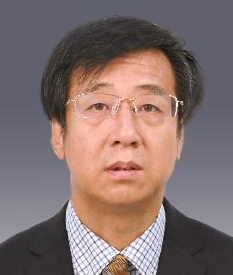 Dianlin Yang (杨殿林)合作论文数Agro-Environmental Protection Institute, Ministry of Agriculture and Rural Affairs2
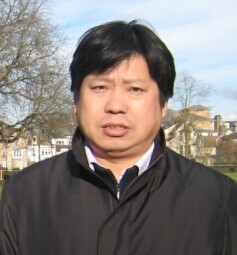 Guoliang Zhang (张国良)合作论文数Institute of Environment and Sustainable Development in Agriculture, CAAS2Liu Xiaowei合作论文数2
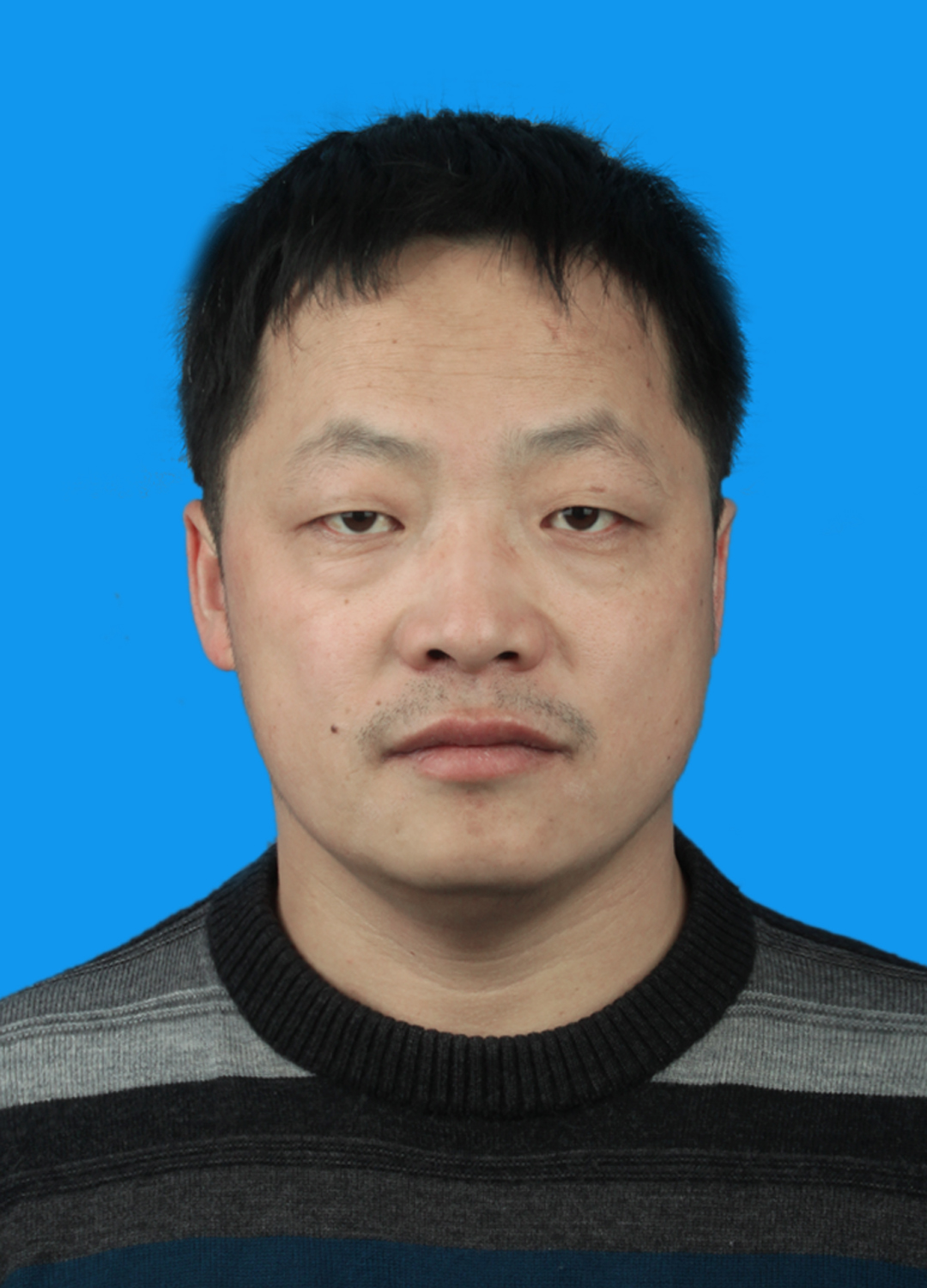 Yunfa Qiao (乔云发)合作论文数School of Ecology and Applied Meteorology, Nanjing University of Information Science & Technology2
 Wenliang Wu (吴文良)合作论文数College of Resources and Environmental Sciences, China Agricultural University2
 Liandi Zhou (周连弟)合作论文数农业综合发展研究所2
 Ji Li (李季)合作论文数College of Resources and Environmental Sciences, China Agricultural University2Yufang Sun (孙玉芳)合作论文数2
 Yuhui Qiao (乔玉辉)合作论文数College of Resources and Environmental Sciences, China Agricultural University2LIU Gang (刘刚)合作论文数1Haibo Li合作论文数1Yuqiao Chen合作论文数1DUAN Qing-hong (段青红)合作论文数1Zu-Liang Shi合作论文数1cai yanming合作论文数1Bo WANG (王博)合作论文数1
 Huayang Zhen (甄华杨)合作论文数College of Resources and Environmental Science, China Agricultural University1Ke-xia XING (邢可霞)合作论文数1Qing-yang LIU (刘青扬)合作论文数1HU Xiaofang (胡潇方)合作论文数1Ze-ying WU (吴泽嬴)合作论文数1Mingming Zhang合作论文数1




