研究生质量管理包括很多方面,如招生、管理、教师队伍以及学士论文的研究等,同时对于学生的自我评价和教师的评价也是必不可少的内容.随着教育事业的不断发展和各国一体化进程的加快,一些西方发达国家的研究生教育和管理的理念融入中国,并对我国的研究生教育起到很有效的促进作用.论文首先介绍了研究生教育质量管理的内涵和西方国家研究生教育质量管理的特色,然后又对西方国家研究生教育质量管理的启示和借鉴展开讨论,并提出个人见解.
新媒体的发展为高校思想政治教育带来了诸多机遇和挑战.新媒体环境下的高校思想政治教育提升路径,应依托新媒体创新思想政治教育形式,加强新媒体环境下高素质教师队伍建设,创新新媒体应用导向的激励机制设计,加强网络信息条件下大学生思想政治教育的互联互通,在思想政治教育的环节积极培养大学生网络环境下媒介素养.
通过氨气还原五氧化二钒(V2O5),在773~873 K下成功地制备V(O,N)粉体.利用X射线衍射(XRD),场发射扫描电子显微镜(FE-SEM),热重力分析(TGA),X射线光电子能谱(XPS),化学分析和比表面积(BET)等材料表征方法,分析了V2O5还原成V(O,N)过程中的物相和形貌演变.根据XRD,XPS和化学分析结果,最终产物应为V(O,N);钒源的物相转变顺序依次为:V2O5→VO2→V4O7→V2O3→V(O,N).另外,还研究了氨还原过程中的形态演变,发现除了VN颗粒看上去似乎是由无数个小的VN晶粒组成外,VN颗粒的尺寸和形状与V2O5几乎保持相同.
镀金原料氰化亚金钾的生产过程含氰废液中锌(Ⅱ)离子和铜离子(Ⅱ)浓度较高,为探究树脂吸附铜、锌离子的规律,运用Aspen Adsorption数值模拟软件对Φ10 mm×200 mm的树脂固定床吸附过程进行数值模拟,采用一阶迎风差分法作为偏微分方程的离散方法,研究不同条件下的吸附穿透曲线和吸附负荷分布曲线.结果表明:增加进料流量和进料浓度均可提高吸附效率,传质系数(KS)大于临界值时,吸附穿透曲线不再受其影响,KS(Zn2+)=4.3×10⁻³s-1,KS(Cu2+)=1.00×10⁻²s-1.
屈光不正,尤其近视,目前已成为全球密切关注的公共卫生问题.屈光不正的合理化矫正是视光医学发展和公共用眼健康的重要基石.本文中笔者在汇总近年来已发表的文献及结合自身临床经验的基础上,提出目前临床上常见屈光不正类型的矫正规律,并就儿童与成人远视眼、近视眼、散光及屈光参差的矫正和配镜原则进行深入探讨.旨在为视光医生及验光师提供可指导性的建议或意见.
进入高校的学生人数不断增多,这也就代表了,学校行政管理涉及到的工作内容会变得更为繁琐和冗杂,管理形式也呈现出了多元化将多样化.本文针对当前高校行政管理工作相关内容出发,通过对于当前高校行政管理的实际情况进行分析,总结其存在的内涵和特征,将高校的行政管理工作与精细化管理模式结合起来,以期提高高校管理工作的效率,为教育事业的更上一层楼添砖加瓦,因此切实提高管理效率与水平,保障学校教学科研工作的有序进行,提高学校建设水平.
本文主要以高校行政管理创新的新途径为重点进行阐述,结合高校行政管理存在的问题为主要依据,从加强行政管理意识、提升行政管理模式的规范性和标准性、对行政管理方法内容进行深化、提升行政管理人员的综合素养这几方面进行深入探索与研究,其目的在于提升行政管理工作的质量和效率,促进高校长期稳定发展.
铬镀层具有优异的机械和抗腐蚀性能,传统六价铬电镀存在高毒、高污染等问题,三价铬绿色电镀工艺受到普遍关注,但铬镀层不能持续增厚和镀液稳定性差是关键瓶颈.文中研究了脉冲电流和镀液流动对铬电沉积的影响规律,发现两者均可促进电镀过程中生成的副产物向镀液主体的传递.然而,脉冲电镀会降低铬电沉积效率,镀液流动可以提高铬电沉积效率,并能促进铬镀层的持续增厚.在50 mL/min的镀液流动条件下,直流电镀60 min,可获得41μm的厚铬镀层,沉积速率为0.68μm/min,镀层表面平整致密.
在门诊中如遇到患儿斜颈,通常会考虑两个因素:垂直斜视引起的代偿头位和儿童斜颈.前者是由于垂直斜视引起复视,患儿为避免复视,通过斜颈的代偿头位来减轻或消除复视,对于此类患儿要详细检查眼位和眼球运动;后者是儿童颈部肌肉发育不对称,引起颈部倾斜,可通过从背部观察患儿颈椎,以及触摸颈部两侧肌肉力量来予以评估,必要时到骨科会诊.
With the depletion of high-quality ore resources at home and abroad, the supply of domestic coking coal resources has become increasingly tense, and research on the non-blast furnace ironmaking technology has become even more necessary. The fluidized ironmaking technology can directly utilize powder ore, does not need to consume coke, and has good prospects for development. However, the sticking problem limits the fluidized ironmaking technology. Therefore, the sticking mechanism of particles must be explored, and inhibition measures must be put forward. Although many researchers at home and abroad have performed numerous studies on the influencing factors and inhibiting technologies of the sticking problem, the quantitative characterization and analysis of the sticking degree have rarely been studied. Similar to the fluid viscosity, the apparent viscosity of solid particles was introduced herein to characterize the interaction force between particles. The apparent viscosity of Fe2O3 particles with nano-SiO2 were measured by a rotational viscometer based on the principle of energy dissipation. The results indicate that the apparent viscosity of Fe2O3 particles increases with the increasing temperature and significantly decreases when nano-SiO2 is added. This result could be explained by the nanoSiO 2 coating on the particles inhibiting the agglomeration and sintering among particles. Sticking occurred during the fluidization process. The reduction of Fe2O3 particles was investigated by a micro-fluidized bed to verify the effect of nano-SiO2 on the apparent viscosity of Fe2O3 particles. Consequently, the results show that adding nano-SiO2 to the Fe2O3 particles can effectively improve the metallization rate and prolong the sticking time in the reduction process. Furthermore, the scanning electron microscopy analysis exhibits that the nano-SiO 2 coating on Fe2O3 particles reduces the diffusion activity of the iron atoms, blocks the contact between fresh iron, and inhibits the sintering of fresh iron, thereby making it difficult to form sticking points. In conclusion, adding nano-SiO2 to Fe2O3 particles can effectively inhibit sticking in the reduction process of the fluidized bed.
To reduce the cost of circulating gas CO2 separation and gas preheating in the process of oxygen blast furnace ironmaking,this paper put forward the technological process of remaking gasifier for oxygen blast furnace injection gasifier. Based on the method of exergy analysis, the main process exergy indices of traditional blast furnace (TBF) and OBF-RGG were calculated and evaluated. The results show that the exergy loss of the blast furnace unit and the whole system in TBF process are 0.911 GJ/Thm and 1.636 GJ/Thm, respectively;the exergy loss of the blast furnace unit and the whole system in OBF-RGG process are 0.298 GJ/Thm and 0.826 GJ/Thm, respectively;in addition, the exergy efficiency of the TBF and OBF-RGG processes are 83 % and 91 %,respectively. This process can realize joint production in metallurgical and chemical industries, and is of great significance for promoting industrial coproduction.
COREX is the most widely and successfully used smelting reduction process for iron making and the unique industrialization production by now. Considering almost the same working condition of BF, the hearth in smelting gasifier is also the most critical factor to determine the campaign life of COREX. Consequently, it is indispensable to clarify and analyze the flow state of pig iron in hearth.In this paper,FLUENT was employed to simulate and analyze the flow distribution of hot metal under different conditions, obtaining the influence rule of specific factors on the flow distribution.The results show that the position of dead column extremely affects the flow of hot metal. When the dead columnis floating in the hearth, more hot metal is allowed to flow through the narrow space between the dead column and the bottom, aggravating the erosion of the bottom, but the circumfluence on the side wall and the"elephant foot"is alleviated.Decreasing the porosity of dead column results in more serious erosion of the hearth and bottom.Reducing the taphole diameter is beneficial to lighten the circumfluence of hot metal.Moreover,the taphole angle has little effect on the flow.
In comparison with blast furnace, pure oxygen instead of air is injected into melter gasifier. Thus, there is a great difference between melter gasifier and blast furnace in the mass, momentum, heat transfer and gas distribution. A two-dimensional mathematical model at steady state was developed to describe the gas velocity, temperature and species distribution around raceway in melter gasifier. The results show that the gas temperature reaches above 3500 K rapidly, due to the heat exchange with the burden and the heat release of combustion reaction with coke or semi-coke formed by lump coal. In addition, a small-scale gas circulation flow phenomenon is observed in front of tuyere. Thus, there is a serious damage in the front of tuyere which results in a higher unplanned blowing-down percentage. In order to decrease the gas temperature in the raceway to prevent the blowing-down, the appropriate hydrogen-rich fuel gas, including natural gas, coke oven gas, can be fed through the tuyere. Furthermore, it also reduces the solid fuel ratio and improves the reduction advantage of H2 in the high temperature to enhance the smelting efficiency of melter gasifier.
Void swelling in austenitic stainless steel degrades the properties of materials used in reactors due to the accumulation behavior of radiation-introduced excess vacancies, which brings a serious threat to the safety of reactor. In this paper, electron beam irradiations were conducted by high voltage electron microscope in a temperatures range of 300~500 ℃, and insitu observation of the void evolution was carried out during irradiations. Void distributions were observed and void sizes were measured using transmission electron microscope after irradiations. The differences among the void evolution under different irradiation temperatures were investigated. The results show that large amounts of point defect clusters, loops, and voids can be observed under electron beam irradiations of different temperatures. Voids formed at 450 ℃and 500 ℃ are the largest, with a size of 13.3 nm and 14.5 nm, respectively. As the irradiation temperature increases, the diffusion of excess vacancies is enhanced, which leads to the enlargement of void size. These results are expected to provide a reference for forecasting the void swelling in austenitic stainless steel under different irradiation temperatures.
Through XRD analysis, the obtained amorphous nano-sized Si2N2O powders, with the size of about 20 nm, began to crystallize at 1100 ℃. By further investigating the oxidation resistance and mechanical properties of the ceramics sintered at different temperatures, the study found that the weight gain of dense bulks was only 1.1% after twenty-hour oxidation at 1600 ℃. The mechanical properties of sintered bulks increased rapidly with the increase of sintering temperature. When the temperature was over 1500 ℃, the increasing tendency of the mechanical properties became slowly with the rise of temperature. The Vickers hardness, flexural strength and fracture toughness of the sintered samples at 1500 ℃ reached 19.6 GPa,440 MPa and 4.1 MPa·m1/2respectively. When Si2OCl6 was taken as raw materials and sodium solution as the reducing agent, amorphous nano-sized Si2N2O powders were successfully synthesized in liquid ammonia solution through low temperature reduction. Thus dense ceramic bulks were obtained via spark plasma sintering without any sintering additives.
The melted gasifier packed bed is the main smelting place for smelting prereduced charge into liquid hot metal and using lump coal to generate large amount of reduced gas for prereduction shaft furnace. In this paper, a one-dimensional steady-state mathematical model of a melted gasifier packed bed was established. The temperature and composition distribution of the reduced gas and solid charge in the packed bed were numerically simulated. The results show that sponge iron gradually melts into liquid molten iron as the solid charge decreases when the temperature difference between sponge iron and lump coal and flux is relatively large,To the bottom of the packed bed, hot metal temperature is up to 1774 K. On the other hand, with the increase of gas flow, the pyrolysis of lump coal increased the volume concentration of H2 significantly, and the volumetric concentration of CO2 gradually increased with flux decomposition and sponge iron reduction. At the upper part of the packed bed, the volume concentration of CO stabilized at 71.8 %.
High purity TiO2-containing product is prepared by acid leaching method. However, the pickle liquor recycling remains a difficult problem, which can be avoided by using the alkaline leaching method, but this process is complex and the recovering cost of sodium salt is a bit high. The acid-alkali method can change the Ti-bearing blast-furnace slag into rich-titanium material theoretically, while this process is complex too, which needs further study and perfection. A variety of pyrometallurgy technologies to recover titanium from ti-tanium bearing blast furnace slag are comprehensively reviewed and a comparative analysis is made from as-pect of technological, economic and environmental protection. It is pointed out that efficient and comprehen-sive utilization of titanium bearing blast furnace slag requires combining pyrometallurgy with hydro metallur-gical process, as well as some external field metallurgy technology.
Precipitation strengthening has an important contribution for Ti microalloy steel strength. With regard to Ti microalloyed steel produced by different rolling water cooling rate, the nano-carbide precipitates in Ti microalloyed steel were obtained by nondestructive electrolysis extraction technology, and its effect on steel strengthening were also calculated based on the phase composition and particle size distribution. The results show that a large number of nano-sized M3C and MC precipitate exists in the Ti microalloyed steel. However, the higher water cooling rate weakens the precipitation behavior of both M3C and MC, which induces that their mass fraction in Ti microalloyed steel decreases. In addition, with the increasing water cooling rate, the size of M3C precipitate decreases, while that of MC precipitate has no significant relationship with the water cooling rate. Generally speaking, the high water cooling rate improves M3C precipitation strengthening and weakens MC precipitation strengthening, but the strengthening contribution of MC precipitate still could not be ignored.
 Yanling Zhang (张延玲)合作论文数Stated Key Laboratory of Advanced Metallurgy, University of Science and Technology Beijing4
 Zhuoqing An合作论文数3
 Kaiping Du合作论文数3
 Xiaobing Wang (王小兵)合作论文数 Ophthalmology Centre of Tongren Hospital affiliated to Capital Medical University, Beijing 0,China3Wanlong Zhang (张万龙)合作论文数2Zhengxin HUANG (黄正欣)合作论文数2
 Jing Fu (付晶)合作论文数Beijing Tongren Hospital, Capital Medical University2
 Ningli Wang (王宁利)合作论文数Beijing Tongren Hospital, Capital Medical University;The First Affiliated Hospital of Xi’an Jiaotong University;Henan Academy of Innovations in Medical Science2
 Haibin Zuo (左海滨)合作论文数Stated Key Laboratory of Advanced Metallurgy, University of Science and Technology Beijing2
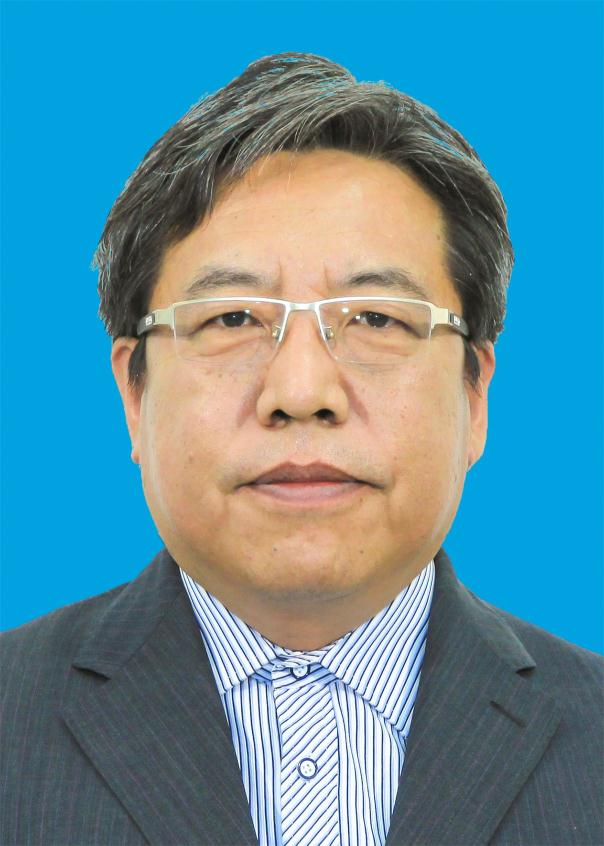 Zhancheng Guo (郭占成)合作论文数Stated Key Laboratory of Advanced Metallurgy, University of Science and Technology Beijing2
 Subing Yang合作论文数1WANG Xiao-bing合作论文数1Zeshang Dong合作论文数1jinhong fu (付锦红)合作论文数1
 Changle Li合作论文数1Jin ZHENG (郑劲)合作论文数1Feng GUO (郭丰)合作论文数1Shang CHEN (陈尚)合作论文数1Hui WANG (王会)合作论文数1LinSong Qi (齐林嵩)合作论文数1DongSheng Wang (汪东生)合作论文数1Zhe Dong (董喆)合作论文数1Wen Li (李文)合作论文数1
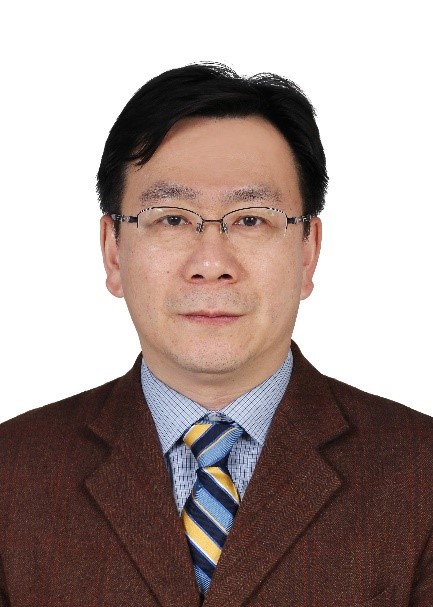 Qing Liu (刘青)合作论文数State Key Laboratory of Advanced Metallurgy, University of Science and Technology Beijing1
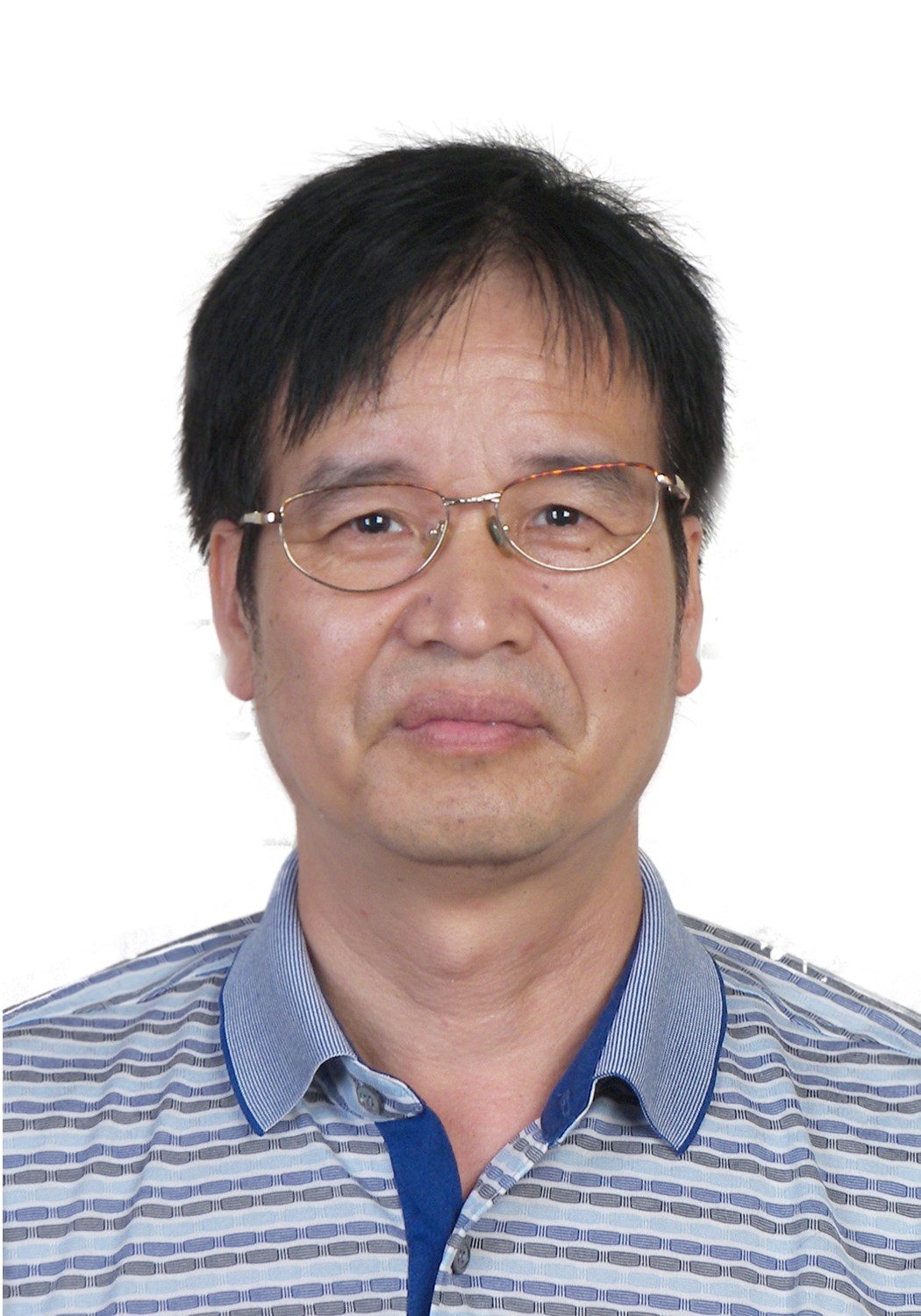 Qi Zheng (郑其)合作论文数China Grinm Group Corporation Limited1Wang Jinghui合作论文数1
 Zhanbing Yang (杨占兵)合作论文数School of Metallurgical and Ecological Engineering, University of Science and Technology Beijing1
 Fei Zhao (赵飞)合作论文数College of Materials and Metallurgy, Guizhou University1
 Guang Wang (王广)合作论文数Stated Key Laboratory of Advanced Metallurgy, University of Science and Technology Beijing1
 Shengli Wu (吴胜利)合作论文数School of Metallurgical and Ecological Engineering, University of Science and Technology Beijing1
 Hongmin Zhu (朱鸿民)合作论文数School of Metallurgical and Ecological Engineering, University of Science & Technology Beijing1
 Haoran Wang (王浩然)合作论文数School of Computer and Information Technology, Hohhot Minzu College1
 Jingsong Wang (王静松)合作论文数Stated Key Laboratory of Advanced Metallurgy, University of Science and Technology Beijing1Ping Liu (刘萍)合作论文数1
 Rong Zhu (朱荣)合作论文数Institute for Carbon Neutrality, University of Science and Technology Beijing1
 Yue Zhang (张跃)合作论文数State Key Laboratory of Advanced Metals and Materials, University of Science and Technology Beijing1Xiaozhen Wang合作论文数1
 Qingguo Xue (薛庆国)合作论文数State Key Laboratory of Advanced Metallurgy, University of Science and Technology Beijing1
 Shuqiang Jiao (焦树强)合作论文数Lanzhou University of Technology1




