Nudge refers to the lateral detouring behavior of autonomous vehicles around static traffic participants. In autonomous robo-delivery systems, nudge decision-making is a frequent and critical classification problem, where suboptimal decisions lead to safety hazards and delivery delays. The inherent characteristics of nudge decision-making process, including high-dimensional spatiotemporal features and a continuous state-action space, make it particularly challenging for traditional rule-based approaches. These methods struggle to devise exhaustive rules and require ongoing optimization for long-tail scenarios. Data-driven methods, in contrast, excel at learning decision boundaries in such complex decision spaces and demonstrate superior generalization capabilities. To leverage these advantages, we developed a transformer architecture for high-dimensional, continuous state-action space decision classification problems, comprising a general-purpose encoder for extracting comprehensive spatiotemporal features, and a multi-head decoder that enables joint learning of multi-obstacle decision-making and multi-modal trajectory generation specifically tailored for nudge tasks. To ensure robust generalization, we curated a large-scale, high-quality nudge-specific dataset with 128 million scene samples, obtained through data mining, distillation, and auto-labeling, and exhibiting a uniform distribution across both temporal and spatial dimensions. Experimental results demonstrate that our model achieves a decision average precision of 99.9%, a trajectory average displacement error of 1.729 m, and an inference latency of 3.1 ms. It shows a 13.55% relative improvement in simulation-based evaluation pass rate compared to the rule-based method, while also outperforming representative learning-based baselines on a common dataset and evaluation split, with further validation through 5 million kilometers of road testing.
Understanding the optimization landscape of linear quadratic regulation (LQR) problems is fundamental to the design of efficient reinforcement learning solutions. Recent work has made significant progress in characterizing the landscape of static output-feedback control and linear quadratic Gaussian (LQG) control. For LQG, much of the analysis leverages the separation principle, which allows the controller and estimator to be designed independently. However, this simplification breaks down when the gradients with respect to the estimator and controller parameters are inherently coupled, leading to a more intricate analysis. This paper investigates the optimization landscape of observer-based dynamic output-feedback control of LQR problems. We derive the optimal observer-controller pair in settings where transient quadratic performance cannot be neglected. Our analysis reveals that, in general, the combination of the standard LQR controller and the observer that minimizes the trace of the accumulated estimation error covariance does not correspond to a stationary point of the overall closed-loop performance objective. Moreover, we derive a pair of discrete-time Sylvester equations with symmetric structure, both involving the same set of matrix elements, that characterize the stationary point of the observer-based dynamic LQR problem. These equations offer analytical insight into the structure of the optimality conditions and provide a foundation for developing numerical policy gradient methods aimed at learning complex controllers that rely on reconstructed state information.
Building a general-purpose whole-body controller is essential for enabling diverse motion capabilities in humanoid robots across a wide range of downstream tasks, including locomotion and loco-manipulation. Different tasks rely on distinct motion reference modalities: locomotion primarily depends on coordinated robot joint trajectories, whereas manipulation requires precise end-effector trajectory tracking. Existing methods often overlook the representational mismatch between dense robot joint angles and sparse end-effector poses. To address this, we propose Multi-Modal Mimic (M3imic), a versatile multi-modal whole-body control framework that unifies heterogeneous motion reference modalities, including robot joint angles, human pose trajectories, and end-effector poses, using modality-specific encoders to map them into a shared latent space. Leveraging large-scale reinforcement learning in the simulator, we train a single policy that achieves sim-to-real transfer across multiple motion reference modalities without modality-specific retraining. Extensive simulation and real-world experiments on the Unitree G1 robot are conducted to evaluate the proposed framework. In simulation, the policy achieves a peak success rate of 98.42% on an unseen test dataset, demonstrating its exceptional generalization capability.
The cooperative control of multiple-vehicle systems is a complex nonlinear optimization problem with numerous constraints, making real-time implementation challenging. In this work, we propose a multi-vehicle neural distributed predictive control (NDMPC) method that can handle a variety of scenarios, where vehicles do not need road topologies to determine relative priorities. To guarantee computational efficiency, we convert the online optimal tracking problem into offline policy optimization, using one single neural network to map the optimal longitudinal and lateral control sequence for each vehicle. We address the collision avoidance constraints by introducing a differentiable penalty function and derive a model-based policy gradient algorithm. Simulation results show that our method improves computational efficiency by up to 5.7 times while maintaining an approximation accuracy of more than 99.4% in lateral position tracking compared to the near-optimal online solver Ipopt, in a single-vehicle sinusoidal tracking task with simultaneous avoidance of multiple dynamic obstacles. We then implement our method in different real-world traffic scenarios. There, two connected autonomous vehicles successfully pass conflict zones simultaneously, with an average computation time of 4.1 ms. Videos are available at https://youtube.com/playlist?list=PLEO1KAxpzETZgAvnTfb3wE_9Yfw3wKxDj.
Distributional soft policy iteration (DSPI) provides an important framework for combining distributional reinforcement learning (DRL) with maximum-entropy control, in which the policy evaluation step is governed by a distributional soft Bellman operator acting on entropy-regularised returns. Theoretical analysis of such an evaluation step requires a probability metric under which Bellman updates can be controlled, typically by showing that the operator contracts the distance between any two candidate return-distribution estimates. In this paper, we focus on the Cramér geometry, a cumulative distribution function (CDF)-based metric with an L^2 structure, and study whether the fixed-policy distributional soft Bellman operator has this contraction property and hence a unique fixed point under this metric. Working directly on an admissible CDF field domain, we formulate the CDF-level distributional soft Bellman operator, prove that it is a -contraction, and obtain the corresponding unique fixed point together with convergent iterative policy evaluation. The CDF formulation also shows that this finite-Cramér-domain property follows from a uniform first-moment condition on the combined one-step reward entropy shift, rather than from separate uniform boundedness assumptions on the reward and entropy terms. We then transport the same evaluation problem to the spectral domain by conjugation, obtaining an equivalent Hilbert-space representation of the same decision process. Taken together, these results identify the Cramér-geometric Bellman fixed point associated with the policy-evaluation step of DSPI, providing a reference point for studying approximate critics, evaluation error, and critic-loss design in DSPI-style algorithms.
Deep reinforcement learning is pivotal for closed-loop autonomous driving yet remains constrained by severe bottlenecks in sampling efficiency. Standard parallel sampling mitigates this but suffers from the straggler effect, where the premature termination of a single environment necessitates a synchronized batch re-initialization, leading to suboptimal sample utilization and prohibitive re-initialization latency. To address this, we propose FAST, a synchronous parallel framework tailored for closed-loop simulation. Specifically, FAST employs Dynamic Parallel Sampling Alignment (DPSA) to maintain vectorization synchronization by extending terminated episodes via virtual continuation, thereby decoupling the sampling loop from individual terminations. By dynamically triggering global truncation based on the termination rate of parallel clips, FAST effectively eliminates the bottleneck of premature resets without sacrificing data diversity. Furthermore, to strictly preserve theoretical consistency, we incorporate a Scaled Mask-Padding Optimization (SMPO) that leverages validity masking and adaptive loss normalization to nullify the bias from auxiliary padding data. Empirical evaluations demonstrate that FAST achieves at least a 1.78 times wall-clock speedup over the single-clip baseline while preserving statistical unbiasedness.
ABSTRACT Accurately understanding the timing of human collision‐avoidance maneuvers is critical for intelligent vehicle decision‐making, as these actions shape pre‐crash dynamics and collision risk. This study develops a probabilistic Bayesian inference framework to accurately model drivers’ perception‐response time (PRT) distributions while accounting for driver‐side visual attention latency and scenario‐side urgency. Using a controlled video‐based hazard‐perception dataset with detailed temporal annotations of scenario evolution and driver responses, we analyze four common vehicle‐to‐vehicle pre‐crash scenarios: rear‐end, opposite‐direction, crossing‐path, and lane‐change. The proposed Bayesian model captures long‐tailed PRT characteristics and yields scenario‐specific safety envelopes for estimating crash probability under varying urgency and perceptual conditions. Results reveal distinct PRT distributions across scenarios, reflecting differences in hazard evolution and driver response patterns. These scenario‐specific safety envelopes identify high‐risk conditions where drivers are likely to fail to respond in time, providing a principled basis for scenario‐level risk assessment. External validation using rear‐end naturalistic crash cases provided preliminary support for the model predictions’ plausibility. Overall, this work enables rigorous inference of PRT uncertainty and delivers actionable safety boundaries for uncertainty‐aware, adaptive interventions, thereby supporting safer human–machine interaction in intelligent vehicles.
The integration of pretrained encoders with diffusion policies has become a dominant paradigm for visual robotic manipulation. However, it still struggles to generalize across complex environments with varying factors such as lighting and surface textures. To address this, we propose FAME, a framework that integrates a factor-aware mixture-of-experts (MoE) with a pretrained encoder to enhance generalization to environmental variations. FAME follows a three-stage training process: (1) policy warmup, where a diffusion policy is trained on standard-environment data with a frozen encoder; (2) factor-specific adapter training, where lightweight adapters inserted between the frozen encoder and the temporarily frozen policy are trained on customized datasets, each targeting a distinct environmental variation; and (3) joint fine-tuning, where a central router and the warmed policy are trained on mixed data to handle multiple factors jointly. FAME is “factor-aware” because the central router softly weights frozen factor-specific adapters as a dense MoE, enabling combinatorial generalization across multiple factors. Evaluations on the Meta-World benchmark show that FAME outperforms diffusion policy baselines by 34
Reinforcement Learning (RL) has significantly improved large language model reasoning, but existing RL fine-tuning methods rely heavily on heuristic techniques such as entropy regularization and reweighting to maintain stability. In practice, they often experience late-stage performance collapse, leading to degraded reasoning quality and unstable training. We derive that the magnitude of token-wise policy gradients in RL is negatively correlated with token probability and local policy entropy. Building on this result, we prove that training instability is driven by a tiny fraction of tokens, approximately 0.01%, which we term spurious tokens. When such tokens appear in correct responses, they contribute little to the reasoning outcome but inherit the full sequence-level reward, leading to abnormally amplified gradient updates. Motivated by this observation, we propose Spurious-Token-Aware Policy Optimization (STAPO) for large-scale model refining, which selectively masks such updates and renormalizes the loss over valid tokens. Across six mathematical reasoning benchmarks using Qwen 1.7B, 8B, and 14B base models, STAPO consistently demonstrates superior entropy stability and achieves an average performance improvement of 7.13% over GRPO, 20-Entropy and JustRL.
Safety is a primary challenge in real-world reinforcement learning (RL). Formulating safety requirements as state-wise constraints has become a prominent paradigm. Handling state-wise constraints with the Lagrangian method requires a distinct multiplier for every state, necessitating neural networks to approximate them as a multiplier network. However, applying standard dual gradient ascent to multiplier networks induces severe training oscillations. This is because the inherent instability of dual ascent is exacerbated by network generalization – local overshoots and delayed updates propagate to adjacent states, further amplifying policy fluctuations. Existing stabilization techniques are designed for scalar multipliers, which are inadequate for state-dependent multiplier networks. To address this challenge, we propose an augmented Lagrangian multiplier network (ALaM) framework for stable learning of state-wise multipliers. ALaM consists of two key components. First, a quadratic penalty is introduced into the augmented Lagrangian to compensate for delayed multiplier updates and establish the local convexity near the optimum, thereby mitigating policy oscillations. Second, the multiplier network is trained via supervised regression toward a dual target, which stabilizes training and promotes convergence. Theoretically, we show that ALaM guarantees multiplier convergence and thus recovers the optimal policy of the constrained problem. Building on this framework, we integrate soft actor-critic (SAC) with ALaM to develop the SAC-ALaM algorithm. Experiments demonstrate that SAC-ALaM outperforms state-of-the-art safe RL baselines in both safety and return, while also stabilizing training dynamics and learning well-calibrated multipliers for risk identification.
Momentum-based optimizers are widely used in modern deep learning, yet the relations among momentum recursion, update geometry, and acceleration remain only partially understood. We develop an ADMM-Inspired Momentum (AIM) framework based on residual-penalty variable splitting, which interprets momentum as a multiplier-like correction driven by the splitting residual. AIM recovers the exponential moving average of gradients from an ADMM-style multiplier update and separates two mechanisms that are usually intertwined in practical optimizers: the residual penalty determines the update geometry, whereas the approximation of the objective-related subproblem determines the acceleration form. Building on AIM, we propose Relativistic Adaptive gradient Descent with Accelerated Residual (RADAR), which combines relativistic adaptive geometry, decoupled residual correction, and second-order momentum filtering to improve the update direction and momentum estimation. We establish stochastic convergence through a variance-perturbed Lyapunov drift analysis. Experiments on supervised vision learning, language modeling, and reinforcement learning show that RADAR achieves consistent improvements over strong adaptive optimizer baselines.
The integration of connected and automated vehicles (CAVs) into traffic systems holds potential to mitigate undesired disturbances. Nevertheless, coexisting human-driven vehicles (HDVs) introduce complex behavioral disturbances, which has imposed critical challenges for control robustness. This study develops a computational framework based on policy iteration to derive robust control policies with optimized attenuation performance for nonlinear mixed traffic flow. Specifically, robust H-infinity control problem is solved by applying the framework of zero-sum game, whose solution at the Nash equilibrium is transformed into a Hamilton-Jacobi (HJ) inequality with a Hamiltonian constraint. For achieving desired attenuation performance, the value function is updated by gradient descent based on counterexamples violating Hamiltonian and monotonicity constraints, where the positive definiteness of the value function is ensured by convex neural networks, facilitating the analysis of control stability via Lyapunov methods. By utilizing constraint gaps, the attenuation level is optimized through the analytical formulae derived from the HJ inequality. The stability and algorithm convergence are proved. Experimental results demonstrate the capability of the learned controller to effectively attenuate disturbance propagation and stabilize mixed traffic flow.
Automated parking commonly assumes marked slots and short approach maneuvers. Delivery and service vehicles, however, may need to reach an operator-specified pose in an irregular bounded environment from a distant start. Existing learning-based parking planners often rely on local observations, which can restrict long-range route reasoning. To address this problem, we present NeuralParker, a reinforcement learning-based hybrid planner for arbitrary-pose parking. NeuralParker encodes full-environment obstacle and boundary geometry in a target-relative vertex representation, allowing the policy to retain route-defining context throughout the approach. It further couples a learned curvature–length arc policy with an in-loop terminal ensemble that selects from diverse cubic Hermite connections using a curvature-regularized cost. We also establish factorial and long-range route-choice benchmarks to evaluate planning success and trajectory quality. Experiments on these benchmarks show that NeuralParker achieves higher planning success and better overall trajectory quality than the evaluated baselines, while ablation studies support the benefits of the target-relative global representation and terminal ensemble. Finally, a real-vehicle evaluation confirms that the planner transfers effectively to real delivery-vehicle perception at a working parking site, planning successfully at low computational cost.
In essence, reinforcement learning (RL) solves optimal control problem (OCP) by employing a neural network (NN) to fit the optimal policy from state to action. The accuracy of policy approximation is often very low in complex control tasks, leading to unsatisfactory control performance compared with online optimal controllers. A primary reason is that the landscape of value function is always not only rugged in most areas but also flat on the bottom, which damages the convergence to the minimum point. To address this issue, we develop a bicriteria policy optimization (BPO) algorithm, which leverages a few optimal demonstration trajectories to guide the policy search at the gradient level. Different from conventional problem definition, BPO seeks to solve a bicriteria OCP, which has two homomorphic objectives: one is from the standard reward signals and the other is to align the demonstration trajectories. We introduce two co-state variables, one for each objectives, and formulate two Hamiltonians for this bicriteria OCP. The resulting new optimality condition preserves the minimum values of both Hamiltonians. Furthermore, we find that gradient conflict is a key obstacle to simultaneously descending both Hamiltonians, and its impact is negatively proportional to the inner product between the ideal and actual gradients. A minimax optimization problem is built at each RL iteration to minimize conflicts between two homomorphic objectives, whose solution for policy updating is referred to as harmonic gradient. By converting its inner optimization loop into a linear programming with convex trust region constraint, we simplify this problem into a single-loop maximization problem with much increased computational efficiency. Experiment tests on both linear and nonlinear control tasks validate the effectiveness of our BPO algorithm on the accuracy improvement of policy network.
Flow Matching shows great promise in offline reinforcement learning (RL), yet optimizing these iterative policies via Backpropagation Through Time (BPTT) is unstable. While prevailing paradigms circumvent this by distilling multi-step flows into single-step approximations, such methods may limit the benefits of iterative refinement. To avoid these sacrifices, we propose Direct Flow Q-Learning (DFQL), a streamlined framework that attains superior results by optimizing flow matching policies without BPTT or distillation. DFQL derives a surrogate objective that directly injects terminal Q-value gradients as a guidance term into each step velocity field, ensuring stable optimization while preserving iterative expressive capacity. Across 73 challenging tasks in OGBench and D4RL, DFQL achieves state-of-the-art results. Additionally, DFQL extends seamlessly to the offline-to-online setting, delivering substantial performance gains without further modification.
World model serves as a promising tool to infer environment dynamics under high-dimensional observations and candidate actions. Recently, LeCun's JEPA provides a compelling framework for learning such models in representation space. Its action-conditioned extension plays a central role in visual control and latent-space planning, but leaves a fundamental question: can it recover the controlled dynamics from nonlinear observations? This paper presents a joint identifiability condition for controlled world models with Gaussian latent states, which consists of two coupled components: (1) representation identifiability and (2) transition identifiability. The former depends on the spectral separation property while the latter is related to non-degenerate variation of conditional action. We prove that when this condition holds, minimizing the LeJEPA-style predictive objective can recover both latent states and controlled dynamics in the sense of orthogonal transformation. We further prove that the upper bound of transition prediction error is inversely proportional to the spectral separation margin. We also characterize an attainable amplification of counterfactual prediction error that scales inversely with the weakest conditional action-excitation margin. The theoretical predictions are empirically supported across four nonlinear observation settings.
Tightly coupled SLAM formulations under mixed-rate sensing often bind temporal processing, local geometric association, estimator formulation, and map-update policy into method-specific designs. Such binding makes it difficult to vary one design choice without re-engineering the rest of the state-estimation process. This paper presents FUSE, a framework for unified state estimation in vehicular and robotic SLAM systems. FUSE organizes the state-estimation interface around observation ingestion, propagation, update, and state query, and uses this interface to separate temporal processing, residual-ready local geometric association, estimator formulation, and map-update policy. A LiDAR–IMU instantiation is developed to examine the framework under mixed-rate sensing and directional degeneracy, where high-rate inertial propagation, LiDAR-triggered geometric update, residual screening, and degeneracy-aware correction operate through the same interface boundaries. On a 418 m loop-corridor sequence, the instantiation reports a 1.626 m end-to-end trajectory error, corresponding to a 7.9
Abstract Reinforcement learning (RL) is being studied for autonomous driving (AD), but its value depends on the role it plays in a task, the action interface, the evaluation protocol, and the evidence from deployment. This survey examines RL-based AD in modular and end-to-end pipelines and relates reported methods to task formulation and deployment evidence. It maps safe RL, offline RL, model-based RL, and PPO/GRPO-style fine-tuning to maneuver selection, continuous control, world modeling, and VLM/VLA-based driving. It also reviews simulators, datasets, RL platforms, and VLA benchmarks, with attention to reward design, observation space, traffic complexity, and open-loop versus closed-loop evaluation. The survey then examines deployment barriers, including safety, Sim2Real generalization, data efficiency, computation, embodied alignment, and evaluation readiness. RL and VLM/VLA-based methods have shown promise, but current evidence is insufficient to support reliable real-world deployment: many reported results come from restricted scenarios and depend on engineered rewards or simulator assumptions.
Learning expressive and efficient policy functions is a promising direction in reinforcement learning (RL). While flow-based policies have recently proven effective in modeling complex action distributions with a fast deterministic sampling process, they still face a trade-off between expressiveness and computational burden, which is typically controlled by the number of flow steps. In this work, we propose mean flow policy (MFP), a new generative policy function that models the mean velocity field to achieve the fastest one-step action generation. To ensure its high expressiveness, an instantaneous velocity constraint (IVC) is introduced on the mean velocity field during training. We theoretically prove that this design explicitly serves as a crucial boundary condition, thereby improving learning accuracy and enhancing policy expressiveness. Empirically, our MFP achieves state-of-the-art success rates across several challenging robotic manipulation tasks from Robomimic and OGBench. It also delivers substantial improvements in training and inference speed over existing flow-based policy baselines.
From the origin of life to the formulation of thermodynamic laws, understanding whether physical systems can manifest intelligence has remained a central scientific challenge. The ability to quantify intelligence is essential for determining whether a system exhibits intelligent behavior, and prior theoretical work has highlighted deep connections between intelligence and the fundamental principles of living systems. Dynamical systems offer a foundational framework for modeling the evolution of physical processes; however, their potential to exhibit intelligence has not been systematically characterized. In this paper, we introduce a mathematical modeling framework that defines dynamical systems composed of two interacting subsystems as Meta-Coupled Systems (MCS) to analyze the emergence of intelligence. Leveraging the concept of state entropy, we establish the Intelligence Emerging Principle (IEP) and derive its necessary and sufficient conditions. We claim that an isolated system that satisfies the energy conservation and an increment of positive total entropy, along with an entropy-declining subsystem, is able to generate intelligent behaviors. Furthermore, we specialize IEP under linear dynamical systems with different energy forms, and find that linear systems can also exhibit intelligence in some extent. Through both linear and nonlinear illustrative simulations, we verify the effectiveness of this mathematical framework as a principled method of investigating intelligence in dynamical systems.
 Keqiang Li (李克强)合作论文数State Key Laboratory of Intelligent Green Vehicle and Mobility, School of Vehicle and Mobility, Tsinghua University;National Innovation Center of Intelligent and Connected Vehicles, Tsinghua University99
 Jingliang Duan (段京良)合作论文数76
 Bo Cheng (成波)合作论文数School of Vehicle and Mobility, Tsinghua University;Suzhou Automotive Research Institute, Tsinghua University68
 Jianqiang Wang (王建强)合作论文数School of Vehicle and Mobility, Tsinghua University50
 Yang Guan (关阳)合作论文数School of Vehicle and Mobility, Tsinghua University34
 Chang Liu (刘畅)合作论文数School of Advanced Manufacturing and Robotics, Peking University30
 Yao Lyu (吕尧)合作论文数School of Information, University of Michigan30
 Jianyu Chen (陈建宇)合作论文数Institute for Interdisciplinary Information Sciences, Tsinghua University;Shanghai Qi Zhi Institute;Robot Era28Shaobing Xu (徐少兵)合作论文数27
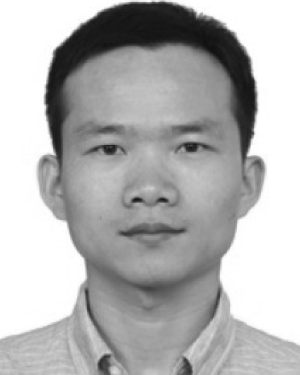 Yuming Yin合作论文数26Wenhan (Winston) Cao合作论文数24
 Zheng Yang (杨铮)合作论文数23
 Qi Sun合作论文数22
 Yujie Yang合作论文数Intelligent Driving Lab, School of Vehicle and Mobility, Tsinghua University20
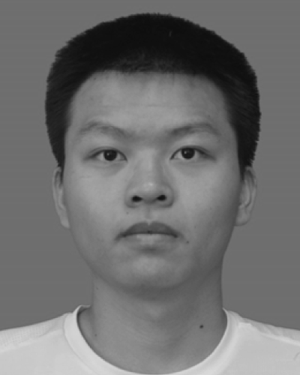 Guojian Zhan合作论文数18
 Yangang Ren合作论文数State Key Lab of Automotive Safety and Energy, School of Vehicle and Mobility17
 Huei Peng (彭晖)合作论文数Department of Mechanical Engineering, University of Michigan17Bingbing Nie (聂冰冰)合作论文数17
 Sifa Zheng (郑四发)合作论文数School of Vehicle and Mobility, Tsinghua University;Suzhou Automobile Research Institute, Tsinghua University17
 Yougang Bian (边有钢)合作论文数College of Mechanical and Vehicle Engineering, Hunan University;Intelligent Vehicle LAB, Hunan University16
 Xiaosong Hu (胡晓松)合作论文数College of Mechanical and Vehicle Engineering, Chongqing University;Department of Automotive Engineering, Chongqing Automotive Collaborative Innovation Center, Chongqing University;Department of Mechanical and Vehicle Engineering, Chongqing University15
 Wenjun Wang (王文军)合作论文数School of Vehicle and Mobility, Tsinghua University15
 Haitong Ma (马海铜)合作论文数Kenneth C. Griffin Graduate School of Arts and Sciences, Harvard University;Google DeepMind14
 Feng Gao (高峰)合作论文数College of Mechanical and Vehicle Engineering, Chongqing University14
 Yao (Mark) Mu (穆尧)合作论文数AI Institute, School of Computer Science, Shanghai Jiao Tong University14
 Yuxuan Jiang合作论文数13
 Jie Li (李杰)合作论文数College of Mechanical and Vehicle Engineering, Chongqing University13
 Guofa Li (李国发)合作论文数College of Geophysics, China University of Petroleum-Beijing13
 Jiaxin Gao合作论文数Sch Mech Engn, Univ Sci & Technol Beijing12
 Ziyu Lin合作论文数School of Vehicle and Mobility, Tsinghua University11
 Renjie Li合作论文数11
 Zhiqian Lan (兰志前)合作论文数Department of Computer Science, University of Hong Kong;The Multimedia Laboratory, University of Hong Kong10
 Shen Li (李深)合作论文数Department of Civil Engineering, School of Civil Engineering, Tsinghua University10
 Kun Deng (邓堃)合作论文数university of illinois at urbana champaign10Zhe Xin (辛喆)合作论文数10
 Qingfeng Lin (林庆峰)合作论文数School of Transportation Science and Engineering, Beihang University10Wenxuan Wang合作论文数9Wenjun Zou合作论文数9
 Xujie Song (宋绪杰)合作论文数University of Michigan9
 Tengxiang Zhang (张腾翔)合作论文数Institute of Computing Technology, Chinese Academy of Sciences9
 Fei Ma (马飞)合作论文数School of Metallurgical Engineering, University of Science and Technology Beijing9
 Ziqing Gu合作论文数8
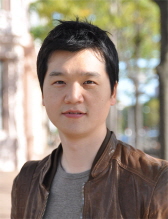 Dongsuk Kum合作论文数The Cho Chun Shik Graduate School of Green Transportation, College of Engineering, Korea Advanced Institute of Science and Technology8
 Qing Xu (许庆)合作论文数School of Vehicle and Mobility, Tsinghua University8
 J. Karl Hedrick合作论文数Department of Mechanical Engineering, University of California, Berkeley8Zhenning Li 合作论文数University of Macau7
 Yuze He (何雨泽)合作论文数Tsinghua University7
 Lei He (何雷)合作论文数School of Vehicle and Mobility, Tsinghua University7
 Fawang Zhang合作论文数7




