Objective:To compare the clinical efficacy of antibacterial suture fixation through the distal phalanx tunnel and Kirschner wire alone in the treatment of old bony mallet fingers.Methods:From February 2016 to December 2020, 45 patients with old bony mallet fingers were treated with antibacterial suture fixation through the distal phalanx tunnel (23 cases in group A) and simple Kirschner wire (22 cases in group B), respectively. The perioperative conditions, postoperative finger mobility and complications of the patients were recorded, and the clinical efficacy was evaluated according to Crawford function score.Results:The postoperative follow-up ranged from 12 to 20 months, with an average of 14.7 months. The range of motion of the affected finger joint and the excellent and good rate of postoperative function in group A were better than those in group B ( P<0.05). There was no significant difference in the incidence of total complications between the two groups ( P>0.05), but the incidence of recurrent mallet fingers in group B was higher than that in group A. Conclusion:The treatment of old bony mallet fingers with antibacterial suture fixation through distal bone tunnel is simple and reliable. The function of the affected fingers is good after operation, and the clinical effect is satisfactory. It is worth popularizing.
目的 比较传统克氏针张力带与空心钉张力带两种内固定方式治疗髌骨粉碎型骨折的临床效果,探讨空心钉钢丝张力带分区固定治疗髌骨粉碎型骨折的可行性及疗效优势.方法 回顾分析2007年12月~2012年5月手术治疗髌骨粉碎型骨折73例,其中46例髌骨粉碎型骨折开放复位应用改良空心钉钢丝张力带内固定,27例采用传统克氏针钢丝张力带固定,术后主动活动结合持续被动活动器(CPM)辅助锻炼膝关节.依据Bostman髌骨骨折疗效临床评分标准于术后2周及6月评价两组病例膝关节功能.比较术后1年内置物取出率.结果 随访8~26月,平均16.5月,早期膝关节功能评定依据Bostman髌骨骨折疗效临床评分标准,空心钉钢丝张力带固定组:优32例,良8例,差6例;克氏针张力带固定组:优7例,良11例,差9例.术后1年内置物取出率:克氏针组70.4%,空心钉组26.1%.两种内固定方法比较结果表明空心钉钢丝张力带固定早期膝关节功能恢复较有优势,并发症更少,其优良率达86.96%.空心钉钢丝张力带组所有病例骨折均顺利愈合,克氏针组2例延迟愈合,均无骨不连病例.结论 空心钉钢丝张力带分区固定治疗髌骨大块粉碎型骨折可行,固定强度可靠,可早期锻炼膝关节有利关节功能更快恢复.
患者,女,47岁,农民.因"渐进性鼻塞并鼻臭半年"入院.有时伴黄脓涕,量不多,伴嗅觉减退,无涕中带血,无发热、头痛、面部麻木及视力下降,无其他不适.
 Jie CHENG (成杰)合作论文数1Shengju Wang (王声菊)合作论文数1You ZHANG (张友)合作论文数1GuangYong Wang (王光勇)合作论文数1HongBin Zhou (周宏斌)合作论文数1Jun Nie (聂军)合作论文数1
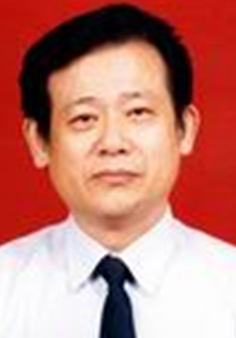 Shiqing Liu (刘世清)合作论文数Renmin Hospital of Wuhan University1
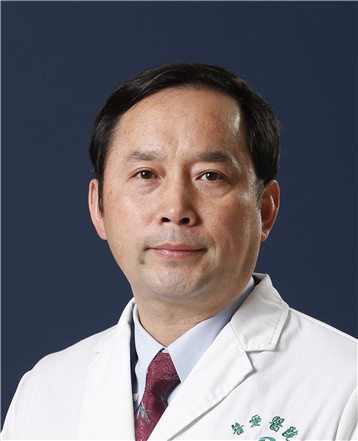 Danmou Xing (邢丹谋)合作论文数Hospital of Universal Love;Tongji Medical College, Huazhong University of Science & Technology1




