This paper proposes a sampling-based motion planning method that rapidly obtains feasible solutions while ensuring high path quality and asymptotic optimality. By leveraging Dynamic Movement Primitives (DMPs) to encode learned motion patterns, our novel linear-interpolation scaling of DMPs parameters enhances generalization across the robot's workspace. DMPs-generated reference trajectories guide a sampling-based optimizer, significantly accelerating convergence. In 2D wall-gap benchmarks, our method achieved initial feasible paths in an average of 0.105 seconds, outperforming RRT* by over 88% in first-solution time, while maintaining lower first-solution costs. In UR5 box scenarios, it located initial solutions in 2.224 seconds, which is more than 70% faster than GMR-RRT*, and found optimal paths with costs reduced by up to 42%. In a shelf task, our method attained a 100% success rate, with first-solution times averaging 0.0938 seconds and final costs reduced by up to 41% compared to RRT*. These results demonstrate that coupling DMPs adaptability with informed sampling yields shorter paths, faster computation, and improved reliability in motion planning.
In human-robot interaction, external force measurement is fundamental to achieving robot compliance control. Parameter identification based on robot dynamics enables external force detection without expensive sensors. However, the unmodeled dynamic errors inherent in real robots pose a challenge to force estimation accuracy. In addition, existing force estimation methods often suffer from high computational dimensionality and an excessive number of tuning parameters, which limits their generalizability and migration to other platforms. In this letter, we employ a Variational Approximate Gaussian Process Regression (VAGP) model to learn the robot's dynamic errors, capturing both the mean and covariance of the error. Then we introduced the indirect measurement form and proposed a dimension-reduced Kalman filter (DRKF) to simplify the state space equation. Finally, we propose a VAGP-based adaptive Kalman filter (VAGAKF) that utilizes the least squares method to reduce the number of tuning parameters. VAGAKF effectively separates external forces from dynamics model uncertainty, reducing reliance on highly accurate robot and external force models. VAGAKF reduces average RMSE and time delay by 23.06%23.06% and 66.7%66.7% respectively, relative to existing methods.
In manufacturing systems, identifying the causes of failures is crucial for maintaining and improving production efficiency. In knowledge-based failure-cause inference, it is important that the knowledge base (1) explicitly structures knowledge about the target system and about failures, and (2) contains sufficiently long causal chains of failures to reach structural-level failure causes. In this study, we constructed Diagnostic Knowledge Ontology and proposed a Function-Behavior-Structure (FBS) model-based maintenance-record accumulation method based on it. Failure-cause inference using the maintenance records accumulated by the proposed method showed better agreement with the set of candidate causes enumerated by experts, especially in difficult cases where the number of related cases is small and the vocabulary used differs. In the future, it will be necessary to develop inference methods tailored to these maintenance records, build a user interface, and carry out validation on larger and more diverse systems. Additionally, this approach leverages the understanding and knowledge of the target systems in the design phase to support knowledge accumulation and problem solving during the maintenance phase, and it is expected to become a foundation for knowledge sharing across the entire engineering chain in the future.
For practical deployment of autonomous robots in human-existed environment, it is essential to train robot policies with simulation environments that reflect the diversity of human body features and motion behaviors. However, existing datasets often overlook this need, relying on simplified skeleton models that ignore variations in age, height, or body shape. Moreover, realistic scenarios representing such diversity are largely missing due to the high cost and complexity of data collection.In this work, we address these limitations by constructing a human motion dataset that captures a wide range of body types and age groups, using accurate and characterized body models. These detailed representations allow robots to better learn how physical attributes influence movement, thereby enhancing their responsiveness and safety during interaction. To further expand the dataset efficiently, we also explore data generation techniques that create diverse motion samples from limited inputs. Our approach enables the scalable construction of simulation environments that reflect human variability, offering a valuable resource for future robot policy learning.
In the maintenance domain, significant progress has been achieved through the integration of emerging technologies. In this study, we focused on industrial inspection processes, recognizing them as the core maintenance operations. Current technological solutions often rely heavily on models and data specific to the target facilities, often disregarding the critical role of human inspectors. In this study, ws aimed to extract strategic inspection knowledge from expert and novice inspectors in industrial inspections. A field study was conducted at an oil refinery in Japan, focusing on patrol inspections of plant equipment. Three expert inspectors (15-37 years of experience) and three novice inspectors (1-2 years of experience) performed inspections according to standard protocols, including predefined device lists and patrol routes. The results showed that the expert inspectors identified significantly more inspection points and demonstrated flexible inspection strategies based on device mechanisms and risk assessment, whereas the novice inspectors adhered closely to the prescribed procedures. In addition, the expert inspectors dynamically adjusted the inspection depth and focus according to equipment conditions and potential failure risks. These differences indicated that the performance of expert inspectors was driven by the integration of experience-based reasoning and situational judgment. Furthermore, the field study revealed variability in the inspection approaches, which enhanced the overall assessment of the plant by incorporating diverse perspectives. These findings provide concrete insights into the strategic knowledge underlying effective patrol inspections and offer implications for improving inspection training and knowledge transfer.
User confusion during human-machine interaction is a leading cause of task abandonment in self-service kiosks (SSK) used within industrial control systems. Existing systems, however, cannot detect struggles until the user explicitly asks for help, which is often too late for effective intervention. This challenge is relevant to life-cycle engineering because of its impact on human-centric manufacturing, where unaddressed operator confusion can significantly degrade operational performance. This pilot study investigated the unobservable formation of help-seeking intentions by drawing on psychological frameworks that conceptualize help-seeking as a staged process. We explored the feasibility of modelling this internal process using multimodal data to design a proactive Just-In-Time Assistance Systems (JITAS). Nine participants completed tasks under manipulated ambiguity levels, while we recorded their EEG and facial expressions. Our key methodology employs retrospective interviews with video playback to elicit participant-validated timestamps as ground-truth labels, segmenting continuous physiological signals into distinct psychological states. Preliminary analysis confirmed that high ambiguity reliably induced confusion, thus validating our experimental paradigm. Facial expression variability, rather than static expression, has emerged as a promising indicator of confusion, whereas EEG patterns revealed heterogeneous stress responses. Rather than detecting precise moments of intention formation, our approach establishes a foundation for designing intervention strategies that respond to sustained struggles. These findings demonstrate the methodological feasibility of detection-based assistance systems that complement the interface design in both service and manufacturing contexts.
Model-based control requires accurate robot dynamics models, among which joint friction is a dominant factor limiting control performance. However, robot friction parameters exhibit complex time-varying characteristics that are difficult to capture accurately using traditional parameter identification methods. This paper proposes an adaptive control strategy to solve the time-varying nonlinear friction problem in robot systems. First, a hybrid offline-online framework is designed to capture the time-varying characteristics of friction parameters in real time. Second, we incorporate an adaptive forgetting factor into the Recursive Least Squares (RLS) method for online friction parameter identification, enabling real-time fitting of friction forces during motion. Third, we propose an adaptive friction feedforward compensation control strategy, where friction forces are fitted in real time using the online-identified friction parameters and compensated in the feedforward torque. We comprehensively evaluated our method on different robots. The results demonstrate that the proposed hybrid offline-online framework achieves a 60
Product–service system design methodologies face adoption challenges because of their cross-domain procedural complexity. Large language model (LLM)-based agents can address this. We developed Service LAD (LLM-Agentic Design), a method-enforcing AI framework embedding methodological knowledge into autonomous tools. Using an expert workshop (N = 4) with a crossover design, we compared it with method-flexible AI for conformance and human factors. The method-enforcing approach achieved higher conformance (99 vs. 82% step compliance; 99 vs. 36% output completeness; 87 vs. 51% traceability), whereas practitioner acceptance was moderated by domain familiarity. The conformance–acceptance tradeoff is conditional, providing evidence for methodology-embedded design support.
This study proposes a generalizable and extensible framework for task allocation among multiple agricultural machines. Although several previous studies have focused on specific aspects, such as route planning and task scheduling under constrained conditions, have addressed the combined challenges of task division, variability in farmland scale, and algorithm lection with hyperparameter tuning in an integrated manner. To fill this gap, we formulate the problem a split delivery vehicle routing problem, which enables flexible division of field tasks across machines. Based on this formulation, we construct a unified framework that incorporates farmland modeling, machine modeling, and farmer-specific preferences. The proposed framework is designed to accommodate multiple optimization algorithms such as simulated annealing, local search, genetic algorithm, and ant colony optimization under a common structure, allowing flexible applications across diverse agricultural scenarios. We evaluated the performance and sensitivity of the algorithm to the hyperparameters using simulations for varying farmland sizes and computation times. The results demonstrate that the framework effectively supports gorithm selection and parameter tuning according situational needs. This approach offers a versatile foundation for optimizing agricultural tasks, and can be tended to dynamic and real-time environments using real farmland data.
Automated manufacturing lines perform repetitive cycles in which continuous operations increase the likelihood of abnormal behavior. However, understanding these abnormalities remains a significant challenge, as expert workers must manually observe and compare normal and abnormal cycles to identify deviations. Motivated by this challenge, we propose a video anomaly detection system that identifies the spatial and temporal locations where abnormal operations occur by comparing normal and abnormal cycles in automated manufacturing lines. Our method first extracts spatio-temporal motion blobs to capture individual object activities. It then applies a sampling strategy to select comparable normal cycles considering variability in a process. Temporal variations are aligned using Dynamic Time Warping, enabling the construction of a codebook that efficiently captures typical periodic patterns. This allows us to localize both spatial and temporal anomalies with high precision, even under limited data conditions. We evaluated the proposed system on two real-world case studies: (1) interference between the chuck and the pallet and (2) delays in the assembly of multiple parts. In both scenarios, our method demonstrated more precise localization of spatio-temporal anomalies compared to state-of-the-art methods from both manufacturing and computer science fields. Specifically, it achieved an AUC score of 0.92, outperforming baselines that achieved 0.61 and 0.69 in the temporal anomaly scenario. These results highlight our system’s robustness to cycle-level variability and its practical applicability, supporting the practical understanding and diagnosis of abnormal phenomena in complex industrial environments.
Human-robot collaboration has become essential for leveraging the complementary strengths of humans and robots to split their duties. Real-time dynamic task planning that balances task completion time and human fatigue is essential for improving system efficiency and flexibility. However, most existing studies focus primarily on local task feasibility, neglecting system-level optimization in terms of time efficiency, human fatigue, and personalized collaboration adaptability. To address these limitations and enhance adaptability in dynamic environments, this study proposes an innovative realtime dynamic task planning framework integrated with environment observation for human-robot collaboration. On the environment observation side, a lightweight recognition and prediction network with only 10 M parameters is developed, providing rapid and accurate human behaviors inference. On the dynamic task planning side, a multi-objective, fast-search strategy utilizes environment observation outputs is proposed to synchronize robot actions effectively with human dynamically in real-time. A simulated industrial production line involving objects handling from shelves to workbench is built, and a dataset of over one million frames capturing human operations is collected. Experimental results indicate the proposed environment observation architecture can rapidly identify human behaviors within 0.025 s including recognizing and predicting human actions and target objects, along with predicting human long-term (3.0 s) motion. The system achieves high accuracies in action recognition (99.4%), action prediction (97.4%), target object identification (96.7%), target object prediction (98.1%), and long-term motion prediction outperforms existing methods. Additionally, online dynamic task planning can adapt robot actions according to human dynamics with computation consistently below 0.020 s in our experiments. These performance underscore the novelty and practical application potential of our proposed method in industrial human-robot collaboration.
Utilizing a single vision sensor for learning from human demonstration (LfD) planning offers numerous benefits. However, the accurate identification of key task constraints for motion planning is a prevailing challenge, stemming from data unreliability. This research introduces a novel LfD planning framework that employs a human action recognition algorithm to extract task constraints from unreliable human skeleton data derived from single camera images, thereby enhancing motion planning. Initially, the method aims to obtain task constraints from the skeleton data using action labels associated with specific constraints, for instance, “pick upward while maintaining a consistent pose.” Subsequently, a robot motion is crafted to comply with the extracted constraints and is catalogued in the motion database as a path experience. For novel planning challenges, this path experience is tailored to new environments, serving as a reference for discerning a valid motion via the random modification of any inconsistent segments. Simulation results, focused on pick-and-place tasks, indicate that the introduced method surpasses the state-of-the-art approach by elevating the success rate and diminishing the computation time and path length by 8%, 20%, and 15%, respectively. Furthermore, superior performance was also observed in two real-world scenarios, including a task that requires more complex human actions, such as rotating the wrist. Although the execution time was slightly increased, the proposed method was shown to increase the success rate by 11% and 28% and reduce the average computation time by 14% and 29% for the two real-world scenarios.
Abstract Background Balance instability is a major contributor to disability and falls in people with Parkinson’s disease (PwP) and is often insufficiently explained by motor impairment alone. Altered awareness of motor control has been suggested to contribute to sensorimotor dysfunction in PwP, but its relationship with balance performance is poorly understood. Objective To determine whether awareness of balance control, assessed using a control detection task (CDT), differs between healthy controls (HC) and PwP, and whether CDT performance is associated with balance-related measures. Methods Healthy older adults (n=20) and PwP (n=22) performed a standing version of the CDT based on center-of-pressure (COP) control, using a force plate. CDT accuracy was used as the primary outcome measure. Static balance during quiet standing was assessed using the COP trajectory length and rectangular area. Dynamic standing balance was assessed using the Index of Postural Stability (IPS). Group differences were examined by independent-samples t-tests. Correlations between CDT accuracy and balance measures were analyzed. Results The PwP group showed significantly lower CDT accuracy. Higher CDT accuracy was associated with better static balance in the HC group and the combined sample, and with higher IPS primarily in the PwP group. Conclusions Motor awareness during postural tasks is altered in PwP and is associated with balance control. These findings suggest that balance instability in Parkinson’s disease may involve altered balance-related action–outcome monitoring in addition to motor dysfunction.
Accurate calibration of robot joint compliance poses a significant challenge with limited existing research. For camera-based calibration, concurrently identifying both joint offsets and compliance errors becomes intricate due to measurement inaccuracies. To overcome this problem, this paper proposes an innovative approach that leverages measurement pose optimization. By leveraging the local product of exponentials (POE) model, our method enables the simultaneous identification of the geometric parameters (joint offsets) and non-geometric parameters (joint compliance). The introduction of a modified visual observability index minimizes sensitivity to camera errors during joint compliance calibration. Experimental results conducted on a 6R serial robot show superior accuracy compared to existing indices, validating the effectiveness of our approach.
This study developed a new explainable artificial intelligence algorithm called PassAI, which classifies successful or failed passes in a soccer game and explains its rationale using both tracking and passer's seasonal stats information. This study aimed to address two primary challenges faced by artificial intelligence and machine learning algorithms in the sports domain: how to use different modality data for the analysis and how to explain the rationale of the outcome from multimodal perspectives. To address these challenges, PassAI has two processing streams for multimodal information: tracking image data and passer's stats and classifying pass success and failure. After completing the classification, it provides a rationale by either calculating the relative contribution between the different modality data or providing more detailed contribution factors within the modality. The results of the experiment with 6,349 passes of data obtained from professional soccer games revealed that PassAI showed higher classification performance than state-of-the-art algorithms by >5
This paper presents a new approach to the multi-agent task assignment and motion planning problem, paying particular attention to the dynamic characteristics of multiple mobile robots such as acceleration and deceleration patterns. By utilizing the Conflict-Based Search with Task Assignment framework, the algorithm is composed of three layers (upper-layer: initial and re-plan, middle-layer: task assignment, and lower-layer: motion planning) which can efficiently handle multiple tasks and robots and deal with a variety of speed and motion constraints. The proposed algorithm was evaluated by simulation and compared to existing state-of-the-art methods such as cooperative A* and priority-based search. Using the proposed algorithm, we obtained superior solutions with makespans of 34–58
Fault cause identification in complex engineered systems remains challenging due to system complexity, frequent reconfigurations, and the limited reusability of accumulated diagnostic knowledge, with automated manufacturing lines representing a prominent application domain. Although Failure Mode and Effects Analysis (FMEA) worksheets contain valuable expert insights, their reuse across heterogeneous system configurations is hindered by natural language variability, inconsistent terminology, and process differences. To address these limitations, we propose OGPAL (Ontology-Guided and Process-Aware Learning), a framework that enhances FMEA reusability by combining manufacturing-domain conceptualization with graph neural network reasoning. First, FMEA worksheets from multiple manufacturing lines are transformed into a unified knowledge graph through ontology-guided information extraction supported by a large language model (LLM), capturing domain concepts such as actions, states, components, and parameters. Second, a Relational Graph Convolutional Network (RGCN) with the process-aware scoring function learns embeddings that respect both semantic relationships and sequential process flows. Finally, link prediction is employed to retrieve and rank candidate fault causes consistent with the target line's process flow. A case study on automotive pressure sensor assembly lines demonstrates that OGPAL outperforms a state-of-the-art retrieval-augmented generation baseline (nDCG@20 = 0.450) and an RGCN approach (0.559), achieving the best performance (0.719) in fault cause identification. Ablation studies confirm the contributions of both LLM-driven domain conceptualization and process-aware learning. These results indicate that the framework effectively supports reasoning over heterogeneous diagnostic knowledge and improves the transferability of FMEA knowledge across manufacturing lines.
This study addresses the challenge of generating high-quality motion plans within a short computation time using only a limited dataset. In the informed experience-driven random trees connect star (IERTC*) process, the algorithm flexibly explores the search trees by morphing the micro paths generated from a single experience while reducing the path cost by introducing a rewiring process and an informed sampling process. Unlike recent learning-based or generative methods that rely on model training or probabilistic priors, IERTC* employs a non-parametric retrieve-and-repair strategy to generalize prior experiences without requiring pretraining or large datasets. This design facilitates broad exploration beyond the original experience, robust adaptation to unseen environments, high flexibility in cluttered environments, and efficient deployment without offline training. Experimental results from a general motion benchmark test revealed that IERTC* significantly improved the planning success rate in the cluttered environment compared to a state-of-the-art optimal motion planning algorithm (an average improvement of 49.3%) while also comparable reduction of the solution cost (a reduction of 56.3% from a benchmark algorithm) utilizing just one hundred experiences. Furthermore, the results demonstrated outstanding planning performance even when only one experience was available (a 43.8% improvement in success rate and a 57.8% reduction in solution cost).
 Tamio Arai (新井民夫)合作论文数Department of Precision Engineering, Schoolof Engineering, The University of Tokyo;International Research Institute for Nuclear Decommissioning217
 Ryosuke Chiba合作论文数Faculty of System Design, Tokyo Metropolitan University62
 Taiki Ogata合作论文数Research into Artifacts Center for Engineering (RACE),, The University of Tokyo56
 Shouhei Shirafuji合作论文数Research into Artifacts Center for Engineering RACE School of Engineering, University of Tokyo52
 Masao Sugi合作论文数A Holonic Architecture for Easy Reconfiguration of Robotic Assembly Systems,44
 Noriaki Kuwahara合作论文数43
 Tatsunori Hara合作论文数Center for Engineering, The University of Tokyo36
 Hajime Asama合作论文数Asama Laboratory, Department of Precision Engineering, University of Tokyo36
 Yusuke Fukazawa合作论文数NTT DOCOMO, Inc.36
 Tsuyoshi Ueyama合作论文数35
 Satoshi Hoshino合作论文数Natl Inst Adv Ind Sci & Technol33
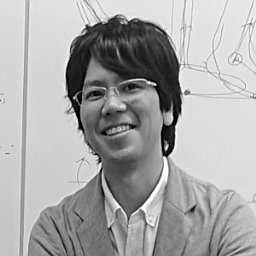 Kohei Kaminishi合作论文数Univ Tokyo, Sch Engn, Dept Precis Engn, Tokyo, Japan31
 Kaoru Takakusaki合作论文数31
 Masako Kanai-Pak合作论文数30
 Jukai Maeda合作论文数30
 Yasuko Kitajima合作论文数30
 Zhifeng Huang合作论文数29
 Daisuke Kurabayashi合作论文数Dept Mech & Control Engn, Tokyo Inst Technol28
 Yanjiang Huang (黄沿江)合作论文数School of Mechanical & Automotive Engineering, South China University of Technology24Mitsuhiro Nakamura (中村光宏)合作论文数Department of Human Health Sciences, Graduate School of Medicine, Kyoto University24
 Ryota Takamido (高御堂良太)合作论文数Center for Engineering, School of Engineering, The University of Tokyo21
 Eiichi Yoshida (吉田英一)合作论文数Department of Medical and Robotic Engineering Design, Faculty of Advanced Engineering, Tokyo University of Science;TICO-AIST Cooperative Reseach Laboratory for Advanced Logistics, Department of Information Technology and Human Factors, National Institute of Advanced Industrial Science and Technology20
 Natsuki Miyata (宮田なつき)合作论文数Laboratory for Application of Cybernetics, Graduate School of Engineering, Hiroshima University;Living Activity Modeling Research Team, Artificial Intelligence Research Center, Department of Informatation Technology and Human Factors, National Institute of Advanced Industrial Science and Technology;Graduate School of Advanced Science and Engineering, Hiroshima University;Research Group of Informatics for Digital Human, Graduate School of Information Science and Technology, Hokkaido University20Yusuke Tamura合作论文数17
 Lounell Gueta合作论文数Graduate School of Engineering, University of Tokyo17
 Toshimitsu Higashi合作论文数15
 Akiko Shinozaki合作论文数15
 Jose Ildefonso U. Rubrico合作论文数15
 Yasushi Umeda (梅田靖)合作论文数Department of Precision Engineering, School of Engineering, University of Tokyo15Yusheng Wang合作论文数14
 Atsushi Yamashita合作论文数Department of Mechanical Engineering|Shizuoka University14Arito Yozu合作论文数14Hideo Yuasa合作论文数Laboratory for Bio-Mimetic Control Systems,
Bio-Mimetic Control Research Center,14Chomchana Trevai合作论文数14Aiyama, Y.合作论文数13
Atsushi Yamashita合作论文数Department of Mechanical Engineering|Shizuoka University14Arito Yozu合作论文数14Hideo Yuasa合作论文数Laboratory for Bio-Mimetic Control Systems,
Bio-Mimetic Control Research Center,14Chomchana Trevai合作论文数14Aiyama, Y.合作论文数13 Chingszu Lin合作论文数Univ Tokyo, RACE, Chiba 2778568, Japan13
 Yasumichi Aiyama合作论文数13
 Ayanori Nagata合作论文数13Norisuke Fujii合作论文数12
 Hiroya Seki合作论文数12
 Dandan Zhu (朱丹丹)合作论文数College of Artificial Intelligence, China University of Petroleum - Beijing11Ping Jiang合作论文数11Zhang Xian Ming (张宪明)合作论文数South China University of Technology the College of Mechanical Engineering11
 Kousuke Inoue合作论文数Department of Intelligent Systems Engineering, Graduate School of Science and Engineering, Ibaraki University11
 Hitoshi Aonuma合作论文数Division of Biological Sciences;Graduate School of Science;Hokkaido University;Graduate School of Science, Hokkaido University11
 Toyokazu Kobayashi合作论文数11Kyoko Aida合作论文数11Mingang Cheng合作论文数11Jorge David Figueroa Heredia合作论文数10




