A ring cavity single-longitudinal-mode (SLM) erbium-doped fiber laser (EDFL) is optimized with cascaded subrings (CSRs) and a saturable absorber (SA), achieving stable and low-cost SLM operation. Through simulation, the length of SA is optimized to 2 m. The laser operates at 1549.58 nm with a linewidth of 475 Hz and an OSNR of 69 dB. Over 60 min, the wavelength drift remains below 0.008 nm and the power fluctuation under 0.026 dB. This study demonstrates a low-cost, highly stable SLM laser suitable for lidar, fiber optic sensing, and high-resolution spectroscopy.
Linear cavity fiber lasers are widely studied for achieving single-longitudinal-mode (SLM) output due to their compact structure and good coherence. However, existing linear long cavities still have shortcomings in mode-selection mechanism and output stability. Therefore, this study employs a high-reflectivity fiber Bragg grating (HR-FBG) and a 3-dB fiber loop mirror (FLM) integrated with a saturable absorber (SA) as the cavity mirrors. Stable SLM output is attained through the synergistic mode-selection by a subring cavity and a SA. Experimental results have demonstrated that, under the synergistic effect of SA and provided that the free spectral range (FSR) of the subring cavity is greater than that of the main cavity, the laser imposes no strict requirement on the subring cavity length. The measured optical signal-to-noise ratio (OSNR) is 54.524 dB, and the maximum output power has reached 16.43 mW. The central wavelength drift and peak power variation of the proposed laser have been <0.003 nm and 0.004 dB over an observation period of 60 min, respectively. In addition, the measured laser linewidth is 885 Hz and the relative intensity noise (RIN) is less than -131.2 dB/Hz above 1 MHz. This scheme provides a useful reference for simplifying linear cavities to achieve SLM operation.
A dual-wavelength ring-cavity erbium-doped fiber (EDF) laser is designed based on two polarization beam splitters (PBSs) and a polarization controller (PC) performing gain equalization and polarization hole burning (PHB) effect. At room temperature, a stable dual-wavelength laser and a multi-output port laser which can simultaneously emit single-wavelength lasing and dual-wavelength lasing are obtained. The signal-to-noise ratios (SNRs) for single-wavelength outputs were 54.70 dB and 57.10 dB, with power fluctuations less than 0.038 mW and 0.029 mW, respectively. For dual-wavelength lasing, the SNRs were 59.63 dB and 59.25 dB, with power fluctuations less than 0.018 mW and 0.008 mW, respectively. The center wavelength drift was less than 0.006 nm for both single-wavelength and dual-wavelength outputs.
There are few reports on the optimization of the composite active cavity fiber laser based on the Mach-Zehnder interferometer at present. And we have developed an engineering model to determine the optimal length of saturable absorber (SA) for design and optimization. Subsequently, comparative experiments using the different lengths of SA have successfully verified the reliability of the engineering model, optimizing the length of SA to 0.004 m. Furthermore, we have compared the lasing output of 3 dB fiber loop mirrors (FLMs) with or without leak port. The result has shown that the lasing output of the structure with leak port is better. Moreover, we have analyzed the lasing output of the fiber Bragg grating (FBG)-only cavity and the 3 dB FLM-FBG cavity with different pumping methods. It has been shown that the 3 dB FLM-FBG cavity exhibits better lasing output with forward pumping. Finally, we have optimized the FBG reflectivity. It has been observed that the FBG with 45% reflectivity corresponds to better lasing output. We have demonstrated the narrow-linewidth single-frequency lasing output with the wavelength of similar to 1550 nm, OSNR of similar to 56.870 dB, and full width at half maximum of similar to 0.0105 nm at room temperature. The lasing output exhibits center wavelength variations of less than 0.004 nm and peak power fluctuations of less than 0.88 dB over 90 min.
Narrow linewidth fiber laser (NLFL) with linear cavity based on saturable absorber (SA) have made great progress, but there are few research reports on a pair of fiber Bragg gratings (FBG) as cavity mirrors and the simplification of their structures through automated design. We have demonstrated a simple compact linear cavity NLFL design based on SA and have developed an engineering model for automated design and optimization. Firstly, we have simulated the theoretical model to analyze the different lengths of SA and to determine their optimal lengths by MATLAB. Subsequently, we have constructed linear cavity laser with narrow-linewidth output and have performed comparative experiments using the different lengths of SA to validate the simulation results. Experimental results have shown that the optimal lasing output with a full width at half maximum (FWHM) of 0.0124 nm and an optical signal-to-noise ratio (OSNR) of 65.867 dB has been achieved when the length of SA is 2.05 m, which has been consistent with the MATLAB simulation results. Additionally, we have compared the effect of pump power on linewidth with or without the SA. The results have shown that the linewidth of the laser has been optimized at a specific pump power with the addition of the SA. We have also observed that the laser output is mainly affected by the bandwidth and center wavelength of the low-reflectivity fiber Bragg grating (LR-FBG) at room temperature.
There are few reports in the field of linear cavity dual-wavelength fiber lasers about the laser output characteristics when 3-dB fiber loop mirror (FLM) and Fiber Bragg grating (FBG) are used as full reflective mirrors, respectively. Additionally, there is scarce research on further tuning of the FBG parameters (reflectivity and center wavelength interval) to study dual-wavelength fiber lasers. In this paper, we compare the performances of dual-wavelength lasing outputs between the 3-dB FLM-FBG cavity and the FBG-only cavity in a linear-cavity erbium-doped fiber laser (EDFL) based on the polarization hole burning effect. The results show that the optical signal-to-noise ratios (OSNRs) of the dual-wavelength lasing outputs with the FBG-only cavity are approximately 4 similar to 5 dB higher than those with the 3-dB FLM-FBG cavity. Furthermore, the lasing output performances based on the FBG-only cavity are compared when the reflectivities of the output-mirror FBGs are the same or different. It is observed that the dual-wavelength laser with the same output reflectivity leads to higher OSNR, slope efficiency, and stability. Moreover, by varying the center wavelength interval of pairs of FBGs in the FBG-only cavity to values of 4 nm, 8 nm, and 12 nm respectively. It is shown that wider intervals result in higher OSNRs but lower laser slope efficiency. Finally, we demonstrate a dual- wavelength linear cavity EDFL operating at room temperature with two lasing wavelengths of 1550 nm and 1562 nm. The laser results in OSNRs around 50.62 dB and 50.93 dB; center wavelength variations of less than 0.030 nm and 0.035 nm; output power fluctuations of less than 0.061 mW and 0.059 mW, respectively.
The choice of linear polarization modes in optical fiber is a key factor affecting transmission quality of mode division multiplexing system (MDM). Firstly, an intensity modulation and direct detection (IM-DD) optical fiber transmission system based on hybrid mode division and wavelength division multiplexing (HMWDM) is designed. Secondly, the transmission characteristics of LP01, LP11, LP02, LP12 and LP21 five modes in the optical fiber transmission system are simulated by Optisystem15.0 software. It was shown that when LP12 mode was multiplexed with LP01, LP11 and LP02, the Q factor of the signal carried by LP12was 5-higher than that of LP21 multiplexed with the three modes at the same system. Then, four modes of LP01, LP11, LP02 and LP12 are multiplexed, and the simulation results show that the optimum value of the Graded-index multimode fiber (GI-MMF) core radius was 21um~22um with the Q factor above 7 when the core radius changed from 19um to 25um. Furthermore, the optimal value does not change with the transmission distance. Finally, in the eight-channel hybrid multiplexing system, the IM-DD method was used to realize the short distance transmission at 2.0km with bit error rate (BER) below 10-9 and a rate of 80Gbit/s.
In this paper, dual-mode index modulation orthogonal frequency division multiplexing (DMIM-OFDM) enabled by orthogonal circulant matrix transform (OCT) precoding is proposed and experimentally demonstrated in visible light communication (VLC) systems. Since all available subcarriers are active to convey information bits, DMIM-OFDM can achieve higher spectral efficiency (SE) and energy efficiency (EE) than index modulation OFDM (IM-OFDM). In addition, to mitigate the uneven frequency-selective fading between different subblocks, channel-independent OCT precoding is applied to all subblocks to equalize the overall signal-to-noise ratio (SNR). The experimental results show that the DMIM-OFDM with OCT precoding outperforms the traditional IM-OFDM, DMIM-OFDM without precoding, and with DFT precoding at different SEs. For DMIM-OFDM VLC system with SE of 4.5 bit/s/Hz, by using OCT precoding, the receiver sensitivity improvement of 3 dB can be achieved at the bit error rate (BER) of 3.8e-3 after 3.5-m free-space transmission.
Extracting railway tracks is crucial for creating electronic railway maps. Traditional methods require significant manual labor and resources while existing neural networks have limitations in efficiency and precision. To address these challenges, a railway track extraction method using an improved DeepLabV3+ model is proposed, which incorporates several key enhancements. Firstly, the encoder part of the method utilizes the lightweight network MobileNetV3 as the backbone extraction network for DeepLabV3+. Secondly, the decoder part adopts the lightweight, universal upsampling operator CARAFE for upsampling. Lastly, to address any potential extraction errors, morphological algorithms are applied to optimize the extraction results. A dedicated railway track segmentation dataset is also created to train and evaluate the proposed method. The experimental results demonstrate that the model achieves impressive performance on the railway track segmentation dataset and DeepGlobe dataset. The MIoU scores are 88.93% and 84.72%, with Recall values of 89.02% and 86.96%. Moreover, the overall accuracy stands at 97.69% and 94.84%. The algorithm’s operation time is about 5% lower than the original network. Furthermore, the morphological algorithm effectively eliminates errors like holes and spots. These findings indicate the model’s accuracy, efficiency, and enhancement brought by the morphological algorithm in error elimination.
Objective Traditional single-wavelength fiber lasers make it challenging to meet the increasing capacity demands for modern optical fiber communication systems. Employing multiple single-wavelength fiber lasers as light sources by wavelength division multiplexing technology is bound to increase system complexity and costs. Additionally, there are potential applications in multi-dimensional information fiber sensing for multi-wavelength fiber lasers. Therefore, multiwavelength fiber lasers with stable performance have been widely studied and can be adopted to expand communication systems and meet the needs of multi-dimensional information fiber sensing. However, the problems for stable operation of multi-wavelength erbium-doped fiber laser (EDFL) are as follows. At room temperature, due to the homogeneous broadening of erbium-doped fiber, it is easy to cause mode competition, which reduces the stability of multi-wavelength fiber lasers with narrow wavelength intervals. Based on the dual-wavelength linear cavity EDFL, we select a simple linear cavity fiber laser structure, optimize the reflectivity and center wavelength of fiber Bragg grating (FBG), and realize a stable dual-wavelength laser output by the polarization hole burning (PHB) effect. Compared with the existing PHB schemes, the laser features a simple and compact structure, low cost, and good stability. We hope that our study will help realize dual-wavelength linear cavity fiber lasers with excellent performance at room temperature. Methods We study the influence of the structure of dual-wavelength linear cavity EDFL and FBG parameters (reflectivity and center wavelength) on the output performance of a dual-wavelength laser. Firstly, the output power and dual-wavelength laser spectra of 3 dB fiber loop mirror ( FLM) and high reflectivity-FBG (HR-FBG) as the total reflector respectively, and low reflectivity-FBG (LR-FBG) as the output mirror are compared. Secondly, based on the double fiber Bragg gratings (DFBGs) as a cavity mirror, two HR-FBGs with the same reflectivity are adopted as the total reflector. The output power, dual-wavelength laser spectra, and power stability with the same reflectivity and different reflectivities are compared when two LR-FBGs are utilized as the output mirror. Finally, based on the first two groups of experiments, DFBGs are leveraged to constitute the cavity, and the reflectivities of the two HR-FBGs and the two LR-FBGs are equal respectively. The output power and dual-wavelength laser spectra of DFBGs with different center wavelength intervals (Delta lambda of 4, 8, and 12 nm) are compared. Additionally, the long-term laser stability is analyzed, which includes the temporal stability of spectra, center wavelength changes, power fluctuations, and 3 dB bandwidth stability. Results and Discussions Firstly, the contrast experiment is carried out based on dual-wavelength linear cavity EDFL with FLM and HR-FBG structures. The results show that the slope efficiency of the two EDFL structures is basically equal. The optical signal-to-noise ratio ( OSNR) based on the HR-FBG structure is still higher than that based on the FLM structure (Fig. 7), which indicates that the laser output performance of the linear cavity EDFL based on the HR-FBG structure is better. Secondly, in the dual-wavelength linear cavity EDFL based on HR-FBG structure, the influence of the same and different reflectivities of LR-FBG on the EDFL output performance is studied. The contrast experiment shows that the slope efficiency and OSNR of the two LR-FBGs with the same reflectivity are higher than those with different reflectivities, and the output power is more stable (Fig. 8). Finally, we study the effect of varying center wavelength intervals of DFBGs on the EDFL output performance. The contrast experiment shows that as the center wavelength interval of DFBGs gradually increases, the slope efficiency of the dual-wavelength linear cavity EDFL gradually decreases, and the OSNR of the two wavelength lasers gradually rises (Fig. 9). By adjusting the polarization controller (PC), the dual-wavelength laser output spectra of EDFL with three wavelength intervals will not hop with time. Constantly, the larger center wavelength interval leads to smaller center wavelength changes (Fig. 10), and smaller output power fluctuations and 3 dB bandwidth (Fig. 11). Conclusions We realize a dual-wavelength linear cavity EDFL based on DFBGs with a simple structure and output a stable dual-wavelength laser at room temperature by the PHB effect, with the output performance analyzed. The results show that the output performance of the HR-FBG structure is better than that of the FLM structure. When the reflectivities of the two LR-FBGs adopted as the output mirror is the same, the output performance is better than that under different reflectivities. Additionally, as the center wavelength interval of DBFGs gradually increases, the OSNR of EDFL gradually improves, and the dual-wavelength laser output gradually stabilizes, but its slope efficiency will decrease due to the gain characteristics of EDF at different wavelengths. Finally, we realize that the stable results in dualwavelength linear cavity EDFL with the OSNR of 1550 nm and 1562 nm are about 50. 24 dB and 51. 19 dB. The center wavelength fluctuations are less than 0. 030 nm and 0. 035 nm, and the power fluctuations are less than 0. 061 mW and 0. 059 mW, with 3 dB bandwidth of similar to 0. 146 nm and similar to 0. 144 nm respectively. The output results are better in the dualwavelength linear cavity.
光纤中线性偏振模式的选择是影响模分复用系统传输质量的关键因素.为此首先设计了基于模分与波分混合复用的直接检测光纤传输系统;其次,基于光纤中线性偏振模式理论,利用Optisystem15.0软件仿真研究LP01、LP11、LP02、LP12、LP215个模式在该光纤传输系统中的传输特性;然后,将LP01、LP11、LP02、LP12四模式复用,仿真得到了折射率渐变多模光纤纤芯半径在19~25μm范围内变化时,各通道Q因子均在7以上的纤芯半径最优化值为21~22μm,且此最优值不随传输距离而变化;最后,在八通道混合复用系统中采用直接检测方式实现了误码率在10-9以下的2.0 km短距离传输.
In this paper, a simple and overhead-free sampling frequency offset (SFO) blind estimation and compensation scheme is proposed and experimentally demonstrated in a short-reach direct detection orthogonal frequency division multiplexing (DD-OFDM) transmission system. After extracting subcarriers of OFDM symbols from multiple OFDM frames, the phase shift is obtained by the fourth-power algorithm, and the obtained results are averaged to perform phase estimation. It can achieve high-precision SFO estimation while ensuring low computational complexity as well as high spectral efficiency. The experimental results show that the SFO estimation accuracy using the proposed scheme can be significantly reduced to as low as ±3 ppm when SFO ranges from -1000 ppm to +1000 ppm after 20-km standard single-mode fiber (SSMF) transmission. Moreover, for the QPSK/16QAM encoded DD-OFDM systems aided by the proposed scheme, up to ±200 ppm SFO can be compensated with slight error vector magnitude (EVM) penalties after 20-km SSMF transmission. Furthermore, the results demonstrate that despite the existence of severe SFO, our proposed SFO compensation scheme can offer nearly negligible power penalties in the DD-OFDM system with optical back-to-back (OBTB) and 20-km SSMF transmission as compared to the ideal case without SFO.
在传感技术不断发展过程中,产生了比较多的新型技术,其中一种即为布里渊分布式传感技术,具有防腐、抗电磁场干扰等优势,广泛地应用于多个领域中.但实际应用布里渊光纤传感技术时,恶劣的外部环境会对其传感光路或布设产生一定程度的影响,导致测试效果的精度不符合要求,甚至测试失败.基于此,文章中重点分析了布里渊光纤传感技术中应用小波滤噪的方法及效果.
Cognitive radio is a kind of intelligent reasoning learning communication system, and fuzzy Q learning method is introduced to realize the cognitive radio spectrum allocation intelligent learning process. Cognitive users adjust the fuzzy inference system through online Q learning, obtain the optimal fuzzy rules of spectrum allocation and realize the adaptive spectrum allocation scheme. The fuzzy Q spectrum allocation algorithm is compared with non intelligent learning algorithm (fuzzy spectrum allocation algorithm and random distribution algorithm). And the simulation results show that this algorithm improves the system bandwidth income and reduces the system conflict rate.
SOC estimation of dynamic-battery is a difficult point of battery management.Proposed the combination of the rebound voltage method and the neural network method to estimate battery remaining capacity.Studied the rebound voltage of lead-acid battery when off-lined and found the relationship between the rebound voltage and residual capacity of battery.Through the contrast and analysis of the estimated SOC value and the measured one,verifies the feasibility of this method.
构建全光纤环形腔放大器,对重复频率在10~50 kHz范围、脉宽数百纳秒的调Q脉冲进行多程放大.本实验研究未对脉冲放大程数进行控制,讨论了脉冲多程放大的增益特性及脉冲时域波形演变特性:该放大系统自动改变脉冲重复频率.实验得到多程放大增益相对于单程放大的增益,最大可提高7 dB以上.研究结果表明,对于重复频率在10kHz及以下的脉冲,采用环形腔多程放大将显著提高放大器的转换效率和信号增益.实验研究为更低重复频率的脉冲实现全光纤再生放大打下基础.
Characteristics of time domain on low-repetition-rate pulse amplification was analyzed,the time domain theory of laser pulse amplification was obtained.The different low-repetition-rate pulse amplification was studied by using the time domain theory,and the amplification project was presented when the optimum conversion efficiency was gained,the time domain theory has been tested in reported experiments adequately,the improved project is proposed for the part of experiments.
We improve the TF-IDF formula,obtain the terms of users' interests and their weights,and establish user interest model.The dynamic update of user interest model can be realized based on updated time factors.The experimental results show that it can reflect users' interests more precisely and improve the accuracy of the search results.
In view of the lack of theoretical research of multi-pass pulse amplification system, established multi-pass pulsed amplification theoretical model based on the basic principle of multi-pass amplification and the rate equation of pulse laser multi-pass amplification, and studied the transmission characteristics of pulse in multi-pass amplifying system. Through the simulation research of the theoretical model, obtained the relation of output power and pump power and the relation of output single pulse energy and pulse repetition frequency.
In order to improve the optical-optical conversion efficiency of the pulse amplification system model,the output characteristics of the dual-pass pulse amplification were studied by means of modeling and simulation. From the transmission characteristics,the relationship between output power and pump power,the relationship between output single pulse energy and pulse repetition frequency,and the relationship between conversion efficiency and repetition rate were obtained. The optical to optical conversion efficiency was 29. 1% when the repetition frequency was 40kHz. Therefore,this dual-pass pulse amplification model improved the efficiency of energy conversion.
 Shuzhong Yuan (袁树忠)合作论文数11Hong Wen (文鸿)合作论文数9Wenping Zhang (张文平)合作论文数9
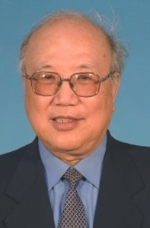 Xiaoyi Dong (董孝义)合作论文数Institute of Modern Optics, Nankai University9
 Yange Liu (刘艳格)合作论文数College of Electronic Information and Optical Engineering, Nankai University8Xiujie Jia合作论文数8Yong Xu (徐勇)合作论文数7
 Xin Guo合作论文数6Guiyun Kai合作论文数Institute of Modern Optics, College of Electronic Information and Optical Engineering, Nankai University6BangCai Huang (黄榜才)合作论文数5
 Changyun Li (李长云)合作论文数College of Railway Transportation, Hunan University of Technology5Wei Tang (唐伟)合作论文数5Shenggui Fu合作论文数4Di Zhang (张笛)合作论文数4WENG Yan-bin (翁艳彬)合作论文数3WeiFeng Yang (杨伟丰)合作论文数3
 Bo Liu (刘波)合作论文数College of Electronic Information and Optical Engineering, Nankai University3
 Wande Fan (范万德)合作论文数School of Physics, Nankai University3Ling-Ling Xu合作论文数3
 Kunping Luo (罗坤平)合作论文数2Su WANG (王苏)合作论文数2
 Ming Chen (陈明)合作论文数School of Information Science and Engineering, Southeast University;National Mobile Communications Research Laboratory, Southeast University2Na Li (李娜)合作论文数2Lingfang Kong (孔令芳)合作论文数2
 Zhancheng Guo (郭占成)合作论文数Stated Key Laboratory of Advanced Metallurgy, University of Science and Technology Beijing2Qinghui Chen (陈青辉)合作论文数College of Computer Science, Hunan University of Technology, Zhuzhou 412007, China2Sg Fu合作论文数1
 Xiahu Chen合作论文数1Junjie Zhang合作论文数1
 Zuochuang Li合作论文数1li weiran合作论文数1
 Hao Chen合作论文数1Xin Huang合作论文数1Xin HUANG (黄鑫)合作论文数1Kang Geng合作论文数1Ding Ning合作论文数1Rui Deng合作论文数1Tiezhu Zong (宗铁柱)合作论文数1Dan Zhou (周丹)合作论文数1
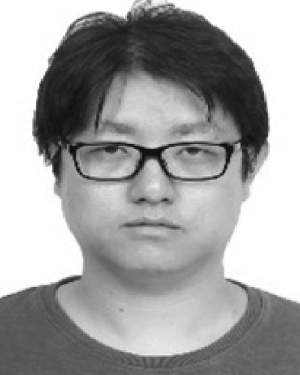 Peng Zhang合作论文数Georgetown Univ, Dept Chem, Washington, DC 20057 USA1
 Wenliang Wang (王文亮)合作论文数1Rui YANG (杨瑞)合作论文数1Ling-ling XU (徐玲玲)合作论文数1
 Jian Zhang (章健)合作论文数1YinAn Qiu (邱银安)合作论文数1YunFeng Duan (段云峰)合作论文数1Hong Jiang (蒋鸿)合作论文数1




