As an important output of scientific research, scientific data play an important role in scholarly communication. The establishment of the data policy of STM journals is of great significance to promote the data sharing, data reuse, data citation and scientific research evaluation. In this paper, by means of literature research and online research and based on the information published on journal websites, we surveyed the data policies operation status of 302 STM journals that were selected as the leading journals, key journals, and echelon journals in the Excellence Action Plan for China's STM Journals. Then we statistically analyzed the data policy setting, and the features of the policy, such as classification types, data availability, and data citation. The survey shows the current practice progress of China’s high-level STM journals related to scientific data publishing. Among the statistical journal sources, 81.82% of leading journals, 62.07% of key journals, 34.67% of echelon journals and 69.23% of high-starting new journals have formulated relevant data policies. According to survey results, the publication of data in STM journals has been widely recognized as one of the effective ways to promote scientific data sharing. Presently, all major publishing institutions have developed relevant data policies. Compared with the international counterparts, the data publishing of China’s STM journals still has a long way to go in industry recognition and framework strategy, and it is urgent to develop a universal data policy framework for different journals and publishers.
With the booming trend of data publishing, data journals have carried out much extensive practice for the exploration of open data sharing. This study focuses on the publishing practice of data journals, which took representative, relatively mature and different disciplinary scopes of data journals as the research objects. The publishing volume and proportion of data papers in data journals are calculated. Based on the author's practical experience in data publishing for several years, this study explores the formulation rules and implementation of data publishing policies. The study results show that data journals generally have well-developed regulations on data use license, data storage and permanent identifier, associated access from paper to data, data review, standardized data citation, but with few practical cases of data update and less attention paid to the problem of data security and data copyright. To facilitate the further development of data journals, we proposed in this study that more operational and reference details of data publishing should be considered in the practice of data publishing in journals.
Abstract The concept of bionics combines biology and engineering technology to provide people with new principles, methods, and ways to improve and create new equipment, promote technological innovation, and solve technical problems in the most flexible, efficient, reliable, and economical way. Although information technology continues to develop, it still faces many challenges in the era of big data and intelligence. With the explosive growth of massive data, the demand of storage, calculation, and analysis, and its energy consumption and efficiency challenges, information technology is urgently needed to find a new development direction. Inspired by biotechnology, it is becoming an international frontier research direction to find information technology innovation scheme from biological structure. As active new research fields, DNA data storage and neural morphological computation as well as related research are representative directions, which have broad future development prospects. Based on the development status and trend of these two research directions, this study attempts to analyze the motivation, trend, and prospect of information technology development inspired by biotechnology. The next two decades will be an important time window for the cross integration of life field and information field. By learning and simulating from life system, and drawing on the new ideas, principles and theories provided by biotechnology research, the information field will produce a number of subversive technologies and applications, and it will affect the entire academic and industrial sessions.
20世纪50~60年代钛合金研究主要可分为用于航空发动机的高温钛合金和机体用的结构钛合金,1970年代开发出耐蚀钛合金,1980年代以后耐热钛合金和高强钛合金得到进一步发展,还出现了形状记忆合金,在工程上的应用日益广泛.各国近年来努力开发低成本高性能的新型钛合金,努力使其进入民用工业领域,随着钛生产力的不断改善,钛合金已成为工业生产中的第三金属.当前主要应用领域包括:航空航天业、船舶行业和医用行业.
用GaN基高效率蓝绿光LED制作的超大屏全色显示,可用于室内室外各种场合的动态信息显示.作为新型高效节能固体光源,高效率白光LED使用寿命超过10万小时,可比白炽灯节电5~10倍,达到节约资源、减少环境污染的双重目的.GaN基LED的成功,引发了光电行业中的革命,发出蓝光和紫外线的氮化镓激光器也被用于高密度的DVD内,大大促进了音乐、图片和电影存储技术的发展.利用GaN材料,还可以制备紫外光探测器,它在火焰传感、臭氧检测、激光探测器等方面具有广泛应用.
根据储能原理,电化学电容器可分为双电层电容、赝电容以及结合二者的复合或功能化.双电层电容器利用电极和电解质之间形成的界面双电层电容存储能量,其电极通常采用具有高比表面积的多孔碳材料,包括活性炭、碳气凝胶、碳纳米管以及石墨烯等.其后发展的赝电容又称法拉第准电容,电极活性物质在电极表面或体相中的二维或准二维空间上,发生高度可逆的化学吸附、脱附或氧化、还原反应,从而产生更高的电容量和能量密度,其电极材料主要包括过渡金属氧化物和导电聚合物.
氮化镓(Gallium Nitride, GaN)基半导体材料是继硅和砷化镓基材料后的新一代半导体材料,被称为第3代半导体材料。氮化镓材料由于具有禁带宽度大、击穿电场高、介电常数小、电子饱和漂移速度高、抗辐射能力强和良好的化学稳定性等独特的特性,在光电子器件和高温、高频大功率电子等微电子器件领域有广阔的应用。
石墨烯[1](Graphene)是一种由碳原子以s p2轨域互相键结成六方蜂巢晶格的平面结构,其厚度只有1个碳原子厚,C-C键长约为0.142n m, C-C之间夹角为120°。石墨烯出现在实验室中是在2004年,英国曼彻斯特大学的科学家安德烈·海姆和康斯坦丁·诺沃肖洛夫成功地在试验中通过微机械剥离的方法从石墨中得到了石墨烯,2人也因此于2010年共同获得了诺贝尔物理学奖[2]。自2004年被发现以来,因其特殊的纳米结构以及优良的力学、光学、热学、电学和化学性能,石墨烯应用范围非常广泛,在超轻材料、触摸屏、晶体管、电极、传感器、生物医学和海水淡化等众多领域均展现出巨大的应用潜能,其理论科学研究和产业化发展持续升温。<br> 石墨烯[1](Graphene)是一种由碳原子以s p2轨域互相键结成六方蜂巢晶格的平面结构,其厚度只有1个碳原子厚,C-C键长约为0.142n m, C-C之间夹角为120°。石墨烯出现在实验室中是在2004年,英国曼彻斯特大学的科学家安德烈·海姆和康斯坦丁·诺沃肖洛夫成功地在试验中通过微机械剥离的方法从石墨中得到了石墨烯,2人也因此于2010年共同获得了诺贝尔物理学奖[2]。自2004年被发现以来,因其特殊的纳米结构以及优良的力学、光学、热学、电学和化学性能,石墨烯应用范围非常广泛,在超轻材料、触摸屏、晶体管、电极、传感器、生物医学和海水淡化等众多领域均展现出巨大的应用潜能,其理论科学研究和产业化发展持续升温。
This paper establishes a feasible science and technology competitiveness evaluation index system and method suitable for Provincial Academy of Sciences.This system includes research abilities of Provincial Academy of Sciences(staff composition,research funds and output,financial and staff input/output ratio),research impact(main contribution output percentage,regional contribution output percentage,high level journal impact factor & citation,project foundation etc.),and research trends and advantages(advantageous and potential fields,top output group &person),contribution to regional technology(transformation of scientific & technological achievements,amount of enterprises,operation revenue,technical service revenue).
 Lu Dong (董璐)合作论文数5Fei Zheng (郑菲)合作论文数5Lihua Kong (孔丽华)合作论文数3Xin Chen (陈欣)合作论文数2Yan Xi (习妍)合作论文数2Yang Wang (汪洋)合作论文数2Fangyu Liao (廖方宇)合作论文数1ZENG Lin (曾琳)合作论文数1Xin WEI (魏鑫)合作论文数1Liu Yajing (刘雅静)合作论文数1Ling Leng (冷泠)合作论文数1
 Zhuang Li (李壮)合作论文数State Key Laboratory of Electroanalytical Chemistry, Changchun Institute of Applied Chemistry, Chinese Academy of Sciences;University of Science and Technology of China1
 Xuehai Hong (洪学海)合作论文数Institute of Computing Technology, Chinese Academy of Sciences;University of Chinese Academy of Sciences1
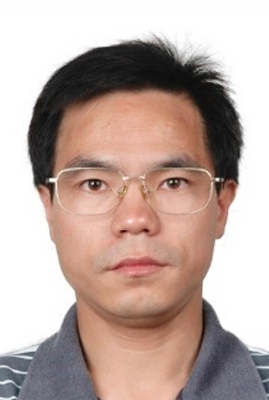 Yuanchun Zhou (周园春)合作论文数Computer Network Information Center, Chinese Academy of Sciences1Xue Lei (雷雪)合作论文数1
 Xiaomin Liu (刘筱敏)合作论文数Document Information Center of Chinese Academy of Sciences1
 Huifang Xu (徐慧芳)合作论文数School of Chemistry and Chemical Engineering, Harbin Institute of Technology1Yangqin Lang (郎杨琴)合作论文数1




