Visual Question Answering (VQA) models often latch onto spurious dataset biases and tend to produce superficial answers instead of performing faithful reasoning. Ensemble-based debiasing methods, which leverage bias-detection branches (e.g., question-only stream) and reverse learning to calibrate answer distributions, have become a mainstream paradigm. Nevertheless, they still suffer from limited generalization and often degrade performance on in-distribution data. We attribute this limitation mainly to two key drawbacks: (1) conventional bias-detection branches cannot fully capture the complex real-world biases inherent in VQA systems, and (2) naive uniform reverse learning easily induces severe over-correction. To mitigate these issues, we propose a Two-Stage Robust Training Framework (TRTF). We first construct an over-biased network and an over-corrected network to characterize two extreme predictive tendencies. Then, a robust training strategy is designed to balance these two tendencies for better overall generalization. Extensive experiments on both in-distribution and out-of-distribution benchmarks validate the effectiveness of our proposed framework.
Abstract Large reasoning models (LRMs) have shown exceptional performance in complex tasks such as mathematics and coding. In the field of machine translation (MT), reinforcement learning (RL) has been utilized to enhance the quality of translations. However, traditional RL approaches rely heavily on the base model’s inherent translation capabilities, which may falter when dealing with terminology translations and domain-specific expressions without sufficient guidance. In this paper, we introduce FeedTrans (Feedback-driven Translation), which employs a FeedRollout mechanism to incorporate feedback as guidance, enabling the production of high-quality translations and expanding the search space for improved translation outcomes. Extensive experiments across six translation tasks validate the effectiveness of our approach. To the best of our knowledge, this is the first attempt at utilizing feedback in MT-oriented RL. https://github.com/Acerkoo/FeedTrans
As Multimodal Large Language Models (MLLMs) become an indispensable assistant in human life, the unsafe content generated by MLLMs poses a danger to human behavior, perpetually overhanging human society like a sword of Damocles. To investigate and evaluate the safety impact of MLLMs responses on human behavior in daily life, we introduce SaLAD, a multimodal safety benchmark which contains 2,013 real-world image-text samples across 10 common categories, with a balanced design covering both unsafe scenarios and cases of oversensitivity. It emphasizes realistic risk exposure, authentic visual inputs, and fine-grained cross-modal reasoning, ensuring that safety risks cannot be inferred from text alone. We further propose a safety-warning-based evaluation framework that encourages models to provide clear and informative safety warnings, rather than generic refusals. Results on 18 MLLMs demonstrate that the top-performing models achieve a safe response rate of only 57.2
Knowledge distillation (KD) is an essential technique to compress large language models (LLMs) into smaller ones. However, despite the distinct roles of the student model and the teacher model in KD, most existing frameworks still use a homogeneous training backend (e.g., FSDP and DeepSpeed) for both models, leading to suboptimal training efficiency. In this paper, we present a novel framework for LLM distillation, termed KDFlow, which features a decoupled architecture and employs SGLang for teacher inference. By bridging the training efficiency of FSDP2 and the inference efficiency of SGLang, KDFlow achieves full utilization of both advantages in a unified system. Moreover, instead of transferring full logits across different processes, our framework only transmits the teacher's hidden states using zero-copy data transfer and recomputes the logits on the student side, effectively balancing the communication cost and KD performance. Furthermore, our framework supports both off-policy and on-policy distillation and incorporates KD algorithms for cross-tokenizer KD through highly extensible and user-friendly APIs. Experiments show that KDFlow can achieve 1.44× to 6.36× speedup compared to current KD frameworks, enabling researchers to rapidly prototype and scale LLM distillation with minimal engineering overhead. Code is available at: https://github.com/songmzhang/KDFlow
Latent visual reasoning aims to mimic human's process by meditating through hidden states of Multimodal Large Language Models. While recognized as a promising paradigm for visual reasoning, the underlying mechanisms driving its effectiveness remain unclear. Motivated to demystify the true source of its efficacy, we investigate the validity of latent reasoning using Causal Mediation Analysis. We model the process as a causal chain: the input as the treatment, the latent tokens as the mediator, and the final answer as the outcome. Our findings uncover two critical disconnections: (a) : dramatic perturbations on the input result in negligible changes to the latent tokens, suggesting that latent tokens do not effectively attend to the input sequence. (b) : perturbations on the latent tokens yield minimal impact on the final answer, indicating the limited causal effect latent tokens imposing on the outcome. Furthermore, extensive probing analysis reveals that latent tokens encode limited visual information and exhibit high similarity. Consequently, we challenge the necessity of latent reasoning and propose a straightforward alternative named , which teaches the model to explicitly using text. Experiments on vision-centric benchmarks show that significantly outperforms complex latent-space baselines, highlighting the superior potential of visual reasoning through explicit imagination.
The rapid development of Large Language Models (LLMs) demonstrates remarkable multilingual capabilities in natural language processing, attracting global attention in both academia and industry. To mitigate potential discrimination and enhance the overall usability and accessibility for diverse language user groups, it is important for the development of language-fair technology. Despite the breakthroughs of LLMs, the investigation into the multilingual scenario remains insufficient, where a comprehensive survey to summarize recent approaches, developments, limitations, and potential solutions is desirable. To this end, we provide a survey with multiple perspectives on the utilization of LLMs in the multilingual scenario. We first rethink the transitions between previous and current research on pre-trained language models. Then we introduce several perspectives on the multilingualism of LLMs, including training and inference methods, model safety, multi-domain with language culture, and usage of datasets. We also discuss the major challenges that arise in these aspects, along with possible solutions. Besides, we highlight future research directions that aim at further enhancing LLMs with multilingualism. The survey aims to help the research community address multilingual problems and provide a comprehensive understanding of the core concepts, key techniques, and latest developments in multilingual natural language processing based on LLMs. z
Multi-domain machine translation remains a challenge when domain labels are unavailable during inference. Prior approaches typically assume a explicit domain from inputs, limiting their applicability in real-world scenarios. We propose a lightweight yet effective LLM-assisted framework that eliminates the requirement for explicit domain labels. Our method explores two paradigms: (1) LLM as Router, where a large language model predicts the domain and routes the input to the corresponding expert model; and (2) LLM as Ranker, where the LLM selects the best output among multiple expert candidates. Experiments on four diverse domains show that the our method achieves an average BLEU score of 43.53, only 1.62 BLEU lower than the upper-bound expert KNN-MT model with gold domain labels (45.15), while requiring no explicit domain labels. Moreover, while expert in-domain models suffer sharply deterioration on out-of-domain inputs, our method maintains strong robustness, effectively mitigating domain shift. The proposed methods combine the cross-domain adaptability of LLMs with the strong in-domain accuracy of expert NMT models, offering a plug-and-play, training-free solution without additional training.
Multilingual retrieval-augmented generation (MRAG) requires models to effectively acquire and integrate beneficial external knowledge from multilingual collections. However, most existing studies employ a unitive process where queries of equivalent semantics across different languages are processed through a single-turn retrieval and subsequent optimization. Such a “one-size-fits-all” strategy is often suboptimal in multilingual settings, as the models occur to knowledge bias and conflict during the interaction with the search engine. To alleviate the issues, we propose LcRL, a multilingual search-augmented reinforcement learning framework that integrates a language-coupled Group Relative Policy Optimization into the policy and reward models. We adopt the language-coupled group sampling in the rollout module to reduce knowledge bias, and regularize an auxiliary anti-consistency penalty in the reward models to mitigate the knowledge conflict. Experimental results demonstrate that LcRL not only achieves competitive performance but is also appropriate for various practical scenarios such as constrained training data and retrieval over collections encompassing a large number of languages. Our code is available at https://github.com/Cherry-qwq/LcRL-Open.
While Large Language Model (LLM) agents excel at monolingual long-horizon planning and tool use, enterprise workflows inherently require processing multilingual resources across extended trajectories. The interaction between multilinguality and long-horizon execution, however, remains underexplored. We introduce PolyWorkBench, a benchmark designed to evaluate LLM agents on multilingual, long-horizon workplace workflows. PolyWorkBench features 67 tasks across five core domains: commerce, knowledge work, legal analysis, localization, and manufacturing. Tasks are authored by the paper's authors from real-world data seeds and independently verified through a second-author audit. Agents must integrate heterogeneous multilingual inputs, execute iterative tool-use trajectories, and produce structured domain artifacts. To rigorously assess performance, we adopt Grade, a task-specific structural scoring rubric, as our primary ranking metric, and complement it with Pytest for executable state verification and LLM-as-Judge for semantic quality diagnostics. Benchmark evaluations reveal that agent performance varies substantially across languages and drops sharply on the harder cross-lingual tasks, and our analysis shows that multilingual execution exposes systematic failure modes across planning, tool interaction, and decision-making in long-horizon agents.
This paper explores the challenges of integrating tactile sensing into intelligent systems for multimodal reasoning, particularly in enabling commonsense reasoning about the open-ended physical world. We identify two key challenges: modality discrepancy, where existing touch-language models often treat touch as a mere sub-modality of language without further addressing the semantic differences, and open-ended tactile data scarcity, where current datasets lack the diversity, open-endedness, and complexity needed for reasoning. To overcome these challenges, we introduce SToLa, a Self-Adaptive Touch-Language framework. SToLa utilizes Mixture of Experts (MoE) to dynamically process, unify, and manage tactile and language modalities, capturing their unique characteristics. Crucially, we also present a comprehensive tactile commonsense reasoning dataset and benchmark featuring free-form questions and responses, 8 physical properties, 4 interactive characteristics, and diverse commonsense knowledge. Experiments show SToLa exhibits competitive performance compared to existing models on the PHYSICLEAR benchmark and self-constructed datasets, proving the effectiveness of the Mixture of Experts architecture in multimodal management and the performance advantages for open-scenario tactile commonsense reasoning tasks.
Multi-domain machine translation (MDMT) faces the challenge of continually adapting to emerging domain data without sacrificing performance on previously learned domains. Existing methods mainly address catastrophic forgetting but often lack effective mechanisms for incorporating new domain knowledge. In this work, we present a novel Domain Knowledge Fusion (DKF) framework that integrates incremental learning with a unified fusion mechanism of word-level and sentence-level domain knowledge representations. This fusion enables the model to dynamically incorporate rich domain-specific information during both encoding and decoding, thereby enhancing its capacity to learn new domains while preserving prior knowledge. Unlike prior approaches, DKF progressively transfers cross-domain knowledge through a pluggable incremental learning strategy, allowing effective adaptation across multiple emerging domains. We implement our framework on the pre-trained mBART model and evaluate it on UM-Corpus and OPUS multi-domain datasets. Experimental results demonstrate that DKF significantly outperforms representative baselines by achieving a balanced trade-off between retention and acquisition of domain knowledge, confirming the effectiveness of our domain knowledge fusion mechanism and progressive training design.
Learning the informative tactile representation while effectively adapting it to pretrained Vision-Language-Action (VLA) models remains challenging at both the data and modeling levels. At the data level, limited task-specific demonstrations constrain representation quality, whereas large-scale pretraining incurs substantial costs. At the modeling level, existing methods either focus on instantaneous contact states or model temporal interaction dynamics using 6D wrench sequences, leaving high-dimensional tactile signals underexplored. To address these challenges, we present τ, a touch-augmented VLA framework that learns an action-conditioned spatiotemporal tactile representation from future visual supervision inspired by the Joint-Embedding Predictive Architecture (JEPA), and fuses it with vision-language features for action generation under limited data. This supervision operates in latent space and is used only during training, adding no deployment overhead. We also introduce TacAura, a dataset of synchronized vision, proprioception, and vision-based tactile signals across four representative contact-rich manipulation tasks. Experiments show that τ outperforms existing models and generalizes to unseen objects and scenes, delivering improved manipulation performance and robustness
Knowledge distillation is an effective technique for pre-trained language model compression. However, existing methods only focus on the knowledge distribution among layers, which may cause the loss of fine-grained information in the alignment process. To address this issue, we introduce the Multi-aspect Knowledge Distillation (MaKD) method, which mimics the self-attention and feed-forward modules in greater depth to capture rich language knowledge information at different aspects. Experimental results demonstrate that MaKD can achieve competitive performance compared with various strong baselines with the same storage parameter budget. In addition, our method also performs well in distilling auto-regressive architecture models.
Visual Question Answering (VQA) models are prone to poor generalization, primarily stemming from their reliance on spurious biases in the training set. Existing debiasing methods, typically using uni-modal models (e.g., a question-only branch) to estimate bias, struggle with two issues: (1) inaccurate capture of multi-modal biases, and (2) neglect of rare samples. To address these, we propose a debiasing framework, namely Dual Knowledge Distillation with Adaptive Constraint (DKDAC). Our approach first identifies short-head and long-tail samples via answer frequency. Then, a dual distillation strategy is employed: a short-head teacher distills multi-modal bias patterns to dedicated bias detection models, while a long-tail teacher directs the standard model's focus to rare samples, enhancing its generalization capability on underrepresented cases. Furthermore, an adaptive constraint function is designed to coordinate the standard and bias models, sharpening bias capture and improving robustness. During inference, the final debiased predictions are obtained by subtracting the bias estimates from the standard model's predictions. Extensive experiments on VQA-CP v1, VQA-CP v2, VQA-CE, and GQA-OOD demonstrate that DKDAC achieves more comprehensive debiasing while significantly boosting accuracy on long-tail samples.
Large Reasoning Models (LRMs) have achieved remarkable performance on complex reasoning tasks by adopting the “think-then-answer” paradigm, which enhances both accuracy and interpretability. However, current LRMs exhibit two critical limitations when processing non-English languages: (1) They often struggle to maintain input-output language consistency; (2) They generally perform poorly with wrong reasoning paths and lower answer accuracy compared to English. These limitations significantly compromise the interpretability of reasoning processes and degrade the user experience for non-English speakers, hindering the global deployment of LRMs. To address these limitations, we propose M-Thinker, which is trained by the GRPO algorithm that involves a Language Consistency (LC) reward and a novel Cross-lingual Thinking Alignment (CTA) reward. Specifically, the LC reward defines a strict constraint on the language consistency between the input, thought, and answer. Besides, the CTA reward compares the model’s non-English reasoning paths with its English reasoning path to transfer its own reasoning capability from English to non-English languages. Through an iterative RL procedure, our M-Thinker-1.5B/4B/7B models not only achieve nearly 100% language consistency and superior performance on two multilingual benchmarks (MMATH and PolyMath), but also exhibit excellent generalization on out-of-domain languages.
The rapid development of Multimodal Large Reasoning Models (MLRMs) has demonstrated broad application potential, yet their safety and reliability remain critical concerns that require systematic exploration. To address this gap, we conduct a comprehensive and systematic safety evaluation of 13 MLRMs across 5 benchmarks and unveil prevalent safety degradation phenomena in most advanced models. Moreover, our analysis reveals distinct safety patterns across different benchmarks: significant safety degradation is observed across jailbreak robustness benchmarks, whereas safety-awareness benchmarks demonstrate less pronounced degradation. In particular, the long thought process in some scenarios even enhances safety performance. Therefore, it is a potential approach to address safety issues in MLRMs by leveraging the intrinsic reasoning capabilities of the model to detect unsafe intent. To operationalize this insight, we construct a multimodal tuning dataset that incorporates a safety-oriented thought process. Experimental results from fine-tuning existing MLRMs with this dataset effectively enhance the safety on both jailbreak robustness and safety-awareness benchmarks. This study provides a new perspective for developing safe MLRMs.
While progress has been made in legal applications, law reasoning, crucial for fair adjudication, remains unexplored. We propose a transparent law reasoning schema enriched with hierarchical factum probandum, evidence, and implicit experience, enabling public scrutiny and preventing bias. Inspired by this schema, we introduce the challenging task, which takes a textual case description and outputs a hierarchical structure justifying the final decision. We also create the first crowd-sourced dataset for this task, enabling comprehensive evaluation. Simultaneously, we propose an agent framework that employs a comprehensive suite of legal analysis tools to address the challenge task. This benchmark paves the way for transparent and accountable AI-assisted law reasoning in the “Intelligent Court”.
 Yufeng Chen (陈钰枫)合作论文数School of Computer Science & Technology, Beijing Jiaotong University181
 Yujie Zhang (张玉洁)合作论文数School of Computer and Information Technology, Beijing Jiaotong University100
 Fandong Meng (孟凡东)合作论文数Pattern Recognition Center, WeChat AI, Tencent52
 Jian Liu (刘健)合作论文数Beijing Jiaotong University37
 Mingtong Liu合作论文数School of Computer Science and Information Technology && Beijing Key Lab of Traffic Data Analysis and Mining, Beijing Jiaotong University32
 Yunlong Liang合作论文数Pattern Recognition Center, WeChat AI, Tencent Inc29
 Wenjuan Han (韩文娟)合作论文数School of Computer and Information Technology, Beijing Jiaotong University19
 Kaiyu Huang (黄锴宇)合作论文数School of Computer and Information Technology, Beijing Jiaotong University16Hui Di合作论文数Toshiba China Co Ltd, Beijing, Peoples R China15
 Yijin Liu合作论文数Beijing Jiaotong Univ14
 Kazushige Ouchi合作论文数Toshiba Corporation14Hui Huang合作论文数Faculty of Computing, Harbin Institute of Technology13Songming Zhang合作论文数Beijing Key Lab of Traffic Data Analysis and Mining, Beijing Jiaotong University12
 Zhibo Man (满志博)合作论文数Beijing Key Lab of Traffic Data Analysis and Mining, School of Computer and Information Technology, Beijing Jiaotong University;iNLP Lab, Singapore University of Technology and Design9Erguang Yang合作论文数9GuoYi Miao (苗国义)合作论文数9Xue Zhang合作论文数8
 Fengran Mo合作论文数RALI Lab, Université de Montréal;Department of Computer Science and Operations Research, Université de Montréal8
 Jiangming Liu (刘江鸣)合作论文数School of Information Science and Engineering, Yunnan University8
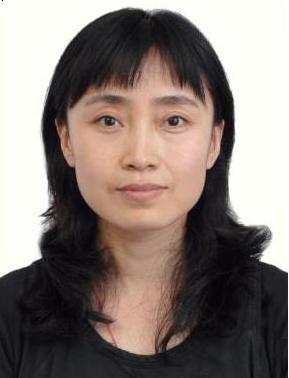 Ying Zhang (张英)合作论文数School of Mechanical,Electronic and Control Engineering, Beijing Jiaotong University8
 Deyi Xiong (熊德意)合作论文数School of Computer Science and Technology, College of Intelligence and Computing, Tianjin University8Yuanmeng Chen (陈圆梦)合作论文数7
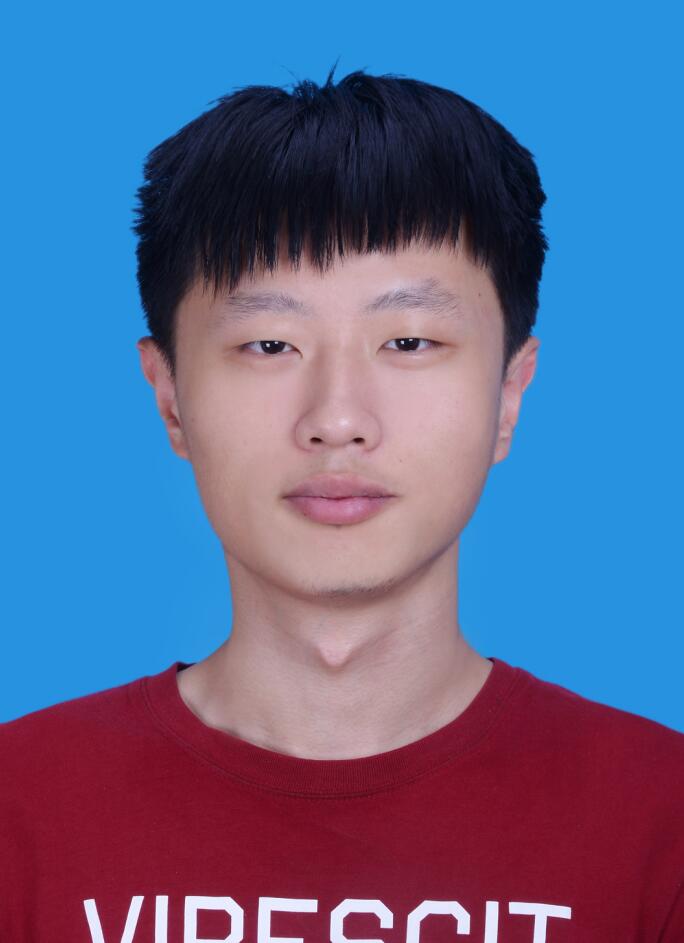 Jiaan Wang (王佳安)合作论文数School of Managemnet, Fudan University;Pattern Recognition Center, WeChat AI, Tencent Inc7
 Jinchao Zhang合作论文数Pattern Recognition Center, WeChat AI, Tencent Inc.7Siyu Lai合作论文数6Yao Meng合作论文数German Research Centre for Artificial Intelligence6
 Zengkui Sun合作论文数5Ning Cheng合作论文数5Chunyou Li合作论文数5Shaotong Li合作论文数Beijing Jiaotong University5
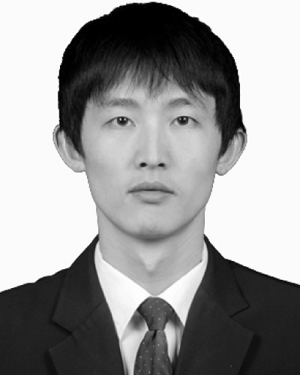 Fuwei Cui合作论文数Institute of Advanced Control System, College of Electronic Information Engineering, Beijing Jiaotong University, Beijing, China5
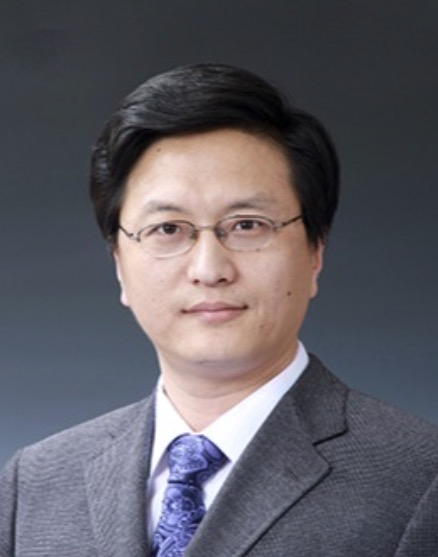 Jie Zhou (周杰)合作论文数Department of Automation, Tsinghua University5Hongxiao Zhang合作论文数4
 Shuaibo Wang (王帅博)合作论文数Department of Thoracic Surgery, Beijing Institute of Respiratory Medicine and Beijing Chao-Yang Hospital, Capital Medical University4Kenji Araki合作论文数Hokkaido University4Peihao WU (吴培昊)合作论文数4
 Chulun Zhou (周楚伦)合作论文数Text-Mining Group, The Chinese University of Hong Kong4
 Ze Liu (刘泽)合作论文数School of Electronic and Information Engineering, Beijing Jiaotong University4Changjian Hu合作论文数4Chen Su (苏晨)合作论文数4
 Bojie Hu合作论文数Tencent4
 Jinsong Su (苏劲松)合作论文数School of of Informatic, Xiamen University;Center for Digital Media Computation of Xiamen University4Yulong Mao合作论文数Beijing Jiaotong University;Beijing Key Lab of Traffic Data Analysis and Mining3Changhao Guan合作论文数3Hongjie Ren合作论文数3Xuanxuan Wu合作论文数3




