Objective To study the effects of bevacizumab combined with pemetrexed and cisplatin on the incidence of brain metastases, survival time and VEGF protein in patients w ith NSCLC. Methods Totally 60 patients w ith advanced NSCLC in our hospital w ere selected from January 2013 to December 2014 and divided into control group (n = 30) and observation group (n = 30) randomly. Patients in control group w ere treated w ith pemetrexed + cisplatin, and those in observation group w ere treated w ith bevacizumab + pemetrexed + cisplatin. The short-term efficacy, survival rate, VEGF protein level, adverse reactions and the incidence of brain metastases betw een the tw o groups w ere compared. Results The ORR and DCR of observation group w ere higher than those of control group (53. 33% vs.26. 67%, 86. 67% vs. 63. 33%) (P < 0. 05) . The survival rates of 1 year, 2 years and 3 years in observation group w ere higher than those in control group (66. 67% vs. 40. 00%, 40. 00% vs. 16. 67%, 26. 67% vs. 6. 67%) (P < 0. 05) . The levels of VEGFA, VEGFB and VEGFC protein [ (87. 51 ± 10. 36) , (78. 42 ± 9. 48) and (50. 17 ± 7. 34) pg/ml] in observation group w ere low er than those in control group [ (160. 37 ± 18. 95) , (129. 74 ± 11. 87) and (89. 74 ±10. 23) pg/ml] (P < 0. 05) . The incidence of hypertension in observation group w as higher than that in control group (P < 0. 05) . There was no significant difference in the incidences of nausea and vomiting, thrombocytopenia, leukocyte reduction, anemia, proteinuria or bleeding betw een the tw o groups (P> 0. 05) . After 1 year of treatment, there w ere 2 cases (6. 67%) and 5 cases (16. 67%) of brain metastases in observation group and control group (P> 0. 05) , respectively; after 2 years of treatment, the incidence of brain metastasis in observation group w as low er than that in control group (10. 00% vs. 33. 33%, P < 0. 05) . Conclusion Bevacizumab combined w ith pemetrexed and cisplatin chemotherapy can improve the short-term efficacy on NSCLC patients, reduce the incidence of brain metastasis, inhibit vascular endothelial grow th factor, and is w ell tolerated, so it is w orthy of clinical application.
Receptor-interacting protein 3 (RIP3) is a member of the Ser/Thr protein kinase family (RIPs). Increasing evidences have revealed that RIPs are essential sensors of cellular stress and key regulators of cell survival, apoptosis and necrosis. Recent studies have demonstrated that RIP3 participates in the signal pathway of cellular necrosis induced by TNF-a. RIP3 functions as an essential regulator of the TNF-a-induced necrosis mainly mediated by reactive oxygen species (ROS) accumulation. These new findings will offer a new target for the advanced tumor therapeutic strategy.
Objective:To investigate the expression of RIP3(receptor interaction protein-3) in lymphoma patients pathological tis-sues and the sub-cellular localization,and to investigate the relationship of the expression of RIP3 and malignant degree of lymphoma.Methods: The RIP3 expression in 48 cases of the lymphoma and non-neoplastic lymph node pathological tissues was detected by im-munohistochemmistry,and the sub-cellular localization of RIP3 was observed.Results: 1) There were RIP3 expresses in the lymphoma pathological tissues,which mainly located in nucleus but weekly in cytoplasm.2) The expression of RIP3 had a relationship with malig-nant degrees of lymphoma.Conclusion: There was RIP3 expression in lymphoma pathological tissues,which shell new light to the study of mechanism of lymphoma.
Objective:To investigate the short-term efficacy and adverse effect of navelbine plus platinum protocol of chemotherapy(NP)combined with Kanglaite for elder advaced non-small cell lung cancer(NSCLC)patients and to evaluate their quality of life.Methods:127 patients were randomly divided into two groups.64 cases were enrolled in the treatment group who were took chemotherapy(NP):NVB25mg/m2 on the first and eighth days ivgtt+DDP 80mg/m2,divided for three days,on the first,second and third day ivgtt,repeated every 3 weeks.Patients in the treatment group were took Kanglaite 200ml qd,1-21 days ivgtt.63 cases were enrolled in the control group who were took single chemotherapy(NP):NVB25mg/m2 on days 1,8 ivgtt+DDP 80mg/m2,divided for three days,on days 1,2,3 ivgtt,repeated every 3 weeks.Two groups of patients were evaluated after treatment for 4 cycles.Results:The response rate in treatment group was higher than that in control group(P0.05);The rate of adverse effect in the treatment group,such as leucopenia anemia and vomit was also lower than that in the control group(P0.05).Patients in the treatment group had better quality of lives than that in the control group(P0.05).Also patients in treatment group gain more weight than that in control group(P0.05).Conclusion:Treatment of Kanglaite combined with chemotherapy(NP)for elder advanced non-small cell lung cancer patients can improve the curative effect,reduce adverse effect of chemotherapy and improve the life quality of patients.
OBJECTIVE:To evaluate the effects of combined Matrine injection on the side effects,quality of life and changes in tumor markers in patients with early breast carcinoma undergoing chemotherapy after modified radical mastectomy.METHODS:123 patients with early breast carcinoma undergoing chemo-therapy after modified radical mastectomy were randomly divided into 2 groups:combined Matrine injection treatment group( n=62) and control group(n=61).In the control group,one case was canceled on account of allergy.Chemotherapy with CAF was used in both groups for 6 cycles(21 days as a cycle) after ten days of surgery.In every cycle,blood routine,biochemical , tumor markers,body weight and KPS score were checked.RESULTS:The incidence of neutropenia and transaminase abnormalities of treatment group is lower than that of the control group,both P<0.05.The quality of life was improved better in the treatment group than that in the control group,P<0.05.The level of tumor marker CA15-3 was lower in treatment group than that were in the control group,P<0.05.It was a trend that the tumor marker CEA is becoming lower in the treatment group which was not so obvious in the control group,P=0.077.CONCLUSION:The Matrine injection combined with chemotherapy CAF in the patients after breast cancer operation,can improve the patients' tolerance to the chemotherapy,improve the quality of life and reduce the level of tumor marker in the blood.
 ZHANG Xiao-qin (张晓芹)合作论文数2Yan Xie (谢彦)合作论文数2Chen Zhang (张晨)合作论文数School of Life Sciences, Peking University2Zhitao Ying (应志涛)合作论文数2Fengming Zhang (张凤鸣)合作论文数2
 Yuqin Song (宋玉琴)合作论文数Beijing Cancer Hospital, Peking University2
 Jun Zhu (朱军)合作论文数Peking University Cancer Hospital2Xiuhua Li (李秀华)合作论文数2Zhengxing Gao (高正兴)合作论文数1Wei WANG (王薇)合作论文数1Li-mei LIU (刘丽梅)合作论文数1GuiLong Lu (卢桂龙)合作论文数1ChunQing Song (宋春青)合作论文数1LiJuan Deng (邓丽娟)合作论文数1Lei Han (韩磊)合作论文数1
 Weiping Liu (刘卫平)合作论文数第四军医大学西京医院1
 Zhongwu Li (李忠武)合作论文数Beijing Cancer Hospital1
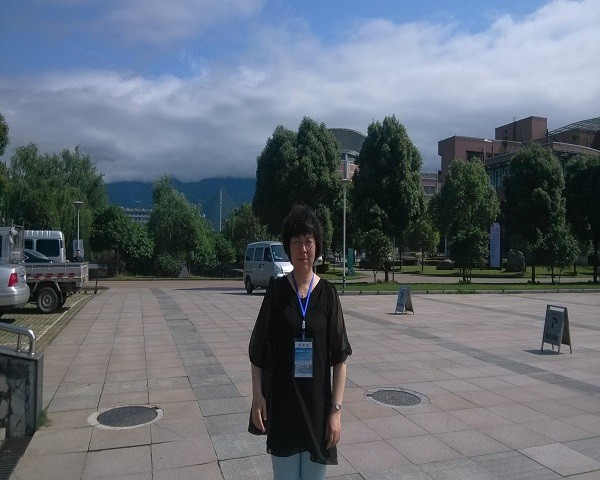 Hong Wang (王红)合作论文数School of Information Science and Engineering, Shandong Normal University1
 Lingyan Ping (平凌燕)合作论文数Peking Cancer Hospital1Xiaopei Wang (王小沛)合作论文数1
 Ningjing Lin (林宁晶)合作论文数Beijing Cancer Hospital, Peking University1
 Yunfei Shi合作论文数School of Information Systems & Technology Management, Business School, The University of New South Wales1




