LLM-based agents are increasingly being deployed for data-related tasks, including data sense-making, exploration, and retrieval. However, their performance heavily depends on the clarity and completeness of data semantics. In practice, many field descriptions remain ambiguous or incomplete, as much of the essential context (e.g., the meaning of a customized field) originates from users' domain knowledge and is rarely documented publicly. This gap restricts the agents' task performance in downstream tasks, such as entity-linking. To bridge this gap, we introduce a novel and comprehensive Interactive SEmantic Enrichment system (ISEE). Given a data field description, ISEE measures its quality through a scoring system, gathers domain knowledge, and collaboratively enriches the semantics with users. Through a user study, automated user simulation, quantitative evaluation, and case study, we demonstrate that ISEE significantly reduces cognitive load, improves description quality, and enhances downstream task performance.
We present a Proactive Monitoring Agent designed for large-scale customer data platforms, such as Adobe Experience Platform (AEP), to predict and prevent workflow disruptions before they impact business operations. Unlike existing reactive solutions that assist engineers only after failures occur, our agent anticipates potential failures across multiple workflow stages, explains its predictions in natural language, and interacts with customer support engineers through a conversational interface. The system integrates a machine learning-based Prediction Module, Knowledge Graph APIs for contextual data access, and a Query Processor that powers an interactive Q&A experience, enabling timely and actionable insights to minimize operational risks and maximize business continuity.
Large language models (LLMs) are increasingly used to automate feature engineering in tabular learning. Given task-specific information, LLMs can propose diverse feature transformation operations to enhance downstream model performance. However, current approaches typically assign the LLM as a black-box optimizer, responsible for both proposing and selecting operations based solely on its internal heuristics, which often lack calibrated estimations of operation utility and consequently lead to repeated exploration of low-yield operations without a principled strategy for prioritizing promising directions. In this paper, we propose a human–LLM collaborative feature engineering framework for tabular learning. We begin by decoupling the transformation operation proposal and selection processes, where LLMs are used solely to generate operation candidates, while the selection is guided by explicitly modeling the utility and uncertainty of each proposed operation. Since accurate utility estimation can be difficult especially in the early rounds of feature engineering, we design a mechanism within the framework that selectively elicits and incorporates human expert preference feedback—comparing which operations are more promising—into the selection process to help identify more effective operations. Our evaluations on both the synthetic study and the real user study demonstrate that the proposed framework improves feature engineering performance across a variety of tabular datasets and reduces users’ cognitive load during the feature engineering process.
Generating accurate and informative column descriptions (e.g. "membership status of customers" for the column name "cust_mem") is essential for a wide range of downstream NLP tasks on tabular data, including NL2SQL, table question answering, and entity linking. This problem arises in enterprises, domain sciences, government data portals, and so on. Despite its importance, most real-world datasets suffer from missing or cryptic documentation, often due to abbreviated column names or domain-specific jargon. Existing approaches largely rely on single-prompt large language models (LLMs), which struggle with three key issues: (i) inconsistent or incorrect handling of abbreviations, (ii) hallucinated or incomplete descriptions, and (iii) redundancy or vagueness that hinders downstream performance. We present TACO, a task-aware framework for automatic column description generation using LLMs. TACO introduces a three-step pipeline: (1) abbreviation expansion, which standardizes column names; (2) description generation, which produces initial semantic descriptions enriched with synonyms and search-oriented keywords; and (3) description revision, which refines these outputs using simulated downstream tasks. In addition, we investigate human-in-the-loop extensions and release new evaluation datasets for entity linking and schema enrichment. Extensive experiments across public and proprietary datasets show that TACO consistently outperforms existing methods, improving downstream task performance by up to 32
High-quality feedback is essential for effective human–AI interaction. It bridges knowledge gaps, corrects digressions, and shapes system behavior; both during interaction and throughout model development. Yet despite its importance, human feedback to AI is often infrequent and low quality. This gap motivates a critical examination of human feedback during interactions with AIs. To understand and overcome the challenges preventing users from giving high-quality feedback, we conducted two studies examining feedback dynamics between humans and conversational agents (CAs). Our formative study, through the lens of Grice’s maxims, identified four Feedback Barriers—Common Ground, Verifiability, Communication, and Informativeness—that prevent high-quality feedback by users. Building on these findings, we derive three design desiderata and show that systems incorporating scaffolds aligned with these desiderata enabled users to provide higher-quality feedback. Finally, we detail a call for action to the broader AI community for advances in Large Language Models capabilities to overcome Feedback Barriers.
Recent advances in LLM agents have enabled complex cognitive capabilities, such as multi-step reasoning, planning, and tool use, that increasingly position these agents as human collaborators. Effective collaboration, however, requires collaborators to continuously maintain and align mental models of their own reasoning,partners' intentions, and shared goals during the collaborative process. Today's agents rarely develop such capabilities since they are primarily optimized for task completion, and the community lacks authentic human collaboration data with action-level mental model annotations that could guide agents toward process-level collaborative competence. To bridge this gap, we present ALMANAC, a dataset of Action-Level Mental model ANnotations for Agent Collaboration built from the Map Task, a classic dyadic routing task from social science. ALMANAC contains 2,987 collaboration actions, each paired with theory-informed mental model annotations that record the participants' self-reasoning, perceived partner intent, and perceived team goal. We benchmark six LLMs on predicting humans' next-turn behavior and mental models. Our results demonstrate ALMANAC's utility in evaluating models' ability to simulate human collaborative behaviors and infer their underlying mental models.
Answering questions over multi-page, multimodal documents, including text and figures, is a critical challenge for applications that require answers to integrate information across multiple modalities and contextual dependencies. Existing methods, such as single-turn retrieval-augmented generation (RAG), struggle to retrieve fine-grained and contextually relevant information from large, heterogeneous documents, leading to suboptimal performance. Inspired by iterative frameworks like ReAct, which refine retrieval through feedback, we propose Doc-React, an adaptive iterative framework that balances information gain and uncertainty reduction at each step. Doc-React leverages InfoNCE-guided retrieval to approximate mutual information, enabling dynamic sub-query generation and refinement. A large language model (LLM) serves as both a judge and generator, providing structured feedback to iteratively improve retrieval. By combining mutual information optimization with entropy-aware selection, Doc-React systematically captures relevant multimodal content, achieving strong performance on complex QA tasks
Generative AI increasingly reshapes how people engage with interactive systems. It now plays a vital role in designing, studying, and refining human-centered methods that let individuals interact and collaborate with AI, strengthening their agency and control. This special issue highlights the human role in Generative AI and seeks approaches that equip diverse stakeholders across socio-technical contexts to understand, direct, and steer these systems while enabling responsible innovation. We publish in this special issue original research on new interaction techniques that integrate human input into Generative AI’s continual development, studies of interaction paradigms that support more effective human–AI collaboration, and work that deepens understanding of model capabilities. Thus, we aim to build a research community around Human-Centric GenAI that empowers people to actively shape systems in line with their values, needs, and expectations.
Large language models (LLMs) have shown remarkable progress in understanding and generating natural language across various applications. However, they often struggle with resolving ambiguities in real-world, enterprise-level interactions, where context and domain-specific knowledge play a crucial role. In this demonstration, we introduce ECLAIR (Enhanced CLArification for Interactive Responses), a multi-agent framework for interactive disambiguation. ECLAIR enhances ambiguous user query clarification through an interactive process where custom agents are defined, ambiguity reasoning is conducted by the agents, clarification questions are generated, and user feedback is leveraged to refine the final response. When tested on real-world customer data, ECLAIR demonstrates significant improvements in clarification question generation compared to standard few-shot methods.
Multi-turn conversations with an Enterprise AI Assistant can be challenging due to conversational dependencies in questions, leading to ambiguities and errors. To address this, we propose an NLU-NLG framework for ambiguity detection and resolution through reformulating query automatically and introduce a new task called "Ambiguity-guided Query Rewrite." To detect ambiguities, we develop a taxonomy based on real user conversational logs and draw insights from it to design rules and extract features for a classifier which yields superior performance in detecting ambiguous queries, outperforming LLM-based baselines. Furthermore, coupling the query rewrite module with our ambiguity detecting classifier shows that this end-to-end framework can effectively mitigate ambiguities without risking unnecessary insertions of unwanted phrases for clear queries, leading to an improvement in the overall performance of the AI Assistant. Due to its significance, this has been deployed in the real world application, namely Adobe Experience Platform AI Assistant.
We present ECLAIR (Enhanced CLArification for Interactive Responses), a novel unified and end-to-end framework for interactive disambiguation in enterprise AI assistants. ECLAIR generates clarification questions for ambiguous user queries and resolves ambiguity based on the user's response.We introduce a generalized architecture capable of integrating ambiguity information from multiple downstream agents, enhancing context-awareness in resolving ambiguities and allowing enterprise specific definition of agents. We further define agents within our system that provide domain-specific grounding information. We conduct experiments comparing ECLAIR to few-shot prompting techniques and demonstrate ECLAIR's superior performance in clarification question generation and ambiguity resolution.
Text-to-Video (T2V) models, despite recent advancements, struggle with factual accuracy, especially for knowledge-dense content. We introduce FACT-V (Factual Accuracy in Content Translation to Video), a system integrating multi-source knowledge retrieval into T2V pipelines. FACT-V offers two key benefits: i) improved factual accuracy of generated videos through dynamically retrieved information, and ii) increased interpretability by providing users with the augmented prompt information. A preliminary evaluation demonstrates the potential of knowledge-augmented approaches in improving the accuracy and reliability of T2V systems, particularly for entity-specific or time-sensitive prompts.
Text-to-SQL models, which parse natural language (NL) questions to executable SQL queries, are increasingly adopted in real-world applications. However, deploying such models in the real world often requires adapting them to the highly specialized database schemas used in specific applications. We find that existing text-to-SQL models experience significant performance drops when applied to new schemas, primarily due to the lack of domain-specific data for fine-tuning. This data scarcity also limits the ability to effectively evaluate model performance in new domains. Continuously obtaining high-quality text-to-SQL data for evolving schemas is prohibitively expensive in real-world scenarios. To bridge this gap, we propose SQLSYNTH, a human-in-the-loop text-to-SQL data annotation system. SQLSYNTH streamlines the creation of high-quality text-to-SQL datasets through human-LLM collaboration in a structured workflow. A within-subjects user study comparing SQLSYNTH with manual annotation and ChatGPT shows that SQLSYNTH significantly accelerates text-to-SQL data annotation, reduces cognitive load, and produces datasets that are more accurate, natural, and diverse. Our code is available at https://github.com/adobe/nl_sql_analyzer.
Recent advancements in retrieval-augmented generation (RAG) have demonstrated impressive performance in the question-answering (QA) task. However, most previous works predominantly focus on text-based answers. While some studies address multimodal data, they still fall short in generating comprehensive multimodal answers, particularly for explaining concepts or providing step-by-step tutorials on how to accomplish specific goals. This capability is especially valuable for applications such as enterprise chatbots and settings such as customer service and educational systems, where the answers are sourced from multimodal data. In this paper, we introduce a simple and effective framework named MuRAR (Multimodal Retrieval and Answer Refinement). MuRAR enhances text-based answers by retrieving relevant multimodal data and refining the responses to create coherent multimodal answers. This framework can be easily extended to support multimodal answers in enterprise chatbots with minimal modifications. Human evaluation results indicate that multimodal answers generated by MuRAR are more useful and readable compared to plain text answers.
Recent advancements in Large Language Models and Retrieval-Augmented Generation have boosted interest in domain-specific question-answering for enterprise products. However, AI Assistants often face challenges in multi-product QA settings, requiring accurate responses across diverse domains. Existing multi-domain RAG-QA approaches either query all domains indiscriminately, increasing computational costs and LLM hallucinations, or rely on rigid resource selection, which can limit search results. We introduce MKP-QA, a novel multi-product knowledge-augmented QA framework with probabilistic federated search across domains and relevant knowledge. This method enhances multi-domain search quality by aggregating query-domain and query-passage probabilistic relevance. To address the lack of suitable benchmarks for multi-product QAs, we also present new datasets focused on three Adobe products: Adobe Experience Platform, Target, and Customer Journey Analytics. Our experiments show that MKP-QA significantly boosts multi-product RAG-QA performance in terms of both retrieval accuracy and response quality.
Enterprise AI Assistants are increasingly deployed in domains where accuracy is paramount, making each erroneous output a potentially significant incident. This paper presents a comprehensive framework for monitoring, benchmarking, and continuously improving such complex, multi-component systems under active development by multiple teams. Our approach encompasses three key elements: (1) a hierarchical “severity” framework for incident detection that identifies and categorizes errors while attributing component-specific error rates, facilitating targeted improvements; (2) a scalable and principled methodology for benchmark construction, evaluation, and deployment, designed to accommodate multiple development teams, mitigate overfitting risks, and assess the downstream impact of system modifications; and (3) a continual improvement strategy leveraging multidimensional evaluation, enabling the identification and implementation of diverse enhancement opportunities. By adopting this holistic framework, organizations can systematically enhance the reliability and performance of their AI Assistants, ensuring their efficacy in critical enterprise environments. We conclude by discussing how this multifaceted evaluation approach opens avenues for various classes of enhancements, paving the way for more robust and trustworthy AI systems.
Multilingual knowledge graphs (KGs) provide high-quality relational and textual information for various NLP applications, but they are often incomplete, especially in non-English languages. Previous research has shown that combining information from KGs in different languages aids either Knowledge Graph Completion (KGC), the task of predicting missing relations between entities, or Knowledge Graph Enhancement (KGE), the task of predicting missing textual information for entities. Although previous efforts have considered KGC and KGE as independent tasks, we hypothesize that they are interdependent and mutually beneficial. To this end, we introduce KG-TRICK, a novel sequence-to-sequence framework that unifies the tasks of textual and relational information completion for multilingual KGs. KG-TRICK demonstrates that: i) it is possible to unify the tasks of KGC and KGE into a single framework, and ii) combining textual information from multiple languages is beneficial to improve the completeness of a KG. As part of our contributions, we also introduce WikiKGE10++, the largest manually-curated benchmark for textual information completion of KGs, which features over 25,000 entities across 10 diverse languages.
 Huaiyu Zhu合作论文数IBM Research36
 Laura Chiticariu合作论文数IBM Research24
 Frederick Reiss合作论文数IBM23
 Shivakumar Vaithyanathan合作论文数Adobe22
 Kun Qian (钱坤)合作论文数Amazon20
 Lucian Popa合作论文数IBM Almaden Research Center17
 Serguei Mankovskii合作论文数15
 Sekar Krishnamurthy合作论文数IBM Data and AI15
 Robert Baumgartner合作论文数15
 Charlie Clarke合作论文数David R. Cheriton School of Computer Science, University of Waterloo;Waterloo Institute for Sustainable Aeronautics, University of Waterloo;Faculty of Mathematics, University of Waterloo15
 Alexandros Labrinidis合作论文数University of Pittsburgh Department of Computer Science Advanced Data Management Technologies Laboratory15Oliver Frölich合作论文数15
 Fuchun Peng合作论文数Meta15
 Marc Najork合作论文数Google DeepMind15Max Goebel合作论文数15
 Wolfgang Gatterbauer合作论文数Khoury College of Computer Sciences, Northeastern University15Maarten van Steen合作论文数14
 Hugo Zaragoza合作论文数Yahoo! Research14
 Kristina Lerman合作论文数Thomas Lord Department of Computer Science, Viterbi School of Engineering, University of Southern California;Information Sciences Institute, University of Southern California14
 Dennis Fetterly合作论文数Microsoft Research14
 Stefan Tai合作论文数Department of Telecommunication Systems, Technische Universität Berlin14
 Sriram Raghavan合作论文数IBM Almaden Research Center, San Jose, CA, USA. rsriram@us.ibm.com
14Michal Ceresna合作论文数14
Sriram Raghavan合作论文数IBM Almaden Research Center, San Jose, CA, USA. rsriram@us.ibm.com
14Michal Ceresna合作论文数14 Vanja Josifovski合作论文数Kumo.AI14
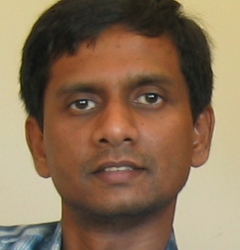 Ravi Kumar合作论文数Google Research14Alan Fekete合作论文数13
 Hui Fang合作论文数Department of Electrical and Computer Engineering, University of Delaware;Department of Computer and Information Sciences, University of Delaware;Institute for Financial Services Analytics, University of Delaware13
 Rosie Jones合作论文数Spotify13
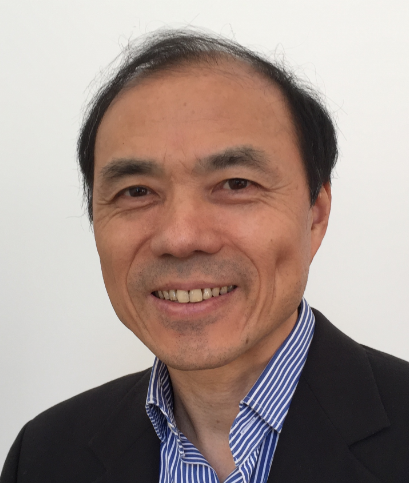 ChengXiang (Cheng) Zhai (翟成祥)合作论文数Department of Computer Science, Siebel School of Computing and Data Science, The Grainger College of Engineering, University of Illinois at Urbana-Champaign;Carl R. Woese Institute for Genomic Biology, Department of Statistics, School of Information Sciences, University of Illinois at Urbana-Champaign13
 H. V. Jagadish合作论文数Michigan Institute for Data & AI in Society, University of Michigan13
 Huahai Yang合作论文数SUNY, University at Albany13
 Marina Danilevsky合作论文数IBM Almaden Research Center12
 Craig Knoblock合作论文数Information Sciences Institute, University of Southern California12
 Iadh Ounis合作论文数School of Computing Science, University of Glasgow11
 Ronny Lempel合作论文数Google11
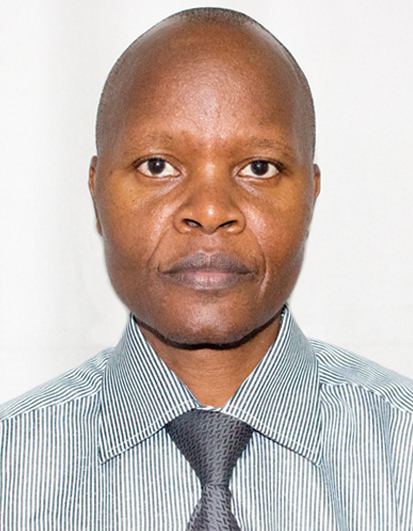 Stephen Kimani合作论文数Department of Computing, Jomo Kenyatta University of Agriculture and Technology11
 Andrei Broder合作论文数Google11
 Minos Garofalakis合作论文数Software Technology and Network Applications Laboratory, School of Electrical and Computer Engineering, Technical University of Crete;Information Management Systems Institute, ATHENA Research and Innovation Center11Alex Wun合作论文数11
 Marlon Dumas合作论文数Institute of Computer Science, University of Tartu;Apromore;Universidad de Los Andes10
 Stefano Rizzi合作论文数University of Bologna10
 Georg Gottlob合作论文数University of Calabria10
 Fabrizio Silvestri合作论文数Dipartimento di Ingegneria Informatica, Automatica e Gestionale, Università degli Studi di Roma "La Sapienza"10
 Carlo Zaniolo合作论文数Department of Computer Science, Samueli School Of Engineering, University of California, Los Angeles10
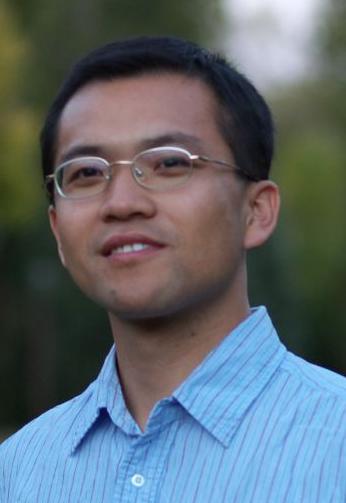 Xuehua Shen合作论文数10
 Heiko Schuldt合作论文数Databases and Information Systems Group, University of Basel10
 Peter Dadam合作论文数Institute of Databases and Information Systems, Ulm University10
 Eric Wohlstadter合作论文数Altiscale9
 Cartik R. Kothari合作论文数Department of Electrical and Computer Engineering, The University of Memphis9




