To address the need for high-precision modeling in digital twin battlefields, this study proposes a six-degree-of-freedom digital twin model of a fixed-wing aircraft. The model adopts a modular and component-based architecture, enabling separate modeling of key components such as the fuselage and wings to enhance modeling granularity and flexibility. An improved Euler method is applied to increase the accuracy of dynamic simulation. Environmental response mechanisms—including standard atmosphere, icing, and rainfall models—are incorporated to dynamically adjust the aircraft’s characteristics under complex conditions. A genetic algorithm is employed to optimize the PID controller, enabling adaptive tuning with limited parameters. The proposed approach is innovative in its integration of fine-grained modeling with complex environmental responses, effectively addressing the limitations of traditional models in terms of low granularity and insufficient environmental representation. Simulation results demonstrate that the model exhibits strong stability and responsiveness, offering reliable support for digital twin modeling of battlefield equipment.
Due to its potential application value, multi-UAV air combat missions have become a hot topic in the current military research field at home and abroad. With the rise of artificial intelligence and intelligent warfare, a series of UAV air combat decision-making methods based on deep reinforcement learning have been proposed by various countries. However, when the number of agents increases and the type of aircraft changes, the action space and state space of reinforcement learning will change, which will face the problem of poor stability of the training process and is extremely sensitive to hyperparameters (such as learning rate). Therefore, based on the traditional multi-agent reinforcement learning based on AC decision network, this paper improves the decision network, introduces curriculum learning and transfer learning, and proposes a multi-agent reinforcement learning decision framework that can converge quickly and improve training robustness.
With the rapid development of artificial intelligence and neural networks, deep reinforcement learning has achieved remarkable results in a series of complex sequential decision-making problems. The application of multi-agent reinforcement learning in air combat game scenarios is also booming. In the use of reinforcement learning for multi-agent air combat decision-making, the scalability and transferability of the model have become critical issues. Designing a multi-agent air combat decision-making framework with solid scalability, robustness, and rapid convergence has become a research hotspot in various countries. To address this problem, this paper proposes a multi-agent air combat decision-making framework based on attention mechanism transfer and designs a 2D air combat simulation environment for this framework. The decision-making process of this framework is divided into two stages. First, course learning is carried out in the designed essential air combat environment to enhance the aircraft's combat capability. Then, the trained strategy is transferred to a complex air combat environment for further training. Experiments have shown that this framework has better transferability and robustness.
The traditional generation of combat simulation scenarios often requires a manual understanding of conceptual scenarios and transformation into simulation scenarios. This method has the problems of long development time and high development threshold. Conceptual scenarios are usually visual Unified Modeling Language (UML) diagrams, so we can use artificial intelligence technology to extract key semantics from them, and automatically map the extracted semantics to simulation scenarios. This method is called the intelligent generation of combat simulation scenarios. To extract the key semantics from conceptual scenarios in UML form, we propose the UML diagram recognition method based on Keypoint Region-based Convolutional Neural Network (R-CNN). This method includes three parts: image character recognizer, primitive object detector, and image semantic extractor. First, we use optical character recognition (OCR) technology to achieve image character recognition. Second, we manually annotate the primitive target-detection dataset and propose a new primitive target-detection model—Keypoint R-CNN. This model considers the direction of connecting lines and realizes the detection of symbols and connecting lines. Third, we propose a targeted combined primitive detection and primitive relationship extraction method to extract the high-level semantics of UML diagrams. Then, we carried out experiments and evaluations on the self-made dataset. Compared with other methods, the F1 score of our method is improved by about 7%, and the Jaccard coefficient is improved by about 10%. Finally, we use a case study to implement the intelligent generation process of combat simulation scenarios using the UML recognition method we proposed. This case shows the operability and efficiency of our method. Our method greatly reduces the labor cost and development threshold of combat simulation scenario generation and improves the development efficiency of the combat simulation system.
The effectiveness of the Wolf Pack Algorithm (WPA) in high-dimensional discrete optimization problems has been verified in previous studies; however, it usually takes too long to obtain the best solution. This paper proposes the Multi-Population Parallel Wolf Pack Algorithm (MPPWPA), in which the size of the wolf population is reduced by dividing the population into multiple sub-populations that optimize independently at the same time. Using the approximate average division method, the population is divided into multiple equal mass sub-populations whose better individuals constitute an elite sub-population. Through the elite-mass population distribution, those better individuals are optimized twice by the elite sub-population and mass sub-populations, which can accelerate the convergence. In order to maintain the population diversity, population pretreatment is proposed. The sub-populations migrate according to a constant migration probability and the migration of sub-populations are equivalent to the re-division of the confluent population. Finally, the proposed algorithm is carried out in a synchronous parallel system. Through the simulation experiments on the task assignment of the UAV swarm in three scenarios whose dimensions of solution space are 8, 30 and 150, the MPPWPA is verified as being effective in improving the optimization performance.
To perform air missions with an unmanned aerial vehicle (UAV) swarm is a significant trend in warfare. The task assignment among the UAV swarm is one of the key issues in such missions. This paper proposes PSO-GA-DWPA (discrete wolf pack algorithm with the principles of particle swarm optimization and genetic algorithm) to solve the task assignment of a UAV swarm with fast convergence speed. The PSO-GA-DWPA is confirmed with three different ground-attack scenarios by experiments. The comparative results show that the improved algorithm not only converges faster than the original WPA and PSO, but it also exhibits excellent search quality in high-dimensional space.
The sky-wave radar uses the reflection effect of the ionosphere to achieve trans-horizon transmission, so its performance is directly affected by the ionospheric environment. In this paper, the latest ionospheric data model IRI2016 is used to generate electron density data, and a three-dimensional short-wave ray tracing algorithm based on Haselgrove equations is implemented. On this basis, an intelligent frequency selection model for fixed-point detection of the sky-wave radar under different ionospheric environments is established and the multipath phenomenon at different operating frequencies is also analyzed. MUF(Maximum Usable Frequency) calculated by the model is compared with the MUF obtained from the measured ionogram. The comparison shows the results calculated by the model are reasonable, which proves that the work done in this article can help the frequency selection of the sky-wave radar.
本文对"面向开源的四旋翼飞行器综合实验"课程的改革实践进行详细介绍,对教改的必要性、课程内容的确定、教学模式改革以及教学环节设计四个方面进行深度探讨.经过实践,教改工作获得了成功,其中对开源软硬件资源的合理应用、课程建设的生态化导向、对创新性实验的支持以及严格的进度监督4个因素是成功的主要原因.
Model reference adaptive control (MRAC) schemes are known as an effective method to deal with system uncertainties. High adaptive gains are usually needed in order to achieve fast adaptation. However, this leads to high-frequency oscillation in the control signal and may even make the system unstable. A robust adaptive control architecture was designed in this paper for nonlinear aircraft dynamics facing the challenges of input uncertainty, matched uncertainty, and unmatched uncertainty. By introducing a robust compensator to the MRAC framework, the high-frequency components in the control response were eliminated. The proposed control method was applied to the longitudinal-direction motion control of a nonlinear aircraft system. Flight simulation results demonstrated that the proposed robust adaptive method was able to achieve fast adaptation without high-frequency oscillations, and guaranteed transient performance.
Herein, we explore a new carbon source for preparation of carbon quantum dots (CQDs) with controllable composition using a porous organic polymer (POP) derived porous carbon via a nitric acid oxidation method. The POP used for the preparation of CQDs was synthesized by mechanochemical Friedel-Crafts alkylation under solvent free conditions. Using the as-prepared CQDs, we develop a simple and effective electrochemiluminescence (ECL) detection method for dopamine (DA) using a CQD/chitosan-graphene composite modified glassy carbon electrode (GCE). Both the electrochemical and ECL behaviors were studied in detail with ammonium persulfate as a coreactant. The complementary structure and synergistic function of the composite give the ECL sensor special properties. Apart from the high stability, it also presents good repeatability and high sensitivity to DA with a wide linear range from 0.06 to 1.6 μM. And a satisfactory detection limit of 0.028 μM (S/N = 3) was achieved for the prepared sensor. Furthermore, the ECL also shows high selectivity toward DA with an excellent interference resistance ability at a high concentration ratio of 100 (C interference : C DA = 100). In addition, the ECL sensor was successfully applied for effective detection and quantitative analysis of the actual dopamine in human body fluids for disease diagnosis and pathological studies.
Fast adaptation is commonly required in model reference adaptive control (MRAC) to handle uncertainties and achieve precise command tracking. High adaptive gain achieves fast adaption, and introduces high-frequency oscillation into the control signal. In this paper, we propose a robust compensator-based MRAC (R-MRAC) for an aircraft to tackle the problem of control signal high-frequency oscillation. First, the architecture of a standard MRAC with state augmentation is presented. Second, the control architecture is modified by introducing a robust compensator to guarantee transient performance of the closed-loop system. Finally, the proposed R-MRAC is applied to control the altitude of the aircraft with significant uncertainty in control effectiveness and aerodynamic coefficients. Numerical simulations results show that the proposed R-MRAC can effectively eliminate high-frequency oscillation. (c) 2019 American Society of Civil Engineers.
According to the nonlinear characteristic of ship motion, the ship motion pose will be disturbed by coupling, indefinite period, noise signals, chaotic and some other factors, which leads that it is hard to predict ship motion in the future precisely. Based on the above, and considering the sequence of ship movement, many neural networks have been applied in ship motion prediction, such as LSTM (Long Short-Term Memory, LSTM) and ESN (Echo State Network, ESN). However, there are problems in the parameter setting of ANN (Artificial Neural Network) algorithm, that how to update network parameters during training iterations of the network to avoid iterates getting into local optimum. LSTM with PSO optimization is proposed in this paper. Testing simulation results show that the combination LSTM and PSO improves the accuracy of ship motion prediction.
Human action recognition is an important field in computer vision. Skeleton-based models of human obtain more attention in related researches because of strong robustness to external interference factors. In traditional researches the form of the feature is usually so hand-crafted that effective feature is difficult to extract from skeletons. In this paper a unique method is proposed for human action recognition called Pixel Convolutional Networks, which use a natural and intuitive way to extract skeleton feature from two dimensions, space and time. It achieves good performance compared with mainstream methods in the past few years in the large dataset NTU-RGB+D.
Model reference adaptive control (MRAC) is known as a proper method to handle uncertainties of systems and achieve precision command tracking. However, actuator saturation of aircraft limits the ability of the adaptive controller in practice. In this paper, a modified automatic control architecture is presented for a class of aircraft in the presence of input saturation. The proposed controller is based on model reference adaptive control augmented with a modern anti-windup (AW) compensator. First, a standard MRAC with integral state feedback is described. Second, a Riccati-based AW compensator is employed to solve the input saturation problem. Finally, the control technique is applied to control the vertical acceleration of the aircraft with significant uncertainty in control effectiveness and matched uncertainties. Simulation results verify the performance of proposed method.
Here is reported the novel determination of hydrogen peroxide by electrochemiluminescence using a chitosan-graphene composite film doped cadmium-tellurium quantum dot modified glassy carbon electrode. The cadmium-tellurium quantum dots were studied by absorption and fluorescence spectroscopy. Scanning electron microscopy and electrochemical impedance spectroscopy were used to characterize the structure morphology of the composite matrix. The electrochemiluminescence emission was linear with the concentration of hydrogen peroxide in the range of 3.5x10(-7) to 1.1x10(-5)M with a determination limit of 2.1x10(-7)M. Furthermore, the modified electrode showed excellent reproducibility and stability.
Parachuting quality evaluation system is a solution to make an assessment after jump training.Parachute simulator data and sampling equipment data solve the problem that there is no training data,which make the parachuting quality assessment system possible.In this paper,in accordance with the need of system,we propose parachuting quality evaluation indicators.Then we use analytic hierarchy process (AHP) to analyze problems,and establish evaluation model.Finally use combination of the weights determining method that combines the subjective methods with the objective methods to determine the weights.The proposed skydiving assessment system makes up the blank of the parachute quality evaluation,and puts forward a new way for using skydiving simulator for training.
Recently, image simulation has widely attracted people's attentions. In this paper, we propose a novel statistical approach to remove salt-and-pepper noise. A statistic model of the number of noise pixels is built and the noise ratio of the corrupted image is estimated. To remove the noise, two steps including pixels analysis and noise removal are studied. Firstly, a statistical approach is proposed to analyse pixels to identify whether they are noise or not. Secondly, we adopt two different mean filters to remove noise with respect to corrupted images whose noise ratios are no more than 30% and above 30%, respectively. For a noiseless pixel, we keep its value unchanged. For a noisy pixel, we replace it with the mean value according to its corresponding noise ratio. Simulation results show that compared with some state-of-the-art methods, our method can effectively eliminate noise, hold more details and acquire larger values with two image quality metrics: peak signal to noise ratio and structural similarity.
The parachuting training system consists of software and hardware,to simulate the parachute training through head mounted display and operating equipment,combined with system modeling,kinematic computation,visual display and expert evaluation.Principle methods of head mounted display with human-computer interactive function and exploitation of Vega Prime inventive exploration on the information collection of viewpoint are conducted.It provides a real time training environment through the configuration of environmental effects,scene control,collision detection and driving information.
In order to remove salt-and-pepper noise, a novel fuzzy switching adaptive weighted mean filter is proposed to eliminate the noise effectively.The method includes two stages: noise detection and noise elimination.In the first stage, first pixels are differentiated into two kinds: noiseless pixels and possible noise pixels.For the second kind pixels, we use the method of the sum of absolute luminance difference with processed pixels next to it and introduce two thresholds to divide them into three categories, noiseless pixels, lightly corrupted pixels and heavily corrupted pixels.In the second stage, a D8 distance relevant fuzzy switching adaptive weighted mean filter is proposed to remove salt-and-pepper noise.The simulation results show that compared with some existing methods, our method can effectively eliminate salt-and-pepper noise, the results contain more details, and have higher values of two typical image quality metrics: peak signal-to-noise ratio (PSNR) and structural similarity (SSIM).Our method saves over 65% processing time compared with the adaptive weighted mean filter, which has the most similar results.
Building a human-computer interactive parachute simulator is an efficient way to avoid the high risk and high cost of field parachute training. In this paper, a novel dynamic recognition and simulation approach of parachute training is developed. Firstly we process the skeletal data acquired by Kinect and enforce the indication of the trainees' parachute posture, where principle component analysis (PCA) is used to extract the key features. Then continuous hidden Markov model (CHMM) is modified, combined with Gauss mixed model (GMM), to recognize parachute action dynamically. Viterbi algorithm is improved to implement the recognition, and action animation is conducted to verify the efficiency. Empirical results suggest that our method is exactly a viable alternative during the recognition of parachute training.
 Liang Han (韩亮)合作论文数Centrale Pekin, Beihang University24
 Xingren Wang合作论文数19
 Guanghong Gong (龚光红)合作论文数School of Automation Science and Electrical Engineering, Beihang University9
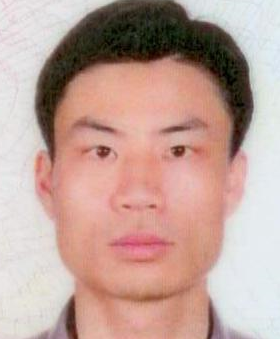 Xiao Song (宋晓)合作论文数School of Cyber Science and Technology, Beihang University7
 Daizheng Liao (廖代正)合作论文数Nankai University7XiaoYuan Peng (彭晓源)合作论文数6
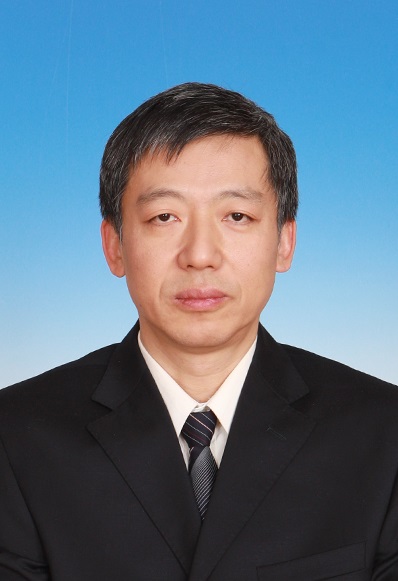 Wen Gu (顾文)合作论文数College of Chemistry, Nankai University6
 Yaofei Ma (马耀飞)合作论文数School of Automation Science and Electrical Engineering, Beihang University6WenZhen Wang (王文珍)合作论文数5
 Yi Wang合作论文数School of Automation Science and Electrical Engineering, Beihang University, Beijing, China4
 XuDong Chai (柴旭东)合作论文数China Aerospace Science and Industry Corporation Limited4Tongyu Zhu (诸彤宇)合作论文数4
 Xin Liu (刘忻)合作论文数School of Resources and Materials, Northeastern University at Qinhuangdao4Qianxiu Pan合作论文数3Yingtong Lu合作论文数3Jiao Chen合作论文数3
 Weihong Wang (王卫红)合作论文数School of Automation Science and Electrical Engineering, Beihang University3
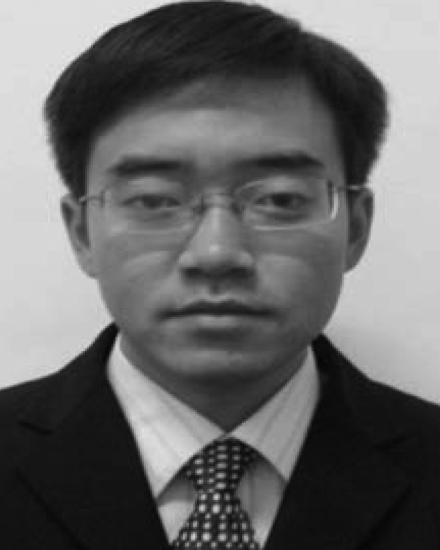 Dezhi Dong合作论文数3Wen-Zhen Wang合作论文数2
 Liuya Wei合作论文数2Yuan-Zheng Cheng合作论文数2Xuan Gong (公璇)合作论文数2Shidong Ma合作论文数2RongZhen Jia (贾荣珍)合作论文数2Fenglian Zhang合作论文数2
 Ni Li (李妮)合作论文数School of Automation Science and Electrical Engineering, Beihang University2Hua Xiang (向化)合作论文数2
 Bohu Li (李伯虎)合作论文数School of Automation Science and Electrical Engineering, Beihang University2Zhenping Zhou (周振平)合作论文数2
 Wei Zhang合作论文数College of Veterinary Medicine, China Agricultural University2Honglei Luo (罗红磊)合作论文数2Dongdong Gao (高栋栋)合作论文数2
 michael xuelin huang (黄学霖)合作论文数Google, Mountain View2Pei-Pei Yang合作论文数2Meijia Wang合作论文数1Hui Li合作论文数1Yafang Zou合作论文数1Xingyu Tian合作论文数1Yunbo Gao合作论文数1Xintong Zhao合作论文数1Lin Xin合作论文数1Zong-Hui JIANG (姜宗慧)合作论文数1Bo Yang (杨博)合作论文数1Yuan MAO (毛媛)合作论文数1Ping Zhang (张平)合作论文数1Yang Ming合作论文数1Zhilu Xu合作论文数1




