BACKGROUND:In recent years, the endeavour to stimulate positive emotions, regulate negative emotions, and facilitate the learning of elementary school students through emotional design has attracted a lot of attention. AIMS:The purpose of this study was to investigate the effects of warm colours and anthropomorphism as emotional design elements on multimedia learning, and whether combining a positive pedagogical agent with positive learning materials would be better. SAMPLES:Experiment 1 recruited 203 elementary school students. Experiment 2 recruited 140 elementary school students. METHODS:Experiment 1 employed a 2 (Colours: warm vs. grayscale) × 2 (Anthropomorphism: with vs. without) between-subjects design. Experiment 2 employed a 2 (Learning materials: positive vs. neutral) × 2 (Pedagogical agent: positive vs. neutral) between-subjects design. RESULTS:Results of Experiment 1 showed that warm colours reduced boredom and anxiety; anthropomorphism increased enjoyment, intrinsic motivation, and mental effort, and reduced boredom; their combination facilitated retention and transfer performance. Results of Experiment 2 revealed that combining a positive pedagogical agent with positive learning materials ameliorated learners' overall emotional experiences, but did not significantly affect retention and transfer performance. CONCLUSIONS:Incorporating both warm colours and anthropomorphism as emotional design elements yielded the most favourable impact in designing positive learning materials. Integrating emotional design approaches to both learning materials and pedagogical agents could be conducive to happy and effective learning, showing the importance of holistic approaches to emotional design in educational settings.
Under the guidance of the student-centered education philosophy, understanding students’ emotions and needs is the key to improving the quality of teaching and promoting the development of personalized education. However, classroom emotion recognition faces challenges such as large numbers of people and occlusion in natural classroom environments. For this reason, this study develops student emotion recognition algorithms adapted to the classroom environment. First, the YOLOv8 model was improved by introducing the MCC module and the WIoUv3 loss function to enhance the detection accuracy and efficiency of the model. Second, a multi-channel emotion recognition network (MultiEmoNet) was developed to improve the accuracy of emotion recognition by combining facial expression, skeletal information, and environmental information. The experimental results show that the improved model performs well in various indexes and can better adapt to the classroom environment, with a view to promoting the development of classroom emotion recognition technology, providing a scientific basis for personalized teaching strategies, and enhancing the effectiveness of teaching.
In the process of deepening the reform of higher education, the classroom plays an important role as the core teaching place. The application of teaching behaviors has a direct impact on the effectiveness of classroom teaching, and teaching behavior analysis, which improves the efficiency of teaching behaviors by exploring the laws of teaching behaviors of teachers and students, is an indispensable aspect in current classroom teaching research. In addition, the university technology theory classroom puts higher requirements on both teaching and learning than the basic education classroom. Based on the above background, the article formulated a teaching behavior table based on the previous research framework, calculated the students’ emotional engagement through the identification model of CoAtNet, and analyzed the teaching behaviors and student engagement in five university technology theory classrooms by combining the classroom observation method and grey relational analysis (GRA). The results of the study shows that the five teaching behaviors of Teaching, Board Writing, Reflection, Evaluation, Response and Teacher’s Question have a strong correlation with student engagement, which provides an important reference basis for the subsequent improvement of teaching behaviors to enhance students’ engagement.
Emotion recognition is critical to understanding students’ emotional states. However, problems such as crowded classroom environments, changing light, and occlusion often affect the accuracy of recognition. This study proposes an emotion recognition algorithm specifically for classroom environments. Firstly, the study adds the self-made MCC module and the Wise-IoU loss function to make object detection in the YOLOv8 model more accurate and efficient. Compared with the native YOL0v8x, it reduces the parameters by 16% and accelerates the inference speed by 20%. Secondly, in order to address the intricacies of the classroom setting and the specific requirements of the emotion recognition task, a multi-channel emotion recognition network (MultiEmoNet) has been developed. This network fuses skeletal, environmental, and facial information, and introduces a central loss function and an attention module AAM to enhance the feature extraction capability. The experimental results show that MultiEmoNet achieves a classification accuracy of 91.4% on a homemade classroom student emotion dataset, which is a 10% improvement over the single-channel classification algorithm. In addition, this study also demonstrates the dynamic changes in students’ emotions in the classroom through visual analysis, which helps teachers grasp students’ emotional states in real time. This paper validates the potential of multi-channel information-fusion deep learning techniques for classroom teaching analysis and provides new ideas and tools for future improvements to emotion recognition techniques.
During the teaching process, the prosodic features of a teachers speech can influence students auditory perception of the teachers speech and, subsequently, affect students enthusiasm, concentration, and comprehension of the lesson content. This study aims to analyze the differences in prosodic features, including pitch, intensity, pauses, and speech rate, among speech samples from different categories of teacher instructional videos. The research algorithm is implemented in Python to calculate prosodic feature values for speech segments. Comparative data analysis revealed that, in comparison to negative teacher instructional video speech samples, positive teacher instructional video speech samples exhibit significantly higher average fundamental frequencies (pitch) and more noticeable variations in speech rate rhythm.
Due to the impact of the COVID-19 pandemic, many students are unable to attend face-to-face courses, Therefore, in this case, distance education should be promoted to replace face-to-face education. However, because of the imbalance of education in different regions, such as the imbalance of education resources between rural and urban areas, the quality of distance education may not be guaranteed. Therefore, in China and some regions, there have been efforts made to carry out blended synchronous classroom attempts. In hybrid synchronous classroom situations, teachers’ workloads have increased, and it is difficult to fully understand students’ learning efficiency and class participation. We use deep learning to identify the behaviors of teachers and students in a blended synchronous classroom-based situation, aiming to automate the analysis of classroom videos, which can help teachers in classroom reflection and summary in a blended synchronous classroom or face-to-face classroom. In the behavior recognition of students and teachers, we combine the head, hand, and body posture information of teachers and students and add the feature pyramid (FPN) and convolutional block attention module (CBAM) for comparative experiments. Finally, S–T (student–teacher) analysis and engagement analysis were carried out on the identification results.
A series of unplugged programming courses based on game activities has been designed and developed to reduce the difficulty of programming courses in elementary school and to develop computational thinking skills in elementary school students. Four components were designed for the course: course objectives, course content, course activities, and course evaluation. A controlled experiment was performed to validate the course's influence on developing learners' computational thinking, and a questionnaire was employed to examine the experimental class learners' experience with the course. The results found that the level of computational thinking in the experimental class was also significantly different from the pretest, and the students in the experimental class rated each item of the course above 7 points. This indicates that this course has a significant effect on cultivating students' computational thinking, and the learners had a good learning experience and made gains from this course.
Engagement plays an essential role in the learning process. Recognition of learning engagement in the classroom helps us understand the student’s learning state and optimize the teaching and study processes. Traditional recognition methods such as self-report and teacher observation are time-consuming and obtrusive to satisfy the needs of large-scale classrooms. With the development of big data analysis and artificial intelligence, applying intelligent methods such as deep learning to recognize learning engagement has become the research hotspot in education. In this paper, based on non-invasive classroom videos, first, a multi-cues classroom learning engagement database was constructed. Then, we introduced the power IoU loss function to You Only Look Once version 5 (YOLOv5) to detect the students and obtained a precision of 95.4%. Finally, we designed a bimodal learning engagement recognition method based on ResNet50 and CoAtNet. Our proposed bimodal learning engagement method obtained an accuracy of 93.94% using the KNN classifier. The experimental results confirmed that the proposed method outperforms most state-of-the-art techniques.
The traditional coding process requires mechanical observation and categorization of the various utterances produced in the classroom. Both the judgment and the professionalism of education of the coders are very challenging. With the development of Automatic Speech Recognition (ASR) and natural language processing (NLP). It is possible for researchers to automate the recognition of speech acts in the classroom. There are also many related studies, but they have not been able to complete the automatic recognition of the classroom interaction speech act(CISA). In order to solve problems, our research proposes a practical CISA coding system. And according to this system, a related CISA dataset is established. A Multi-text classification(MTC) model called Bert-TextConcat is proposed for training on the constructed dataset. The trained model performs automatic classification of CISA while referring to the above. After experiments, We demonstrate the effectiveness of the BertTextConcat model and CISA coding systems.
A new spectral-spatial hyperspectral image (HSI) classification method called hierarchical broad learning system (HBLS) has been proposed in this paper. Specifically, it combines wavelet, broad learning system (BLS) and Gabor filters into a hierarchical structure. First of all, wavelet is used to reduce the observation noise of HSIs. Then BLS is adopted to acquire a set of pixelwise probability maps from the input data, and Gabor filters are used to explore spatial information by refining these probability maps. These two operations (BLS and Gabor filtering) are alternated to form a hierarchical architecture. And the discriminative spectral-spatial features can be extracted at each layer of the hierarchical architecture. Finally, the spectral-spatial features are fed into the standard BLS for classification. Experimental results on three widely used HSIs reveal that HBLS outperforms some state-of-the-art methods in terms of classification accuracy and sample complexity.
智慧教室位置不仅是一个物理坐标,而且具有丰富的内涵,其特征涉及高低交互区、与讲台与媒体的距离等.然而,学习者对这些特征的偏好是如何与其内部学习动机相关联尚需要进一步挖掘.基于此,文章以H大学102名本科生为研究对象,探讨了学生在"圆桌式"、"秧苗式"两种智慧教室布局下座位偏好与学习动机之间的关系,结果发现:两种布局都存在座位选择的偏好区域与非偏好区域;学生的自主动机高于受控动机,学习动机水平较高;学生的学习动机与高低交互区、距离讲台远近的座位偏好显著相关,但与距离屏幕远近的座位偏好关系不显著.此结论有助于改进智慧教室空间设计,同时,为富媒体环境下如何扩大交互区域、激发学习动机提供一定的方向与参考.
反思是培养创新能力的重要方式,利用学习日志进行反思是促进深度学习的重要途径.针对学生利用学习日志进行自主反思时存在片面化、碎片化等问题,且难以促进学习者的深度反思,探讨学习日志反思脚手架设计方法,以帮助学习者提高反思水平,从而促进其实现深度学习.在文献综述的基础上提出反思脚手架的三个设计原则:全面性、递进性和引导性,并构建学习日志反思脚手架,具体包括"内容反思""过程反思""前提反思"三个维度;其次,将其用于某高校在线实验课程中,将学生分为高成绩组和低成绩组,从反思水平、学习效果两方面验证其有效性.结果表明,学习 日志反思脚手架解决了反思内容片面性、碎片化的问题,实现了反思内容的系统化,能够显著提升学习者的反思水平及学习效果.
移动互联网+教育促进了教育数据采集方法的革新.移动经验取样法是一种移动技术与经验取样方法相结合的纵向即时数据采集方法.本研究在系统梳理移动经验取样法的理论基础、取样方法和相关工具的基础上,重点对情境感知移动经验取样工具的功能流程和关键技术进行重点分析,设计并实现了一款指向真实学习情境的教育即时数据采集工具.该工具以智能终端为信息采集载体,实现随机取样、间隔取样、基于事件的取样和设备取样四种取样方式.接着,从感知有用性与感知易用性两个方面,通过焦点小组讨论对工具进行了评价与完善,并对工具的功能进行了横向比较.最后,对工具的应用进行了展望,以期为移动经验取样工具的本土化研究及应用提供借鉴与参考.
混合式研修已经成为新时代深化教师队伍建设、助力教师专业发展的一种常规研修方式.教师研修满意度是一个受教师个体特征、研修过程和结果感知等多种因素影响的复杂概念.首先,本研究基于文献综述探讨了教师研修满意度的内涵及影响因素,并提出了研修动机、感知支持、学习获得、感知有用性、感知易用性和研修态度六项变量的教师参与混合式研修满意度的影响因素假设.其次,采用问卷调查法收集数据,并利用主成分分析、相关分析、逐步多元回归分析等对研究假设进行分析与验证.结果表明:(1)教师的感知有用性、学习获得、感知支持对混合式研修的满意度有积极影响,并具有较强预测作用;(2)教师的感知易用性的预测作用较弱;(3)教师研修动机、研修态度与混合式研修满意度之间存在正向相关关系,但不具有预测作用;(4)学段差异显著影响混合式研修满意度.最后,研究从提高线上资源质量、加强线下实践成效、实施精准研修三个方面为提升教师混合式研修满意度提出了若干建议.
Online learning has become a significant way for learners to acquire knowledge, which enables anybody to learn anywhere and anytime. However, how to choose appropriate content for learning is an interesting issue, especially when one faces massive online learning resources. With this regard, deep learning-based personalized learning resources recommendation has become an effective approach to handle this problem. In this paper, deep learning-based personalized learning recommendation technology in the field of education is thoroughly analyzed, and some limitations of recent studies as well as future works, then, are reported and predicted respectively. The study would provide suggestions for future research on deep learning-based personalized learning recommendations.
利用计算机视觉技术和机器学习技术对学生课堂行为进行自动识别,是过程性评价的一种新方法,近年来逐渐引起了研究者的关注.文章以监控设备拍摄的实际课堂教学视频为数据源,采集、标注了学生课堂行为数据,提取了学生的人体骨架信息.在此基础上,文章采用Boosting算法和卷积神经网络算法,对基于这两类不同机器学习算法的5种模型进行了学生课堂行为自动识别准确率实验.实验结果表明,在学校教室这种识别比较困难的场景,基于人体骨架信息提取的学生课堂行为自动识别可以达到较高的精度,其中基于Boosting算法的XGBoost模型识别准确率最高.文章的研究推动了计算机视觉技术和机器学习技术的进一步应用,有助于解决学生课堂行为自动识别难题,并助力教师优化教学策略、提高教学效率.
在网络研修社区的对话反思数据中,蕴含着教师对于整合技术的学科教学知识(TPACK)的丰富、客观和协同的认知.依据TPACK框架,对网络研修社区中教师的对话反思数据进行结构化编码,并应用认知网络分析法(ENA)探索教师的认知框架模式,可以得到教师TPACK特征的最自然的评判.采集网络研修社区"齐心协力工作坊"中的教师对话数据,依据TPACK框架对数据进行编码,探索了教师认知行为的分布特征.再采用认知网络分析,探索了高低分组、不同年龄组、评论和回帖组教师的认知网络结构特征.研究发现教师对话的知识类型主要是学科教学法知识和一般教学法知识.高分组教师的PK-PCK、PK-TPACK、CK-PCK连线系数较高,TPACK更加灵活,低分组教师则更关注技术知识与学科教学法知识的结合.低年龄组教师的PK-PCK、PCK-TPACK连线系数较高,而高年龄组教师的PK-TPACK、CK-PCK、TPK-PCK连线系数较高.回帖组教师的认知网络中各元素的连线系数均较高.认知网络分析法为大数据支持的学习分析与评价提供了一种新范式.
Learning discriminative features for visually similar classes is crucial for fine-grained image recognition tasks. Bilinear pooling models use the outer product of embedding features to enhance the representation capability and achieve favorable classification performance. However, these models cause exceedingly high dimensionality of features which makes them impractical for large-scale applications and may result in overfitting. This article proposes a feature correlation residual method to mine the channel and spatial correlation of embedding features without increasing the dimensionality of features. For this purpose, each channel/location of the embedding features in the residual module is determined by its channel/spatial correlation to all other channels/locations. Then, the correlation residual features are used to complement the original ones. In addition to cross entropy loss, batch nuclear norm loss and triplet loss based on the extracted features are used as regularization to alleviate overfitting, enlarge inter-class variations and reduce intra-class variations. Experimental results show that our method achieves state-of-the-art performances on some popular datasets for fine-grained image recognition.
With the development of internet technology and physiological signal technology in the era of big data, exploring the correlation between human physiological information and teaching process has become a new hot spot in the field of education. The article expounded the physiological signals and their characteristics; and investigated the principles, applications and future research direction of physiological information analysis method such as heart rate detection analysis, eye-tracking technology, galvanic skin response and electroencephalography. In the end, this paper presented the big data characteristics, portability, integration, group characteristics of physiological information analysis, and the development trend of educational neuroscience research.
Observing student body gesture has been widely used to assess teaching effectiveness over the past few decades. However, manual observation is not suitable for the automatic data analysis in the field of learning analytics. Consequently, a student body gesture recognition method based on Fisher Broad Learning System (FBLS) and Local Log-Euclidean Multivariate Gaussian (L 2 EMG) is proposed in this paper. FBLS is designed by introducing the discriminative information into the hidden layer of Broad Learning System (BLS) and reducing the dimensionality of hidden-layer representations. FBLS has superiorities in accuracy and speed. In addition, L 2 EMG, which is a highly distinctive descriptor, characterizes the local image with a multivariate Gaussian distribution. So L 2 EMG features are fed into the FBLS for recognition in this paper. Extensive experimental results on self-built dataset show that the proposed student body gesture recognition method obtains better results than other benchmarking methods.
 Qingtang Liu (刘清堂)合作论文数Faculty of Artificial Intelligence in Education, Central China Normal University14
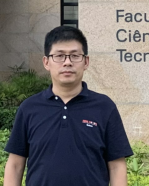 Yantao Wei (魏艳涛)合作论文数Faculty of Artificial Intelligence in Education, Central China Normal University7
 Linjing Wu (吴林静)合作论文数Faculty of Artificial Intelligence in Education, Central China Normal University6
 Yuchen Yan (鄢煜尘)合作论文数Electronic Information School, Wuhan University6
 Feng Yuan合作论文数5Yankai Tu合作论文数4
 Si Zhang (张思)合作论文数Hubei Research Center for Educational Information, School of Educational Information Technology, Faculty of Artificial Intelligence in Education, Central China Normal University4
 Huang Yao (姚璜)合作论文数Faculty of Artificial Intelligence in Education, Central China Normal University4
 Guoqing Lu (卢国庆)合作论文数College of Education Technology and Communication, Northwest Normal University3Jiazhen Xu (徐家臻)合作论文数Faculty of Artificial Intelligence in Education, Central China Normal University3
 Mingwen Tong (童名文)合作论文数Faculty of Artificial Intelligence in Education, Central China Normal University3
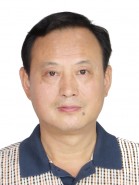 Qinghu Chen (陈庆虎)合作论文数Institute of Condensed Matter Physics, School of Physics, Zhejiang University3Meijuan Liu合作论文数2HaoYi He (何皓怡)合作论文数2JiaoJiao Wang (王娇娇)合作论文数2
 Liang Huang (黄亮)合作论文数School of Transportation and Logistics Engineering, Wuhan University of Technology;National Engineering Research Center for Water Transport Safety, School of Navigation, Wuhan University of Technology;Intelligent Transportation Systems Research Center, Wuhan University of Technology2
 Xiaoqiao Luo (罗小巧)合作论文数College of Physical Science and Technology, Central China Normal University2
 Donghui Pan (潘东辉)合作论文数School of Mathematical Sciences, Anhui University2Ni Zhang (张妮)合作论文数1Hairu Yang合作论文数1Yueru Lang (郎悦茹)合作论文数1Shu-yan ZHOU (周姝言)合作论文数1Yixue Hao合作论文数1Mengsiying Li合作论文数1Jiu-ming XIONG (熊久明)合作论文数1DENG Guan-qun (邓冠群)合作论文数1Xinxin Zheng合作论文数1mengge ding (丁梦鸽)合作论文数1Wenling Dai (戴雯玲)合作论文数1Yue Chen (陈越)合作论文数1Lu DENG (邓露)合作论文数1JIANG Long (姜龙)合作论文数1Qi Luo合作论文数1Yafei Shi合作论文数Cent China Normal Univ, Sch Educ Informat Technol, Wuhan 430079, Hubei, Peoples R China1GuangRun Xiao (肖光润)合作论文数1XiangYu Wu (吴翔宇)合作论文数1HongWei Shi (石宏伟)合作论文数1Yang Wang (王洋)合作论文数1
 Shaoying Gong (龚少英)合作论文数School of Psychology, Central China Normal University1
 Dan Xia (夏丹)合作论文数Faculty of Artificial Intelligence in Education, Central China Normal University1
 Gang Zhao (赵刚)合作论文数Faculty of Artificial Intelligence in Education, Central China Normal University1Lijuan Liao合作论文数1
 Zhifeng Wang (王志锋)合作论文数Faculty of Artificial Intelligence in Education, Central China Normal University;School of Educational Information Technology, Central China Normal University1Yaowu Luo合作论文数1
 Tiantian Chen合作论文数Beijing University of Aeronautics and Astronautics, Beijing Univ. of Aero. and Astron.1
 Wanhui Yu (余婉卉)合作论文数School of Philosophy, Wuhan University1Yunfei He (何云飞)合作论文数1Chaowang Shang (上超望)合作论文数School of Educational Information Technology, Central China Normal University1




