Vision-based underwater exploration is crucial for marine research. However, the degradation of underwater images due to light attenuation and scattering poses a significant challenge. This results in the poor visual quality of underwater images and impedes the development of vision-based underwater exploration systems. Recent popular learning-based Underwater Image Enhancement (UIE) methods address this challenge by training enhancement networks with annotated image pairs, where the label image is manually selected from the reference images of existing UIE methods since the groundtruth of underwater images do not exist. Nevertheless, these methods encounter uncertainty issues stemming from ambiguous multiple-candidate references. Moreover, they often suffer from local perception and color perception limitations, which hinder the effective mitigation of wide-range underwater degradation. This paper proposes a novel NUAM-Net (Novel Underwater Image Enhancement Attention Mechanism Network) that addresses these limitations. NUAM-Net leverages a probabilistic training framework, measuring enhancement uncertainty to learn the UIE mapping from a set of ambiguous reference images. By extracting features from both the RGB and LAB color spaces, our method fully exploits the fine-grained color degradation clues of underwater images. Additionally, we enhance underwater feature extraction by incorporating a novel Adaptive Underwater Image Enhancement Module (AUEM) that incorporates both local and long-range receptive fields. Experimental results on the well-known UIEBD benchmark demonstrate that our method significantly outperforms popular UIE methods in terms of PSNR while maintaining a favorable Mean Opinion Score. The ablation study also validates the effectiveness of our proposed method.
In this work, an adaptive learning robust controller is proposed to suppress the vibration of offshore platforms, which are subject to waves, winds, varying control delays and parametric perturbations. To realize nonlinear uncertainty approximation under the bounded H-infinity performance, the H-infinity controller incorporates both an online adaptive part and an offline fixed part. The adaptive part constructed by neural networks adjusts online, while the fixed part is obtained by regulating the H-infinity performance. Importantly, adaptive updating strategy does not require accurate values or upper bounds for real-time control delay or uncertainty. Several comparable experiments demonstrate the feasibility and effectiveness in vibration-suppression of the designed adaptive controller in shallow/deep water. This scheme significantly reduces system response variations due to structural and hydrodynamic uncertainty, as well as additional random environmental forces caused by winds.
Urban Growth Boundaries (UGBs) are a tool to control urban sprawl. However, the way to optimize future urban land uses and fix their boundaries is not clear. This paper presents a new framework to delimit UGBs while accounting for ecological, economic, and carbon storage benefits. Aggregate land-use constraints are included in a multi-objective optimization algorithm to capture non-inferior solutions on the Pareto Surface (PS) under different objective scenarios. A patch-level cellular automata simulation model is then used to spatially allocate these land uses, followed by a new two-step adjustment method to delineate the UGBs. This modeling is applied to Wuhan, China. The results show that: (1) One district (Caidian) will have a strong economic growth under low-carbon development. (2) The maximization of carbon storage reduces losses in ecological benefits, suggesting that carbon storage be considered in urban growth planning. (3) The combined model framework and two-step boundary adjustment method can help urban planners define different UGB scenarios and make science-based policy decisions.
This article deals with collision-risk-based event-triggered optimal formation control problems for mobile multiagent systems. First, several collision-risk-related definitions, such as collision-free margin, moving direction angle, collision risk angle, and collision risk level, are proposed for the moving agents. Then, a collision-risk dependent, time-varying, event-triggered heterogeneous communication network topology is developed, where the agent starts obtaining information of the neighboring agents only when collision risks occur among them. Third, an anti-collision control law, which is composed of a switch function, a control force direction function, and a control strength function, is designed to guarantee the collision avoidance formation of multiagents. Fourth, to ensure the formation quality and save control cost of the multiagent system, an optimal formation control scheme with feedforward compensation is designed. Simulation results illustrate that: 1) by using the collision risk information of mobile agents, the proposed control scheme is effective to realize the collision avoidance optimal formation task and 2) the anti-collision formation controller can be implemented with incomplete information of the agents.
Adaptive control methods are suitable for offshore steel structures subject to harmful vibrations, as they employ reference models to adapt to coastal and nearshore physics. To decrease the dependence on the accurate characteristics of the offshore platform, a compensating measure containing the ocean environment is proposed in the adaptive control scheme. With incomplete states as the driving input, external loads are approximated using a wavelet neural network frame. Numerical experiments are conducted on a platform model with varying parameters to test the performance of the proposed adaptive controller. It is shown that the adaptive weights derived from the chosen Lyapunov function are qualified both theoretically and practically. The system-output-based adaptive controller overcomes the disadvantage of state loss. The compensated disturbance environment guarantees the reliability of the restored reference system based on mismatched physics. The designed estimator as a part of the adaptive controller compensates for the deviations of the environment between the reference and the practical, resulting in a desirable reduction in the excessive vibration.
Marine structures are inevitably influenced by parametric perturbations as well as multiple external loadings. Among these loadings, earthquake is generally more destructive and unpredictable than others. It is significant to develop effective active control schemes to guarantee the safety, stability, and integrity of marine structures subject to earthquakes and parametric perturbations. In this paper, the problem of networked [Formula: see text] robust damping control is addressed to stabilize a marine structure subject to earthquakes. First, in consideration of perturbations of the structure parameters, an uncertain model of the networked marine structure under earthquakes is presented. Second, a robust networked [Formula: see text] control scheme is presented to suppress seismic responses of the structure. By using stability theory of time-delay systems, several sufficient conditions on robust stability of the networked marine structure system are obtained, and the linear matrix inequality methods are utilized to solve the gain matrix of the controller. Finally, simulation indicates that compared with the traditional robust [Formula: see text] control and the proposed networked [Formula: see text] control, the seismic responses amplitudes of the marine structure under the two controllers are almost the same, while the latter is more economic than the former.
In view of the large number of registered readers and the huge amount of books in smart libraries, this paper is concerned with clustering analysis of readers and books. First, the classifications for readers and books of smart libraries are investigated from multiple dimensions, and the complexity of the classifications is analyzed. Then a hierarchical clustering strategy based on event triggering is proposed, the clustering algorithms and event based on clustering algorithm trigger mechanism are analyzed in detail. Finally, the simulation results of the clustering strategy are given by using the data of some readers and book borrowing volume of a university library.
In this paper, we investigate the vibration control problem in an offshore platform control structure. A model predictive controller is designed under internal model principle (IMP) and model predictive control (MPC) on the basis of linear quadratic optimal theory, where a rolling-optimized observer is taken to observe and estimate mixed external disturbance. Firstly, a steel jacket offshore platform is modelled as a single-degree-of-freedom (SDOF) vibration system subjected to varying waves and winds containing sensing delay. And the process of finding a vibration suppression controller is summarized as a global optimization problem. Secondly, an optimal quadratic regulator is proposed to attenuate the structure vibration, which naturally adopts IMP considering the varying dynamics of marine disturbance. Data-driven MPC method is then adopted to deal with leading disturbance items. Thirdly, a rolling-horizon optimal algorithm is applied to the proposed disturbance observer so that desired predictive states in deriving the optimal control law are obtained regardless of disturbance sensing delay. Lyapunov stability of the proposed control strategy is proved and comparable simulation experiments are conducted with other controllers.
Abstract In this paper, an adaptive learning H∞ controller is proposed to attenuate the wave-wind-induced vibration of a jacket offshore platform with varying control delay and structured uncertainty. A novel scheme is proposed regarding bounded H∞ performance and nonlinear uncertainty approximation online, incorporated with adaptive and fixed parts respectively. The adaptive part is self-adjusting based on neural network updating laws, and the fixed part is derived through minimizing the generalized H∞ disturbance attenuation index. In the presented scheme, accurate values of real-time control delay and upper-bounds of uncertainties are not necessarily required. The stability of controller is proved by Lyapunov functions following the simulation results. Comparable experiments efficiently illustrate feasibility and vibration-attenuation effectiveness of the proposed approach in both shallow and deep water.
This paper deals with the optimal formation control problem based on model decomposition for multiple unmanned aerial vehicles (UAVs). The main contribution of this paper is to integrate the formation control and the trajectory tracking into one unified feedforward control and feedback control framework in an optimal mode. We first establish the dynamic model of the leader-follower UAV formation system, and the communication network topology which only depends on the position information given by the leader. Second, to reduce the complexity of the model, each follower is decomposed into three isolated subsystems. Third, a step-by-step formation controller design scheme decomposed into feedforward control and optimal control of formation control is proposed. Finally, the proposed scheme has been extensively simulated and the results demonstrate the stability and the optimality.
In deepwater-drilling engineering, it is necessary to disconnect the bottom equipment of the lower marine-riser package from the blowout preventer when encountering multi-hazard environmental factors. In order to reduce the impact of recoil on the drilling platform after the sudden disconnection of the riser, in this paper, an optimal guaranteed cost H∞ recoil control problem is considered for the drilling riser. First, a three-element mass-damper-spring deepwater-drilling riser model subject to fluid discharge and heave motion of offshore platform is given. Then, an optimal guaranteed cost H∞ controller (OGCHC) is designed to suppress the recoil response of the drilling riser, and the sufficient conditions for the asymptotic stability of the closed-loop system are derived. Third, it is found through simulation results that the designed OGCHC can reduce the recoil response effectively. In order to further analyze the advantages of the OGCHC, the performance indices of the riser without active-recoil control and with optimal control (OC) and OGCHC are compared. It is shown that the average response amplitudes of three mass blocks of the riser are almost the same, while the control cost by the OGCHC is less than that by the OC. Further, under the designed recoil control, no riser compression occurs, thereby ensuring the safety of the riser system.
To improve the coverage efficiency of mobile agents, the related information of the agents is generally required partially or completely during the coverage control process, which may lead to a dramatic control cost and energy consumption increase. How to balance the improvement in coverage rate and the reduction of control cost is an important issue in the coverage control area of mobile agents. This paper addresses the dynamic cooperative game coverage control algorithm design problem of a multi-agent system under an incomplete information condition. First, by separating the moving multi-agent system into several subgroups, where each agent can only obtain the position information of the neighbor agents, the coverage control problem of the moving multi-agent system is transformed into a dynamic cooperative game coverage problem of moving multi-groups under incomplete information conditions. Then, the cooperative game rules of the subgroups are presented, and a virtual repulsive force-based dynamic coverage game decision strategy of the agent system is developed to compute the new candidate positions of the agents. Third, the moving multi-agent system is considered a rigid virtual structure, and the coverage control problem of the system is turned into a new one with the virtual structure as a reference frame. Thus, the displacement path planning design of the coverage control for a multi-agent system is simplified. Simulation results reveal that the dynamic cooperative game coverage algorithm based on the virtual repulsive force can effectively realize the coverage control requirement of the moving agent system under the incomplete information condition and can remarkably reduce the cost of coverage control. In addition, compared with several existing coverage algorithms, using the dynamic cooperative game coverage algorithm proposed in this paper requires fewer moving times of agents while obtaining a higher coverage rate.
The service life of floating production platforms can be substantially shortened due to undesirable excessive vibrations caused by dynamic loads. It is thus necessary to develop effective vibration reduction methods for floating production platforms. This article proposes a network-based active control approach for a spar-type floating production platform (SP) against wave exciting loads and deception attacks. First, a novel active tuned heave plate (ATHP) mechanism based on the concept of the active tuned mass damper is developed for the SP. Second, in the context of networked control of the SP-ATHP system, an event-triggering transmission mechanism is introduced to significantly improve communication efficiency. Meanwhile, a Bernoulli distribution and a nonlinear function are employed to character possible deception attacks in shared communication channels. Then, by modelling the network-based closed-loop SP-ATHP system as a time-delay stochastic system, its stability and H∞ performance analysis is derived. Besides, some criteria are obtained to co-design the triggering mechanism and the H∞ controller. Finally, simulation studies demonstrate that compared with some existing heave plate mechanisms, the designed event-triggered H∞ controllers under this ATHP mechanism are more effective to suppress heave motions of the platform and save network resources and control expenditure. Furthermore, even though there are deception attacks, the proposed scheme can still guarantee satisfactory system performance.
研究移动机器人在狭窄通道环境下的定位和路径规划问题.首先,根据在书架和图书上预置的射频识别(RFID)标签,利用RFID技术提出了确定书库管理机器人位置和姿态的方法.然后,根据书库的书架间通道狭窄的特点,将书库管理机器人的行驶状态分解为匀速直线运动和原地匀速旋转运动,并给出了机器人匀速直线运动和原地匀速旋转运动的用时模型.最后,提出一种书库管理机器人从任意起始位置和姿态到达任意目标位置的最小用时路径规划算法.仿真结果表明,本文提出的路径规划算法是有效的.
研究线性系统在正弦扰动下的扰动抑制问题.对于一类受正弦扰动的n阶线性系统,提出了一种具有二阶动态特性的状态反馈控制算法.设计的动态反馈控制律结构由两部分构成.首先利用内模原理,在控制器中嵌入了正弦扰动的模态矩阵,实现了闭环系统的无静差扰动抑制.然后通过设计控制器中的n+2个参数,使闭环系统的极点实现任意配置,从而保证了闭环系统的指数渐近稳定性.数值仿真算例说明了控制策略的有效性.
为了实现具有参数摄动和随机扰动等不确定性欠驱动自主水下航行器的鲁棒控制,基于线性二次型调节器(LQR)方法和滑模控制,设计了一种鲁棒最优积分滑模控制器.首先,给出了AUV的垂直面数学模型;其次针对AUV的标称模型,根据二次型性能指标,设计了基于状态独立黎卡提方程(state dependent Riccati e-quation,SDRE)最优控制器,使标称系统的性能满足提出的最优指标;然后,考虑系统的不确定性,在SDRE标称控制器的基础上设计鲁棒最优积分滑模律,使AUV系统在满足性能指标要求的同时,对不确定性具有鲁棒性.最后,采用RE-MUS AUV系统模型验证了该方法的有效性和鲁棒性.
This paper deals with the optimal formation control problem of multi-agent systems under a prior unknown desired shapes. The objective of this paper is to accomplish a rolling optimal formation of multi-agent systems by incorporating trajectory tracking and energy saving control into a unified framework. First, according to the real-time desired position offset between each follower and the leader, the rolling optimization performance indexes are introduced. Then, a distributed rolling optimization algorithm is proposed to realize the desired formation of multi-agent systems under the minimum energy consumption of agents. Finally, several simulation examples are conducted to illustrate the effectiveness of the proposed design algorithm.
This paper considers friction compensation control problems for electric power steering systems (EPSs) of vehicle. According to the requirement analysis of vehicle assistant control, a mathematical model of EPSs is established, and a double closed-loop control system structure is proposed. Based on the assist characteristic of the desired steering wheel torque, we design a torque control law with mechanical friction compensator and a current control law and with electrical friction compensator respectively. Theory analyses shows the double closed-loop control system structure can make the output torque applied to the steering wheel at different mechanical friction torques are always close to the desired steering wheel torque, and the control laws with friction compensators can make starting steering wheel is smooth. Simulation results show the control system structure and the friction compensation control strategy are easy to implement and the control effect is better.
This paper considered the transformer fault diagnosis by using the restricted boltzmann machine(RBM).Firstly,Three ratios were calculated by transformer fault characteristic gas data and the Gaussian noise were imported into three ratios data.Secondly,the RBM was used for unsupervised training and getting feature.Then the Back Propagation (BP) was used for supervised training and getting transformer fault.Simulation examples show the effectiveness of the presented approach.
为满足调平系统对快速性和准确性的要求,提出了应用于调平系统的Bang-Bang变结构控制算法,同时给出了切换线参数的配置原则;针对固定切换线的Bang-Bang控制对变化的负载控制能力弱的特点,提出了模糊自适应变切换系数的方法,降低了系统在切换线附近的抖振,同时提高了系统的调平速度.对比调平系统中普遍采用的PID控制方法,该方法仅需调节一个参数,降低了参数整定的难度.仿真和实验测试表明该方法是稳定的、简单的和有效的.
 Gongyou Tang (唐功友)合作论文数Ocean University of China36Baolin Zhang (张宝琳)合作论文数College of Sciences, China Jiliang University9Qing Yang合作论文数8Li-Na Tang合作论文数7
 Dexin Gao (高德欣)合作论文数College of Automation and Electronic Engineering, Qingdao University of Science and Technology6Chun-peng TIAN (田春鹏)合作论文数5Yun Zhang合作论文数Pan Asia Microvent Tech Jiangsu Coporat, Changzhou 213100, Peoples R China5Pan-Pan Du合作论文数4
 Lukun Wang (王鲁昆)合作论文数College of Information Science and Engineering, Ocean University of China, Qingdao, China.4Jing Zhang合作论文数3
 Jianliang Xu (徐建良)合作论文数School of Computer Science and Technology, Faculty of Information Science and Engineering, Ocean University of China;National Institute of Secrecy, Faculty of Information Science and Engineering, Ocean University of China3Hao Yu合作论文数3
 Hui Ma (马慧)合作论文数College of Information Science and Engineering, Ocean University of China3
 Yandong Zhao合作论文数2Xue Yang (杨雪)合作论文数2Yang Qing合作论文数2
 Shuqing Wang (王树青)合作论文数Department of Ocean Engineering, College of Engineering, Ocean University of China;Shandong Provincial Key Laboratory of Ocean Engineering, Ocean University of China2
 Junyu Dong (董军宇)合作论文数Faculty of Information Science and Engineering, Ocean University of China2
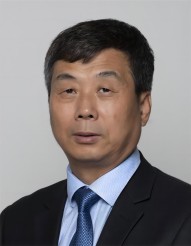 Zhongwen Guo (郭忠文)合作论文数Faculty of Information Science and Engineering, Ocean University of China2Yuanshi Zheng (元世郑)合作论文数1ma hui (慧 马)合作论文数1xue jian (健 薛)合作论文数1CAI Zhihui (蔡智辉)合作论文数1
 En-Zhi Cao合作论文数1TANG Li-na (唐丽娜)合作论文数1Jian-Liang Xu合作论文数1Shuqing Wang合作论文数1Juan Li合作论文数1Hua-Nv Feng (冯华女)合作论文数1Yue-Ting Sun合作论文数1Wei Hu合作论文数1Hua Lin合作论文数1Wei Zhang合作论文数1
 Jingye Li (李靖业)合作论文数1
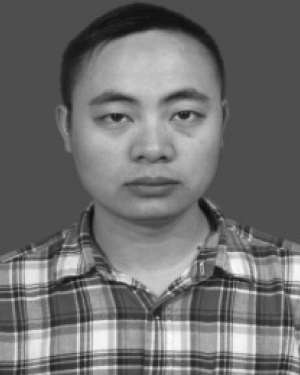 Zhihui Cai合作论文数1Jian Zhang (张健)合作论文数1Lin Li (李琳)合作论文数1
 Jian Gong (龚健)合作论文数School of Public Administration, China University of Geosciences1
 Qiong Li合作论文数1
 Yuan Rao (饶元)合作论文数School of Software, Xi'an Jiaotong University1
 Xin Sun (孫鑫)合作论文数Faculty of Data Science, City University of Macau;Technical University of Munich1
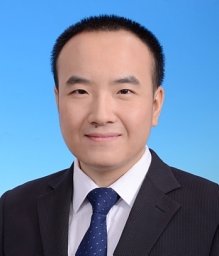 Feng Gao (高峰)合作论文数School of Computer Science, Faculty of Information Science and Engineering, Ocean University of China1Xiaoying Zhao (赵晓颖)合作论文数1
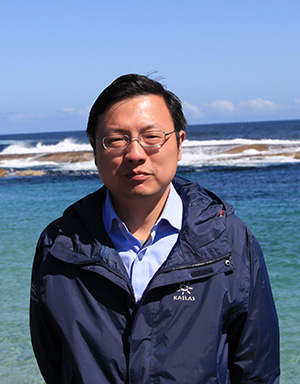 Jian Xue (薛健)合作论文数University of Chinese Academy of Sciences1Jin Zhou合作论文数1




