Hong-Ou-Mandel (HOM) interference-based optical neural networks can offer complexity advantages on benchmark learning tasks, but conventional readout compresses the coincidence spectrum into a single scalar, limiting its use in complex settings such as continuous-action reinforcement learning. Here we introduce a spectrum-resolved HOM (SR-HOM) architecture that promotes the photons' spectral degrees of freedom to a trainable computational resource and use it to construct a compact optical actor-critic agent. Diagonal spectral responses generate continuous actions, while higher-order spectral correlations provide nonlinear state-action features for value estimation. Across five continuous-control benchmarks, SR-HOM outperforms parameter-matched multilayer-perceptron baselines, including a 4.4× improvement in sample efficiency and a 74.0% increase in best 100-episode moving-average return for LunarLanderContinuous-v3. Applied to online calibration of drifted tunable-coupler CZ and iSWAP gates for transmon qubits, simulations show it restores fidelities to 0.9917 and 0.9952 respectively, exceeding 99.8% of their drift-free calibrated values.
Quantum control has been a cornerstone of quantum information science, driving major advances in quantum computing, quantum communication, and quantum sensing. Over the years, it has enabled the implementation of arbitrary completely positive and trace-preserving (CPTP) maps; an important next step is to extend control to Hermitian-preserving and trace-preserving (HPTP) maps, which underpin applications such as entanglement detection, quantum error mitigation, quantum simulation, and quantum machine learning. Here we present an efficient and fully constructive method for implementing arbitrary HPTP maps. Unlike existing methods that decompose an HPTP map into multiple CPTP maps or approximate it using bipartite Hamiltonians with large Hilbert spaces, our approach compiles a target HPTP map into a single executable CPTP map whose Kraus rank is guaranteed to be no larger than the intrinsic rank of the target HPTP map plus one, followed by simple classical post-processing. Numerical results for inverse noise channels used in quantum error mitigation, including bosonic photon loss, confirm substantial reductions in resources and highlight scalability in higher-dimensional settings. Together with our numerical benchmarks, these results validate the efficiency and versatility of the proposed framework, opening a route to broader quantum-information applications enabled by HPTP processing.
Quantum metrology typically demands the preparation of exotic quantum probe states, such as entangled or squeezed states, to surpass classical limits. However, the need for carefully calibrated system parameters and finely optimized quantum controls imposes limitations on scalability and robustness. Here, we circumvent these limitations by introducing an echoed random process that achieves sensitivity approaching the Heisenberg limit while remaining blind to the random probe state. We demonstrate that by simply driving a Kerr nonlinear mode with random pulses, the emergence of sub-Planck phase-space structures grants high sensitivity, eliminating the need for complex quantum control. The protocol is statistically robust, yielding high performance across broad driving parameter ranges while exhibiting resilience to control fluctuations and photon loss. Broadly applicable to both bosonic and qubit platforms, our work reveals a practical, hardware-efficient, scalable, and optimization-free route to quantum-enhanced metrology in high-dimensional Hilbert spaces.
[This corrects the article DOI: 10.1093/nsr/nwaf246.].
Entanglement is crucial for quantum networks and computation, yet maintaining high-fidelity entangled quantum states is hindered by decoherence and resource-intensive purification methods. Here, we experimentally demonstrate entanglement pumping, utilizing bosonic quantum error correction (QEC) codes as long-coherence-time storage qubits. By repetitively generating entanglement with short-coherence-time qubits and injecting it into error-detectable logical qubits, our approach effectively preserves entanglement. Through error-detection to discard error states and entanglement pumping to mitigate errors within the code space, we extend the existence time of entanglement by nearly 50% compared to the case without entanglement pumping. This entanglement pumping scheme can additionally serve as an erasure detection protocol for the dual-rail code. This Letter highlights the potential of bosonic logical qubits for scalable quantum networks and introduces a novel paradigm for efficient entanglement management.
Quantum metrology promises measurement precision beyond classical limits by exploiting large-scale quantum states, yet realizing this advantage faces two fundamental challenges: the deterministic preparation of non-trivial quantum probes and the efficient extraction of metrological information in high-dimensional Hilbert spaces. Here, we introduce quantum confocal microscopy in Fock space that simultaneously resolves both challenges. Drawing a direct analogy between classical wave optics and quantum state evolution in a bosonic mode, we construct a confocal system with two Fock-space lenses. The first lens deterministically focuses a coherent state into a quantum probe with a tightly concentrated photon-number distribution, while the second lens maps the metrological information back to the vacuum state for efficient readout. Using a superconducting circuit QED platform, we prepare focused probe states with mean photon numbers up to ${N} = 500$, achieving a 21.5$\pm$1.1 dB compression of the photon-number uncertainty relative to a coherent state, with a scalable quantum circuit of $\mathcal{O}(1)$ operational depth. We demonstrate a displacement sensitivity scaling as $N^{-0.416}$, approaching the Heisenberg scaling ($N^{-0.5}$), and achieve a record metrological gain of 19.06$\pm$0.13 dB beyond the standard quantum limit. This work establishes quantum confocal microscopy as a scalable and practical framework for quantum-enhanced precision measurement, readily extendable to other bosonic platforms and high-dimensional quantum many-body systems.
The scalable preparation of bosonic quantum states with macroscopic excitations poses a fundamental challenge in quantum technologies, limited by control complexity and photon-loss rates that severely constrain prior theoretical and experimental efforts to merely dozens of excitations per mode. Here, based on the duality of the quantum state evolution in Fock state space and the optical wave-function propagation in a waveguide array, we introduce a Kerr-engineered multi-lens protocol in a single bosonic mode to deterministically generate Fock states exceeding 10,000 photons. By optimizing phase and displacement operations across lens groups, our approach compensates for non-paraxial aberrations, achieving fidelities above 73% in numerical simulations for photon numbers up to N=100,000. Counterintuitively, the protocol's execution time scales as N^-1/2 with the target photon number N, exhibiting robustness against the photon loss. Our framework enables exploration of quantum-to-classical transitions of giant Fock states, paving the way for advanced quantum metrology with significant quantum gains, and error-corrected quantum information processing in high-dimensional Hilbert spaces.
Distributed quantum computing architectures require high-performance quantum interconnects between quantum information processing units, while previous implementations have been fundamentally limited by transmission line losses. Here, we demonstrate a low-loss interconnect between two superconducting modules using an aluminum coaxial cable, achieving a bus mode quality factor of 1.7e6. By employing SNAIL as couplers, we realize inter-modular state transfer in 0.8 μs via a three-wave mixing process. The state transfer fidelity reaches 98.2% for quantum states encoded in the first two energy levels, achieving a Bell state fidelity of 92.5%. Furthermore, we show the capability to transfer high-dimensional states by successfully transmitting binomially encoded logical states. Systematic characterization reveals that performance constraints have shifted from transmission line losses (contributing merely 0.2% infidelity) to module-channel interface effects and local Kerr nonlinearities. Our work advances the realization of quantum interconnects approaching fundamental capacity limits, paving the way for scalable distributed quantum computing and efficient quantum communications.
Quantum algorithms offer computational advantages, yet incorporating them into quantum sensing and converting these advantages into enhanced information acquisition remains challenging. Here, we realize quantum-computing-enhanced sensing in a spin-oscillator architecture, where a microwave cavity provides a high-dimensional quantum register and a coupled superconducting qubit serves as the sensor. The unknown signal directly generates the phase oracle operation, establishing a natural physical interface between quantum computation and sensing. We experimentally demonstrate the first Grover search in a bosonic mode and observe quantum amplitude amplification in a Hilbert space spanning more than 128 photons. For the same number of sensing iterations, our protocol extracts more information and resolves more frequency candidates than classical sequential search. Our results establish signal-driven oracles as a route for harnessing oracle-based quantum algorithms and realizing quantum-computing-enhanced sensing.
High-fidelity quantum operations are the cornerstone of fault-tolerant quantum computation. In open quantum systems, traditional optimal control only passively resists decoherence, leaving environment-induced uncertainty as a fundamental performance bottleneck. To overcome this, we propose a new optimal control framework with flag ancillas and the Flag-GRAPE algorithm, which can actively tailor the system's noise structure. Through embedding post-selection directly into the objective function, Flag-GRAPE correlates decoherence errors with the ancilla's unexpected state. Subsequent measurement and post-selection effectively expel this uncertainty, circumventing the fidelity bounds of traditional control. Numerical simulations in a superconducting quantum circuit demonstrate a 51% reduction in infidelity compared to traditional closed-system pulses and also show that such enhancement is robust across broad noise regimes. Furthermore, by actively converting unstructured decoherence into heralded erasure errors, Flag-GRAPE is inherently compatible with quantum error correction. We demonstrate this by initializing a logical cat-code state, showing that the combination between Flag-GRAPE and QEC yields immediate state preparation enhancements. This new framework can reduce hardware overhead for fault-tolerant architectures and open up a practical path toward logical state preparation gain in near-term experiments.
Cavity optomechanical systems enable coherent photon-phonon interactions essential for quantum technologies, yet high-performance devices have been limited to suspended structures. Here, we overcome this limitation by demonstrating cavity Brillouin optomechanics in a suspension-free racetrack microring resonator on a lithium-niobate-on-sapphire chip, a platform that merits high stability and scalability. We demonstrate coherent coupling between telecom-band optical modes and a 9.6 GHz phonon mode, achieving a maximum cooperativity of 0.41 and a phonon quality-factor-frequency product of 1013 Hz. The momentum-matching condition inherent to traveling-wave Brillouin interactions establishes a one-to-one mapping between the optical wavelength and phonon frequency, enabling multichannel parallel operations across nearly 300 MHz in phonon frequency and 40 nm in optical wavelength. Our suspension-free architecture provides a coherent photon-phonon interface compatible with wafer-scale integration, opening pathways toward hybrid quantum circuits that unite photonic, phononic, and superconducting components on a single chip.
Breaking time-reversal symmetry in integrated photonics without magnetic fields remains a fundamental challenge. We demonstrate phonon-induced non-reciprocity through direct lifting of forward-backward mode degeneracy in microring resonators. Coherent acousto-optic coupling generates differential AC Stark shifts between counter-propagating fundamental optical modes, eliminating the need for intermodal conversion or complex photonic structures. Simple microwave excitation of integrated piezoelectric transducers provides dynamic control of non-reciprocal response, with experimentally demonstrated mode splitting exceeding twice the optical linewidth. The linear relationship between the splitting and acoustic power enables real-time reconfigurability across a wide range of optical wavelengths. This mechanism requires only simple microring resonators and fundamental optical modes, transforming non-reciprocity from a specialized technique requiring careful modal engineering to a universal, electrically-controlled functionality. Our approach establishes a new paradigm for magnetic-free optical isolation and dynamic topological photonics.
Protecting quantum information through quantum error correction (QEC) is a cornerstone of future fault-tolerant quantum computation. However, current QEC-protected logical qubits have only achieved coherence times about twice those of their best physical constituents. Here, we show that the primary barrier to higher QEC gains is ancilla-induced operational errors rather than intrinsic cavity coherence. To overcome this bottleneck, we introduce error-detectable universal control of bosonic modes, wherein ancilla relaxation events are detected and the corresponding trajectories discarded, thereby suppressing operational errors on logical qubits. For binomial codes, we demonstrate universal gates with fidelities exceeding 99.6% and QEC gains of 8.33× beyond break-even. Our results establish that gains beyond 10× are achievable with state-of-the-art devices, establishing a path toward fault-tolerant bosonic quantum computing.
Preparing high-fidelity logical states is a central challenge in fault-tolerant quantum computing, yet existing approaches struggle to balance control complexity against resource overhead. Here, we present a complete framework for the fault-tolerant preparation of arbitrary logical states encoded in the four-legged cat code. This framework is engineered to suppress the dominant incoherent errors, including excitation decay and dephasing in both the bosonic mode and the ancilla via error detection. Numerical simulations with experimentally realistic parameters on a 3D superconducting cavity platform yield logical infidelities on the order of 10^-4. A scaling analysis confirms that the logical error rate grows nearly quadratically with the physical error rate, confirming that all first-order errors are fully suppressed. Our protocol is compatible with current hardware and is scalable to multiple bosonic modes, providing a resource-efficient foundation for magic state preparation and higher-level concatenated quantum error correction.
High-fidelity two-logical-qubit gates are essential for realizing fault-tolerant quantum computation with bosonic codes, yet experimentally reported fidelities have rarely exceeded 90%. Here, we propose a geometric phase engineering approach for implementing controlled-phase gates for binomially encoded logical qubits. This method leverages the structural simplicity of geometric drives to reduce the numerical optimization dimensionality while fully incorporating system nonlinearities, enabling fast and high-fidelity logical operations. As an example, we experimentally demonstrate a process fidelity of 97.4±0.8% with postselection to exclude leakage (94.9±0.7% without post selection) for a controlled-Z gate between two lowest-order binomial codes, surpassing all previously reported two-logical-qubit gates in bosonic codes. This Letter demonstrates that geometric phase engineering provides an effective and experimentally feasible route to fast, high-fidelity logical operations in bosonic quantum processors.
Deterministic preparation of high-excitation Fock states is a central challenge in bosonic quantum information, with control complexity that generically explodes as the Hilbert space dimension grows. Here we introduce resonant subspace engineering (RSE), a protocol that analytically confines the infinite-dimensional bosonic dynamics to a two-dimensional invariant subspace spanned by an initial coherent state and the target state. State transfer then reduces to a geodesic rotation on a synthetic Bloch sphere, governed by resonance and phase-matching conditions we derive in closed form. For single Fock states, RSE achieves $O(n^{1/4})$ scaling in both evolution time and gate depth, showing a fundamental improvement over existing deterministic schemes. The construction generalizes to $K$-component superpositions via a $(K{+}1)$-dimensional invariant subspace with full $\mathrm{SU}(K{+}1)$ controllability, requiring only 3-5 iterations of operations for superpositions spanning photon numbers 70--100. RSE provides a scalable and analytically transparent framework for large-scale bosonic state engineering and gate synthesis across single- and multimode platforms.
We propose and experimentally demonstrate a global parametric gate that generates multi-qubit entangled states in a single step. By applying a parametric drive to a common qubit at precise detunings relative to computational qubits, we directly produce two-, three-, and four-qubit entanglement with state fidelities of 99.4%±0.2%, 93.4%±0.3%, and 91.4%±0.3%, respectively. This scheme enables efficient, reconfigurable control using only microwave drives and is compatible with fixed-frequency qubits. Error analyses indicate that infidelity stems primarily from decoherence and coherent control errors, with negligible contributions from static ZZ coupling and flux noise. Furthermore, simulations with state-of-the-art parameters predict this global gate can generate high-fidelity (99.70%) entanglement in systems of up to six qubits.
The principles of wave optics provide elegant and scalable control over classical light in spatial and temporal domains. However, in the quantum regime, engineering Fock states of photons has been largely restricted to only a few photons at a time, hindered by the computational and experimental challenges of large Hilbert spaces. Here we introduce a conceptual framework of wave propagation in the quantum domain by treating the photon number in a microwave resonator as a synthetic dimension. In the large-photon limit, the coupling between adjacent Fock states becomes approximately uniform, allowing us to establish an analogy to light propagation. Using a superconducting cavity, we experimentally demonstrate Fock-space analogues of optical propagation, refraction, lensing, dispersion and interference with up to 180 photons. By mapping intuitive optical concepts onto the domain of high-dimensional quantum state engineering, our work provides an approach to scalable control of large-scale quantum systems with thousands of photons and advanced bosonic information processing.
The manipulation of distinct degrees of freedom of photons plays a critical role in both classical and quantum information processing. While the principles of wave optics provide elegant and scalable control over classical light in spatial and temporal domains, engineering quantum states in Fock space has been largely restricted to few-photon regimes, hindered by the computational and experimental challenges of large Hilbert spaces. Here, we introduce “Fock-space optics", establishing a conceptual framework of wave propagation in the quantum domain by treating photon number as a synthetic dimension. Using a superconducting microwave resonator, we experimentally demonstrate Fock-space analogues of optical propagation, refraction, lensing, dispersion, and interference with up to 180 photons. These results establish a fundamental correspondence between Schrödinger evolution in a single bosonic mode and classical paraxial wave propagation. By mapping intuitive optical concepts onto high-dimensional quantum state engineering, our work opens a path toward scalable control of large-scale quantum systems with thousands of photons and advanced bosonic information processing.
Neutral-atom quantum processors have rapidly advanced in scale and coherence, yet their practical performance remains constrained by limited quantum circuit iteration rates (qCIRs) and information throughput. Here we experimentally demonstrate a high-throughput neutral-atom system based on non-destructive readout and atom reuse. By integrating a chip-based photonic interface with a 10-qubit array, we implement non-destructive readout with a retention probability of 99.7
 Chang-Ling Zou (邹长铃)合作论文数Key Lab of Quantum Information, Department of Optics and Optics Engineering, University of Science and Technology of China68
 Weiting Wang (王韦婷)合作论文数63Weizhou Cai合作论文数56
 Yipu Song (宋祎璞)合作论文数Institute for Interdisciplinary Information Sciences, Tsinghua University41Yuwei Ma合作论文数35
 Yuan Xu (徐源)合作论文数Shenzhen International Quantum Academy28Z. Hua合作论文数Ctr Quantum Informat, Tsinghua Univ27
 Guangcan Guo (郭光灿)合作论文数School of Physical Sciences, University of Science and Technology of China;Key Lab of Quantum Information, Chinese Academy of Sciences, University of Science and Technology of China23X Mu合作论文数Tsinghua Univ, Ctr Quantum Informat, Inst Interdisciplinary Informat Sci, Beijing 100084, Peoples R China21Xiaoxuan Pan合作论文数19Yifang Xu合作论文数18Zi-Jie Chen合作论文数18
 Haiyan Wang合作论文数15
 Luming Duan (段路明)合作论文数Institute for Interdisciplinary Information Sciences, Tsinghua University15
 Luigi Frunzio合作论文数Schoelkopf Lab, Yale University;Prober Lab, Yale University15
 Haifeng Yu (于海峰)合作论文数Division of Quantum Computation, Beijing Academy of Quantum Information Sciences14
 Guangming Xue合作论文数12H. Wang合作论文数10
 Lianxue Hu合作论文数10
 Yukai Wu (吴宇恺)合作论文数Institute for Interdisciplinary Information Sciences, Tsinghua University10J Han合作论文数9Be Kane合作论文数9Xuegang Li合作论文数8
 Steven Girvin合作论文数Department of Physics, Yale University;Department of Applied Physics, Yale University;Yale Quantum Institute, Yale University8
 Hongyi Zhang (张宏毅)合作论文数Institute for Interdisciplinary Information Sciences, Tsinghua University8
 Shi-Biao Zheng (郑仕标)合作论文数College of Physics and Information Engineering, Fuzhou University8
 Xubo Zou (邹旭波)合作论文数School of Physical Sciences, University of Science and Technology of China7
 Michel H. Devoret合作论文数Department of Applied Physics, Yale University7
 Zhenbiao Yang (杨贞标)合作论文数Department of Physics, College of Physics and Information Engineering, Fuzhou University;Fujian Key Laboratory of Quantum Information and Quantum Optics, Fuzhou University7
 Gianluigi Catelani合作论文数7Jiaxiu Han合作论文数6Yan-Lei Zhang合作论文数Univ Sci & Technol China, Key Lab Quantum Informat, Hefei 230026, Peoples R China6
 Jacob Blumoff合作论文数6
 Zhangqi Yin (尹璋琦)合作论文数School of Physics, Beijing Institute of Technology6Matthew Reed合作论文数Dept Phys & Appl Phys, Yale Univ6
 Dongling Deng (邓东灵)合作论文数Institute for Interdisciplinary Information Sciences, Tsinghua University6Hanhee Paik合作论文数Department of Physics, Yonsei University6Xiyue Han合作论文数5
 R. Vijay合作论文数Department of Condensed Matter Physics and Materials Science, Tata Institute of Fundamental Research5Liu Ke合作论文数5
 Xinbiao Xu合作论文数5
 Chunhua Dong (董春华)合作论文数CAS Key Laboratory of Quantum Information, University of Science and Technology of China5
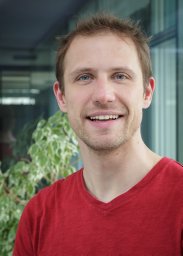 Gerhard Kirchmair合作论文数Institut fur Quantenoptik und Quanteninformation5
 Re-Bing Wu (吴热冰)合作论文数Department of Automation, Tsinghua University5
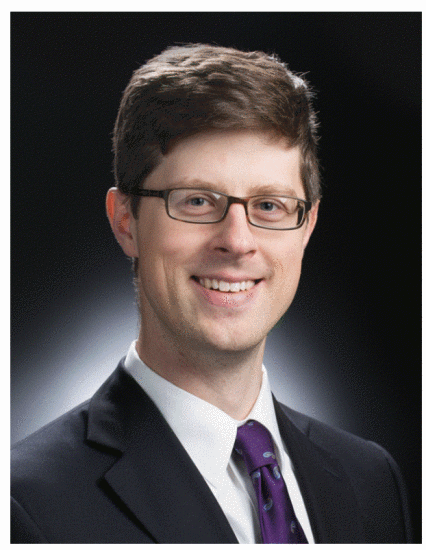 Tomasz M. Kott合作论文数5
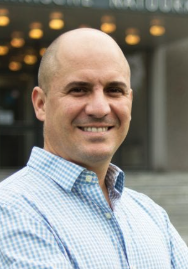 Leonardo Dicarlo合作论文数Quantum Computing Division, QuTech, Delft University of Technology;Faculty of Applied Sciences, Delft University of Technology5
 367 (陆娟娟)合作论文数School of Information Science and Technology, ShanghaiTech University4Bo Zhang合作论文数4
 Ling Hu (胡玲)合作论文数Institute for Quanfum Science and Engineering, College of Science, Southern University of Science and Technology4




